
Woodshop Diaries

  • Shop
  • About
    • Work With Me
    • Frequently Asked Questions
  • DIY Projects
    • DIY Furniture Plans
      • DIY Bed Plans
      • DIY Dresser Plans
      • DIY Nightstand Plans
      • DIY Desk Plans
      • DIY TV Stand Plans
      • Coffee and Side Table Plans
      • Tables
      • Shelves and Bookcase Plans
      • DIY Storage Trunk Plans
      • DIY Bench Plans
      • DIY Storage Cabinet Plans
      • DIY Bathroom Vanity Plans
      • Kids Projects and Furniture
    • DIY Scrap Wood Projects
    • DIY Workshop Projects
    • DIY Home Decor Projects
  • Getting Started
    • Cabinet Building
    • Woodworking Basics
    • Furniture Finishing Tips
    • Tool Guides & Reviews
  • Blog
menu icon
go to homepage
  • Shop
  • About
    • Work With Me
    • Frequently Asked Questions
  • DIY Projects
    • DIY Furniture Plans
      • DIY Bed Plans
      • DIY Dresser Plans
      • DIY Nightstand Plans
      • DIY Desk Plans
      • DIY TV Stand Plans
      • Coffee and Side Table Plans
      • Tables
      • Shelves and Bookcase Plans
      • DIY Storage Trunk Plans
      • DIY Bench Plans
      • DIY Storage Cabinet Plans
      • DIY Bathroom Vanity Plans
      • Kids Projects and Furniture
    • DIY Scrap Wood Projects
    • DIY Workshop Projects
    • DIY Home Decor Projects
  • Getting Started
    • Cabinet Building
    • Woodworking Basics
    • Furniture Finishing Tips
    • Tool Guides & Reviews
  • Blog
search icon
Homepage link
  • Shop
  • About
    • Work With Me
    • Frequently Asked Questions
  • DIY Projects
    • DIY Furniture Plans
      • DIY Bed Plans
      • DIY Dresser Plans
      • DIY Nightstand Plans
      • DIY Desk Plans
      • DIY TV Stand Plans
      • Coffee and Side Table Plans
      • Tables
      • Shelves and Bookcase Plans
      • DIY Storage Trunk Plans
      • DIY Bench Plans
      • DIY Storage Cabinet Plans
      • DIY Bathroom Vanity Plans
      • Kids Projects and Furniture
    • DIY Scrap Wood Projects
    • DIY Workshop Projects
    • DIY Home Decor Projects
  • Getting Started
    • Cabinet Building
    • Woodworking Basics
    • Furniture Finishing Tips
    • Tool Guides & Reviews
  • Blog
×
Home

DIY Kids House Bed

January 24, 2020 by Shara, Woodshop Diaries

Shara Woodshop Diaries reading in DIY Kids House Bed Frame

This post about how to build your own DIY Kids House Bed is sponsored by Build Something and contains affiliate links. See policies.

.

Now, this may not be the first house I built (I built a dog house, and my own house in years past). But IT IS the first house BED I’ve built.
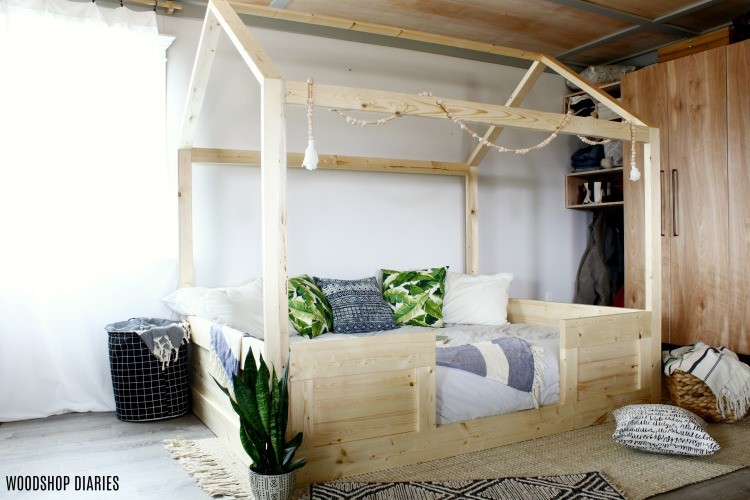
A look at this DIY kids house bed made from construction lumber

Channeling into my inner child on this DIY kids house bed build made me think about how much fun it would have been to have one of these when I was little.

.

I just had a bright (blindingly bright) brass railed headboard and a rickety metal twin bed frame in my childhood days.

.

Not that I’m complaining…I’m just getting old and grumpy in my 30s haha. Kid’s these days with their cool, fancy wood bed frames–they have all the fun.

.

Now, before I get too far, let’s address the elephant in the room. I know what you’re thinking…THIS BED LOOKS HUGE. I agree. It is. It’s actually a queen. And just in case you want the queen OR full size, I’ve got you covered with the plans here:

BUT DON’T LEAVE YET! Although, I built this queen size for a friend, I knew that most likely, since this bed is for kids, many of you would like to see it in a twin size, too.
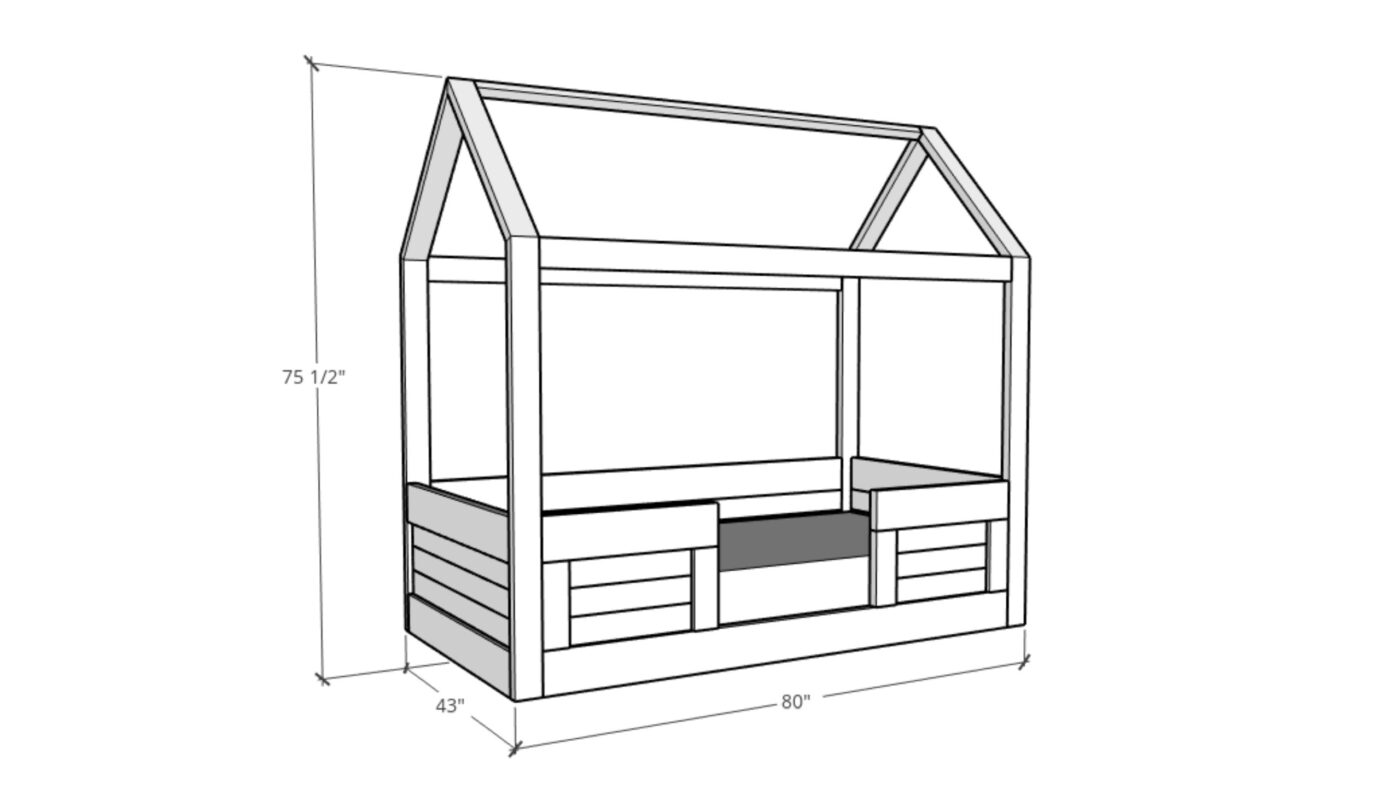
Kids house bed twin size overall dimensions

So, I partnered with my friends at Build Something and Kreg Tool to share FREE PLANS for this exact same style bed in a TWIN size over on Build Something here. PS, you can make the whole thing from standard construction lumber!

And I’ve got a really great video (although I may be slightly biased since I made it HA!) on how it came together for you right here:

Now, before we get building, I did want to point out that this bed is built in sections for easy assembly and un assembly when it’s time to move it–there are two sides, a front, back, slats, and three pieces that attach at the roof line.
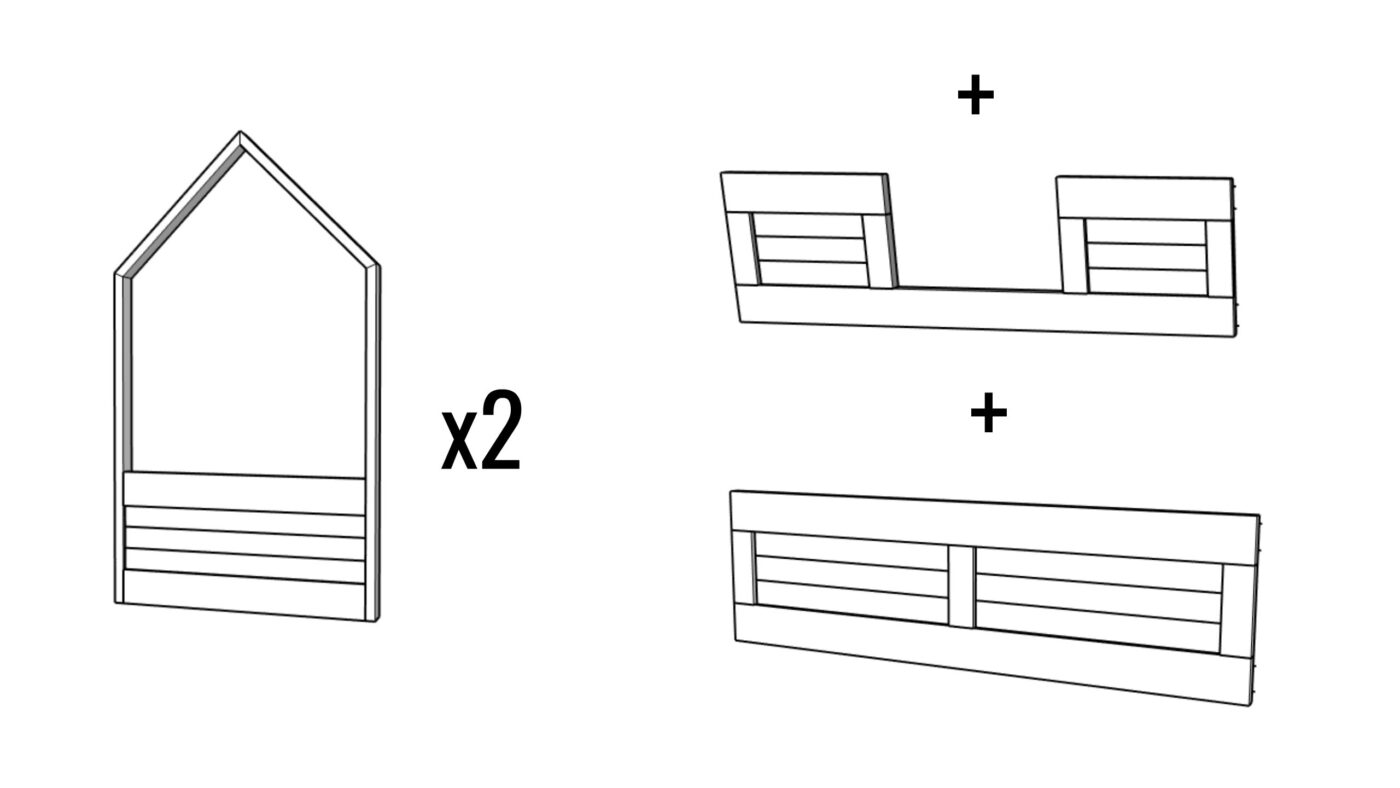
DIY kids house bed pieces

.

You can grab all the details on the pieces of this house bed and how to assemble them in the plans for a full and queen here and for a twin size here.

Step 1: Build House Bed Side Panels

I’ve seen several designs for house shaped beds, but this one is a little different because it’s got solid sides to help prevent roll out.

.

So the first thing I did was glue up two side panels using 1x4s. Each bed size will require a different length for this panel, so refer to the plans for details.
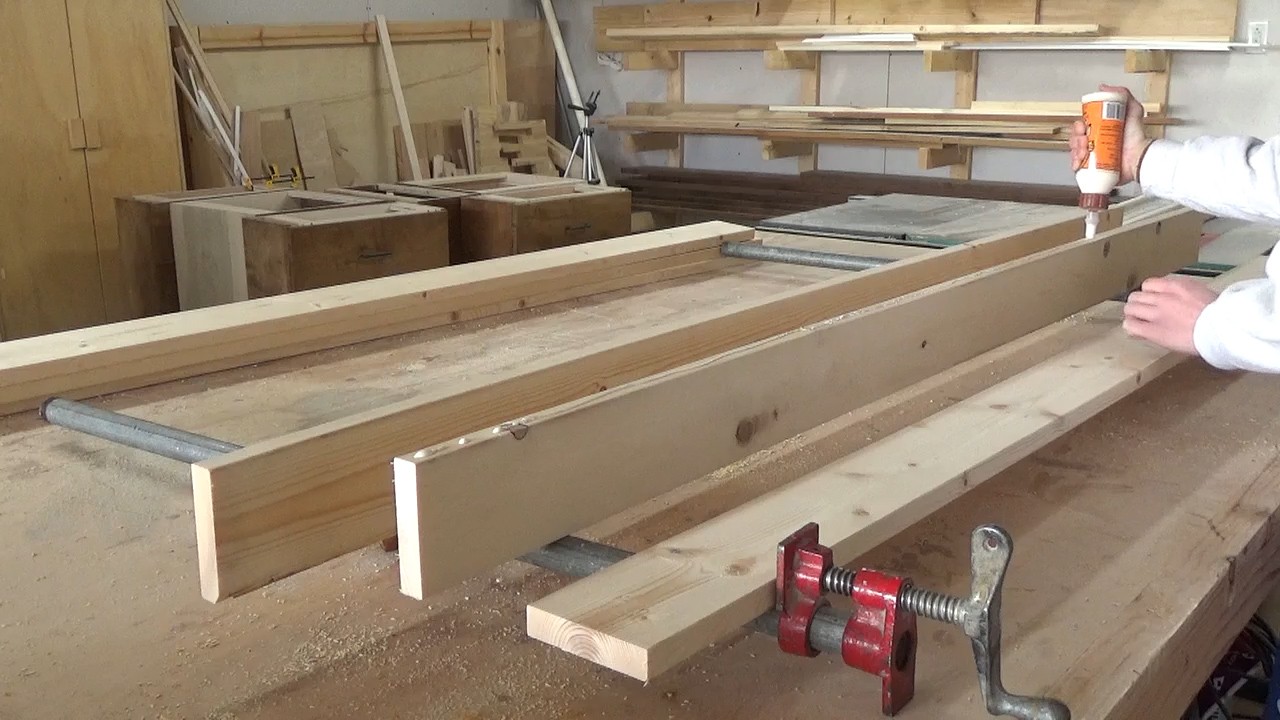
Gluing up solid side panels of DIY kids house bed

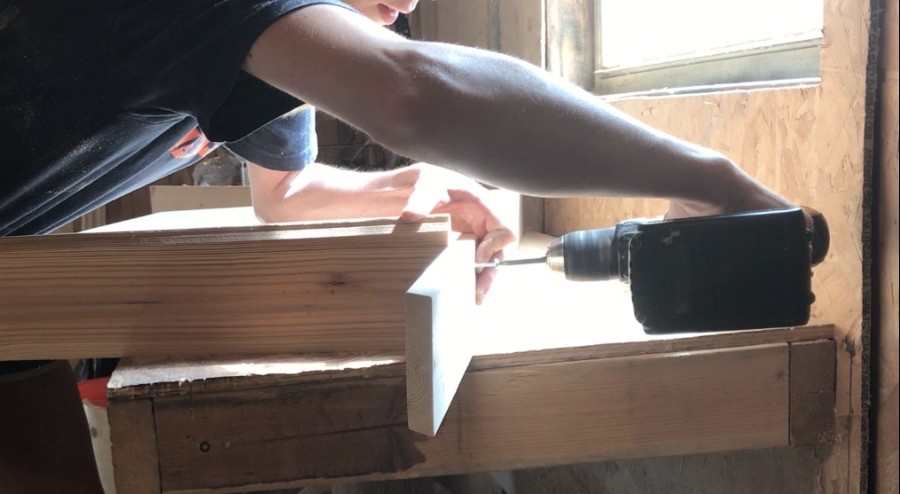
Once the side panels were glued up, I drilled pocket holes in the ends to assemble them into the frame in the next step.

Solid 1x4 panels glued up

Step 2: Assemble Side Frames

Now that the side panels were assembled, it was time for the side frames.

.

These frames were built with 2x6s on the bottom and top sides of the panel, and 2x4s everywhere else.

.

I trimmed the top of the 2×4 corner posts to a specific angle (again, each bed size is different, so refer to the specific plans for the angles here) to make the roof line.
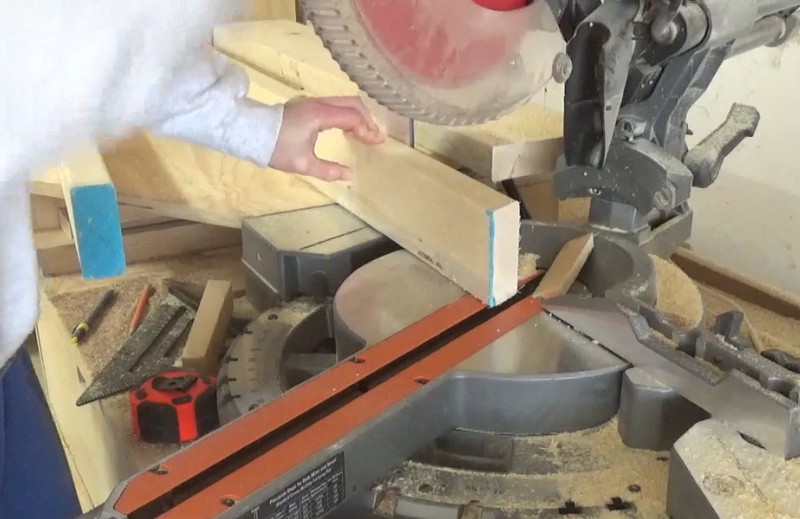
Trim roof angle of house bed

Then, I used pocket holes and screws to attach the 2×6 between them with a 10 ½″ gap between them.
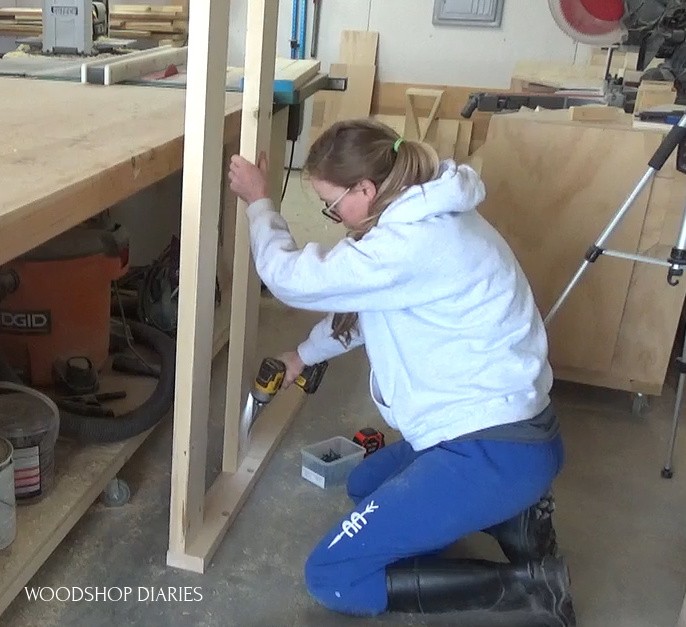
Assembling house bed frame side panels

All that’s left is to add the roof line. I cut two pieces of 2×4 to the proper angles (again, this is detailed in the plans based on what size you’re building), and screwed them together at the “peak” of the roofline.
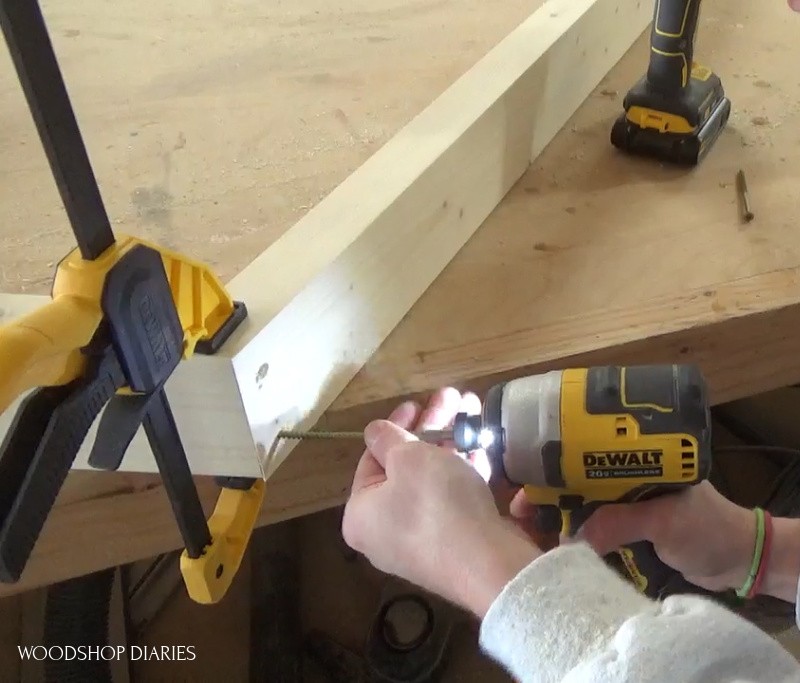
Attaching roof peak of house bed frame

Then, I glued and screwed these into the corner posts to complete the side frames.
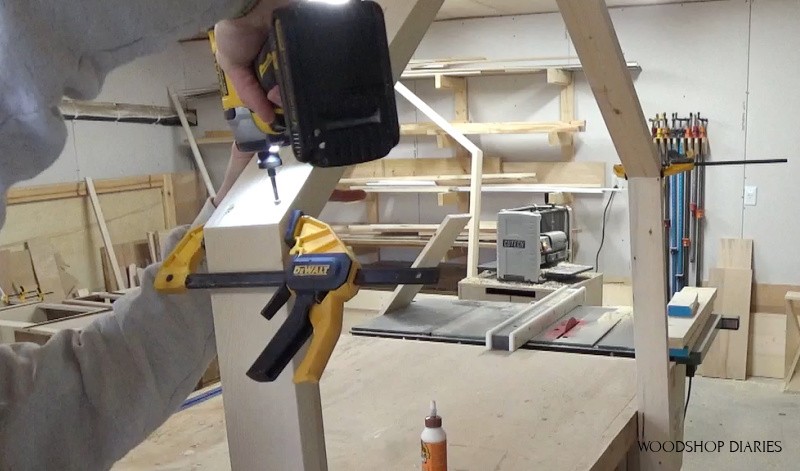
Attaching the roof top pieces of house bed

Step 3: Install Side Panels

Lastly, I installed the panel from step 1 into this frame using pocket holes and screws.
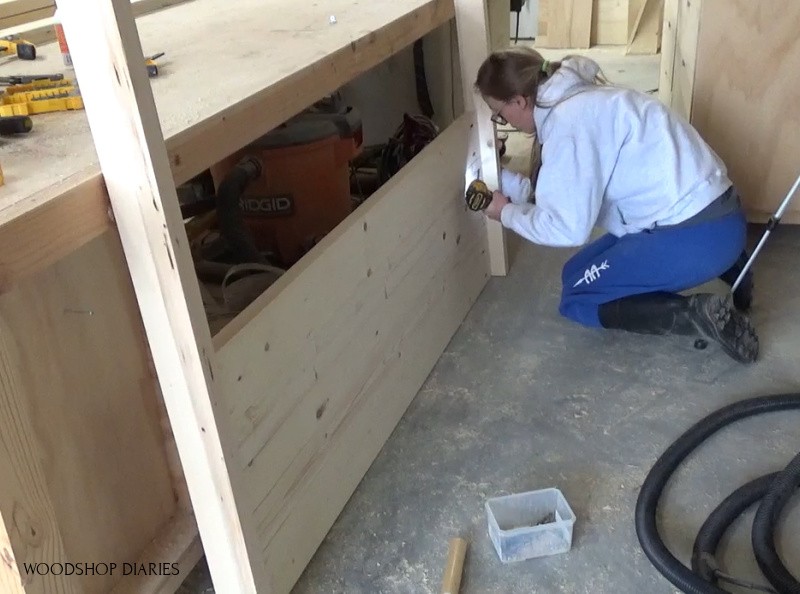
Installing solid side panels into bed frame sides

Now the two side panels are complete, so it’s time to build the front and back panels.

Step 4: Assemble Front and Back House Bed Panels

Now, just like the side panels, I glued up one long panel made of three 1x4s for the back of the bed and two shorter panels for the front of the bed.

.

While the glue dried, I build the frames. The front frame uses 2x6s at the top and bottom, 2x4s on the inside and 1x4s on the outside edge. The frame is assembled with pocket holes and screws.
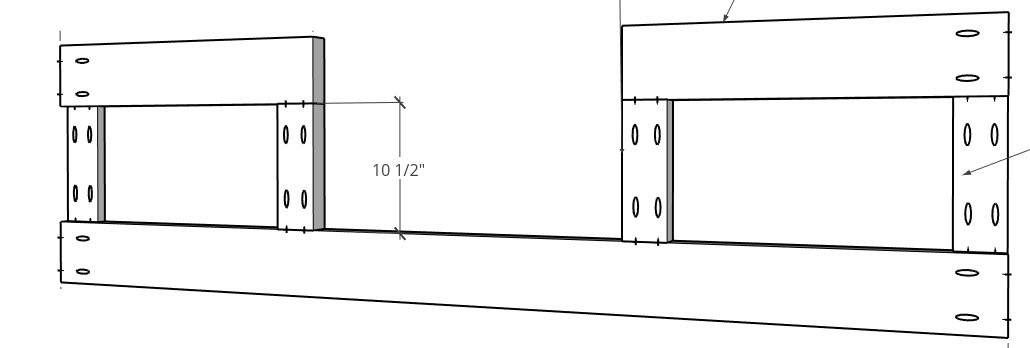
3D diagram of front frame of house bed

The back frame uses 2x6s at the top and bottom, 2x4s on the outside edges and a 1×4 in the middle. Again, all assembled with pocket holes and screws.
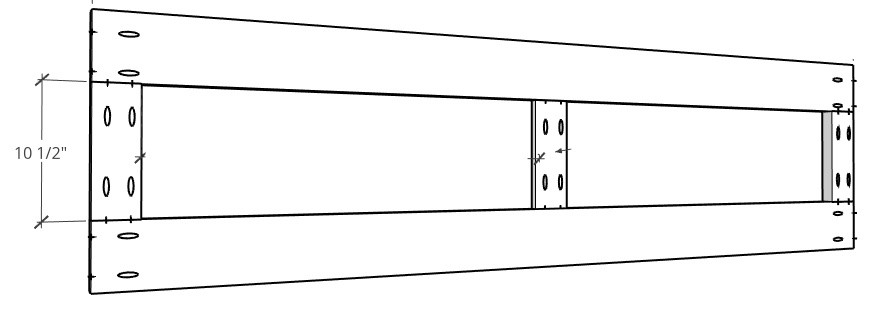
3D diagram of house bed back panel

Then, I installed the panels into the frames. For the front, the panel covers the outside 1×4 and simply screws in place. But on the inside, I used pocket holes and screws to attach to the inside 2×4.
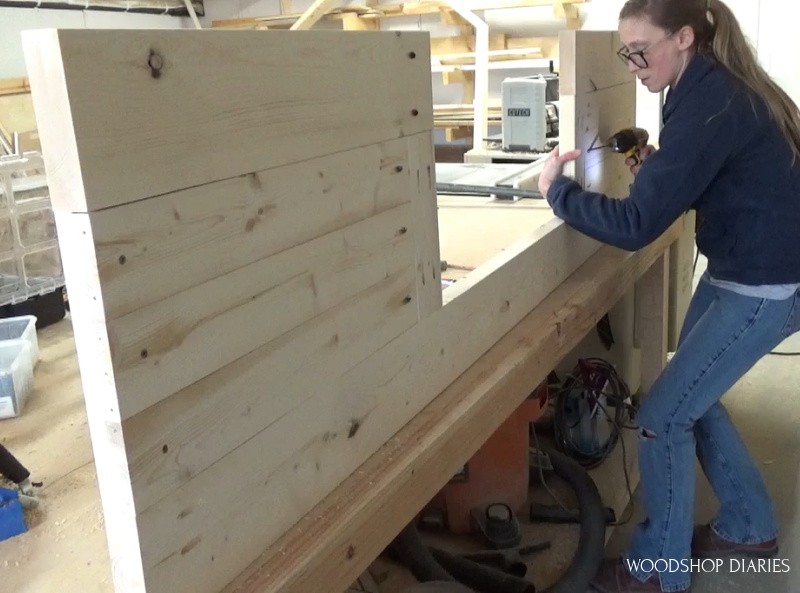
Installing front panels into front bed frame

The back panel uses pocket hole screws to install into the sides of the frame, then simply screws into the 1×4 in the middle (this just helps prevent bowing).
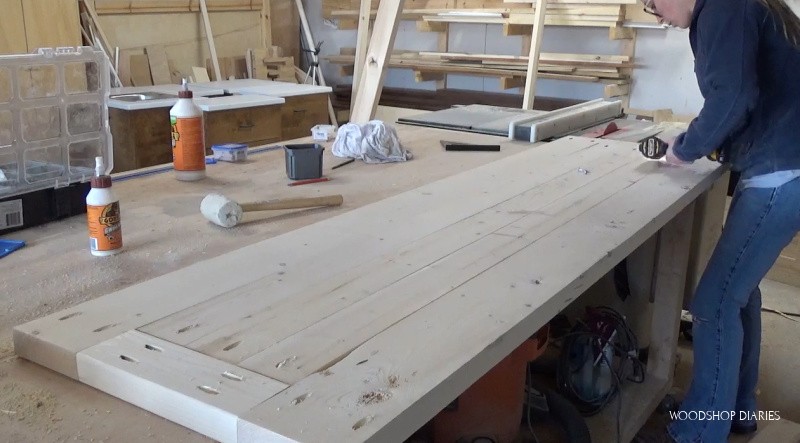
Installing back panel into back bed frame

So now there are two side panels, and a front and a back panel. It’s time to put it together!

Step 5: Assemble Frame and Add Roof Stretchers

To assemble the four pieces of the bed together, I drilled pocket holes into the top and bottom 2x6s of both the front and back panels. Then, I moved them to their destination (inside the house) and screwed together.
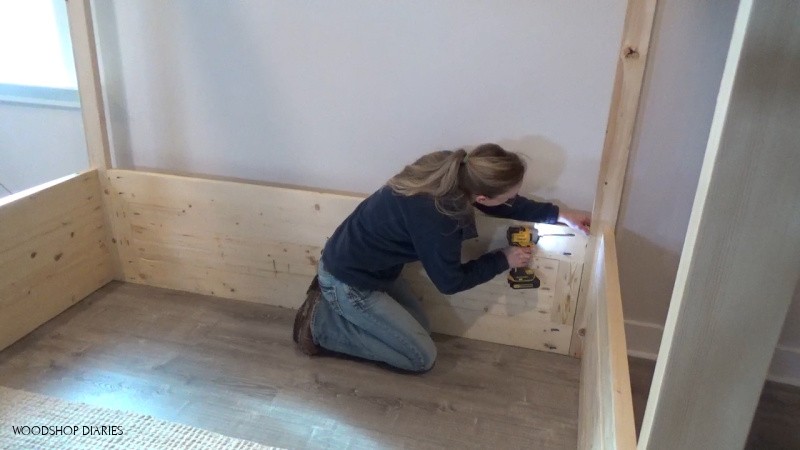
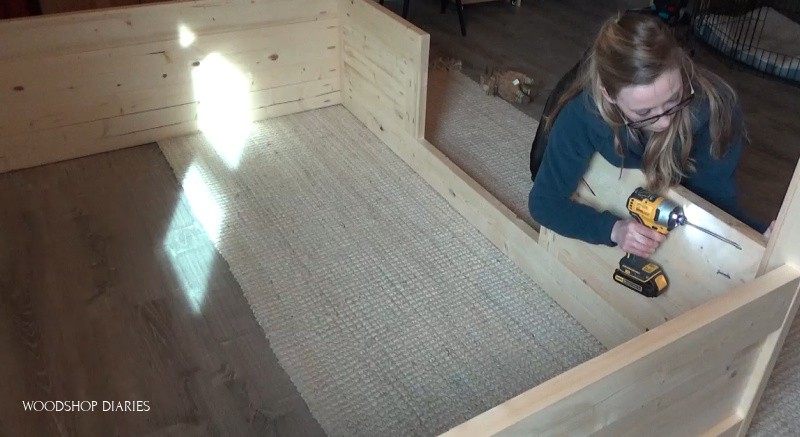
Shara installing back panel of house bed with pocket holes and screws
Shara Attaching four bed panel sides together for kids house bed

Once the four sides were together, I added a 2×4 on the front and back of the roof and a 2×2 at the roof peak. I used pocket holes and screws to attach these. Notice the holes are on the back side, so you won’t see them from the front.
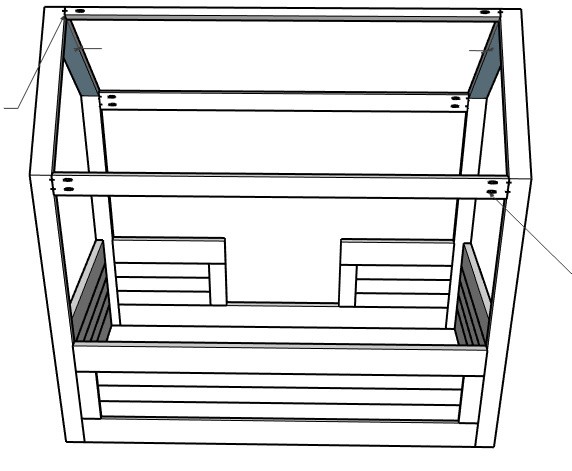
3D diagram of roof stretchers installed into DIY kids house bed

Step 6: Add House Bed Mattress Slats

Now everything is in place except the bottom slats. These are what supports the mattress.

.

I screwed some 2x4s along the bottom edge of the front and back panels to rest these slats on.
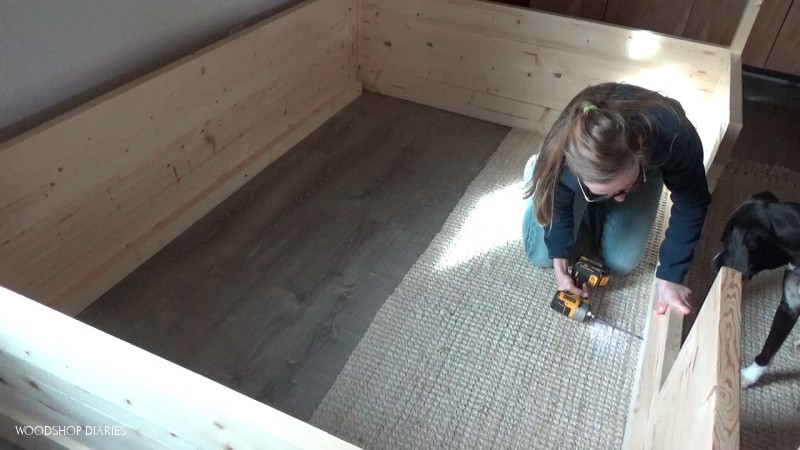
screw slat supports into front and back bed panels

Then, I screwed some small 2×4 blocks into the middle of some 1×4 slats (I used 1x6s here in the photo, but the plans call for 1x4s–either works fine) and evenly spaced them out like shown. It’s best to screw these in place before installing the mattress on top.
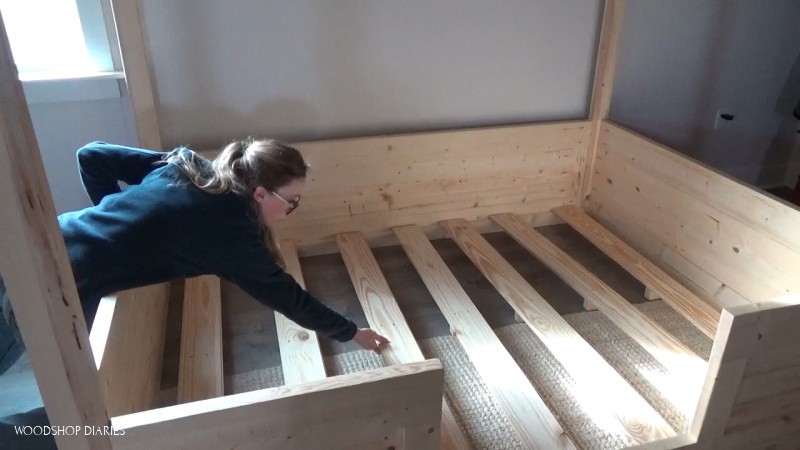
Install bed slats into kids house bed

At this point, it’s time to place the mattress inside and put the bedding on…and maybe take a nap 😉

.

If you want to paint and stain, you can do that at any point, but may be easier before bringing it inside to assemble. I simply applied some clear coat poly to protect the wood.

Shara Woodshop Diaries reading in DIY Kids House Bed Frame
DIY House Bed

I really enjoyed this project and it’s such a fun project for a kids room or even a hang out spot for a man cave or she-shed. I’m a grown adult and wouldn’t mind this in my own home office haha.

.

Of course, I probably wouldn’t get much work done with it in there, so might not be the best idea for productivity ha!
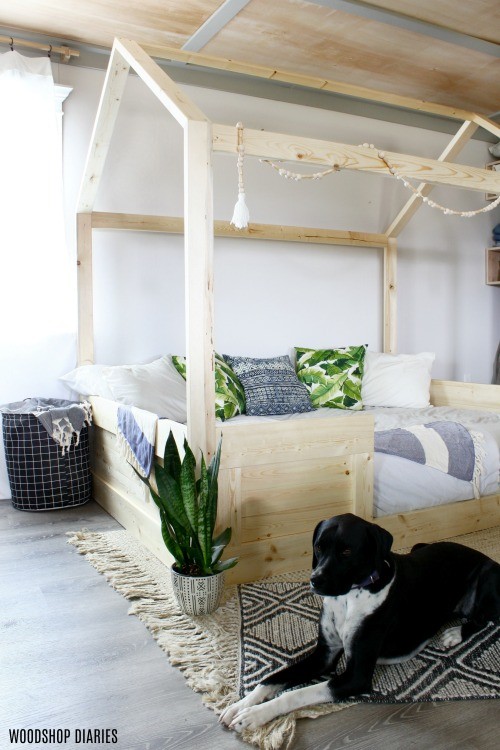
Lucy next to DIY kids house bed with panels

So if you’re ready to head to the shop and start building this DIY kids house bed, be sure to check out the YouTube video tutorial here and grab the FREE PLANS for a twin size over on Build Something here.

Looking for more DIY beds OR bedroom furniture projects?

Here are some of my favorites:

  • DIY Modern Bed
  • Free Building plans to build your own DIY King size storage bed
    DIY Storage Bed
  • DIY Modern Nightstand
  • DIY Dresser
  • DIY Dresser
  • Faux Drawer Dresser
  • How to build a Modern DIY Dresser Armoire
    DIY Wardrobe Dresser

If you like this DIY kids house bed project, I’d love if you’d pin it for later or share it on your favorite social channel 🙂
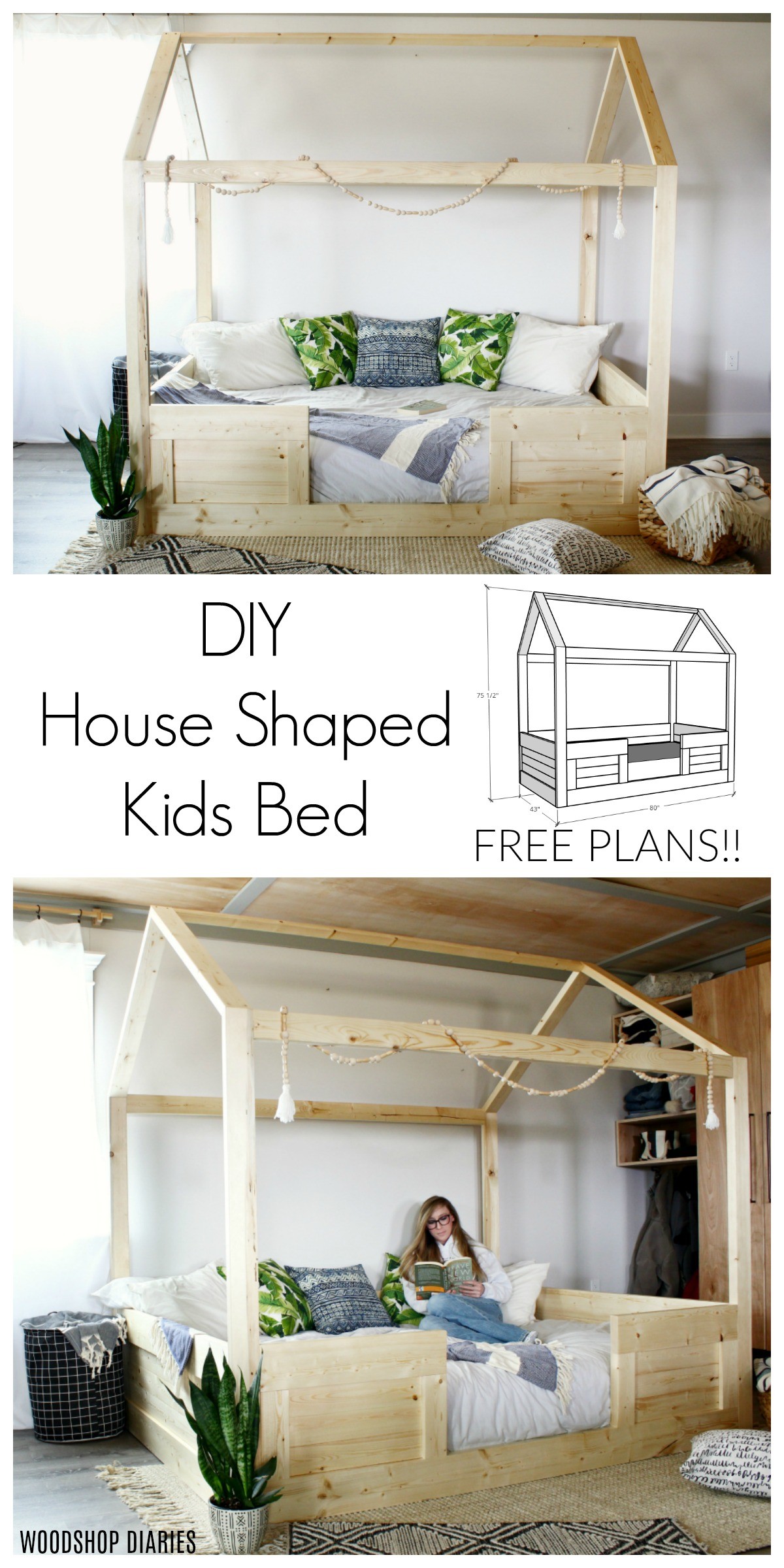
How to Build a DIY Kids House Bed Pinterest collage image

Until next time, friends, happy building! 🙂

DIY Continuous Grain Keepsake Box {with Tile Lid!}

January 21, 2020 by Shara, Woodshop Diaries

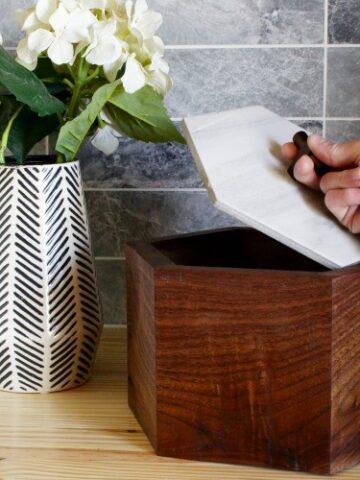
DIY Continuous grain walnut box with tile top

I’ve made several keepsake boxes over the years. They’re just a simple, handy little project that can be made a thousand ways. But, I’ve never shown how to make a DIY continuous grain keepsake box before, so…today’s the day 🙂

.

This post is sponsored by The Home Depot as part of the ProSpective Program and contains affiliate links. See policies for details.

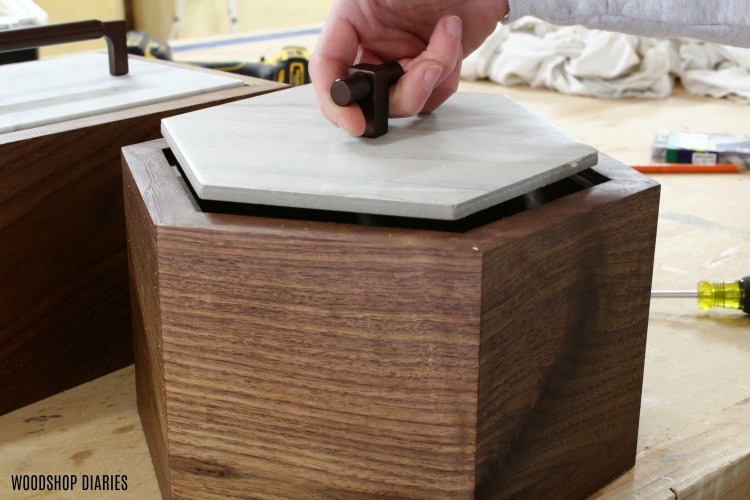
Hexagon keepsake box with continuous grain and tile lid

While browsing the tile section at The Home Depot lately, I ran across some tiles that I liked. Now, this isn’t the first time I’ve played around with tile and marble…remember this marble and walnut platter and this epoxy tray? So I grabbed a couple different shapes to take home and figure out a new way to use them.

.

I decided that it would be fun to use the tiles as a lid to some little continuous grain keepsake boxes, so this is what I came up with. I made one rectangle (below) and one hexagon (seen above) 🙂

rectangle keepsake box with continuous grain and tile lid

So, let’s get to the how to. I’ve got a quick video and the step by step below.

First, you will need the following:

materials needed to create keepsake box

Board for the box–see step 1 to figure out how much

¼″ plywood (same size as your tile)

Tile (this is the hexagon I used, and this is the rectangle I used)

Knob or Pull

Wood Glue

Painter’s Tape

Table saw OR Router

Miter Saw

Drill

Bosch DareDevil Carbide Tipped Drill Bits

Step 1: Determine Board Size

First, you need to determine what size board you need. I used a 1×6 board. That makes the box about 5 ½″ tall. If you want a deeper box, choose a wider board.

.

For length, add up the length of all the sides of your tile and add at least 6″ -10″ just to be safe.

.

Once I picked my board, I choose the prettiest side. This will be the outside of the box.

Step 2: Cut Dadoes and Top Lip of Keepsake Box

Next, I cut a dado on the board to insert the ¼″ plywood bottom and a dado at the top of the board to serve as a lip for the tile to sit down into. I used a table saw and a dado blade, but you could also use a standard blade and make several passes or use a router.

dadoes cut in board to create continuous grain keepsake box

I cut a ¼″ dado, ¼″ deep about ¼″ from the bottom of the board and another ¼″ dado at the top of the board. I made sure to cut this NOT on the prettiest side. This will be the INSIDE of the box.

Step 3: Cut Continuous Grain Keepsake Box Sides

Next, it was time to start cutting the sides. First, I needed to determine my bevel angle. With a rectangle or square tile, your bevel angle is 45 degrees. But with a hexagon, it’s only 30 degrees. I made both with this project, but here, I’m showing the hexagon.

hexagon continuous grain keepsake box diagram

So I adjusted the BEVEL angle on my miter saw to 30 degrees. Note that the MITER angle TWISTS the blade, but the BEVEL angle TILTS the blade. Does that make sense? So I TILTED my blade 30 degrees and left my miter angle square.

bevel miter saw to 30 degrees

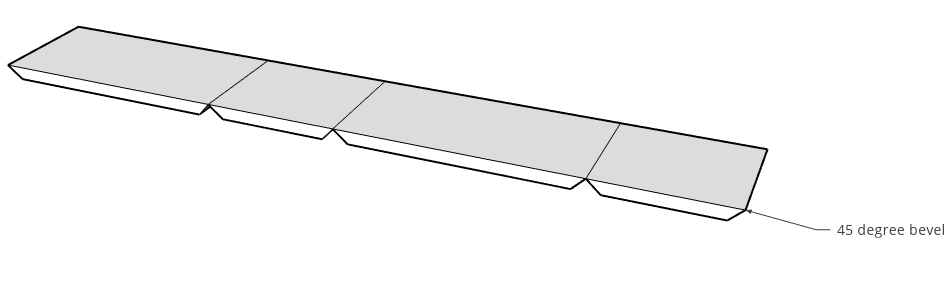
Now, to make a continuous grain box, I had to pay careful attention to the side of the board I was cutting. You want to make sure the grain matches all the way around the box. This diagram shows you how the board will be cut.

diagram of cuts for continuous grain keepsake box boards

So, first, I cut the end off the board like shown. I always made sure the LONG SIDES of my cuts were the outside of the board (so not the side with the dadoes).

cut end of board 30 degrees bevel

Then, I used the tile to figure out how long to cut this first board. I placed the tile in the top dado lip so that it was lined up with the end and marked the other end to know how long to cut for the tile to fit.

Then, I cut this at that mark like shown. Notice the long end of the cut is the outside of the board (dadoes are facing up).

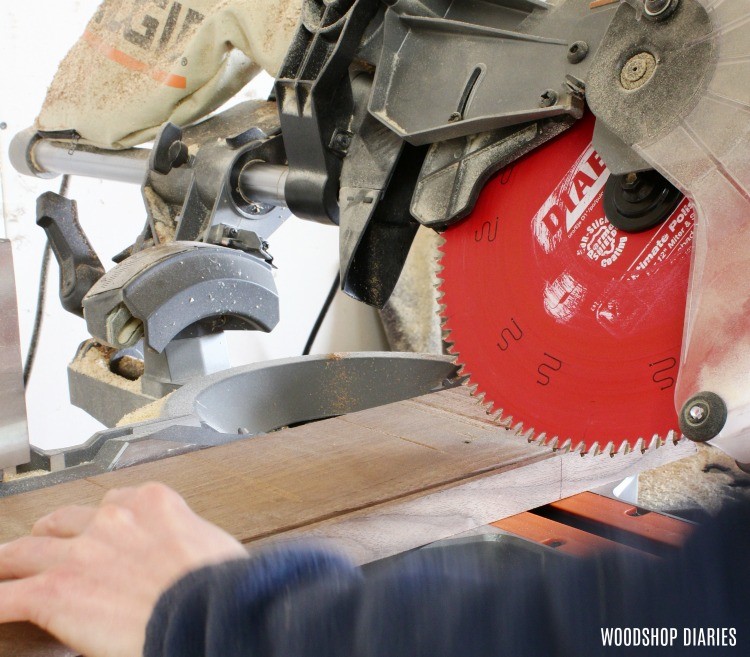
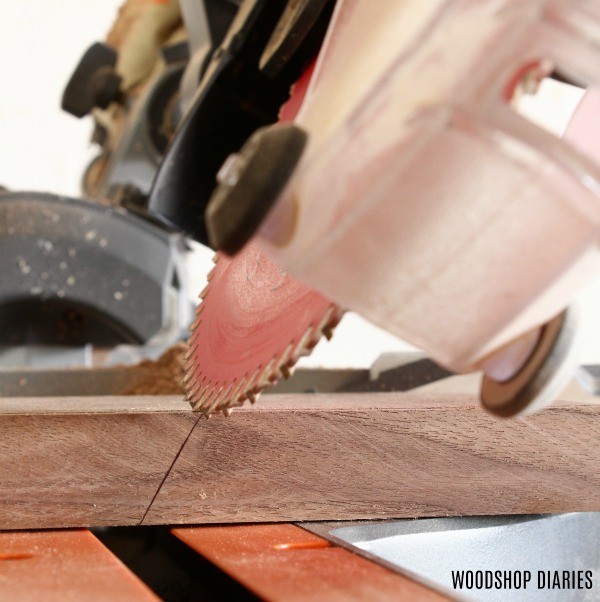
I double checked that the side of the tile fits snugly on the top lip dado of this piece, then flipped the board over and cut off the end again at a 30 degree bevel. Be careful to JUST cut the end off…line up the blade so that it doesn’t cut hardly any of the top of the board here…just the bottom part.

miter saw lined up to cut off end of board

Then, I flipped the board over, and used the first piece to mark this board to make another piece the same size. (NOTE: this only applies if all sides are equal.) I continued until I had six equal pieces to make the box. Notice how the grain matches up across the top when they are laid out next to each other.

lay out continuous grain boards to prepare for glue up

If your tile sides aren’t the same length–as is the case with a rectangle–each piece isn’t the same length. Each cut should match the length of the next adjacent side of the tile. Here’s a diagram of a rectangle example–notice it alternates between short and long sides to fold up and create a rectangle box. You can see this post on DIY wooden urns for more details.

Step 4: Cut Bottom of Keepsake Box

Before gluing up the box, I had to cut the bottom. I used a small piece of ¼″ plywood for the bottom. I test fit the pieces together and made sure the tile fit into the top lip. If it does, then the bottom plywood piece should be the same size as the tile to fit into the dadoes cut in step 2. In my case, the tile had some wiggle room when I placed it in, so I traced the tile onto the plywood and cut the sides a little bigger than the lines to give it a tighter fit.

Trace tile to cut bottom for keepsake box

I cut this with my miter saw, but a jig saw also works in this case.

Step 5: Glue Up Continuous Grain Keepsake Box

Once I had my bottom piece cut, I laid my pieces out on the workbench and matched up all the grain. I used painters tape along the joints like shown.

Apply painters tape to continuous grain boards to prepare for glue up

Then I flipped it over and applied wood glue to the joints. I placed the plywood bottom in the dado and wrapped the boards around it like shown. PS forgive the fact that my arm is totally all up in the way in the photo haha.

Glue up continuous grain keepsake box

Then I taped up the end joint and wiped away any excess glue.

Clamp DIY continuous grain keepsake box with painters tape

Step 6: Attach Handles to Tile Top

I made two boxes for this project…I showed you the making of the hexagon box, and now we switch to showing the rectangle tile haha. I did this for both tiles and both boxes…so the same steps apply to each.

.

That said, I needed to attach a handle to the tile in order to lift it off the box and place it back on. So I used these Bosch DareDevil carbide tip drill bits to drill holes to attach the hardware. They’re made to easy drill through tile, concrete, metal, and wood so they were perfect to use on these ceramic and marble tiles and with a hex shank, they fit easily into drill.

.

I used a long pull for the rectangle tile and a little knob for the hexagon tile. For both, I sized the screws that came with the hardware and chose a bit that was SLIGHTLY larger than the screw so that it would fit through the hole.

Choose correct size drill bit that screw will fit through

Then I marked where to drill the holes for the handles.

Measure where to place handles on tile top

Then I drilled two holes to attach the hardware like shown. These Bosch DareDevil bits drilled through this marble SUPER EASILY. But, it was a little hard to get the hole started because the bit kept “walking” off the mark–which is typical with a hard, slick surface like marble, metal, etc.

Use Bosch carbide tipped drill bits to drill holes into tiles

So, I suggest starting to drill VERY SLOWLY until you get a little dimple drilled, then you can increase the drill speed and drill the hole.

.

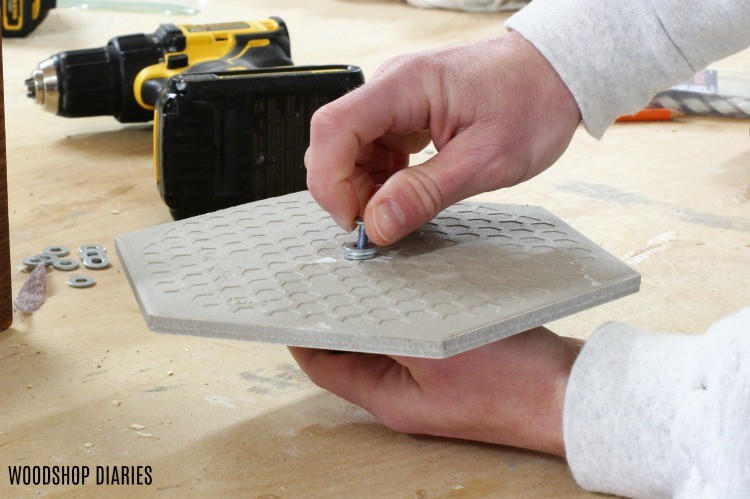
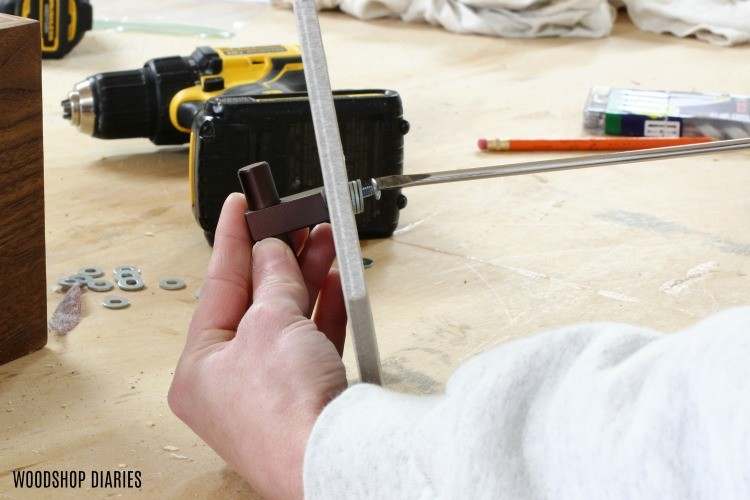
Once the hole was drilled (switching back to showing the hexagon tile again haha), I had to use a couple washers on the screw because it was a little too long, but I screwed it into the knob like shown.

Step 7: Finish Keepsake Box

Finally, the last step is finishing the box. Obviously, once the glue is dry, remove the painter’s tape and fill any cracks or places where the joints didn’t seal perfectly with a little putty. Then sand the box really well.

.

You can paint, stain, wax, whatever you wish. Since I was using walnut, I just applied a furniture wax to bring out the wood grain. Then, it’s finished and ready to store all your keepsakes…or tea bags, or Christmas cards, or jewelry, or whatever in 🙂

Placing keepsake card into tile top keepsake box

I REALLY love this hexagon shaped box. It’s the perfect size to store little notes and cards in. But I think I may use this rectangle box in the bathroom to store some toiletries or tissues in.

Rectangle continuous grain keepsake box with tile lid

Get a good look at that grain pattern that turns around that corner. Pretty cool, right? Continuous grain boxes aren’t difficult to make, you just have to pay attention to the board direction when you’re cutting. But it adds so much cool visual interest, I think!

Hexagon continuous grain keepsake box with tile lid

I hope you enjoyed this DIY continuous grain keepsake box project. It’s a great gift idea and a fun weekend build! If you want to check out some other DIY keepsake box ideas, here’s a few!

  • How to build a DIY wooden keepsake box with splines and picture frame top
  • How to Make an Easy DIY Scrap Wood Keepsake Box

And if you want to save this for later, be sure to pin it!

DIY continuous grain keepsake box with tile lid pinterest collage image

Thanks so much for following along, friends! Until next time, happy building 🙂

Ridgid Cordless Shop Vacuum Review

January 20, 2020 by Shara, Woodshop Diaries

Ridgid Cordless Vacuum cleaning out truck

This post is a review of the Ridgid Cordless Shop Vacuum and is sponsored by The Home Depot as part of the ProSpective Tool Review Program. See policies for details.

Picking up lightweight shop vacuum

I don’t know if you’ve heard, but cordless is IN. You know like platform shoes were in at one time. And bell bottom jeans were in. With the styles I see these days…I don’t even know what’s in anymore (I just wear work jeans and t shirts since they never go out of style haha). But, in the tool world, cordless is in, no doubt about it.

.

If you head to the tool section of The Home Depot, you’ll see tools you (well, at least I) would have never dreamed would be cordless–routers, miter saws, even some table saws. WHAT A TIME TO BE ALIVE!

.

But I had always kind of assumed a shop vacuum would eventually become cordless. And I couldn’t wait for that day. That would be the day I would hang up my extension cords, get rid of the tripping hazards, and finally vacuum my truck without having to find the nearest outlet and the longest extension cord.

Shara Woodshop Diaries cleaning truck with Ridgid Shop Vacuum

There have been a few brands come out with one fairly recently, but today, I want to show you the one that I’m using–this Ridgid 9 Gallon 18V Cordless Shop Vacuum.

First, let’s talk about what comes in the box

Much like the heated jacket I reviewed lately, you can purchase this vacuum with or without a battery. If you are already on the Ridgid 18V battery platform, this works with your existing batteries, so there’s no need to purchase any additional.

.

However, if you aren’t on the Ridgid platform already, you can purchase this kit that comes with a 9.0ah battery and a charger to get you started.

Shara woodshop diaries with ridgid cordless shop vacuum cleaning shop floor

Whether you purchase the vacuum with or without a battery, it also comes with a filter, a 7ft flexible holse (1 ⅞″ diameter), and several attachments that help get in tight spaces or vacuum large, flat surfaces like workbenches and floors.

.

The full size (9 gallon) vacuum requires no fancy assembly right out of the box except simply snapping on the included rolling feet.

But, what about power? Isn’t it weak?

In short–I’m very impressed with what this Ridgid Cordless Shop Vacuum has sucked up while I’ve used it to clean my shop. I expected a battery operated vacuum to be a little less “sucky” than my corded version. Seriously…it’s not.

.

But, I feel I need to elaborate a little on this subject.

.

You will notice that this vacuum has a place for two batteries on top. However, it can run on just one. Two batteries extends the run time before needing to recharge.

Installing battery pack into Ridgid cordless shop vacuum

I haven’t noticed a difference in POWER using two batteries vs. just one. But it does run significantly longer with two batteries.

.

The hose on this vacuum is 1 ⅞″ diameter. The hose on my corded vacuum is much larger. I wanted to do a comparison video between my cordless and corded vacuums, but it’s really not comparing apples to apples. Obviously, with a bigger hose, the corded version can suck up larger objects. But, they can both suck up equally heavy objects–screws, rocks, wood chunks. I made a quick video showing this vacuum in action.

So, let’s break this down to pros and cons…

Pros:

  • Full size vacuum (9 gallon) for less emptying
  • Same amount of “sucking” as a corded vacuum
  • Runs on Ridgid’s 18V battery platform (so you can use your existing Ridgid batteries)
  • Multiple attachments for hard to reach, or flat surfaces
  • Runs on one OR two batteries
  • 7 ft tug a long hose for easy maneuvering while vacuuming
  • NO CORDS–HALLELUJAH!
Using Ridgid shop vacuum to clean truck

What about the cons??

The biggest downside to this vacuum vs. my corded version is the smaller hose diameter. So basically, it just can’t suck up larger chunks of wood off the shop floor…which honestly, I probably shouldn’t be sucking up anyway–that’s why I have a broom haha.

.

And of course, in a perfect world, the batteries would last forever. But we don’t live in a perfect world, so they need recharging. But with two fully charged batteries, it does last a good while. We used this vacuum while installing our new vinyl floor and they lasted several hours of intermittent use vacuuming debris and dirt from the floor as we went.

Using ridgid cordless shop vacuum to clean floor before installing vinyl plank

The larger batteries will last longer, so I’d recommend using with a 6ah or more.

Final thoughts on the Ridgid Cordless Vacuum

Overall, I give it a five out of five stars. I’ve wanted one of these for my shop for a while and it didn’t disappoint. I’m able to keep my shop a little cleaner as I go without tripping over extension cords and hogging an outlet with my corded vacuum.

Using Ridgid Cordless shop vacuum to clean up miter saw stand

So if you’re interested in getting one for your own shop, you can purchase this kit with a battery and charger included OR this kit without the battery included.

.

If you’ve enjoyed this review, be sure to check out my other tool reviews here and be sure to pin this for later 🙂

Ridgid cordless shop vacuum pinterest collage image

Until next time, happy building 🙂

I acknowledge that The Home Depot is partnering with me to participate in the promotional program described above (the “Program”). As a part of the Program, I am receiving compensation in the form of products and services, for the purpose of promoting The Home Depot. All expressed opinions and experiences are my own words. My post complies with the Word Of Mouth Marketing Association (WOMMA) Ethics Code and applicable Federal Trade Commission guidelines.

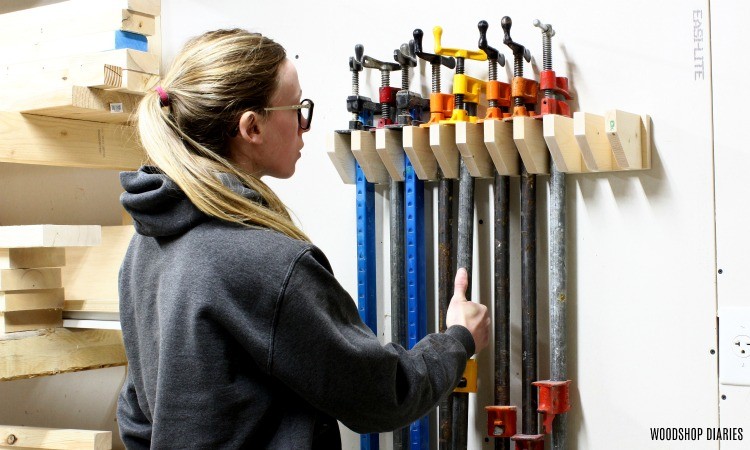
DIY Pipe Clamp Rack

January 15, 2020 by Shara, Woodshop Diaries

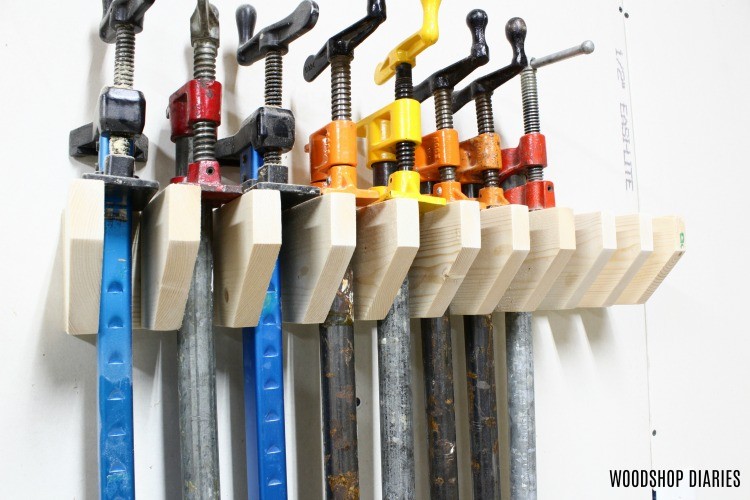
DIY Pipe Clamp Shop Rack

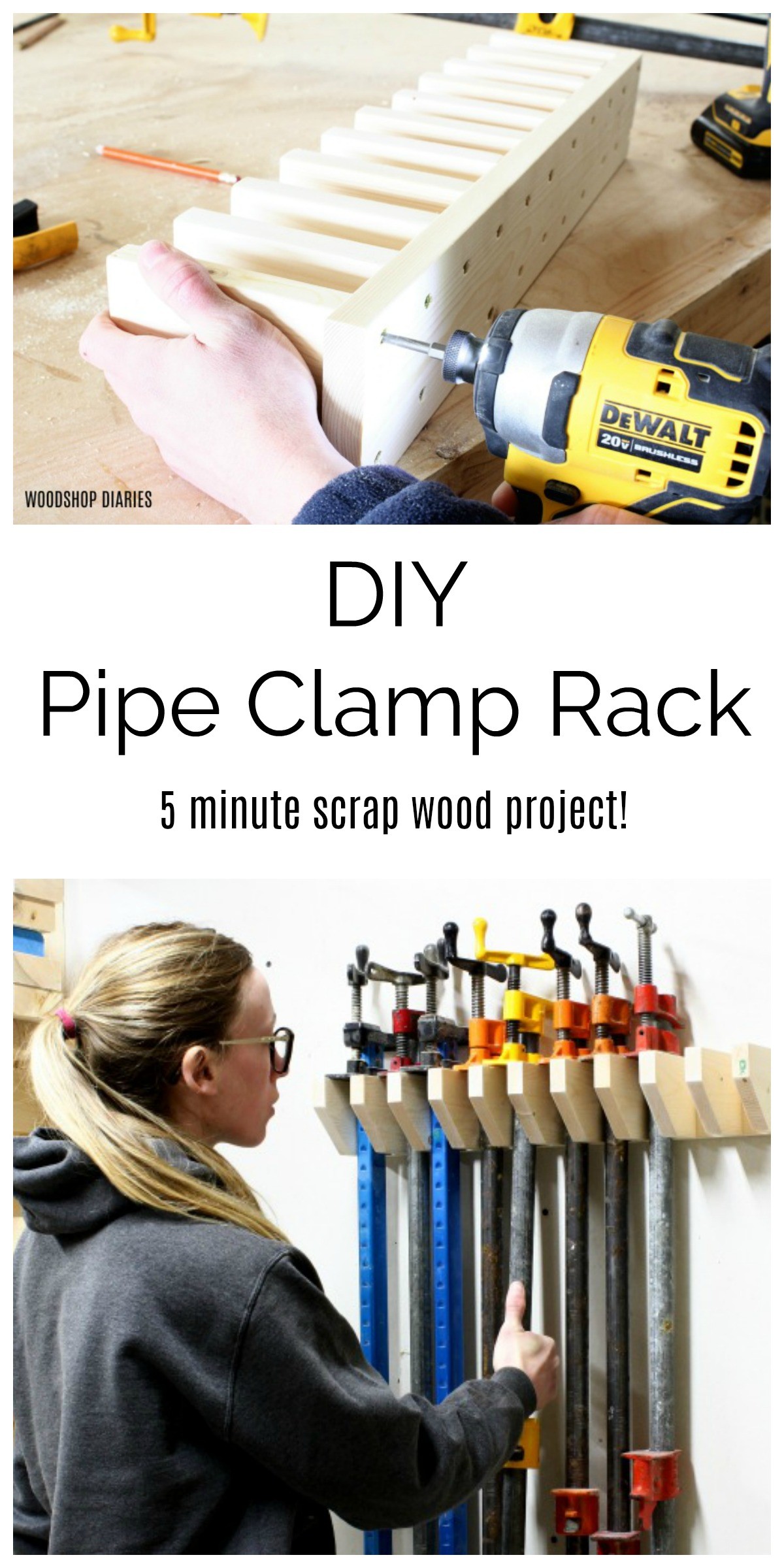
In this post, I’m sharing how to make a simple scrap wood DIY pipe clamp rack for your workshop or garage!

Shara Woodshop Diaries Hanging pipe clamps on rack

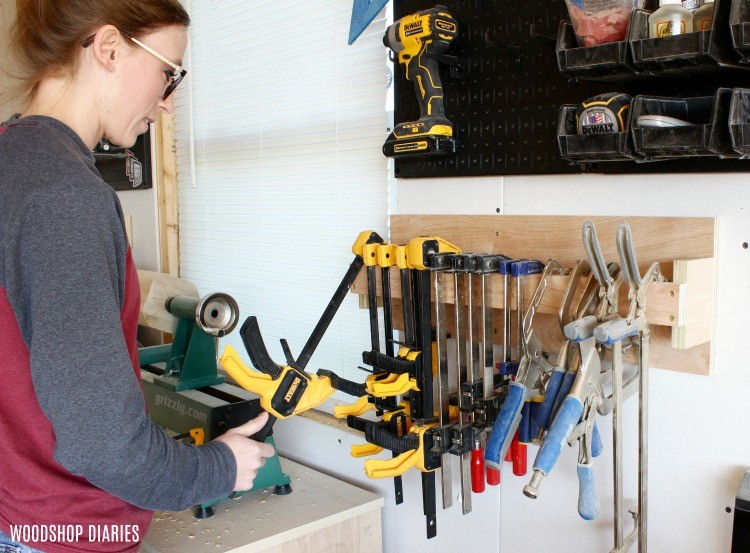
A couple weeks ago, I wrote a quick tutorial on how to make a simple clamp rack for small clamps.

But what about those bigger, heavier clamps you may have? This post is for those!

There are so many awesome clamp rack solutions out there. Some people have large rolling clamp rack carts.

Some use big storage cabinets, some people have walls FULL of clamp racks–metal ones, wooden ones, etc.

But, I, personally, like this small rack solution that simply hangs on the wall.

Close up of pipe clamp rack

You can customize it to hold as many clamps as you want, and can easily whip up one or a few with some scrap plywood or scrap 1x4s.

For mine, I used a scrap piece of 1×4. If you don’t have that, a 1×6 works great, too, OR just use some scrap plywood 4-7″ (ish–doesn’t have to be exact) wide.

Tools & Materials:

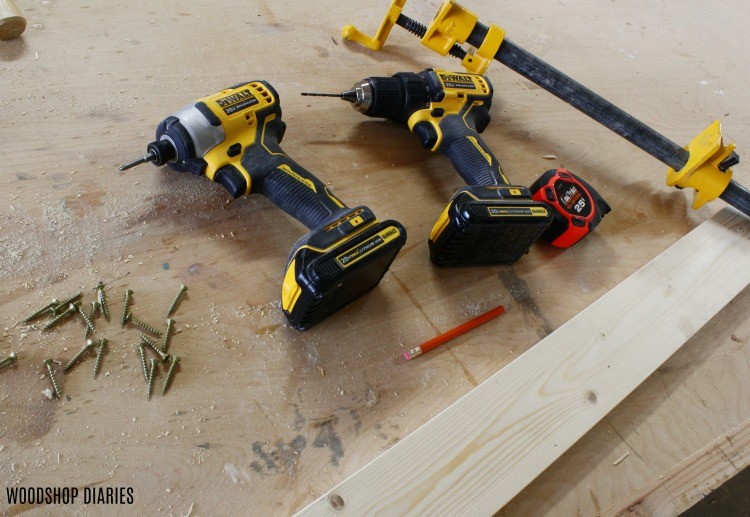
For this build, you will need just a few common tools. This post contains affiliate links. See policies page.

Tools:

  • Drill/Driver
  • Drill bits
  • Speed Square
  • Measuring Tape
  • Miter Saw

Materials:

  • 1×4, 1×6, or scrap plywood board
  • 1 ¼″ wood screws
  • 2 ½″ or 3″ wood screws

How to Build a Pipe Clamp Rack

This rack can be made whatever size you need to fit however many clamps you have.

Feel free to modify the sizing as needed if you have larger or smaller clamps to hang up.

You may want to make the “dividers” deeper and hang your clamps sideways instead. There are several ways to use and modify this.

Step 1: Cut Pieces to Assemble DIY Pipe Clamp Rack

First, I cut down my pieces. I made my rack to hold 10 pipe clamps.

However, you can easily customize this to hold as many as you want. To determine the length you need to cut your back board, use this equation:

X=number of clamps you want

Length=(X * 1 ⅜″) + ((X+1) * ¾″)

So, in my example,

(10 * 1 ⅜″) + (11 * ¾″) = 13 ¾″ + 8 ¼″ = 22″

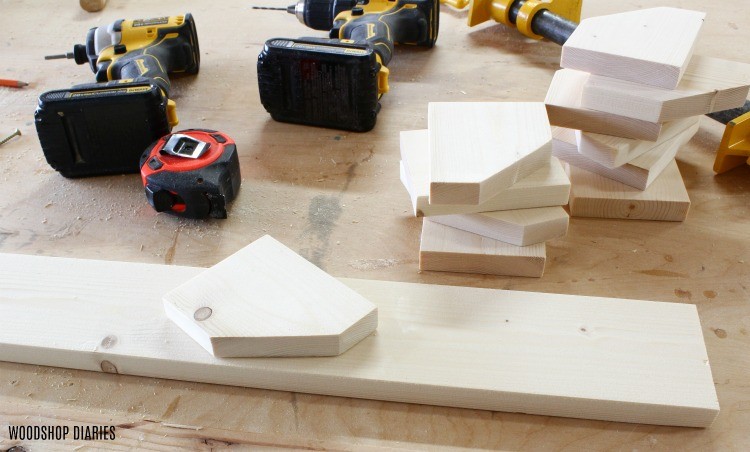
So, I cut a piece of my 1×4 to 22″ long, then cut small blocks like shown to serve as rack dividers.

I cut these pieces approximately 4 ½″ – 5″ long, and added a little 45 degree bevel on the front corner (mostly for looks).

You need to cut one more block than you want clamps. So in my case, I wanted 10 clamps, so I cut 11 blocks.

DIY Pipe Clamp Rack Supplies and materials needed

Step 2: Attach End Block to Clamp Rack

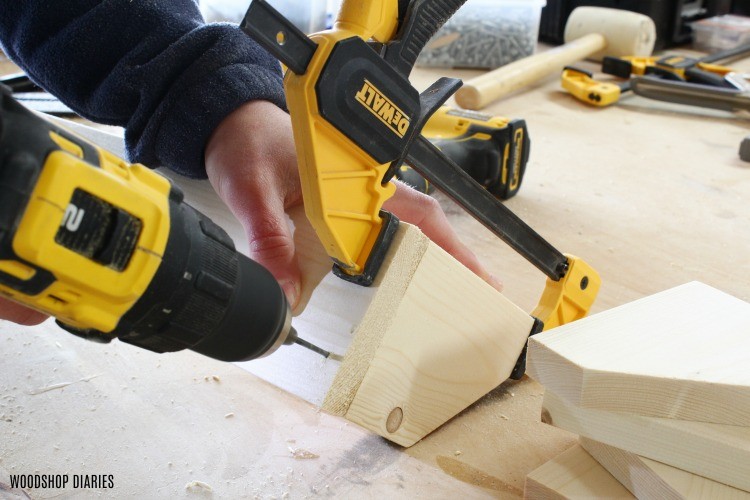
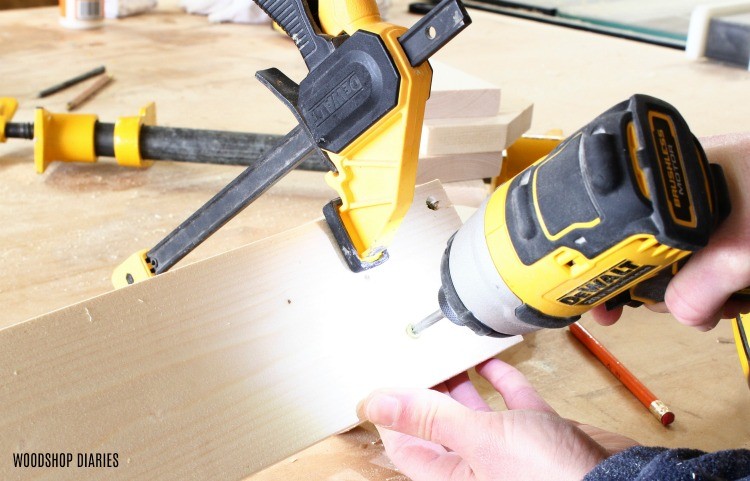
Use a small clamp to clamp a block onto the end of the back board like shown.

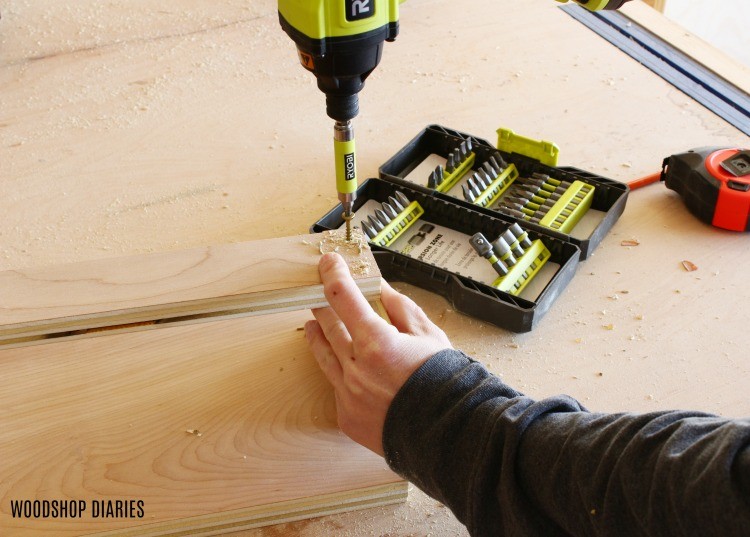
Using a drill bit slightly smaller than the SHANK (not including the threads) of the 1 ¼″ screws you are using, predrill holes and drive screws to attach this block onto the end of the board. Use two screws.

Predrill holes to drive screws into DIY pipe clamp rack
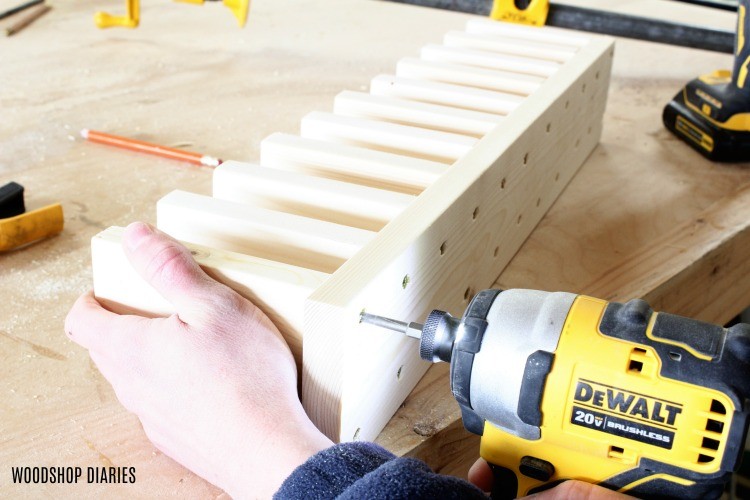
Drive screws to attach dividers into DIY pipe clamp rack

Step 3: Add Divider Blocks to DIY Pipe Clamp Rack

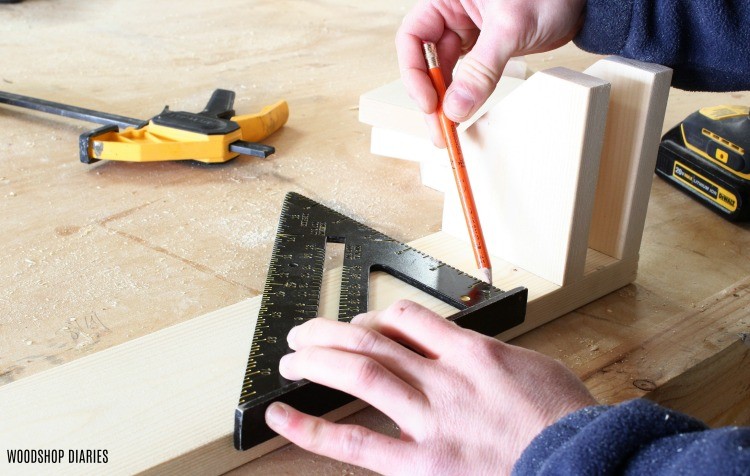
Use a square to draw a line across the board about 1 ⅜″ from the outside block and line up the next divider block along this line.

Clamp in place, predrill and drive screws from the back side to attach in place.

predrill holes to attach clamp rack dividers
drive screws to attach DIY pipe clamp rack dividers

Continue along the board attaching divider blocks, keeping them spaced about 1 ⅜″ apart.

draw 1 ⅜" space between pipe clamp rack divider blocks
drive last screw to attach clamp rack divider blocks

Note there is a little extra back board here on the end–I cut mine a little long to make sure I didn’t run out of board before I ran out of blocks if one of my measurements got a little off. That’s okay…not a big deal.

Step 4: Hang Pipe Clamp Rack

Now, it’s time to hang the rack! If you remember from my small clamp rack tutorial, I know where my studs are in my shop because I never finished my drywall.

However, if you don’t know where your studs are, use a stud finder to locate one (or more) studs to hang your rack on.

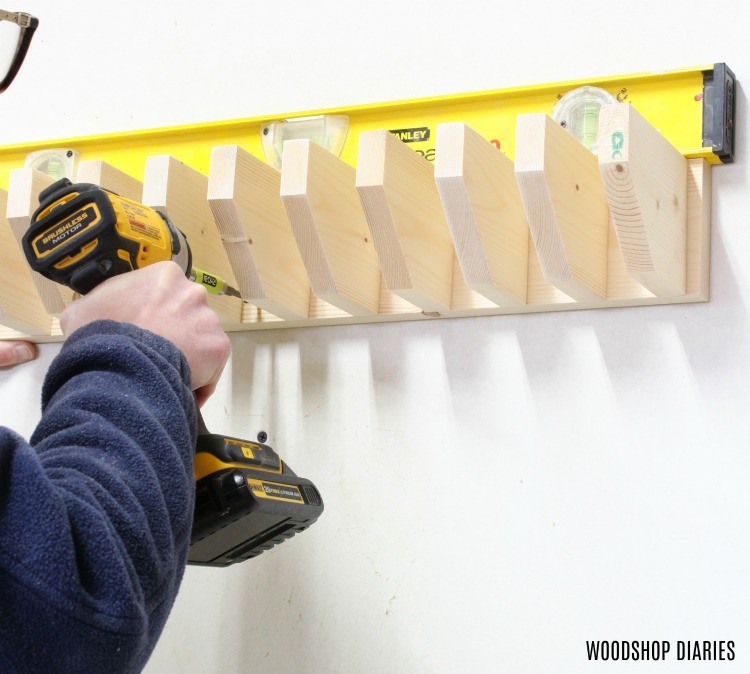
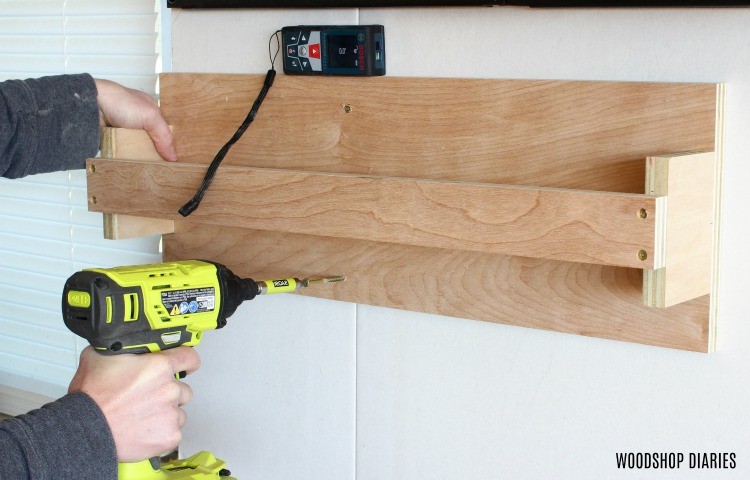
Using a long bit, drive 2 ½″ or 3″ wood screws through the back of the rack and into a stud. Make sure it’s level and use at least two screws.

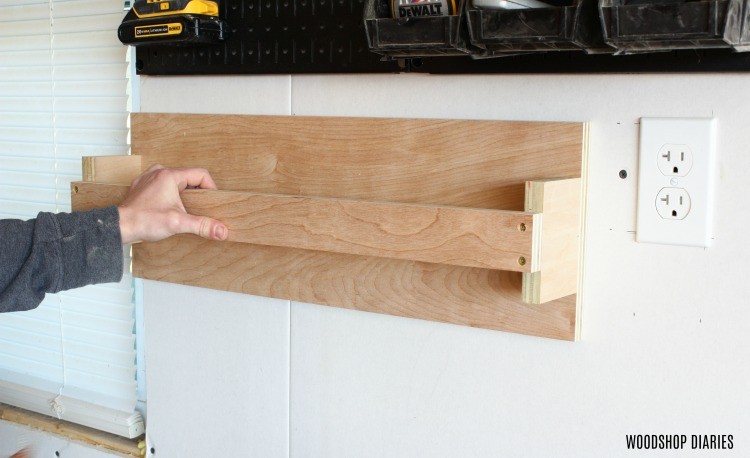
Screwing DIY Pipe Clamp Rack into Studs in shop wall

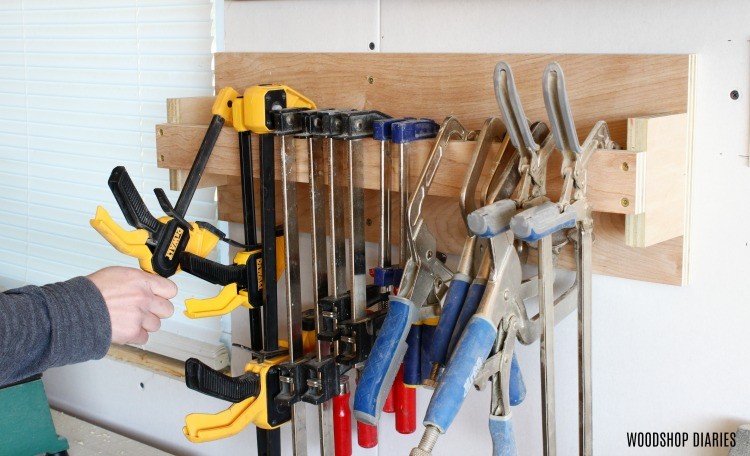
Hang up your clamps, and you’re all set! Just like with my smaller clamp rack idea, this is so easy to put together and so handy to have in the shop.

And it’s so quick and cheap to make, if you need to add on later because your clamp collection has grown, it’s easy to make another to hang next to it.

Shara Woodshop Diaries Hanging Pipe Clamps on DIY pipe clamp rack

I hope you guys like a quick tutorial…this one is about a “five minute-er” haha.

But once you get this one knocked out, if you want more shop storage and organization ideas, be sure to check these out:

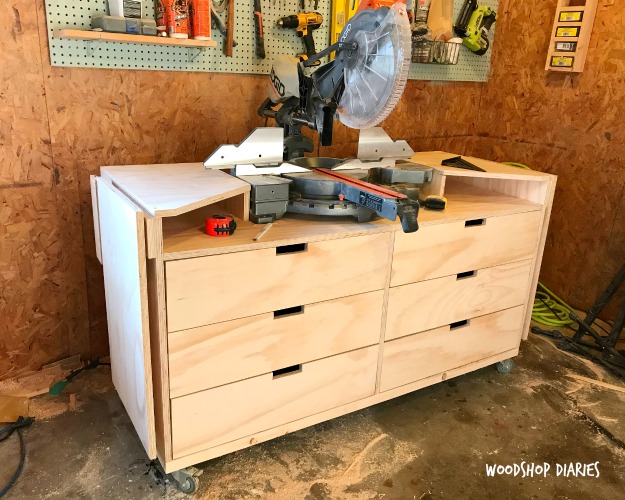
How to build a mobile Miter Saw Stand with storage drawers, and fold down extension wings
How to Build a DIY Rolling Scrap Wood Cart
DIY Simple Mobile Tool Cart

If you enjoy these projects, be sure to sign up to our newsletter for priority access to all the latest projects and plans on Woodshop Diaries.

And if you liked this simple DIY pipe clamp rack, I’d love if you’d pin this for later 🙂

DIY Pipe Clamp Rack Collage Pinterest Image

Stay tuned for lots of projects coming at you soon! Until next time, happy building 🙂

DIY Wooden Stove Top Cover

January 8, 2020 by Shara, Woodshop Diaries

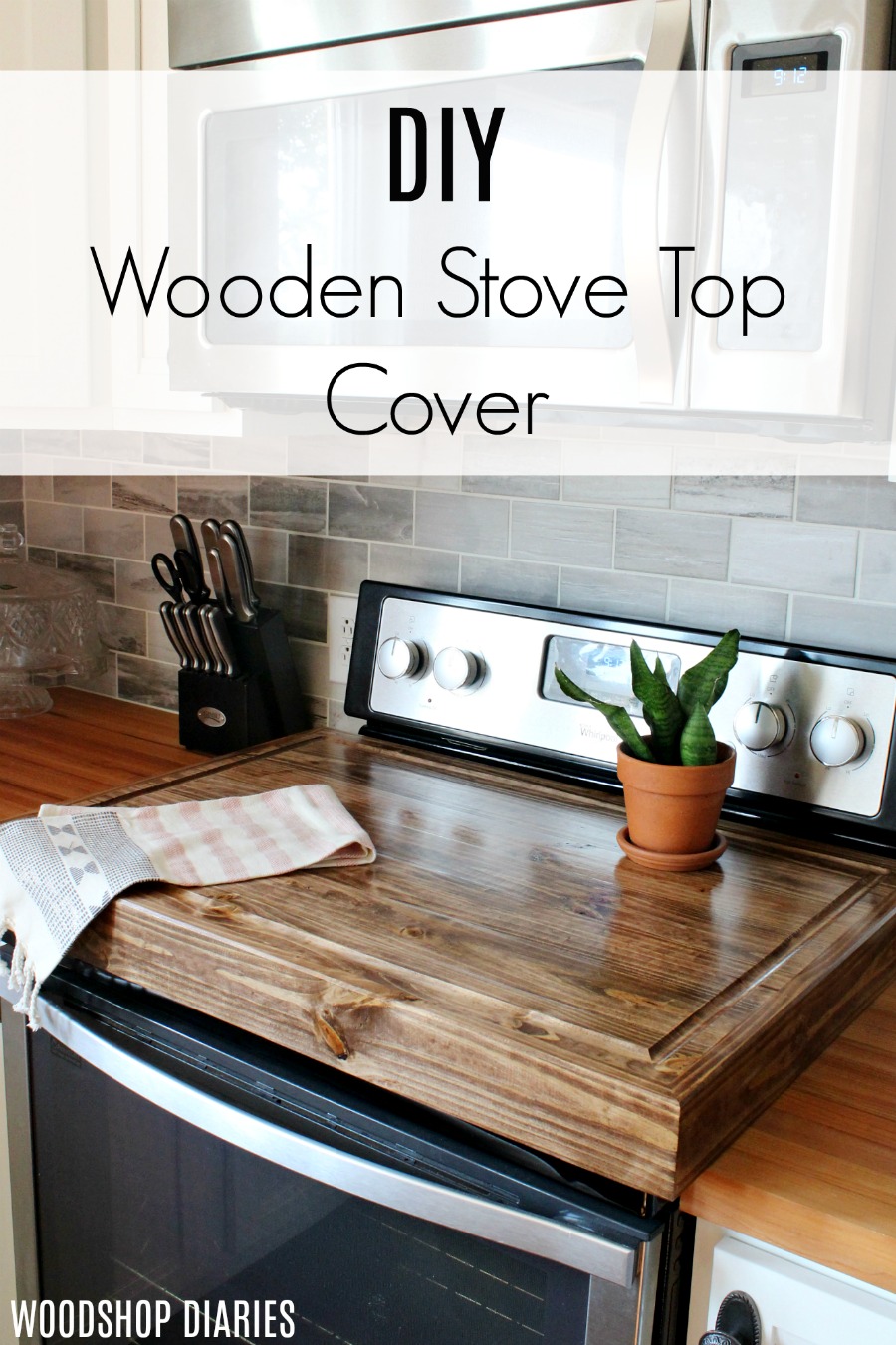
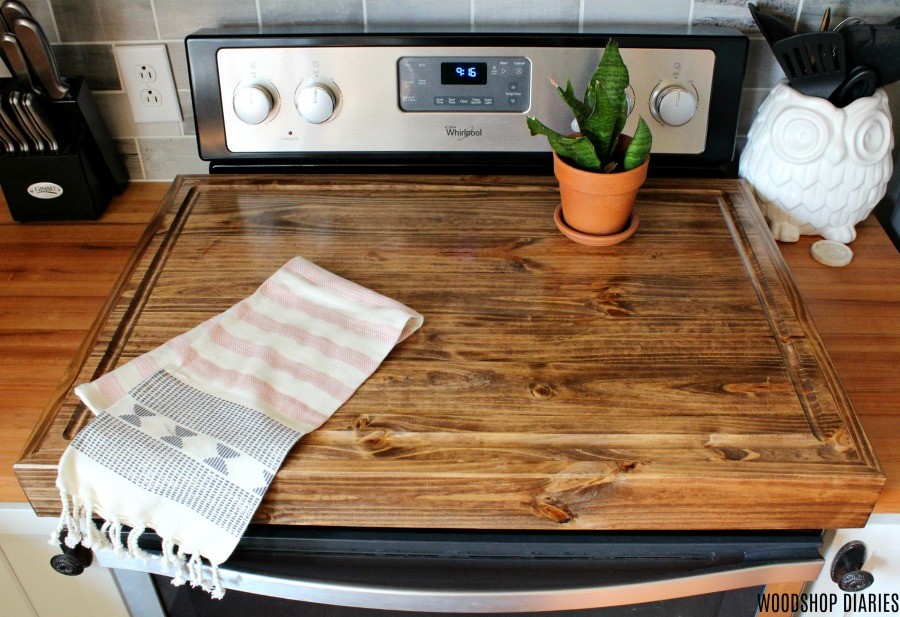
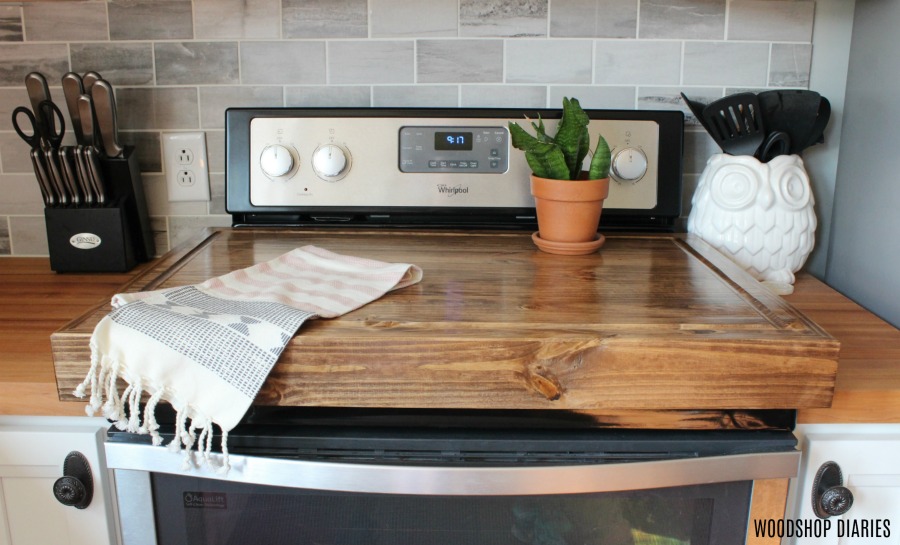
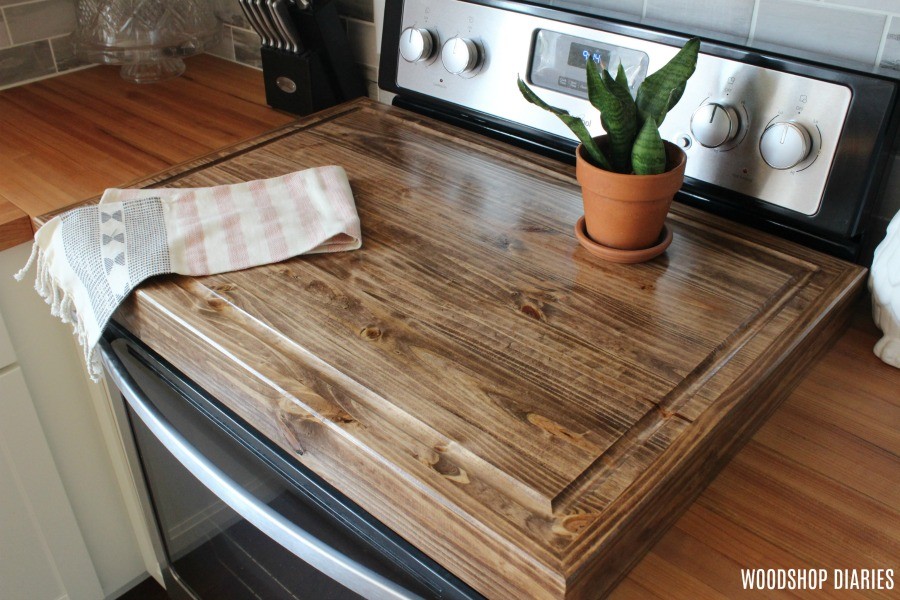
In this post, I’m sharing how to build a DIY Wooden Stove Top Cover or–as some people call them–a noodle board!

How to maximize your counter space by building a DIY wooden stove top cover

Have you ever looked around your kitchen and thought to yourself how big of a waste of counter space your stove is when it’s not in use? 

I mean, maybe you use your stove more than I use mine…which, based on the amount of frozen pizza in our freezer, that’s likely HA! 

BUT, still, when you aren’t using it, all your stove is doing is collecting dust, crumbs, and crud…and taking up 2 ½ ft of counter top.

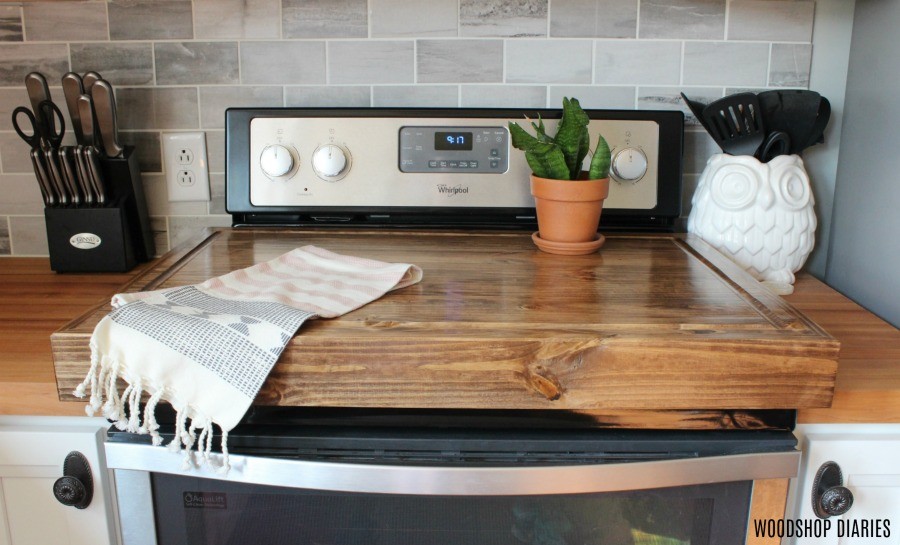
But, you can get that space back while simultaneously protecting your stove top from dust and crumbs with this easy DIY wooden stove top cover.

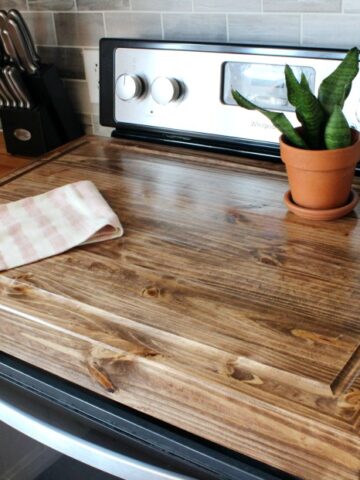
DIY Wooden stove top cover sitting on stove for extra counter space

I’m sharing how I made it plus some tips to get the most use of of a noodle board in this post below.

If you’re ready to get building, let’s go!

Tools & Materials

*This post contains affiliate links.  See policies.

Tools:

  • Miter Saw
  • Table Saw or Circular Saw
  • Sander
  • Router
  • Juice Groove Router Bit
  • Nail Gun
  • Clamps

Materials:

  • (4) 1x4x8 (I used tongue and groove here, but standard is fine, too)
  • Scrap wood for Routing Guide (See step 5)
  • Wood Glue
  • 1 ¼″ brad nails
  • Wood Finish

What to know before building a wooden stove top cover

If you want to double your stove top cover and also use it as a cutting board, I recommend using hardwood to make it.

I built this one out of basic pine lumber, so it wouldn’t be a great option for a cutting board. However, it still works great as a prep and serving tray.

A note of precaution

Please take note that this is obviously intended only for use when the stove is OFF and completely cool. 

Do not use wood to cover a stove that is ON or is still hot.  It is wood.  It can catch fire. 

Also, always follow manufacturers instructions for your particular stove.  This is used on an electric stove top. 

I am not sure if this would be acceptable on a gas stove. Check with the manufacturer.

Cutting a Juice Groove

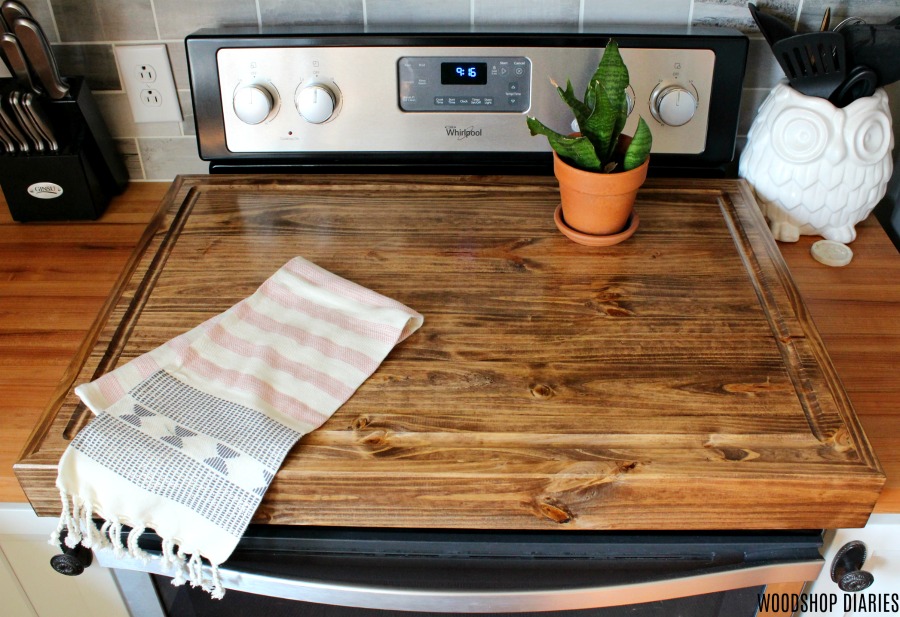
Juice grooves are typically found on thick cutting boards. They’re like little “ditches” around the edge to catch the juices that run out of whatever is being cut.

DIY Wooden stove stop cover with juice groove cut on edges

I mentioned earlier that I used pine so this wouldn’t make a great cutting board. However, I went ahead and cut the juice groove just for looks.

I never cut a juice groove before, but it was really simple with the right router bit. 

I got a special router bit just for this and it made it super simple.  The link to the juice groove bit I used is here.

How to Make a Wooden Stove Top Cover

Now, let’s get to the how to.  I’ve got the step by step tutorial for you below, but if you prefer to watch, I’ve also got a video for you here as well 🙂 

This is a really great project for any DIYer! 

Step 1: Measure Your Stove

First, measure your stove top–the area you are covering.

MOST stoves (not all) are standard width of 30″, but the top depth can sometimes vary, especially if it’s got controls on the back like mine.

Make sure to make the interior dimensions of your cover big enough to fit over your stove.

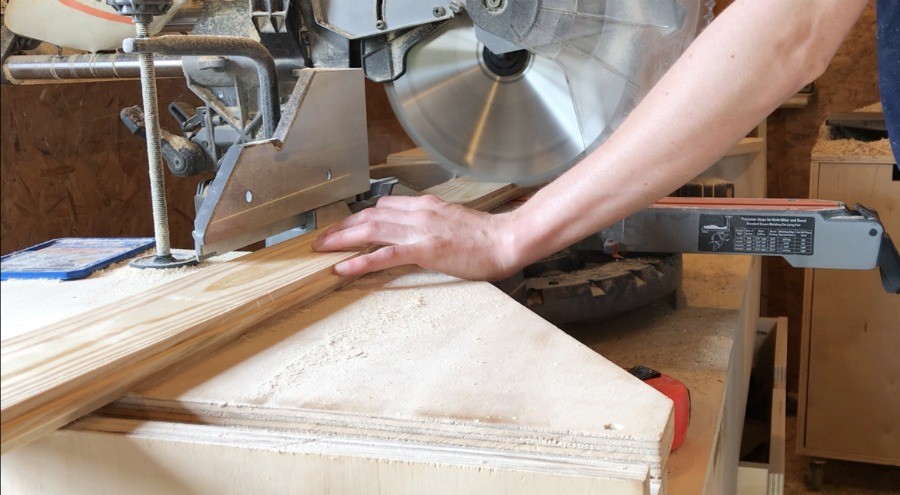
Step 2: Cut Pieces for Top of DIY Wooden Stove Top Cover

Using a miter saw, cut 7 or 8 pieces of 1×4 board to slightly more than the width you need the stove top cover opening to be.

NOTE: 7 boards put together will create a 24 ½″ wide piece. You can trim down later, but if you need larger to fit your stove, go with 8 instead of 7.

If you have 8 ft boards, three 32″ lengths works out well. You can trim down later.

So, long story short… cut approximately 7 pieces of 1×4 to 32″ long.

cut boards to glue up stove top cover top on miter saw

As you can see from the pictures, I used 1×4 tongue and groove pine since that’s what I had available in my shop already.

You can certainly use tongue and groove as well, but standard 1×4 without the T&G works just fine (if not better!) for this.

Step 3: Glue Boards Together for Stove Top Cover

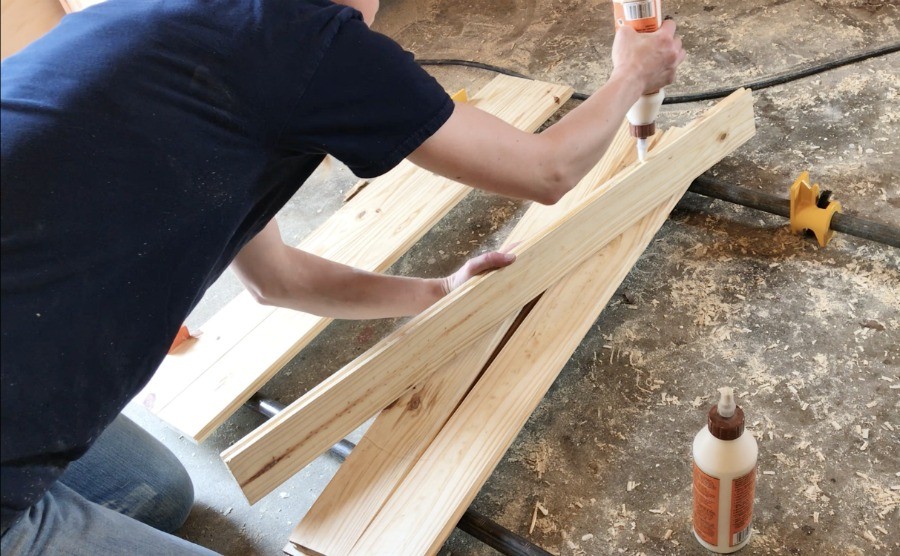
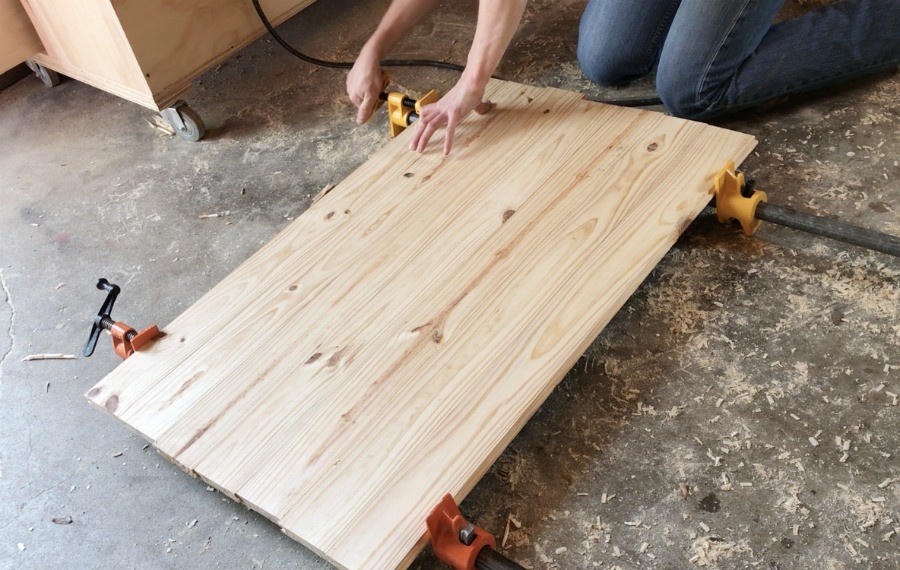
Apply glue in the grooves of the boards (if you’re using tongue and groove) or along the edges and clamp together as shown. Allow the glue to fully dry.

glue up tongue and groove boards to create diy wooden stove top cover top
clamp stove top cover boards to create top of noodle board

NOTE: It may be helpful to glue this up in sections vs all at once. You can glue up a few boards at a time until you get them all glued together if you’d like.

Step 4: Trim Down and Add Sides

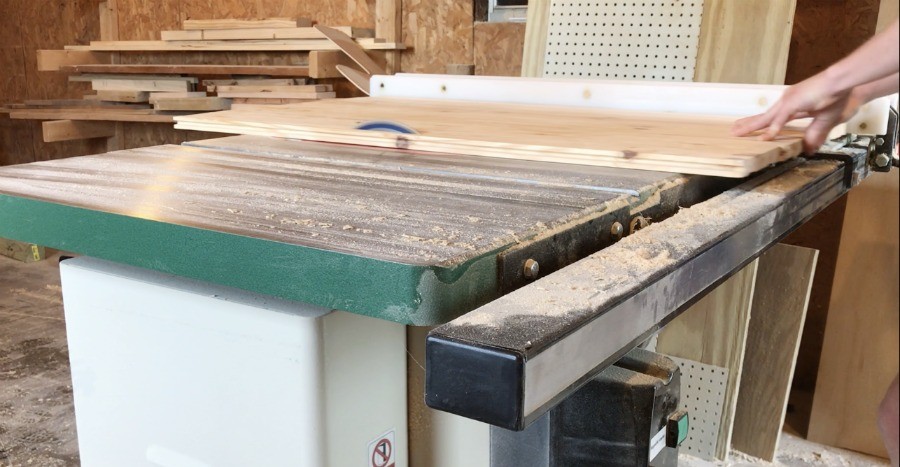
Once the glue is fully dry, remove the clamps and use a table saw or a circular saw and a straight edge to trim down all sides to your desired opening size–from step 1.

Make sure to trim all sides smooth (so no tongues or grooves are showing).

Trim DIY wooden stove top cover to correct size on table saw

Then, cut pieces of 1×4 to trim out around the edges of this piece.

If you’re using tongue and groove, be sure to trim the tongues off, first, using a table saw. 

Then, cut these to fit around the top with the smooth side facing up. Miter the corners 45 degrees for a more seamless look.

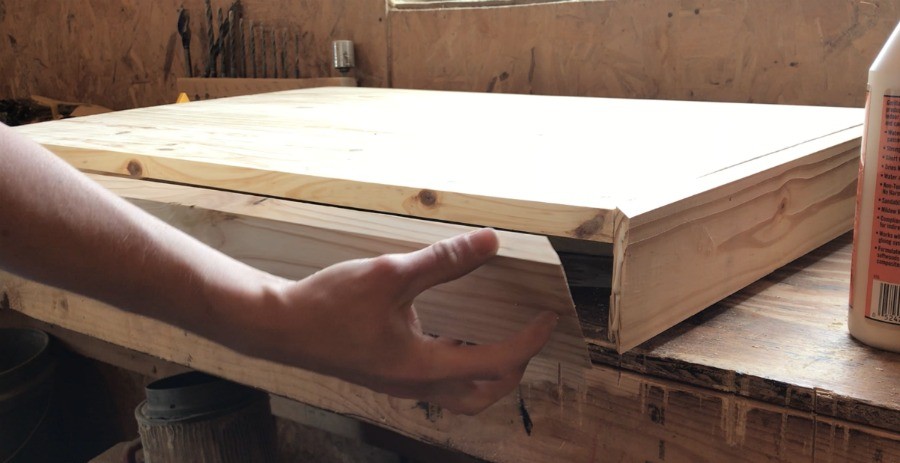
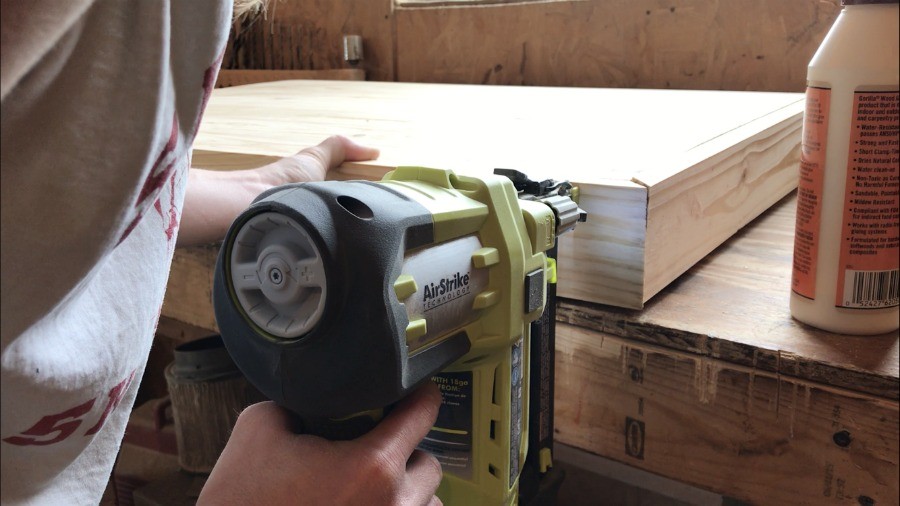
Glue and brad nail these pieces into place like shown (ignore the ugly corner joint here, I was just holding in place for a picture) making sure the smooth sides (not the grooves) face upward. 

NOTE: In hindsight, gluing this way may cause issues later with wood movement.  I’ve not had issues with this in the past, but just note, over time, seasonal wood movement MAY cause some small gaps here.

nail boards onto stove top cover to add sides and height

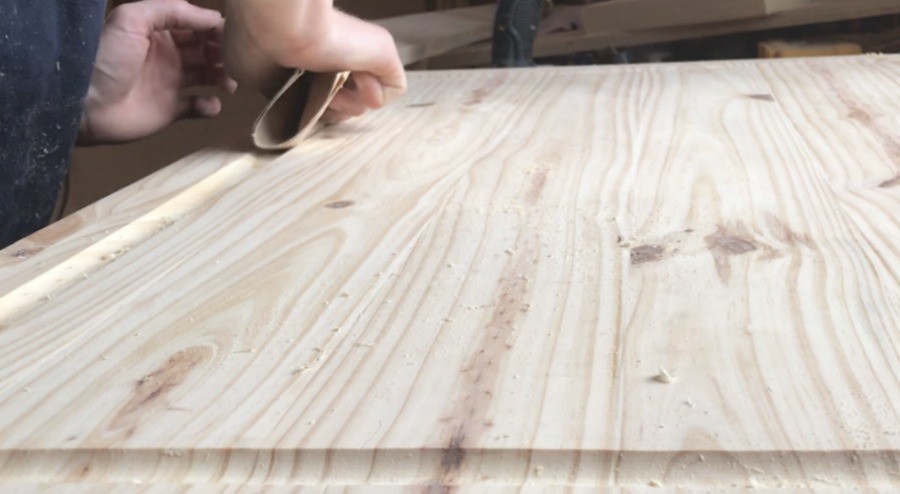
Allow glue to dry completely, then sand all the joints and corners smooth.

Step 5: Add Juice Groove to Stove Top Cover

At this point, you could stain or finish as desired. 

But I added a juice groove. It’s mostly decorative just to make it look like a real cutting board, BUT could also come in handy if you spilled something on it. 

A juice groove is just like a little groove you cut along the edges to catch any liquids or spills from your cutting board.

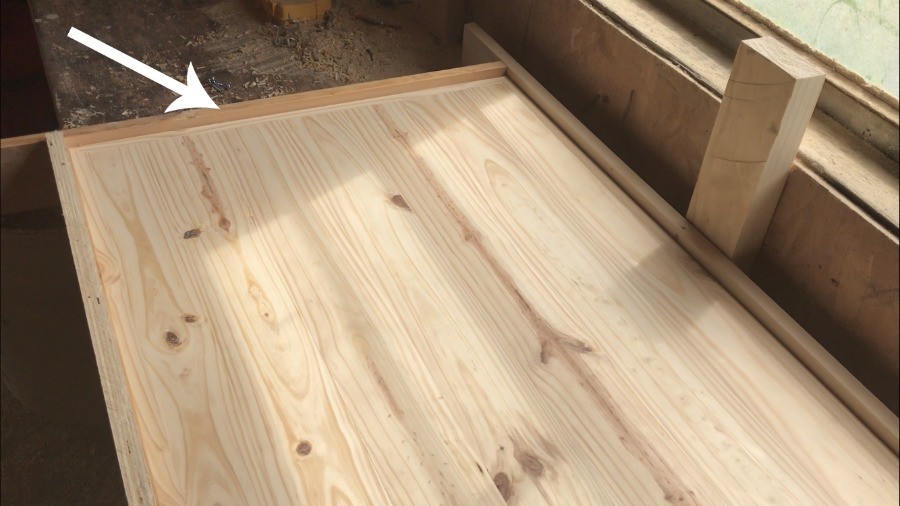
To do this, I screwed some scraps together around the cover.  Don’t screw directly to it, but screw the boards together TIGHTLY around the stove top cover like shown.

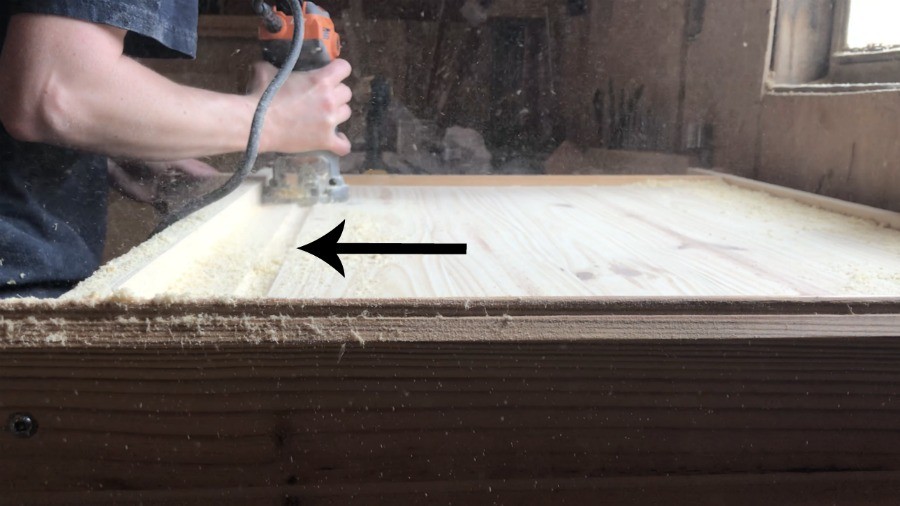
This will be used as a routing guide.  Insert a juice groove router bit into your router and SLOWLY and CAREFULLY run your router along the outside edge. 

Keep it pressed against the lip of the boxed edge all the way around.

RELATED: How to use a router

Remove the router guide boards and sand the groove smooth.

Step 6: Finish Stove Top Cover

Finish as desired.  I stained mine with Minwax Provincial and finished with a water-based clear coat.

I was not planning to use this to cut on.  However, if using to prepare food, be sure to use a food safe finish (not oil based stain), something like a mineral oil or butcher block oil.

If using as a cutting board, it’s best to use a hardwood as well.

Once you have your finish applied, simply set in place ????

DIY wooden stove top cover kitchen hack idea

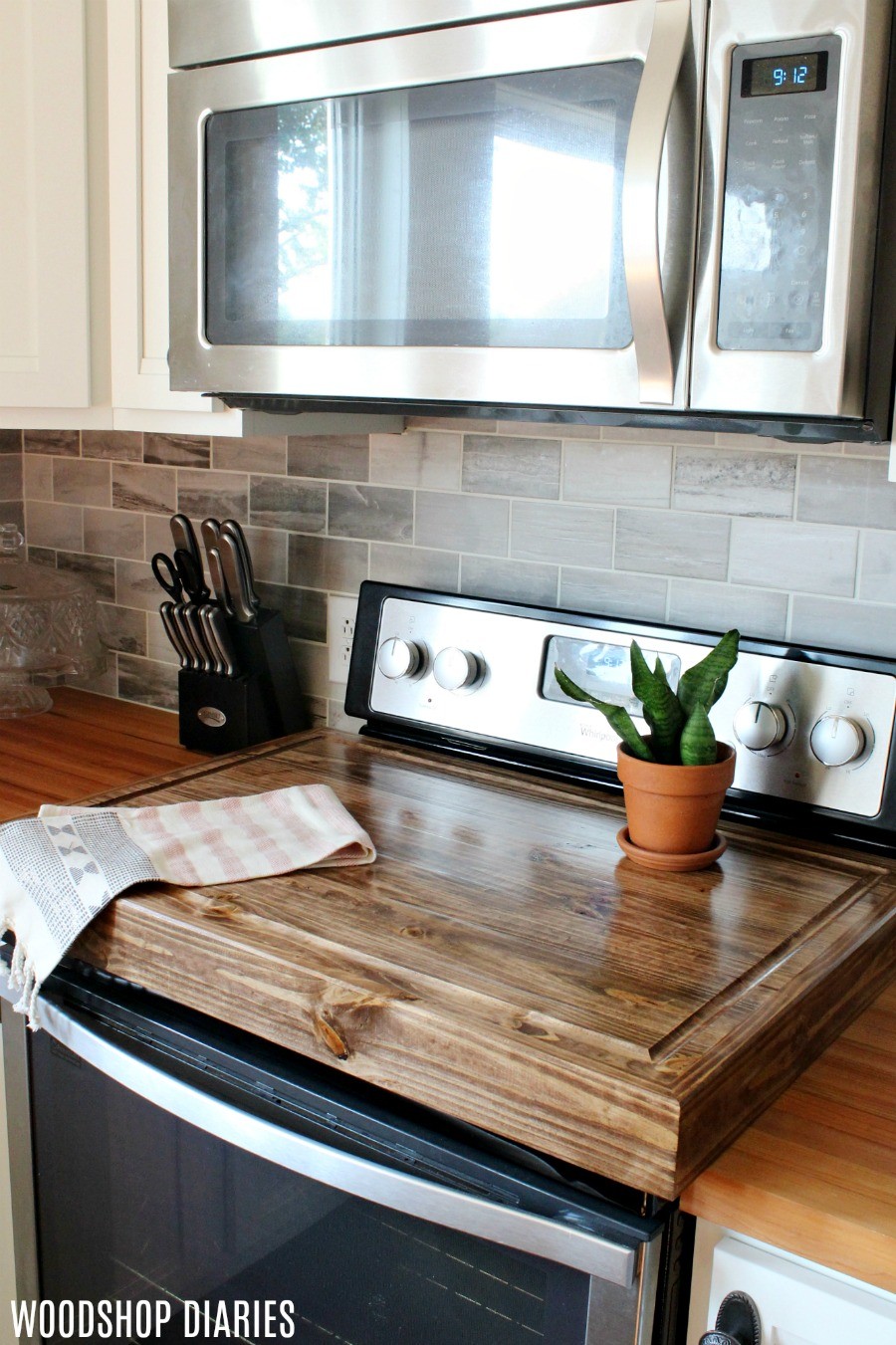
It’s great for adding a little extra counter space when you aren’t using your stove. 

You could also flip it over to use as a wooden serving tray if you wanted.

This is a great weekend project or gift idea and is a simple way to add some extra counter space to your kitchen.

DIY Wooden Stove Top Cover on stove for added counter space in kitchen

So if you’re ready to take back your counter space, get out there and get building this easy DIY Wooden Stove Top Cover!

Then, check out these other favorite kitchen projects:

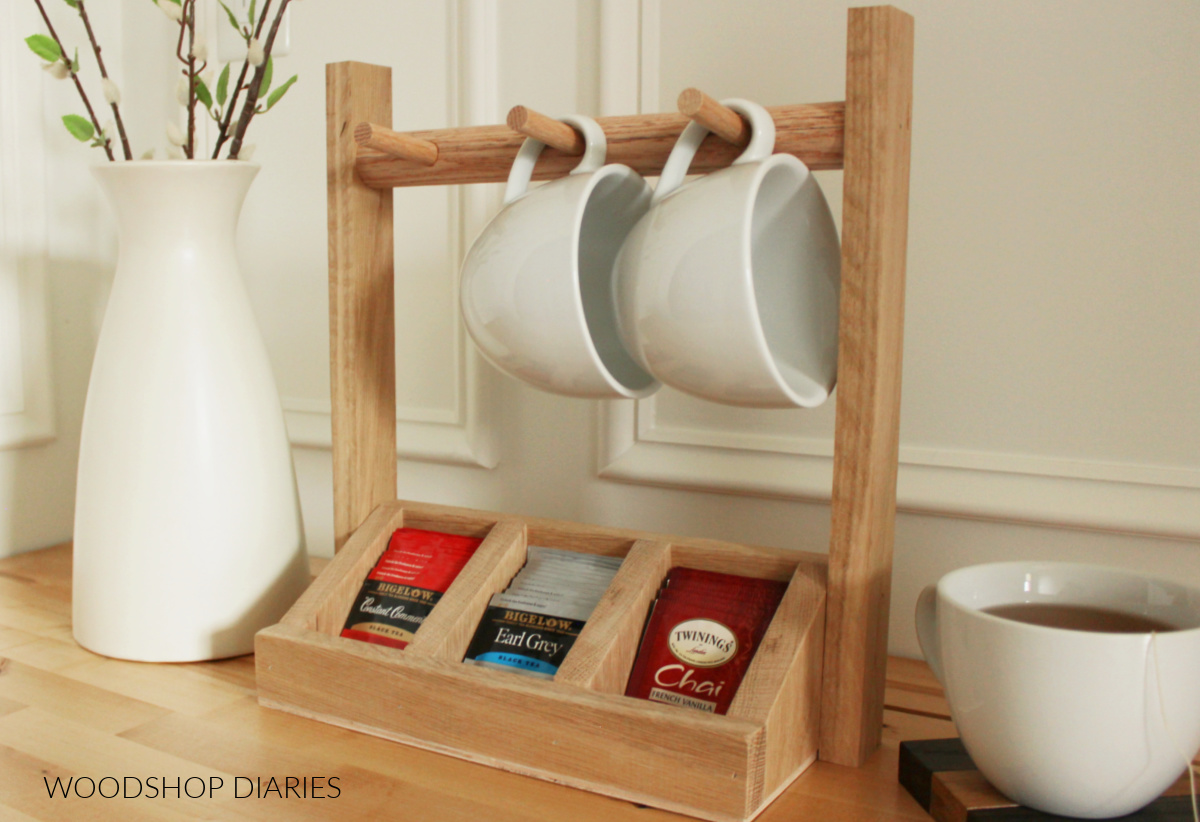
Tea Box with Mug Holder
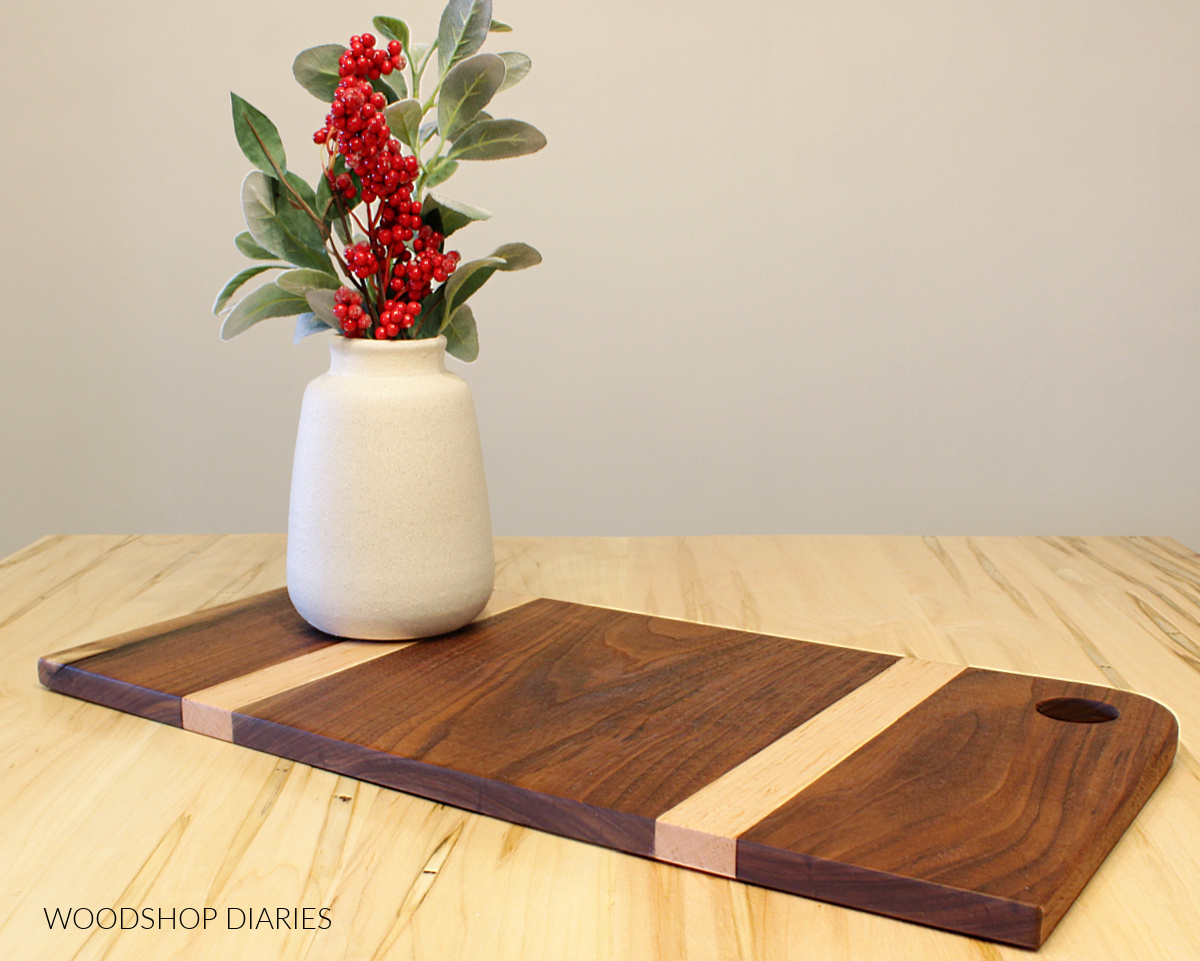
DIY Two Tone Cutting Board
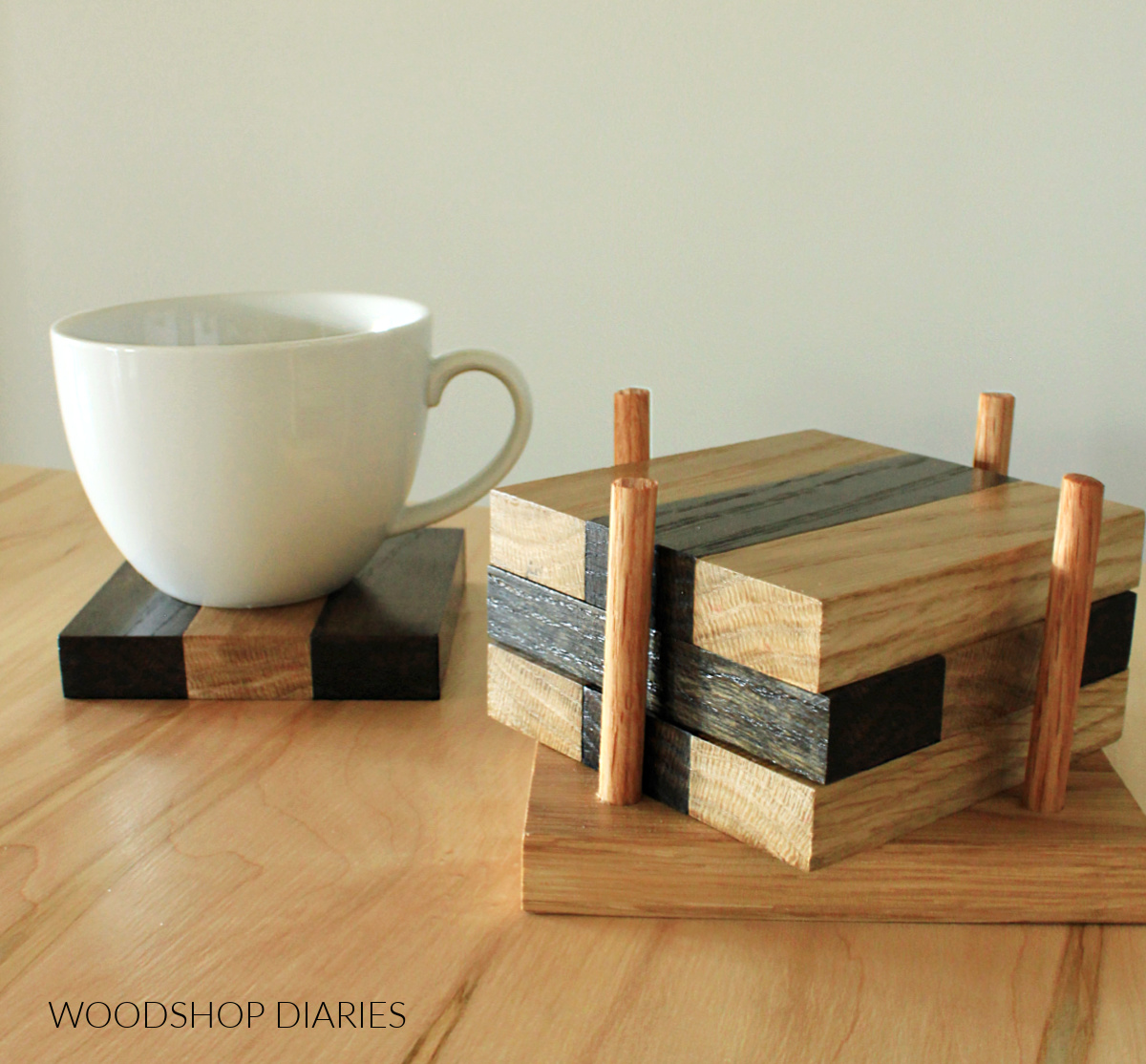
Scrap Wood Drink Coasters

And don’t forget to pin this for later 🙂

How to maximize your counter space by building a DIY wooden stove top cover

Until next time, happy building 🙂

Ridgid 18V Battery Powered Heated Jacket Review

January 6, 2020 by Shara, Woodshop Diaries

Battery powered heated jacket?? Who knew that was even a thing?! In this post, I’m reviewing the new Ridgid 18V Battery Powered Heated Jacket and showing its features. This post is sponsored by The Home Depot as part of the ProSpective Program and contains affiliate links. See policies for details.

Shara Woodshop Diaries models Ridgid heated jacket

I’m not a fashionista. Two things are true of my winter wardrobe–it’s comfortable and it’s warm. We are talking sweats and hoodies and literally not much else. #fancy I have priorities, and style just isn’t at the top of the list.

.

First is warmth. So when I heard about heated jackets, I was definitely up for giving one a try. I was a little skeptical, I’ll be honest, but had high hopes. As part of The Home Depot’s ProSpective Tool Review Program, I received one of these new Ridgid 18V Battery Powered Heated Jackets and I’m excited to tell you about it. So let’s dive in.

Battery Options for Heated Jacket

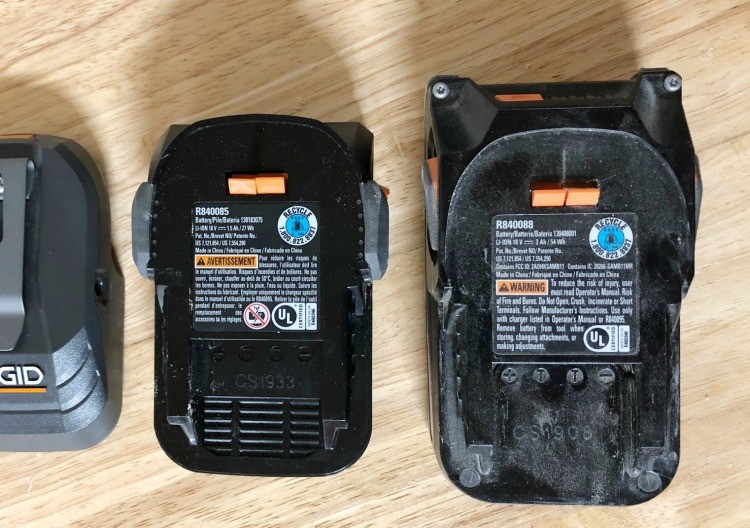
This jacket runs on Ridgid’s 18V battery platform. You can purchase this jacket WITH or WITHOUT a battery. If you have existing 18V Ridgid batteries, you can use those if you want. However, the battery that comes with the jacket is much smaller than the batteries I use with my Ridgid tools. So, personally, I’d recommend getting the smaller battery to minimize bulkiness. See the comparison?

If you’re already on the Rigid 18V platform, this smaller battery still charges on the same 18V charger, so no need to purchase anything additional.

What about the heat?

The jacket has 3 heat zones–one across the back, and one on each side of the chest, and the heat intensity heat is adjustable on three different heat settings. The heat isn’t excessive, even on the hottest setting, but it is enough to “knock the chill off” if you’re outside in the cold. My jacket fit a little loose (it’s a men’s small), so I think the heat would have felt more substantial had it fit a little tighter. Still, I don’t think you’re going to break a sweat in it, but it did make a noticeable difference when walking the dog, working outside, and piddling in the shop at around 30-40 degrees.

Shara Woodshop Diaries vacuuming truck in Ridgid heated jacket

In order to turn on the heat, you simply slide your battery pack onto the power source, plug the jacket in (there’s a cord located in the left hip battery pocket), press the orange activation button on the power source, then press the power button on the jacket at the top of the left side.

Slide battery onto power source of heated jacket
Plug heat cord into battery pack of jacket
Power button for heat settings on heated jacket

The power button on the jacket will light up red, orange or white to indicate which heat setting it is using. Red is the warmest, orange is the middle, and white is the coolest setting.

If you’re wondering what to do with the battery pack at this point, that’s a good question. The power cord on the jacket is located in a pocket on the back of the left side. You can zip up and store your battery pack in this pocket.

Battery slides into pocket on left hip of jacket
Battery pack pocket on Ridgid heated jacket

OR, my personal preference–the power source has a belt clip and you can reroute the power cord on the inside of the jacket and slip your battery pack onto your belt, pants pocket, or waistband. I think it feels less bulky using the belt clip, but you have a couple options depending on your own preference.

Ridgid 18V jacket power source plug in
Heated jacket battery pack belt clip

USB Charging Options

You may also have noticed the USB plug in in these pictures. The power source has a USB plug in so that you can heat your jacket AND charge your phone (or other USB device) at the same time. The jacket has a cell phone pocket about mid way up, but I like to keep my phone in the lower pockets instead. Either works and it’s got several little slits on the inside to run your wires between different pockets and into your battery pack.

USB Charging port on heated jacket battery pack power source

Let’s talk about the JACKET

As far as the jacket itself, it’s wrinkle resistant, has a removeable hood, and is a nice slick material that I’ve found easy to wipe clean (wipe clean=brush off sawdust and dog hair because that’s what I’m always covered in haha).

.

Honestly, I wear the jacket alone without the battery pack VERY OFTEN and I’ve gotten a lot of compliments on it. It’s heavy enough to keep warm running errands and being outside in mildy cool temps (40 ish degrees), but lightweight enough to be able to move comfortably. It’s a nice looking every day jacket.

Shara Woodshop Diaries in Heated Jacket and hat

So let’s talk pros and cons…

Pros:

  • Adjustable heat settings in 3 heat zones
  • Removeable hood for added versatility
  • USB charging option to charge phone on the go
  • Belt clip OR pocket battery pack storage
  • Runs on Ridgid’s 18V battery platform–can use existing batteries and charger
  • Lightweight, but warm material–great for working in
  • Slick material easy to wipe clean
  • Several pockets for storing phone, gadgets…or candy haha 🙂

Cons:

Now, honestly I love this jacket and I use it all the time…I’ve seriously had a ton of compliments on it. But I have two slight complaints.

.

The battery pack is bulky. I said earlier that I recommend the jacket that comes with the battery because that battery is significantly smaller than my other Ridgid batteries. However, even though it’s smaller, it’s still fairly bulky. That said, you have to consider that I’m a small girl wearing a small jacket. The same battery pack on a man in an XL jacket would proportionately not be as bulky.

Ridgid Heated Jacket Battery Pack on Belt clip

I wear mine often without the battery for this reason, BUT when I need the heat, I do think it’s worth a little bulk. You can’t have something for nothing…that’s just part of life.

.

My second slight complaint is that while this jacket is really easy to wipe clean if I get dog hair or sawdust or workshop debris on it, the instructions say to hand wash only. Now, I don’t see this as a huge inconvenience because I’ve had mine for two months and have yet to need to wash it because it’s so easy to just wipe clean. It’s just something I noticed that might need to be considered.

Shara Woodshop Diaries Ridgid Heated Jacket with Pockets

Overall, this is legit my new favorite go to jacket. I wear it in, I wear it out, I wear it working, I wear it chilling on the couch. So if you’re looking for a slick casual winter jacket, or a work jacket with extra heat, this is definitely one to consider. You can check it out this Ridgid 18V Heated Jacket at these links on Home Depot’s website.

Ridgid 18V Heated Jacket WITH Battery

Ridgid 18V Heated Jacket WITHOUT Battery

I hope you’ve found this review helpful and insightful and I hope you’ll share and pin this for later. You can also check out more tool reviews here.

Ridgid 18V Battery Powered Heated Jacket Review Pin Image

Stay tuned for more projects coming very soon! Until next time, happy building! 🙂

Simple DIY Clamp Rack

January 1, 2020 by Shara, Woodshop Diaries

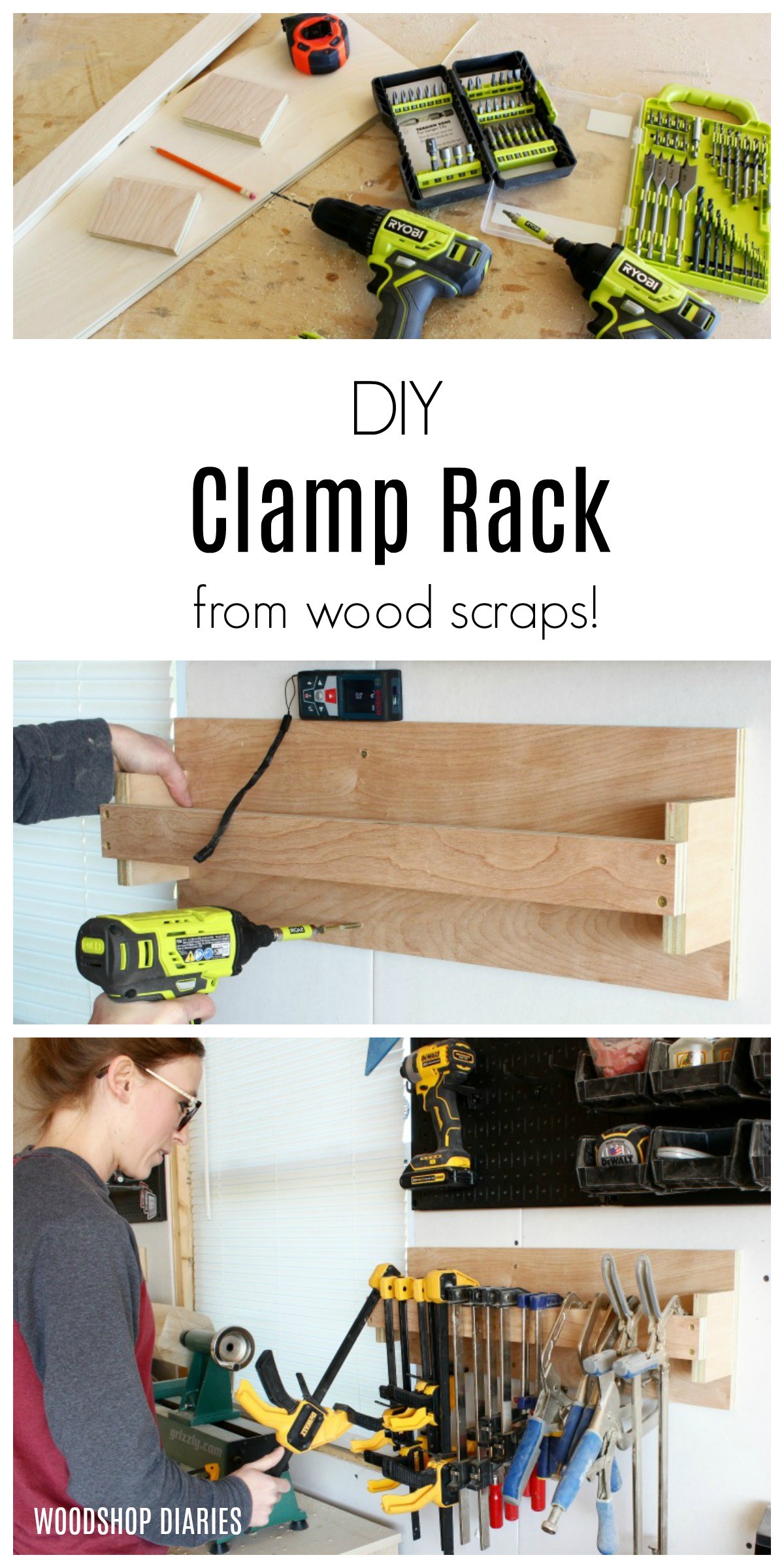
In this post, I’m sharing how to build a SUPER SIMPLE DIY clamp rack for your workshop or garage!

*This post was sponsored by The Home Depot as part of the ProSpective Program and contains affiliate links. See policies for details.

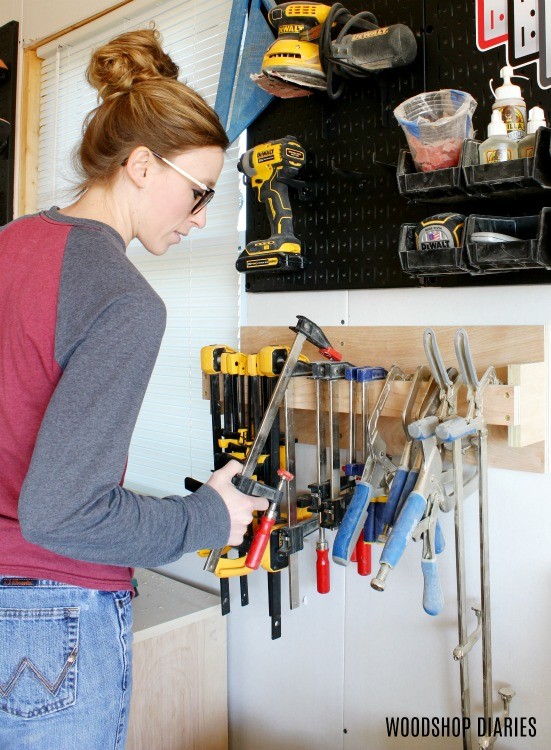
Shara Woodshop Diaries hanging clamps onto DIY clamp rack in workshop

You’ve probably heard it said that you can never have enough clamps in your workshop.

I wholeheartedly agree with that statement. BUT, I also know that whether you have 1,000 clamps or 3, they’re useless if you can’t find them when you need them.

So I built this SUPER SIMPLE DIY clamp rack so that my clamps have safe place to hang out and I know exactly where to find them when I need to grab one.

This is great for small clamps of all kinds, BUT I don’t recommend hanging a bunch of large heavy clamps on this.

For large, heavy, or pipe-style clamps, check out this DIY pipe clamp rack instead.

DIY Clamp Rack Tools & Materials:

Tools:

  • Drill and Driver
  • Miter saw (or any saw that can cut straight lines)
  • Drilling and Driving Bits

Materials:

  • Scrap plywood
  • 1 ¼″ wood screws
  • 2 ½″ wood screws
Materials needed to create DIY clamp rack

How to Build a Simple Scrap Wood Clamp Rack

This project is a really quick way to organize and store your clamps so they’re easy to use when you need them.

It only takes about 5 minutes to assemble and you can customize your size to fit the clamps you have.

I recommend digging around your scrap pile to find the materials you need. Again, these don’t have to be specific sizes, so work with what you’ve got.

Step 1: Cut Clamp Rack Pieces to Size

To get started, I grabbed some scrap ¾″ plywood pieces to use for this project.

Your sizes don’t have to be exactly the same as mine–you can make yours longer or shorter or deeper as needed.

No matter what size you make it, the length of the front runner and the back should match each other.

I used a wider board for the back, a narrow (approx 1×2 size) board for the front, and some medium width pieces for the sides.

Pieces needed to create DIY clamp rack

Cut List:

  • Front Runner: ¾″ x 2″ x 24″
  • Back Piece: ¾″ x 7″ x 24″
  • (2) Side Pieces: ¾″ x 3″ x 4″

Step 2: Attach Side Braces

Once the pieces were cut, I screwed the side pieces to the back piece using 1 ¼″ wood screws.

Wood glue along with the screws can help add additional strength.

To do this, first, I marked the center of both the side pieces and the center of the short ends of the back piece.

This was just so that I could line up the side supports on the back piece in the middle so it wasn’t lopsided.

Then I predrilled two holes for the screws into each end.

predrill holes into back piece to drive screws without cracking

HELPFUL TIP: To predrill a hole, choose a drill bit the size of or SLIGHTLY smaller than the diameter of the SHANK portion of the screw you are using (not the threads, just the shank).

Once I had my holes predrilled, I drove the screws tight.

drive screws to assemble side pieces on DIY clamp rack
Back side of DIY clamp rack assembled

Step 3: Add Front Runner Support

Now that the back and sides were attached, next was the front rack piece where the clamps will hang.

I simply centered this piece on the side pieces on the front and predrilled and drove 1 ¼″ screws to attach it.

Predrill holes for screws to assemble DIY clamp rack
Drive screws into front runner on DIY clamp rack

Step 4: Hang DIY Clamp Rack on Wall

The clamp rack itself is finished at this point, but now I had to hang it on the wall.

Since my drywall in my shop isn’t finished, I knew exactly where the studs were because that’s where the drywall screws are.

But if you aren’t sure where your studs are, use a stud finder to locate a stud or two to drive your screws into to hang your rack.

Test fit clamp rack onto wall space

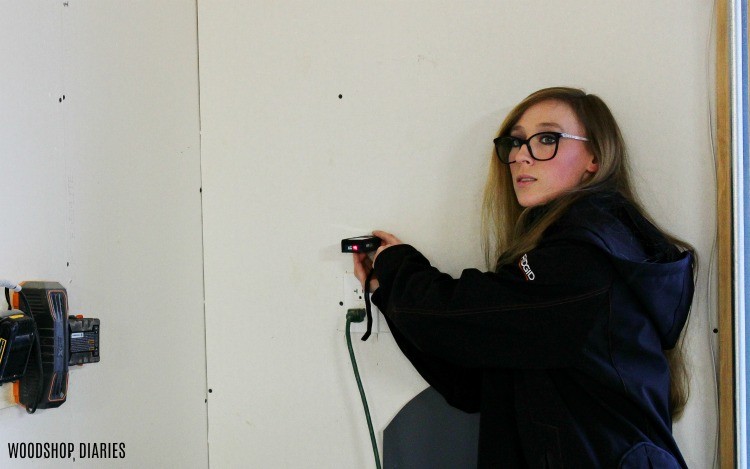
I used a couple of 2 ½″ wood screws to attach the rack to the wall and used this Bosch Laser Measurer to make sure it was level when I screwed it in place.

Attach clamp rack to wall driving into studs

Then, I hung my clamps on it and got to work 😉

Close up of hanging clamps on DIY clamp rack

This is such a super easy little project, but it’s so helpful in the shop to have somewhere to hang all my clamps.

And as I add to my collection, I can make another one to hang right beside it. It’s the perfect set up for all my smaller clamps.

Shara Woodshop Diaries hanging clamps on DIY clamp rack storage system

If you’re looking for more shop storage and organization projects, check out one of these:

How to build a mobile Miter Saw Stand with storage drawers, and fold down extension wings
EASY DIY Lumber Rack
DIY Pipe Clamp Shop Rack
Pipe Clamp Rack
How to Build a DIY Rolling Scrap Wood Cart
DIY Simple Mobile Tool Cart

And if you’re enjoyed this one, I’d love if you’d share it on your favorite social channel and pin this image for later 🙂

How to make a SIMPLE DIY CLAMP RACK from scraps and just a few screws!  Get your workshop organized!

Until next time, happy building 🙂

I acknowledge that The Home Depot is partnering with me to participate in the promotional program described above (the “Program”). As a part of the Program, I am receiving compensation in the form of products and services, for the purpose of promoting The Home Depot. All expressed opinions and experiences are my own words. My post complies with the Word Of Mouth Marketing Association (WOMMA) Ethics Code and applicable Federal Trade Commission guidelines.

Ridgid 18V Drywall Screwdriver with Collated Attachment

December 30, 2019 by Shara, Woodshop Diaries

This post is a review of the Ridgid 18V Drywall Screwdriver with Collated Attachment and is sponsored by The Home Depot and contains affiliate links. See policies for details.

.

Hi friends! This past year I’ve had a really fun opportunity to try out some new tools in partnership with The Home Depot as part of their ProSpective Program.

.

And it got me thinking…you guys may be interested in knowing my thoughts on them and the features they provide.

.

So I’m excited to begin doing regular tool reviews on both the tools I try out from this program and also tools I pick out and purchase on my own. I hope you find it helpful when searching for your next favorite tool, a gift for your favorite handy man or woman, or just learning more about what tools are out there.

.

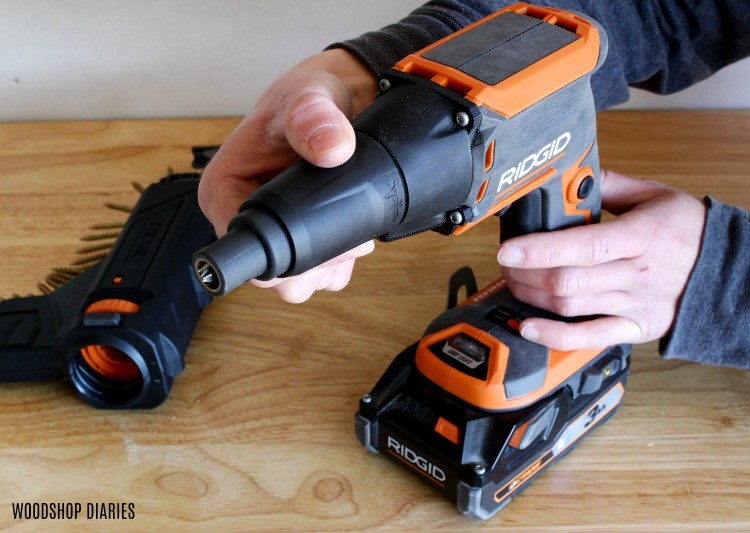
So today, I’m talking about this Ridgid 18V Octane Drywall Screwdriver with Collated Attachment.

Now, at first glance, you may think this is just your average drill/driver, but it’s more like the drill/driver’s second cousin–similar, but it’s got several distinct features.

.

First of all, what exactly is it?

It’s a brushless, battery powered screwdriver that utilizes either a drywall nose cone or a collated screw attachment to drive screws repeatedly and to a precise depth each time. It runs on Ridgid’s 18V battery platform and is backed by Ridgid’s Lifetime Warranty.

Second, what’s it used for?

This tool would be ideal for hanging drywall, laying subfloors, building sheds, installing slats on fences, boards on decks, or basically anything that requires repetitive screw driving. (I wish SO BAD I had known about this tool when I was hanging the drywall in our garage apartment. The collated attachment would have made the job a lot quicker and a lot easier on the fingers.)

So…that’s cool, but how do you use it?

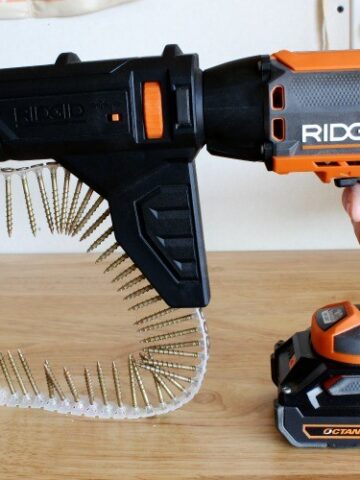
This tool comes with two attachments for the front end. First, let’s discuss the collated attachment. Collated screws are basically just screws that come in a little plastic strand…like this:

You can purchase collated screws in many varieties–drywall screws, subfloor screws, decking screws. Different lengths, different styles, etc. I purchased a pail of 1 ¾″ subfloor screws to play with for this review, but drywall screws are pretty popular, too.

.

Once you load the screws, the tool automatically advances to the next screw when you push to drive OR pull the trigger depending on your settings. This saves so much time (not to mention saves your fingers so much wear haha) not having to repeatedly load after each and every drive.

.

To use this attachment, simply load the long drill bit (the tool comes with a long Phillips head and a long square head bit) into the tool. It loads similar to an impact driver, depress the head and insert the bit and it should latch in place.

Then, slide the collated attachment onto the front. The long bit slides through the hole and it locks in place. Also note that you can load the screws into the attachment prior to it being installed onto the screw driver, or after the fact.

Once the attachment is in place, it’s got a couple adjustment settings you may need or want to change. First, you need to adjust the attachment to suit the length screws you are using. Slide the orange lever on the front to adjust the depth to match your screw length.

You can also adjust how far the driver drives the screws. Maybe you want it JUST flush with the wood. Or maybe you want it sunk in just a little…or a lot. You can simply turn the orange knob shown below on the attachment to adjust the depth deeper or shallower as desired.

Load up your screws and you’re ready to roll.

One feature that I personally really love on this tool is the Push to Drive feature. You can set this driver up to simply push in the head on the attachment in order to drive the screws. You don’t even have to pull the trigger. This can make that repetitive screw driving go much quicker.

To activate this feature, simply press the little orange Push to Drive button on the base of the tool, then press in the lock button on the handle and push in the trigger to active the trigger lock (see image above). Now you can simply push in the head to drive a screw.

Now, maybe you don’t want to use this with collated screws. Totally understandable. It also comes with a drywall nose cone attachment if you’d rather use that instead of the collated attachment.

.

To remove the collated attachment, press the grey rectangle button on the back of the attachment and pull away from the driver.

The tool also comes with a couple shorter bit options. You can swap out the long bit for one of these shorter ones and slip on the drywall nose cone. Just like with the collated attachment, this just snaps in place.

Also, just like with the collated attachment, you can easily adjust your screw driving depth. With this attachment, adjust by simply turning the nose cone clockwise or counterclockwise. The nose cone is perfect for drywall screws driving just deep enough to mud over them for finishing.

And again, just like with the collated attachment, you can also activate the Push to Drive feature with the nose cone as well the exact same way–press the orange Push to Drive button on the base, and locking the trigger.

Pros…Cons…What else you need to know

Let’s start with the pros:

  • Backed by Ridgid’s Lifetime Warranty
  • Runs on Ridgid 18V battery platform (so uses compatible batteries with other Ridgid tools)
  • Multiple head attachments for various applications
  • No tools required for depth adjustments and switching out heads
  • Push to Drive feature makes repetitive driving quick and easy
  • Comes with multiple bits for various screw types and applications

What about the cons?

The biggest “con” I see with this this tool is that when using the push to drive feature with the collated screws, if you didn’t hold constant pressure on the driver once it’s started driving a screw, it would stop driving and leave your screw half way out. And since it automatically advances to the next screw, you can’t go back and drive it again.

But, obviously, this is kind of common sense. If you were actually driving a screw, you’d keep constant pressure until it’s driven, so mostly this is just operator error (AKA my fault haha), but I could see where this may become annoying if you weren’t careful and unintentionally bumped the tip here or there while working. Not a huge deal to me personally, just something I noticed while using it.

My Final Thoughts:

Overall, I was personally really impressed with how easy this tool was to use and how easy it was to change out the heads and adjust the settings while I was testing it out. In full disclosure, I tested this out by driving (and backing out) about 50-60 screws into some scrap blocks using the collated attachment and about 20 screws with the nose head.

.

But, I’m looking hard for a good project to work with it on because I really enjoyed playing around with it for this review…although I’m not wishing for a drywall project anytime soon…I’d pick subfloor or decking over drywall any day haha.

.

So if you’re interested in adding this to your collection, you can check out all the product details for this Ridgid 18V Octane Drywall Screwdriver with Collated Attachment over at The Home Depot here.

I hope you’ve enjoyed this review! I’ll be posting new tool reviews on Mondays when I have one to share, so I hope you stop back by and see what’s new each week. Until next time, friends, happy building! 🙂
.

I acknowledge that The Home Depot is partnering with me to participate in the promotional program described above (the “Program”). As a part of the Program, I am receiving compensation in the form of products and services, for the purpose of promoting The Home Depot. All expressed opinions and experiences are my own words. My post complies with the Word Of Mouth Marketing Association (WOMMA) Ethics Code and applicable Federal Trade Commission guidelines.

Why We Chose LifeProof Vinyl Flooring–And How to Install It

December 20, 2019 by Shara, Woodshop Diaries

Interested in learning why we chose LifeProof Vinyl Flooring for our home and want to know how to install it? This post is for you! This post is sponsored by the Home Depot and contains affiliate links. See policies for details.

.

If you’ve followed along for any length of time, you’ve heard me mention that we are currently living in a one room studio style garage apartment.  It’s been an interesting year living here and we’ve learned a lot about life, love…and how much we hate these bare concrete floors–have you ever noticed them in my pictures?

They’ve got cracks, stains, chips and rough spots and they constantly look dirty no matter how much we clean them.

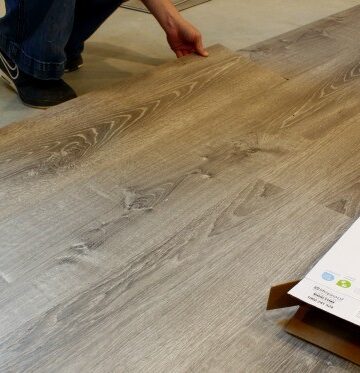
So we decided to finally cover it up and make our house feel more like a home than a garage with LifeProof vinyl plank flooring in Sterling Oak from The Home Depot.

LifeProof Vinyl Plank Flooring installation with box

Before deciding what to cover these concrete floors with, we did a little research. We choose this vinyl plank flooring by LifeProof for a few reasons. 

.

First, it was a simple floating snap and lock design so we could install it over our concrete floors without any messy glues or fancy tools or hardware.  All we needed was a rubber mallet and a piece of scrap plywood for a tapping block. The planks just snap together and float on top of the concrete. So easy install? Check.

.

Second, we didn’t have to buy and install a water proof barrier between the flooring and the concrete since it has a built in water proof underlayment. This allows you to install it directly onto wood, concrete and even some existing flooring types. So no additional underlayment required? Check.

.

Third, it’s perfect for our lifestyle—which is basically that we aren’t super careful with anything, so we need flooring that is tough (Danny says I’m a bull in a China shop…just like my dad haha).  This LifeProof vinyl plank flooring should hold up well to Lucy’s dog nails, and the mud, gravel, sawdust, etc that we both track into the house all the time. It’s waterproof, scratch resistant, and looks like real wood. Check.

LifeProof vinyl flooring is easy to clean and great with pets

And, lastly, we chose this sterling oak color because we have so much wood furniture and wood colored kitchen cabinets that we thought the neutral grey color would keep it all from clashing.  (However, if you aren’t a fan of the grey, LifeProof has several color options in this exact same flooring product to choose from.)

Why we chose LifeProof Vinyl Flooring in our kitchen--it's waterproof

Installing the floor was pretty simple and straightforward and it didn’t require a lot of tools (Woot woot!). The worst part was having to move literally our entire house in sections since we live in one big room.

.

Luckily, once it was started, it went down really quick.  I’ll share with you some tips and our process below.

.

But first, here’s a video if you’d like to watch rather than read.

What you’ll need:

LifeProof Vinyl Plank Flooring (order about 10% more floor than you should need to cover your area)

Bosch Blaze Laser Measurer

Ridgid Battery Powered Vacuum

Rubber Mallet or Soft Faced Hammer

Utility knife and blades

Square

Knee Pads (optional, but trust me, you’ll wish you had them)

Oscillating saw (optional…may or may not need)

Prybar

Trim to cover expansion gaps (quarter round–may remove and reuse if you already have)

Nail gun to attach/reattach trim

Jig saw & table saw (helpful in some cases, but not required)

Detailed instructions are included in every box of flooring. Refer to these before installing.

Step 1: Decide Layout and Clean the Floor

When installing plank flooring (whether wood or vinyl, etc), the first thing you need to do is decide your floor layout and which direction you want to install. Typically, you’d run your rows parallel to the longest wall in the room. But there are some exceptions.

.

In our case, towards the back of the house, there was a bathroom and a laundry nook. If we ran parallel to the longest wall, we would end up having to go into our bathroom and laundry nook laying flooring in both the tongue and the groove…which would have been difficult. So in our case, we ran it parallel to the shorter wall to avoid having to work on both sides of the flooring once we got to the back of the room.

.

Once layout was decided, I moved the furniture in the section I planned to start. Then, I used my Ridgid battery powered vacuum to get all the dust bunnies, and debris off the floor before laying the planks. You can see more about this vacuum in my gift guide post here.

Vacuum debris before installing LifeProof Vinyl Plank Flooring

If you have existing quarter round or shoe molding, remove it as well. If you are careful, you can reuse it later in step 7. I didn’t have any, so I skipped this step and added it later when I was finished.

Step 2: Measure and Lay Out First Row

Then I grabbed this Bosch Blaze Laser Distance Measurer to figure out how long my first row was going to be.  It was important not to have pieces too short on the ends of each run (pieces should be 8″ or longer), so I measured each run to make sure I wouldn’t end up with a piece on the end just a couple inches long after laying all my planks. (FYI each flooring piece is approx 48″ long.)

Bosch Laser Measurer to measure first row of LifeProof Vinyl Plank Flooring

I used this little laser measurer throughout the project and was super blown away with how handy it was. I’ve got a post all about it here if you’re interested in its features.

.

Then I started working on the first row of floor.  The first row went easy. I used a rubber mallet to hit the edges to simply snap them together. You can feel across the seam…when it’s snapped in good, it’s flush across the top.

Snap ends of vinyl plank first row together

Once I had a few snapped together, I used spacer blocks (small ¼″ plywood scraps) to keep the boards ¼″ from the walls. The instructions said to leave a ¼” gap along all the edges for expansion, so I kept that in mind throughout the project.

.

I continued along the first row until I got to the end.  I measured the length for this last piece and subtracted ¼” for expansion gap, then cut a piece to fit.  To cut, simply mark where to cut (make sure you measure the correct end of the board!) and use a square and a utility knife to score the top. Then the piece should snap along this line and you can cut the backing to separate it.

Score and snap vinyl flooring to cut

If you have a miter saw, you can cut this on a miter saw instead, but I didn’t want to get up and run to the shop every time I needed to cut, so I found the score and break method to be helpful.

Step 3: Install Second Row of Vinyl Plank Flooring

After the entire first row was together, the hardest part of the whole project began…laying down the second row.  The second row was a little frustrating because it was hard to snap the pieces tight when the first row pieces kept moving.  But eventually, I figured out that you have to angle the piece slightly and tap it into the groove of the first row, then snap the edge to the piece beside it (like from step 2), and tap it tight with a tapping block.

Installing second row of LifeProof Vinyl Flooring

There are a lot of helpful tools you can purchase for this process, but I found that a scrap piece of plywood worked well as a tapping block…just be mindful of your block placement and be careful not to place it where it will damage the snapping lip. Or you can purchase this installation kit if you don’t want to make your own tapping block.

Step 4: Continue Snapping and Locking Floor Down

Once the second row was down, I slid the two rows tight up against the spacer blocks on the wall and began laying the next rows.  It’s pretty repetitive.  Lay a row, lay another row, keep going until you get to something you have to move, or an obstacle you need to cut around.

.

Keep in mind when laying flooring that you should stagger the pieces so that the ends do not line up in the same location on adjacent rows. When you cut end of the row pieces, be sure to cut the correct side of the piece and, unless the piece is too small, you can usually use the other end as a starter piece for the next row.

Installing starter piece onto row of LifeProof Vinyl Plank Flooring

I found the key to snapping the rows together tight, was tapping first at a slight angle…

Tap vinyl planks int snapping lip to install

…then snapping the short end to the adjacent piece…

Snap ends of LifeProof Vinyl Flooring together

…then using the tapping block and a mallet to tap it in tight laying flat. You will be able to see the gap disappear between boards when you get it snapped in tight. That’s when you know it’s snapped in well and you can move to the next piece. If you have trouble getting a tight fit, check for debris in or damage to the snapping lip.

Tap LifeProof Vinyl Flooring Tight with tapping block

Step 5: Cut Around Obstacles as Needed

We didn’t have a ton of obstacles to cut around in our one big room, but when I got to a door or a protruding wall, I kept in mind that the flooring will go UNDER the door frame, but stay ¼” from the walls/baseboards.  I would cover the gap with baseboard or quarter round later as needed. 

.

When a piece needed to go under the door jamb, I used an oscillating saw and a scrap piece of flooring to cut the door jamb and trim pieces so that a piece can slide under it.

Flush cut door jamb when installing Flooring

I marked where the piece would need to be cut and trimmed this with a jig saw.  (You can use a standard wood cutting blade.) Always pay attention to cut the correct side when trimming pieces and always buy a little extra flooring for accidents like this…oops 🙂

Miscut on LifeProof Vinyl Flooring Plank

Besides a few mis cuts here and there, and having to move all the stuff in the entire house, the install was pretty smooth sailing. It took about a day and a half to install 800 sq. ft. and that included time to move all the stuff and put it all back, cut around obstacles, uninstall and reinstall the washer, dryer, refrigerator, etc. Not bad if you ask me.

Step 6: Cut Last Row

When we got to the last row, all the pieces needed to be trimmed to fit.  So, I measured how wide each individual piece would need to be cut and trimmed this on the table saw.  (You can use a utility knife or a jig saw if you don’t have a table saw. If you do have a table saw, they make special blades for this, but a general purpose blade like this works fine as well.)

General purpose table saw blade

Never take for granted, though that all these pieces will be the same width.  Most walls aren’t perfectly square and each piece may need to be trimmed slightly differently, so measure for each piece. 

.

Because I couldn’t tap these pieces in, I used a prybar to carefully snap them into place. 

Use Prybar to install last row of floor

Step 7: Cover Flooring Gaps with Trim

Once the last piece was put in place, I needed to cover the expansion gaps along the edges with trim.

.

So I used my laser measurer again to figure up how much trim I needed, and to figure out what lengths to cut it.  I cut to fit quarter round along all the walls where I left a gap, but since the gap was underneath the cabinet toe kicks in the kitchen, I didn’t bother covering those since you won’t see them. 

.

Because the floor is a floating floor, it’s important that it’s not secured to anything stationary.  So I was careful not to accidentally shoot a nail into the floor when installing the quarter round.  Nail into the baseboard or wall…not down toward the flooring.

Nail quarter round on expansion gaps after installing flooring

After a little putty in the nail holes and some caulk along the trim, that’s all there was to installing this LifeProof vinyl plank flooring from The Home Depot.

.

This was such a great improvement to our space and such a worthwhile investment. 

Before and after bare concrete floors vs LifeProof Vinyl plank flooring

I’m really glad we went with the sterling oak color, too. The grey looks really nice against all the warm wood in the house. And not it feels a little bit more like we live in a house now rather than a garage haha.

LifeProof Vinyl Plank Flooring in our kitchen

If you’re in the market for flooring that you don’t have to worry about with water or scratches, and is TOTALLY DIY-able, I’d definitely recommend checking out this LifeProof vinyl plank flooring. They’ve got plenty of color options, and of all the flooring I’ve ever laid (and I’ve laid a lot of flooring–engineered hardwood, hardwood, tile, laminate), this was by far the easiest to put down.

Muddy Boots easy to clean up on  Vinyl flooring

I hope this post has been helpful and I hope you’ve enjoyed watching us slowly transform our garage into a real home. If you liked this project, I’d love if you’d pin this for later or share it on your favorite social channel.

Why we chose LifeProof Vinyl Plank Flooring for our studio style garage apartment Pinterest Image

Until next time, happy home improvement 🙂

Bosch Blaze Laser Distance Measurer–A Must Have Workshop Gadget

December 16, 2019 by Shara, Woodshop Diaries

This post is a review of the Bosch Blaze Laser Distance Measurer and is sponsored by the Home Depot as part of the ProSpective program. This post contains affilaite links. See policies.

.

I have a new favorite tool in the shop and it isn’t a power tool…it’s a gadget.

.

Ever since I took this Bosch Blaze Laser Distance Measurer out of the package, I can’t put it down.

Bosch Blaze Laser Distance Measurer area funtion on screen

I’m sure laser measurers aren’t brand new (I’m usually a few years behind the times haha), but I’ve never played with one until recently and I don’t know why I waited so long. I wish I had this while we were building our garage apartment and I was building my sisters and my own cabinets.

Shara Woodshop Diaries holding Bosch Blaze Laser Distance Measurer in hand

This Bosch Blaze Laser Distance Measurer honestly blew me away with it’s features all crammed in such a tiny size. It’s lightweight and small, so it can fit in a pocket or tool belt. It has a full color display so it’s easy to read, it measurers to the 32nd of an inch and it measures up to 165 ft! Also, ignore my man hands…it’s been a rough week haha.

Close up of Bosch Blaze Laser Distance Measurer measuring for piece of trim length

Now, the instructions do specify that it’s accurate to 1/16th of an inch, not 1/32nd–which is still impressively accurate. But, I’ve personally compared the readings to what I’ve gotten with my own tape measure, and it’s been DEAD ON accurate every time, even to the 32nd. So take that for what it’s worth.

Bosch Blaze Laser Distance Measurer compare side by side with tape measure
Close up of Bosch Blaze Laser Distance Measurer compared to tape measure readings

So, we’ve covered that this laser distance measurer measures distance. Thank you captain obvious. But it also can be used as a level.

Bosch Blaze Laser Distance Measurer used as a level on flooring surface

And it’s got several different measuring functions built in that allow it to calculate area, or volume of a space all while measuring from a single point.

Bosch Blaze Laser Distance Measurer area function

Hold it in the corner, take measurement, hold it the other way, take measurement. Boom. Area. No wrestling with a tape measure.

This is super handy for calculating how much sq. ft. of flooring you need, or how much paint you need, etc. Speaking of paint, wall space area is another feature it’s got, too.

.

It can save up to 30 measurements and is Bluetooth enabled to connect up to the Bosch MeasureOn app to save photos and store measurements if you do the contractor or client thing and need to keep track of different measurements for different projects.

Measuring length of room using Bosch Blaze Laser Distance Measurer

I can think of SO many times I wish I had this while we were building or remodeling. SO. MANY. Do you know how inaccurate (not to mention how frustrating) it is to ask your husband (or sister, or mom, or dad) to hold the other end of the tape measure while you are measuring for trim, or cabinets, or drywall?

.

The question, “Can you hold the end of this tape measure real quick?” has started more arguments in our house than anything else, I think. Hopefully I can put most of that behind me now, with this Bosch Blaze Laser Measurer.

You can check out more info or grab one of your own on Home Depot here. It comes with 2 AAA batteries (I always love when batteries are included 🙂 ), a pouch, and a hand strap.

Bosch Blaze Laser Distance Measurer collage in pin image as level, tape measure and area calculator

Check it out in action in my post about how to install vinyl plank flooring post coming out later this week.

.

Until next time, friends, happy measuring 🙂

.

I acknowledge that The Home Depot is partnering with me to participate in the promotional program described above (the “Program”). As a part of the Program, I am receiving compensation in the form of products and services, for the purpose of promoting The Home Depot. All expressed opinions and experiences are my own words. My post complies with the Word Of Mouth Marketing Association (WOMMA) Ethics Code and applicable Federal Trade Commission guidelines.

DIY Mobile Lathe Stand with Drawers

December 13, 2019 by Shara, Woodshop Diaries

This post is sponsored by The Home Depot and is part of the ProSpective Program. It contains affiliate links. See policies for details.

I’ve spent the last three years wanting a lathe so bad that I couldn’t hardly stand it.  I finally decided to quit being so cheap and just buy one (this is the one I got) this fall, but honestly my shop doesn’t have room for another large tool (but I obviously made an exception 🙂 ), so I needed a really compact DIY mobile lathe stand for it so it would take up as little space as possible and be easy to move out of the way.

Shara Woodshop Diaries woodturning on her DIY mobile lathe stand

So I built this little DIY mobile lathe stand from a single sheet of ¾” plywood and a little scrap ¼″ plywood. Because I love drawers, I built it with a couple of drawers to store my sandpaper and accessories, some shelves for spare turning blanks, and a chisel holder to keep them easily accessible while I’m turning. (I’m 30 now, so I don’t want to bend down to grab a chisel in my old age haha)

DIY Mobile Wood Lathe Stand with drawers and chisel shelf

I’m sharing the link to the downloadable PDF plans with cut list and instructions here and the step by step tutorial and some tips below. And I’ve also got the video tutorial here as well:

As part of this project, I reviewed this Ryobi 4 pc combo kit from Home Depot. I also put these Bosch DareDevil Spade bits to the test as well. Check out my thoughts on them below.

For this project, I used:

Ryobi 4 pc Combo Kit (Drill, Driver, Worklight, Recip Saw)

Circular Saw

Kreg Rip Cut (optional to help cut down plywood)

Miter Saw

Kreg Pocket Hole Jig

90 degree driver attachment

Jig Saw

Bosch DareDevil Spade Bits

Table saw (Optional or drawer dadoes)

(1) sheet ¾″ plywood

¼″ plywood scraps for drawer bottoms

(4) caster wheels

1 ¼″ pocket hole screws

(2) pair 16″ drawer slides

Step 1: Cut Down Plywood

To get started, I set up my ¾” sheet of plywood onto my Kreg Trak horses and grabbed my Rip Cut and Circular saw and got started cutting it down into more manageable sizes. I’ve provided a detailed diagram and cut list in the plans here.

Cut down plywood into strips to build DIY mobile lathe stand

Step 2: Assemble DIY Mobile Lathe Stand Cabinets

I used my Kreg pocket hole jig and Ryobi drill to drill pocket holes along the edges of the cabinet bottom and a couple of thinner slats as the top supports. 

Drilling pocket holes with Kreg Jig for DIY mobile lathe stand assembly

I assembled two identical boxes using 1 ¼” pocket hole screws.  Also note that I added shelves to the middle of these later and that would have been a TON easier to do at this point than how I did it towards the end of this project.  So in the plans, I add the middle shelf here vs at the end. 

Assembling DIY mobile lathe stand with pocket hole screws

Step 3: Cut Out the Lathe Stand Top

Once the two cabinet boxes were assembled, I moved on to making the top.  I cut the top piece then marked a cut out in the middle of it and cut this out with a jig saw. 

Using jig saw to cut middle section out of mobile lathe stand plywood top

This is optional, but I wanted to add a shelf later for my chisels between the cabinets and having this cut out allowed me to easily reach down to grab a chisel vs having to step back and reach underneath the top.

.

Once the top was cut, I flipped it upside down on my workbench and attached the cabinets to it using 1 ¼” screws through the top slats.

Attaching cabinets to top of mobile lathe stand

You’ll notice that I’m using a Ryobi Drill and Driver in this project.  It’s part of a 4 pc Ryobi combo kit that I reviewed as part of this project.  This kit is also included in my Christmas gift guide post here.

Ryobi drill and driver set

It’s a nice combo kit for a beginner and it includes several tools to get you started–two batteries, a charger, the drill and driver you see me using in this project, a worklight, a reciprocating saw and a bag. This was my first time using a Ryobi drill and driver in a project, and I was really surprised at how well they both performed during this build.

.

The worklight is SUPER bright, and the recip saw has a 1″ stroke length for fast cuts. I plan to use it to cut down a few limbs that fell in my sisters yard this fall into pieces short enough to turn on my new lathe 🙂 Kind of like a mini battery powered chain saw haha. But if you’re into cutting down pallets for projects, it would work well for that, too.

Ryobi drill driver worklight recip saw 4 pc combo kit

Step 4: Add Casters and Bottom Shelf

Once the body of the stand was assembled, I added some casters to the corners.  Although my shop is a decent size, I still struggle to find the room I need to build large projects, so I make sure to keep every cart in my shop on casters so I can move them around and out of the way as needed. 

screwing casters onto corners of DIY mobile lathe stand

Then, I cut a piece for the bottom shelf to connect the cabinets.  This helps sturdy up the cart, but also gives me a place to store extra blanks, accessories, etc. I added this using pocket holes and screws and made sure it was flush to the back of the cabinets.

Screw in bottom shelf of DIY mobile miter saw stand

At this point, I thought it would be a good idea to test fit my new lathe.  Perfect fit.  I played around on it a while and finally decided to build the drawers to finish it up. Side note: It’s not recommended to leave the lathe in place…it’s really unmotivating to finish the project, when you could be turning instead haha.

Step 5: Add Shelves and Drawers

I cut some dadoes into the drawer pieces to insert the bottom, then drilled pocket holes and assembled using pocket hole screws.  I slid the ¼” bottom in place, then attached the fronts. 

Attaching drawer fronts of DIY mobile lathe stand drawer boxes

I installed 16” drawer slides into the bottom of the cabinets, then realized it would be easier to attach the shelves before installing the drawers, so that’s what I did next.  Cut two shelves to fit inside the cabinet and drilled ¾” pocket holes into the ends. 

.

Now, things would be easier if I hadn’t already put the lathe on top, but hindsight is 20/20.  It was really difficult to get the driver in such a tight spot, so I used this 90 degree driving attachment and it made things a little easier…only it was so low to the ground it was hard to see. 

.

So I ended up removing the lathe and flipping it over to get the shelves installed.  See what I said about not recommending putting the lathe on until it was finished?? HA.

Installing shelves to DIY mobile lathe stand cabinets

Once the shelves were in place, I installed the drawers onto the slides and it was ALMOST ready!

Installing drawer boxes to mobile lathe stand cabinets

Step 6: Install Chisel Holder Shelf into Mobile Lathe Stand

The last thing I did was add a shelf that would hold my chisels so they would be easy to grab while I’m turning.

DIY Mobile lathe stand with chisel shelf

So I grabbed a piece of plywood to fit between the cabinets and these Bosch DareDevil spade bits and marked 6 evenly spaced holes for my six chisels.  I used the 1” spade bit from this set to drill holes large enough for my chisels to fit down into, but small enough, they wouldn’t go all the way through.

bosch daredevil spade bit set

These spade bits have a fully threaded cone tip that helped quickly get my holes started and keep me centered. Now, here are my honest thoughts on spade bits…I avoided using spade bits whenever possible in the past because my old set would end up giving me egg shaped or just really ugly looking holes vs nice, clean round ones…ugh. Plus, it took so long to drill them out that it would eat up my drill battery.

.

So I expected these to do the same thing and really didn’t want to use them for this. However, I was pleasantly surprised that with these bits, my holes did actually come out round and clean. (I think it’s got something to do with the spurs and the reamer edges.) And even with my drill on low speed, it only took about 7 seconds to drill each one. Who knew not all spade bits were created equal??

bosch daredevil spade bit set drills clean holes into plywood

Once the chisel holes were drilled, I drilled pocket holes into the ends of the board and placed it in the stand.  I put a couple chisels in so that I could adjust the height of the shelf as needed.  I wanted the chisels to be high enough where I could comfortably reach them, but also low enough so that they were out of the way.

.

Once I got the shelf where I wanted, I screwed it in place with pocket hole screws.

Install chisel shelf into stand using pocket holes and screws

I rolled the stand into place and put my chisels into the holes.  Now I’m ready for lots and lots and LOTS of wood turning practice.  I’m brand new, so I have a lot to learn, but I’m excited to play around with it and see what I come up with.  Let me know what you’d like to see me make with my new lathe and if you are a wood turner, I’d love any tips you feel would be helpful for getting started!

So if you’re in need of a DIY mobile lathe stand…or just a general shop cart, check out the downloadable PDF plans for this one here.  Or check out some of my other mobile shop cart and workbench projects as well. 

  • DIY Simple Mobile Tool Cart
  • How to Build a DIY Rolling Scrap Wood Cart
  • How to build a mobile Miter Saw Stand with storage drawers, and fold down extension wings

If you’ve enjoyed the project, please feel free to pin this for later or share on your favorite social channel!

Thanks so much for following along and until next time, happy building!

DIY Light Up Christmas Scene

December 9, 2019 by Shara, Woodshop Diaries

Want to build a super simple DIY light up Christmas art piece? I’ve got the project for you!

This post is sponsored by Build Something and contains affiliate links. See policies.

DIY Light Up Christmas Art display next to Christmas tree

A couple years ago I saw a kind of wall art Christmas light up village thing at a store and thought it would be cool to make something similar.  It had a ton of little intricate cut out details, but I’m too impatient for that, so I went with a more simple design with just a couple of trees. 

.

Snowmen would have been cute for this as well.  But, if you’re into scroll sawing or intricate details, feel free to explore the possibilities.  I’ll be over here with my super simple trees haha.

Free template to make your own DIY light up Christmas Art

I’m sharing the free plans and a template for my trees over on BuildSomething.com if you’d like to build your own. And I’ve got a fun video showing how it came together here:

To get started I dug around in my scrap wood cart for a few pieces of ¾” plywood about the size I wanted my piece to be.  I ended up finding a piece about 16 ½” wide and 14” tall that I used for the backdrop piece, and two more pieces similar in size for the two tree cut out pieces.

Besides some scrap plywood, you only need a few other things to complete this project:

1x4x8 board

Drill

Miter Saw

Kreg Pocket Hole Jig

1 ¼″ pocket hole screws

Jig Saw

(2) sets battery powered Christmas lights

.

And of course, you might want to play around with some paint 🙂 I had a really hard time deciding on my color scheme for this project. I originally painted the back drop piece black, but changed my mind later…you’ll see in the video haha.  I ended up assembling the piece then hating the black *face palm*

So I actually took the whole thing apart and painted the trees white and the back with a navy ombre effect. Basically, I painted the top half white and then started at the other half with navy paint and blended it in with the white as I worked my way up. Much better. It looks a little more like an ACTUAL night sky now haha.

DIY Light Up Christmas Art with battery powered lights and snow trees

For the scene, I made the middle tree cut out a little larger than the front cut out piece so that it wouldn’t be hidden behind the front tree. And to keep things simple, I just cut everything out with my jig saw. 

I freehanded the design (I’m not the best artist haha), and I traced my cut out onto a piece of paper and provided a template for it in the build plans linked here.  But obviously you can customize this part a thousand different ways. I think snowmen or a cool house design would be cute, too.

DIY Light Up Christmas Art with night sky and snow trees

Also, I personally like this piece sitting on a console table, but you can definitely hang this on the wall as well. There’s a little cut out cubby on the back side to slide the battery packs for the lights into.

Sawtooth hanger on DIY light up Christmas Art Piece

So you can put a little sawtooth hanger on the back side to easily remove it from the wall, flip the battery packs on, and set it back in place. PS don’t judge my painter’s tape haha. You can use staples to keep it a little classier in the back with all the wires if you’d rather.

.

I show how easy this is to switch on and off in the video linked here (and shown above) if you want to check it out.

.

And if you’d like some more Christmas project inspiration, here’s a few more of my favorites:

  • DIY Christmas Lantern Post from Wood Scraps and an Old Spindle--great way to repurpose an old spindle
  • How to make your own DIY wooden Christmas village perfect for Scandinavian Christmas decor. Easy and free project tutorial
  • Check out this awesome Grinch Pillow--a Pottery Barn Knock Off!

You’ve still got time to whip up a fun Christmas project, so if you like light up decor, be sure to head over to Build Something to grab the plans for this one. You can easily have one built in an afternoon!

.

I’d love if you’d pin this project for later or share it on one of your favorite social channels 🙂

How to Make a DIY Light Up Christmas Art Display

Until next time, happy building AND Merry Christmas 🙂

DIY Tiered Plate Candy Stand + 3 Ingredient Christmas Candy

November 26, 2019 by Shara, Woodshop Diaries

Hey friends! I’m so excited to share with you how to make this Christmas Tree shaped DIY Tiered Plate Candy Stand.

As a bonus, I’m also sharing my absolute FAVORITE easy 3 ingredient Christmas candy recipe!

DIY 3 Tier Plate Stand Christmas Tree Shape

I don’t normally share recipes on my woodworking website, for obvious reasons.

BUT I figured since I’m showing you a project to display all your Christmas candy, I might as well show you how to make easy Christmas candy to put on it.

That way, you’ve got everything you need to COMPLETE the project…candy and all 😉

I’m not a huge homemade candy fan, but I do have a few favorites that I make every year.

Typically, I bring them to family get togethers in an old scratched up tupperware container and that’s just kind of…..lame.

DIY 3 ingredient Christmas candy

.

So this year, being full of festive-ness, I headed to the shop to whip up something a little less lame to display and serve my candies on.

I’ll show you how I put it together and then I’ve got my fav recipe after the tutorial 🙂

Christmas Tree shaped tiered plate stand

This post contains affiliate links. See policies for more info.

.

How to Make a DIY Tiered Plate Candy Stand

This is a simple project you can certainly complete in a weekend and makes an excellent DIY Christmas gift idea!

.

Overall project dimensions for this tiered candy stand are approximately 17 ¾″ x 18 ⅝″ x 22 ¾″.

For this DIY Tiered Plate Candy Stand, you will need:

Tools:

  • Miter Saw
  • Jig Saw
  • Drill

Materials:

  • (2) 1×2 boards (I used oak for this)
  • Scraps for plates (plywood works great–I used some scrap walnut)
  • Wood Glue
  • Painters Tape
  • 1 ¼″ wood screws

I’ve detailed how to build the tiered candy stand below.

But if you prefer to print your plans, I’ve included cut diagrams, a complete cut list and helpful diagrams in the printable plans here:

Step 1: Cut 1×2 Boards for Candy Stand Tier Supports

I cut all my angles for this project at 30 degrees and 90 degrees.

First I set my miter saw to 30 degrees and cut all the pieces that needed 30 degree ends.

adjust angle on miter saw to cut pieces for tiered plate stand

This project has three total supports each made up of three tiers. For each support, I cut six boards as shown.

Three boards (bottom left) with 30 degree bevels on each end parallel to each other.

Prefer printable diagrams? Grab the printable plans with full cut list here.

pieces cut for tiered plate stand support

The other three boards (top right) have a 90 degree cut on one end and 30 on the other.

Now it’s ready for glue up!

Step 2: Assemble Three Support Tiers for Candy Stand

I paired the long pieces, the middle pieces and the short pieces and started gluing them together like shown below.

pair together angles for tiered candy stand

I used some wood glue and painter’s tape and let the glue dry completely before moving on.

If you are confident enough with a nailer and want to drive a nail or two to hold these together while the glue dries, that certainly would be fine.

Once the glue dried completely, I removed the tape and sanded off any glue squeeze out.

Then I marked about 2″ in from the pointy tips of the short and middle pair and glued these together using wood glue and painters tape again like shown.

I lined them up so that the tops were on the inside of the 2″ marks…so there was a 2″ overhang. There are three sets of these.

tiered christmas candy plate stand glued together supports

Grab the printable tiered tray building plans here.

Step 3: Cut Plates for Tiered Candy Stand

I test cut several circles to see what sizes I needed for these plates. I tried this with plywood first and didn’t like the exposed plywood edges.

I decided to go with some walnut pieces for the plates instead.

Test fit tiered plate candy stand pieces

I cut three round plates for this using my jig saw and ended up with one small, one medium and one large to fit my tiers.

Pieces ready for assembly for tiered candy plate stand

I could have made the middle and bottom slightly larger, but it is what it is and I didn’t want to cut new ones haha.

I had walnut scrap boards large enough for the small and middle plate, but ended up gluing up a couple of boards to cut one large enough for the big plate.

To get my circles traced onto my boards, I found it easiest to find a round object about the size you want the plate and trace it onto the boards then cut that out with a jig saw.

RELATED: How to draw any size circle–3 different ways!

You can also make a simple jig like I used in this round tray project to draw your own circles to the exact size you want.

Step 4: Assemble DIY Tiered Candy Stand

Before putting all the pieces together, it’s best to go ahead and finish all pieces. I used a simple food-safe beeswax finish for this.

You could also use a water based poly. Once these are fully cured, they’re usually considered food safe (check with manufacturer to be sure).

Next, I started screwing the pieces together.

I dry fit all the plates in on the supports and arranged the supports so that they looked pretty evenly spaced.

Starting at the top, I predrilled and drove 1 ¼″ wood screws through the bottom side of the supports.

Screw plates into supports on tiered plate stand

I’d like to say this whole process went smoothly, but I ended up breaking one of the three supports while screwing the middle piece in place.

Whoops.

TIered plate stand candy display assembly broken piece

I went ahead and screwed the second tier in the same way I did the first, and then glued the support back together.

See the clamp in the bottom right?

Screw tiered plates into support pieces tree shaped display

Then I screwed the bottom plate in place and let the glue dry on my broken support.

If you have a 90 degree drill attachment, it would definitely come in handy here.

Also, if you wanted, you could skip screws altogether and use brad nails or just wood glue to secure the plates to the frames instead.

Step 5: Add Top Block and Hardware

I cut a scrap piece of 1×4 and glued it onto the top of the stand just to kind of tie together the loose ends at the top.

Then attached a hitching ring, that I spray painted black, to the top of the block.

Attach top to tiered plate stand

I attempted to super glue the ring in a vertical position and it worked okay for decoration, but probably won’t hold if I actually used the ring to carry the stand.

That’s okay, though…I just wanted it as decoration anyway.

I added some candy, some sugar cookies that Danny made, and a little decoration and she’s all dressed up and ready to head to the next Christmas party.

Or just hang out on my kitchen table so I can eat all the candy 🙂

DIY Tiered Plate Stand to display Christmas candy

Speaking of candy, I promised I’d share my favorite SUPER EASY 3 ingredient candy recipe with you.

By the way, we call them haystacks.

.

Ingredients:

  • 5 oz Chow Mein Noodles
  • 1 bag butterscotch chips
  • ½ cup peanut butter
3 ingredient Christmas candy ingredients

On LOW HEAT (don’t get it too hot or it’ll burn and taste gross), melt the ½ cup peanut butter and butterscotch chips in a medium pot on the stove.

.

Stir and melt until it’s smooth (not lumpy), then drop in a few noodles at a time, stirring to get them covered before dropping in some more.

Once all the noodles are mixed in, spoon onto wax paper on a cookie sheet then refrigerate until they’ve hardened.

Then try one….AMAZING 🙂 haha.

3 ingredient Christmas candy on pan

And that’s it! An easy way to display your Christmas candies or appetizers, and an easy candy recipe.

Now you’re ready to dive into the holiday season 😉

DIY Christmas Candy Display Plate Stand shaped like a Christmas tree

If you want to check out some other fun holiday projects, here’s a few favorites 🙂

How to make your own DIY wooden Christmas village perfect for Scandinavian Christmas decor. Easy and free project tutorial

If you enjoyed this project, pin this for later 🙂

How to make a simple DIY Tiered Plate Candy Stand Shaped like a Christmas Tree to display candy--Plus 3 ingredient Christmas Candy Recipe!

Until next time, happy building 🙂

Holiday Gift Guide for DIYers

November 21, 2019 by Shara, Woodshop Diaries

Gift giving gives me all the feels. Like, there’s the warm, fuzzy feeling you get when you give someone something they love at Christmas-time. Then, there’s the agony of stressing out for weeks trying to figure out what that thing is to give them. HA!

.

This post is sponsored by The Home Depot and is part of the ProSpective Program. This post contains affiliate links. See policies for details.

So I’m trying to help save you from that same agonizing stressful feeling while you are holiday shopping this year with this simple holiday gift guide. You’re welcome 🙂 haha.

.

If you are shopping for an avid DIYer, a weekend workshop tinker-er, a dad who just needs a new hobby, a mom who wants to get started in woodworking, or basically anyone who could use an extra tool in the garage, I’m sharing some gifts I’d recommend in a few different price categories. Let’s get to it!

**These prices are accurate as of November 2019

Gift Ideas Under $15

Drill Bit Set

One can never have too many drill bits. I mean it…I’d happily take a drill bit set in my stocking year after year after year. For woodworkers, metalworkers, garage tinker-ers…ANYBODY–a drill bit set is a great option that is sure to get it’s fair share of good use. I love these simple ones from DeWalt.

Drill bit set as gift guide idea under $15

Tape Measure

Much like with drill bits, saw blades, and batteries, you can never have too many tape measures. There are many types and brands of measuring tapes and I’ve used several that I love. But this tape is my favorite because 1. it’s inexpensive and 2. it shows the fractions on the tick marks so it’s easier to get more accurate measurements without having to count and do fractions in your head haha.

Fractional tape measure as gift guide idea under $15

Husky Sport Knife

A utility knife is always a great gift. I love this knife for it’s practicality, but also because with the wood handle and the black details, it’s nice to look at, too!

Husky sport knife as gift idea under $15

Husky Small Parts Organizer

These organizers are stackable and latch together so you can easily add on to your collection. They are also great for on the go, or just to corral screws and drill bits in the shop. I got some this summer and they’ve been life changing in helping me keep my shop organized. I give them 5/5 stars…highly recommended!

Gift Ideas Under $40

Kreg 320 Pocket Hole Jig

This is Kreg’s latest pocket hole jig and it’s an EXCELLENT choice for someone getting started building furniture or cabinets. It’s simple to use, easy to adjust, and is perfect for both beginners and more advanced builders. See it in action in this DIY wooden wagon project.

Kreg 320 Jig as gift guide idea under $40

Husky Backpack With Rubber Bottom

I love this backpack so much. My sister got it for me for my birthday and I used it immediately to pack up a few tools to go help my dad put up a pergola. It’s the perfect size to throw a drill, driver, some bits into and be on your way. For more helpful tools for workers on the go, check out this post.

Husky Backpack as gift guide idea under $40

Husky 10 Piece Socket Set

A good socket set is worth its weight in gold. Okay, maybe that’s a bit of an exaggeration. But, just like I mentioned with tape measures, you can never have too many sockets and socket sets. This thin wall deep socket set is a bit of a “specialty set” made for getting into tight spaces, but also works great in wide open spaces, too. It’s impact rated, so it works nicely in a impact driver. Check it out in action in my DIY flatware caddy build.

DeWalt 90 Degree Drill Attachment

Speaking of getting into tight spaces…I’ve wanted one of these 90 degree attachments for a while and finally got my hands on one this summer. For an inexpensive gadget, this little guy is a life saver. I have used it in some tight places to get some handles installed and to drive some pocket hole screws. Another highly recommended tool for any workshop. You can see it in action in my DIY 3 drawer vanity build.

Dewalt 90 degree attachment as gift guide idea under $40

Gift Guide Ideas Under $100

Ryobi ONE+ 18V Drill & Driver Combo Kit

One of the key players in anyone’s workshop is a drill and driver. Those are some of my most used tools! This Ryobi drill and driver kit is priced right and packs a ton of value making it the perfect starter kit for a beginner or a great spare for someone who may already have a drill/driver kit. It comes with 2 batteries and since Ryobi has the largest selection of 18V battery powered tools on the market with its 18V ONE+ platform, expanding your tool collection with these batteries is a breeze. Check them out in action in my DIY lathe stand build (coming soon!).

Ryobi drill driver set as gift guide idea under $100

Kreg K4 Pocket Hole Jig

If you’re looking for a little more hefty version of the 320 pocket hole jig mentioned earlier to gift your favorite builder, this K4 is another great option. This particular kit comes with the K4, a clamp, the R3 and some accessories! That’s a STEAL! Check it out in action in my DIY Christmas Tree Stand/Hope Chest Box.

Kreg K4 and R3 kit under $100 great gift idea

Kreg AccuCut Saw Guide

I use my Kreg AccuCut all the time to help me cut down large sheets of plywood. It’s a must have for any builder who likes working with plywood and wants a quick and accurate way to trim down large sheets. It comes with 4 ft of track and a sled that attaches to a circular saw. But you can purchase additional track pieces to add on to it later. Check it out in action on my DIY kitchen cabinet build.

Husky Connect 22″ Rolling System

This rolling system is great for those who are always on the go...or just like a little extra organization in the shop. It’s got three connecting sections for plenty of tool storage and the top section has small parts compartments so you don’t loose your drill bits or pencils or whatever tiny parts I always seem to lose under the truck seat when I take my tools on the go haha. Check out more handy tools for workers on the go in this post.

Gift Guide Ideas Under $150

Rigid 18V Battery Powered Vacuum

This may be my favorite thing on this entire list. In my shop, I create a TON of sawdust. And I have a really good corded vacuum, but when I plug in my extension cord and start vacuuming the floor, I end up spreading around more sawdust with the cords dragging around the floor than I actually vacuum up. This Ridgid 18V Vacuum is a game changer. It can run on one (or two for longer runtime) Ridgid batteries and performs just as well (I think actually better) as my corded vacuum. And, I can pick it up, pack it out to my truck, and vacuum up the sawdust from my seats before my husband knows I got it dirty 😉 I could really get used to this cordless thing haha. This would make an excellent gift for any woodworker who likes to keep a clean shop…and a clean truck.

Ryobi ONE+ 18V 4 Piece Combo Kit

If you thought the drill and driver kit was a good deal, check out this Ryobi 4 pc. kit. In addition to two batteries, the drill, and driver, this kit also comes with a work light AND a recip saw. Again, with Ryobi’s huge selection of ONE+ 18V battery powered tools, this is a great starter kit that you can easily add onto. If you know someone who is wanting to get into pallet repurposing, or does remodeling and demo work, this kit is perfect. The recip saw is great for cutting apart pallets or demoing during a remodel and the drill and driver are great for putting things back together 😉

Ridgid 18V Circular Saw

A battery powered circular saw is a game changer. Even if you already have a corded saw, it’s nice to have a battery powered one too. It’s great for on the go and it’s nice not to have to mess with keeping a cord out of the way whenever you’re cutting. And a circular saw is one of the most versatile saws you can have in the shop. In a pinch, it can take the place of a miter saw, a table saw, and is great for cutting down plywood, too. Check out this saw in action in this DIY Floating Mirror and this DIY Glass Door Linen Cabinet.

Gift Ideas Under $200

Ridgid 18V Heated Jacket

I’m such a wimp when it comes to the cold weather. Once I get cold, I’m done. I’m inside under a blanket. I just can’t even. #weak So I got my hands on this Ridgid 18V Heated Jacket. This jacket uses a standard 18V Ridgid battery and can also charge my phone while it heats! It is a really nice weight…not super bulky, but heavy enough to keep you pretty warm even without heat. There is a battery pocket on the back left side to hold the battery pack, but it also comes with a belt clip so you can clip it onto your belt or waist band.

DeWalt Atomic 20V Drill and Driver Kit

This DeWalt 20V Atomic drill and driver set packs a big punch for such a tiny package. They’re significantly smaller and lighter than their older versions, but perform just as well. Check them out in action in this DIY Metal and Wood Wall Clock project.

Ridgid 2 HP Router

If you’re looking to add a tool to your favorite woodworker’s shop, a router is a great option. I recently upgraded my trim router to this Ridgid 2HP ½″ router and I have absolutely zero regrets about it. This large router is great for adding decorative edges to my projects, cutting out circles, routing dadoes, rabbets, etc. With its two handles, it’s powerful, easy to control and allows me to “up my game” with some nice decorative details that only a router can provide. A great option for a woodworker! Check it out in action in my DIY butcher block counter top and laundry room storage cabinets posts.

I feel like there are SO MANY MORE good options, but there’s no way I can list everything. These are a few of my favorite things and things I would definitely recommend as a great gift idea.

.

However, if nothing you see here suits you, head over to Home Depot’s gift guide here. They’ve got some amazing options and you can search by category and/or price range.

.

There’s way too much stress to be had during the holidays to let “what to buy Uncle Lester for Christmas” be another source of anguish haha. Let this gift guide help you with that 😉 You’ve got better things to do…like make and eat Christmas candy and watch cheesy holiday movies. #priorities

I do hope you’ve found this helpful and we will be back to building in the next post. Until next time, happy shopping…OH, and don’t forget to sneak in a little something for yourself, too! 😉

How to Build a DIY Modern Dog Bed

November 18, 2019 by Shara, Woodshop Diaries

Want to build your furry best friend a DIY Modern Dog Bed?  I’ve got the plans for you in this post! But first, let me show you my furry best friend, Lucy.

This post is sponsored by Build Something and contains affiliate links.  See policies.

Shara and Lucy in the workshop

We’ve had Lou for about 3 years. Check out the dog house I built her when she came home with us here. I’m kind of jealous of her.  Is that weird?  I whipped out the camera to take pictures of this project and she instantly stole the show.

.

I take 100 pictures of myself with a project and find one mediocre one that’ll do.  But Lucy…

Lucy Lou in her DIY Modern Dog bed looking at the camera

She knows what she’s doing. I took 25 pictures of her in her new DIY modern dog bed and could easily have used 20/25 for this post.  The other 5 were just blurry because I moved my hand while pressing the button…

.

WHO TAUGHT HER THIS?  She’s like a professional!  For a rescue mutt, she’s pretty impressive ???? I’ve actually had a ton of questions about her breed…and we have no idea. I personally think she’s got some boxer, some German pointer, and probably some pit. All I know is she’s pretty haha.

Lucy in DIY Modern Dog Bed sitting

Anyway, about the DIY modern dog bed…she was well overdue for a new dog bed after she had completely flattened her old one from laying on it.  So we went out and got her a big fluffy one. 

.

The problem was that it was SO FLUFFY she couldn’t figure out how to crawl up on it and lay down.  I had to pick her up and set her on it. (Forgive the terrible quality photo.)

I’m cheap and I didn’t spend that much money on a nice dog bed for her not to lay on it (HAHA), so I thought maybe putting it in a box to help keep her from rolling off of it might be a practical solution.

Lucy laying down in DIY modern dog bed

SHE. LOVED. IT. 

.

I actually found this original modern dog bed design online, but it was only available in extra small and small…and our Lou just wasn’t going to fit in that.  So I made this one to fit large dogs and a dog bed size of about 25×35.  But it’s easy to modify…I’ll show you below how to modify it to fit your own dog bed size.

.

And I’ve partnered with Build Something to bring you the free plans here and a video tutorial below!

Now, a few notes about this DIY Modern Dog Bed Project:

I’ve provided the free plans on Build Something here, but here are a few notes about modifications if you need to adjust the bed size or if you noticed that what I did in the video isn’t exactly what the plans show. I’ll explain these things below.

.

Also, this bed can be made from a single half sheet of ¾″ plywood and some scraps OR a 1×8 board for the feet. So it’s definitely an affordable option and is quick and easy to assemble. Besides the ½ sheet of plywood, all you need to complete this project is:

Kreg Pocket Hole Jig

Drill

Jig Saw

Kreg Rip Cut

Circular Saw

Miter Saw (or could use circular saw instead)

Adjusting the Bed Size:

I mentioned that this particular bed box fit a dog bed size of 25×35 (that’s overall measurement when it’s sitting on the floor fluffed up–the fabric measurements are 28×38).  But, I made the bottom of the dog bed box 1” shorter in both width and length than her bed so it would be a tight, snug fit.  So since her bed pillow was 25”x35”, I actually made the inside of the box 24”x34”.

DIY Modern dog bed overall size

In order to modify this to fit your own bed, simply adjust your box bottom piece to be 1” shorter in width and length than your dog bed and cut to fit the pieces along the sides.  You can see my example in the plans on Build Something.

Possible Assembly Modifications:

If you compare the video and the plans, you’ll notice that I assembled the sides of the box slightly differently in each one. This wasn’t intentional…Here’s the deal…I just don’t think ahead haha.

.

No, but really. I cut my pieces and built the bed in the video from a brand new full size sheet of plywood because I had it in the shop. But, then I realized that you could easily have built this bed from a half sheet of plywood and not a whole sheet if you didn’t want to buy (or didn’t have room to buy) a full size sheet.

.

But that would require you to cut your sides to 24″ long instead of 24 ¾″ long. So here is what I did in the video:

But that’s not what’s in the plans. The plans show you how to build this using 24″ long side pieces, which is way more efficient. My bad. The only difference between the assembly in the video and the plans is that the sides are SLIGHTLY different in dimensions and I drilled my pocket holes in the back piece vs in the side pieces to attach the box together. I apologize for the confusion.

.

Next time, I’ll try to think ahead better 🙂 But, here are a few more pictures of Lucy to make up for it haha.

Lucy Looking at camera in DIY Modern Dog Bed

I was cracking up so bad editing these photos…she’s so serious! Look at those eyes!

Anyway, if you’ve got a furry friend of your own, be sure to check out these free plans on Build Something to build one of these fancy looking beds. I think Lou is really enjoying being able to stay in her bed AND that it’s up off the ground, too.

Be sure to check out the video for a few Lucy bloopers and be sure to pin this project for later. Thanks so much for following along and letting me tell you all about my dog 🙂 haha.

Until next time, happy building 🙂

DIY Cremation Urn with Green Meadow Memorials

November 13, 2019 by Shara, Woodshop Diaries

Hi friends! Today I’m sharing somewhat of an unusual project with you that I’ve partnered with Green Meadow Memorials to create.

When a loved one passes and is cremated, you have to decide where is the best place for their body to rest in the years to come. There are many options for types and styles of urns and you can certainly purchase some very beautiful ones.

.

But, you can also MAKE a very beautiful DIY wooden cremation urn, too. And I’m always a fan of “handmade.” So today, I’m sharing with you how to make your own simple wooden urn with just three tools and a standard 1×8 board. 

I’m sharing the video tutorial below and the step by step over on Green Meadow Memorials site here.

For a project like this, I recommend using a good quality hardwood.  But those can sometimes be pricey. 

.

In this project, I’m using a standard 1×8 poplar board from the Home Depot.  You can purchase 4 ft of this board for a little under $15.  However, if you have access to a local hardwood store, you may can find some other hardwood options like walnut or even oak or cherry and have them surface it for you for about the same price.

So if you want to see how to build your own DIY cremation urn (which, by the way, also makes a great keepsake box even if you don’t need an actual urn), head over to Green Meadow Memorials for the how to.

.

And once it’s complete, Green Meadow also offers a nice personalized plate option to add to your box. Find out all about them over on their site.

How to Build a “Floating” Broken Leg DIY Resin Desk

November 7, 2019 by Shara, Woodshop Diaries

I’m not a magician, but how about I show you a quick magic trick anyway?

Close up of diy resin desk corner

Are you ready?  I’m going to make this DIY resin desk…..FLOAT. One…

Two…

Three…HA! 

Shara Woodshop Diaries sitting at DIY Epoxy Resin Desk

You didn’t believe me did you? Okay, so my magic trick is a little rough around the edges, but this floating broken leg DIY resin desk is pretty slick. 

.

If you’re interested in other desk designs, check out one of these:

  • How to Build Your Own Standing Desk--With planked sides and a shelf, this makes a great cashier kiosk or standing desk
    Standing Kiosk Desk
  • Simple Mobile Workbench Desk
  • Build Your Own Corner Desk {That Looks Like A Pro}
    DIY Corner Desk
  • DIY Storage Desk with 9 Drawers
    DIY Storage Desk

This desk is super simple in design.  I really wanted something kind of plain in overall design so that the legs would be the cool factor. It’s made of white oak and has a single drawer in the front.  Oh, and if you didn’t notice, the legs are made with MAS deep pour clear resin. 

Close up of DIY Epoxy Resin Desk Legs

I’m sharing the tutorial and plans below for this DIY Resin Desk and have some additional info in the video here as well:

This post contains affiliate links. See policies.

For this build, you will need:

(3) 1x8x8 Boards (desk top)

(3-4) 1x3x8 boards (desk legs)

(4) 1x4x8 boards (desk apron and drawer)

¼ sheet ¼″ plywood (drawer bottom)

(1-2) Gallon MAS Deep Pour Resin

(1) 16″ Drawer Slide

Scrap plywood to build forms

Wood screws to assemble forms

Tyvek tape

Wood Glue

Wood Dowels OR 1 ¼″ pocket hole screws

Dowel Jig OR Pocket Hole Jig

Drill

Miter Saw

Circular Saw

L-Brackets to attach top

Sander and sandpaper (various grits)

Clamps

Table Saw (to cut dadoes in drawer bottom)

Furniture Wax or Finish

Step 1: Break DIY Floating Desk Legs

Because white oak posts are hard to find, I made my own “post style” legs by laminating a few layers of the wood.  I ripped them down to about 2 ½” wide (which is what a standard 1×3 measures) to get started so that when I glued three layers together, it would be ALMOST a square post. (Almost = 2 ¼″ x 2 ½″…so it’s almost square 🙂 )

.

Next was the hardest part of the entire project…Breaking these oak boards.  Oak is harder than I thought it was.  I originally wanted to glue up these posts and break them as one piece to make the legs, but I’m glad I didn’t because there’s no way I could have broken a 2 ½” thick piece of oak.

My alternative idea was to score and break each board individually and glue them together.  This worked okay, but did have a few challenges…like that it was still really hard to break. 

.

I cut my 1x3s to about 4 foot long and used my miter saw to “score” a line in the middle of the board like shown.  The shallower the line, the messier the break (which is what I was going for), but the harder it was to crack. About ¼” deep score cut seemed to be the happy medium. 

NOTE: In order to score these, I needed to put some scrap wood spacer blocks between the board and the back fence to push them off the fence and allow the blade to slide across the top. DO NOT JUST CUT THIS FREEHAND. The board needs to be securely pushed up against the back fence with spacer blocks.

score board to break for DIY resin desk legs

Once I scored my boards, I broke them along that line.  Basically I leaned them up on a concrete block and jumped until they split, then I broke the pieces apart haha.

Break legs for DIY resin desk

Once I had 12 boards broken, I beat any that weren’t quite as jagged as I wanted with a hammer to split the ends a little more.  I really wanted them to look BROKEN, not just cut.

Step 2: Glue “Broken Legs” Together

Then, I matched them together as best I could to make it look like a natural break and glued up four legs of three boards each. 

Glue up broken legs for DIY resin desk

Step 3: Build Forms to Pour DIY Resin Desk Legs

Now, it was time to build the forms to pour the resin.  I used some scrap ¾″ plywood and cut down pieces to build a form that would make a 2 ½” square x 32” long leg.  I lined the plywood pieces with Tyvek tape to prevent the resin from sticking to the form, then I screwed them together using wood screws.

Mold dimensions for pouring DIY epoxy resin legs

And once all the forms were assembled, I caulked the joints to prevent any resin leaks during the pouring process.  Now, here is where I messed up—I used regular white caulk for this.  And during the pour, this caulk wrinkled up and folded up into my mold.  Since it was clear, this was a problem.  I recommend using a clear caulk for this, not white.

Caulk molds for pouring DIY resin legs

Step 4: Pour Broken Leg Resin Legs

I unclamped the legs and trimmed the unbroken ends flush. Each leg was a slightly different length once I trimmed them varying between 18-22 ish inches long. Then, I sanded them smooth on the sides.  I vacuumed up any lose particles or dust from the broken ends…and while I was at it, I vacuumed any dust from the forms as well.

DIY broken legs for desk

Before I started the pour, I applied some MAS penetrating epoxy to the legs.  I got this into every nook and cranny and crack and all over the broken ends to seal off the wood to help prevent air bubbles when I did the deep pour.  I just mixed according to the instructions and brushed on with a cheap paintbrush.

Apply penetrating epoxy to legs before pouring

I gave it a day to dry, then placed the legs into the molds and clamped them flat.  Because the legs were 2 ½” thick, I poured this in three steps—about ⅞” thick at a time.

Clamp broken legs into epoxy molds

I mixed the deep pour epoxy in small batches according to the instructions and poured until I had the first layer about ⅞″ thick on all four legs.  One thing to note if doing a clear pour is that you should mix REALLY WELL.  I didn’t mix that great on the first layer and you could see some “swirlies” in the resin where it wasn’t uniform. 

Pour epoxy resin into molds with broken legs

Because this cures so slow, most of the air bubbles came to the top and busted before it cured, BUT I did brush over it lightly with a torch to get the surface bubbles gone before walking away.

.

I let each layer cure to the point where it was hard, but still a little tacky, and had cooled down to room temperature, then poured the next layer.  It took several hours depending on the temperature before it was ready for the next layer. SEVERAL. So be patient 🙂

Pour epoxy resin into furniture leg molds

Once the third layer was poured, I did a little happy dance and slowly backed out of the shop and turned out the lights to let it cure for a good 36 hours before taking them out of the molds.

Step 5: Clean Up and Sand Resin Desk Legs

After about 36 hours, I removed all the screws from the forms and used a rubber mallet and a chisel to help pry the form away from the leg.  It broke away pretty easily, but I was pretty careful not to damage anything.

Remove DIY Resin and wood desk legs from mold

Because of the caulk issue, I planed these legs to remove as much caulk from the edges as I could. This was a messy process.  You could also trim down on a table saw. But, if you don’t have caulk to remove in the corners of your molds, I would skip planing and sawing if at all possible and just go straight to sanding. PS wear a dust mask when cutting and sanding resin.

.

I trimmed a little of the ends off the legs as well on the miter saw because…again with the caulk issue.  (Also note…when I trimmed them, I trimmed them all EQUALLY so the legs stayed the same length)

Trim resin and wood desk legs

Then I moved to sanding.  Sanding resin is a process.  Wear a dust mask and get comfortable…you’ll be there a while.  I sanded everything smooth with 120, then moved to 220, 400, and eventually wet sanded by hand with 800 and 1500 to get it at clear as possible.  LOTS OF SANDING!

Sand wood and resin diy desk legs

Step 6: Assemble the Floating Broken Leg Desk Base

Once I had the legs ready to go, it was time to assemble the rest of the desk.  I used 1x4s for the desk aprons.  I’ve got the plans shown below with all the dimensions for this build. You can assemble this using ¾″ pocket holes and 1 ¼″ pocket hole screws to make things easy, but I used wood glue and dowels.

DIY Resin desk design and assembly diagram

Because I was installing a drawer in the front, I cut these front apron pieces only about a foot long so I could put the drawer between them.  When I cut these, I cut them off the ends of one of the oak boards so that when I put the drawer front on, it will be the middle piece of the board and will make a continuous grain pattern across the front.

Step 7: Glue Up Desk Top

While the glue dried on the base, I started gluing up the top.  I used three 1×8 oak boards a little over 60″ long for this and simply edge glued them together and clamped.  Overall, I made this desk top 21 ¾″” deep and I’ll trim it down to 60″ long later.

Glue and clamp desk top

Step 8: Install Drawer to Floating Resin Desk

While the glue was drying on the top, I moved back to the base.  I cut a couple scrap plywood pieces and drilled pocket holes into the ends.  I attached between the front aprons and the back aprons to give me somewhere to mount the drawer slides to. 

Diagram of DIY Resin Desk Design with broken floating legs

Then I installed a pair of drawer slides onto these pieces and started working on the drawer.

Installing drawer slide onto DIY desk supports

I made the drawer from 1x4s that I ripped down slightly to 3 ¼″ wide and cut dadoes in.  I installed a piece of ¼” plywood as the bottom into these dadoes and assembled the drawer using pocket holes and screws.

Drawer Diagram for simple DIY desk

I installed the drawer into the desk and moved back to the top. 

Installing drawer onto DIY desk

Step 9: Attach Desk Top

Once the glue was dry on the top, I trimmed it down to 60″ long and sanded it smooth.  I attached the top using some L brackets from underneath. I screwed four in each side like shown, then placed the top on and screwed it on from the underside.

Attaching top of DIY desk with L brackets

Step 10: Add Drawer Front and Finish

After the top was installed, I screwed the drawer front on from the inside of the drawer and moved onto finishing.

Installing drawer front onto DIY resin desk

So I attempted to finish this DIY Resin Desk with a clear coat poly.  And when I brushed it onto the resin, it looked terrible.   So I sanded.  And I sanded.  And I sanded again to get all the poly off. I went from 220 to 400 to 800 to 1500 AGAIN, and then tried a wax.  Much better. 

Waxing DIY resin desk

I ended up finishing the desk in Walrus Oil Furniture Wax and I was really happy with how it turned out. 

Full View of DIY resin desk with broken floating legs

Although, I’m a super amateur with this stuff, so maybe there’s a better option to finish resin with…too late.  I’m tired of sanding so I’m leaving it as is haha.

Close up of left side of DIY resin desk legs

I was really going for desk that looked like it was floating…and being realistic, I knew you’d still see the clear resin so it’s not like it would be completely invisible.  But, with a quick glance, you may think it’s floating and do a double take before you realize the truth.  And I mean, I’m happy with a double take haha.

Shara Woodshop Diaries sitting at DIY Resin Desk

If you’d like more details on this DIY Resin Desk project, I highly recommend checking out the video here on my YouTube channel. And if you aren’t already subscribed to my channel, be sure to subscribe so you don’t miss out on what’s coming next…it could be another magic trick, you never know haha.

Close Up of DIY Resin Desk Broken Legs

And if you liked this project, I’d love if you’d pin this for later 🙂

Floating Broken Leg DIY Resin Desk--A Unique Design, Free Plans, and Video Tutorial

Until next time, happy building! ????

DIY Outdoor Dining Table

November 4, 2019 by Shara, Woodshop Diaries

Looking for a quick and easy DIY Outdoor Dining Table tutorial? I’ve got you covered with everything you need below 🙂

DIY Outdoor Dining Table with Shara from Woodshop Diaries

I love my mom, but sometimes she gets these ideas and I just roll my eyes and I assume she will change her mind pretty quickly, so I don’t get in a hurry to start on any projects she has for me. (Does that make me a terrible daughter or an insightful business owner?? HA!)

.

I know her well…she passed on a lot of those indecisive traits to me haha. 

DIY Outdoor Dining Table with Shara from Woodshop Diaries and her mom

Anyway, I digress.  So this outdoor dining table was one of mom’s projects she wanted me to do and I assumed she would change her mind so I put off starting on it until I realized she was serious.  Hence, that’s why I’m just finishing it here at the end of the outdoor season haha.  Oops.

.

Hey! By the way…see that walnut serving tray on the table pictures? You can build your own with this tutorial here 😉

.

But better late than never, right?  This DIY outdoor dining table turned out better than I expected and it’s such a quick and easy assembly. 

Looking for more DIY Dining Table inspiration? Check out one of these!

  • Check out this beautiful distressing on this easy to build DIY Farmhouse Dining Table--get the free building plans here
  • How to Build a Modern Farmhouse Dining Table

So if you’re ready to get to the build, let’s go. I’ve got the video tutorial below and the plans following 🙂

This post contains affiliate links. See policies.

For this build, you will need:

(5) 2x4x8 boards

(6) 2x6x8 boards

(4) Table legs (use coupon code WSD10 for free shipping on these!)

2 ½″ exterior pocket hole screws

Kreg Pocket Hole Jig

Kreg Clamp

Drill

Miter Saw

Router and Chamfer Bit (optional)

.

A while back, Highland Manor Wood Products sent me a leg to build this pedestal coffee table and four legs to build a dining table.  I’ve been eager to use these dining table legs all summer, but again…mom changes her mind quickly so I didn’t want to use them, then she decide she wanted something different. 

DIY Outdoor Dining Table Legs from Highland Manor Wood Products

So here we are finally putting them to good use. If you’re interested in these particular legs, here’s a link to them. They have a bunch of other leg options as well if this isn’t your cup of tea. But if you decide to purchase any, be sure to use coupon code WSD10 for free shipping!

.

To get started, I grabbed these legs and started figuring some dimensions.  My mom wanted an 8 ft long and 3 ft wide table.  I actually ended up making it ABOUT 34 ¼”  wide and 94” long…so close enough.

Final dimensions of DIY Outdoor Dining Table Project

Step 1: Assemble the Sides of DIY Outdoor Dining Table Base

I cut four pieces of 2×4 to 24” long to make two sides of the table base.  By the way, I used standard construction lumber for this table.  I could have used treated lumber, but as long as my mom keeps it painted and sealed on all sides, it should last her a long while.

 .

I assembled this table with an exterior wood glue and exterior grade pocket holes and screws.  So I drilled 1 ½” pocket holes into the ends of these 2×4 pieces and attached between the legs like shown using 2 ½” pocket hole screws.

Shara from Woodshop Diaries Assembling DIY outdoor dining table base sides

Because these legs had this flat spot at the top and the bottom, I decided to add these pieces on the bottom to dress it up a bit.  It would have been fine without them, BUT they do add a little sturdiness to it…and make it look a little cooler.

DIY outdoor dining table assembly plans for sides of base

Step 2: Assemble DIY Dining Table Base

Once my two sides were assembled, I cut three pieces of 2×4 to 84” long and drilled pocket holes into the ends.  I attached these between the two sides like shown using 2 ½” pocket hole screws and wood glue.  Two at the top for the apron, and one centered at the bottom between the stretchers. 

DIY outdoor dining table base assembly attach aprons with pocket holes and screws

There were better ways to put these pieces together than what I was doing in the video, but I didn’t think of them until after the fact…as is usually the case haha. By the way, I attached all the apron pieces flush to the INSIDE of the legs like shown in the image above.

Step 3: Attach Table Top Supports

Once the main base of the table was together, I added two top supports between the long aprons with pocket holes and screws.  These are to help support the table top and give me somewhere to screw the top pieces into.

Diagram of DIY outdoor dining table base assembly with top supports added

Step 4: Trim and Route Dining Table Top Boards

Speaking of the top pieces, I trimmed them down to 94” long (the reason I trimmed them vs just leaving them 96” was because a couple of the tops had a crack on the ends I wanted to get rid of).

Trim DIY outdoor dining table top boards on miter saw

Outdoor table tops need some gaps to allow rain or snow to fall through so it doesn’t just puddle up on the table.

.

I allowed ¼” gaps between the boards on this top, but to add a decorative touch and help the water roll off the sides better, I used a router and a chamfer bit to route an edge along all the boards for the top.  This is totally optional, but it did make it look a little fancier…which my mom is always a fan of haha.

Once the edges were routed, I spaced the boards out with ¼” gap between them and an overhang on the long sides of 1 ½” from the leg.  The spacing worked out to allow a 1 ⅝” overhang on the short sides from the leg instead of 1 ½”.  It’s close, but slightly more than the long sides. 

DIY outdoor dining table assembly plans

To make this easy, I just toe nail screwed these boards in place through the four short table supports at the top of the base.  I could have used pocket holes and screws, or L brackets.  But simply driving screws at an angle through the supports and into the boards was quick and easy and will work just fine.  I did as many from the top as I could, then crawled underneath and screwed the rest from the bottom.  I’m getting too old for that haha. 

Unfinished DIY outdoor dining table

I brought it over to my mom and dad’s house to let my mom paint it because I hate painting and she insisted on it being painted white.  And it was finished.  (PS, she used an exterior grade latex primer and an exterior grade latex paint for this and simply brushed it on.)

DIY outdoor dining table in backyard painted white

By the way, this is sitting on her paver patio during every day use so it’s not sitting directly on the grass.  I just moved it here to take a few pretty photos. 

close up of DIY outdoor dining table corner legs

To help prolong its life, I suggest putting a small washer underneath the legs and setting it on a patio or flat surface (not grass) to keep it slightly off the ground.  This will prevent it sitting in puddles of water and damaging the legs over time.

I’m glad to have this project completed and my mom is glad to have a place for her and dad to hang out in the back yard…after winter haha.  Win win ????

So if you’re looking to build your own hangout place in your back yard, this DIY outdoor dining table design is super simple, but with the fancy legs, it looks really high-end! Be sure to check out the video tutorial for this project before you get started AND if you aren’t already subscribed to my YouTube channel, head over and subscribe now so you don’t miss out on the upcoming shenanigans projects 😉

.

And before you go, be sure to pin this for later!

How to Build a DIY Outdoor Dining Table with free plans!

Until next time, happy building!

Super Easy DIY Breakfast Tray

October 28, 2019 by Shara, Woodshop Diaries

I’ve been making a lot of serving trays lately…have you noticed?  Today I’m going to share just one more…because this one’s my FAVORITE, then I’m back to some bigger builds…promise.  But today, I’m sharing this super simple DIY breakfast tray. 

This post is sponsored by Build Something It also contains affiliate links. See polcies.

Cypress serving tray with rose gold handles

If you’ve been loving the smaller builds lately, I’m glad.  But if you’re ready for bigger stuff, don’t worry.  I’ve got plenty of bigger builds lined up soon.

.

I’ve been really obsessed with building smaller décor items lately because with us living in a small garage apartment, I don’t have a lot of room for big pieces of furniture.  So I’ve been making lots of serving trays to tide me over.  PS if you haven’t seen them, here’s a few you may want to check out!

Honestly, I’ve loved it.  They’re so fun and quick to make and they’re so useful around the house and there’s a thousand ways to customize them with different sizes, shapes and styles.

.

But this one is my favorite for three reasons: it uses metal AND wood, it’s easy to build, and it’s versatile.  I’ll explain below.  But first…the plans.

Close up of diy breakfast tray serving platter

If you want the free building plans for this simple DIY breakfast tray, head over to BuildSomething.com to check them out.  While you’re there, be sure to browse around other plans as well.  If you didn’t already know, Build Something has hundreds of free building plans from storage beds to dressers to simple serving trays like this project.

.

I’ve got the video tutorial here for you as well:

Now let’s talk about this metal and wood combo!

So I recently took a field trip to a local hardwood place and picked up a piece of cypress.  I’ve never worked with cypress before, but it was really pretty so I thought I’d give it a shot. 

Cypress board for building serving tray

I also recently made this flatware caddy and made my own metal handles and spray painted them rose gold. 

flatware caddy with rose gold metal handles

I thought the light, warm color of the cypress looked really good with the rose gold, too, so I mixed the two on this project.

square breakfast tray with bowl for serving

I made my handles from ⅛” x ¾” wide steel flat stock and it was SO EASY.  No special tools required, you just need a way to cut the metal.  You can use a simple hacksaw, a jig saw with a metal cutting blade OR a circular saw and a metal cutting blade (I used the circular saw and metal blade method).  Check out the details in the video or here in this post.

Bending rose gold metal handles over corner of workbench

Making your own handles can save a ton on hardware costs and it’s really fun to shape them however you want.  Plus in this case, they’re hiding something I didn’t want to show on the final project ????  Check out the video or plans to see what I’m talking about.

Ease of Building

A few of my recent serving tray options required a unique tool or two.  And while I’m always a fan of picking up a new tool for a project, I’m also a fan of making good use of the tools I already have. 

.

This tray was SO easy to make with just a miter saw, Kreg Pocket Hole Jig, Drill, Jig Saw, and a metal cutting blade (whether a hacksaw or a circular saw with a metal cutting blade).

Drilling pocket holes to assemble breakfast tray

I love building with pocket holes and screws because it makes for quick and easy assembly and is great for beginners and experts alike.  However, my only issue with pocket holes and screws is I don’t like seeing the holes in the finished project.  With this project, all the holes are hidden underneath the tray OR underneath the handles.  Sneaky sneaky ????

Close up of corner of serving tray

Check out how I snuck in holes in the top of the project and creatively hid them in the plans here.

.

PS, if you haven’t already seen the Kreg 320 Pocket Hole Jig, it’s definitely worth checking out.  It’s SUPER easy to adjust between different board thicknesses and it’s really versatile.

Collar adjustments on pocket hole jig bit

You can check it out in action in this DIY little porch wagon post here.

Now let’s talk versatility.

I love this square shaped DIY breakfast tray.  Most of my other trays have been rectangles, but for this one I opted for a square shape to accommodate more tray surface and better stability when actually carrying plates, cups, etc.

Close up of rose gold handles on simple square breakfast serving tray

Since I may actually be using this tray for serving and not just decoration, I really wanted it to be USEFUL for serving and allow me to carry, say, breakfast, with me to the couch or the desk and eat while working at my computer (because literally, I live at my computer, sooooo……).

.

Also, because I’m a math nerd…did you know that you can use the least amount of lumber while making the most area of tray by making it square vs rectangle?  Math tip of the day—square > rectangle ???? HAHA

Overhead image of DIY breakfast tray from cypress wood with rose gold handles.

Anyway, that’s enough math jokes for the day.  Let’s just get back to the wood stuff.

.

Don’t forget to check out these free plans to make this DIY breakfast tray here and be sure to watch the video tutorial as well.  If you aren’t already subscribed to my YouTube channel, I’d LOVE it if you’d subscribe so you don’t miss out on what’s coming next ????

Overhead view of gorgeous square DIY breakfast tray with rose gold handles

Be sure to pin this for later and if you’d like more DIY serving tray ideas, check out a few more of my favorites here:

  • How to make a simple DIY wooden serving tray

Until next time, friends, happy building ????

Tiny Laundry Room Storage Solutions–Making the Most of the Space You Have

October 21, 2019 by Shara, Woodshop Diaries

I’m sharing all my tiny laundry room storage solutions, but first, did you catch my recent laundry room refresh post or video?  If you didn’t, you don’t want to miss it…it’s a pretty big before and after for such a tiny little nook.  Head over and check it out first, I’ll be waiting for you when you get back 🙂

This post is sponsored by The Home Depot and PureBond Hardwood Plywood.  This post also contains affiliate links.  See policies.

.

During the process of renovating my tiny laundry space, storage was a key issue I set out to improve.

.

In the original space, I had good intentions of adding more storage, but all I ended up doing was making a little cabinet with flimsy, hard to open doors.  And yes, that was a design flaw that was 100% my fault.  I’m aware.

But for the time, it functioned okay and did give us a place to put our laundry detergent so I left it be with good intentions of returning to fix it. 

.

It only took a year, but I FINALLY got back around to working on this space and my first task was to fix this boring, hard to open cabinet.  My second task was to add more storage.  And my third task was to improve my laundry hamper cart…that’s actually this bar cart I made a few years ago.

I was able to check all three laundry room storage solutions off my list and I’m excited to show you how I added some much needed storage and function to my laundry nook by building a sliding door cabinet, adding a second cabinet, and “converting” my bar cart into a laundry hamper cart.

Check out the video below and all the details following.

First, let me share with you my cabinet building secret ???? I build a lot of cabinets (I built my own kitchen last year and my sister’s this year) and I always use PureBond plywood for them.  PureBond makes excellent quality plywood right here in the USA and Canada, it’s formaldehyde free, and available at most Home Depot stores.  Good cabinets start with good plywood.

.

For the cabinet bodies in this project, I used ¾” PureBond Birch sheets and I used 2×4 panels of ¾” PureBond Hickory Plywood for the doors to match what I used on my kitchen cabinets here.

Now, let’s get to the builds.

Task #1: Build Sliding Door Cabinet

Since I already had good bones with my existing cabinet, I decided to just take it down, take it apart, modify it for thicker doors (thicker doors would be less flimsy and easier to slide back and forth to open), and put it all back together.

Remove old laundry room storage cabinet

But, I’ll show you how to build it from scratch because most likely, you don’t already have this cabinet in your laundry space ????

.

First, I cut down two 12” wide strips of ¾” birch PureBond plywood using my circular saw and Kreg Rip Cut.  I trimmed these down to two pieces 58” long, two pieces 19” long and two pieces 17 ½” long.

Trim down plywood for laundry room storage cabinet

Then, I used my new Ridgid ½” 2 HP router and this Diablo ½” straight bit to cut out the slot for the doors.  Since I already had a ¼” slot in the top and bottom pieces of the cabinet, I lined up a straight edge so that my ½” bit would run right along next to that slot and made sure it cut to the same depth to make a ¾” slot (I cut it ¼″ deep).

Route out dado in laundry room cabinet panel

Then I cut my slot out with running the router left to right. However, since you most likely don’t already have this slot, you could set your bit to cut so that you leave about ½” between the slot and the front of the piece, and cut about ¼” deep.  Then, adjust your straight edge back ¼” and cut again to give you ¾”.  See diagrams below.

Use Router to route slot for sliding door for laundry room storage solutions idea

Once I had my slot cut, I test fit a ¾” plywood scrap piece to make sure it fit.  I wanted a tight fit, but also loose enough to easily slide back and forth.

.

Then, it was ready to start assembling. I trimmed my middle divider panels widths to be about ⅛″ narrower than the distance from the back of the slot to the back of the cabinet and assembled using 1 ¼″ wood screws like shown. The screws will be hidden and this was quick. But you could also assemble with dowels or pocket holes.

Diagram of sliding door laundry room cabinet assembly

Then, I attached a couple scrap pieces of ¾” plywood onto the back in order to be able to hang it onto the wall. 

How to assemble sliding door cabinet diagram

I found it easier to hang the cabinet without doors, so at this point, I went ahead and screwed the cabinet to the wall using 2 ½” screws through these back pieces into the studs.

.

Then, I cut two ¾” plywood doors 18” x 19”, applied edge banding, painted, and attached door pulls.

Attach door pulls to sliding cabinet door

Then, I slid the doors in place and attached the other side panel. 

attach side panel to sliding door cabinet

And just like that, laundry room storage solution #1 was complete ????

Task #2:  Add Additional Storage

In addition to the sliding door cabinet, I wanted to fill this empty space to the left with something useful to store my overflow of random things.  We live in a tiny garage apartment, so anywhere I can stuff random seasonal décor, craft supplies, bedding, etc is an asset.

So I built a SIMPLE little cabinet to fit this space and assembled it with ¾” PureBond Plywood and pocket holes and screws.  You can see more details on building simple cabinets in this post.  I built this one 16” deep just to give me some room to store deeper items.

Once the box was assembled like shown above, I added some strips at the top and bottom in order to give me a way to hang it onto the wall, then I installed it next to the sliding door cabinet using 2 ½″ screws through these strips into the studs on the wall.

I added adjustable shelves to the cabinet with my Kreg shelf pin jig and I installed this Hickory Plywood door with concealed inset hinges. I simply trimmed the 2×4 plywood panel down to the size I needed and I had quick and easy hickory cabinet door 😉 PS, I’ve got details in this post on how to measure for the correct size door for your cabinets. And I also have details here on how to install them using concealed hinges.

Attach hickory plywood door to cabinet

This space is adjacent to my kitchen in our home.  We used this Hickory plywood for my kitchen cabinet doors and I wanted this space to tie into that aesthetic.  I LOVE THIS PLYWOOD and it’s SO easy to simply cut it to size, and install it as a beautiful and simple cabinet door.  PS PureBond has other options besides hickory…but personally, hickory is my FAV.

Laundry room adjacent to kitchen matching hickory plywood doors

Making a few simple cabinets like this for any little nook or wall space around your house is SO easy and such a quick way to add extra storage.  Cover it up with a specialty plywood door, and you have yourself a designer cabinet *wink wink*

Task #3: Add a Laundry Hamper

In my old space, I stuck a laundry basket in my old bar cart and it fit nicely in this little gap between the washer and the wall.  It looked cluttered, but functioned, so I never bothered to do anything with it.  But once I hung the Hickory plywood door on the upper cabinet, I knew this was starting to look too nice to leave all this junk exposed. 

.

But, I didn’t want to get rid of the cart because it was the perfect size for everything I needed.  I just needed to cover up the chaos.

.

So, I took another piece of PureBond hickory plywood, trimmed it to size and used some L brackets to attach it to the front side of the bar cart and added a matching handle.

Screw plywood and L brackets to attach plywood to bar cart laundry hamper
Attach plywood to front of bar cart for creative laundry room storage solutions

This worked PERFECTLY because if I ever want to use the bar cart for a bar cart again, I can remove these brackets and never even know they were there since the screw holes are on the bottom side of the boards. 

Small Laundry room with rolling laundry hamper cart

And that completes task #3.  My work here is done ????

I seriously LOVE this new laundry space.  Would I love a bigger room?  Heck, yeah.  But am I making the best of the small one I have?  Heck, yeah.

.

And I know I’m not alone with my tiny laundry nook.  Many people have a small laundry space (tiny laundry room owners UNITE!) and if that’s you, I hope this post has given you some ideas on how to improve it and make the most of your laundry room storage space.

Be sure to check out PureBond’s specialty plywood options.  They make such EASY cabinet doors, but have such a bold impact.  I love them in this space with the grey backsplash (tutorial for backsplash right here), the pink sliding doors, and the champagne finish washer and dryer (see my thoughts on them here).

.

I hope you’ll head over here to check out the full before and after of this space and I’d love it if you’d pin this for later.

How to make the most of your small laundry room and creative small laundry room storage solutions!

Until next time, friends, happy building ????

How to Tile a Backsplash

October 18, 2019 by Shara, Woodshop Diaries

I love tiling. It’s like putting together a SUPER easy life size puzzle. Only, it’s way more fun. I’m going to show you how to tile a backsplash in today’s post 🙂

.

I’ve tiled a few things in my day…several backsplashes, a shower, some flooring. And while I’m definitely not an expert, I’ve learned a few things that I can certainly share with you.

Laundry Room with cabinet and backsplash tile

I recently tiled the backsplash in my own little laundry nook (above) AND in my sisters new kitchen (below) and decided to put together a tutorial to show you some basics and how to get started.

Kitchen with corner backsplash tile

Keep in mind that every space is a little different and you may encounter some challenges not mentioned in this post. This post is meant to give you some general information and basic ideas so that if and when you face that challenge, you may be able to figure out your own solution. It’s also intended for backsplashes only…tiling floors and showers require a few extra steps or different materials. But, if you’re good with that, let’s get started.

Shara tiling kitchen backsplash wall

First, obviously you have to pick out your backsplash tile. If you’ve never done any tiling before, I highly recommend starting with something simple like a subway tile or larger rectangles as opposed to the smaller tiles that come in sheets. They’re just a little easier to work with.

.

Once you’ve got your tile, you need to pick up a few more items, then, you’re ready to go. I’ve got a quick video for you below and the materials list and step by step after that 🙂 This post contains affiliate links. See policies.

Tools and materials:

Level

Square

Backsplash tile (shown here in this tutorial is Jeffrey Court Tundra Grey Tile; shown in my sister’s kitchen is Jeffrey Court Casablanco)

Mastic

Trowel

Spacers

Tile saw

Painter’s Tape

Plastic or Trash Bags

Grout

Water

Mixing bucket

Clean bucket

Grout float

Grout sponge

Caulk

Step 1: Lay Out Your Backsplash Tile Design

When tiling a backsplash, the first thing to do is decide on a particular design and layout.  Then, figure out the best way to start that pattern.  If you are doing a straight wall—like my laundry nook, it’s best to start at the center and work your way outward. 

Woodshop Diaries Laundry Nook Straight wall tile from center out

However, if you are doing a corner, it’s better to start in the corner and work your way out.

Corner wall tile from corner out

But, if you have a large window AND a corner OR a straight wall like this kitchen, you may want to start in the center of the window and work your way out. That way your tile spacing will be even on both sides of the window since it’s likely the focal point. Either way, you need to figure out how will look best to lay out your tiles in your particular space.

wall with window tile from center of window out

So first, I laid out a few tiles (or sheets if you are doing a backsplash that comes in sheets) and made sure my spacing and everything looked good.  In my case here in my laundry nook, I started at the center.  So I measured and marked the centerline of the area. 

Marking centerline of area to tile backsplash

Step 2: Prepare the Materials to Tile a Backsplash

I borrowed Danny’s uncle’s tile saw for this (and every other I’ve ever done haha) tiling project.  It’s a wet saw with a diamond blade and it’s SO MUCH FUN TO USE. (Here’s me using it for our kitchen backsplash while we were building our house.)

Trimming backsplash tiles on tile saw

I set it up outside on some sawhorses and poured water into the reservoir.  Then I plugged her in and she was ready to go.  Keep in mind, you will get wet while using the saw.  It’s a WET SAW after all ????

.

There are other tile cutting options as well, but I like the wet saw the best. Then I headed back inside and taped off the countertop with trash bags to protect it from the mastic and grout from the tiling.

Step 3: Begin With the Bottom Row

When installing tile on a vertical surface, start with the bottom row.  The key is to get the bottom row level, then build on top of it.

.

So I applied mastic (it’s just a tile adhesive—you can mix it yourself, or buy it premixed.  I buy mine premixed) to the back of the tile with the trowel.  You can also apply this directly to the wall, but I think applying it to the tile is cleaner.  It’s important to get plenty on the back, but evenly spread it.  After a few, you’ll get the hang of it. 

apply mastic to back side of tiles for backsplash

Too much mastic and you’ll have a bunch of squeeze out and too little and your tile could fall off the wall, or break.

.

NOTE: this mastic is NOT FOR WET LOCATIONS.  If you are tiling a shower, this is NOT what you want to use.  For that, you want to use a tile adhesive appropriate for wet locations–like a mortar.  And you’d also need to take a few extra steps to prepare the wall to take the tile…like a cement board backer, possibly a waterproof membrane, etc.  We are just talking backsplash in this post.

.

Then, I stuck the tile to the wall to line up with my markings and pressed firmly. I continued placing tiles along the bottom row using tile spacers below and in between the tiles.  I used ⅛″ spacers for this.

level bottom row of backsplash tiles

PS I’ve been told this isn’t the correct way to use spacers.  As long as you have the same space between the tiles, it doesn’t really matter and this method allows me to remove them easily and reuse them.

.

Once the bottom row was in place, I checked for level (see image above).  This is the most important part of this entire process.  I shimmed up as needed using spacers and painters tape to get this row as level as possible all the way across. 

.

The second most important part is to remove any mastic squeeze out before it dries on the tiles.  I’ll be grouting between the tiles, so I removed excess mastic from between them as I went.  (Side note: I picked a grout color similar to my mastic color—white—so if I happen to miss any squeeze out, it will blend in with my grout.)

.

If I was using sheets of tile, the process is the same, just in sheets instead of individual tiles.  Place the bottom row first, and get it all level. And if starting in a corner, cut the corner tile or sheet in half (or cut across a line that makes it easy to piece together a pattern) and place those in the corner first. See how this pattern flows nicely across the corner? PS It’s not caulked yet, so ignore the gaps.

install clean pattern in corner of backsplash wall

Step 4: Cut End Pieces

Once I reached the edge of the backsplash, I had to cut pieces to fit.  So, I measured the distance from the wall to the edge of the closest tile and subtracted 2x the spacer thickness (I was using ⅛” spacers, so I subtracted ¼”).

.

Then, I measured and marked that distance on the tile and placed painters tape along this line.  The tape helps prevent chipping and also gives me a high visibility line to cut across.

mark where to trim tiles with painters tape

I carefully cut along this line on the tile saw, then brought it back inside, applied mastic and stuck it to the wall.  Easy as that.

trim backsplash tile with tile saw
stick backsplash tile to the wall with mastic

Side note: You’ll notice above that I already laid a second row. I laid two full rows, then cut four end pieces at the same time just to save time. Once your bottom row is level, you can begin laying the next row.

Step 5: Repeat Tiling Backsplash

Once I had my bottom row in place, it’s level and cut, I simply built on top of it.  I made sure to keep spacers between all the tiles and periodically checked for level and for square and adjusted as needed.  I went with this super simple design, but you could also do other designs. The important thing with this particular design is to check often that things are square and you aren’t veering off one direction or another.

continue adding tiles to backsplash wall

In my little laundry nook, I didn’t have any outlets or anything to cut around.  BUT, if you come to an outlet or light switch or cabinet, etc, measure and mark where the tile needs to be cut and cut as needed. 

.

Helpful hint: it’s easiest when you have to cut out a corner or just trim a tile length.  However, when you come to a tile that needs a notch, use the tile saw to cut straight into the tile along the sides of the notch, then cut this notch out in tiny strips.  You don’t actually cut along the middle line.  If you cut thin enough strips, they simply break off to give you your notch. Imagine in the image below that the black marks are the saw cuts to make the notch. The thin pieces should easily break off.

diagram of how to notch a tile

PS It’s better to cut too large than too small.  Make sure not to get too close to the outlet with your tiles.  You can purchase larger plates to cover any gaps if needed.  Also, once you tile a wall, you’ll have to install extenders on your outlets to compensate for the thickness so you can attach your plates back on.

Step 6: Finish Last Row of Tile

Once I got to the the top,I needed to trim the tile height to fit.  Just like cutting the sides, I measured between the last tile and the cabinet, subtracted 2x the spacer width, then measured, marked, and cut the tiles to fit.

measure for last row of backsplash tile
rip backsplash tile on tile saw

Then I stuck them in place.

Step 7: Grout Backsplash Tile

I let the tiles sit for a day or so, then removed the spacers from between the tiles.  And I was ready to grout.  I used sanded grout for this application.

.

Note: sanded grout is for spacing ⅛” or larger and non sanded grout is for ⅛” and smaller.  Also be aware that some tiles can scratch easy and shouldn’t be used with sanded grout.  Refer to manufacturers recommendations.

mix sanded grout to apply to tiles

I mix my grout in a 1 gallon ice cream bucket if I have one (that size works well), but if not, any size bucket can work (even a milk jug cut in half haha).  I mixed my grout with water until it was about the consistency of cake batter.  Then, using a float, I scooped some grout out of the bucket and smeared it across the tiles.

apply grout to tiles diagonally

It’s best to smear it at an angle—it helps it get into all the cracks.  Basically, I’m trying to smush the grout into all the little cracks.  I smeared the grout one direction, then the other direction and tried to scrape off the excess as I went. 

closer view of applying grout to basksplash tiles

It’s best to work in kind of small sections.  I did as much as you could in approx. 15 minutes, then it was time to clean. 

.

I grabbed a bucket of clean water and a grout sponge, wrung the sponge out well (you don’t want it dripping) and gently wiped the tiles to remove any excess grout. The key is not to just smear it around, but to WIPE IT OFF.

use grout sponge to clean backsplash tiles

I rinsed out my sponge and changed the dirty bucket water often.  And I just repeated the process until the whole area was grouted.

.

I rinsed the tiles several times with clean water.  Any remaining residue will make the tiles look cloudy once dry. I removed the plastic I had laid down to protect the countertop and wiped everything well.

Step 8: Caulk Edges of Backsplash

The last step is caulking.  Once the grout was dry, I caulked the edges, corners, and where the tile meets cabinets, trim, or counter top with caulk that matched my grout color.

caulk edges of tile

And, done.  Check it out…we just tiled a backsplash!

DIY laundry nook refresh close up view of backsplash tile

See? It’s just like working a puzzle…only totally more fun 😉 I really love how a few tiles can transform a space and it’s really a pretty simple task to stick tiles on a wall and grout the gaps.

Laundry room with DIY backsplash tile

I hope this tutorial has been helpful and if you’re looking for some more laundry room (or any room, really) inspiration, be sure to check out the full reveal of this space here, and the butcher block countertop tutorial here.

.

Thanks so much for following along and I’d love it if you’d pin this for later 🙂

How to Tile a Backsplash Pin Image Graphic

Until next time, friends, happy…uh, tiling?? We will get back to building soon, I promise 🙂 Stick around…

How to Make DIY Cabinet Doors

October 11, 2019 by Shara, Woodshop Diaries

Looking to make your own DIY cabinet doors? I’ll show you how in this post 🙂

.

This post is sponsored by The Home Depot as part of the ProSpective program. It also contains affiliate links. See policies.

How to build gorgeous DIY cabinet doors without fancy router bits

Cabinet doors are the “face” of your cabinets.  Thank you, Captain Obvious…

.

But, seriously.  All cabinets are basically the same thing…just a simple box.  (I’ve got a tutorial for cabinet boxes here *wink*) But the doors…OH THE DOORS.  Those are the stars of the show.

.

So when my very traditional sister asked me to build her new cabinets, of course, the doors were a major concern.

.

She didn’t want a standard shaker style door with a flat, square frame and inside panel….like this from my old laundry room cabinets. 

How to make simple Shaker style cabinet doors!!

No, she wanted a decorative edge along the inside of the door frame.  I don’t have a lot of fancy cabinet door making tools, so I took the poor man’s approach to building these and they turned out, honestly, better than I expected.

.

But enough chit chat, let’s get to the how to.  I’ve got the step by step tutorial for you below and a video as well 🙂

Tools and Materials:

  • 1×3 Poplar Boards (recommended for paint OR wood species of your choice)
  • ¼” plywood (birch recommended for paint projects OR match 1×3 wood species)
  • Miter Saw
  • Trim Router
  • Round Over Router Bit
  • Table Saw
  • Diablo Dado Blade
  • Sander and Sandpaper
  • Large Clamps
  • Wood Glue
  • Dowel Jig
  • Dowels
  • Drill
  • Concealed Hinge Jig
  • Concealed Hinges
  • Werner 10 ft Podium Ladder

Step 1: Determine Your Lumber Choice

For this situation, I was building my sister brand new cabinets.  And she wanted them painted white.  So I went with poplar for the door frames and ¼” birch plywood for the panels.  I chose these options because they are easy to work with and paint really well.

Use poplar for painted DIY cabinet door frames

However, if you aren’t painting and are simply replacing doors on existing cabinets, you will probably want to match the wood species and color of what you already have.

Step 2: Cut Dadoes in Cabinet Door Frames

I built my cabinet doors with simple frames and floating panels (as in the panels “float” inside the frame).  There are a million ways to make a door, but this method is fairly simple and worked with the tools I already had.

DIY Cabinet doors in new kitchen

The first thing I did was cut a ¼″ dado (basically, a groove if you aren’t familiar with a dado) on one edge of all my 1×3 poplar pieces for the panel to fit into. 

Cut dado into DIY cabinet door frame boards

I installed my dado blade into my table saw and set it up to cut ¼″ dado, be ¼” from the rip fence, and cut ¼” high.  Since my 1x3s were ¾” thick, this would put my dado in the center of the board and ¼″ deep.

Install dado blade for cutting dadoes in cabinet door frames

However, if you don’t have a dado blade, You can set your regular blade ¼″ from the rip fence and run the board through once, turn it around 180 degrees and run it again, then adjust slightly to clean out what’s left in the middle between the two cuts.

Run DIY cabinet door frame boards through the table saw to cut dadoes

Step 3: Route Edges of DIY Cabinet Doors Frame Pieces

Once all the dadoes were cut (there were 28 boards for all my sister’s cabinet doors—TWENTY EIGHT…), I began routing the decorative edge.  Because my sister likes to make things difficult (love you, Sissy!), she didn’t just want a plain shaker style door.  She wanted the inside edge to have this little somethin’ somethin’.

Decorative beaded edge of DIY cabinet door frames

So I used my trim router and a round over bit to cut a nice round over edge on the same side of the board as the dado. 

Route cabinet door frame pieces

Again….TWENTY EIGHT BOARDS later, we were ready to start making doors ????

.

Side note: I will admit, this really did make these doors look nicer than a standard, plain square edge…BUT it added quite a bit of work.  See step 5…

Step 4: Determine Cabinet Door Size

Check out this post to learn more about determining cabinet door sizing.

I know you will ask how to determine the size your door needs to be. I LOVE math, so it’s fun for me, but I know it can be a little overwhelming sometimes. So I made these graphics to help 🙂 Cabinets typically come one of two ways–with a face frame on the front or frameless. (I prefer frameless, but most people have face frames.)

Face frame vs frameless cabinet styles

For cabinets with face frames, if doing inset doors, subtract ¼” from both the height and width of your frame opening to get your door size. 

Measurements for Inset DIY cabinet doors

For cabinets with face frames, if doing partial overlay, add 2 times whatever you want your overlay to be to the height and width of your inside opening (and be sure get hinges to match your overlay.)  Typical overlays are ½”, ¾”, and 1”. 

Measurements for partial overlay DIY cabinet doors

If doing full overlay on either framed or frameless cabinets, subtract ¼” from the height and width of your overall cabinet front box (not including toe kicks).  This is the style I went with. Check out my post here about to build frameless cabinets.

Measurements for full overlay DIY cabinet doors

And if you are making a double door cabinet (like one where you have two doors that meet in the middle), measure just like above, then subtract ⅛″ from the width (to give you an ⅛″ gap between the doors), then divide that number by two to get the width for your each of the two separate doors.

Step 5: Cut Cabinet Door Frame Pieces

Because my sister wanted this decorative edge, I couldn’t simply butt join the frames together because then the round over edges wouldn’t line up.  So they had to be mitered.

.

So I measured the sizes I needed my doors to be (see step 4) and began cutting my pieces with 45 degree miters on each end. 

Cut DIY cabinet door frame pieces with mitered edges

I measured and cut based on the long sides and made sure the short sides had the dadoes and the round over edge.

.

Basically, I cut the pieces to the size my door needed to be.  So let’s say I need my door 14” wide x 26” tall.  I cut two pieces 26” long (on the longest edge) and two pieces 14” long (on the longest edge), so that when they fit together, the door is 14” x 26”.  Make sense?

Step 6: Cut Middle Panel for DIY Cabinet Doors

Once the frame pieces are cut, it’s time for the panel.  I’m going to hit you with some more math, so don’t freak out, okay?  If you are using true 1x3s (which are 2 ½” wide), your panels should be about 4 ⅝” narrower and 4 ⅝” shorter than your door frame pieces. 

Measurements for inside panel of DIY cabinet doors

This should allow about ⅛” of room for the panel to move within the frame (for wood movement and some wiggle room when you glue it up).

Cut panel for inside cabinet doors

I cut my ¼” plywood panel down using my jig saw, but a table saw or circular or miter saw works fine, too depending on the size you need.

Step 7: Assemble the Door

Now for the fun part.  I laid my frame out on my workbench and used a square to mark lines along the diagonals in the corners.  This is just to line up my dowel jig.

Mark corners on cabinet door

Then, I centered the center line on my dowel jig with these lines, clamped it, and drilled two dowel holes in each board end. Centering the center line on the jig to the line I drew at the diagonals just helps ensure the dowel holes will line up when it’s put together. It’s also helpful to label each frame piece so you know how they go back together 😉

Drill dowel holes in ends of cabinet door frame boards

Once the holes were drilled, I used wood glue and dowels to join all the corners.  I found it easiest to put three pieces together (one short and two long), then slide the panel in place, then add the last piece of the frame.

Assemble cabinet door frame with inside panel

Maybe there are better ways of doing this, but it worked.

attach last door frame piece onto cabinet door

Once everything was together, I used some pipe clamps to clamp it in place and make sure it was nice and square and my corners lined up well.  I wiped any excess glue away so it will be easier to sand later.

Clamp cabinet doors while glue dries

Step 8: Finish and Install Cabinet Doors

Once the glue was dry, I gave the corners a good sanding to get everything nice and smooth and sand out any unevenness at the joint. (And to remove any glue squeeze out). 

Then, I puttied the corners as needed (if there were any small gaps or dents), sanded again, and caulked along where the panel meets the frame for a cleaner paint job later. 

.

I like to hang my cabinet doors using concealed hinges because they offer three different adjustments to get your door to hang just right.  (I have a post here all about concealed hinges and how to install them.) To do this, I drill a hole using my Kreg Concealed Hinge Jig. 

Then I install the type of hinges I’m using (inset, partial overlay, full overlay), and follow manufacturers instructions (or my instructions) for attaching those hinges to the cabinet.

I’ve actually got a post right here to show you how I installed my own kitchen cabinet doors using full overlay hinges.

.

For this particular situation, I installed the doors on the cabinets in my shop to ensure a good fit, transported them to my sister’s garage, removed the doors from the hinges, painted, installed the cabinets, then re-attached the doors. In that order. Helpful hint: when removing doors, LABEL THEM so you know what cabinet they go back onto later 🙂

To finish the cabinets doors, I simply applied a coat of general latex primer, then lightly sanded with 220 grit sandpaper once it was dry. Then I applied a high quality latex enamel paint with a small ⅜″ nap roller. I used three coats of paint to get good coverage and sanded between each coat.

Painting cabinet doors with small roller

A huge help during the cabinet door installation was this Werner 10 ft Podium Ladder.

It was the perfect height to be able to stand securely to install the doors and the cabinet pulls, but the podium also provided a great place to place my tools, drill bits, screws, etc. It’s also got a 300 lb load capacity, but it’s fiberglass, so it’s pretty light weight.

The podium would also be perfect for standing on if working with 10 ft or higher ceilings–one day when we build our house, this podium ladder will see its fair share of foot traffic I’m sure 😉

.

And once the hardware was in place and the doors were hung…well, there was still a lot of work to do with trim and caulk and shelves and such. But at least the doors were done haha.

Showing off new DIY cabinet doors in new kitchen

I really love this style door and I really like that I didn’t have to invest in expensive tools to make them. The extra decorative edge along the middle really makes them look professional.

Simple DIY shaker cabinet door finished

So, if you are looking to build your own DIY cabinet doors, I hope this post has been helpful and inspiring. Be sure to check out the video tutorial as well and stay tuned for more info on how I designed and built these cabinets coming soon.

New kitchen with DIY shaker style cabinet doors

Be sure to subscribe to my YouTube channel so you don’t miss it. And, I’d be ever so grateful if you’d share this or pin it for later 🙂

How to build your own DIY cabinet doors for kitchen, vanity, laundry cabinets

Until next time, friends, happy building 🙂

DIY Wooden Flatware Caddy with Metal Handles

October 7, 2019 by Shara, Woodshop Diaries

Want to make your own DIY wooden flatware caddy? I got you covered in this tutorial!

This post is sponsored by The Home Depot as part of the ProSpective program. This post also contains affiliate links. See policies for details.

Most normal people probably keep their silverware—you know…forks, spoons and knives—neatly tucked away in a drawer.

.

I’m not in that category.  We used to have one of those fancy little bamboo drawer organizers for that, then there was a massacre incident during one of our remodels and somehow it got covered in blood and trashed.  Don’t ask…

.

Ever since, being the thrifty crafter that I am, I just used glass jars I already had on hand to store them in inside one of the bottom cabinets. (Because $10 for a new one seemed like a lot…)  And, it worked…for a while.

.

Recently, two of the jars broke while putting the silverware away after a spin through the dishwasher and Danny asked me to make something better for this than these silly glass jars before one of us gets hurt.

.

I’m on it. So I made a little wooden flatware caddy with these cute metal handles.  I had seen one similar online somewhere and really thought the metal handles were cool. 

So if you want to see how it came together, I’ve got the video here and the tutorial below 🙂

For this project, you will need:

(1) 8 ft. board (1×6 or 1×8 would work fine)

⅛″ thick x ¾″ wide steel flat stock

Miter Saw

Circular Saw

Diablo Steel Demon Saw Blade

Drill

(4) 1 ¼″ lag screws

Husky Thin Wall Deep Socket Set

Sander

Table saw (optional)

Wood Glue

Clamps

I made this caddy out of walnut.  If you remember a few projects ago (the DIY walnut serving tray), I mentioned that a coworker of mine gave me a stack of rough sawn walnut earlier this year.  I’ve been slowly working my way through it and that’s what I used for this project.

.

However, if you didn’t already have a stash of walnut to use, check your local Home Depot. Some stores carry walnut now. And if not, standard oak or pine works fine, too.

Step 1: Trim Boards to Size

I brought the wood to the miter saw to cut down my pieces to the following lengths:

  • (2) @ 16″ long (long sides)
  • (2) @ X” long where X=the width of the board you’re using (short sides)
  • (2) @ 14 ½″ long (bottom and long divider)
  • (2) @ 2 ½″ long (short dividers)

I dry fit all my pieces together to make sure everything fit well, then remembered that the middle pieces needed to be trimmed shorter to fit.  So I marked where to trim and trimmed them.

After test fitting again, I was ready to glue…RIGHT after I gave all the pieces a good sanding.

Step 2: Glue Up Middle of DIY Wooden Flatware Caddy

I glued up middle dividers first, then assembled the rest of the box around it.  So I applied wood glue to the short pieces and evenly spaced them out and clamped making sure to keep it square.

I applied glue along the bottom of this divider assembly and clamped it onto the bottom of the box.

Glue up inside of DIY wooden flatware caddy

While that glue was drying, I moved onto working on the handles.

Step 3: Bend and Prepare Flatware Caddy Handles

I made these handles out of ¾” wide ⅛” thick steel flat stock.  I had a couple pieces to work with to make two handles.

.

I set them on top of one of the short side pieces of the caddy to get an idea of where I wanted to put the bends in it and marked.  I will trim these later, so I wasn’t worried about centering the marks on the steel.

Then, I lined up one of the marks with the edge of my workbench, clamped it down and carefully bent it along this line 90 degrees. 

I pulled this away from the workbench about 1”, clamped again, and bent back up to give me one side of my handle. 

I did the same on the other side where I had marked to give me a rough handle. I repeated this process for the second handle until I had two almost identical handles.  Then I moved back to the glue up.

Step 4: Finish Gluing Up Wooden Flatware Caddy

To finish the glue up, I just applied glue to all the joints where one wood will meet another and glued and clamped the sides around the divider.

Step 5: Finish and Install Handles

While that glue dried, I moved back to the handles.  I centered the bends across the sides of the box and marked where to trim them to be flush. See above image.

.

Then, I clamped them down to the workbench and I installed a Diablo Steel Demon saw blade into my circular saw. 

DIablo steel demon saw blade to cut metal handles for DIY wooden flatware caddy box

I’m not a metal worker, by any means, but It’s nice to have a good way to cut metal when I need to besides a hacksaw.  This one cuts steel clean and with minimal sparks…which is nice since this is a woodshop full of saw dust haha.

I used my circular saw and this steel demon blade to trim the handles down along the marks on each side.

.

To attach these handles, I used some 1 ¼” lag screws.  So I drilled a hole just big enough for this screw to fit through into each end of each handle.

Then, I spray painted the handles and the lag screws with this new rose gold color—I thought that would look good with the walnut.

paint DIY wooden silverware caddy box handles rose gold

While the paint dried, I removed the caddy from the clamps and gave it a final sanding to remove any glue squeeze out.  Then I applied a simple beeswax finish along the outside AND inside of the caddy before attaching the handles.

.

Now it’s time to finish this up.  I brought the handles over and prepared to install them.  For this, I used this Husky Thin Wall Deep Socket set and my drill. 

Install metal handles onto walnut DIY wooden flatware caddy box

I predrilled holes into the walnut, then drove the lag bolts in to attach the handles.  It’s nice that this set works with my drill AND driver, so I don’t have to use a ratchet to drive bolts like this. If you’re looking for a simple, general socket set, it’s great to have a thin wall deep socket option for tight spaces. This one works great for general purposes like this as well.

And, it’s finished!

Overhead view of DIY wooden flatware caddy box with metal rose gold handles

I brought it inside and trashed the old glass jars and now we don’t risk injury when unloading the dishwasher haha.

Simple modern DIY wooden flatware caddy box with metal handles

Besides being safer than storing our silverware in glass jars, I also think it’s MUCH nicer to look at ????

DIY Wooden Flatware Caddy with rose gold metal handles

And that’s enough to make it worth it haha.  So if you’d like to make one yourself, be sure to check out the YouTube video.  And if you aren’t already subscribed to my channel, then be sure to subscribe so you don’t miss out on what’s coming next.  I’d also love if you pinned this for later 🙂

How to make a simple DIY wooden flatware caddy from one board and a little steel flat stock

Until next time, friends, happy building ????

DIY Pumpkin Plate Serving Tray

October 4, 2019 by Shara, Woodshop Diaries

DIY Pumpkin Plate Serving Tray--a fun fall seasonal craft

In the mood for a seasonal craft? This DIY pumpkin plate is the perfect fall project!

DIY Pumpkin Plate Serving Tray--a fun fall seasonal craft

I love fall. 

.

It’s my birthday season.  It’s the time of the year that all the bugs go to die and the snakes go away and the smell of tobacco barns fills the air.

.

And the heat index isn’t a billion and one.  Oh, and let’s not forget it’s also pumpkin spice latte season ????

.

This fall, I’ve been SWAMPED with to-dos and I haven’t had much time to put any fun fall projects together.  BUT, I was determined to make at least one fall thing, so I squeezed in this adorable pumpkin plate project one afternoon after work. 

DIY Pumpkin Plate perfect for fall seasonal decor

PS, this design is SUPER similar to the design I used to make this round serving tray here

round serving tray sitting on coffee table with vase of faux greenery sitting on it.

I also did it with this Fall Leaf Tray

fall leaf tray next to pumpkins on coffee table.

I’m sharing the video with you right here and I’ve got the step by step below ????

For this project, I went to the lumber yard and asked for the most orange wood they had.  I was making a pumpkin plate, so obviously, the more orange the better.  I ended up getting some red oak.

Cut down red oak boards for pumpkin plate

Step 1: Glue Up Two DIY Pumpkin Plate Panels

You can use whatever size boards you want for this project, but mine were approximately 5 ½” wide–which is a standard 1×6 board. 

RELATED: Understanding lumber sizing

I trimmed down four pieces at the miter saw about 20” long, then brought them over to the workbench to glue up two sets of two.

Glue up boards to make pumpkin plate
clamping boards together for DIY pumpkin tray

Step 2: Cut Two Pumpkin Plate Boards

While the glue was drying, I just did a quick Google search for “pumpkin clip art” and found a basic pumpkin shape that I liked. I blew this up to about 11” x 18” in a Word document, printed it out in sections on multiple sheets, taped it together, and cut it out.  This was my pumpkin template.

You could also freehand draw your own pumpkin shape, or find one in a coloring book, a newspaper, etc. Feel free to get creative.

Once the glue dried, I removed the boards from the clamps and traced along this pumpkin template onto one of my panels.

Trace out DIY pumpkin plate onto board panel

Then, I simply cut this out using a jig saw.

Cutting out pumpkin shape with a jigsaw.

Once the first pumpkin was cut out, I traced it onto the second panel and cut it out as well with a jig saw.

tracing around cut out pumpkin shape for second panel.

I tried to get these two cut outs as close to the same shape as possible–this will help make clean up easier later.

Step 3: Cut Out Middle of Plate

Now that I had two almost identical pumpkin shapes, I traced along the inside of one of them about ¾” from the outside edge. 

I used a scrap piece of 1x material and kept my pencil held tight to the side of it while I ran it along the edge of the pumpkin to give me an offset of about ¾” all the way around. 

I wasn’t cutting out the stem, so I just freehanded the line below it.

Outline offset on DIY pumpkin plate

This doesn’t have to be perfect. It just needs to follow the same shape as the outside edge and be approximately ¾″ from the edge. This will be the “lip” on the tray.

I drilled a large hole in the middle section to get my jig saw started and cut out this middle piece along the line I just drew.

Removing inside cut out of pumpkin shape.

Then, I gave both the top and bottom a good sanding to remove any glue squeeze out from the glue up. 

Next, I glued this outline piece onto the bottom plate piece and clamped it.  It wasn’t perfect, by any means, but I’ll fix that later.

Glue up top of DIY pumpkin plate
pumpkin plate glued and clamped for drying.

Step 4: Clean Up Edges of Pumpkin Plate

Once the glue was dry, I put a flush trim router bit into my router and adjusted it to cut about 1” deep. 

I flipped my pumpkin plate upside down, clamped it to my workbench, and routed along the outside edge to trim everything flush. 

Using router to smooth edges of pumpkin shape.

Then I flipped it over and did it again along the top side.

If you don’t have a router, a belt or orbital sander with some 80 grit sandpaper can also help smooth out these edges where the top and bottom pieces meet. Basically, you’re just trying to smooth out the transition so the outside edge is smooth.

.

To get the inside of the curves nice and smooth and to get into the little nooks and crannies, I used a Dremel.  If I was patient, sandpaper and a little elbow grease would work as well.

Clean up edges of DIY pumpkin plate

Again, the goal is simply to smooth out these outside edges.

Step 5: Finish Plate

I gave the edges a final sanding, then finished it off with some beeswax to bring out that nice orange tone.  Some cutting board oil or Walrus Oil Furniture Butter would work well too. Or, you could paint or stain as you wish.

Keep in mind if you plan to use this for food, you want to opt for a food safe finish.

Applying stain to wood pumpkin shaped tray.

And, just like that, it’s finished.  It turned out super cute and would be perfect for serving up pumpkin muffins and lattes and all the basic fall things haha. 

Super cute DIY pumpkin plate serving tray platter

But seriously, this was such a quick and fun project for fall and really for any season if you just switch up the templates.

Adorable seasonal serving tray DIY pumpkin plate

So I hope I’ve helped you get into the seasonal spirit!  Here are a few other fall projects from years past that you may be interested in, too!

Super easy DIY fall leaf sign from wood scraps

If you aren’t already subscribed to my YouTube channel, I’d love if you’d subscribe so you don’t miss out on what’s coming next. And I’d also love if you’d pin this for later 🙂

Until next time friends, happy building!

DIY Pumpkin Plate Servin Tray

DIY Pumpkin Plate Servin Tray

Yield: 1 DIY Pumpkin Plate Serving Tray

Looking for an easy seasonal fall craft or project? This adorable DIY pumpkin plate is a quick and easy project you can make in an afternoon!

Materials

  • Red Oak wood
  • Wood Glue
  • Clamps
  • jigsaw
  • Dremel
  • Router
  • Stain and Sealer

Instructions

  1. Cut wood into four 20" long pieces.
  2. Glue and clamp up into sets of 2 to create 2 panels
  3. Trace your pumpkin template onto each panel and cut out using a jigsaw..
  4. Cut out the middle plate section using a jigsaw.
  5. Glue the outline of the pumpkin shape to the full pumpkin shape using wood glue and clamps and allow to dry.
  6. Sand using a router or Dremel to get edges nice and smooth and even.
  7. Finish with stain and sealer.
© Shara, Woodshop Diaries
Project Type: DIY Home Decor / Category: Seasonal Projects

Workshop 101–Part 5: Workshop Tour

October 2, 2019 by Shara, Woodshop Diaries

Welcome to Workshop 101! This is part 5 of a five part series I’m excited to be sharing! Part 5 is my workshop tour–a little before and after a major overhaul I undertook to get it back in shape and ready for work again.

.

This post contains affiliate links.  See policies.

After building my sister’s kitchen cabinets a few weeks ago, my shop was a complete wreck.  Nothing was organized, everything was covered in sawdust, and I had misplaced several of my favorite tools while transporting them between her house and my shop.  #hotmess

So I decided to get my crap together and get my shop back in shape.  And that’s what sparked me to write this series.  Each Wednesday for five weeks, I’ll be covering the topics listed below here on the blog, but I’ll also be giving my shop an overhaul behind the scenes so that at the end of the series (that’s today!), I will reveal my own shop tour and a kind of before and after. 

..

Today is the workshop tour, but I covered the following topics in the previous weeks:

  • Part 1: Workshop Maintenance
  • Part 2: Workshop Organization
  • Part 3: Workshop MVPs
  • Part 4: Workshop On the Go

We’ve reached the end of the series, friends!  I hope it’s been informative and helpful.  I’ve really enjoyed sharing some “behind the scenes” of running a workshop and hope I was able to give you some tidbits to help you in yours.

.

Today, I’d like to wrap up the series by giving you my workshop tour.  But first, let me share with you my “workshop story.”

.

My workshop started out in the shed of a rental house when we were in between houses.  I had nothing…no tools, no workbench, no storage…nothing.  I collected some random rusty screw drivers and a couple hammers and eventually bought my first power tool—a $30 jig saw.

.

Once we bought a house, I upgraded to a single car garage workshop and over the course of three years, transformed it into a nice, functional space for my projects.  It’s where I REALLY got started making and building.

Then, we sold that house and built our current garage apartment and I upgraded again to a 2 car garage, BUT I share it with Danny’s tractor and lawn mower, so altogether, it’s really just slightly larger than the single car garage I used to have.  His toys take up a lot of space.

But I am thankful to have a space to work (play) in. And that’s where I’m working now. So, let me show you around 🙂

I have worked really hard to get it set up to where I feel like I can work pretty efficiently. But it didn’t start out that way.

.

When we first moved in, I didn’t have a plan. I just threw my stuff on the wall and in the corner without thinking about workflow or the best use of the space. Then I added a large assembly workbench earlier this year and this Husky Mobile Workbench recently and things started getting a little chaotic.

I had tools on the floor, scrap lumber EVERYWHERE, stuff leftover from the house build, and after building my sister’s cabinets, I had had enough. So I took everything out and put it back in how it should have been from the beginning. And now, we are here.

The first thing I did was to move all my lumber to a central location. I had my scrap cart in the back corner and the lumber rack in the front corner. So, over time, I ended up with random lumber cut offs strung out between the two…so basically, all over the shop.

.

So I moved all my lumber and material storage to the back corner to keep it all together. I immediately felt better haha.

Lumber rack in woodworking workshop tour

But that was where my miter saw stand and sliding door cabinet used to be. So, now, I had to find a new location for them.

.

In my old shop, my miter saw stand was really close to the table saw. Basically I could cut on the miter saw, then turn 90 degrees and be ready to cut on my table saw. It was a tight squeeze, but worked well for me.

.

So I moved my miter saw stand similarly in this situation and placed it next to my table saw.

PS, speaking of my miter saw stand, it’s one of my favorite (and it seems it’s also a reader favorite, too!) things in this shop.  I built it a while back, and I’m still loving using it.  It gives me a ton of storage, fold down extension wings, and it’s on wheels so I can move it in and out of the way as needed.

Miter saw stand on workshop tour

Now, that sliding pegboard cabinet…I put it in this back corner above my mobile planer cart and another rolling cart I built a while back. I keep my less often used tools and such in here, so I opted to put these items further away from my work bench and leave the wall space closer to the workbench for more often used tools on my Wall Control Boards.

Here I keep my drill, driver, sander and circular saw handy to grab while I’m working. It’s just a few steps from the workbench, so that makes things efficient.

Speaking of workbench, my second favorite item in my workshop is this mobile workbench.  I have wanted a large rolling workbench that doubled as an outfeed table for YEARS until I finally had the space to build one earlier this year.

It’s the hub of the shop and it’s where I put most of my projects together, cut down a lot of my plywood, and glue up a lot of my table tops.

.

This workbench also stores a ton of my most used items and long cutting tools. I recently added this little shelf piece to it to store my Husky small parts organizers as well.

Small parts storage ideas on workshop tour

It makes a great outfeed table to my Grizzly cabinet table saw and both are on wheels, so if needed, I can roll them around and out of the way.

Workshop Tour Looking at lumber storage

I HIGHLY recommend whatever table saw that you have, to get it on wheels.  It’s a pretty large tool and sometimes it’s nice to be able to roll it away if you aren’t using it.  My old saw was on legs and was a PAIN to drag around if I needed to move it.

.

And finally, moving a little further down the wall here, I’ve got my Husky Mobile Workbench and a nice little backdrop for a photoshoot (#bloggerlife).  It also doubles as my battery charging station since it has a power strip in the side of it. 

Rolling storage cart on workshop tour

Here I keep many of my hand tools and saw blades stored away from dust and debris and neatly tucked out of the way. It also doubles as an assembly table, but I’m super careful not to get any stain or glue on the top since it’s so pretty 🙂

.

Next to it in the front corner, I keep my trash can (which typically stays super full all the time) so it’s easy to take out when I fill it up.

.

I’ve got some open space in the back, and a little in the front for works in progress and for assembling large pieces or cutting down sheets of plywood and Danny’s toys take up the rest of the space.

Workshop Tour Front View of shop

It was a lot of work to rearrange the shop and I was out of commission for a while in the process, but it was well worth it to rethink how I work in here and how I can make the best use of my space.

.

No matter how big or how small your shop, you can make it work for you with a little planning and a little work and a little creativity. And maybe a few tools to help keep your stuff organized 😉

.

I feel so much better walking in here now than I did when my tools were all over the floor and there was lumber everywhere and nothing had a place.

.

And that ends the workshop tour! So if you’ve followed along this whole series, thank you SO MUCH for sticking with me until the end! And if you’ve missed any part, be sure to check them out here:

  • Part 1: Workshop Maintenance
  • Part 2: Workshop Organization
  • Part 3: Workshop MVPs
  • Part 4: Workshop On the Go

I hope it’s been an inspiration and a help to you 🙂 And I hope you’ll pin this for later and I also hope one more thing…that you’ll stick around to see what new projects I’ve got up my sleeve because now that my shop is clean, I’m ready to get back to building!

Workshop 101 Part 5: Workshop Tour--Take a look inside my woodworking shop and my design and layout!

Thanks so much for following along and until next time, happy building 🙂

DIY Butcher Block Counter Top in Laundry Room

October 1, 2019 by Shara, Woodshop Diaries

This post is sponsored by The Home Depot and is part of the ProSpective Program.  It also contains affiliate links.  See policies for details.

.

I think the most important part of a laundry rooms is the counter tops.  Is that weird?  I mean, most people probably say the washer and dryer, or the storage, or a clothes drying rack.  Nope, not me.

.

Countertops.

Folding towels on DIY butcher block counter top

In my old house when we first moved in, I didn’t have a laundry room counter top.  IT DROVE ME NUTS.  So I literally ripped everything out of the room and put one in.  #worthit

.

It was so nice to have a work surface to pretreat my extra filthy clothes, and to fold my clean ones.  I also used it to paint and stain a TON of little projects on…but that’s another story for another day haha.

.

So when we moved into our little garage apartment, there wasn’t enough room to have a nice counter top like that because it was basically just a little 2 ½’ x 6’ nook on the other side of our bathroom wall.  Sad day.

My only option was to install one over the washer and dryer…which wasn’t possible with my top load washer.  

.

But after we decided to make the switch to a front load (check out my thoughts on this set here), I immediately started building a counter top. 

.

I wanted it to look like butcher block counter top with lots of thin pieces glued together…because I like making things difficult haha.

Close up of butcher block counter top

So if you’re ready to see how I made it and how you can make your own, check out this video showing the process and the tutorial is below 🙂

For this DIY butcher block counter top, you will need:

2x material (I cut down 2x10s—amount will vary based on your space)

Stud finder

2 ½” screws to install supports

Driver or drill

Wood Glue

Miter Saw

Table Saw (optional)

Planer (optional)

Large Clamps

Circular Saw

Sander

Ridgid 2 HP ½″ Router

Chamfer Bit

Step 1: Cut Down 2x Material to make DIY Butcher Block

I started out by measuring the space I wanted the countertop to stretch between and how deep I wanted it.  Based on my space, I needed a top that was about 6 ½” foot long and 30” deep.  From that I determined the amount of lumber I would need.

.

I ended up purchasing  four 2×10 boards from Home Depot and that gave me SLIGHTLY more than I needed.   I ran them through the planer to get them cleaned up and to make sure they were all the same thickness.  This step is optional, but saves time on sanding later. 

plane boards for butcher block counter top

Then, I cut them down on my miter saw to make them easier to trim down to thinner strips.   If you didn’t want to make it look like butcher block and you were okay with wider boards, they’ll be easier to glue together without cutting them down like this.  But I liked the butcher block look, so I cut two of my boards in half and the other two I cut into 5’ and 3’ pieces—just to give me some variation when gluing them up.

I took these boards over to my table saw and squared up one side by shaving about ⅛” off, then cut them all down into 1 ½” strips to make 2x2s.  (Note: if you planed the boards, then cut the width here the same as your final board thickness, so all sides will be the same width.)

Note that you could just use 2x2s from Home Depot instead of cutting down 2x10s, but I prefer making my own.

Step 2: Glue Up DIY Butcher Block Counter Top in Sections

The glue up was stressful.  I won’t lie.  But, I found it MUCH easier to glue up in sections of 5 runs at a time.

So, I laid out my clamps and arranged 5 rows of 2x2s how I wanted across the clamps making sure that 1. My butt joints didn’t all line up in the middle (stagger them) and 2. I left myself enough room to trim off the ends so that my final length would still be enough.

Then, I applied glue to the edges and the butt joints and clamped tightly.  It’s important to get everything as flat as possible to make the sanding process later less painful.

.

Once that glue was dry, I unclamped and glued up the next five rows.  Then I clamped it all back up again.

I did this five rows at a time until I got to the final width I needed—approx 30”.  It took a couple of days—one glue up after work, one glue up before bed, repeat the next day haha.

Step 3: Trim Counter Top to Desired Length

Once everything was glued up, I trimmed down the length to the exact size I needed to stretch wall to wall in my laundry nook.  Using a square and my Kreg AccuCut, I trimmed one side with my circular saw making sure to keep it nice and square.

Trim down butcher block counter top

Then I measured from that end to where to cut on the other side for the length I needed and cut it as well.

Step 4: Sand and Flatten DIY Butcher Block Counter Top

The next step is sanding.  It was a long process, but I used a belt sander and an orbital sander to get the counter top as flat as possible. 

It actually would have been easier to glue up this counter top in sections of 5 runs, then run those through a planer, THEN glue them all together instead of gluing so many individual boards into one big piece, but hindsight is 20/20 and this ended up working fine…just took a little longer.

Step 5: Add a Decorative Edge

I’ll be leaning over this top pretty often to access the upper cabinet over my washer and dryer, so I didn’t want a super sharp corner. 

So I used my new Ridgid 2 HP ½” Router and Diablo ½” 30 degree Chamfer Bit to give this counter top a nice chamfered edge along the front.

I’ve got a Ridgid ¼” trim router as well, but have been wanting something with a little more power for deeper cuts on thicker materials and this Ridgid ½” router didn’t disappoint. 

With the upgrade from ¼” router to a ½” router, I had a good excuse to grab a few new bits (although the ½” router does come with an adapter to use my old ¼” bits), and a Diablo ½” 30 degree chamfer was my first bit choice since it’s my favorite edge to route.

I actually used it on an outdoor table I built for my mom (post coming soon!) as well and it cut through 4 sides of six 8’ boards like butter. 

Step 6: Install Butcher Block Counter Top

Once the top was finished, I was ready to install it.  First, I determined the height of my new washer and dryer to make sure I left enough room for them to slide underneath.  Then I located the studs along the walls where the counter top was going and marked a line along the walls where the bottom of the counter top needed to set.

.

I used 2 ½” wood screws to screw 2×2 and 2×4 scraps into the studs right at the line I marked for the counter height.  I made sure everything was level side to side when I screwed them in and  I attached one on each side of the nook and placed one along the back wall.

We slid the counter top into place on top of these supports and checked that everything was level.  It wasn’t (does anything ever work out right the first time??), so I ended up making a few adjustments to my supports to get it all level, but it wasn’t too bad. 

Slide butcher block counter top into place

At this point, you could screw the top into the supports to hold it in place, but we wanted to be able to remove the top in case we needed to access the shut offs quickly, so I didn’t screw it in.  It’s heavy enough, it’ll stay put.

.

I installed the washer and dryer, slid my laundry hamper in place and gave it a couple coats of poly to protect and seal it and it was finished.

Laundry room butcher block counter top and cabinets

Step 7: Add Gap Filler Piece

Because my washer shut off access was so high, I ended up having to raise my top a couple inches above my washer and dryer to clear the water access.  I wasn’t a huge fan of this gap, so I cut a scrap piece of 1×2 and glued it onto the bottom of the top like shown.  This is optional, but I think it looks better to cover up the gap.

Glue gap filler piece into butcher block counter top

Ideally, you won’t have a gap to begin with (unless your water access is too high haha), but if you have a similar situation to mine, that’s how you can fix it ????

.

And now, I’ve got a nice pretty surface to fold my laundry on.  Life changing, you guys.  Life.  Changing.

Folding laundry on butcher block counter top

I made life a little more difficult by making this more of a butcher block counter top style with all the thin strips, but I really like the variation here.  To each his own.  HA!

Butcher block counter top and backsplash in laundry room nook

If you haven’t already checked out my whole transformation and laundry nook refresh, check it out in this post.  And stay tuned for details on how I built the cabinets and tiled the back splash coming very soon.

Laundry Room with butcher block counter top

In the meantime, be sure to check out the video tutorial over on YouTube, be sure to subscribe to my channel, and if you don’t mind, I’d love if you’d pin this for later ????

DIY Butcher Block Counter Top in Laundry Room--A Step by Step Tutorial

Until next time, friends, happy building! 🙂

Samsung Champagne Washer & Dryer-A Closer Look with The Home Depot

September 30, 2019 by Shara, Woodshop Diaries

This post is sponsored by The Home Depot.  I have been provided product and/or compensation for my time.  However, I value honesty and all opinions in this post are my own.  This post also contains affiliate links.  See policies for details.

In a house with two grown adults who work filthy day jobs and where one of the two works an equally filthy second job after the day job (that’s me with the whole woodworking thing 😉 ), laundry is a daily necessary evil.

.

But, why am I telling you about my laundry habits? 

.

Well, I recently got the itch to tackle another home improvement project, but since we just built our new garage apartment last year, most everything is already new.  EXCEPT for our halfway finished laundry nook. 

My 8 year old washer and dryer were running on their last leg and the space could use some…help. (PS check out the whole before and after in this post)

.

So I addressed the situation and I decided to tackle the project head on starting with FUNCTION above all else…because what good is a pretty laundry room if you can’t wash your clothes in it?

.

And I’ve teamed up with The Home Depot to replace our worn out washer and dryer with this new Samsung Champagne Washer and Dryer Set.  It’s a whole different animal compared to our old pair, so I had a few hesitations at first.

One: I’ve never owned a front load washer—will it clean our filthy work clothes as well without an agitator?

Two:  I’m not used to having so many washing and drying options—isn’t this too complicated for a simple girl like me?

Three:  I’ve never had a “champagne taste”—isn’t this color a little too….bold?

.

Nevertheless, we went with this set and I’m sharing my thoughts with you guys from an average, every day, simple (and pretty dirty) household.  And stay tuned all week for more details on the rest of the remodel as I share details on the counter top, cabinets, and back splash here on the blog. 

.

First, let’s address the main thing here.  Does it CLEAN?

Clothes and Towels

Let’s get right to it.  Yes, this machine cleans.  And it cleans well.  Surprisingly well.  And it uses literally ⅓rd of the detergent I used to use in my old machine. 

And let’s be honest…I don’t sort my laundry.  I throw my towels and jeans, shirts and socks, and all the things in the laundry at once and wash.  I’m sure it would probably clean even better if I sorted things out and washed them separately.  But even with me doing everything wrong, everything still came out clean (even my soiled work pants), fluffy, and smelling fresh. 

I like to think of washing all the things at once as multitasking, not poor laundry habits 🙂 And if the Samsung Champagne washer and dryer can handle my bad habits multitasking, it gets two thumbs up from me.

Itself

Among its many cycle options, it also comes with a self cleaning cycle to keep bacteria and residue build up from forming.  The manual recommends running this every 40 cycles or so.  And because it knows how forgetful we all are, it even reminds you on your control panel when it’s time.

Speaking of cycles, let’s address item number two—is it complicated?

Yes and no.  It definitely has more options than I’m used to with my old machine.  And at first it was a little overwhelming.  But the manual explains everything really well (and I’ve read a lot of manuals…this one is well written) and once you wash a few loads, it’s pretty intuitive. 

Plus, if you set it up in your SmartThings app, it can set up your laundry “recipe” for you if you tell it what you are washing.  More on that in a second.

Washing Cycle Options

I’m pretty plain Jane, so I stick with Normal for my “any and everything” loads, but it’s nice to have the options for bedding, activewear, and delicates if and when I need them. 

.

I can also foresee when the Sanitize cycle would come in handy if you needed to clean and kill bacteria on towels, sheets or clothes that may have come in contact with germs you don’t want to spread around (I’m thinking when one of us gets the flu and the other doesn’t want it haha).

It’s also got options for steam and presoak for even more stain removing power and a heavy duty cycle option for heavily soiled clothes.  So basically, now I’m not going to feel panic when I’m playing in the mud and wondering if I’ll have to replace instead of just wash my clothes haha.

Delay End Feature

Besides the options for better and more efficient washes depending on your load type, my favorite feature is the Delay End option.  I’m terrible at forgetting to start the washing machine until bedtime and our old washer was so loud, I couldn’t run it while we slept. 

.

The Delay End option on the new washer allows me to set up my washing options and select to delay the end of the cycle until my alarm goes off in the morning.  Now my load is complete when I wake up (PS this one’s quiet enough to run while we sleep 😉 ) and I can move it to the dryer and have clean, fresh clothes by the time I leave for work. 

Folding work pants from Samsung Dryer

Obviously, you can set up your own routine based on your schedule, but the delay end feature is really convenient for busy (and forgetful) people like me.

Dryer Cycle Options

The dryer cycles are very similar to the washer cycles—the normal, bedding, heavy duty, and delicates.  But what I really like about this dryer is the option to “refresh.”

.

As a woodworker, my iron has made its way to my shop and is permanently covered in edge banding glue.  Whoops.  So I do not iron clothes.  This new dryer has a steam option and a Refresh cycle that worked perfect for getting out wrinkles in our Sunday bests (or our favorite t-shirts) in just 15 minutes. 

Running Refresh Cycle in new Samsung Champagne Dryer

I’ve never had steam available in my dryer before and I think I could get spoiled using the two steam cycle options—refresh and steam sanitize. 

Smart Control

To take it a step further, both the washer and dryer are capable of connecting to WiFi and you can set up, monitor status, and start them both from the SmartThings app on your smart phone.  From the app, you can run even more specific cycles or set up your own custom cycles with the touch of a button. 

.

Oh, and if you don’t know what cycles you need to run for either the washer or dryer, the app allows you to tell it what you’re washing and it will pick the best option for you.  And you can link your washing and drying cycles, so the dryer knows what to run based on what you washed.

Folding Laundry in new Laundry Room after Makeover

You can even set it up to automatically order more detergent when you get low, and remind you if you left your clothes in the washer once the cycle is complete.

.

It’s literally like having a personal laundry assistant.  I could definitely get used to this.

Now finally, let’s talk about this Samsung Champagne color. 

This new finish from Samsung is called champagne.  And it’s really hard to define.  It’s not BEIGE, but it’s not GRAY.  It’s maybe like a greige?

A closer look at the new Samsung Champagne finish

I was afraid this color would feel too traditional and a little too…brown for my modern black and white taste.  But it actually pairs great with white and with gray and looks nice with pink, too.  You have got to see this color in person.  It’s absolutely beautiful. 

.

It’s not too bold.  But it’s also not boring.  It definitely has a neutral feel but is a really nice change from the typical black, white, and grey options you’re used to seeing.  And even more good news for really messy people…this color doesn’t show dust and dirt like darker appliances ????

.

I admit, I was a little resistant to change from my super simple, old top load set (who isn’t resistant to change?), but I’m really glad we made the switch to this new Samsung Champagne Washer and Dryer. 

.

It unexpectedly made life a little less hectic (you know…by actually having clean pants to wear to work in the mornings), and although I’m still getting used to having so many options, it is really nice to be able to make laundry a little more “set it and forget it” with the SmartThings app and all the convenient features. 

.

If you’re shopping for a new set, definitely check this one out at The Home Depot.  They provide delivery and even install it for you, if you prefer.  And, last time I checked, they were having a pretty good sale on the washer and the dryer both.  But, if you do happen to find one cheaper, Home Depot also offers a price match guarantee.

Laundry Room Refresh with new Samsung Champagne Finish Front Load Washer and Dryer

If you are looking for some inspiration for your own laundry room refresh, stay tuned the rest of this week on the blog for details on how I transformed my little laundry nook and tutorials for the countertop, cabinets, and backsplash.  And if you haven’t already seen the before and after post, check it out here.

.

Be sure and pin this for later and check out my first every IGTV video over in Instagram about the refresh and this new set.

A closer look at my recent laundry room refresh with a look at the new Samsung Champagne Washer and Dryer

Until next time, friends, happy washing 😉

Laundry Room Refresh–Before & After

September 29, 2019 by Shara, Woodshop Diaries

Ready to see our laundry room refresh before and after? Small spaces are sometimes the most fun to redo 😉 Keep reading to see how it all came together.

.

It was almost exactly a year ago this weekend that we moved into our new garage apartment.  Time flies, you guys. 

Garage Apartment build in process

So while our home is still fairly new, I’m not sure I’d call it “finished.”  Take the laundry nook for example…last winter, I attempted to make the little laundry nook kind of cute.  I threw a simple cabinet on the wall and had intentions of adding a few other things.  Then I kind of stopped short. 

Laundry room before

Life happened and I got busy and it worked for now, so it wasn’t a high priority.  You know how those things go.

.

But after helping my sister remodel her kitchen lately, I’ve got the itch to do something fun to my own little house.  And in all 750 sq ft of brand new house, there’s not a lot I can tear out and remodel.  So here I am…back to this laundry nook to attempt to finish what I started.

.

So I took a long hard look…well, really more like a quick glance…at my current situation and thought about how it could improve. And at the end of the day (it was more like a week haha), I ended up with the after:

Laundry Room Refresh After

I’ve got a quick and fun video of the process here and all the details (and pretty pictures) below.  If you aren’t already subscribed to my YouTube Channel, be sure to subscribe so you don’t miss out on my latest videos!

Laundry Room Refresh Improvement #1: Storage

My biggest issue in this little nook was storage.  Living in a small space means you have to make the most of every square inch for storage.  The previous set up left much to be desired.

.

The existing cabinet had flimsy, hard to open doors—a design flaw that was 100% my own fault.  And there was a large section on the left that was just wasted space.

Laundry Room Refresh Project Before

So I cleared out the clutter, emptied the cabinet and took it out to the shop to take it apart.  I used a router to cut out a section for thicker sliding doors (Post coming soon with all the details on how I built these cabinets), then put it back together.  But not before painting the new doors a pretty new color 😉

Laundry Room Refresh Cabinets Detail shot

I also painted the front of the cabinet white to brighten things up and little. Then, I just hung it right back in place.

.

I also put together another deeper cabinet to go on the left side to give me more storage for odds and ends, linens, and random items I’m not sure what to do with haha. You can never have enough storage…especially in a laundry room 😉

Front view of Laundry Room after remodel

I’m currently using the bar cart I built a few years ago as my “laundry hamper cart,” but since it’s all open, I matched the PureBond hickory plywood door on the top cabinet with a panel I screwed onto the front of the cart to help hide the clutter. 

Laundry Room Refresh Laundry Hamper Cart

I used this same PureBond Hickory Plywood in my kitchen cabinet build as well if you want to check that out here.

Laundry Room Improvement #2: Counter Top Space

Once the storage situation was up to par, I moved on to my next task—a countertop.

Laundry Room Before Countertops

I’ve wanted a nice countertop to fold clothes on since we moved into our home a year ago…dragging the clothes from the dryer over to the bed to fold was really annoying.  But with limited space and my top load washing machine, it just wasn’t feasible. 

.

Since my current washer and dryer set was running on its last leg, I decided to upgrade my washer and dryer set and we went with this Samsung front load champagne finish washer and dryer set.  (Check out my thoughts on it and all its features in a post tomorrow.)

Interacting with new washer and dryer in refreshed laundry space

Having a front load set opened up the possibility of having a countertop here, so I built a butcher block style top to go wall to wall in my little laundry nook.  (I’ll have a post for the tutorial to build your own very soon.) 

Folding clothes in new Laundry Room Refresh After

It’s my new favorite.  I love being able to contain all my clean laundry in this area and fold it without covering my entire bed with stacks of laundry to put away.

Close up of folding towels on new laundry room countertop

Side note: if you check out the video, you’ll see that we installed the cabinets, then the countertop, then the washer and dryer.  But, in hindsight, it would have been much easier to install the countertop, THEN the cabinets, then the washer and dryer.  Live and learn 😉

Laundry Room Refresh in process

Laundry Nook Improvement #3: Style

I love my kitchen in our new home.  It’s literally my favorite.  It’s very simple, but exactly my style. 

But the old laundry nook….not so much.  It was just really boring looking and didn’t tie into the kitchen.  And since it’s in such close proximity (like everything else in my house haha), I really needed some cohesion. 

Laundry Room Close to Kitchen

Also, side note: when I walk in from my shop, this is the view I see…so I look at this A LOT.  I want it to be pretty haha.

.

So I made sure my cabinets were simple to match those in the kitchen and I matched these light wood tones from the PureBond hickory plywood doors as well.  AND I even had plenty of leftover backsplash from the kitchen to tile this tiny section. 

Close up of backsplash in new laundry room

I’ll show you a few tiling basics and how I tiled this section of my laundry nook in another post coming soon!

.

But, to give it a little personality of its own, I painted the cabinets white and these doors pink, while still matching the overall aesthetic (it feels weird using these big words haha) of the space.

Opening cabinet doors in new laundry room

Honestly, I was hesitant to go with pink…afraid it would be too bold.  But with these champagne appliances, it looks SO GOOD.  And if I get tired of it, it’s just paint, so it’s easily changeable 🙂  It’s okay to be fearless in your design style every now and then haha.

Backsplash close up in laundry nook

So with a few tweaks and a few additions, I transformed this little 2 ½” x 6” space from blah to this 🙂

Laundry Room Refresh After Transformation

Even tiny laundry rooms deserve to be pretty.  I’ve always put a lot of value in having a nice laundry room…no matter what size it was.  You have to do the most boring and mundane chores in this room.  At least make it fun to look at, amiright?

.

PS check out my old house’s laundry room before and after here.

.

I’m really loving the bold look, but I am glad I chose a small part of the house to try it out in.  Maybe it’ll extend out to other parts of the house…we will see. 

.

Either way I’m happy with the counter space and the storage and this will definitely make things more functional.  Be sure to check out all related posts to this one and all my additional tutorials coming in the next few days.

.

I hope I was able to give you some laundry room refresh inspiration.  Stay tuned for plenty more projects coming your way.  But until then, be sure to pin this for later and share with your friends!

Laundry Room Refresh Transformation Before and After

Thanks for following along and until next time, happy building 🙂

Workshop 101: Part 4–Working On the Go

September 25, 2019 by Shara, Woodshop Diaries

Welcome to Workshop 101! This is part 4 of a five part series I’m excited to be sharing! Part 4 will cover working on the go and how to take your workshop off site.

.

This post is sponsored by The Home Depot and contains affiliate links.  See policies.

Workshop 101 Working on the go

After building my sister’s kitchen cabinets a few weeks ago, my shop was a complete wreck.  Nothing was organized, everything was covered in sawdust, and I had misplaced several of my favorite tools while transporting them between her house and my shop.  #hotmess

So I decided to get my crap together and get my shop back in shape.  And that’s what sparked me to write this series.  Each Wednesday for five weeks, I’ll be covering the topics listed below here on the blog, but I’ll also be giving my shop an overhaul behind the scenes so that at the end of the series, I will reveal my own shop before and after. 

.

Today is workshop on the go, but we will be covering the following topics in the coming weeks:

  • Part 1: Workshop Maintenance
  • Part 2: Workshop Organization
  • Part 3: Workshop MVPs
  • Part 5: My Before and After Workshop Overhaul

.

Let’s get to Part 4–taking your workshop on the go.

Handy Husky Tool Tote for working on the go

If it hasn’t already happened, it will.  I think it’s only a matter of time once you start your woodworking and DIY journey that someone—mom, dad, sister, friend, neighbor down the street, stranger you met at the grocery store—asks you to come over and help them with a project.  Or, you know…DO the entire project.

.

At some point in your life, there will come a situation in which you will need to load up your tools and take them to an off site job to work.  Even if it’s to hang a picture at your best friend’s house.  (Or cabinets at your sisters…)

I’m here to help you prepare for when that time comes and give you some tips for taking your workshop on the go.

Tip #1:  Make a List and a Plan

I’m a list person.  I live and die by my to do list.  And I understand some people are not.  But I’ve found that if I sit down and make a list of the tasks I need to complete on my off site job, I can easily turn around and list out the tools and materials I will need to complete those tasks, pack everything up, and be on my way.

Make a list of tasks and tools needed to complete your work off site

So even if you’re not a list person, you may (like I do) find it helpful (at least at first) to make a step by step “task list” for whatever you are doing off site, then list out a “tools and materials list” based off your task list. 

.

For example, when I installed my sister’s kitchen cabinets, my “task list” looked something like this:

  1. Level and install corner blind cabinet
  2. Add 1 ½” trim piece on left side
  3. Install trash can pull out cabinet next to trim piece

Etc. Etc. Etc.

.

So looking at my list, I saw first I need to level.  So I’m going to need shims.  Add that to the tools and materials list.  Then I’m going to need to install the cabinet.  So I’m going to need some screws and a driver with the correct bit to drive the screws.  Add those things to the list.  Next, I need to make sure I’ve cut the 1 ½” wide trim piece and add that to the list.  You see how this goes?

Task and tool list for working on the go

I’ve found this process IMMENSLY helpful as I’ve taken my work on the go so that I don’t have to remember all the things I need off the top of my head.  The process, tools, materials, and strategy have already been thoughtfully planned and listed out.

Tip #2: Prepare for the Worst

I know I sound like a Negative Nancy here, but it’s always best to plan and be prepared for the worst when you are taking your work off site so that you make sure you have EVERYTHING you need on hand. 

.

So you’ve made your task list from tip #1.  Now go back and see what could possibly go wrong.

.

For example, let’s say you built a cabinet for a friend that is supposed to be built into a nook in their living room.  Let’s say when you get it installed, you find the walls weren’t square and now you have a ¼” gap on one side of it that you weren’t planning for. Think ahead and anticipate issues like this and how you can fix them…like adding a small piece of trim. 

Then make sure you add what you need to the tools and materials list so you will have what you need to not only install the original cabinet, but also the trim piece or whatever else you may have to install.

.

Now, those are my biggest tips for the planning and preparedness part of working on the go.  Now let’s talk about the packing part.

Tip #3:  Keep Small Parts Organized

If you read part 2 of the series, this may seem familiar.  My number 1 tip for keeping your shop organized was to keep small parts organized.  But this is even more important when you’re on the go.  Transporting lots of tiny parts like drill bits, nails, screws, paint can openers, even pencils and measuring tapes can be a nightmare if all you have to put them in is the floor board of your truck. 

Small parts organizers help you take work on the go and keep things together

I’ve been there more times than I want to admit.  Keep your small parts contained while you’re on the go with these interlocking Husky storage containers. 

Interlocking storage containers for working on the go

I used these recently when I was installing the cabinets I built for my sisters kitchen and her window trim.  They were easy to transport since they lock together and I could carry and keep organized all the nails for my nail gun, paint can openers and brushes for touchups, screws, and sandpaper. No lost drill bits under the truck seat, no spilled screws in the bed of the truck.

Tip #4: Make Tools Easy to Carry

Now that small parts are organized, it’s time to focus on the bigger things…like tools.  When you take your tools to an off site location to work, it’s best to make them easy to pack from the truck to the work site. 

Easy to carry tool tote for taking work off site

I used this Husky 19” ProHybrid Tote to carry all my tools when I recently installed my sister’s kitchen cabinets and it was a life saver! One trip from the truck to her garage and I was set up and ready to go.  It can carry most of my major tools, plus has little bungees and pockets lining the inside to help contain small parts.

Tool Tote for carrying small parts on the go

It’s also got a removable zippered pack on the side for storing screw drivers or other small parts, but it’s the perfect size for a laptop, notebook, folders, etc.  (Hint hint…you can stick your lists from tip #1 in here ???? )

Tool Tote with tool carrying pouch

But if you’re taking more than this tote can handle, this Husky 22″ Connect Rolling System Tool Box is another great option.  It’s got three interlocking sections—one large one on the bottom, a smaller one with removable tray in the middle, and one small parts organizer on the top. 

Interlocking rolling system tool box

So technically, you can take care of both tips 3 & 4 both with this option.  I actually didn’t get this until after I installed my sister’s cabinets, but it would have been ideal for taking with me on that adventure. 

Husky rolling too box

I love that this one is on wheels, so you can load it down and not have to worry about it being too heavy to pack around.

Rolling tool box

Tip #5: Remember to Charge Batteries

My last tip is kind of a no brainer, but is worth repeating.  Many times, when you take your work off site, power isn’t readily available OR it’s not ideal to be tripping over extension cords while you’re doing whatever you’re doing. 

.

Battery powered tools are ideal for on the go work.  BUT, only if you remember to keep your batteries charged.  This can be complicated when you have several different brand batteries to keep charged.

.

I’m sure there are much more sophisticated options for this, but here’s what I’ve done.  I recently took a scrap piece of plywood and attached all my chargers to it.  I used small ⅝” wood screws and screwed them into the board spacing them appropriately so that the chargers will slide on like shown.  While I’m in my own shop, I leave this board screwed to the wall and they’re plugged into my Husky Mobile Workbench power strip.

Battery chargers on wall make it easy to remove for working on the go

But when I’m ready to pack up and work off site, I can simply unscrew this from the wall, throw it in the truck along with a power strip of my own and once I get on site, I just plug in this one power strip and keep my batteries juiced up.  It’s crude and not super fancy by any means, but keeping all my chargers mounted together and just using one outlet, this makes charging one less thing I have to worry about when I’m on the go.

How to easily take batteries for working on the go

So I hope these tips have been helpful and I hope you guys are enjoying this series.  I’m really enjoying sharing it with you and hope by me sharing what little knowledge I have has been a help to you in your workshop life ????

.

If so, I’d love if you’d share these posts and be sure to pin this for later.

Workshop 101 Part 4: Working on the Go and how to take your workshop with you for off site work.  Tips for taking your work with you

Stay tuned for next week when I show off my own shop and how I transformed it with my own Workshop 101 Series tips and a little sweat and sawdust 🙂 Until next time, happy building!

Black & Wood DIY Planter Box

September 19, 2019 by Shara, Woodshop Diaries

Looking for some help with your porch decorating? This DIY Black and Wood Planter Box is perfect for those fall mums, winter Christmas trees, and even spring flower pots! I’m showing you how to make your own in this post 🙂

It may still be a million degrees outside, but if you caught my last project–that cute little DIY wooden wagon, you’ll know that despite what the weather forecast is telling me, fall is on it’s way and I’m getting ready. 

And just like that wagon project, I’m hoping this cute little DIY planter box lasts me through the winter and into the spring because multiseasonal decor is the best (that means I don’t have to remember to switch things out each season haha).

I’m loving really simple designs lately and this particular design isn’t exactly “NEW,” but the black trimmed panels on the side give it a little more unique-ness and give it a bit more of a modern flair. (PS someone help me with my grammar…is it flare or flair? Vocabulary isn’t my strongest suite…is it suite, or suit? See? Oh, the struggle is real, friends…)

.

Anyway, let’s move on to something I’m a little better at and get to the build 🙂 I’m sharing the video tutorial for this simple black and wood planter box here and the written instructions below. This post contains affiliate links. See policies.

What You Need to Build This Planter Box:

  • (2) 2x2x8 boards
  • (4) 1x4x8 boards
  • (2) 1x2x8 boards
  • Scraps for slat supports
  • Wood Stain
  • Black (or whatever color) paint
  • Outdoor Sealant
  • Miter Saw
  • Drill
  • 2 ½″ screws
  • Nail gun and 1 ¼″ nails OR use drill and 1 ¼″ screws

Cut List:

  • (4) 2×2 @ 25 ½″
  • (4) 2×2 @ 10 ½″
  • (4) 2×2 @ 12″
  • (12) 1×4 @ 23″
  • Trim cut to fit

Step 1: Cut and Assemble the Planter Box Frame

The first thing I did was to cut down my 2x2s to create the frame of the planter box.  You can make this box as tall as you want by adjusting the length of the legs, but it’s important to make the supports between the legs so that two sides are 10 ½” and the other two sides are 12”.

I assembled the frame like shown using 2 ½” wood screws and attaching so that two opposite sides have the 10 ½” supports and the other two have the 12” supports.  I also attached the bottom supports so that they were 2 ½” from the bottom of the legs.

Also, just a helpful tip: predrill your holes before driving screws.  2x2s have a tendency to split easily.

planter box assembled

Step 2: Add Side Panels to Planter Box

Once the frame was assembled, I cut the pieces for the side panels.  I cut these from 1×4 boards to 23″ long and nailed in place on the insides of the frame.

Notice that three boards fit perfectly in the 10 ½” sides and three boards PLUS two edges fit in the 12” sides.  It’s like it was planned that way 😉  It should be a tight fit, so it may be helpful to lightly hammer these in place. 

nail side panel boards into place on DIY planter box

You can also screw these in place instead of nailing if you want.

Step 3: Stain Planter Box and Prepare Trim

Once all four sides were attached, I stained the box (PS people always ask what stain color this is when I use it. It’s my new favorite and it’s a mix…first I stain the wood with Varathane Summer Oak, then go back with a second coat of Minwax Early American).

Then, I painted a couple of 1x2s black.  This part is totally optional, but I REALLY liked this added trim detail on the sides and if you didn’t want to do black, your paint option is totally up to you…obviously 🙂  Oh, by the way, you can purchase an exterior grade paint for this OR give it an exterior grade clear coat once it’s all finished. Either way should be fine.

Step 4: Add Trim to Sides

Once the paint was dry on these 1x2s, I measured and cut to fit pieces to go along the insides of the planter box sides.  I only did three of the four sides, because the back is against the house, so you’ll never see it.  That and I ran out of 1x2s haha.

Cut trim pieces for planter box

But once I had cut all four pieces, I simply nailed them in place around the panels.

nail trim onto DIY planter box sides

Step 5: Add Support Slats

Lastly, before I could put my mum inside, I needed to add something for it to sit on.  So I screwed a couple scrap pieces onto two sides like shown about 8” down from the top using 1 ¼” screws. 

screw supports to box insides

Then I set a couple slats across these pieces so that my mum could set on top of these boards inside the planter.

place slats into box

I gave the box a good outdoor clear coat sealer, then brought it to the front porch and set my mum in place. 

Place mum in DIY planter box
DIY Planter Box with black trim

My goal with this planter was to keep it simple, but add a little something to make it stand out…and I’m really happy with how it turned out with this black trim.  I think it pairs perfectly with my little wagon I built a few weeks ago, too. 

Modern style simple design DIY planter box
Simple DIY Wooden Planter Box

And if you’re looking for more cute DIY planter box ideas, I’ve got a few other great ones here. Click the image to see the tutorials.

  • How to Build a Modern Planter Box from Wood scraps! Great beginner project
    Mid Century Planter Box
  • Easy DIY Louvered Wood Planter Box
    Louvered Planter Box
  • How to Make a DIY Concrete Planter for Your Front Porch!
    Concrete Planter Pot

But, before you go, be sure to subscribe to my YouTube channel here so you don’t miss out on what’s coming next.  AND, be sure to pin this pretty little image for later 🙂

How to make a DIY planter box with black trim with a few tools and a few boards

Thanks so much for following along and until next time, happy building ????

Workshop 101: Part 3–Workshop MVPs

September 18, 2019 by Shara, Woodshop Diaries

Welcome to Workshop 101! This is part 3 of a five part series I’m excited to be sharing! Part 3 will cover workshop MVPs and the tools you need to improve your quality.

.

This post is sponsored by The Home Depot and contains affiliate links.  See policies.

After building my sister’s kitchen cabinets a few weeks ago, my shop was a complete wreck.  Nothing was organized, everything was covered in sawdust, and I had misplaced several of my favorite tools while transporting them between her house and my shop.  #hotmess

So I decided to get my crap together and get my shop back in shape.  And that’s what sparked me to write this series.  Each Wednesday for five weeks, I’ll be covering the topics listed below here on the blog, but I’ll also be giving my shop an overhaul behind the scenes so that at the end of the series, I will reveal my own shop before and after. 

Today is workshop MVPs, but we will be covering the following topics in the coming weeks:

Part 1: Workshop Maintenance

Part 2: Workshop Organization

Part 4: Workshop On The Go

Part 5: My Before and After Workshop Overhaul

.

Let’s get to part 3 of the series—workshop MVPs.  I assume you already know that MVP stands for “most valuable player.”

.

But what does that have to do with your workshop?  Well, there are a few key players in your shop that can make a big impact (both positive and negative) on your quality and it’s good to know that you’re getting the best bang for your buck when it comes to these items.

And spoiler alert—you don’t have to upgrade to more expensive tools to improve your quality.  You can make the most of what tools you already have by simply upgrading a few key accessories.

What are those accessories?  Saw blades, sandpaper, router bits, and a tape measure.  Trust me when I tell you that once you upgrade these things, you will never go back.  I’ll share with you what I’m using in my own shop below.

1. Saw Blades

Whether you’re just starting out and only have a $30 jig saw (that’s exactly how I started out), or you are working with a few thousand dollars in professional equipment, your cuts are only as good as your blades.  A bad blade on a good tool will still make a bad cut. 

.

So make sure you’re using the best blades you can. Personally, I use Diablo saw blades in my shop for cutting both wood and metal.  They carry a variety of blade types, but here’s what I’m using in different tools.

.

For wood: Because I cut a variety of wood types (pine, hardwood, plywood, etc) on my table saw and it’s the hardest blade to change, I keep a Diablo general purpose 10” 40 tooth blade installed so I don’t have to change them out when I change materials.

Diablo 10" saw blade

I’ve had some bad luck with table saw blades in the past warping and causing my rip cuts to be bowed.  So I switched to Diablo blades a while back and found that these blades don’t get as hot as my old blades, are less likely to warp, and they cut cleaner, longer and straighter than the blades I have used in the past.  I highly recommend using good blades in your table saw…you don’t want to mess around with possibility of kickback due to a cheap blade.

But my miter saw is a bit different.  I typically make finish cross cuts (which are most likely to have tear outs) on my miter saw, so I like to keep a Diablo Ultimate Finish blade on it to reduce splinters and the amount I have to sand on my final pieces. It’s impressive how smooth pieces come right out of my miter saw with this blade.

Improve quality with a fine finish saw blade--workshop MVP number 1

And lastly, I typically keep a plywood blade on my circular saw because I use it mostly for cutting down large sheets of plywood to more manageable sizes.  But since my circular saw blade is the easiest to change out, I keep a variety of specialized blades for it in case I’m cutting something unusual.

Like…Metal: I don’t cut a lot of metal in my shop, but when I do, my main concern is heat and sparks.  With all the sawdust, I try to avoid any potential fire hazards…aka flying sparks.

So, I use a smooth cutting Diablo Steel Demon blade on my circ saw to get the job done.  It’s advanced technology allows it to stay cool even when cutting tough steel and it gives a smooth cut with minimal sparks (MUCH fewer than a cutoff wheel).  And smooth cuts means no grinding is required as well. #grindingstinks

2. Sandpaper

I think the biggest difference I’ve noticed between an amateur and an experienced woodworker is their sanding process. When I was first starting out, I never sanded anything. Now I sand A LOT. I think you just get a little more picky about things the more you do it haha.

But, when you get into sanding, you have to know that not all sandpaper is created equal.  I use my orbital sander A LOT, so I keep plenty of 5” disc sandpaper on hand.  And I hate sanding, so anything that makes it easier is a win in my book.

.

I’ve recently discovered Diablo SandNet sand paper and it lasts much longer than the standard paper discs and sand much faster, too.  They are great for hardwood and resin (they don’t “clog up” like regular paper discs and you can wash or blow them clean and reuse them if they do).

SandNet Sandpaper

However, I’ve found that they do tend to leave some “fuzzies” on plywood (I think because of their cloth-like texture), so I keep Diablo paper discs handy for using on plywood and SandNet discs handy for everything else.  Here’s a visual to help you remember…paper on plywood, SandNet on hardwood. Easy as that 🙂

Workshop 101 MVP sandpaper

3. Router Bits

Just like with saw blades, your router cuts are only as good as your bits….no matter how good your router may be.

.

Make sure you are getting the best bits you can.  Again, I’ve tried several brands, but I’m a fan of Diablo router bits.  (Honestly, I’m just a big fan of Diablo in general…can you tell? Haha) They cut clean and they last much longer than the standard cheap bits I used to get. 

Router bits, in general, can be pricey, but spending twice as much for one that will last three or four times as long is still a good investment.  You do that math on that one 😉

4. Tape Measure

Last but not least, let’s talk about tape measures.  They’re definitely not the most exciting tool in the shop.  BUT, I dare say they may be the most important.  I mean, I would be lost without my tape measure.  But, just like saw blades, sandpaper, and router bits, not all tape measures are created equal. 

.

When you get into building furniture and making things that require a little more precision, it’s important to have a tape measure that is accurate and precise.  You can only build as precise as your tape measure.  So if it only reads to the nearest ¼”, you will only be able to build to specs +/- ¼”. 

Workshop MVP number--tape measure

Make sure you’re using a tape measure that measures AT LEAST to the nearest 1/16th of an inch or 1/32nd is even better.  Then, make sure you are measuring, marking, and cutting to that precision as well 😉 

.

I’m sorry for such a long post, but I’m pretty passionate about this topic.  I wish someone had told me sooner how important it is to invest in good blades, bits, etc.  It would have saved me a lot of time and money over the years.  And that’s why I’m telling you now. 

Now that we’ve covered the workshop MVPs, I hope you will go forth inspired and eager to improve your quality with a few small upgrades. 

Improve your craftsmanship with Workshop MVP sawblades

Next up, we will be covering how to take your workshop on the go with you if you are going to an off site job or install.  I hope you’re enjoying this series and are finding it helpful!  Stay tuned for the last two parts and be sure to pin this for later to keep up with the whole series.

Worshop 101 Part 3--Workshop MVPs and how to improve your craftsmanship with a few simple upgrades

Until next time, happy building 🙂

Workshop 101: Part 2–Workshop Organization

September 11, 2019 by Shara, Woodshop Diaries

Welcome to Workshop 101!  This is part 2 of a five part series I’m excited to be sharing! Part 2 will cover workshop organization and the tools you need to keep your shop running more efficiently.

.

This post is sponsored by The Home Depot.  See policies.

After building my sister’s kitchen cabinets a few weeks ago, my shop was a complete wreck.  Nothing was organized, everything was covered in sawdust, and I had misplaced several of my favorite tools while transporting them between her house and my shop.  #hotmess

So I decided to get my crap together and get my shop back in shape.  And that’s what sparked me to write this series.  Throughout the month, I’ll be covering the topics listed below here on the blog, but I’ll also be giving my shop an overhaul behind the scenes so that at the end of the series, I will reveal my own shop before and after. 

.

Each Wednesday for five weeks, I’ll be posting a new part to this series.  Today is workshop organization, but we will be covering the following topics in the series:

Part 1: Workshop Maintenance

Part 3: Workshop Most Valuable Players

Part 4: Workshop On The Go

Part 5: My Before and After Workshop Overhaul

So let’s get to part 2—workshop organization.

Last week I mentioned that I started the series off on maybe the most boring topic—maintenance.  But this week, things get a little more interesting with a topic it seems everyone is always interested in—organization and storage.

Workshop Organization starts with organizing your small parts

After losing one too many pencils and tape measures in my unorganized chaos of a garage, I decided that though it may never be CLEAN, by golly, it was going to be organized and all things would have their proper place so that things can run more efficiently in here.

.

So I’m sharing some tips about workshop organization and storage solutions in today’s post to help you work more efficiently…you know, by not spending ten minutes looking for that thing you know you have but you don’t know where you put it 😉

1. Keep Small Parts Organized

I recently got a set of these Husky small parts organizers and I’m loving them for keeping all my tiny parts together and clear of sawdust.  They lock together so you can take them with you on the go (more on that in part 4 coming out in a couple weeks).

Small parts organizer snaps together

But for use around the shop, I built a simple rack to slide them into for quick access under my workbench. 

small parts organizer rack

I keep my screws, drill bits, paint can openers, shelf pins, and all my tiny parts organized and out of the way until I need them.  And I haven’t lost a drill bit yet, so that’s a huge plus.

Store small parts in organizers

Whether you grab a few of these, or find a different storage solution, keeping small parts in their place and not lost in a pile of dust or between your workbench and the wall will save you a lot of time around the shop.

2. Keep Materials Stored off the Floor

Have you ever noticed that you typically have more wall space than floor space?  UTILIZE YOUR WALL SPACE and stack/store your materials on the wall vs on the floor.  I built a simple lumber rack from a few 2x4s and some 4” screws to keep my lumber organized and up off the floor. 

Store materials off the floor for easier access and to save floor space

I keep hardwood cut offs on one shelf, walnut on another, trim on another, and standard construction lumber (2x and 1x) material on another.  So when I take inventory, it’s easy to see what I’m out of and what I’ve got.  Plus, it keeps my floor clean and my lumber easily accessible. 

.

Oh, and scraps and plywood?  I keep those somewhat organized in my scrap and plywood cart, which I have instructions to build here.

How to Build a DIY Rolling Scrap Wood Cart

3. Keep Things Mobile

This isn’t necessarily an ORGANIZATION tip, but it will help you work more efficiently. I like to keep wheels on my carts and workbenches for easy mobility.  It’s nice to keep things on wheels so you can roll them out of the way when needed.  Which is also helpful if you’re building large pieces and need space to work and assemble.

DIY Mobile Workbench with storage rack on one end is a great way to improve workshop organization

A new addition to my shop this summer was this Husky Mobile Workbench.  When I upgraded tool sets, I needed somewhere to organize all my pieces and somewhere to keep my not so often used tools.

Workshop Organization using mobile storage carts

I LOVE THIS WORKBENCH.  It’s super sturdy, keeps all my sockets organized, has large drawers for my bigger tools, and a shallow top drawer to keep my router bits and saw blades tucked away.  It’s nice to keep many of my accessories and specialty tools stored away safely and be able to easily roll it out of the way if I need the space.

Store sockets neatly in drawers for easy access

Plus with a power strip on the side, I’m able to charge all my batteries in once location. (And I’ve noticed it makes a real nice photo backdrop 😉 #bloggerlife)

4. Keep Often Used Tools Handy

For tools I use often (like drills and drivers), I like to keep them accessible, but put away on these metal Wall Control pegboards when not in use so they don’t get damaged or dirty.  I’m not a fan of hanging EVERYTHING on the wall (I feel like it looks cluttered and it’s always getting dusty).  But for high use tools, it is nice to have them up on the wall for quick and easy access.

Hang high use tools on the wall for easy accessibility for better workshop organization

5. Keep Floor Open

Again, not necessarily an ORGANIZATION tip, BUT will help you work more efficiently. Basically keep floors for walking and for assembly when needed.  Don’t store your tools on the floor or your lumber on the floor.  Damp floors can cause tools to rust and can ruin good lumber.

.

I try my best to keep my floor semi clear (sawdust is inevitable) to prevent tripping, having to step over stuff all the time, and just to make it easier to get from one place to the other.  This also goes back to number 3…if you keep your floor clean and keep most of your things on wheels, it’s easy to move around and make space for you to work.

DIY Simple Mobile Tool Cart

So now that we’ve covered part 2 of the series, I hope you will see how much more efficiently you can work if things are stored away properly and well organized.  That means less time looking for things you know you have around here somewhere and more time doing what you love…like building furniture 🙂

..

I’m excited to share part 3 with you next week about the real workshop MVPs and how a few simple upgrades can improve your work quality. So be sure to check back in! Until then, be sure and pin this for later 🙂

Workshop 101 Part 2--Workshop Organization and the tools you need to work more efficiently

Until next time, happy organizing 🙂

DIY Wooden Wagon

September 10, 2019 by Shara, Woodshop Diaries

Want to make your own DIY Wooden Wagon? I’ll show you how 🙂

This post in sponsored by Kreg Tool and contains affiliate links. See policies.

How to Build a DIY Wooden Wagon great for Fall Front Porch Decor with Pumpkins and Mums

I don’t know about you, but I wait ALL YEAR LONG for pumpkin season.

Fall is my absolute FAVORITE time of year and I always love creating some fun, new autumn themed DIY projects whenever the weather starts to get a little “crispier.”

This fun and simple DIY wooden wagon is a simple weekend project that is not only great for fall, but all year long!

It is perfect for displaying pumpkins or mums, but also for small Christmas trees on the porch as you transition into the holidays, too!

So if you’re ready to see how to make it, let’s dive in!

Tools and Materials:

Tools:

  • Miter Saw
  • Drill/Driver
  • Pocket Hole Jig

Materials:

  • (1) 2x4x8 board
  • (2) 1x8x8 board
  • 1″ dowel rod
  • Scrap piece of 1×2 or 1×3 for wagon handle
  • (2) Eye Bolts with 1″ inside diameter
  • Set of 4 casters
  • Corner brackets (optional)
  • 2 ½″ pocket hole screws
  • 1 ¼″ pocket hole screws

How to Build a Simple DIY Wooden Wagon

This project is simple to assemble using basic pocket holes and screws.

RELATED: How to use a pocket hole jig for building

Note that this project is intended for decoration and not as an actual wagon.

While it can function as a useable wagon, its size and structure is not intended to carry or pull a great deal of weight.

If you’d like to use this as a real, working wagon, I’d recommend making it a little larger and securing the handle with something more than just a single screw.

Cut List:

  • (2) 2×4 @ 25″ long (wagon base)
  • (2) 2×4 @ 9″ long (wagon base)
  • (2) 1×8 @ 23 ½″ long (box bottom)
  • (2) 1×8 @ 25″ long (box sides)
  • (2) 1×8 @ 14 ½″ (box sides)

Step 1: Assemble the Base of the Wooden Wagon

To build the base of the wagon, I cut the pieces down to size on my miter saw according to the cut list above.

I like to use my miter saw for simple, straight cuts like this, but you could also use a jig saw, circ saw, or whatever type of saw you have to cut these down.

I drilled 1 ½″ pocket holes into the ends of the short pieces to assemble a simple rectangular frame.

RELATED: How to make pocket holes

Drilling pocket holes for DIY wooden wagon using Kreg 320

I used a 320 Pocket Hole Jig for this, but any Kreg pocket hole jig would work.

RELATED: What’s the Difference between the Kreg Pocket Hole Jigs?

I attached the bottom wooden wagon frame together using 2 ½” pocket hole screws.

2x4 frame assembly diagram for DIY wooden wagon

Once my frame was assembled, I attached 4 metal casters like shown on the corners of the frame using 1 ¼″ screws with a few washers.

Screwing industrial casters onto bottom frame of wagon on workbench

I decided to paint my base black for a more industrial look, so before moving on with the build, I went ahead and painted the base.

That’s totally optional.

Applying black paint to wagon frame

Step 2: Assemble Bottom of Wagon Box

While the paint dried, I moved onto working on the rest of the wagon.  It’s basically, just a simple box built from 1×8 boards. 

So first, I cut two 1×8 boards to 23 ½″ long to make the bottom panel of the wagon box.

I drilled ¾″ pocket holes along the edge of one of the boards.

Then, I assembled these two pieces into a panel like shown using 1 ¼″ pocket hole screws.

Diagram showing using pocket holes to assemble bottom wagon panel

Now, you can skip pocket holes for this part and simply glue and clamp these pieces together to make a panel.

Using pocket holes just saves a little time waiting for glue to dry.

Step 3: Assemble DIY Wagon Box

Once the bottom panel was assembled, I cut four boards to make the wagon box sides from the rest of my 1×8 boards. 

These boards should all fit together AROUND the bottom panel to create a simple box. See cut list above.

Once I made sure everything fit well, I drilled ¾” pocket holes along all four sides of the bottom panel like shown below.

Pocket hole location diagram for wagon bottom panel

I also drilled two ¾″ pocket holes toward the top along the ends of the short box side pieces. 

Exploded diagram showing DIY wooden wagon box assembly

Then, I assembled all the pieces together using 1 ¼”pocket hole screws to complete my wagon box.

I flipped the bottom panel so that the pocket holes faced the bottom and attached each side first.

Bottom view of DIY wooden wagon box assembly using pocket holes

Then, I secured the corners at the top using 1 ¼″ pocket hole screws through the pocket holes on the side pieces.

top view of wagon box assembly diagram

Before attaching this box to the base, I gave the box a coat of stain. I used a combination of Mixwax Golden Oak and Minwax Early American to get my desired color.

You can stain/paint now or later, but since I was painting and staining the base and box two different colors, I found it easiest to finish them before screwing them together in the next step.

Step 4: Attach Wagon Box to Wagon Base

I used 1 ¼″ wood screws (pocket hole screws work fine for this) to secure the box from step 3 to the base from step 2 together.

I just used 1 screw at each corner through the bottom of the box into the base below.

Using drill to secure wooden wagon box to base frame

Step 5: Add Handle to DIY Wagon

As mentioned before, this handle is meant for decorative purposes and isn’t intended for pushing/pulling with.

If you intend to use the handle, I recommend attaching the 1×2 using a bolt and nut, or replacing the 1×2 with a smaller dowel that can be installed into a hole drilled into the larger dowel rod that runs between the eye bolts.

To add the decorative handle to the wagon, I used a dowel rod and two eye bolts.  Make sure the dowel rod will fit into the holes on the eye bolts.

I predrilled holes into the base, then screwed the eye bolts into these holes. 

Screw Eye Bolts into Wooden Wagon Base

I inserted a wooden dowel rod through these bolts, then screwed a scrap piece of 1×2 into the dowel. 

The 1×2 can be as long as you’d like–it doesn’t have to be an exact length.

Screw handle onto DIY wooden Wagon Base

Then, I screwed another small piece of the dowel into the top to provide a “handle” at the top.

Assembling decorative wooden wagon handle using drill

If you didn’t have a 1×2, you could make the whole handle from a dowel if you wanted.

Then I gave the handle a coat of stain to match the box.

Step 6: Add Decorative Hardware

As a final step and to add a little more detail, I added some black corner brackets to the box. 

This will help keep the box together, but it’s mainly for decorative purposes, so if you wanted to skip that part, it would be fine. 

But since I was going for an industrial look, I really liked the added hardware.

Screw corner braces on DIY wooden wagon for extra industrial style

And at this point, this DIY wooden wagon was finished and ready for decorating!

So, I brought it to the porch and loaded it down with pumpkins and mums and ALL THE FALL THINGS. 

DIY Wooden Wagon on front porch with pumpkins and mums

The wagon is a really cute addition to the porch this season and will be great to decorate for Christmas and even spring later. 

Display pumpkins in wooden wagon for a fun fall front porch idea

Looking for More Fun Fall Project Ideas?

I hope you guys enjoyed this project as much as I did and I hope you are prepared to enjoy the most wonderful time of the year–pumpkin spice season *wink wink*

If you’re looking for some more fun fall project inspiration, here are a few favorites!

DIY Fall Planter Boxes
Hello Pumpkin Sign
Scrap Wood Pumpkin Sign
Super easy DIY fall leaf sign from wood scraps
Scrap Wood Leaf Sign
Completed fall tray sitting on coffee table with orange and white pumpkins and fall greenery.
DIY Leaf Shaped Tray
DIY Pupmpkin Shaped Wooden Tray

Be sure and sign up for the newsletter to receive priority access to all the latest projects and plans as they come out!

And if you liked this project and want to give it a try, don’t forget to save it for later by pinning it or sharing to your favorite social channel!

DIY Fall Wooden Wagon with Pumpkins and Mums

Until next time, friends, happy building! 🙂

Workshop 101: Part 1– Workshop Maintenance

September 3, 2019 by Shara, Woodshop Diaries

Welcome to Workshop 101!  This is part 1 of a five part series I’m excited to be sharing! Part 1 will cover workshop maintenance and the tools you need to keep your shop up and running.

.

This post is sponsored by The Home Depot and contains affiliate links.  See policies.

After building my sister’s kitchen cabinets a few weeks ago, my shop was a complete wreck.  Nothing was organized, everything was covered in sawdust, and I had misplaced several of my favorite tools while transporting them between her house and my shop.  #hotmess

So I decided to get my crap together and get my shop back in shape.  And that’s what sparked me to write this series.  Throughout the next few weeks, I’ll be covering the topics listed below here on the blog, but I’ll also be giving my shop an overhaul behind the scenes so that at the end of the series, I will reveal my own shop before and after. 

.

Each Wednesday for five weeks, I’ll be posting a new part to this series.  Today is workshop maintenance, but we will be covering the following topics in the coming weeks:

Part 2: Workshop Organization

Part 3: Workshop Most Valuable Players

Part 4: Workshop On The Go

Part 5: My Before and After Workshop Overhaul

So, let’s get to part 1—workshop maintenance.

Now, I may have picked the most boring topic to start with…forgive me.  I know “routine maintenance” doesn’t really sound like the party you want to spend your weekend attending.  But hang on, it’s not so bad, I promise 🙂

Workshop Maintenance on table saw

Routine shop maintenance is a necessary part of doing what you love—making.   At some point you have to tighten a loose bolt on your favorite tool, change out a saw blade, or clean out all the saw dust inside your belt sander (been there, done that).

.

So, you need tools to work on your tools.  Funny predicament to be in, huh?

Husky hex wrenches in use

I’ll tell you about two great options of tools sets that I’m using in my own shop, then I’ll show you a few tasks I do with them regularly to keep my shop running smoothly.  And although this post is sponsored, I want you to know that I’ve learned many lessons the hard way and one thing I know for a sure is that you won’t regret having a good tool set in your home or garage.  It comes in handy more often than not.

.

I recently got a 432 piece Husky Mechanics tool set for my shop.  It’s literally got everything imaginable you’d ever need to work on almost anything.  It’s a 72 pound box full of sockets, wrenches, bits and ratchets.  However, it’s literally just 432 pieces inside a cardboard box…there isn’t a case or anything. 

Husky Tool Set organized in drawers

If you’re looking for all the bells and whistles, this is a great set with both metric and standard sockets and wrenches.  The only downside that I see is that you’ll just need to find somewhere to store and organize all the pieces (more on that in the organization part of the series 😉 ). 

Husky 432 Piece Tool Set Sockets

I’d highly recommend this set for anyone who needs a little of everything and tinkers with cars, tractors, ATVs, and projects around the house.  (Side note: keeping a good mechanics set around the house is always a good idea as a homeowner. )

Husky Large Wrenches in tool cart

But, if you’ve got a few screw drivers, and wrenches already and are just looking for a general socket set but don’t need EVERYTHING, this Husky Superior Access 125 piece set is a great option as well. 

125 Piece Husky Tool Set in Case

It’s got standard and metric sockets with both ¼″ and ⅜″ ratchets, and some useful accessories.  It also has precision ratchets that need less than an inch of space to turn a fastener. And it comes in a case, so that’s an added bonus for anyone who doesn’t have empty drawers in their tool box to designate for sockets and ratchets.

125 Piece Husky Tool Set

So now that we’ve covered some tool set recommendations, what do we do with those tools?

.

These are the four tasks I try to complete on a regular basis in my shop to keep things running smoothly. 

1. Routinely Check and Change Out Saw Blades

It’s a good idea to routinely check that your saw blades are in good shape (not warped, dull, or chipped), and to make sure they are still tight and secure.  It’s best to check each tools’ saw blade before using the tool. 

.

Changing out and tightening blades often involves using hex head wrenches and/or sockets. 

Tighten blade on circular saw

I prefer hex, or Allen wrenches, but if I am wrestling with a really tight nut OR my hand is too close to the teeth and I’m afraid of getting cut, I’ll opt for a socket.  And some tools, like table saws, will require normal wrenches vs hex heads to change or tighten the blade.  This is where a good mechanics set comes in handy.

Use Husky 432 Piece Tool Set Wrenches to tighten table saw blade

Obviously, you should always follow manufacturer’s instructions for routine maintenance and blade changing instructions…sometimes the nuts on certain saws are threaded counterclockwise…don’t ask me how I know that 🙂 haha

2. Clean Out Tool Dust and Particle Collection

It’s important for better performance to make sure to clean out dust collector bags or containers, and to clean out any particle accumulation areas of your tools. Sometimes, you need to remove parts of your tool to access areas that need cleaning.  Refer to manufacturer’s instructions for taking tools apart.

.

A good example is in a miter saw.  The throat of the miter saw is a scary place.  If the blade hits a piece of debris in the throat during a cut, it can cause the saw to kickback or throw that piece of debris out at a frightening speed.

.

So, I routinely take this section off my saw and clean out any particles or wood chips so my blade can’t fling them out when making a cut.

Keep Miter Saw throat cleaned out and debris removed

And, if you have a table saw, regularly clean out underneath that as well.  You don’t want debris hitting your blade while it’s at full speed.

3. Check and tighten outlet covers

Despite having many battery powered tools, I still use my outlets A LOT.  I don’t like keeping ANYTHING plugged in when I’m not using it, so I’m always plugging in, then unplugging.  Over and over and over.

. 

With all the wear and tear on my outlets, sometimes my cover plates get loose.  To prevent damage to my outlets, and to keep them from getting full of dust and debris, I like to check these every so often to make sure the plates are snug and in good condition. 

Use Husky Screwdriver to keep outlet cover plates tight

4. Tighten Caster Wheels

If you’ve followed along for a while, you’ll know that I’ve built several rolling carts for my tools.  I like to periodically check these wheels to make sure the screws are tight.  One time a caster came off my VERY FULL scrap wood cart and it was a little heavy to lift up to try to repair with all the scrap wood inside. 

.

Checking that your casters are tight on both your self made DIY carts, OR store bought workbenches and tool carts is always a good idea to prevent damage to the caster, or your back after you have to lift and move whatever it broke off of at some point.  I know this from experience.

Use Husky 125 Piece Ratchet Set to tighten caster wheels on mobile tool carts

So, now that we’ve covered “part 1” of the series, I hope that helps you see 1. How useful having a good tool set in your shop can be and 2. How you can help keep your own shop up and running smoothly while you work on doing what you love in there.

.

I’m excited to share the next part of the series, workshop organization, with you next week, so stay tuned for that.  I hope you enjoy this series and that it’s a help to you 🙂  Now, get out there and tighten your saw blades 😉 And be sure to pin this for later so you can reference it and keep up with the whole series.

Workshop 101: Part 1--Workshop Maintenance--The tools you need to keep your shop up and running

Until next time, happy building! 🙂

Wood + Marble + Resin DIY Tray

September 1, 2019 by Shara, Woodshop Diaries

Looking for a unique way to combine wood, and marble in a fun DIY resin tray? Keep reading for the tutorial to make this beauty *heart eyes*

DIY Walnut Resin and Marble Tray Horizontal Beauty Shot

I’m excited to finally be sharing my very first resin project…well, TECHNICALLY, it’s my second.  My first attempt at this project didn’t turn out so great, but luckily the second time was a success. 

.

Apparently, there is a learning curve haha.  I’ll explain a little more about my mistakes later, BUT before we get started, I want to talk about the marble portion of the tray.  It’s got a whole story of its own.

Close up of corner of DIY resin tray

My dad makes tombstones and long story short, he had to replace an old, broken mausoleum door.  Since no one wanted the old one, he kept it in his shop for a few years in the back corner…so I snatched it up for this project.  Creepy? Maybe…but it’s a beautiful piece of thick marble, sooooooo I took my chances.

.

Side note: if you want to replicate this project, but don’t have an old mausoleum door, check your local granite or marble countertop dealer and see if you can purchase a scrap piece.

.

I’ve got the step by step tutorial written out for you below.  But if you prefer watching, I’ll show you how I made it right here in my latest YouTube video.

This post contains affiliate links. See policies page.

For this DIY tray, you will need:

A unique piece of wood (I picked up a scrap chunk from a local hardwood place–just like I did for this modern industrial clock)

A piece of marble (check local granite and marble countertop dealers for scraps OR can also use a marble tile)

Scrap plywood and wood screws (to build the mold)

Drill

Circular saw

Diamond Blade (if cutting the marble)

Deep Pour Resin

Black Diamond Pigment

Rubbing Alcohol

Table Top Epoxy

Sander

2 Handles

5 minute epoxy

PSSSSST! While on the topic of fun serving trays, you might like a few of these projects, too!

How to make a DIY round wooden serving tray
How to make a DIY serving Tray with brass handles

Step 1: Cut Wood and Marble Pieces for DIY Resin Tray

I made this tray from random scrap piece of walnut, a piece of marble, and filled in the middle with resin.  So to get started, I trimmed down my walnut piece to the size I wanted and laid it out on my marble slab.  These pieces need to be the same width for this tray, so I marked carefully where to cut the marble.

Measure and mark where to cut marble

Using my circular saw and a diamond cutting blade, I began CAREFULLY cutting the marble slab.  I kept the surface and the blade wet by pouring a little water onto the marble surface before cutting and I cut halfway through first.

Diamond blade cutting halfway through marble

Then, I dropped the blade down and cut the piece completely out on the second pass.  I cut this very slowly being careful not to damage the saw, the blade, or the marble.  It was a little stressful.

Cut Marble piece to use in Tray

I wanted a jagged edge along the marble where the resin would be, so I took a hammer and chipped away the edge until I liked the shape.  Be careful of flying debris if you do this…safety glasses are highly recommended…marble chips in the face and eyes aren’t exactly my favorite things to experience haha.

Chip away at marble piece for tray

Step 2: Build a Resin Pour Mold

Then, I laid out my marble and walnut pieces on my workbench to see about the length I wanted my tray to be. 

Measure size to make tray

I measured this length and cut a piece of plywood this length and the same width as my pieces to serve as the bottom of the mold for the resin pour.

Cut bottom plywood for tray mold

I cut strips for the sides of the mold from some scrap plywood I had lying around (you could also use 1x4s) then cut them to size on my miter saw to fit around my plywood bottom.

.

Once all the pieces were cut for the mold, I applied Tyvek tape to them to prevent sticking once everything is cured.  Then, I screwed the mold together like shown.

Screwing sides onto tray mold
Assembling sides on tray mold

To prevent leaking, I applied a bead of caulk along the joints at the bottom and the corners and let it cure before starting to pour.  I also vacuumed out all the dust and chips to prevent these from floating up in the resin.

Step 3: Pour the Deep Pour Resin

Now to the fun part…I placed the marble and walnut down into the mold and brought it inside to pour. 

Place wood and marble into resin tray mold

This is where I screwed up the first time.  I followed this whole process twice because the first time I did this, I poured it in the garage and the temperature was a little too toasty. 

.

My resin got way too hot and started to separate from the wood and marble pieces.  I tried to salvage it, but it was a lost cause and when I removed it from the mold, it was like super sticky caramel and made a huge mess all over my workbench, my floor, and my dog…whoops.

.

I said all that to say…bring this inside to pour so you don’t make the mistake and waste the resin that I did. 

.

Once it was inside, I clamped down my pieces to keep them in place when I poured the resin.

First pour of resin into tray mold

For this project, I used Total Boat deep pour formula and mixed according to the instructions on the package.  I added some black diamond pigment powder to give it the black metallic appearance.  Once the color and the resin was mixed well, I poured it into the mold. 

.

Then, I repeated the process of mixing, coloring, pouring, until the resin reached the top surface of the marble and walnut.  It’s easier to mix better in the smaller cups, but if you mixed in a larger container, you may not have to mix so many batches. Sooooo….pros and cons haha.

Pouring resin into mold of DIY tray with wood and walnut

NOTE that if the marble and walnut aren’t the same thickness, you will need to cut a few shims to place under which ever one is thinner until they both are the same thickness in the mold BEFORE pouring any resin.  That way, when you pour, you pour to the top surface and both surfaces are the same height.

.

After letting the resin sit for a few minutes, I used a little rubbing alcohol to liven things up a little.  It’s really fun to watch the effect a few drops has.  It’s like everything just starts bubbling and gives a cloudy appearance. You can see the bubbling effect here as the alcohol is applied.

Close up of cloudy effect alcohol has on resin tray

It’s hard to do, but at this point, I had to walk away to allow it to cure.  I wanted to keep stirring and picking, but it’s best to walk away and come back the next day.

Step 4: Removed the Mold and Prepare for Finish

My patience was tested, but I survived the waiting and once it was cured, I took the mold apart and carefully pried the tray from the bottom.

.

Then I cleaned it up by sanding it nice and smooth with 220 grit sandpaper and finishing off with 400 grit before bringing back inside.

Sanding DIY Resin Wood and Marble Tray

Step 5: Apply a Finish Coat

As a final step, I gave it a coat of Total Boat tabletop epoxy to seal everything.  This was MUCH thicker than the deep pour, but is self leveling and gave it a nice slick finish.  I mixed according to the instructions and poured it onto the tray.  I used a paint stick to smear it around and a little disposable paint brush to cover the sides. 

Pouring Resin on DIY Serving Tray
Smoothing Table Top Resin on DIY Serving Tray

If you preferred, you could also use a food safe (if you plan to use this for food) clear coat sealer or poly instead of another resin.

Step 6: Attach Handles

Once that cured, I attached two handles to the tray using some general purpose epoxy.  The Total Boat epoxy was pretty thin and was a little difficult to use for this, but I had some Gorilla Glue epoxy handy, and that worked great.  It was thicker and dried faster to keep the handles in place. 

Attaching Handles to DIY Tray

Of course, you could also drill through this and attach with screws as well.

.

And that was it!  I loved how this simple tray turned out and I’m really happy with my first resin project…well, I guess it’s my second one since the first one is in the trash haha.

Overhead view of DIY Resin Serving Tray

It’s hard to photograph since the top coat is so shiny, but the cloudy effect in the resin is a really cool touch. 

Close up of corner of DIY Resin wood and marble tray

So, it’s safe to say there will be more resin projects in the future, but what do you think of my first one??  I’m pretty fond of it 😉

Angled shot of finished DIY Resin Tray

If you would like to see more resin projects, you’re in luck because I’m pretty sure this won’t be my one and only. I’ve already got a few fun ideas up my sleeve, so stay tuned 😉

Resin Serving Tray and Wood and Marble Ends Overhead view

If you aren’t subscribed to my newsletter, be sure to subscribe below so you don’t miss out on what’s coming next. I send out an email for each new blog post so you can stay up to date on all the latest projects. If you enjoyed this one, I’d love if you’d pin it for later!

DIY Resin Tray Pinterest Collage

And, until next time, happy building 🙂

DIY Modern Floating Floor Mirror

August 25, 2019 by Shara, Woodshop Diaries

Interested in making a unique DIY Floor Mirror? This project is for you 😉 This post is sponsored by The Home Depot as part of the ProSpective Tool Review Program.

DIY Brass and Walnut Modern Floating Mirror

This post also contains affiliate links. See policies page.

.

I’m not much of a fashionista. My outfit typically consists of jeans, sneakers, and some sort of woodworking t-shirt haha. But, before this project, if I ever wanted to look at my outfit from head to toe, I had to ask my husband to take my picture on my phone and that served as my mirror.  Please tell me I’m not the only one who does that??

.

It’s not exactly ideal, so I decided I needed to make a floor mirror so I could quit relying on my husband’s poor photography skills to tell me if my shoes match my shirt…

I wanted a really unique style mirror (what else is new?), so I made this one using brass dowels and some walnut boards to make the mirror look kind of like it’s floating in the frame.  Also, I’m well aware that my mirror is still covered in dust despite the fact I cleaned it before taking these photos. *face palm*

So, if you’re ready to see how I put it together, let get to it. I’ve got the video for you here and the step by step right after 🙂

For this project, you will need:

(2) 1×3 boards

Circular Saw

Diablo Wood and Metal Circular Saw Blade

½″ diameter brass dowel–I can’t find this online, but you can check your local metal supplier. OR you can use a steel rod (which is MUCH CHEAPER) and spray paint it to look like brass

Drill

½″ drill bit

Dowel Jig

Wood Dowel

Wood Glue

Adhesive Epoxy

Cut List:

(2) 1×3 boards @ 66″ long

(2) 1×3 boards @ 18″ long

Step 1: Trim Boards for DIY Floor Mirror Frame

The first thing I did for this project was determine the approximate size I wanted the mirror to be and trim the boards accordingly. I trimmed two pieces of walnut to 66” long and two pieces to 18” long.  This made my mirror 66″ tall and 19 ½″ wide overall.

For this project, I used a circular saw with Diablo’s wood and metal blade to trim both the wood pieces and the brass dowels.  It was nice to not have to switch blades back and forth as I switched back and forth between cutting wood and cutting metal.

Once my walnut was trimmed to size, I laid it out on my workbench to see how long I wanted to make the brass dowels for the mirror.  But then, basically, because I’m incredibly indecisive, I just decided that I didn’t like the boards this wide, so I ripped them in half.

The boards were originally about 6” wide, so I ripped them down on my table saw to about 2 ¾” wide.  If you are purchasing standard dimensional lumber for this project, you can use 1x3s and be pretty close to the same size boards I ended up with here.

Funny thing, once I trimmed these down, I still thought they were too wide, so I ended up turning them on their side haha.  But you’ll see that later.  Indecisiveness puts me on the struggle bus.

Step 2: Cut Brass Dowels to Hold Floor Mirror in Place

Once I had my boards ready to go, I started working on my dowels.  I needed to cut slots in the center of the dowels for the mirror to fit down into to hold it in place.  For this, I made a simple jig from some scrap wood.  Since I was using a ½” diameter dowel rod, I used a ½” drill bit to drill a hole in the center of a piece of 2x scrap I had lying around.

Then I used my circular saw to cut this piece along the middle of this hole.

Now, I could place the brass dowel in the hole and clamp it in place in the jig.

I flipped this over, clamped the jig to my workbench and drew a line down the center of the dowel.  I set my blade depth to cut ½” and cut along the center line through the wood jig and the brass dowel.  That’s another cool thing about the wood and metal blade I am using here.  I can cut straight through wood right into metal without any problems. 

Since I was purchasing an ⅛” mirror, I needed to make sure my slot was slightly larger than ⅛”.  The blade itself is slightly less than ⅛”, so I cut a little more out by running the saw slightly to the left and slightly more to the right of this first cut until I had about 3/16-¼” wide.  Once the first cut is made, it’s easy to follow these cuts for the rest of the dowels to keep the slots the same size.

Once I cut the slot, I clamped the dowel securely to my workbench, then trimmed the end of the dowel with the slot to 2 ½” long and sanded the rough edges.  I did this for 6 dowels total–cutting the slot, then trimming off that end, cutting the slot, then trimming off that end, etc. Again, using the same blade 🙂 I hate changing out blades, so this worked out really well haha.

Step 3: Attach the Dowels into the Mirror Frame

Then, I moved on to attaching these dowels in place.  I used my ½” drill bit again to drill holes in the center of the top and bottom mirror frame pieces and in two places on each of the side pieces about 16″ from the ends. 

It’s important to drill these as close to perpendicular as possible so your dowels aren’t crooked when you glue them in place.  It’s also important to drill these holes in the CENTER of the board front to back.  If they aren’t the same, one may cause strain on the mirror and cause it to crack or break.

.

After I drilled all the holes, I taped them and poured in some general purpose 1:1 epoxy to glue these dowels in place.  Side note: the tape definitely leaked some, so be careful and don’t epoxy your board to your workbench haha.

I made sure that these were nice and square and that the slots were running parallel to the board and them let them cure.

Step 5: Assemble DIY Floor Mirror Frame

After the epoxy had cured, I gave everything a good sanding and finished the boards with Walrus Oil furniture wax.  It’s easier to finish now than after the mirror is in place. 

.

Then, I drilled dowel holes to assemble the frame together.  I attached the top and bottom pieces to one side piece with wood glue and dowels, then test fit everything before gluing on the last piece.

NOTE: If you wanted to use wood glue and screws, or pocket holes instead of dowels, that would work fine, too. Just make sure that you put your pocket holes on the OUTSIDE of the frame because you won’t be able to get to them on the inside with the mirror in place.

.

I ordered an ⅛” thick mirror that was 2 ½” shorter and 2 ½” narrower than my inside mirror frame opening (so 62″ x 15 ½″ ish…double check your own before ordering) from my local glass shop.  I slid it into the slots like shown to test fit everything together before allowing the glue the dry. 

Then, I CAREFULLY attached the last piece using dowels and wood glue and lightly clamped while the glue dried.  It was really nerve wracking to assemble this with the mirror in the middle.  Every tap of the hammer and every twist of the clamp I was so worried I would chip or break the mirror. 

But luckily, it all turned out fine and once the glue was dry, I wiped it clean and brought it inside.

I really like the simple, modern style of this mirror and it looks great leaning up against the wall in our garage apartment. 

But the best part of all is that I don’t have to ask Danny to take my picture every time I want to check my outfit anymore.  #WORTHIT 

.

So if you like this project and want to give it a try, be sure to check out the YouTube video tutorial here AND be sure to pin this for later. And stay tuned for plenty more fun projects coming at you soon!

Until next time, happy building! ????

Simple DIY Desk Organizer

August 12, 2019 by Shara, Woodshop Diaries

Hey friends! Today I’m sharing with you a project that may be small in size, but it’s had a big impact on my work area.  It’s a simple DIY desk organizer with a shelf and drawer.

..

This post is sponsored by Build Something. It also contains affiliate links. See policies.

DIY Desk Organizer With Small Drawer

As a small business owner and content creator, I have a lot of papers, receipts, to do lists, planners, and SD cards to keep up with and a very tiny space to keep them all organized (remember I live in a tiny garage), yet still easy to access.

I was tired of papers stacking up in a mess on my desk and having a hard time keeping track of things (I’m convinced that will always be a problem, so really, I just need somewhere to hide the things HA!), so I built this simple organizer from the red oak scrap boards I had leftover from my recent linen cabinet build.

DIY Desk Organizer With Small Drawer and storage Cubby

And I’ve partnered with Kreg Tool and Build Something to bring you the plans for free over on BuildSomething.com. 

.. ..

But first, let me share with you a video tutorial, a few tips and a mishap that I had on this particular project below.

Tips On Gluing up Panels

As I already mentioned, I used leftover wood from the linen cabinet I recently built.  So that made things cheap, BUT that meant I needed to glue up panels to create this organizer. Truth be told, I HATE gluing up panels.

..

There are two reasons…I can never seem to get things lined up just right and I hate waiting for glue to dry in order to move on with a project…especially when I’m killing time in a 100 degree garage workshop.

..

So this time, I glued AND screwed using my Kreg Pocket Hole Jig. The pocket holes help reinforce the joint, but it also helps impatient people like me be able to remove the clamps and move on with the project once the screws are in. Win-Win 😉

Clamping and Gluing Up Panels to make DIY Desk Organizer

So, if you need some help (or you need to save some time), pocket hole joining your glue ups can sometimes be your best bet.

Drawer or No Drawer…And a Little Mishap

Once I got the back and shelves installed, I could have left it as is, but I really wanted a little drawer to help corral all my nick knacks on my desk and provide a good place to hide all my random to do lists and things.

DIY Desk Organizer with Drawer Open

So I measured how big to make the drawer and began cutting my boards down to make it.

..

BUT, I need to make a quick confession.  I’m a little timid with my table saw and the side pieces of the drawers were cut pretty short.  I was nervous to run these through the table saw for the dado, so I ended up just using a narrower piece of scrap for the drawer sides.

Assembling Drawer for DIY Desk Organizer

I was able to slide the bottom through the dados on the front and back pieces, then staple them onto the bottom of the sides.  In hindsight, I should have cut the dado BEFORE trimming down the pieces.

Stapling Drawer Bottom on Drawer for DIY Desk Organizer

Either way works, but just in case you were wondering what the heck I was doing here…now you know.  I’m afraid of the table saw haha.   I recommend cutting the dadoes THEN trimming down to size.

Finish and Put to Use

I’ve always thought I hated oak. It brought up memories of my mom’s old orange kitchen and really bad spray tan experiences. But since actually using it on a few recent projects, I’ve realized that I actually really like oak…when it’s finished naturally and not with that fake tan orange stain color 😉

How to make a DIY round wooden serving tray

Speaking of oak projects, check out this white oak serving tray tutorial here.

So for this red oak, I used Walrus Oil Furniture Wax to give this a nice natural finish like I did on my linen cabinet.

..

Then I brought it inside and set it on my desk…and filled it with all the junk that used to be sitting out in the open on my desk.  Haha…at least now it LOOKS like I’m a little more organized.

DIY Desk Organizer with Drawer Large Field of View

This may be a small project, but it has definitely helped me out a ton.  Just clearing up the clutter on my workspace instantly helped me better focus, and stay motivated.  It’s amazing how a little paper clutter can hold you back.

..

So if you are ready to get your space organized, be sure to head over to Build Something to find the plans to build one of these for yourself.  And don’t forget to check out the video as well. And if you don’t mind, I’d love if you’d pin this project for later 🙂

Simple DIY Desk Organizer With Drawer Step by Step Tutorial and Video

That’s it for now, friends! Until next time, happy building! ????

X Design DIY Scrap Wood Cutting Board

August 2, 2019 by Shara, Woodshop Diaries

up close chamfer edge on cutting board

Looking to make a fun new piece of functional decor for your kitchen??  Check out this tutorial to make an easy DIY Scrap Wood Cutting Board!

Hey friends!  I’m sharing a fun, new scrap wood project with you today because, let’s be honest, at this moment in time, my shop, my budget, and my scrap wood pile are all out of control.  So I needed to make something small, free, and that will make an ever so slight dent in the massive collection of mostly useless pieces of wood I just can’t bear to part with haha.

.

If you know where I’m coming from, this project is for you…and if you don’t have a clue what it feels like to live in chaos, feel free to help me come get my crap together because apparently you’re managing your life better than me. HAHAHA…the laughter is to cover up the stress 🙂

A little backstory before we begin…if you remember a few weeks ago when I shared my DIY Walnut Serving Tray, I told you about a friend at work who brought me a truckload of old walnut wood he didn’t want.  Well, mixed in with that bundle was one cracked piece of cherry and one thin piece of GORGEOUS maple.  So I combined some thin strips I had leftover from the walnut tray, this one piece of maple, and an off cut of the cherry board into this X design cutting board.

If you didn’t have multiple wood types to play with, you could totally do this with just one wood type and I think it would still turn out pretty cool with the different wood grain directions.

.

AND, one last note before diving into the project tutorial…I must warn you that this design doesn’t exactly follow the rules as it pertains to wood movement.  This design could potentially cause warping, splitting, or cracking over time as the wood moves.  However, since this is just a decorative cutting board, I don’t see any harm in breaking a few “rules.”  I’ve broken MANY before and never had any issues.

But even if it warps or cracks, it would still function just fine for cutting cheese and apples or serving snacks on 🙂  So I don’t mind.

.

So if you’re ready to get building, I’ve got the tutorial below and the video as well 🙂  This post contains affiliate links.  See policies page.

For this project, you will need:

Scrap wood (amount will depend on size you want–I used maple, walnut and cherry for my board)

Miter saw

Table Saw

Circular Saw

Straight Edge

Kreg AccuCut (optional)

Wood Glue

Speed Square

Clamps

Sander

Router and chamfer bit (optional)

Step 1: Glue Up Main Cutting Board

Because I really LOVED this piece of maple, I chose to use it as my main board.  So I cut it in four equal pieces on my miter saw, then applied wood glue to the edges and clamped together making sure to keep everything nice and flat.

Step 2: Trim Main Board and Cut Diagonal

Once the glue had dried, I trimmed the edges of this board nice and flush on the miter saw, then used a straight edge to draw a line along one of the diagonals.  I used my circular saw and Kreg AccuCut to cut a straight line across this diagonal along the line I just drew.

If you didn’t have a Kreg AccuCut (although, I highly recommend them–I use mine ALL THE TIME), you could also clamp a straight edge to guide your circular saw along this line instead.

Step 3: Glue in First X Legs

I already had two thin strips of walnut leftover from the walnut serving tray project that were ¾″ x ¾″.  So I cut four strips of cherry the same size to sandwich beside the walnut in the design on my table saw.

The key thing to make sure of here is that you want all your boards to be the same thickness when you glue them together–in my case, this was ¾″ thick, because that’s how thick my main maple board was from step 1.

.

Once I had my cherry and walnut strips, I brought them over and glued them up in the diagonal of the main board like shown.  I was careful to glue this up so that the glue joints on the maple board stayed straight and not offset.  This will lengthen the board a little during the glue up process.

Step 4: Cut Second Diagonal and Glue in X

Once the glue dried from step 3, I used a straight edge to draw a line across the other diagonal and cut using my AccuCut and circular saw.  Then I glued in two more cherry strips and a walnut strip just like before.

When I clamped this together, I made sure again, to keep my maple boards lined up straight and not offset.  This was just personal preference, but I didn’t want them to look crooked.


Step 5: Trim Corners and Ends

Once the glue was dry from step 4, I removed the clamps and used a speed square to mark 45 degree lines along the corners and to mark where to trim the ends of the board.  I really wanted the X to look like it was coming out of the corners, so I ended up having to trim a few inches off the ends of the board and then cut my corners so they were even like shown.

I used my circular saw to trim the corners first, then used my miter saw to trim the board down and clean up the corners to get them even.

Step 6: Clean Up and Finish

Once it was trimmed down, I sanded it down to get it flat and remove any glue squeeze out.  Then I used a router and a chamfer bit to chamfer the edges of the top and bottom of the board.  Again, you can totally skip this step, but I really liked knocking those sharp corners off.

Lastly, I finished the board with a food safe beeswax finish and it was ready to use!

Obviously, it can be used as a cutting board, but I will probably be using it for a serving platter as well and for general decoration around the kitchen.  I mean, at this point, I’ve got decorative trays and boards everywhere–like this walnut serving tray, this wood and marble cheese board, this round serving bowl, and now this cutting board.

So I guess I have started a collection 🙂  There’s even some that I haven’t shown on the blog I have sitting on my window sill.  Don’t judge my hoarding tendencies haha.

I just love a good scrap wood project.  Especially one that’s pretty AND functional 😉

So hopefully I’ve inspired you to dig around your scrap pile and make a cool new cutting board.  But, if you’re still looking for more scrap wood projects, I’ve listed a few of my favs below.

DIY Scrap Wood Project--Simple Guitar Shaped Bookends made from scrap wood and a few simple tools! Build several shapes and sizes to make your own DIY bookends

How to build a simple modern DIY boot tray with just two boards! Great beginner woodworking project

Don’t forget to check out this video tutorial over on YouTube and if you aren’t already subscribed to my channel, be sure to subscribe so you don’t miss out on the latest projects.  And, be sure to follow on Instagram for sneak peeks, and sign up for my newsletter below, too 🙂

Oh, and if you like this project, be sure to pin for later!  Until next time, friends, happy building 🙂

DIY Scrap Wood Fall Sign

August 1, 2019 by Shara, Woodshop Diaries

Super easy DIY fall leaf sign from wood scraps

Looking for a fun scrap wood DIY project for the fall season?  This is LEGIT, my favorite fall project, and I’m sharing the how-to for you right here!  I shared this exact project two years ago, but it’s worth bringing back to the surface 🙂

.

How to make a super easy DIY scrap wood fall sign

It may be August, but fall is coming and it’s coming fast.  Fall is the most wonderful time of the year.  You may have heard that that’s actually Christmas…but it’s not.  It’s fall.

.

Fall is when you smell the tobacco barns burning, you can start drinking pumpkin spice EVERYTHING, hoodies are acceptable clothing for wearing out in public, you can load up your porch with pumpkins and mums, and IT’S MY BIRTHDAY SEASON.  So fall is obviously the best time of the year 🙂

.

Lately, I’ve been on a roll with the scrap wood projects.  And, lately, I’ve also been getting into the fall spirit (if you didn’t already notice).  So today, I’m combining the two and showing you how to make a SUPER EASY fall wooden sign idea.

Super easy DIY fall leaf sign from wood scraps

Isn’t it like…the cutest thing!?  And all you need is some scraps, a drill, a jig saw, and a hammer and nails (or a nail gun)!  It’s such a super simple project that will literally take you maybe 30 minutes to finish.

How to Make a DIY Scrap Wood Fall Sign

.

Here’s what you need (post contains affiliate links, see policies):

  • Scrap ¼″ thick plywood (mine was 11 ¼″ x 11 ¼″)
  • Scrap ¾″ plywood (should match size of ¼″ piece above)
  • 1×2 scraps to make the frame
  • Jig Saw
  • Drill and large bit
  • Miter saw
  • Nail Gun
  • Wood Glue
  • Leaf Stencil

.

  • Cut List:
  • ¼” x 11 ½” x 11 ½”
  • ¾” x 11 ½” x 11 ½”
  • (2) ¾” x 1 ½” x 11 ½”
  • (2) ¾” x 1 ½” x 13”.

And for more scrap wood projects, you can check these out, too, in case you missed them:

How to build a Scrap Wood Carrying Caddy for Cleaning Supplies
Carrying Caddy
Wood Cake Carrier
How to Make an Easy DIY Scrap Wood Keepsake Box
Keepsake Box

For this particular project, I made the sign with a leaf on it.  But you could also do pumpkins, turkeys, or whatever else makes you think of fall.

.

Step 1: Cut Plywood to Size

Because this is a scrap wood project, it’s pretty unique to the scraps you happen to have on hand.  In my case, I used 11 ¼″ square plywood pieces, but you could use whatever size you had the ability to make. 

.

The key thing is that you want to make sure that both your ¼″ and ¾″ pieces are cut to the same size.

.

Step 2: Cut Out Leaf

You can buy a leaf-shaped template, or just simply Google “leaf clip art” and use an image you like as a template.  I just printed the image to the size I wanted to make and cut it out.

Tracing leaf onto plywood

I traced this shape onto my ¼″ plywood and used a drill and a large bit to drill a pilot hole inside the leaf to fit the jig saw blade to start cutting.

Drilling hole in pattern to cut with jigsaw.
Cutting leaf pattern with jigsaw.
Leaf pattern cut out of plywood for scrap wood fall sign.

Then I used my jig saw to cut out the leaf.

.

Step 3: Stain or Paint  as Desired

.

It’s much easier to finish pieces separately before assembling together, so I went ahead and stained my ¼″ piece of plywood and left my bottom piece natural.  You can finish however you wish.

Two pieces of plywood, one with leaf cutout for DIY scrap wood fall sign.

Step 4: Glue Leaf Sign Together

.

I applied wood glue to the outside edges (not the middle since that’s where the leaf will be) of the ¾″ plywood piece and placed the ¼″ plywood piece on top.  I clamped in place while the glue dried.

Glue on the back of sheet of plywood.
DIY scrap wood fall sign glued and clamped together

Step 5: Attach Frame

.

I cut pieces of 1×2 to attach around the leaf as a frame.  I just glued and nailed these around the edges.  Nail guns make this really quick, but if you don’t have a nail gun, a hammer and nails or just glue alone works fine.

Adding frame to DIY scrap wood fall sign with nail gun.
Completed frame around leaf sign.

That’s it!  See, I told you they were easy 🙂

.

These would be so cute hanging on the wall grouped together or sitting along a console table all decorated up.  I’ve got plenty more scraps, so you may see that set up in a future post 😉 act surprised haha.

Super simple DIY fall leaf sign from scrap wood!

I’m hoping to have plenty more fun fall crafts and scrap wood projects for you this season as my never ending scrap pile doesn’t seem to be getting any smaller.  So if you have any suggestions or ideas you would like to see, I would love it if you’d let me know!

.

But, before you go, don’t forget to pin this fun craft for later!

Until next time, happy building!

Super easy DIY fall leaf sign from wood scraps

DIY Scrap Wood Fall Sign

Yield: 1 DIY Leaf Scrap Wood Fall Sign

This easy to make scrap wood fall leaf sign is a quick and easy craft to get ready for the fall season! Follow this tutorial to make your own!

Materials

  • Scrap ¼" thick plywood (mine was 11 ¼" x 11 ¼")
  • Scrap ¾" plywood (should match size of ¼" piece above)
  • 1x2 scraps to make the frame
  • Jig Saw
  • Drill and large bit
  • Miter saw
  • Nail Gun
  • Wood Glue
  • Leaf Stencil

Instructions

  1. Cut your plywood pieces to whatever size you have the ability to make. This is a scrap wood project, so it will depend on the size of the scraps you have on hand.
  2. Cut out the leaf by tracing your leaf template onto one of the plywood. pieces, then using a jigsaw to cut the leaf design out. Drill a hole in the design to get it started.
  3. Stain or paint the leaf panel in the color of your choice.
  4. Glue your leaf sign together using wood glue and clamps.
  5. Add a frame around the sign and you're done!
© Shara, Woodshop Diaries
Project Type: DIY Home Decor / Category: Seasonal Projects

What’s the Big Deal About Haven?

July 11, 2019 by Shara, Woodshop Diaries

Hey friends!  Today I’m sharing something a bit out of the norm for my little DIY and woodworking blog.

Today, I want to tell you about the very first blogging conference I attended–Haven.  If you’ve been in the “blogging world” for any time, you’ve probably heard of Haven at some point.

I know, I know.  You thought I just did projects and that’s it, didn’t you? HA.  Beyond just projects, there is a LOT that goes on behind the scenes of a blog.  Conferences are great ways to connect with like minded people, learn how to grow your business, pitch ideas to your favorite brands, and focus on the behind the scenes part of running a blog.

And Haven was my very first blogging conference a couple years ago!  It was life changing!

So what exactly is Haven?  Haven is a conference for home decor and DIY bloggers.  It’s basically a big blogger party where we take classes to learn how to grow or better our businesses, talk to various brands about new ideas and products, network, and have in person heart to hearts with the people we’ve become friends with on the internet.  It’s legit, an amazing experience.

But it can be a little intimidating if you’re new.  That’s why I’m so excited to be a Haven Mentor this year to help those newbies (like I was once!) handle the chaotic adventure of their first blogging conference!  (I promise it’s worth it!)  I can’t wait to share what advice and tips I can and meet so many new faces.


I’m FAR from an expert, but I’ve learned a little over the years…mostly what NOT to do haha.  But even if I don’t have some big secret to success, I want to encourage those who have big blogging goals and dreams because I have big goals and dreams, too.  And I know how great it is for someone to push you towards them even when things aren’t always (or ever) easy.

So are any of you going to Haven this year (next week)?  I’d love to hear from you, meet up, and snap a selfie 😉 #bloggerlife


Speaking of meeting up and snapping selfies…that’s actually the best part of Haven.  Meeting new friends.  You can take a million classes and buy all the books, but having a blogger friend you can bounce ideas off of, ask advice, and someone who shares the same passions and who is working towards similar goals is the best way to learn, grow, and find encouragement.

I’ve met some of my best friends at blogging conferences!  So if you are going, my only advice to you is to make friends.  Talk to people.  Ask questions.  Be an encourager.  And take selfies haha.

You won’t regret it, I promise 🙂

Now, stay tuned for more DIY projects coming very soon, but until then, happy blogging 😉

  • « Previous Page
  • 1
  • …
  • 8
  • 9
  • 10
  • 11
  • 12
  • …
  • 16
  • Next Page »

Hi! I'm Shara, the designer, maker, and videographer behind Woodshop Diaries. Let's get building, friends :)

Learn more →

Woodworking Tips & Guides

  • How to make simple Shaker style cabinet doors!!
    DIY Simple Shaker Cabinet Doors
  • 5 Tools To Get Started Woodworking
  • DIY Kitchen Cabinets–From Only Plywood
  • How to Square Board Edges and Make Your Own 2x2s

Footer

↑ back to top

Tips to Take Your Projects to the Next Level

--5 Secrets to Professional Looking DIY Furniture

--How to Properly Paint Wood Furniture

--How to EASILY Cover Plywood Edges

--How to Sand Wood

--10 Must Have Tools for Furniture and Cabinet Building

Printable Building Plans

Check out our shop to browse printable PDF building plans!

Website Policies

This website is for entertainment purposes. Using any information provided is to be at your own risk.

This site uses cookies to provide you with a better experience.

All images and text on this site are property of Woodshop Diaries, LLC. Please be respectful and don't steal this content.

See Policies and Privacy page on this site for more information.

Want to get in touch? Contact Us Here

Copyright © 2026