
Woodshop Diaries

  • Shop
  • About
    • Work With Me
    • Frequently Asked Questions
  • DIY Projects
    • DIY Furniture Plans
      • DIY Bed Plans
      • DIY Dresser Plans
      • DIY Nightstand Plans
      • DIY Desk Plans
      • DIY TV Stand Plans
      • Coffee and Side Table Plans
      • Tables
      • Shelves and Bookcase Plans
      • DIY Storage Trunk Plans
      • DIY Bench Plans
      • DIY Storage Cabinet Plans
      • DIY Bathroom Vanity Plans
      • Kids Projects and Furniture
    • DIY Scrap Wood Projects
    • DIY Workshop Projects
    • DIY Home Decor Projects
  • Getting Started
    • Cabinet Building
    • Woodworking Basics
    • Furniture Finishing Tips
    • Tool Guides & Reviews
  • Blog
menu icon
go to homepage
  • Shop
  • About
    • Work With Me
    • Frequently Asked Questions
  • DIY Projects
    • DIY Furniture Plans
      • DIY Bed Plans
      • DIY Dresser Plans
      • DIY Nightstand Plans
      • DIY Desk Plans
      • DIY TV Stand Plans
      • Coffee and Side Table Plans
      • Tables
      • Shelves and Bookcase Plans
      • DIY Storage Trunk Plans
      • DIY Bench Plans
      • DIY Storage Cabinet Plans
      • DIY Bathroom Vanity Plans
      • Kids Projects and Furniture
    • DIY Scrap Wood Projects
    • DIY Workshop Projects
    • DIY Home Decor Projects
  • Getting Started
    • Cabinet Building
    • Woodworking Basics
    • Furniture Finishing Tips
    • Tool Guides & Reviews
  • Blog
search icon
Homepage link
  • Shop
  • About
    • Work With Me
    • Frequently Asked Questions
  • DIY Projects
    • DIY Furniture Plans
      • DIY Bed Plans
      • DIY Dresser Plans
      • DIY Nightstand Plans
      • DIY Desk Plans
      • DIY TV Stand Plans
      • Coffee and Side Table Plans
      • Tables
      • Shelves and Bookcase Plans
      • DIY Storage Trunk Plans
      • DIY Bench Plans
      • DIY Storage Cabinet Plans
      • DIY Bathroom Vanity Plans
      • Kids Projects and Furniture
    • DIY Scrap Wood Projects
    • DIY Workshop Projects
    • DIY Home Decor Projects
  • Getting Started
    • Cabinet Building
    • Woodworking Basics
    • Furniture Finishing Tips
    • Tool Guides & Reviews
  • Blog
×
Home

DIY Hello Pumpkin Wood Art

August 19, 2022 by Shara, Woodshop Diaries

In this post, I’m sharing how to make this super simple DIY hello pumpkin wood art project with scrap wood and a Cricut!
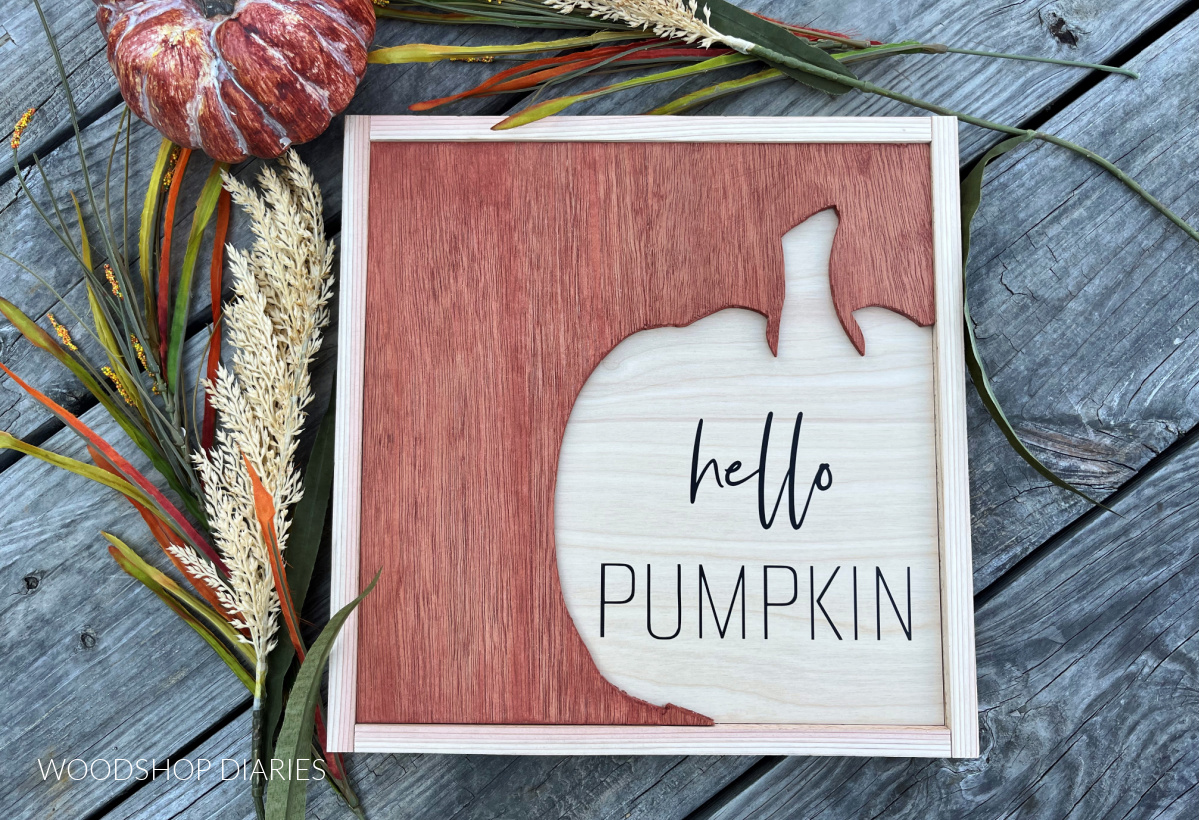
Wooden art piece with black vinyl letting "hello pumpkin" at bottom corner and orange stained pumpkin cut out shape overlaid it

It’s almost the most wonderful time of the year! You know…autumn 🙂

I’d be happy if it was fall all year long and we just skipped spring, summer, and winter altogether haha.

Every year when we start nearing the end of summer, I get this “make all the fall things” bug.

And lately, I’ve also been on a scrap wood project binge because my wood scrap collection is out of control!

So for this little project, I combined the fall element with scrap wood and brought out my new Cricut Explore 3 to bring it all together.

And I’m sharing how you can make your own below!

Tools & Materials:

*This post contains affiliate links. See website policies.

Tools:

  • Jig Saw
  • Cricut (I used an Explore 3, but any vinyl cutter would work fine)
  • Brad Nailer (optional)
  • Sander

Materials:

  • Wood Scraps
    • ¾″ plywood (for back)
    • ¼″ plywood (for front)
    • 1×2 (for frame)
  • Vinyl to Cut
  • Transfer Tape
  • Wood Stain
  • Wood Glue

Some Notes About This Wood Art Project

Feel free to get creative with your text and your shape here. You could make similar wood art pieces for any season or occasion.

Cricut Design Space File

If you’re new to using a Cricut, basically you design your project within the free software called Cricut Design Space.

You can design your idea elsewhere and simply import it, or you can design it directly in the software.
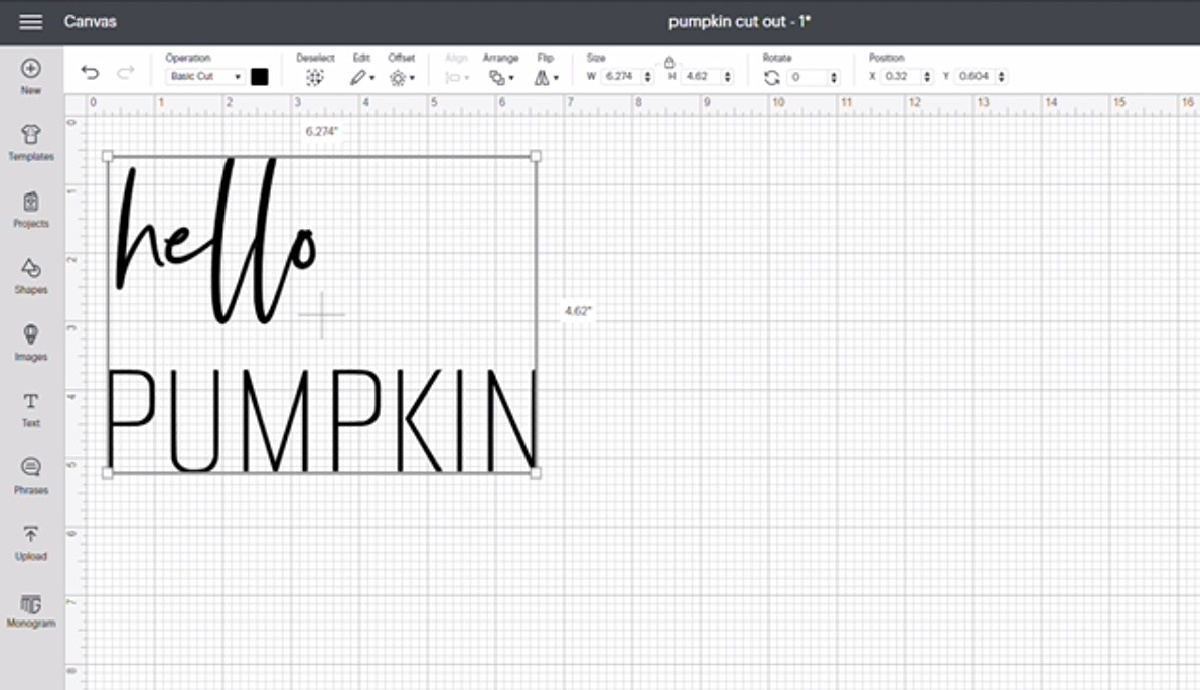
text "hello pumpkin" in Cricut Design Space screenshot

I’m sharing the DIY hello pumpkin wood art project file here, but of course, I always encourage you to create your own and make it yours 🙂

Once you have your design ready, you simply send it to your machine to cut it out. In this case, I cut my letters out on black permanent vinyl that I stuck directly on the plywood.

But, I also cut my pumpkin shape out on vinyl, too, that I used as a cutting guide. It’s “permanent” vinyl, but you can remove it (carefully) from a wood surface so it makes an excellent stencil.

Material Options

I used ¾″ plywood for the back and ¼″ plywood for the pumpkin shaped front piece. I cut both of them to about 12″ x 12″, but you can make yours any size you want.

This is a great opportunity to rummage through your scraps and see what you can come up with.

How to Make Your Own DIY Hello Pumpkin Sign

Let’s get building!

I’ve detailed the written step by step instructions below, but if you prefer to watch, I’ve also put together a quick video overview of the project for you here:

Step 1: Gather Your Materials

The first step is to gather your materials and cut them to size.

I shopped around my scrap pile and found a piece of ¾″ plywood and a piece of ¼″ plywood and cut them to 12″ x 12″.

But your pieces don’t have to be exactly this size and you could use thinner/thicker materials as well.

Either way, you just need a piece to add the lettering to and a piece to cut out to go on top.

Step 2: Cut Lettering and Shape Template on the Cricut

I used a Cricut Explore 3 to cut out my lettering and my pumpkin shape cutting pattern.

However, any vinyl cutter would work and you could also freehand all of this if you don’t have a vinyl cutting machine.

I’ve included the Cricut Design Space project here, but I encourage you to create your own custom text, fonts, and sizes to make it your own if you’re up for it 🙂
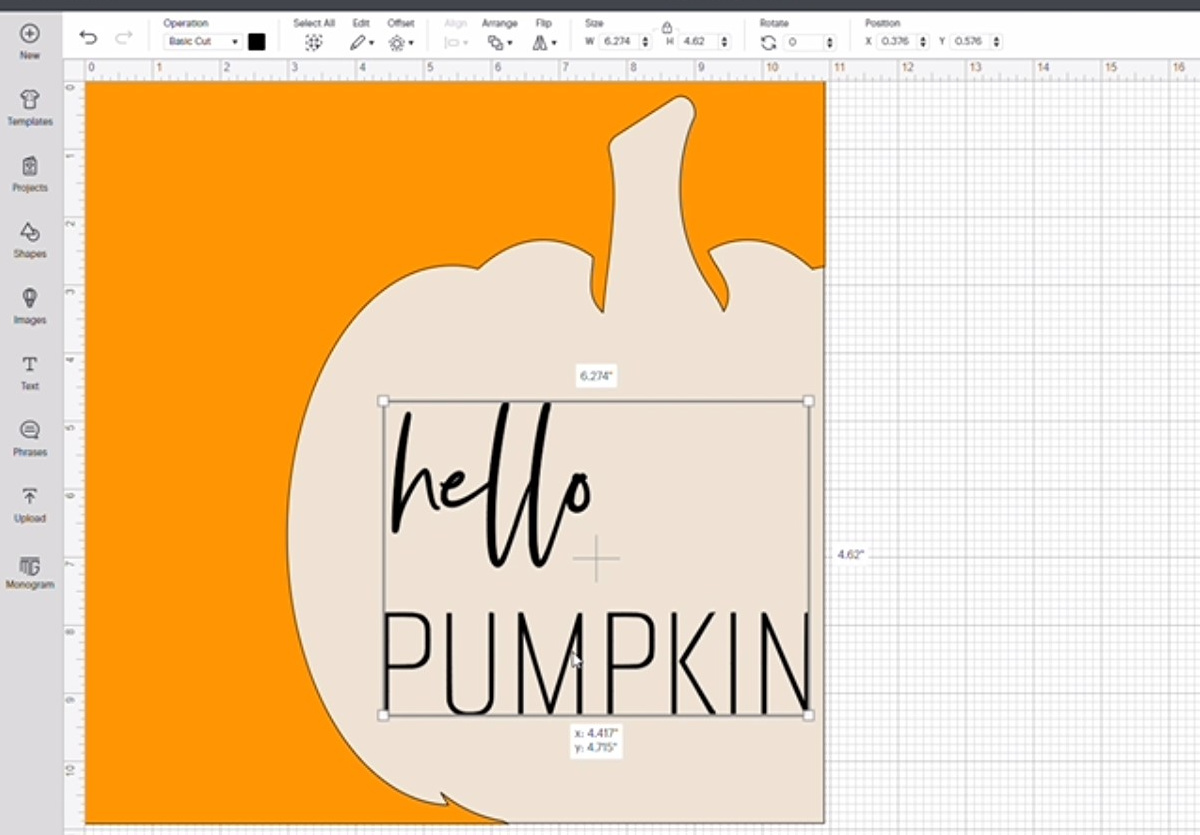
Cricut Design Space project image for DIY wooden hello pumpkin art

I created my design so that the text would fit inside the “cut out” section of the pumpkin shape.

I cut out my text first on a small scrap piece of black permanent vinyl.
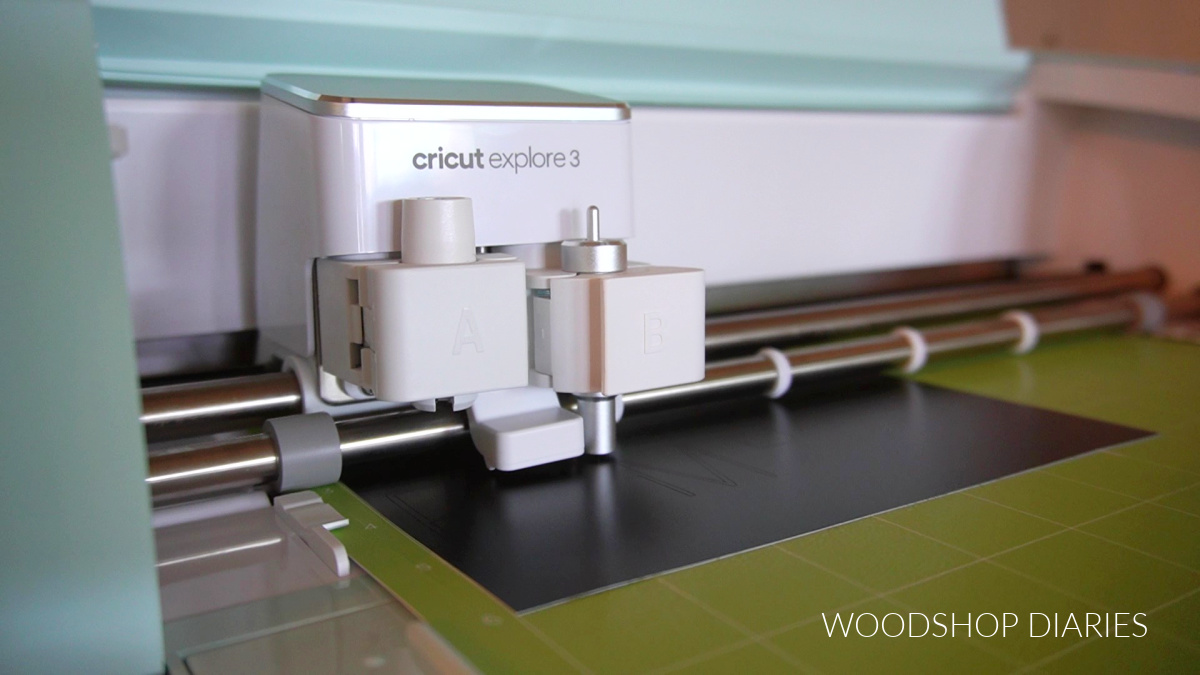
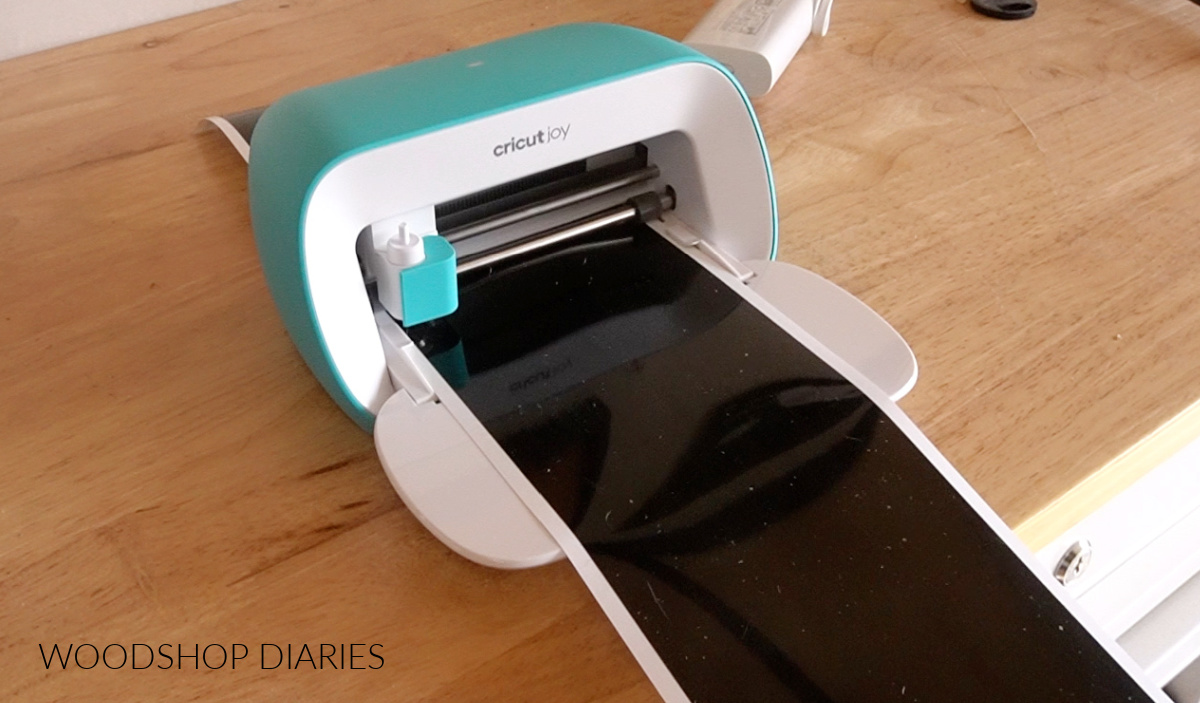
Close up of Cricut Explore 3 cutting vinyl lettering for hello pumpkin art

Then, I cut out my pumpkin shape on a piece of white permanent vinyl (the color of the shape cut out doesn’t matter–I just happened to have more white than black on hand, so I made it work).

I weeded the designs to remove everything I didn’t want, then applied transfer tape on them so I could transfer the vinyl to the wood pieces.
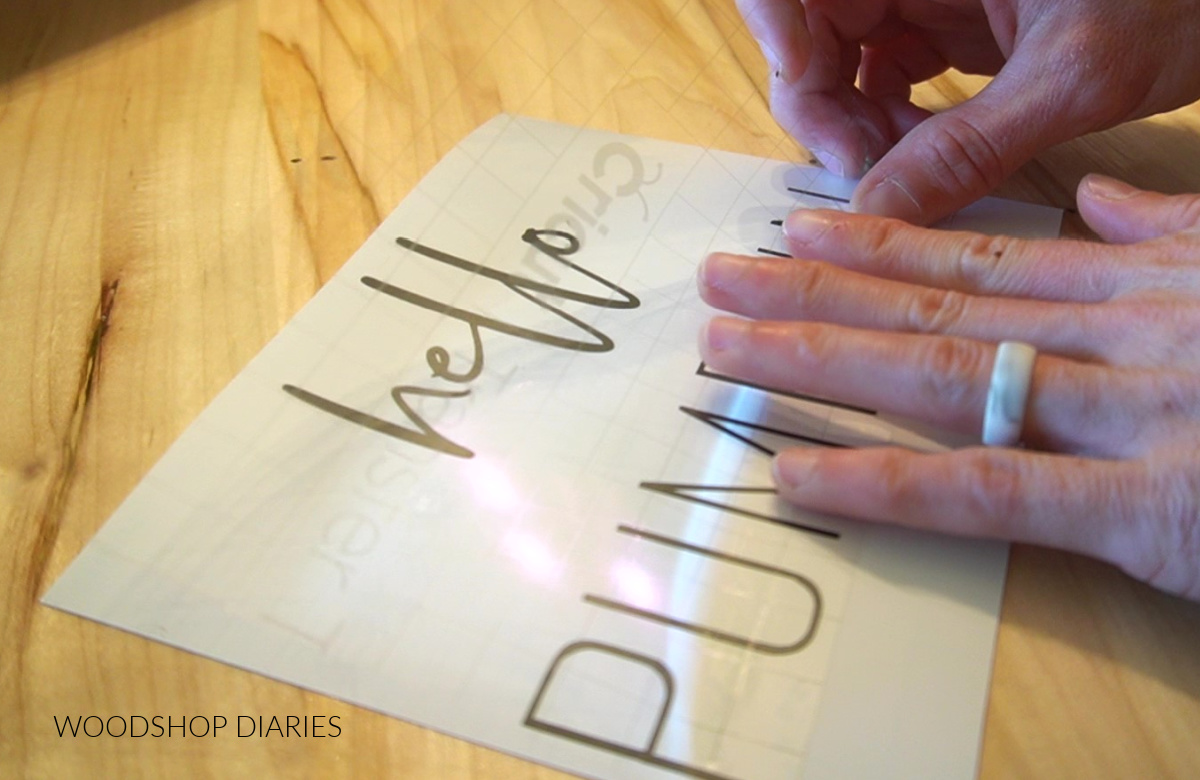
Placing transfer tape over vinyl lettering
Applying transfer tape to vinyl lettering

Step 3: Apply Lettering to Wood Backer

I applied the black vinyl text to the ¾″ plywood piece first. I put this toward the bottom corner.

Applying vinyl to wood can be a little tricky sometimes. I highly recommend sanding it well first to about 400 grit to make it extra smooth. Remove ALL the dust.
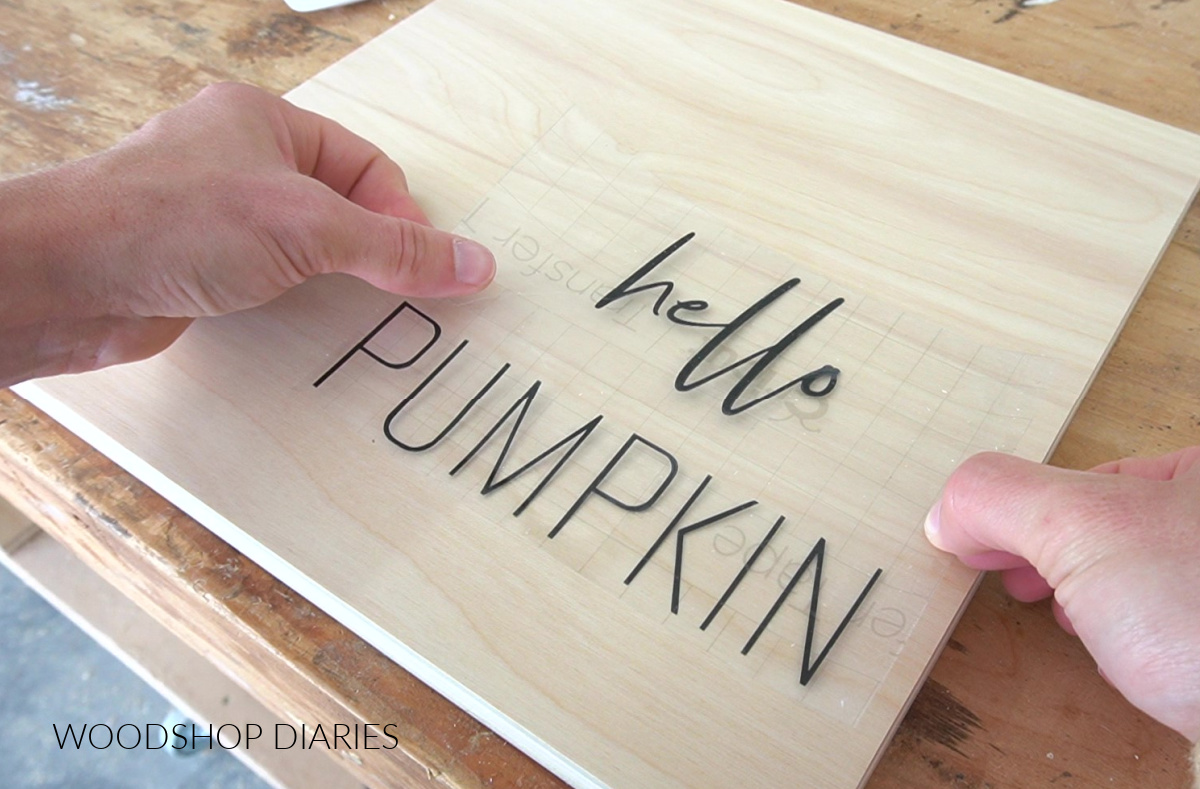
Applying hello pumpkin text to wood art plywood surface

You want the vinyl to stick to the wood and not the dust.

Make sure to use PERMANENT vinyl and press it onto the wood FIRMLY. I like to run my fingers along every letter and press hard before removing the transfer tape.
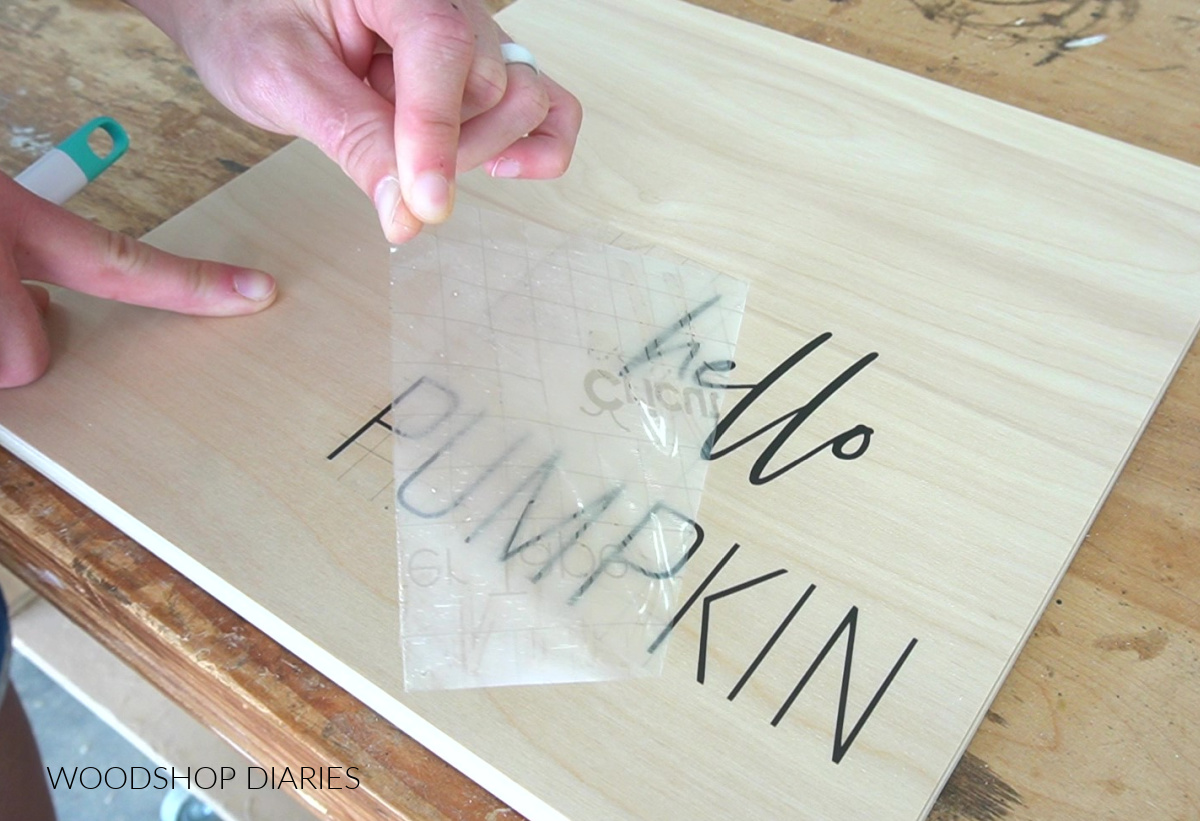
Removing transfer tape from vinyl hello pumpkin wood art lettering on plywood

It may help to seal the wood first with a coat or two of clear poly, but if you do, make sure to let it dry at least 24 hours before applying the vinyl.

Step 4: Cut Pumpkin Shape

After the lettering was on, I grabbed by ¼″” plywood piece and applied the pumpkin shape vinyl to it.
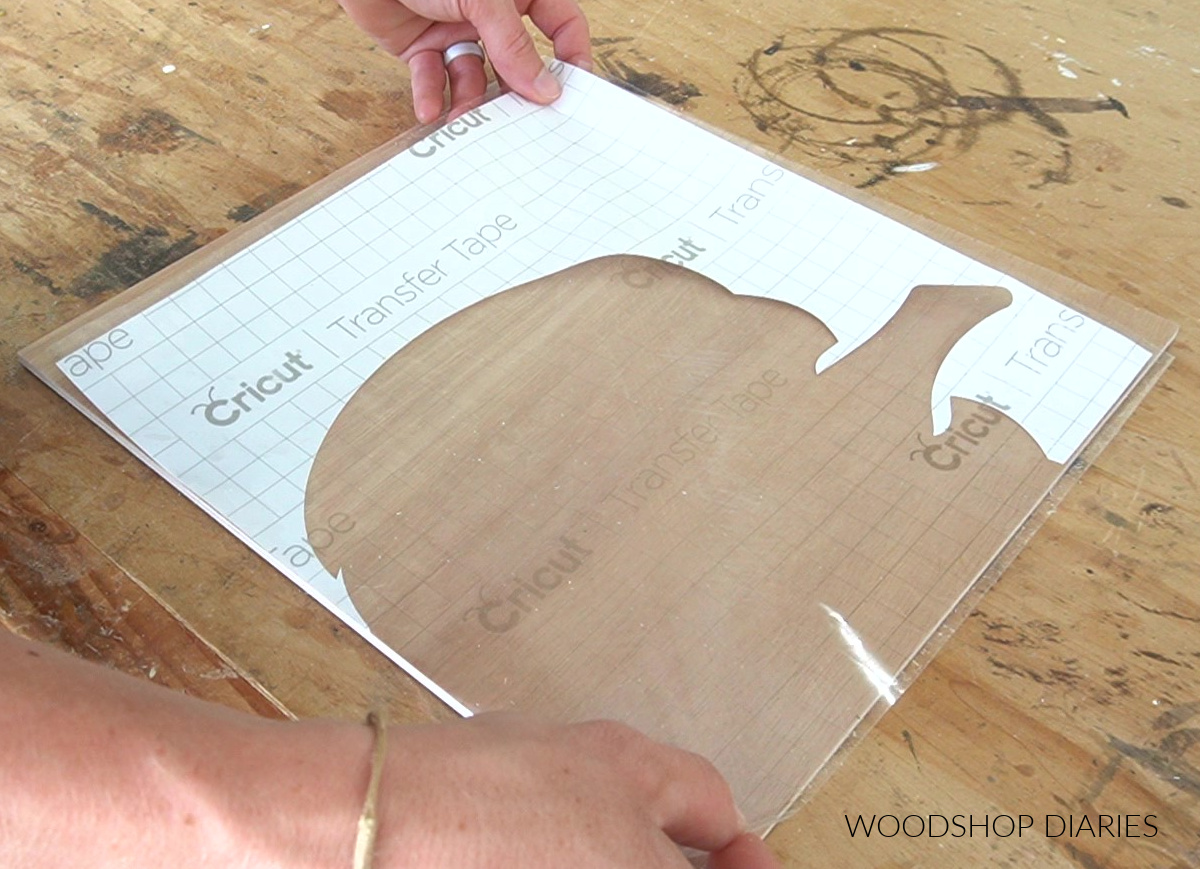
Placing pumpkin cut out shape vinyl stencil onto ¼" plywood piece

I removed the transfer tape, then used this as a cutting template.
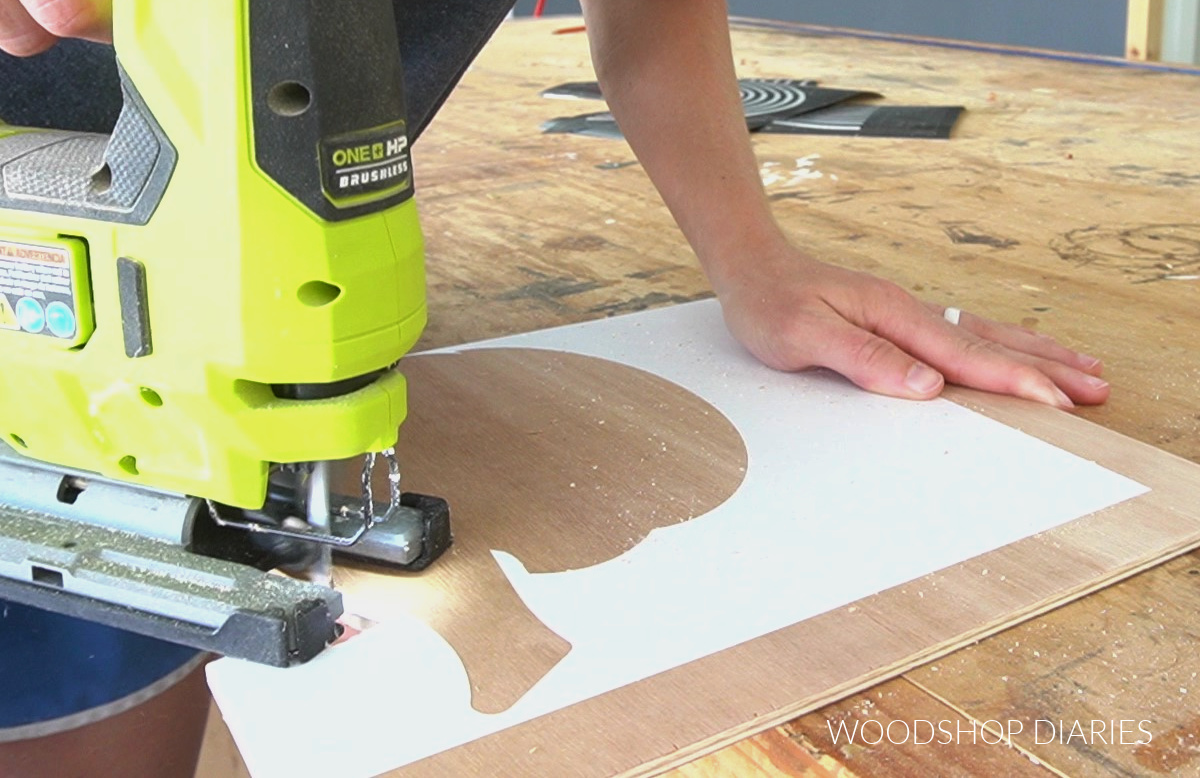
using a jig saw to cut around vinyl pumpkin stencil on plywood

After cutting, I removed the vinyl and lightly sanded around the edges.

I stained this in Minwax Samara (this is not a premixed color, but you can get it mixed just about anywhere they sell Minwax stains–I got mine mixed at my local Sherwin Williams paint store.)
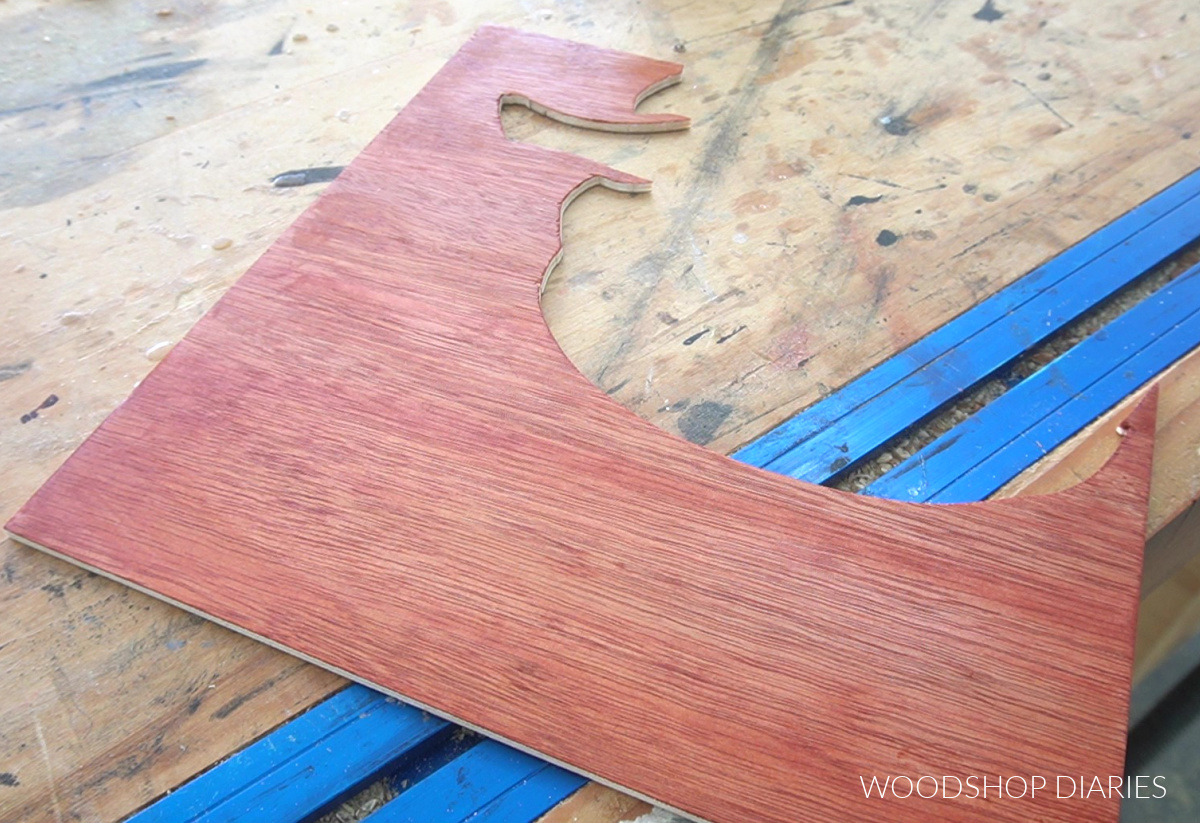
pumpkin cut out of ¼" plywood stained orange

Step 5: Glue Pieces Together

Now, it was time to put it all together!

I used some wood glue to glue the pumpkin cut out onto the ¾″ plywood piece.
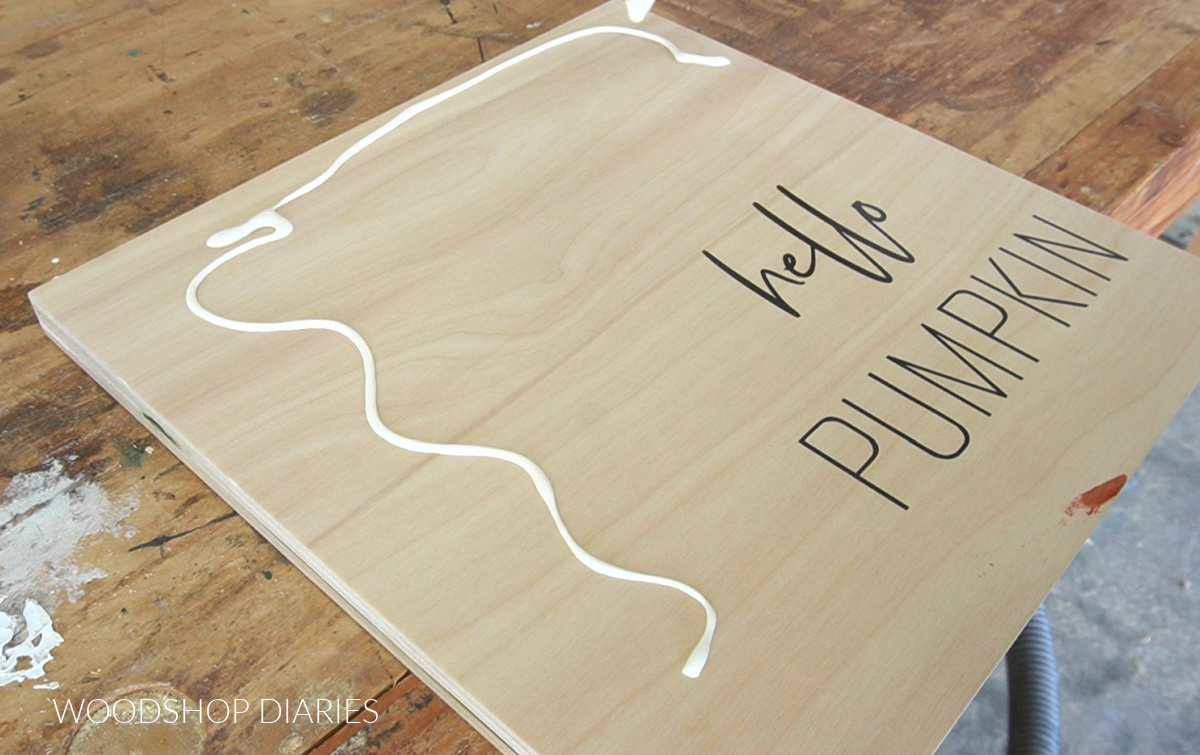
applying glue to back piece of hello pumpkin wood art

Be careful not to use too much glue–you don’t want it to squeeze out onto where the lettering is. That would be tough to clean up!
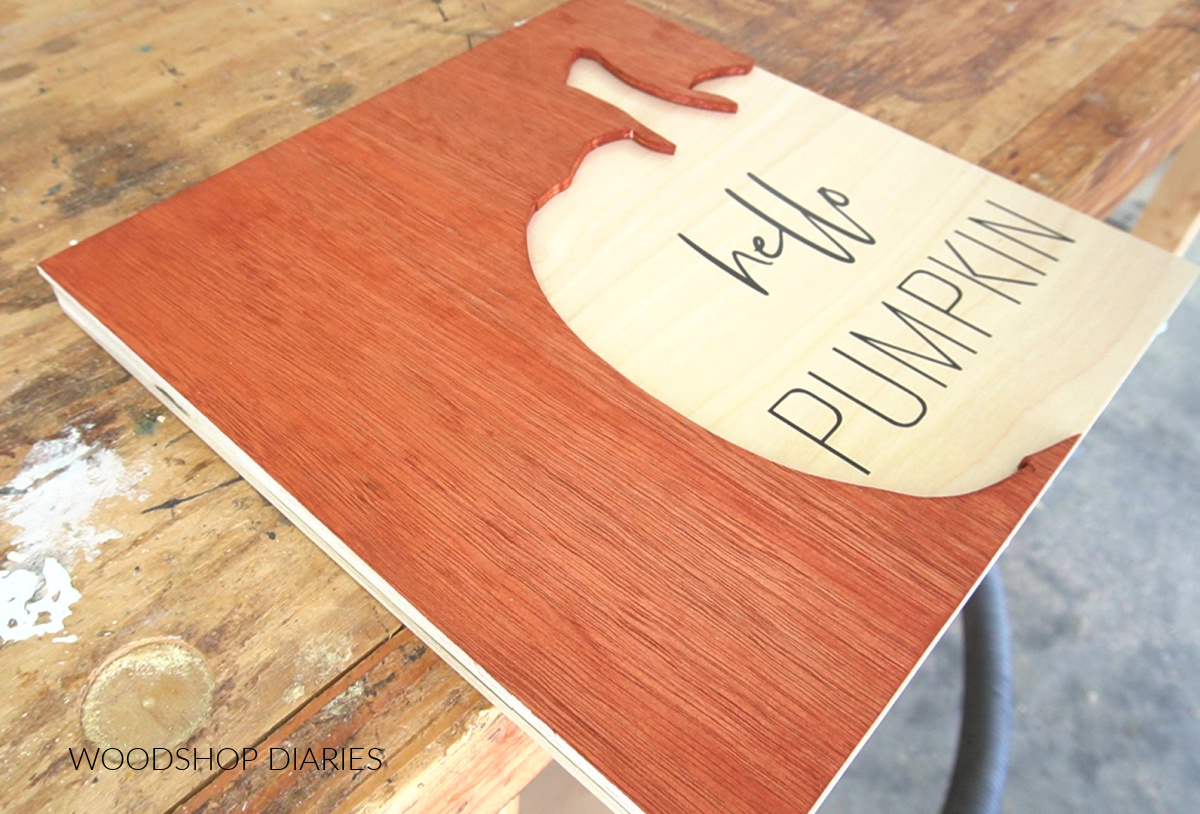
plywood pieces glued together so that hello pumpkin vinyl text shows inside pumpkin shape cut out

Step 6: Add Frame

Once the glue was dry, I cut to fit 1×2 pieces (these were actually pieces of cedar fence pickets I ripped to 1 ½″ wide) to fit around the sides to frame this out and hide the plywood edges.

You could just glue these pieces on, or if you have a brad nailer, you can tack these in place using that to save a little time (and a little mess haha).

completed hello pumpkin wood art sign on weathered wood back drop with fall foliage

And with that, it’s completed!

I don’t typically hang much stuff on the walls–I usually just place things on shelves and swap them out for the seasons.

However, if you prefer to hang this, you can add a simple sawtooth hanger on the back side at the top. These are inexpensive and easy to install with just a hammer.

Looking for More Fall Scrap Wood Projects?

If you enjoyed this fun DIY hello pumpkin fall wood art, be sure to check out some other fun fall scrap wood ideas you can add to your list here:
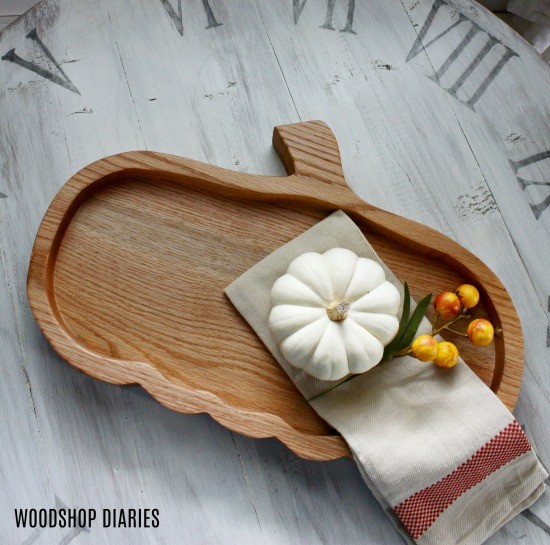
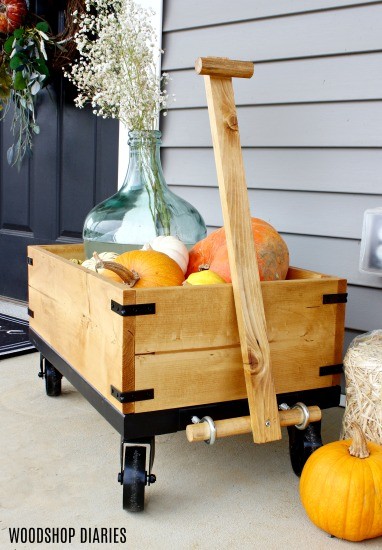
DIY Pupmpkin Shaped Wooden Tray
DIY Front Porch Wagon
How to make a super easy DIY scrap wood fall sign
Scrap Wood Leaf Sign
EASY Fall Centerpiece Board
Completed fall tray sitting on coffee table with orange and white pumpkins and fall greenery.
DIY Leaf Shaped Tray

And if you want to stay up to date on new projects and building plans, be sure to subscribe to the newsletter below:

Don’t forget to save this for later by pinning it or sharing it to your favorite social channel!
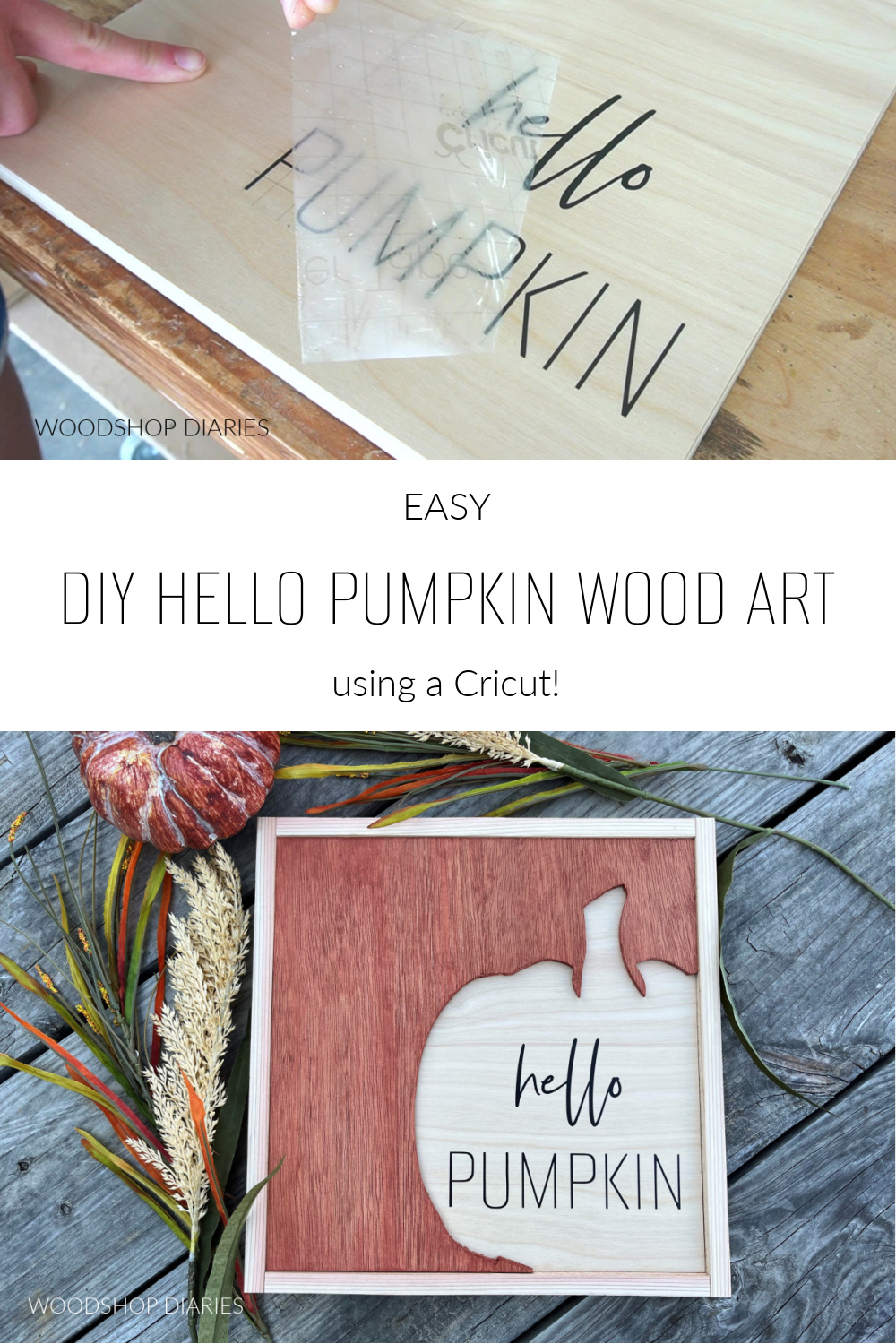
Pinterest collage image showing removing transfer tape from vinyl lettering at top and completed hello pumpkin sign at bottom with text "easy DIY hello pumpkin wood art using a cricut!"

Until next time, friends, happy building!
DIY Reversible Wall Shelf

August 16, 2022 by Shara, Woodshop Diaries

In this post, I’m sharing how to build a simple DIY reversible wall shelf using scrap wood!

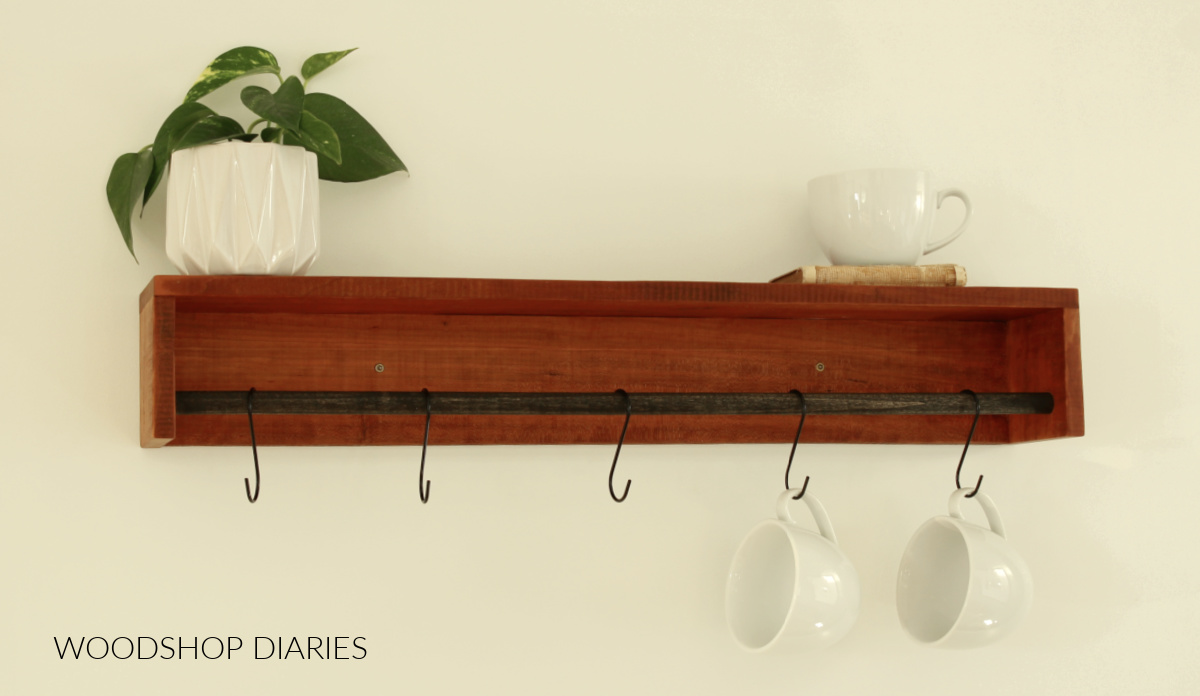
Wood wall shelf with black dowel rod hanging coffee mugs from S hooks

This simple DIY wall shelf can be hung up like shown above to give you a place to hang coffee cups, tea towels, plants, etc.

.

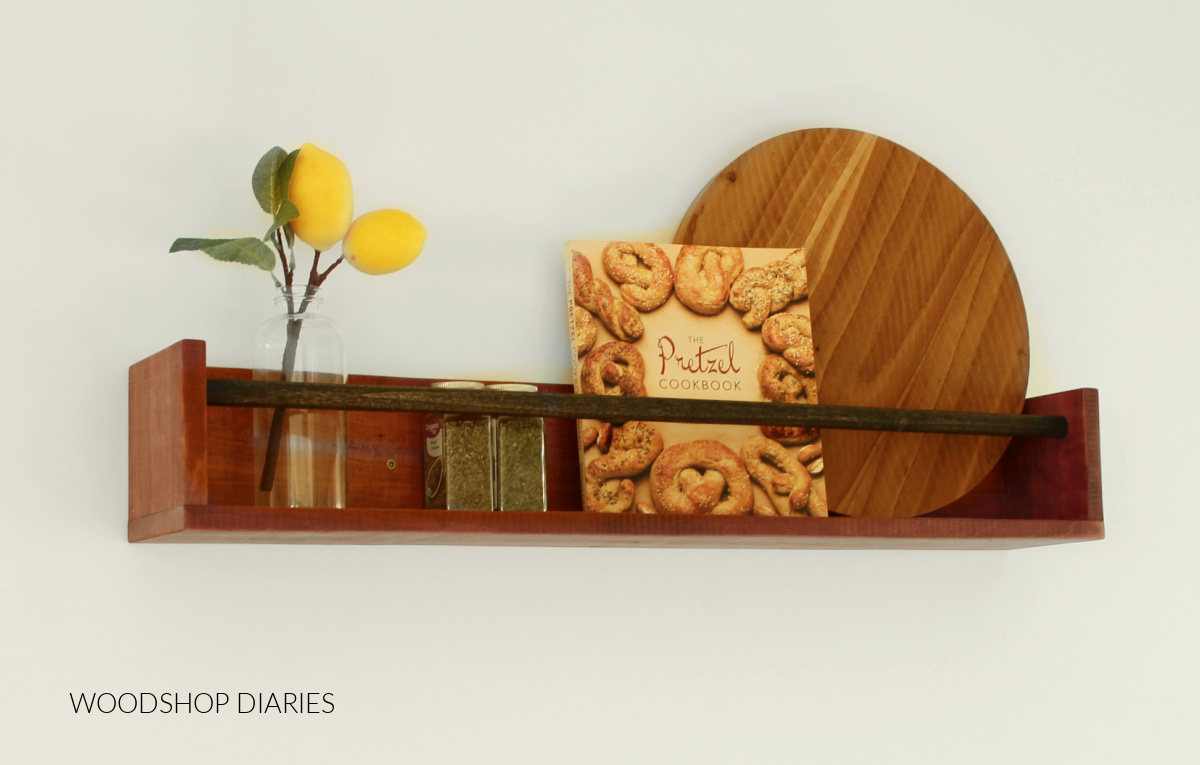
Or, you can reverse it and hang it like shown below to use as a spice rack, for books, or for displaying plates or cutting boards.

Wood Wall shelf with black dowel rod used as spice and book rack

It’s quick and easy enough to build, so you could just build two so you can do both at the same time! *wink wink*

.

The dimensions for this are easily customizable, so I encourage you to dig around your scrap pile as you can likely find everything you need there to build your own!

Tools & Materials:

*This post contains affiliate links. See website policies.

Tools:

  • Miter saw
  • Circular or Table Saw (optional–only needed if you rip your boards)
  • Pocket Hole Jig
  • Drill/Driver
  • Brad Nailer
  • ¾″ Forstner Bit
  • Clamps

Materials:

  • Wood Scraps (see notes below)
  • ¾″ diameter dowel rod
  • Wood Glue
  • 1 ¼″ pocket hole screws
  • 2 ½″ wood screws (to hang with)
  • Brad Nails
  • Wood Finish
  • S hooks (optional if you want to hang things from shelf)

Some Notes About Building a DIY Reversible Wall Shelf

You can build this shelf from almost any size wood–it really just depends on what you’d like to use it for and how deep you want your shelf.

.

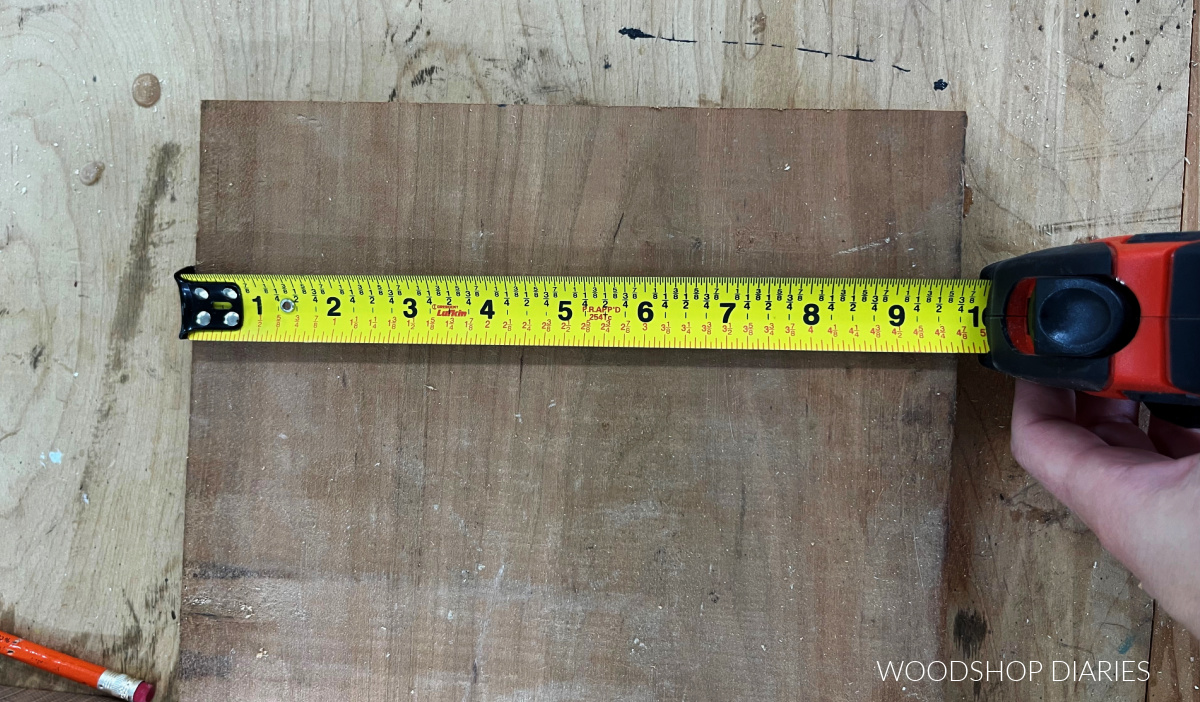
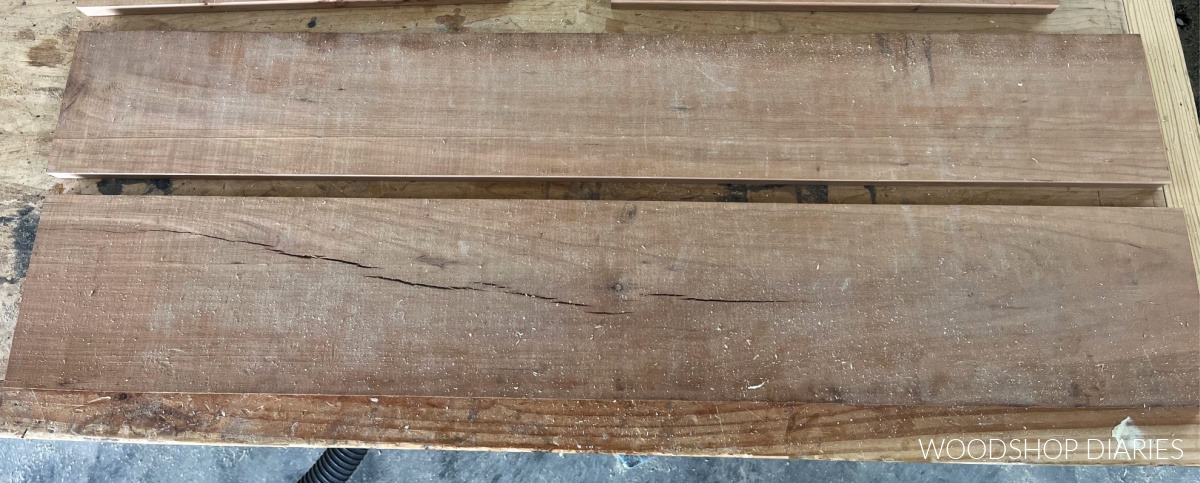
In my case, I had a wide scrap board about 9 ¾″ wide that I ripped into two 4 ½″ wide strips for this.

Measuring tape measuring 9 ¾" wide board

I used one piece for the back and one for the top and cut a side piece from each (see step 1 below).

.

However, if you had some scrap 1×4 or 1×6, you could just use that instead. Feel free to shop your scrap pile and find whatever you can work with.

Two 4 ½" wide wood strips laying on workbench

As far as length, I made my shelf about 30″ long. Of course, you can make it longer or shorter.

.

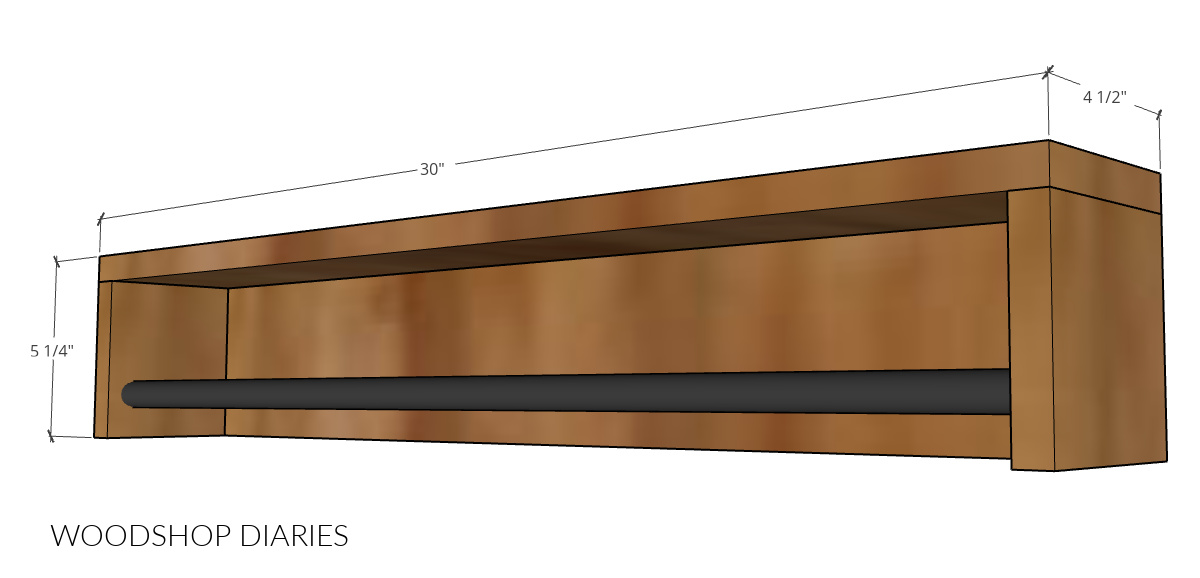
My overall shelf dimensions were 4 ½″ deep x 5 ¼″ tall x 30″ long.

Overall wall shelf dimensional diagram

BUT…the dowel will tend to sag if you make it too long and hang several heavy things from it. So if you plan to hang items, I’d keep it 30″ or less OR use a thicker dowel.

How to Build DIY Reversible Wall Shelves From Scrap Wood

Alright, let’s get building!

.

This is a really quick project, and I’m sharing the step by step plans below.

.

But if you prefer to watch, I’ve also put together a quick video overview so you can watch how it’s made:

Step 1: Cut Pieces to Assemble Wall Shelves

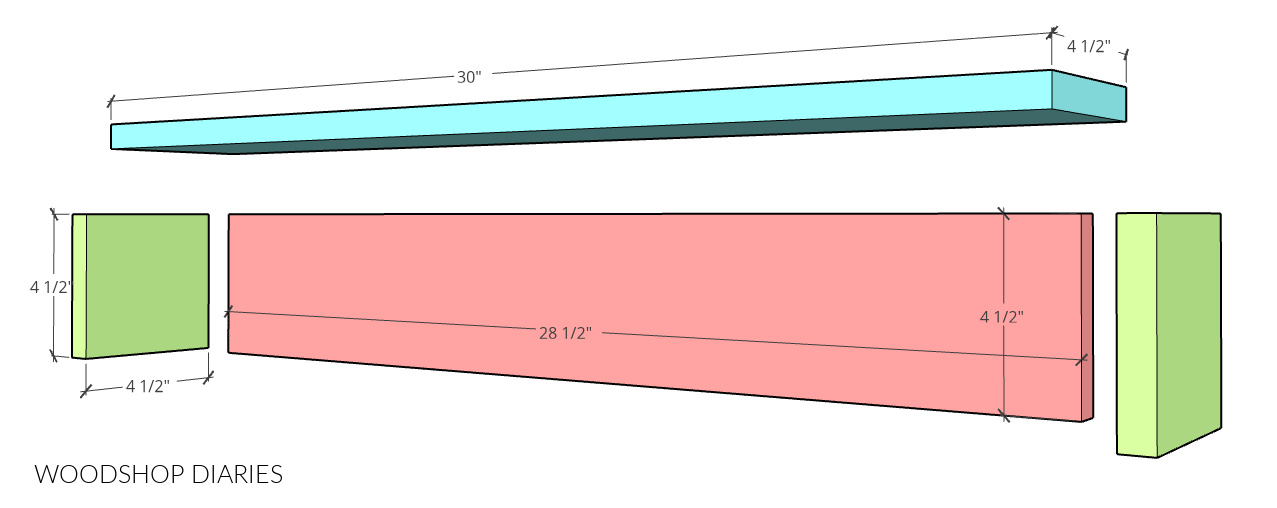
First, I cut down my scrap wood board into four pieces. I used 1x material, so it was all ¾″ thick.

.

Now, again, yours don’t have to be exactly the same as mine. But I cut the following:

  • (2) 4 ½″ x 4 ½″ sides
  • (1) 4 ½″ x 30″ top
  • (1) 4 ½″ x 28 ½″ back
Exploded cut diagram for scrap wood wall shelf

These pieces should fit together to create kind of a “partial box.”

Wood pieces cut to size and laid out on workbench with labels--top, back, sides

Then, I cut my ¾″ diameter dowel rod to 1″ longer than the back board. So in my case, it was 29 ½″ long.

.

If you want to stain or paint your dowel rod a different color than your shelf, I recommend doing it now before installing it as it’ll be much easier.

.

I stained my wooden dowel Rustoleum Ebony.

Step 2: Drill Pocket and Dowel Holes for Assembly

I drilled ¾″ pocket holes into the ends of the back board (on the back side, so they’ll be hidden in the finished project).

.

Then, I used a ¾″ forstener bit to drill out ½″ deep holes in the side pieces to install the dowel rod into.

Close up of ¾" diameter hole drilled for dowel

You can adjust the location of the dowel however you’d like, but I drilled mine with center 1 ¼″ from the bottom and front edges of each piece.

Step 3: Assemble Scrap Wood Wall Shelf

I used 1 ¼″ pocket hole screws to attach one side to the back. Make sure to orient the dowel hole correctly on the side piece before driving the screws.

.

Before securing the second side, I stuck the dowel rod into the shallow holes.

Inserting dowel rod into hole on sides of shelf

Then, I screwed the second side on using 1 ¼″ pocket hole screws.

Diagram showing how the back of wall shelf is assembled between the sides

Finally, I attached the top using wood glue and brad nails.

Diagram showing how to install the top of wall shelf

Step 4: Finish and Hang Reversible Shelves

I gave the piece a final sanding, then applied Walrus Oil Furniture Butter for finish.

.

You can paint or stain however you’d like. For more wood finishing tips and ideas, check out how I finish my wood furniture pieces here.

.

Then, I located the wall studs where I wanted to hang the shelves and used two 2 ½″ wood screws through the back side of the shelf into two wall studs behind it.

Shara Woodshop Diaries hanging wall shelf using wood screws

Make sure to use a level so it’s not sloping.

.

You can install these so that the dowel is toward the top to use it as a plate, book, or spice rack.

Wall shelf with dowel toward top with spices, book, and cutting board inside

Or, you can install these so that the dowel is toward the bottom and use S hooks to hang coffee mugs, towels, or utensils from.

Close up of wall shelf flipped over and s hooks hanging coffee mugs from dowel

This is such a simple shelf idea, but it’s got so many possibilities!

.

I love the minimalist style of it added to our dining room wall. This would be great in a kitchen, for a coffee station, or even in a kids room for a book rack.

Want More Storage and Shelving Ideas?

I hope you enjoyed this fun and simple DIY wall shelf project and if you’re looking for more shelving ideas, here’s a few favorites!

Vinyl Record Shelf
Scrap Plywood Coat Rack
Faux Live Edge Wall Shelves
Close up of industrial details of DIY scrap wood wall shelf
Scrap Wood Industrial Shelves
Corner Floating Shelves
Simple Shoe/Book Rack

More Fun With Scrap Wood

Can’t get enough scrap wood projects?? I’m teaming up with my friend, Kati, from Houseful of Handmade all month long to share some “Scrap Wood Summer” Projects!

.

Check out all the projects in the series so far below. Click on an image to learn how to make each one!

Scrap Wood Monitor Stand
Scrap Wood Footed Tray
Scrap Wood Cake Plate
Scrap Wood Geometric Art
Scrap Wood Bookends
Scrap Wood Wall Shelf
Scrap Wood Curtain Rod Brackets
Scrap Wood Pumpkin Sign
Scrap Wood Tiered Plant Stand
Scrap Wood Plant Stand

We will be posting new Scrap Wood Summer projects every Tuesday through this entire month.

.

Subscribe to the newsletter to be the first to know when the new scrap wood projects come out!

If you’d like to save this project for later, don’t forget to pin it or share it to your favorite social channel!

Pinterest collage showing shelf with coffee mugs at top and shelf as book rack at bottom with text "DIY Reversible wall shelves from wood scraps"

Until next time, friends, happy building!
DIY Mobile Battery Charging Station for Workshop

August 13, 2022 by Shara, Woodshop Diaries

In this post, I’m sharing how to build a DIY mobile battery charging station for your workshop or garage!

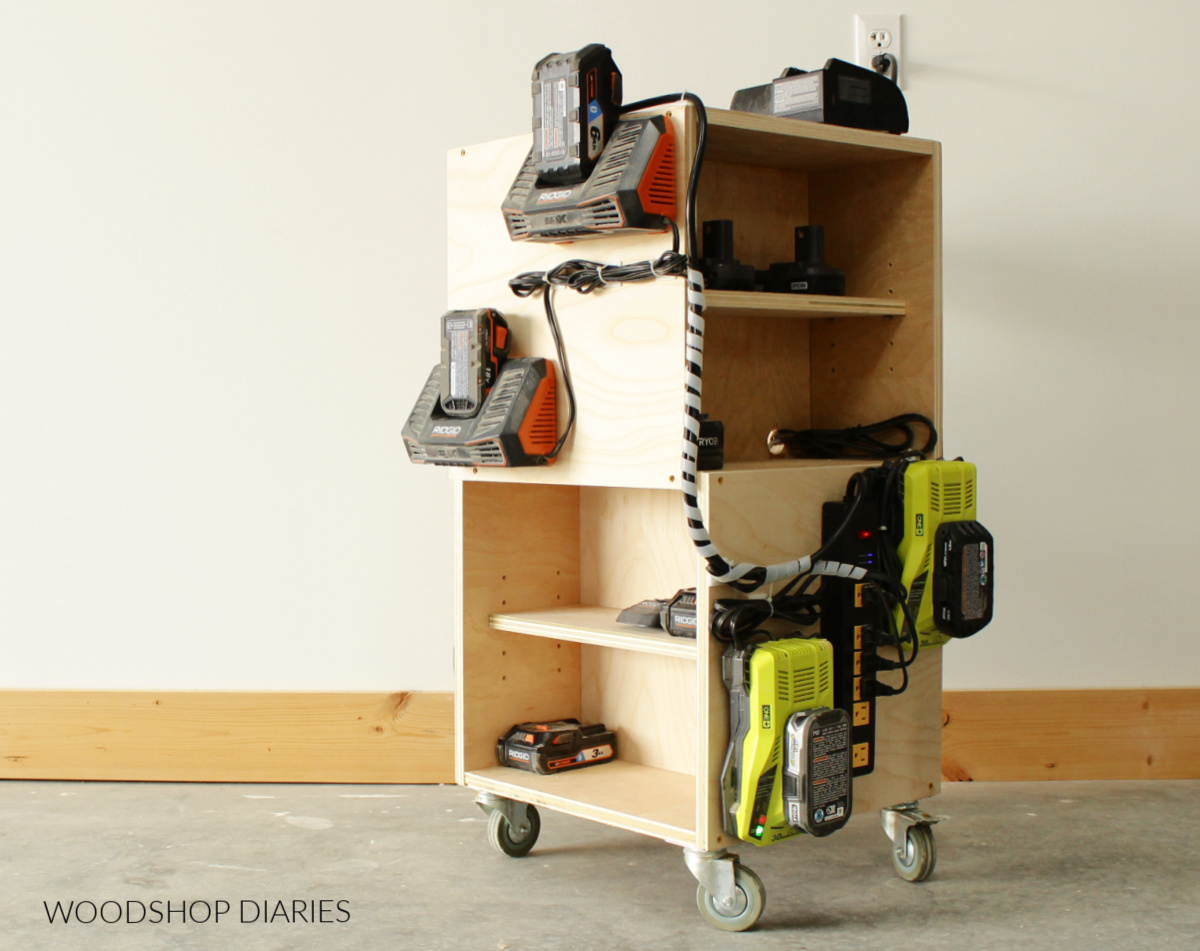
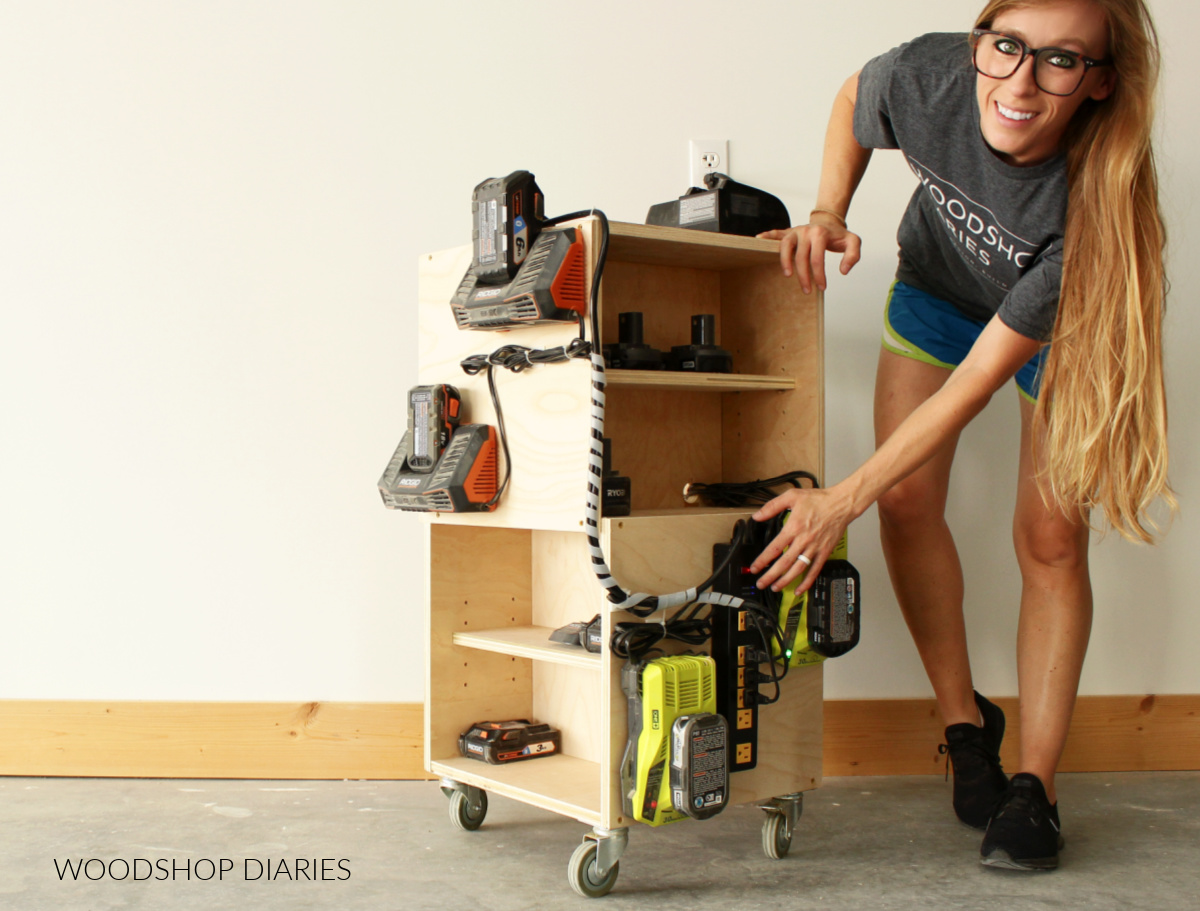
Plywood shop cart with wheels with battery chargers mounted on sides

Cordless tools are a game changer.  But…those batteries can accumulate quick.

.

All my battery chargers and spare batteries had taken over my workbench space and the cords had become a little chaotic.

.

So I decided to put together a DIY mobile battery charging station with plenty of room to mount all the chargers, plus shelving for my batteries.

.

I separated the chargers on two separate power strips–one for the outdoor equipment batteries and one for the smaller power tool batteries. That way, I can charge only what I need to depending on what I’m using at the moment.

.

Oh, and it’s on wheels so I can just roll it in and out and around as needed—wheels just make everything more fun!

.

If you’re looking to get your chargers and batteries organized in your own shop or garage, I’m sharing how to build this mobile charging station below!

Tips Before Building a DIY Mobile Battery Charging Station

I made this 4 sided shelf project as a mobile charging station, but you could DEFINITELY use this for any type of extra storage in the shop, as a tool cart, craft supplies, etc.

.

Feel free to get creative with how you use it.

Overall Dimensions

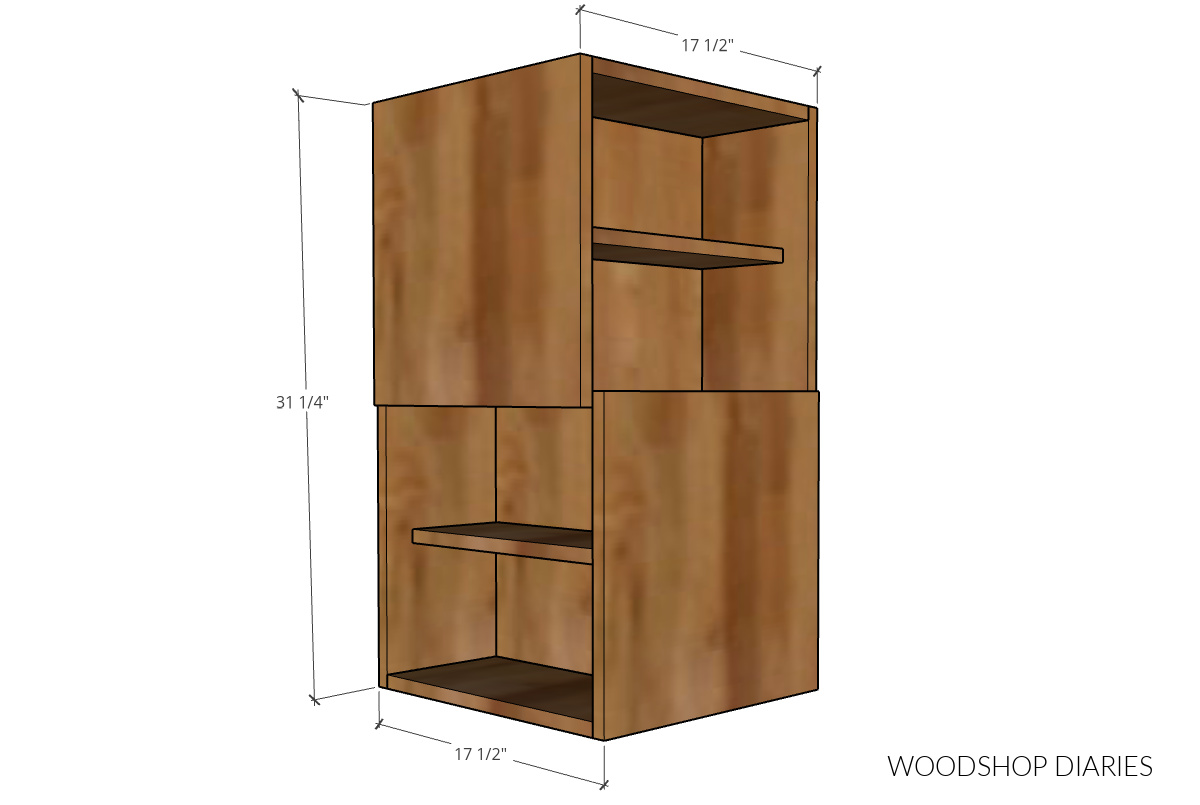
Overall dimensions BEFORE ADDING WHEELS are 17 ½″ wide x 17 ½″ deep x 31 ¼″ tall.

Overall dimensional diagram of mobile battery charging station without wheels

You can add any size casters you want on this depending on how you want to use it and that will obviously change your overall height accordingly.

Power Strips

To help contain all the cords, I plugged the chargers into power strips, so that I can just run one cord from the strip to an outlet when I get ready to charge.

.

Battery chargers pull quite a bit of energy while charging. I recommend checking your specific charger(s) for ratings and choose a power strip capable of handling the number/size/type of chargers you plan to plug into it.

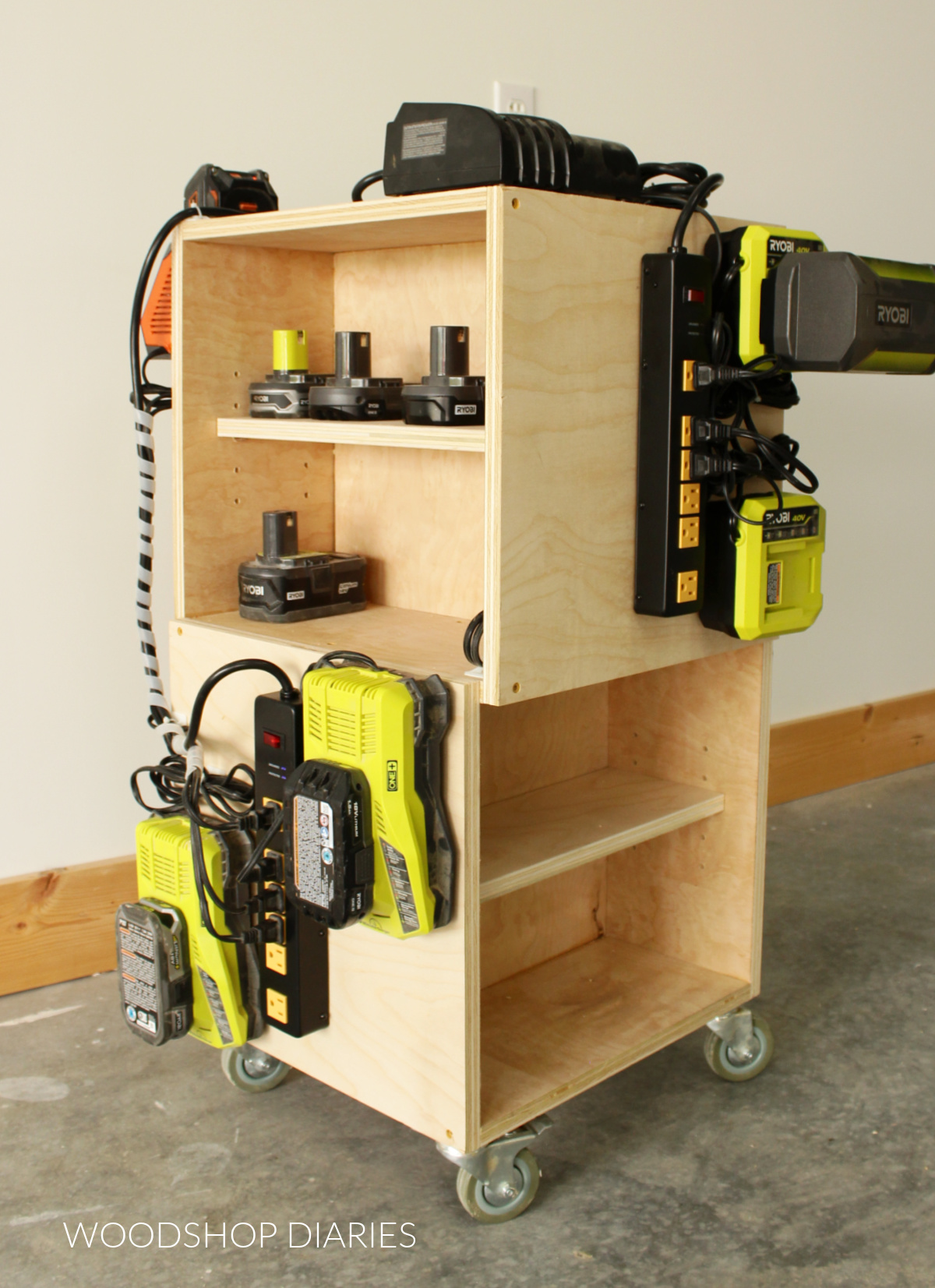
Close up of mobile charging station showing two power strips mounted on the sides

I separated my chargers out on two different power strips. I put my outdoor equipment battery chargers on one and my power tool battery chargers on another.

.

Of course, you can add more or less, or change that up however you’d like.

Wood Type

I used ¾″ birch plywood for this project because that’s what I already had available in my workshop.

.

However, since this is just a workshop or garage project, you can definitely opt for a lower grade plywood to save a few bucks if you’d prefer.

.

Despite the grade of plywood you choose, I still recommend sticking with ¾″ plywood as that’s what is used in the plans below.

NOTE: Many ¾″ plywoods are ACTUALLY 23/32″ thick–which is 1/32″ shy of a full ¾″. In most cases, this 1/32″ is negligible, so ¾″ is used to keep the math a little easier to manage.

Tools & Materials

**This post contains affiliate links. See website policies.

Tools:

  • Circular Saw
  • Cutting Guides (optional)
  • Drill/Driver
  • Shelf Pin Jig

Materials:

  • (1) 4×8 sheet ¾″ plywood
  • (4) Caster Wheels (you can use any size you’d like)
  • Wood Glue
  • 1 ¼″ wood screws
  • ⅝″ wood screws + washers
  • Shelf Pins
  • Power strips (optional)
  • Zip Tie Mounts with Cable Ties (to contain the cords)
  • Painters tape

How to Build a DIY Mobile Battery Charging Station

Are you ready to get building?

.

Grab your plywood sheet, your battery chargers, and just a few tools and let’s dive in.

.

If you prefer to watch, I’ve put together a short video tutorial overview here. The step by step plans and full length video follow below.

You can find the printable version of the plans below here.

Charging Station Cut List:

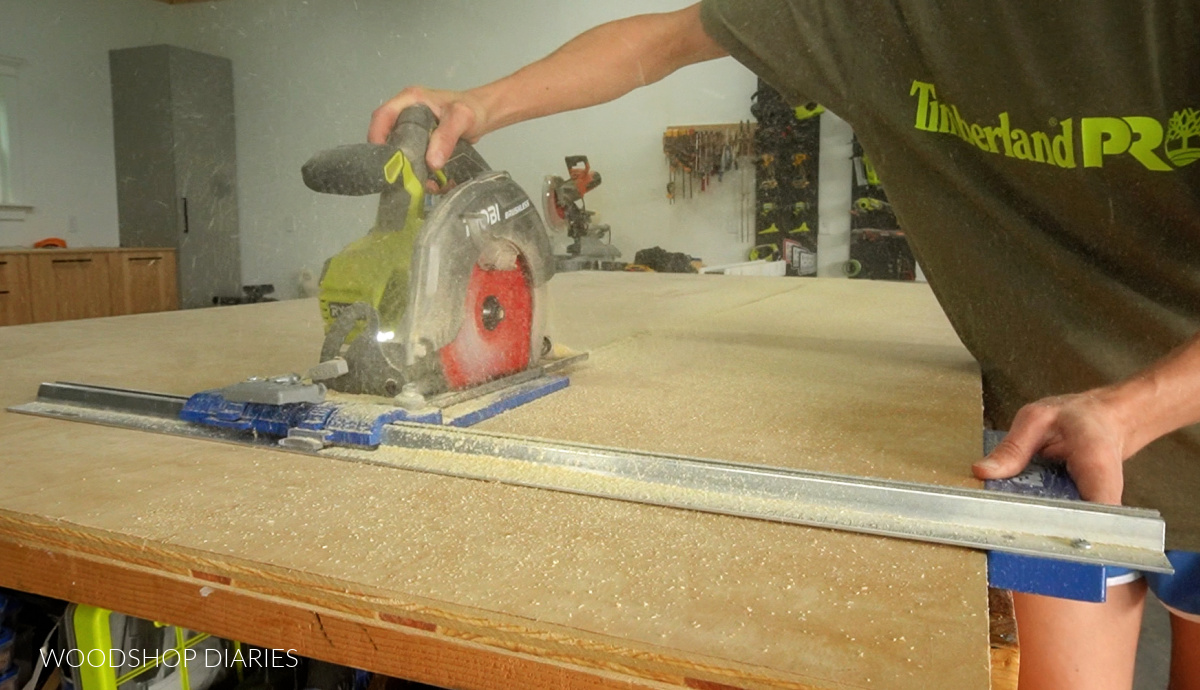
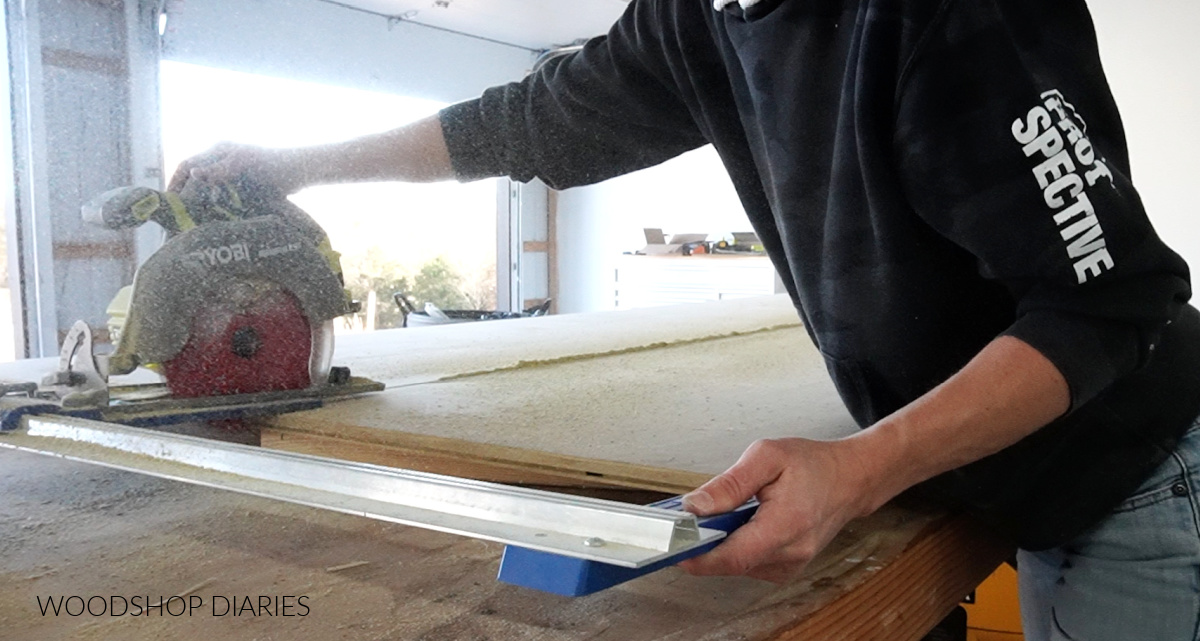
To get started, I used my Kreg Rip Cut and circular saw to rip two 16″ wide strips of plywood from my sheet.

RELATED: Check out this guide for how to cut plywood sheets using a circular saw.

Using a circular saw and Kreg Rip Cut to cut down plywood sheet

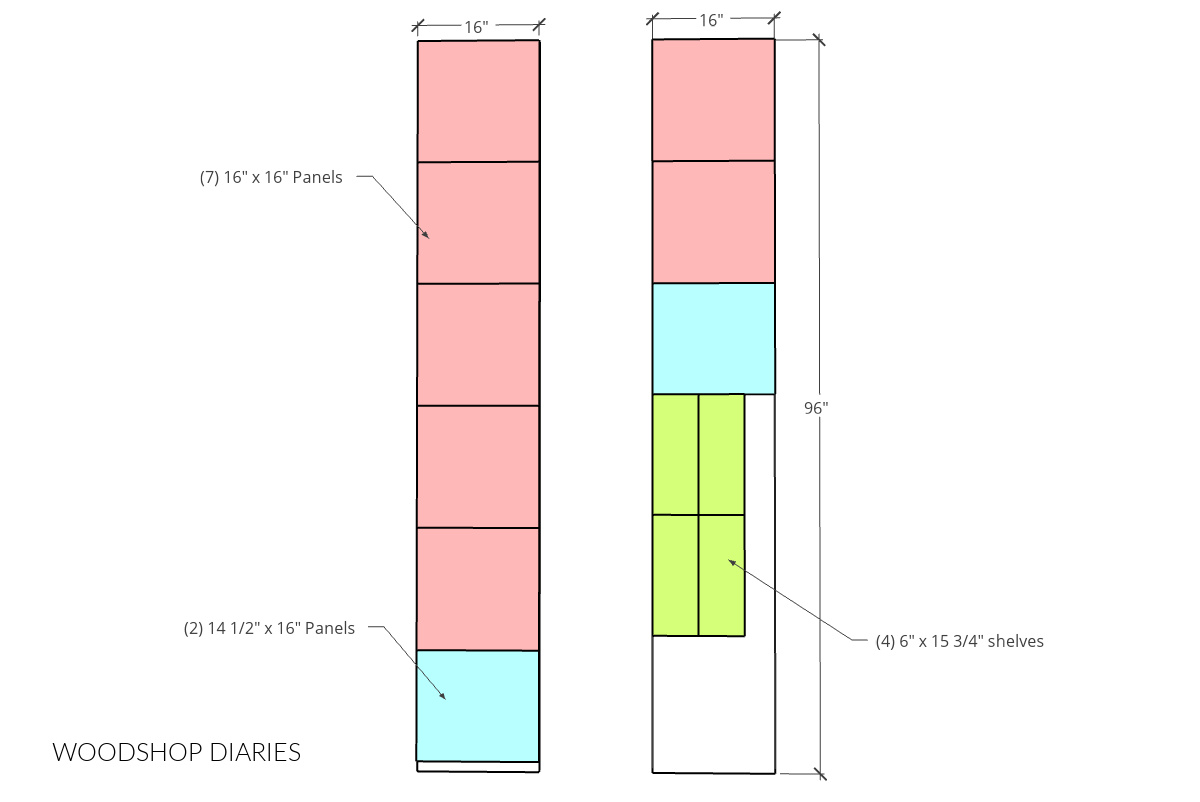
Two 16″ x 96″ plywood strips are all you need for this project, so I set aside my leftover plywood piece to use on another project later.

.

Below is a plywood cut diagram showing all the cuts for the build.

Plywood cut diagram for battery charging station

Once these strips were cut from the main sheet, I used a miter saw to cut down all the individual pieces, but you could use a circular saw if you prefer.

Prefer to print your plans? Grab the printable version of the plans from this post here:

Step 1: Assemble Bottom Half of Battery Charging Station

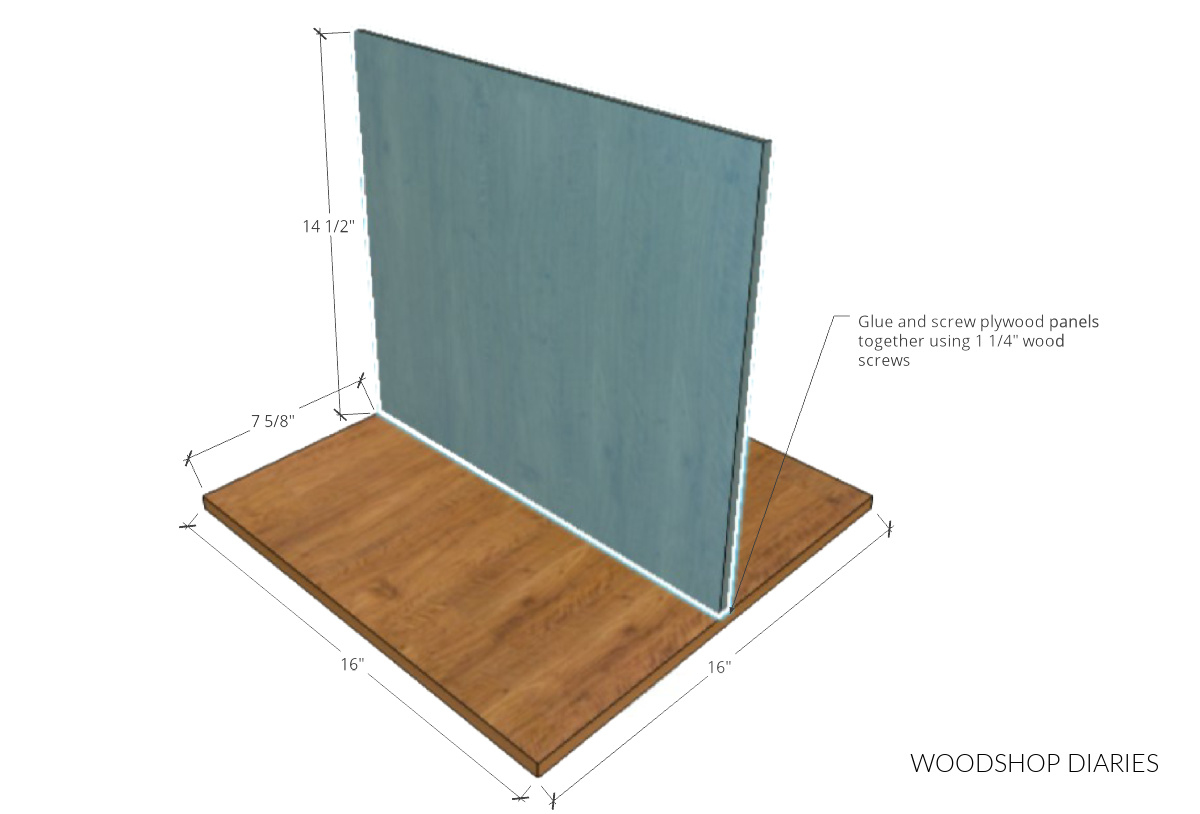
I attached one 14 ½″ x 16″ panel to one of the 16″ square panels using wood glue and 1 ¼″ wood screws so that it forms an “upside down T” shape.

Diagram showing how to assemble first two pieces of mobile shop cart

Make sure the vertical piece is the smaller panel and that it’s centered side to side.

.

I actually found it easiest to assemble this by laying it on it’s side to drive the screws.

Driving screw into plywood panels on workbench using driver

PRO TIP: Predrill all your holes before driving the screws to prevent splitting the wood!

.

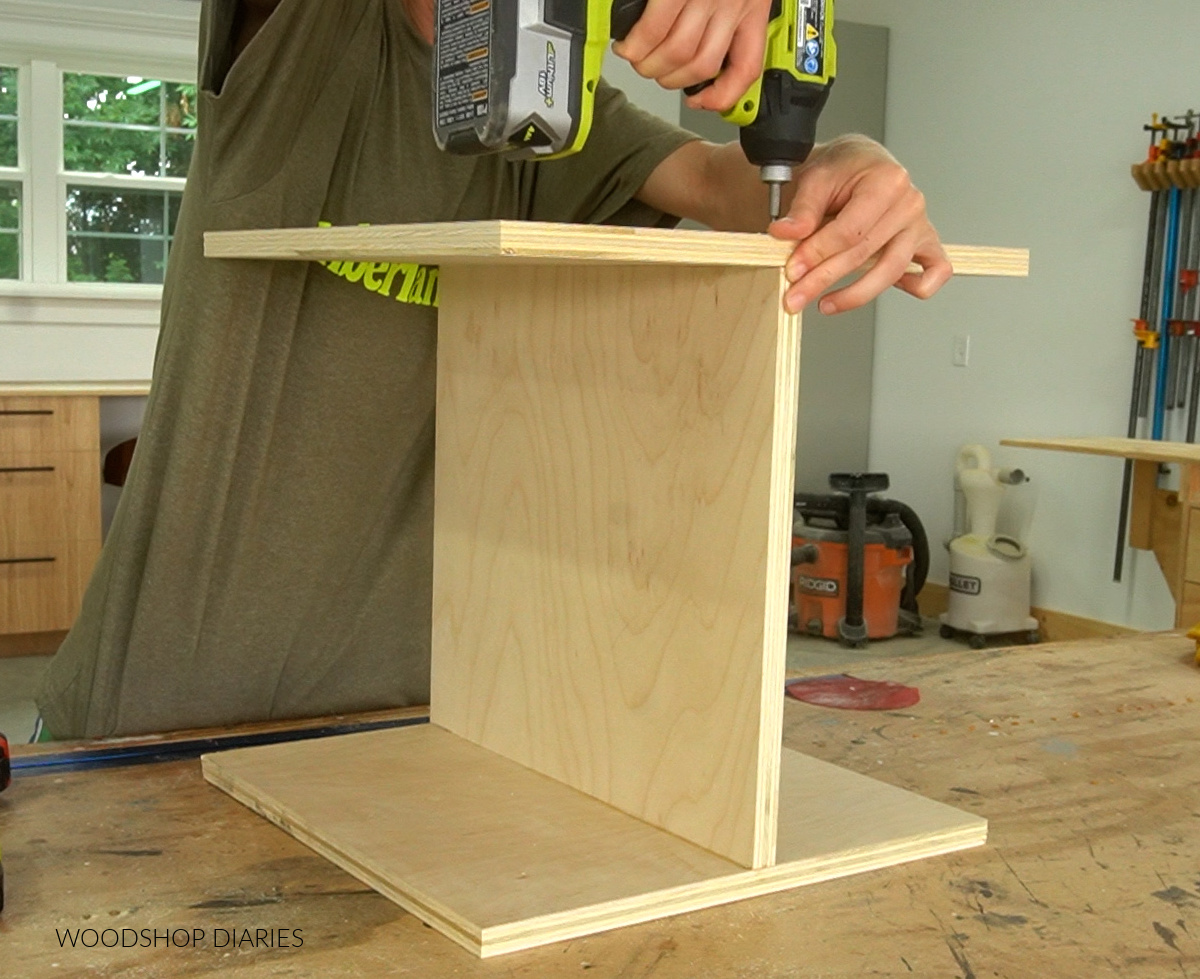
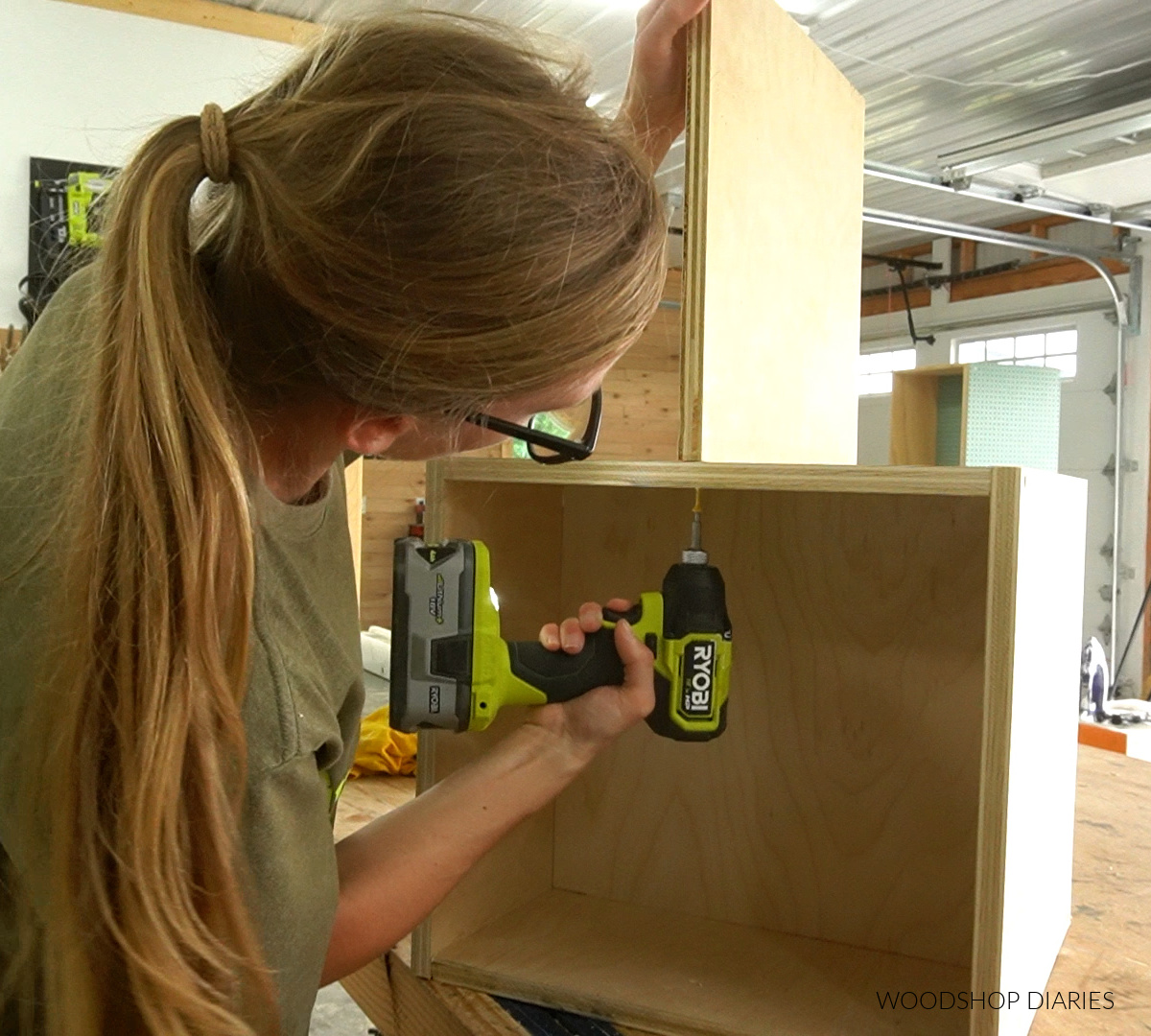
Then, I attached another 16″ square panel on top using wood glue and 1 ¼″ wood screws again.

Driving screws into plywood pieces to assemble a capital "I" shape for charging station body

I made sure this piece was centered on the vertical piece below it.

.

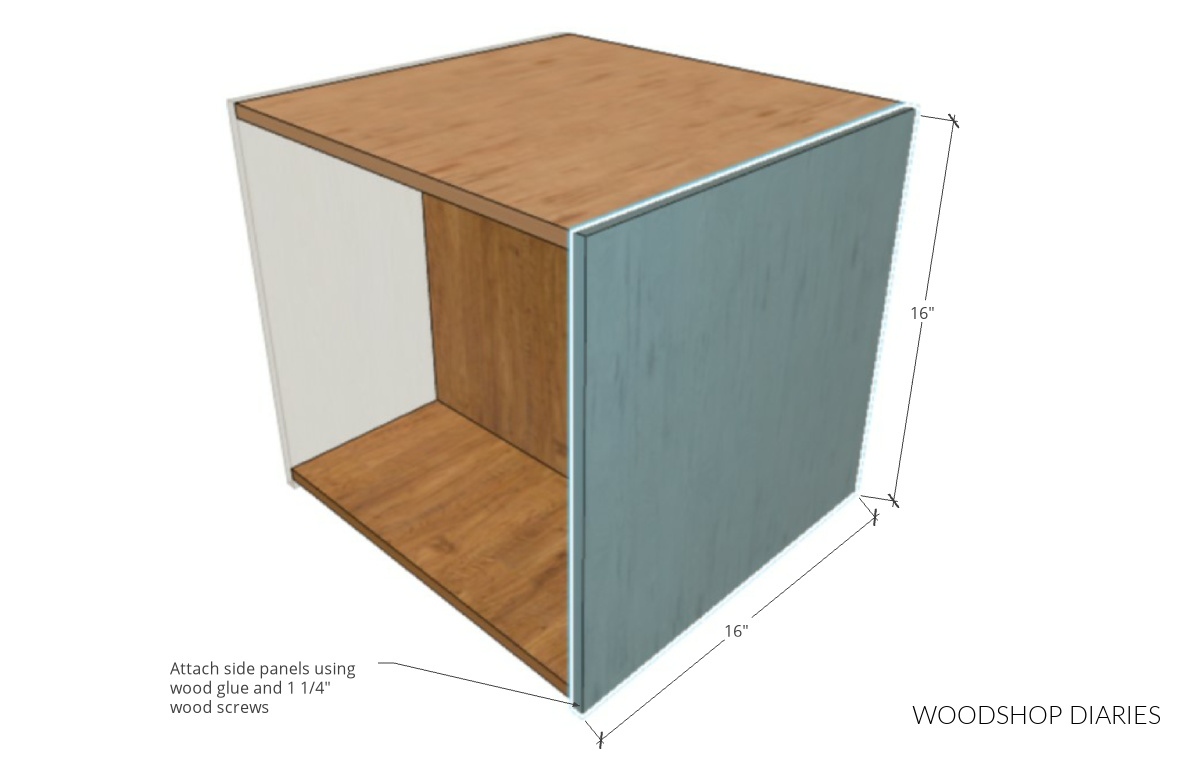
Then, I completed this bottom section by attaching two 16″ square plywood panels on each side to make kind of a “box.”

Diagram showing dimensions of side panels of battery charging station bottom box

Step 2: Assemble Top Half of Battery Charging Station

The top half of the DIY mobile battery charging station is exactly like the bottom except it’s rotated 90 degrees.

.

So, I attached the second 14 ½″ x 16″ piece vertically using wood glue and 1 ¼″ wood screws through the top panel of the bottom section.

Shara Woodshop Diaries driving screws through plywood to attach top half of charging station box

Again, I made sure the panel was centered side to side before securing.

.

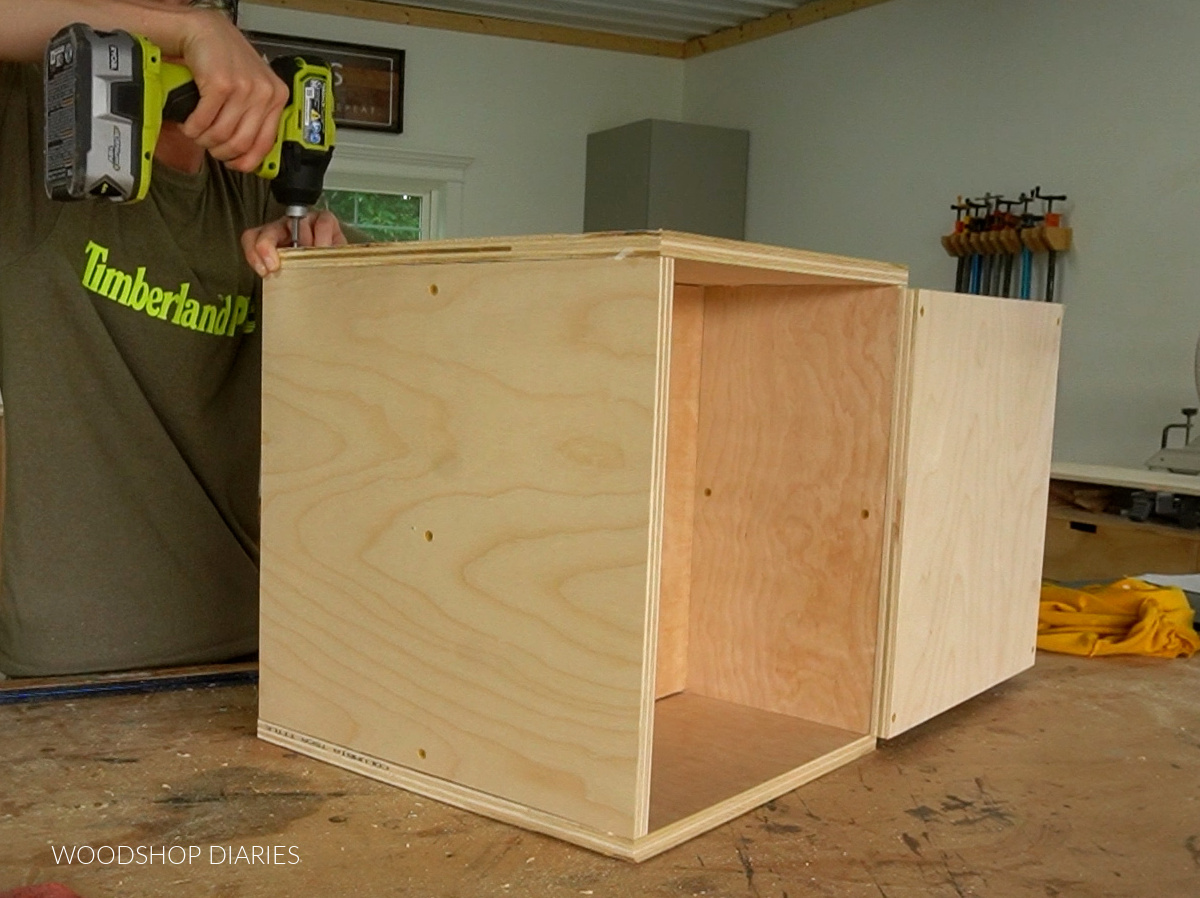
Then, I added a 16″ x 16″ top panel and two 16″ x 16″ side panels using wood glue and screws again to complete the main body.

Shara Woodshop Diaries assembling main body of charging station on workbench

Step 3: Add Shelves to Charging Station Box

I chose to add adjustable shelves to this project vs stationary. I like to have options with my shelf placement ha!

.

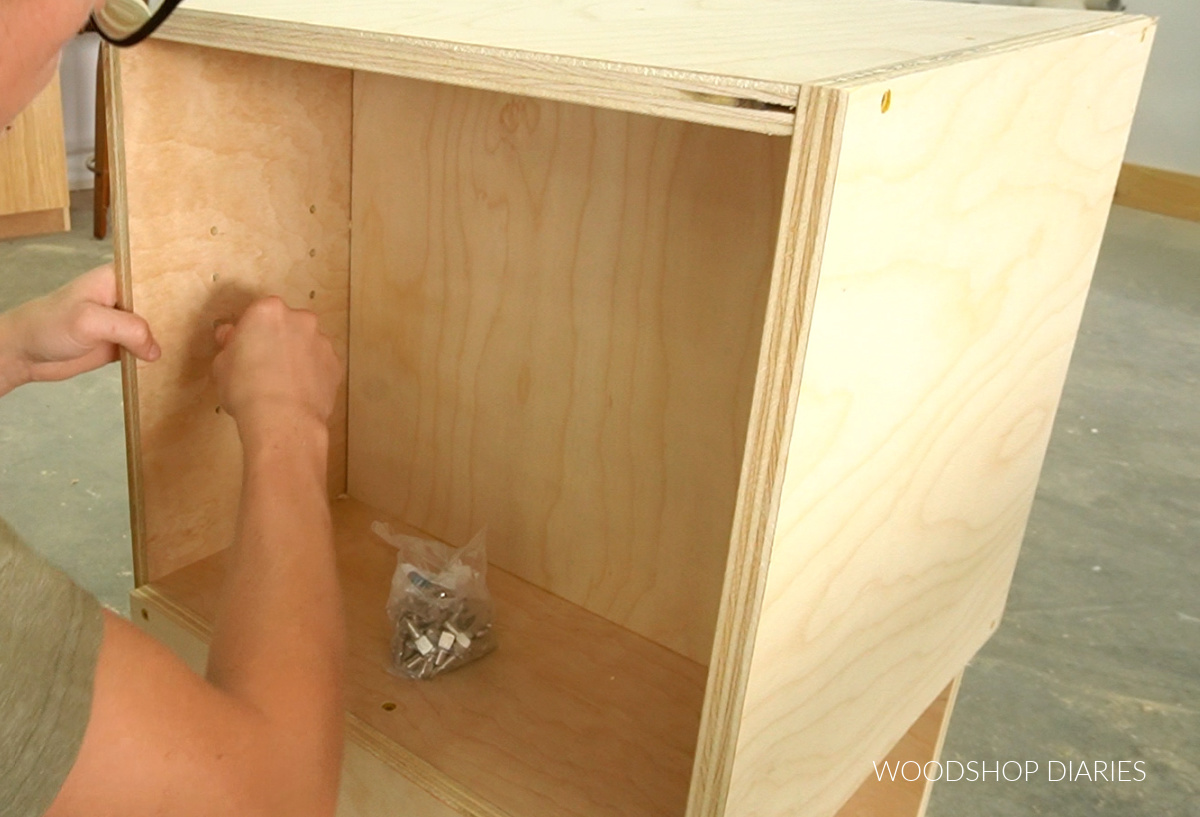
So, I used my Kreg Shelf Pin Jig to drill shelf pin holes into each open “cubby” of the box.

RELATED: Learn more about shelf pin jig uses and other cabinet building tools.

Installing shelf pins into shelf pin holes

Then, I placed shelf pins into the holes where I wanted the shelves to go.

.

I just cut one shelf for each cubby, but you could cut more if you’d like from your leftover plywood.

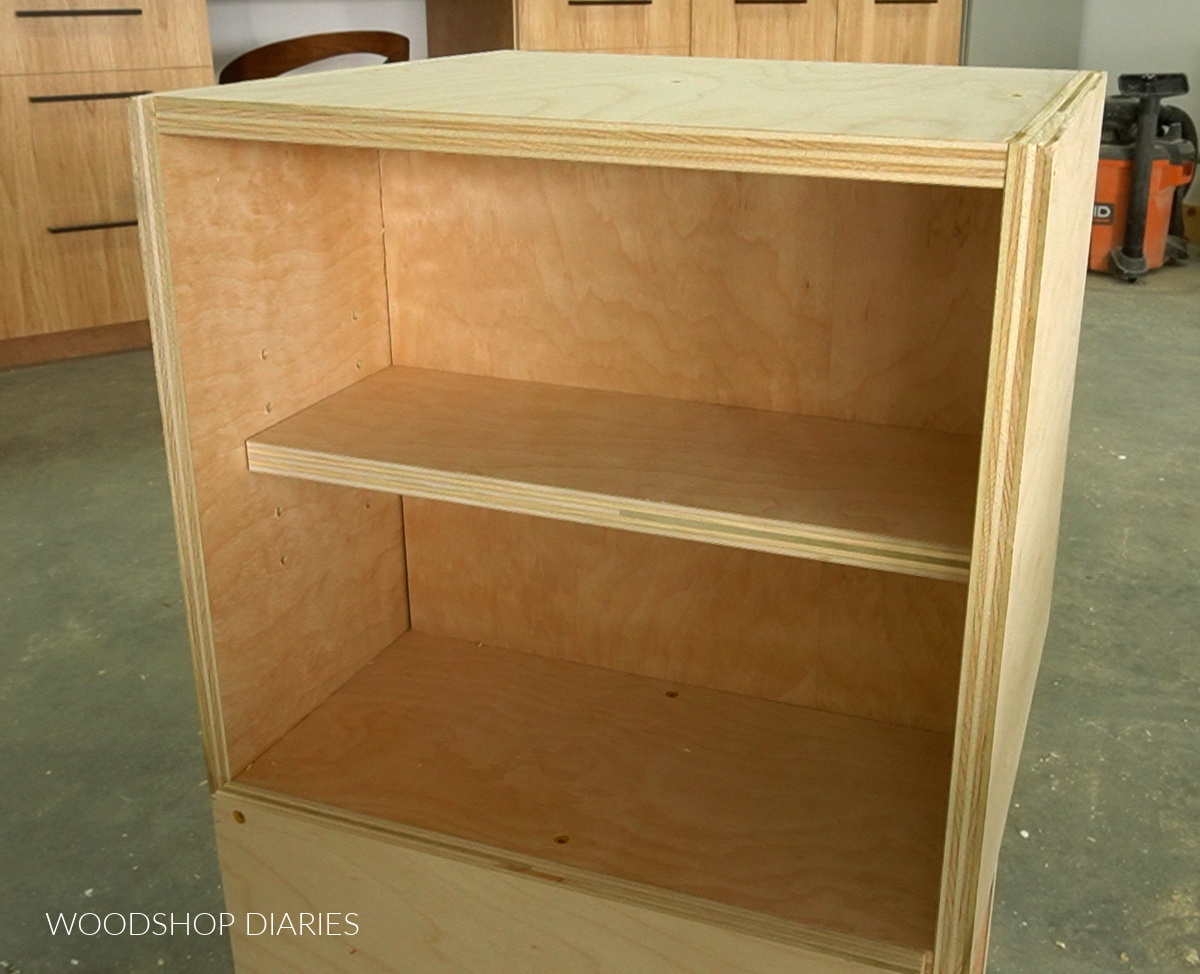
Shelves installed in cubbies of charging station box

I placed these shelves into the cubbies on the pins.

Step 4: Install Caster Wheels

To make this cart mobile, I added some caster wheels on the bottom. There are HUNDREDS of styles, colors, sizes of casters.

.

It’s not really critical what kind you use here as long as they’ll support the weight of the cart (which isn’t a whole lot). So feel free to shop around if you like different styles.

.

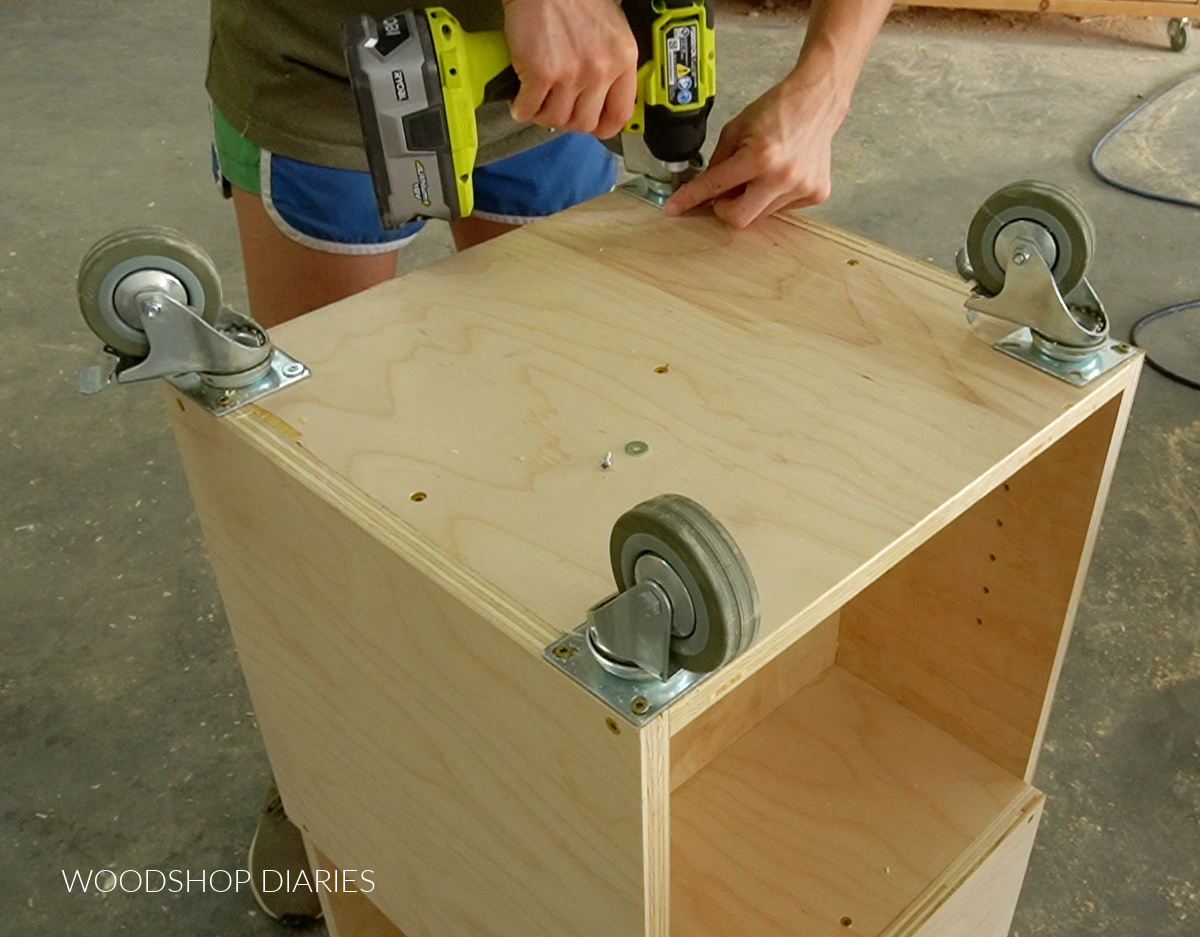
I flipped the station upside down (remove the shelves first or they’ll just fall out in the process haha), and placed a caster wheel on each corner.

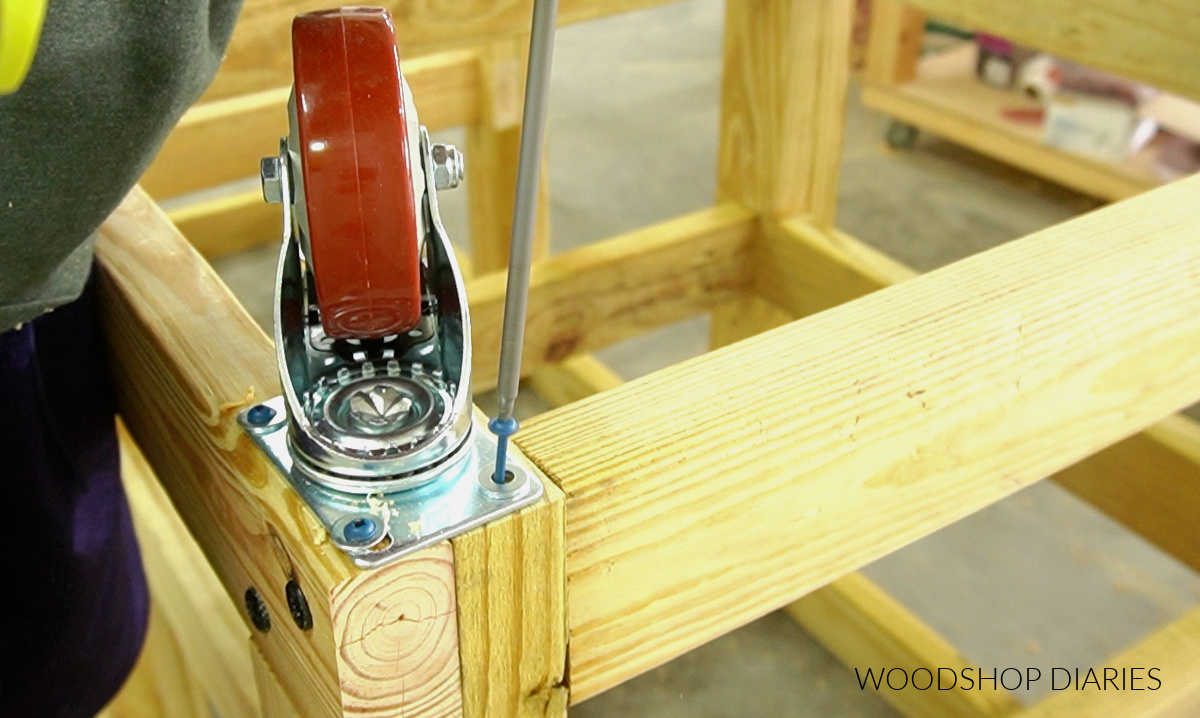
Installing caster wheels on bottom side of plywood shop cart

On the outside holes on the caster plates where the screws will go into the side panel edges, I used 1 ¼″ wood screws.

.

However, on the holes toward the inside, I used ⅝″ wood screws and some washers so that the screws didn’t go through the plywood and pop out on the other side.

Step 5: Mount Battery Chargers

Once the wheels were on, it was time to actually put this charging station to use and mount the chargers.

.

You may or may not have seen this “trick” before, so I’ll share it with you anyway.

.

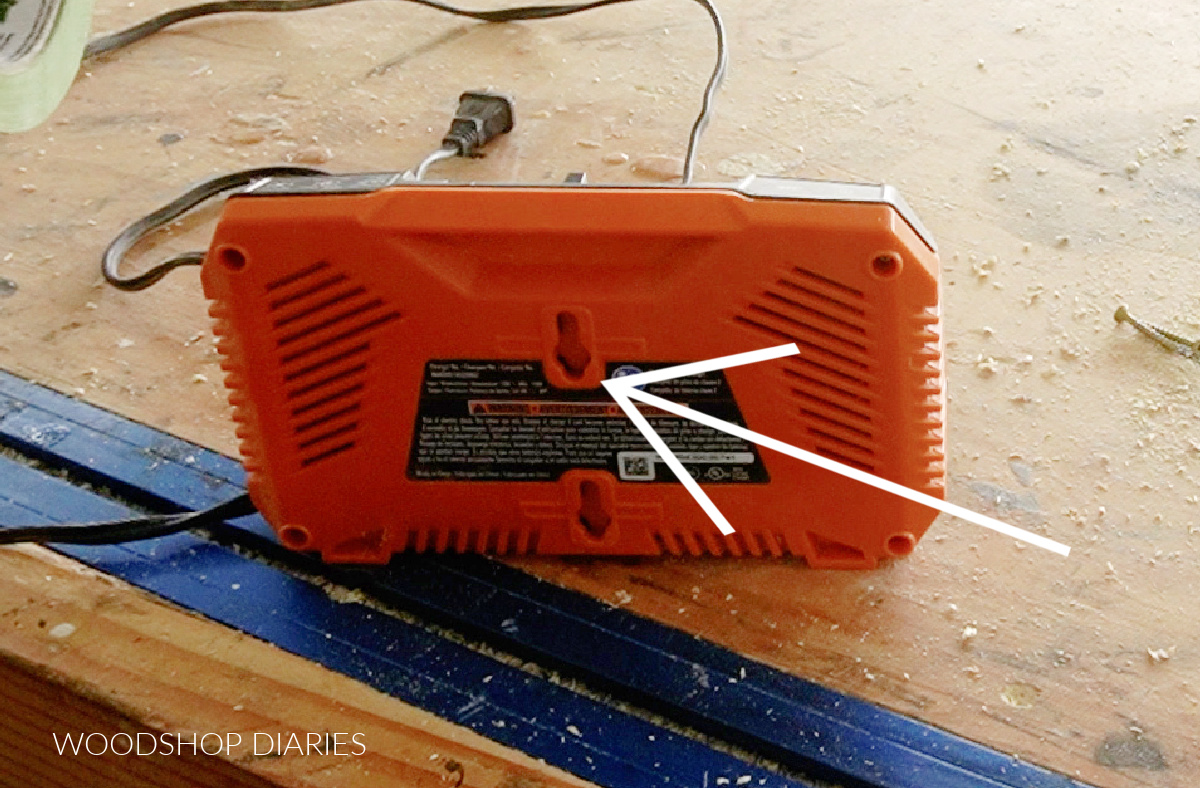
All but one of my chargers had these mounting holes on the under/back side.

Close up of mounting holes on back side of battery chargers

I didn’t want to have to measure these holes out, transfer them to the charging station side panels, and hope it worked.

.

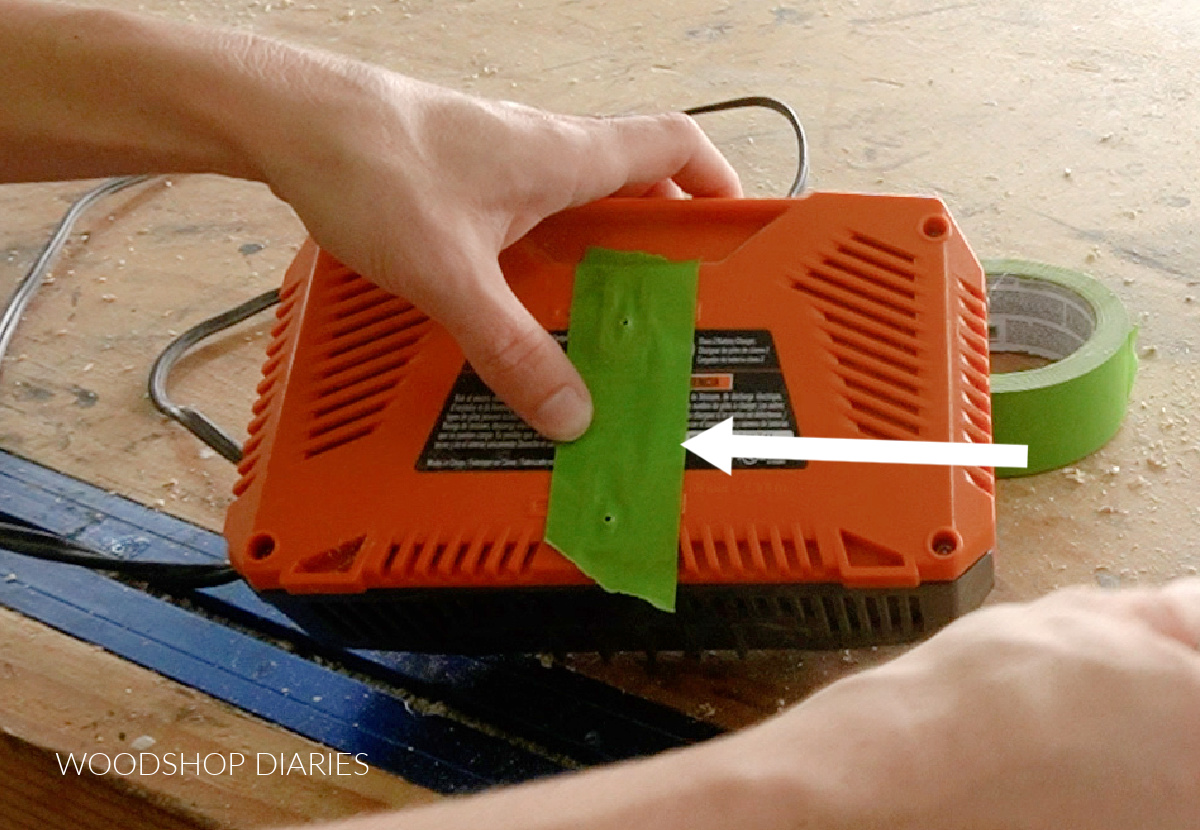
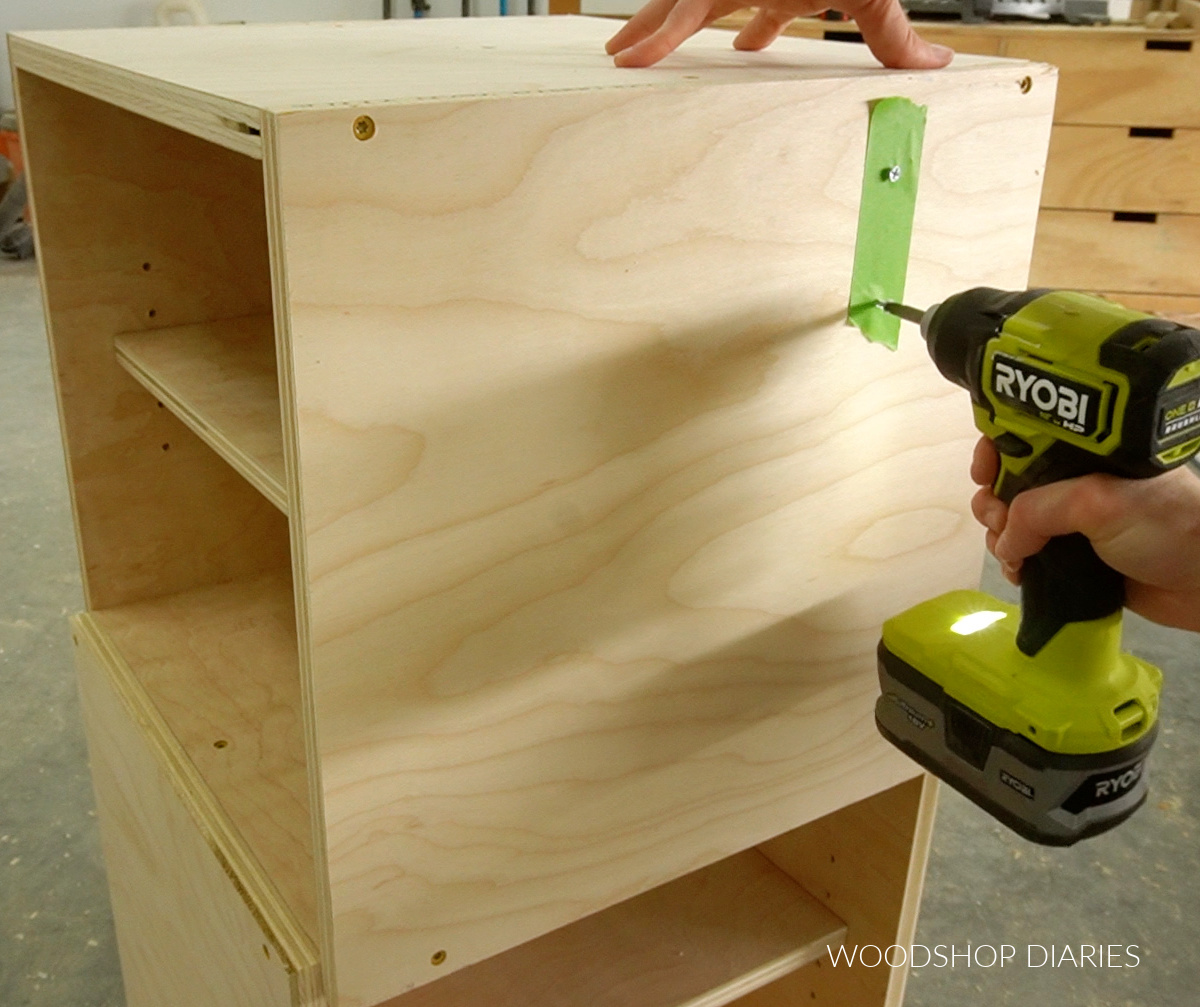
So, instead, I used some painters tape over these holes and used a screw to just poke a hole in the tape at the center of the mounting holes.

Painters tape on back side of battery chargers

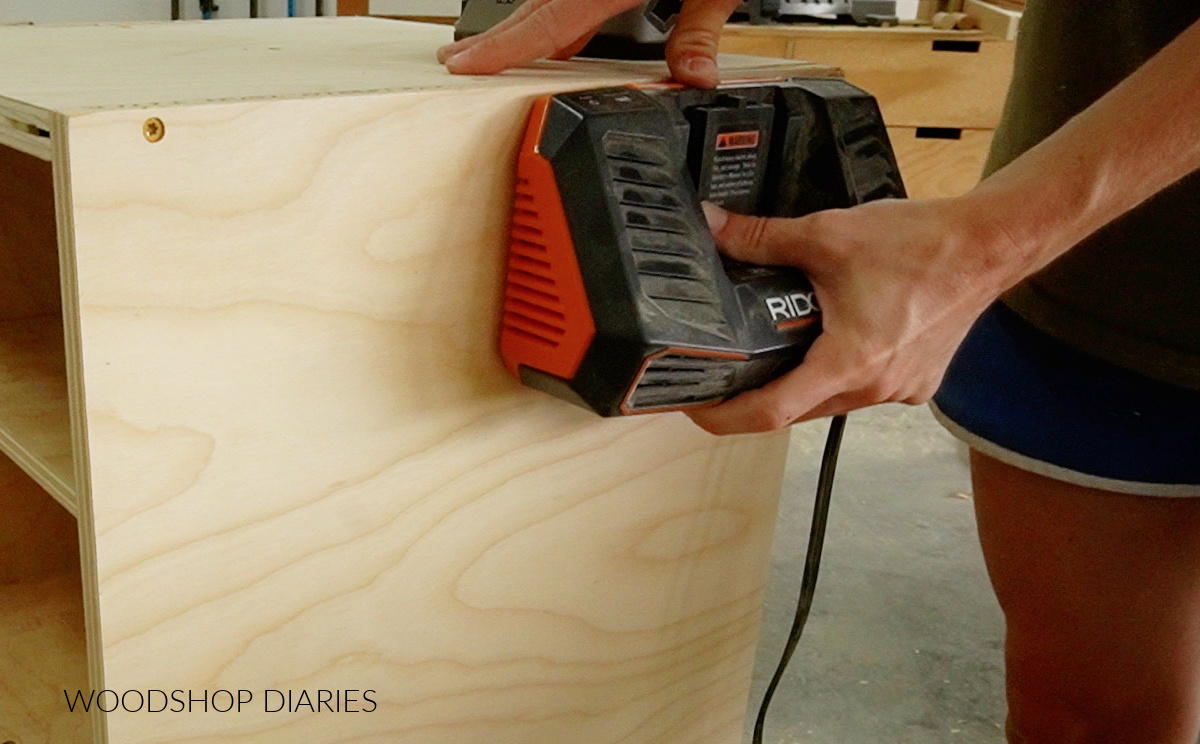
Then, I could transfer this tape to the charging station and drive ⅝″ wood screws in the holes. You want to drive them so they’re still sticking out a little.

Driving screws on painters tape as template for mounting chargers

Then, you can slide the chargers right onto them.

.

I did this for all my chargers on all four sides of the station. For the one charger without mounting holes, I just set it on top.

mounting battery charger on side panel of charging station

Step 6: Add Power Strip(s) and Manage Cords

I mentioned earlier that I used power strips to make things easier when it was time to plug in.

.

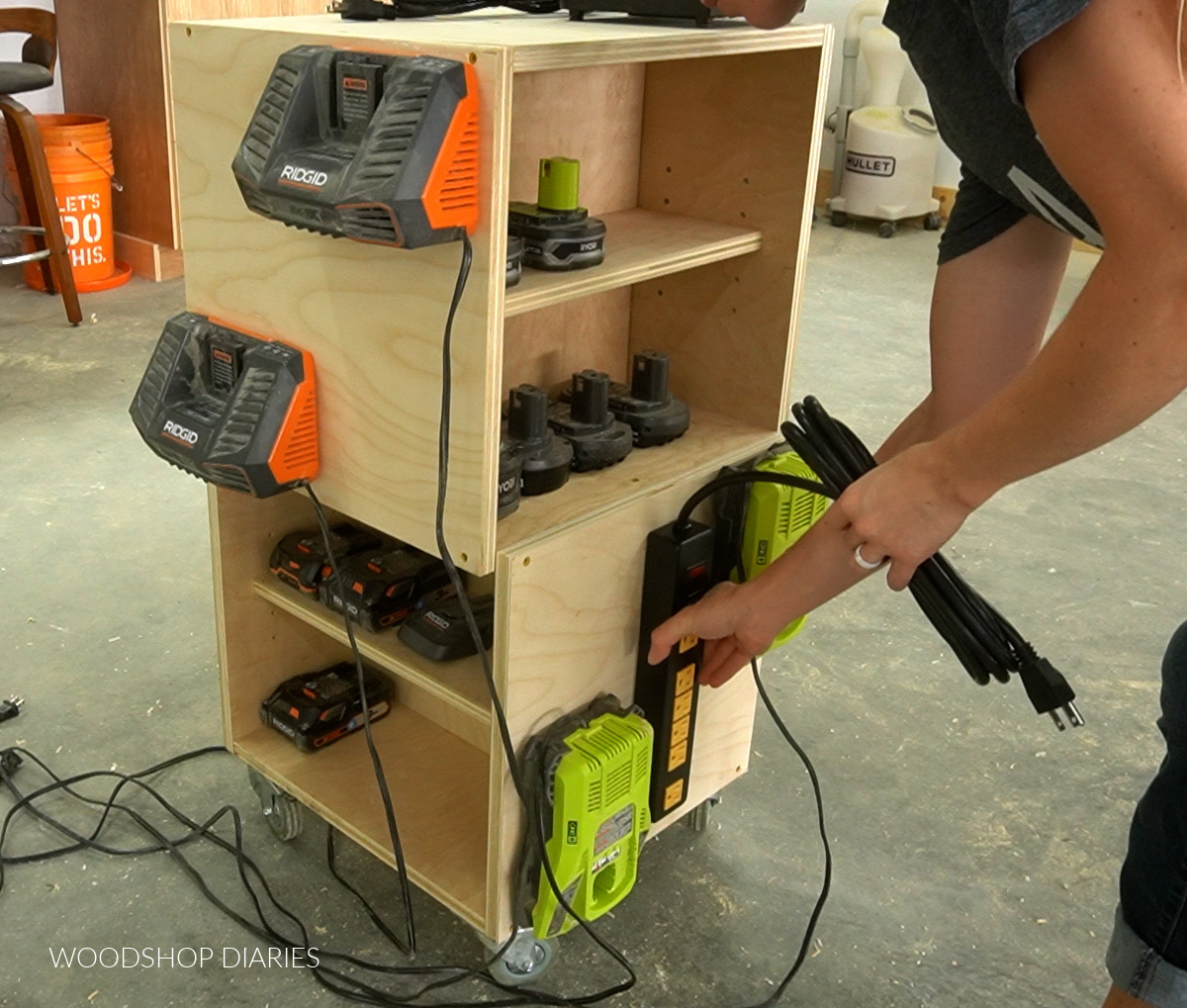
So, I mounted two power strips (using the same painters tape method shown above) on the station and plugged my chargers into them.

Installing power strip on side panel of mobile battery charging station

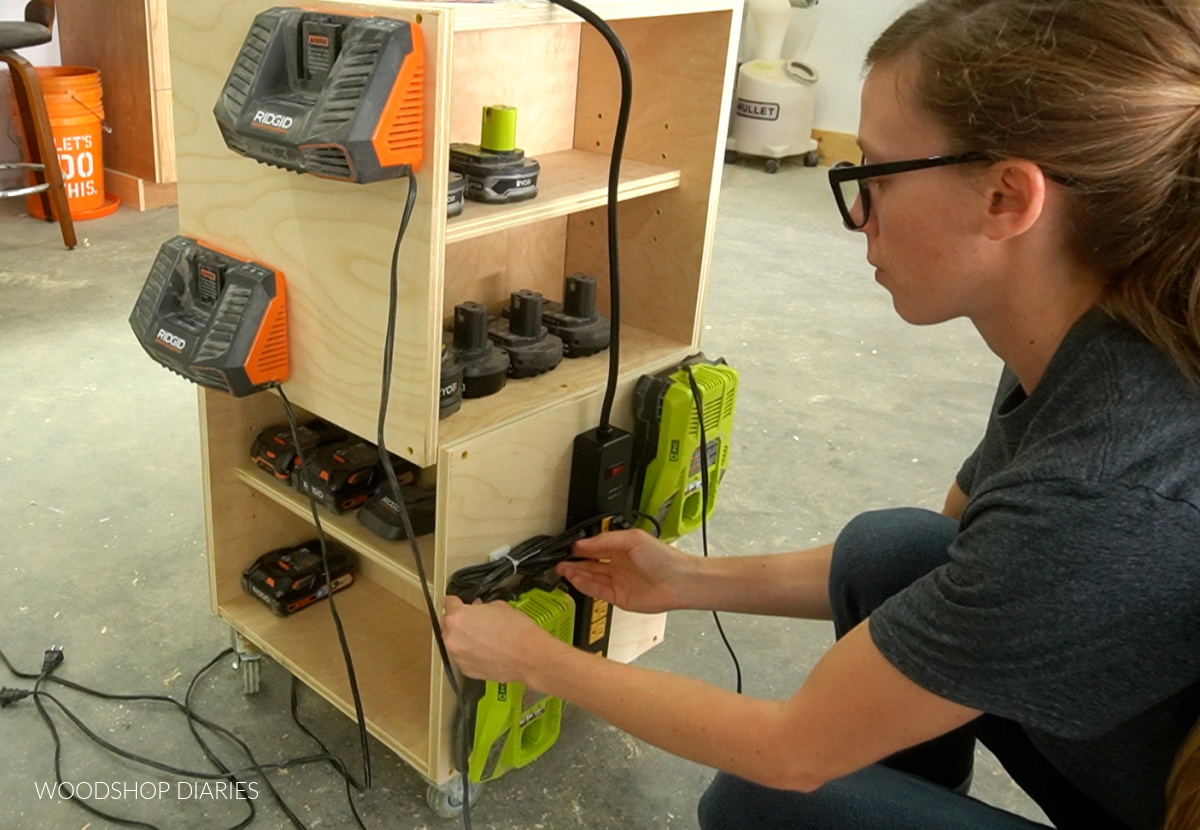
Then, I went back and cleaned up all my cord chaos using some sticky tabs and zip ties.

.

This part is kind of where you have to do what’s best for you. You can drill out holes to run your cords through the inside if you’d prefer.

Managing cords using zip ties on side panels of mobile battery charging station

But I ran mine on the outside so that I didn’t have to worry with cords or holes interfering with the shelves. I did drill one hole to run some cords through on the inside, but I just didn’t want to drill holes all over my new build haha.

.

Just contain the cords however you feel is best.

.

I ran my power strip cords to the top and just laid them there. That way, I can roll this around where I want and just plug in as needed.

Looking for more Workshop Organization Ideas?

And with that, the DIY mobile battery charging station build was complete and ready to get charging!

Shara Woodshop Diaries flipping switch on power strip on side of battery charging station

I really love this set up and it is nice that it’s organized AND mobile so I can move it around as I need (and as I frequently change my mind haha).

Grab the printable plans for this project here.

.

If you’re looking for more workshop organization ideas, here’s a few workshop project favorites to check out!

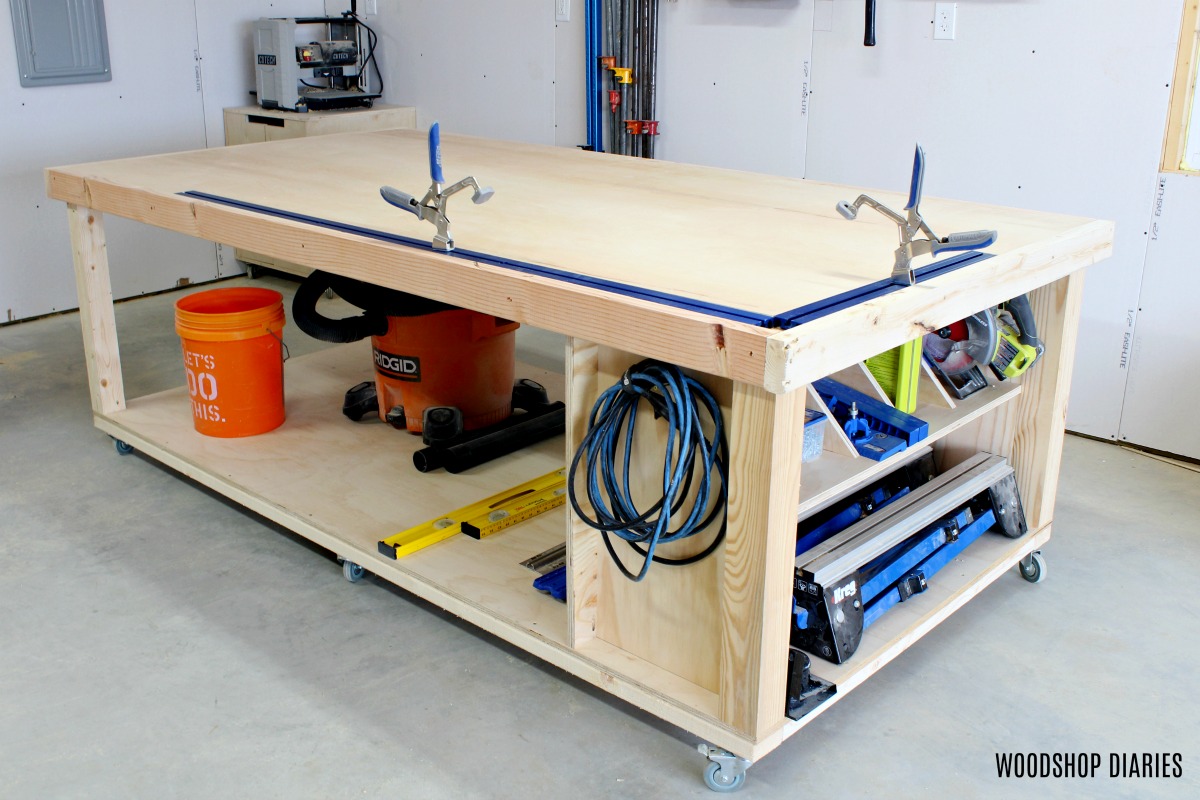
Mobile Workbench
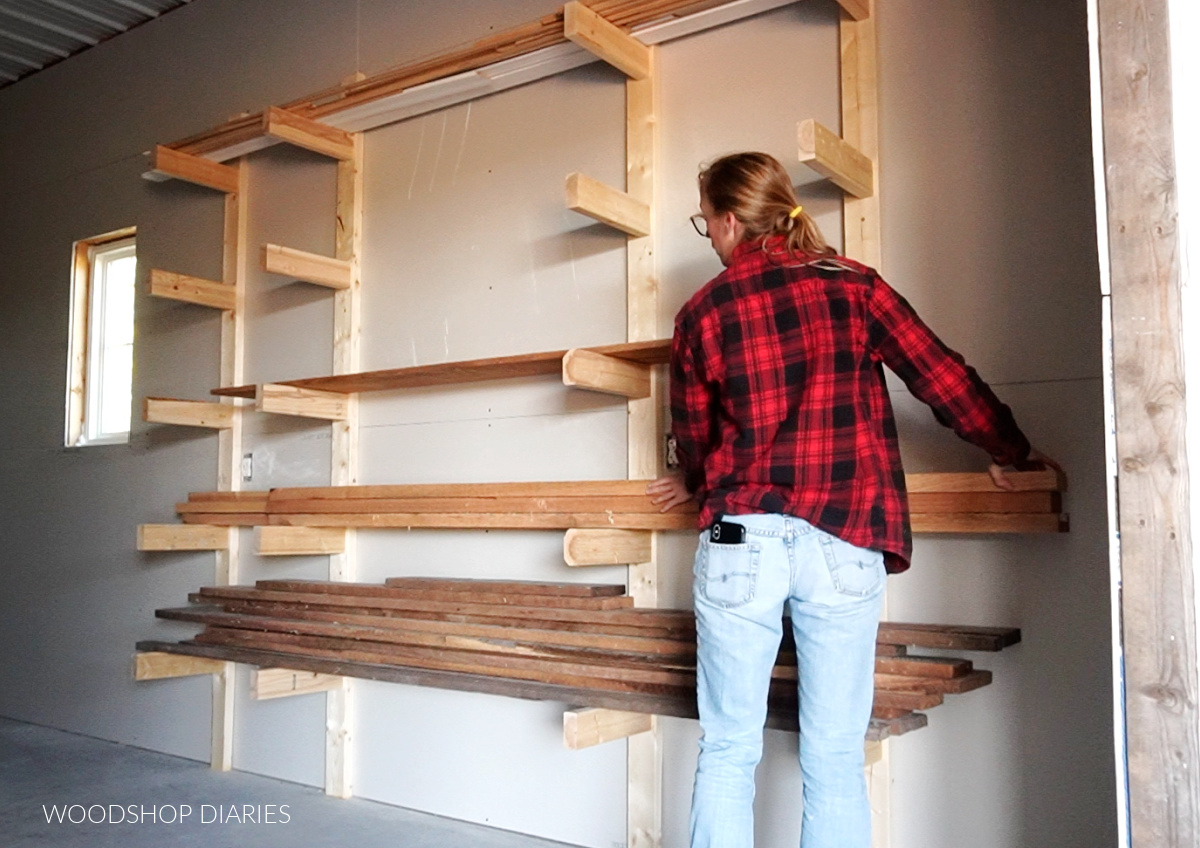
EASY DIY Lumber Rack
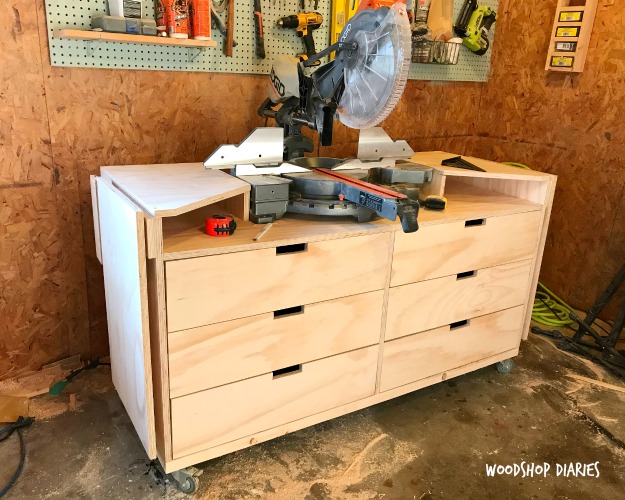
How to build a mobile Miter Saw Stand with storage drawers, and fold down extension wings
Mobile Miter Saw Stand
How to Build a DIY Rolling Scrap Wood Cart
Scrap and Plywood Storage Cart
DIY Simple Mobile Tool Cart
Mobile Tool Cart
Mobile Lathe Stand
Lazy Susan Garage Cabinet
How to Build Cabinet Boxes
Scrap Wood Clamp Rack

I hope you enjoyed this simple, but very practical workshop project idea!

.

I’ve got the full length video tutorial over on my YouTube Channel so you can watch the entire build start to finish!

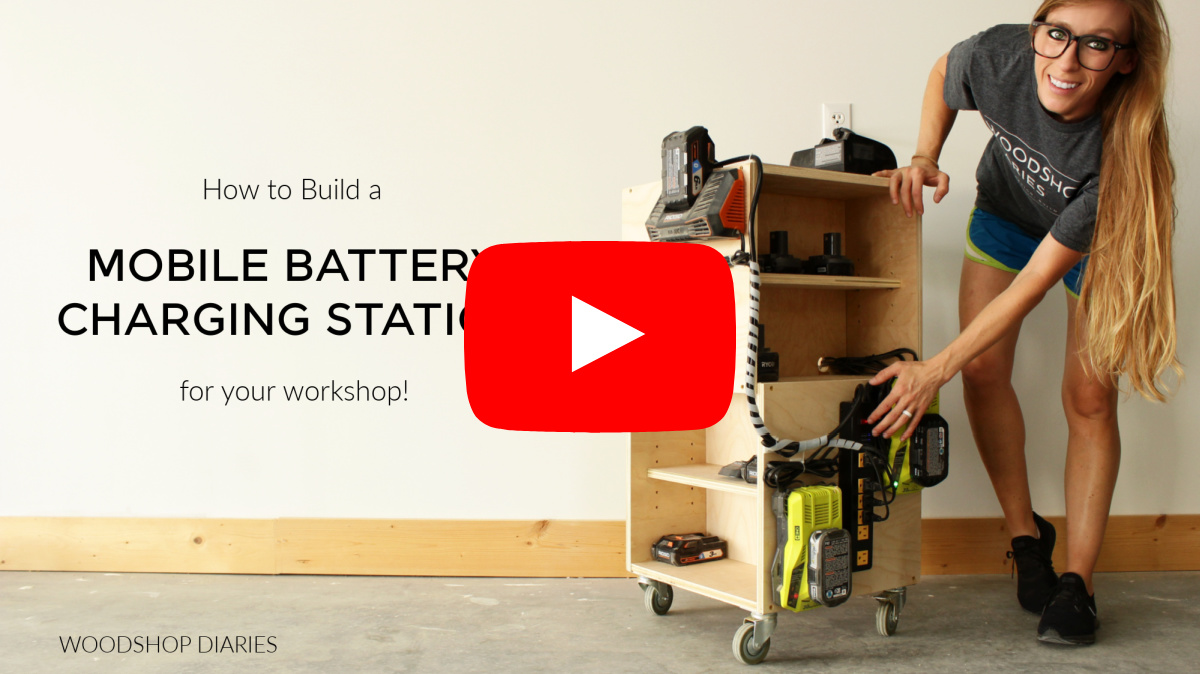
Mock YouTube thumbnail for how to build a mobile battery charging station

And if you want to stay up to date with all the latest projects and plans, be sure to subscribe to the newsletter for priority access!

Be sure to pin this to save it for later or share it to your favorite social channel!

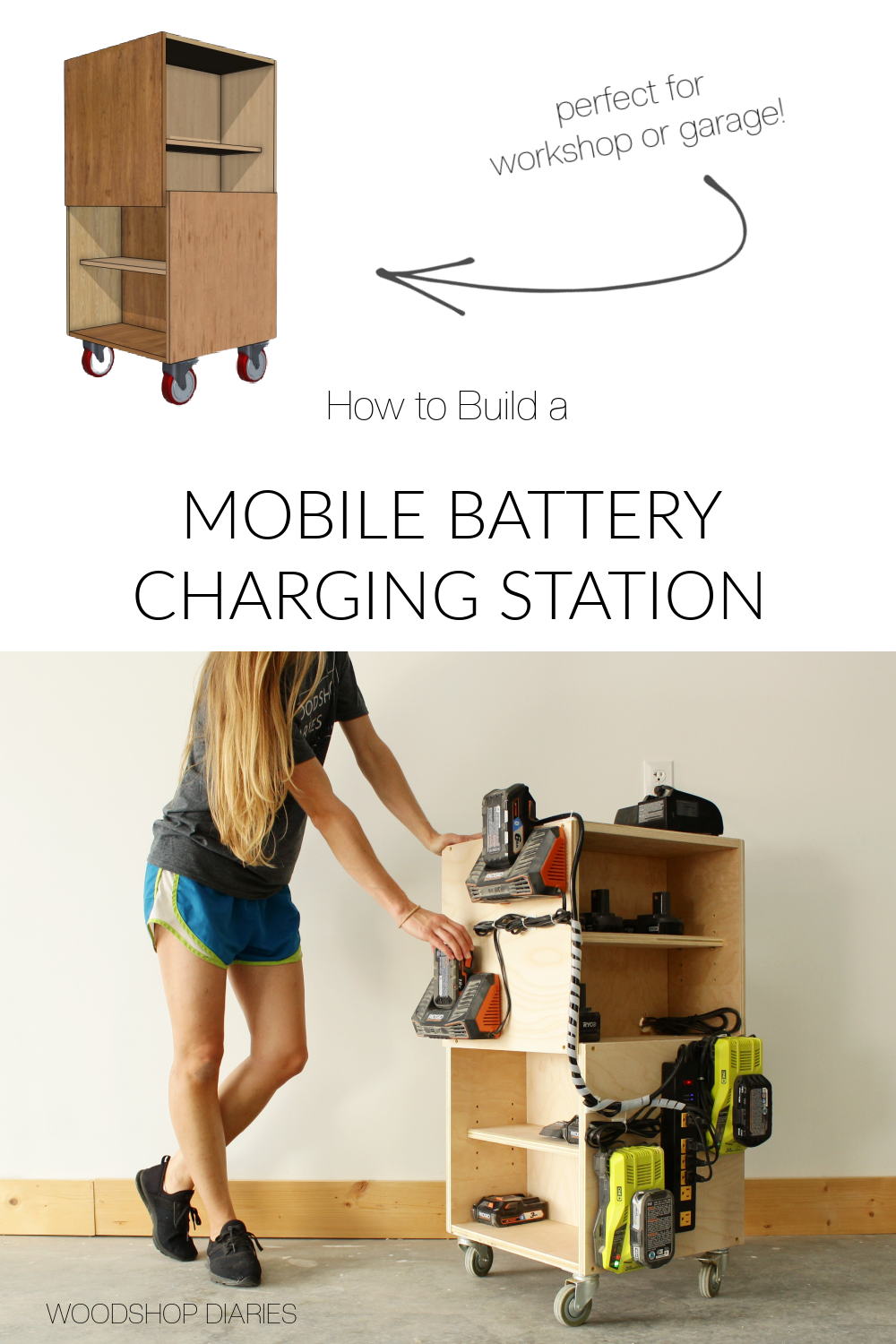
Pin image collage showing overall diagram at top and Shara Woodshop Diaries putting a battery on the charger at bottom with text "How to build a mobile battery charging station"

Until next time, friends, happy building!
DIY Geometric Wooden Art–From Scrap Wood

August 9, 2022 by Shara, Woodshop Diaries

In this post, I’m sharing how to make your own DIY geometric wooden art pieces from scraps!

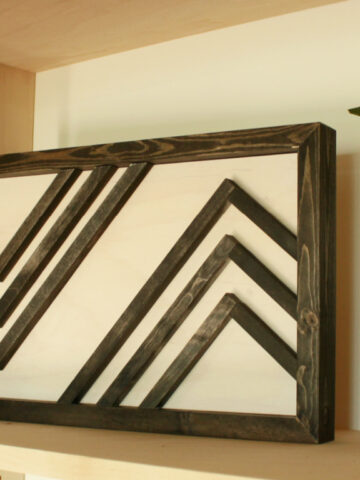
Black and white scrap wood modern geometric wooden art piece in shelf next to vase

If you’re looking for some simple décor for your empty shelf, look no further than your scrap wood pile!

.

This easy DIY geometric wooden art project is a fun way to use up even those tiny scrap pieces that you don’t want to toss in the trash (or am I the only one that hangs on to those??).

.

Feel free to get creative with your size, shape, and stain/paint colors to make your own custom geometric wooden art piece!

.

What Type of Scrap Wood to Use for Geometric Wooden Art

There is no “right” or “wrong” way to do this. It really just depends on what you’ve got to work with in your scrap pile and the design you’d like to create.

.

For this project, I used a scrap piece of ¾″ plywood for the back–the main “canvas” I guess you could call it. But 1x material, or ½″ plywood would work as well.

.

For the geometric design, I used some ½″ square dowels that I had leftover from when I made a modern sliding glass panel door.

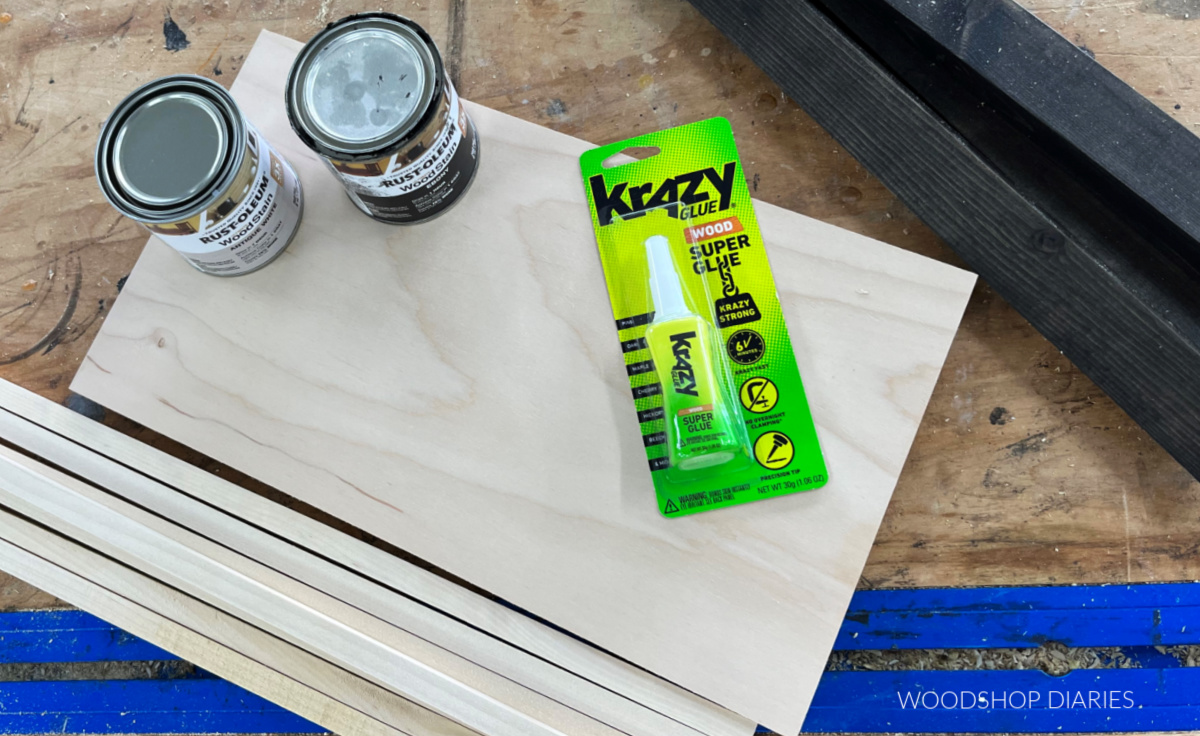
Scrap wood, stain, and glue laid out on workbench--materials to make scrap wood sign

Of course, if you don’t have ½″ square dowels, you could use any small, thin wood pieces to create a unique design or cut down some of your larger scraps to this size.

.

And for the frame, I used some leftover 1x2s from when I made my large custom picture frames.

Tools & Materials:

*This post contains affiliate links. See website policies.

Tools:

  • Miter saw
  • Brad Nailer (optional)

Materials:

  • Wood scraps (see notes above)
  • Wood Glue
  • Wood stain/paint as desired
  • Brad nails (optional)

How to Make Scrap Wood Geometric Wood Art

The tutorial below will walk you through how I made this “chevron pattern” DIY geometric wooden art.

.

But, this same process can apply to any pattern…not just chevron.

.

Prefer to watch?? Here’s a video of the process!

Step 1: Cut and Finish Back Panel Board

I mentioned earlier that I used ¾″ plywood for the back panel of this art piece.

.

But, you can also use ½″ plywood or scrap 1x material, etc.

.

Whatever material you decide to use for this, trim it to your desired size, sand it, and apply a finish, if desired.

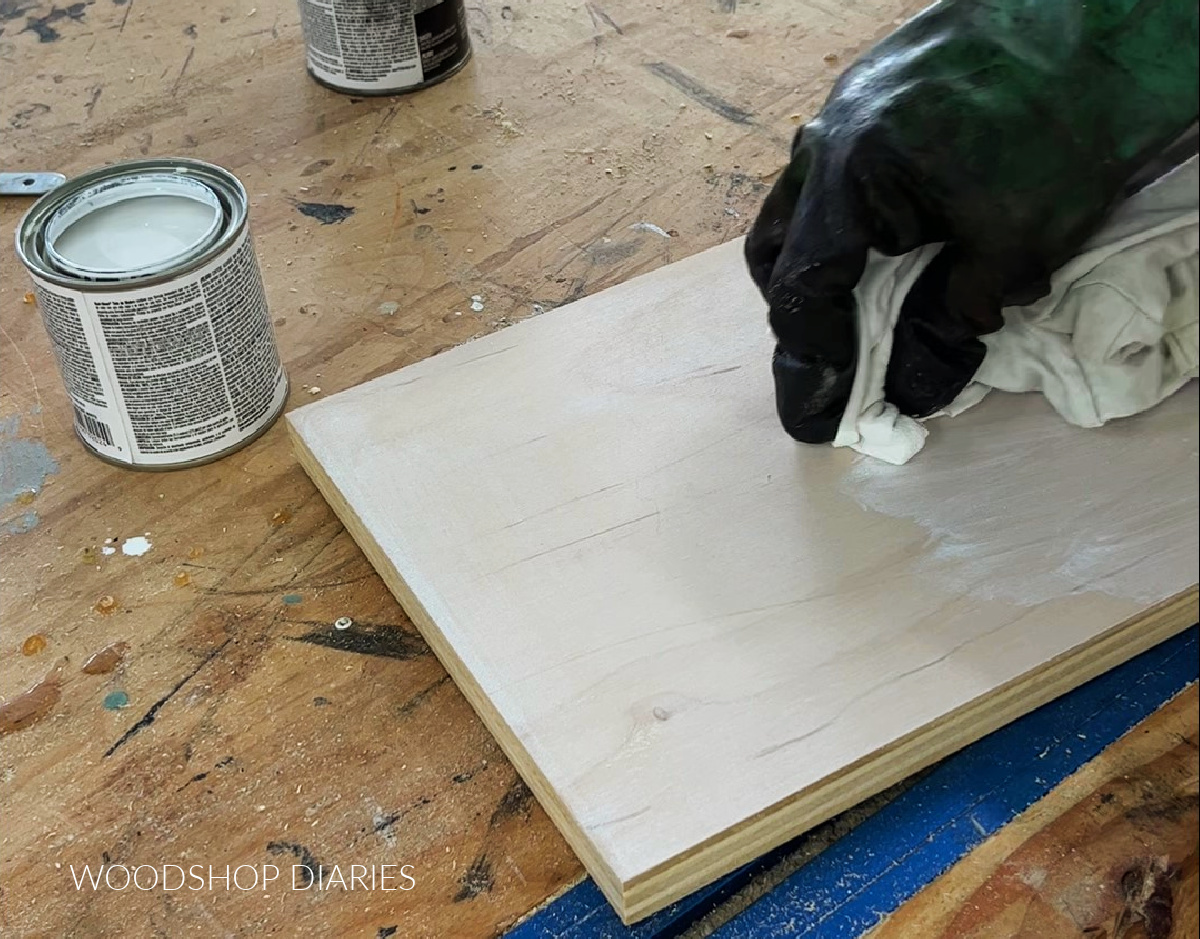
Applying white stain to back plywood panel board

It’s going to be MUCH easier to stain/paint this back panel now than after the pieces are attached.

.

I stained my piece Rustoleum Antique White to just lighten up the back ground to contrast the dark pieces I was putting on top.

Step 2: Layout and Cut Geometric Art Design

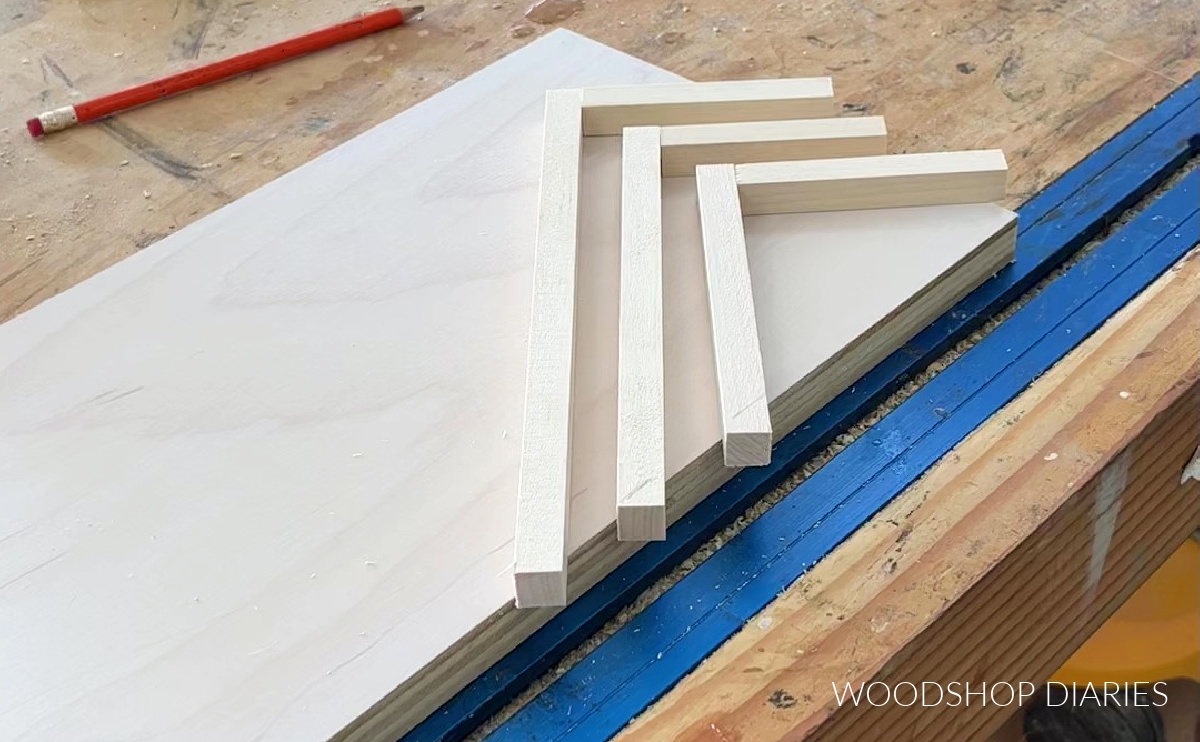
I used ½″ square dowels to create my geometric pattern. So first, I laid them out on the board from step 1 and kind of figured out what kind of shape(s) I wanted to create with them.

.

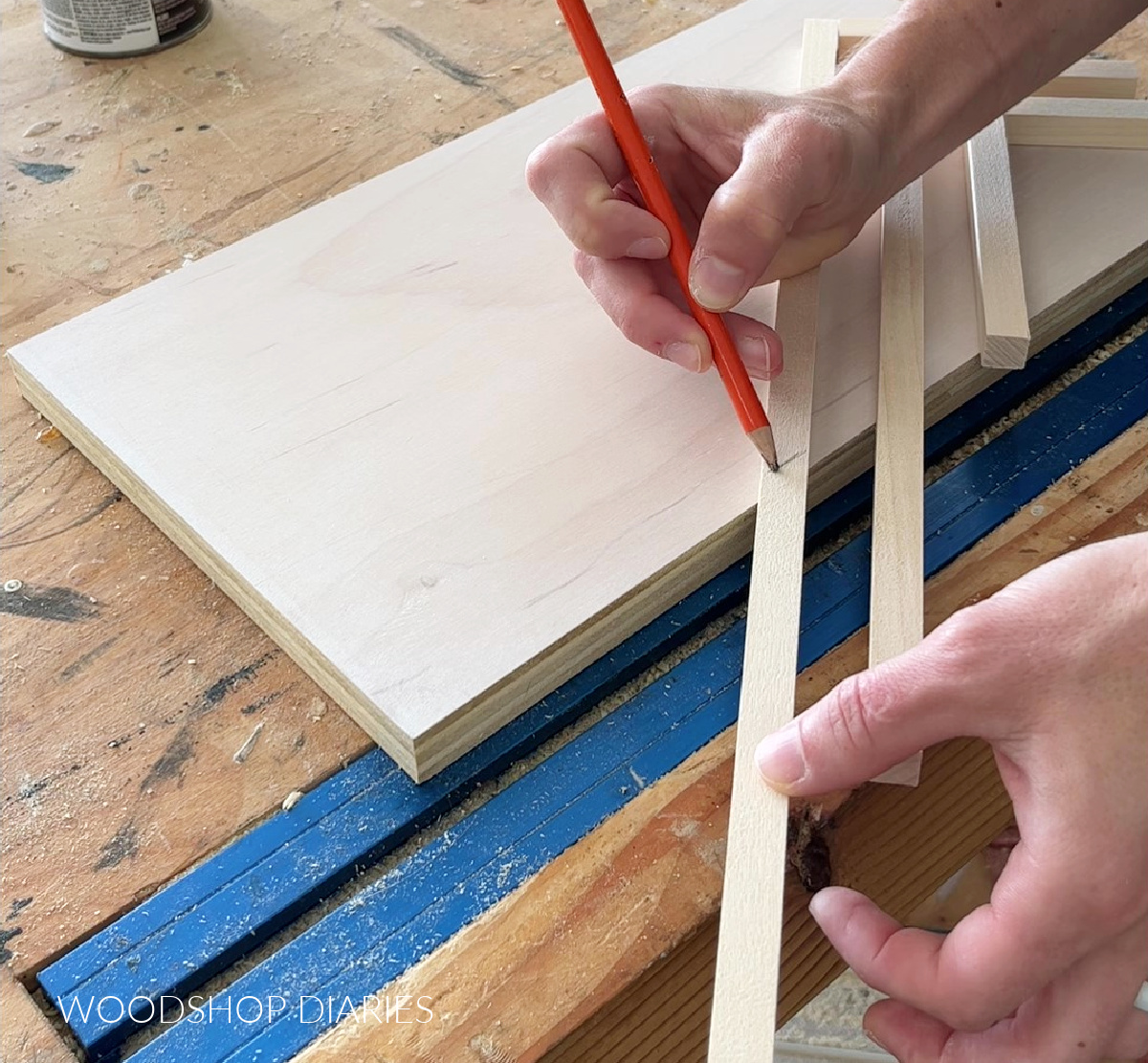
I marked where to trim the dowels and trimmed them a little long on the miter saw.

Using a pencil to mark length of square dowels on scrap wood art piece

You don’t have to cut these at and angle. You want them to hang off the edge just a little when you glue them in place.

.

You’ll be trimming it flush later.

square wooden dowels trimmed to length, laid out in geometric pattern

Once I had these pieces trimmed to rough length, I stained them Rustoleum Ebony.

Step 3: Attach Wooden Geometric Design and Trim Edges

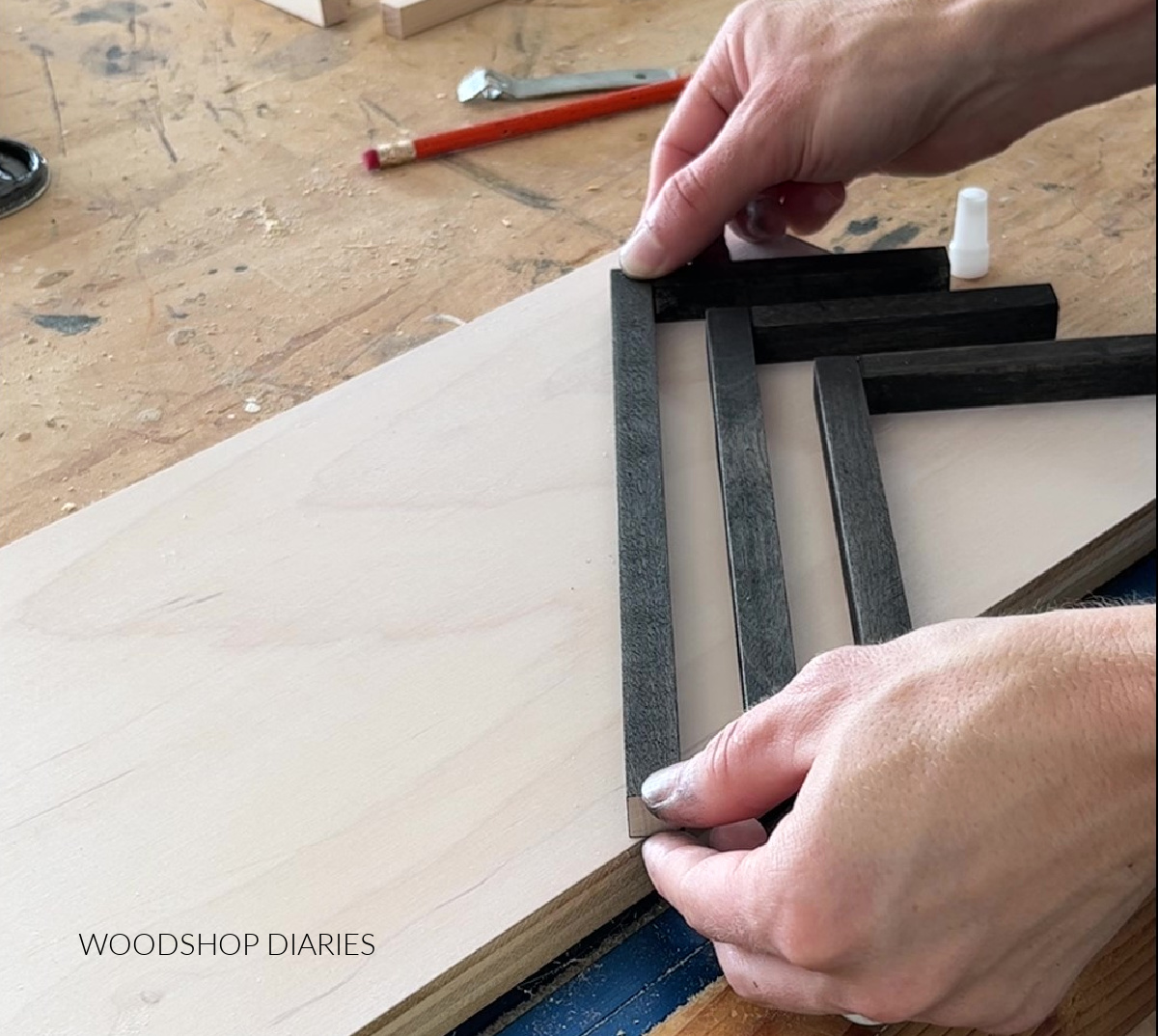
After the stain had dried (kind of…I’m not that patient haha), I laid them out on the board how I wanted them and used some Krazy Glue Fast Dry Wood Glue to secure each piece in place one at a time.

Gluing stained dowels in chevron pattern on wooden art back panel

You can use regular wood glue for this, but a fast drying wood super glue makes this quick and a lot less messy.

.

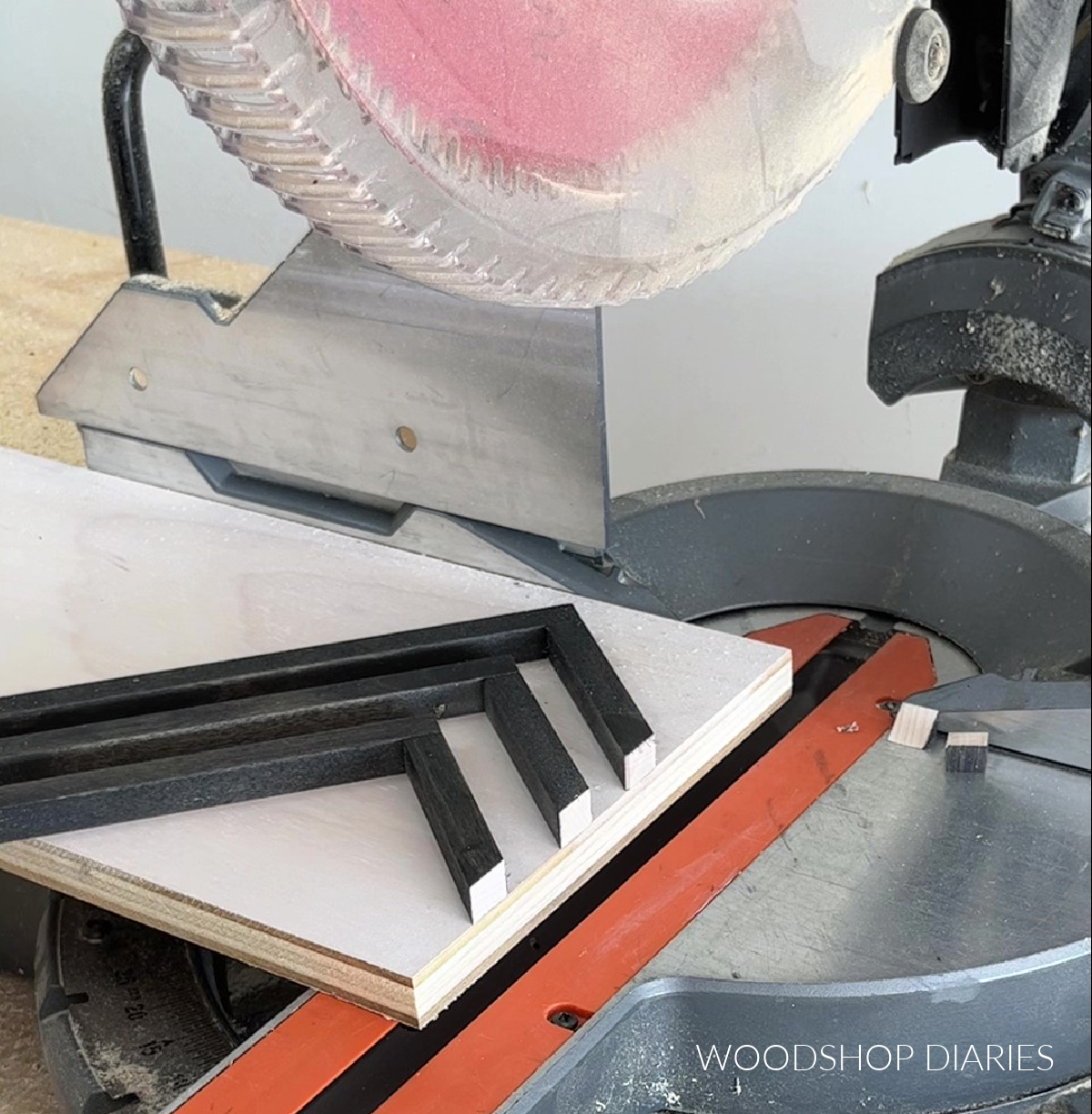
After I got one section glued on, I took it to the miter saw and trimmed the edges flush where the dowels were a little long.

Art piece placed in miter saw to trim edges

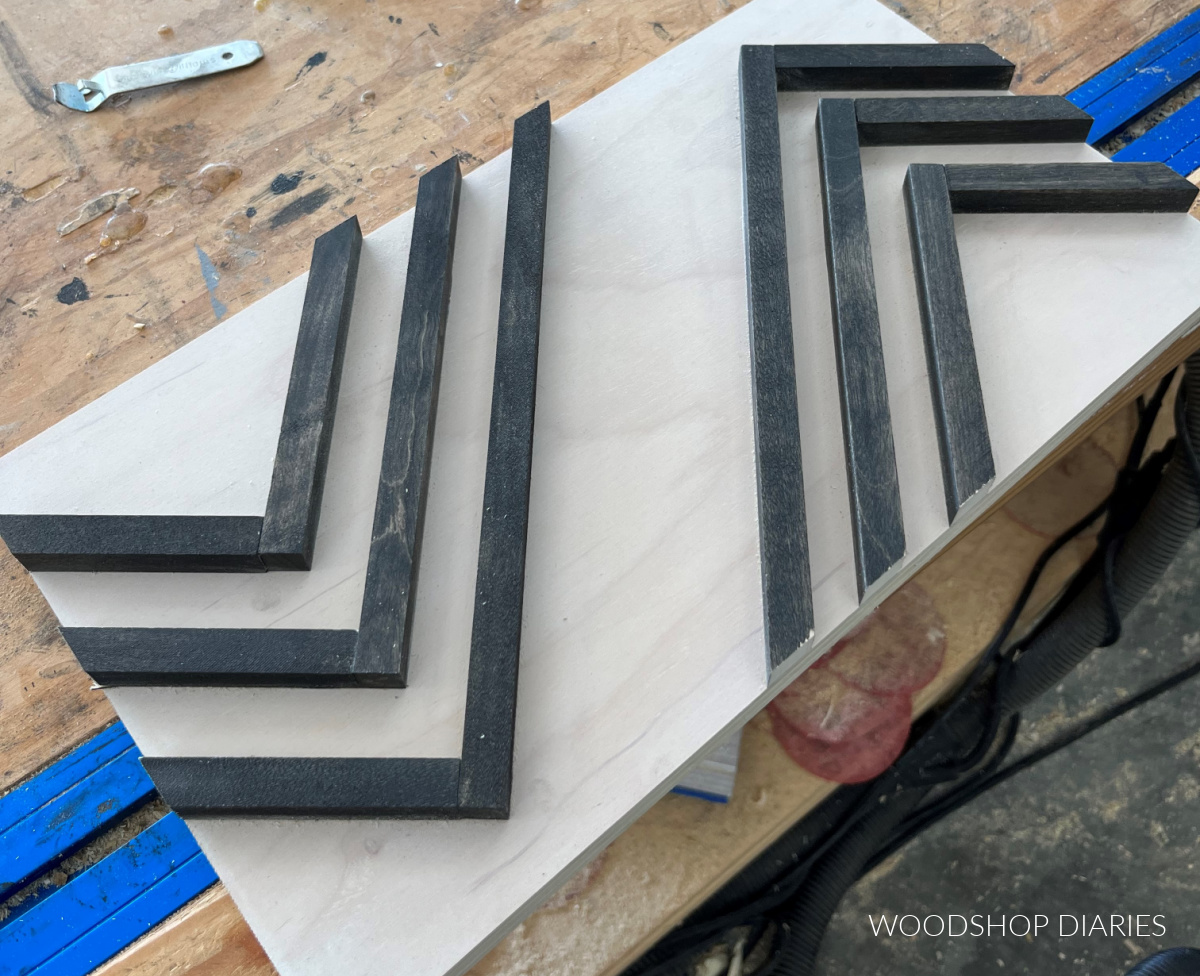
Then, I repeated for the rest of the pattern and trimmed those sides as well.

PRO TIP: Don’t glue and trim them all at once. If you have pieces hanging off all sides, it will be difficult to sit square in the miter saw to trim the edges.

.

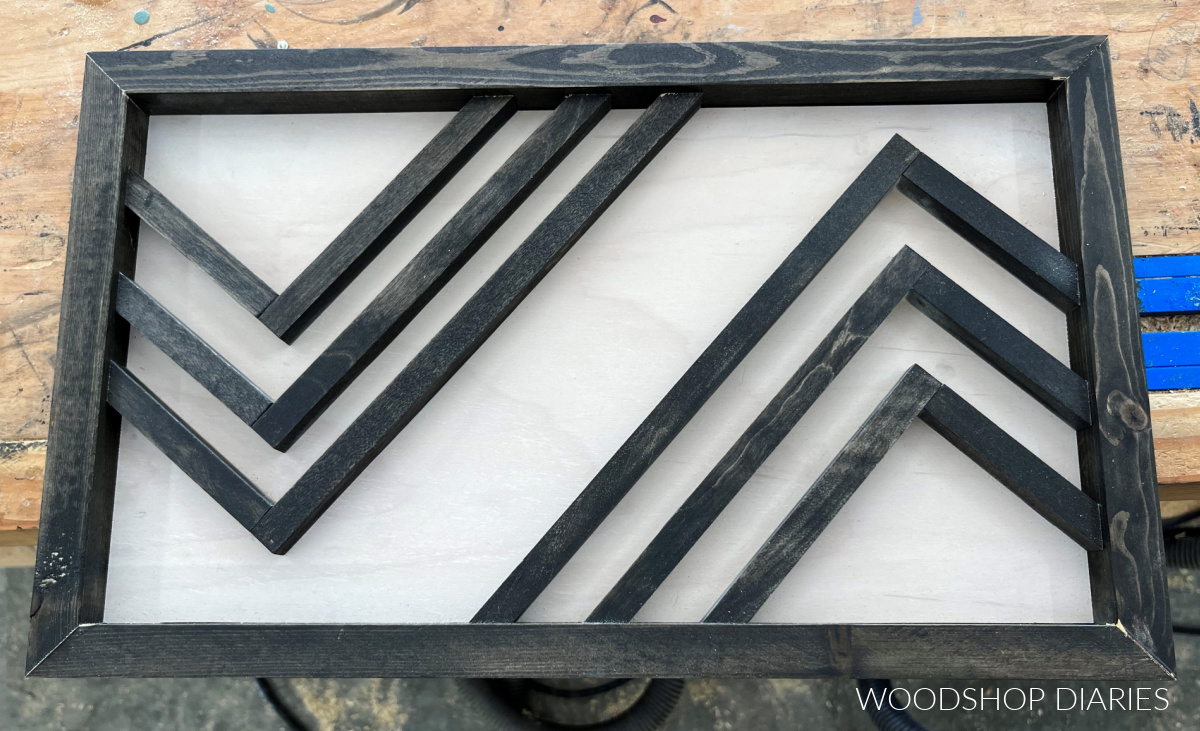
Geometric pattern glued onto backer board and trimmed to size laid on workbench

Step 4: Add Frame

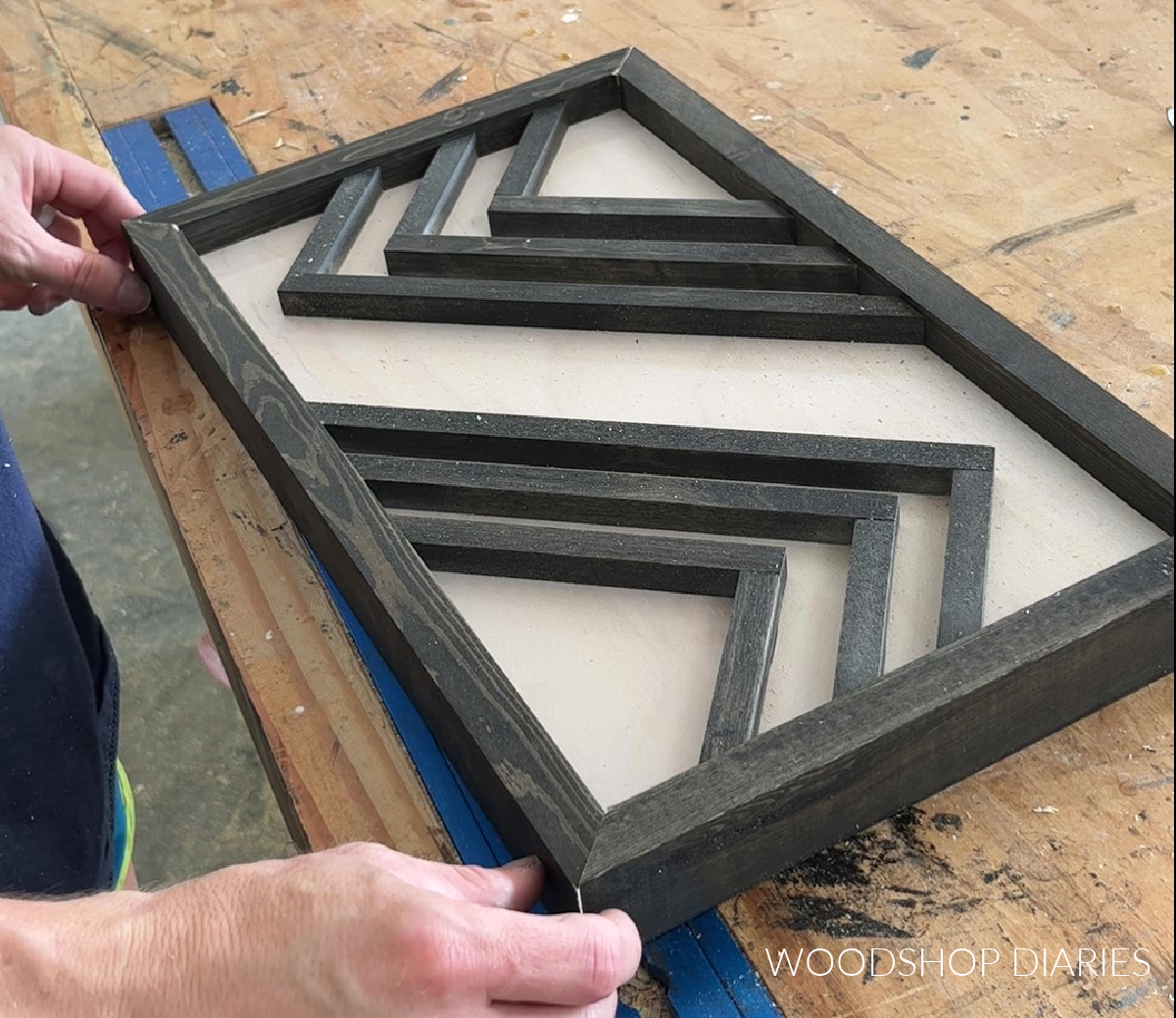
Once all sides were trimmed flush, I cut to fit scrap 1x2s around the edges with 45 degree mitered ends to frame it out.

.

These pieces were left over from when I did the exact same thing to make large DIY custom picture frames so they were already stained black from that.

.

But, I recommend once you dry fit the pieces around the edge, stain or paint them as desired before attaching.

Placing 1x2s around DIY geometric wooden art piece to frame it

I used Krazy Glue Fast Dry Wood Glue again to simply glue these pieces around the edge so they were flush on the back side.

.

If you wanted, you could also use a brad nailer to nail these pieces in place as well.

Step 5: Finish and Display

And with that, I wiped away all the dust and it was ready to sit on the shelf! If you wanted to seal it (that’s optional), I’d recommend something like Minwax Polycrylic spray sealer.

completed black and white DIY geometric wooden art close up

It will be difficult to brush sealer on this design, so spray is probably the easiest option to cover all surfaces evenly.

.

If you preferred to hang this instead of just sitting it somewhere, you can certainly attach hanging hardware on the back and use a roofing nail or a screw into a stud (or a drywall anchor) to hang this on the wall.

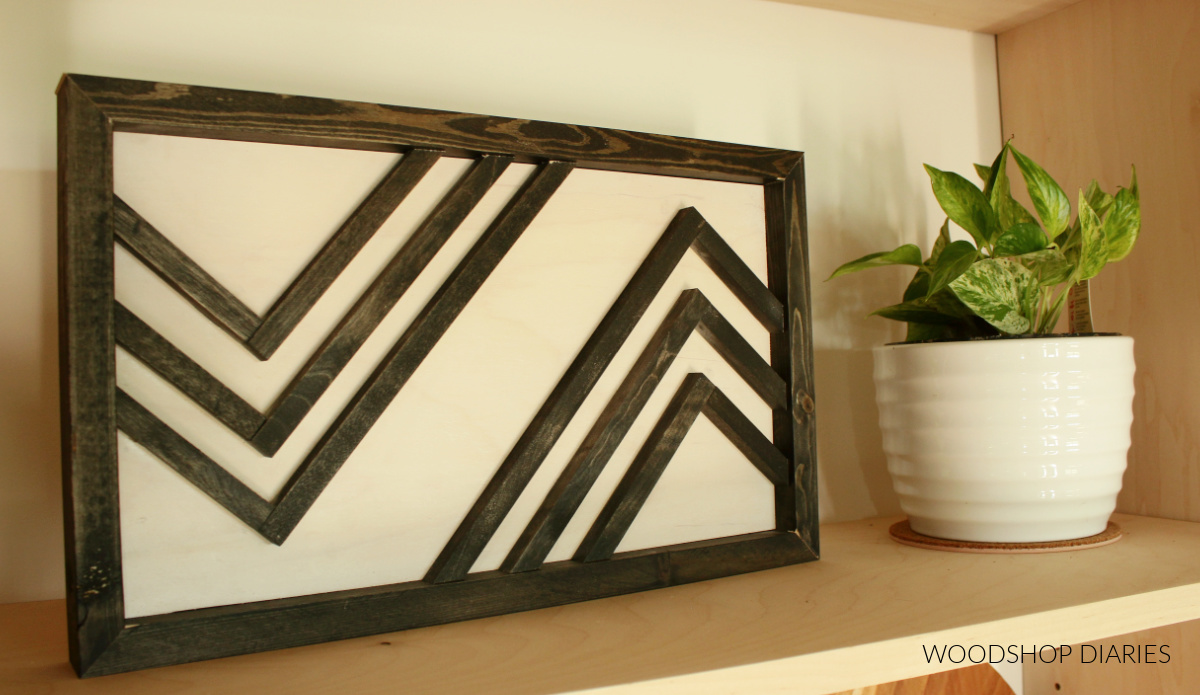
Black and white wooden art piece sitting on shelf next to plant

This would make a great little gift idea, and you could use different colors, designs to swap out for the seasons!

More Fun With Scrap Wood

Can’t get enough scrap wood projects?? I’m teaming up with my friend, Kati, from Houseful of Handmade all month long to share some “Scrap Wood Summer” Projects!

.

Check out all the projects in the series so far below. Click on an image to learn how to make each one!

Scrap Wood Monitor Stand
Scrap Wood Footed Tray
Scrap Wood Cake Plate
Scrap Wood Geometric Art
Scrap Wood Bookends
Scrap Wood Wall Shelf
Scrap Wood Curtain Rod Brackets
Scrap Wood Pumpkin Sign
Scrap Wood Tiered Plant Stand
Scrap Wood Plant Stand

We will be posting new Scrap Wood Summer projects every Tuesday through this entire month.

.

Subscribe to the newsletter to be the first to know when the new scrap wood projects come out!

I hope you enjoyed this simple scrap modern art project and if you’d like to save it for later, don’t forget to pin it or share to your favorite social channel!

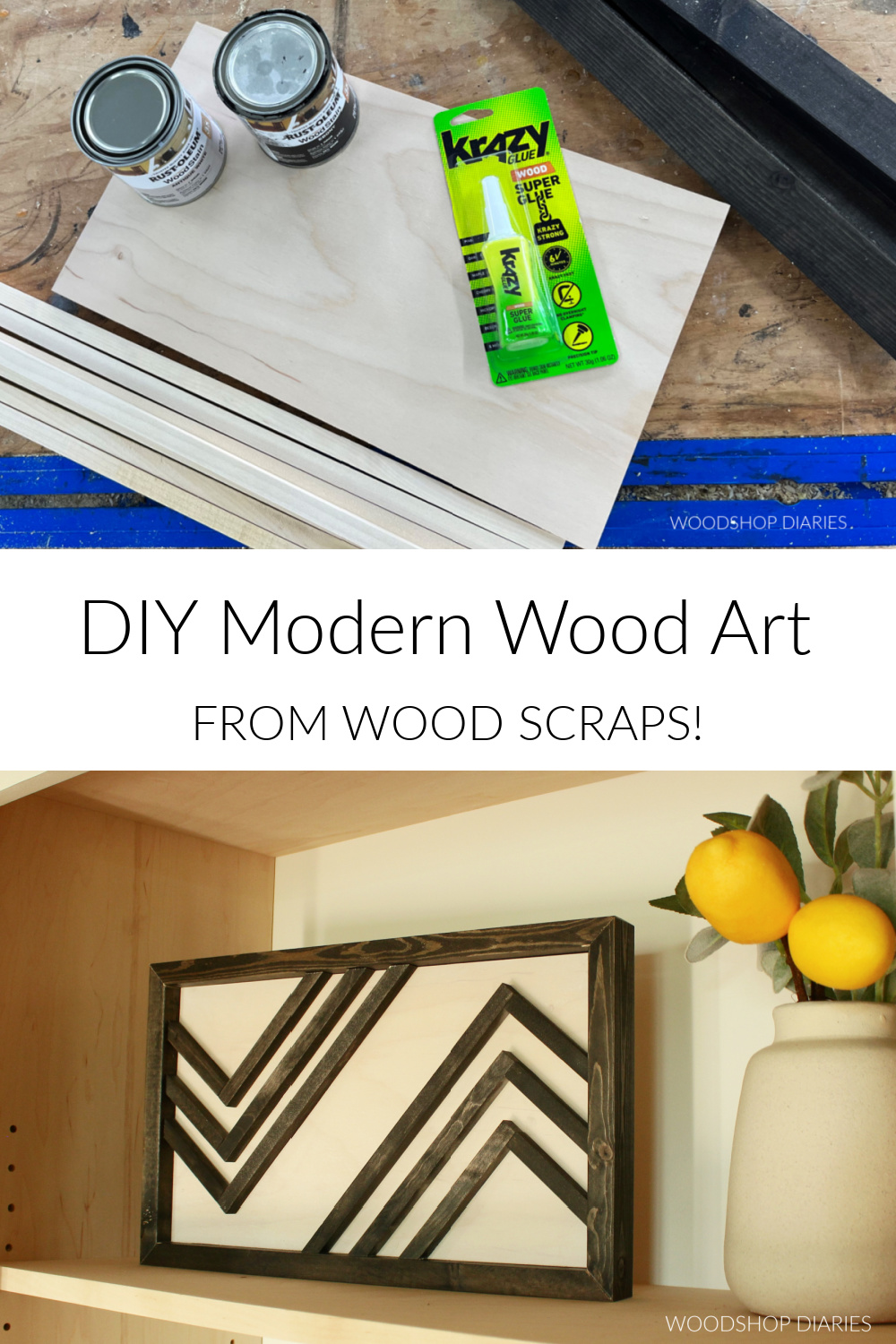
Pinterest collage showing materials needed at top and completed DIY geometric wooden art sign at bottom with text "DIY modern wood art from wood scraps"

Until next time, friends, happy building!
Easy DIY Footed Tray

August 2, 2022 by Shara, Woodshop Diaries

In this post, I’m sharing how to make an easy DIY footed tray in just 5 minutes using scrap wood!

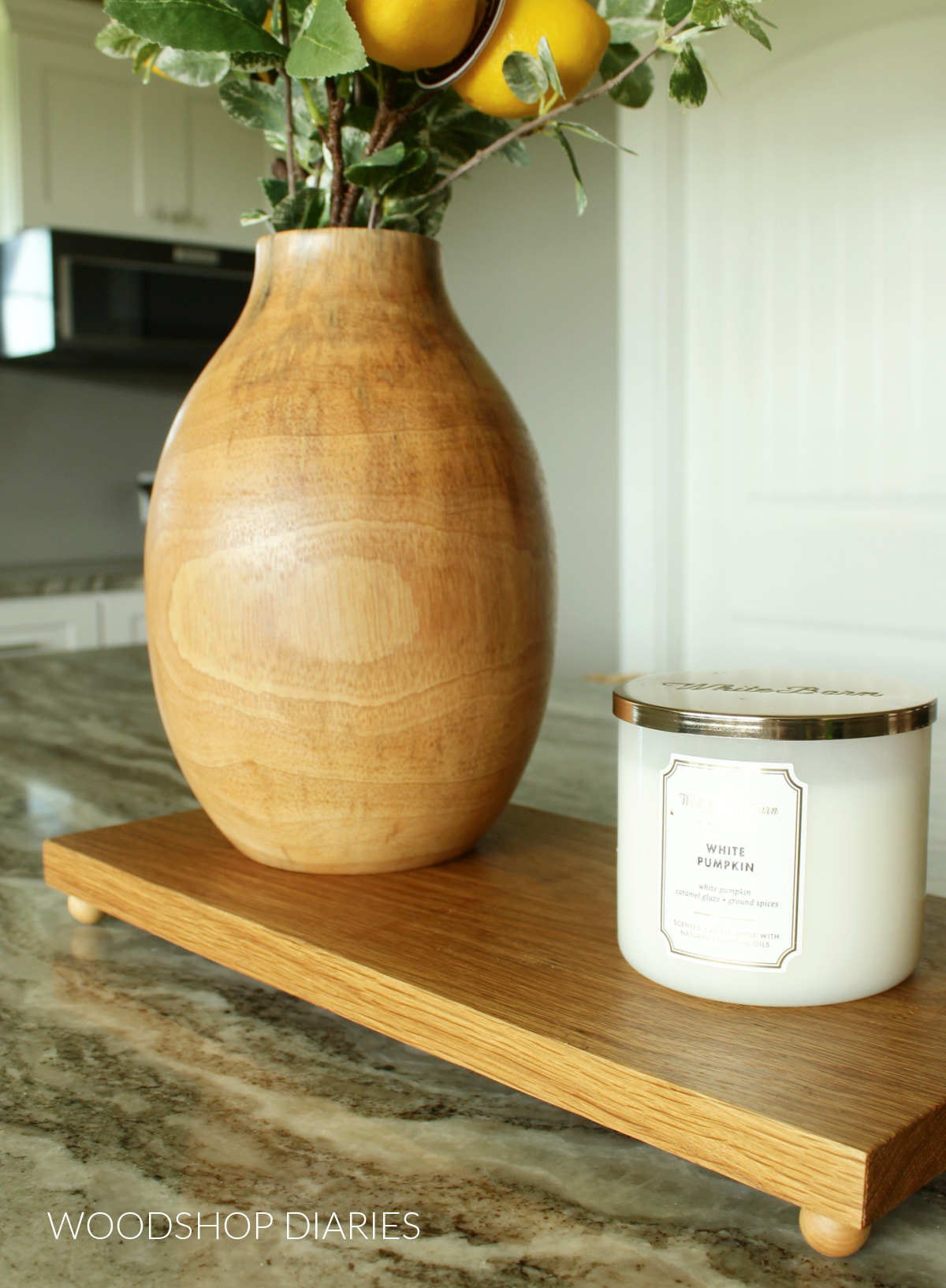
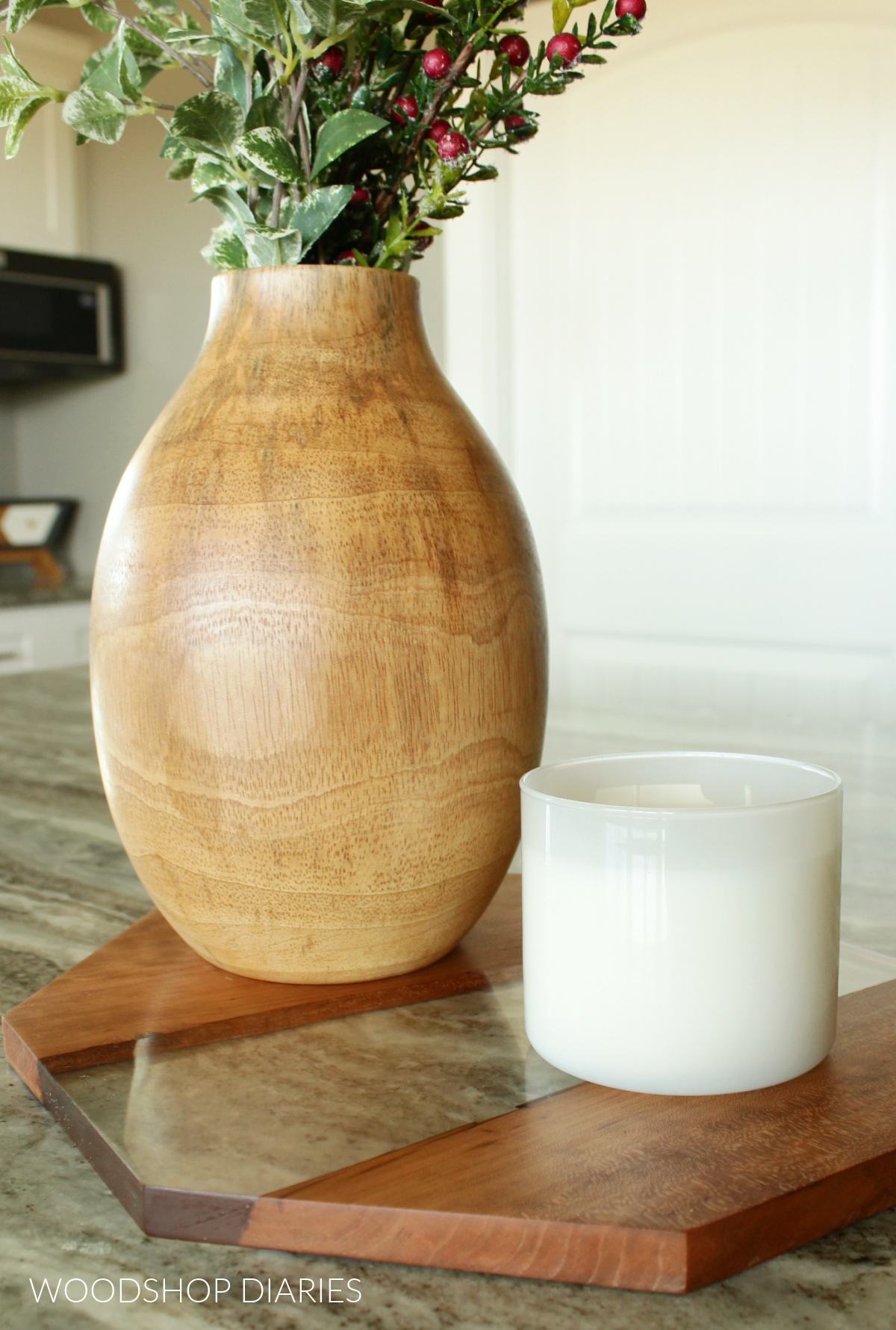
White oak wooden footed tray on granite countertop with wooden vase and candle on top

I love a good scrap wood project–especially one you can throw together in just a few minutes with little to no tools!

.

These are perfect to make in all different sizes to use in various places around the house–like for a plant coaster, a cute serving tray, a place to set bathroom items on the vanity countertop, etc.

.

I especially like the idea of a plant coaster to help protect my furniture surfaces!

.

No matter what you use it for, I’m sharing how to make your own DIY wooden tray with feet below.

Tools & Materials:

*This post contains affiliate links. See website policies.

Tools:

  • Drill
  • Drill Bits
  • Saw (only need if you need to cut down your scraps to a certain size)

Materials:

  • Scrap wood (any size, any type…get creative!)
  • Wooden Balls (could also use small furniture feet, little blocks, etc)
  • Fast Dry Wood Glue
  • Wood Finish
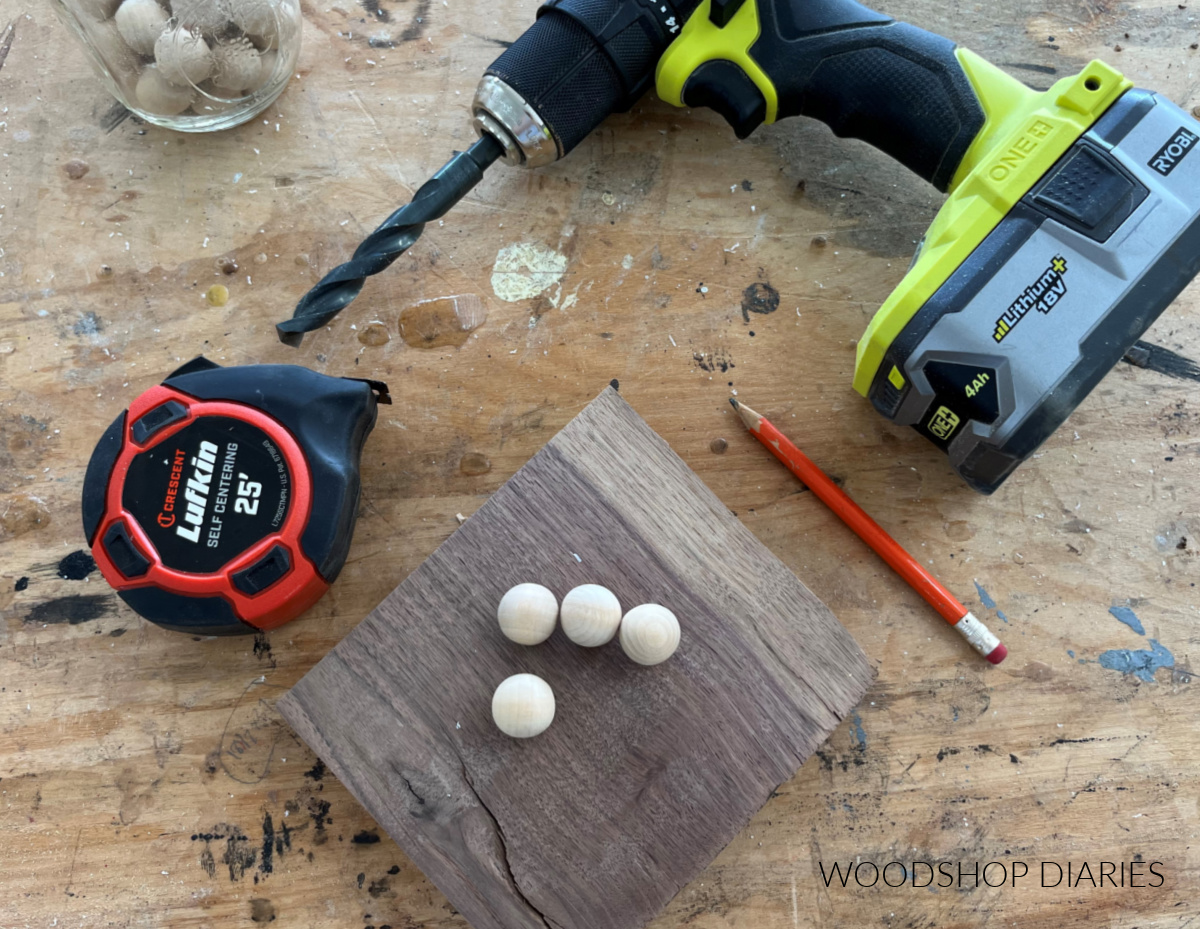
Measuring tape, scrap block, wooden balls, and drill laid out on workbench

How to Make a DIY Footed Tray

The process to make this simple wooden tray with feet is SUPER easy!

.

But, just in case you’d prefer to watch and not just read, I made a fun video for it as well!

.

Watch the video here, then grab the how to below.

Step 1: Find and Trim Scrap Board for Footed Tray

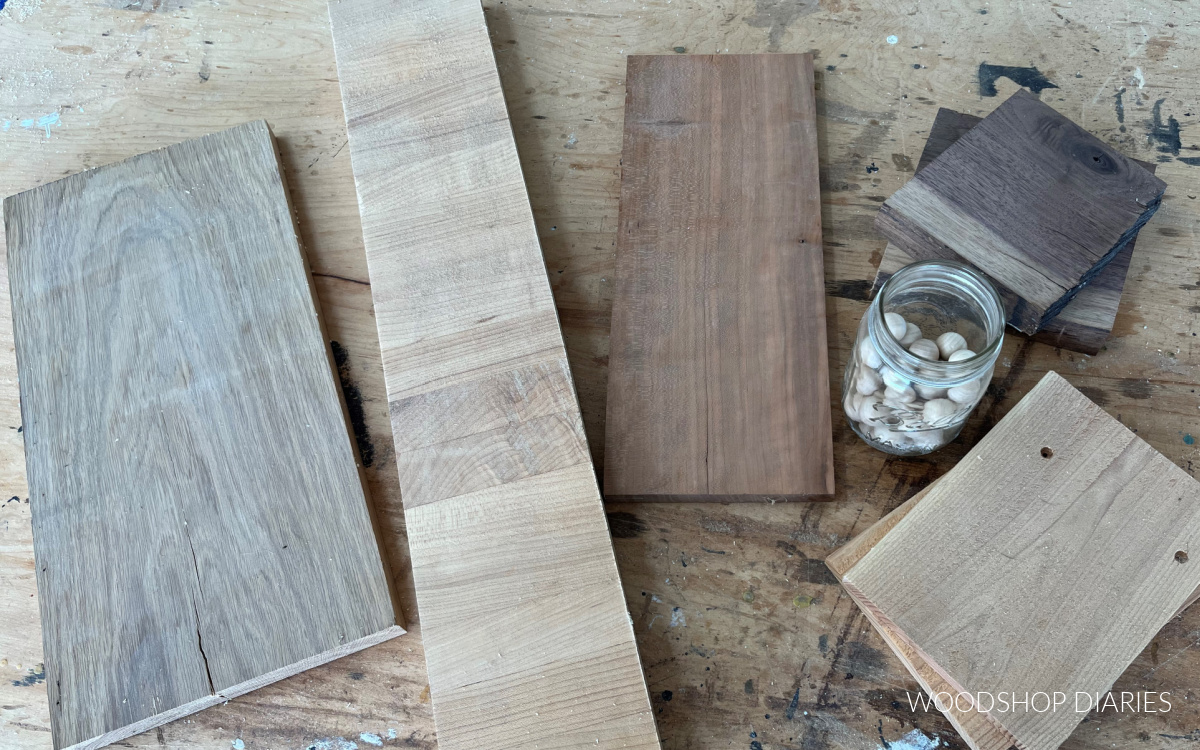
Browse around your scrap wood pile and take inventory of what you have. Pick one (or several) pieces you’d like to use for this.

.

This is a great time to use up those small hardwood blocks, pieces with rough edges, or pieces with cracks or imperfections that you may not be able to use for other, larger projects.

Scrap wood options laid out on workbench with wooden walls in jar to use as feet

Small pieces work great for coasters, but you could use larger pieces for a tray.

.

Trim down scraps to your desired size (if needed). Feel free to get creative and cut them in circles or other shapes if you don’t want a square or rectangle.

.

Sand pieces as needed.

Step 2: Drill Foot Locations

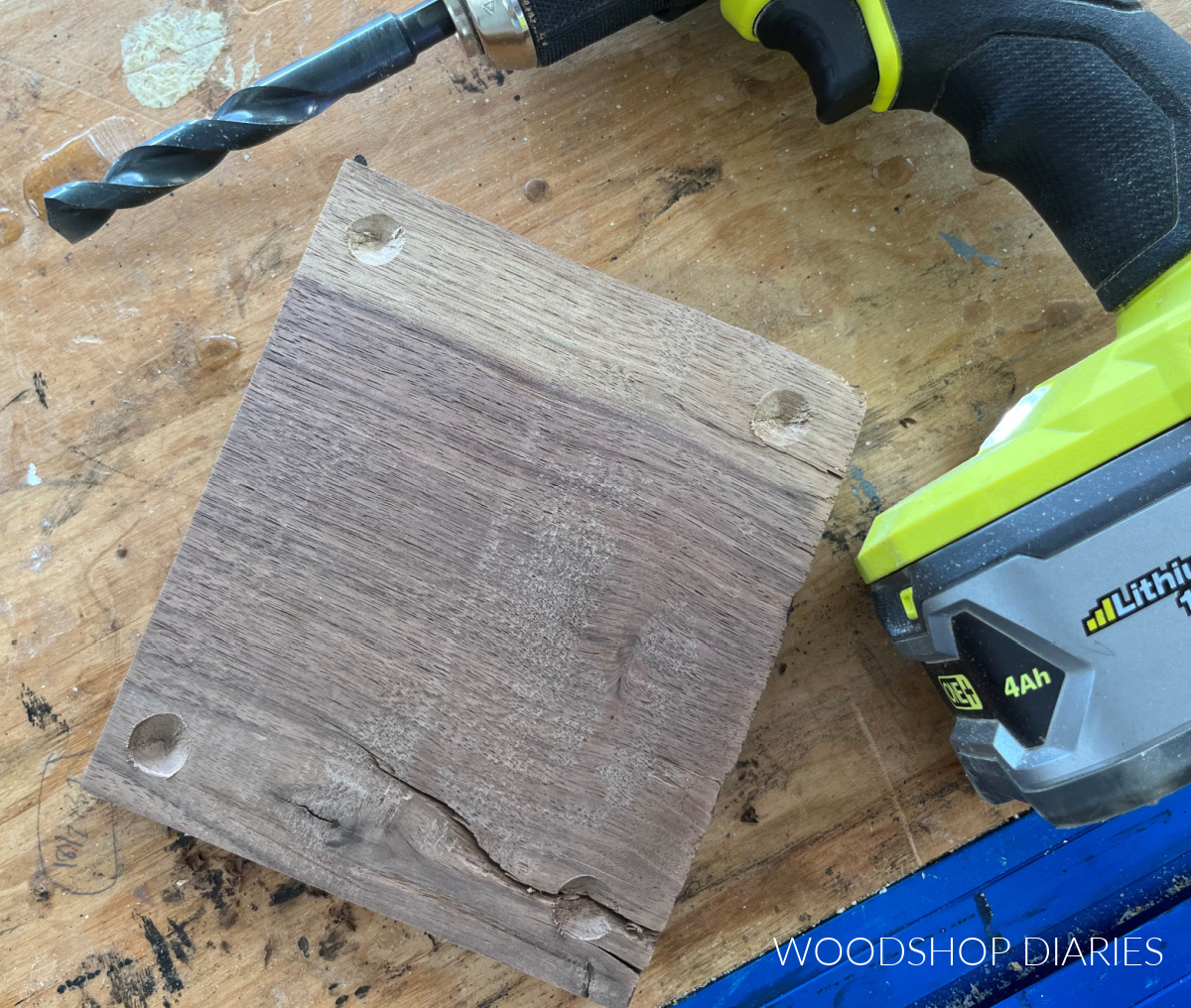
Since I was placing wooden balls on the bottom of the board, I decided to drill small holes for these to sit down into.

.

If you decided to use something else for “feet” instead of wooden balls–something with a flat surface–you can skip this step.

Holes drilled into the bottom side of the wooden footed tray block to install the feet

This isn’t NECESSARY, but it allows more surface area for the glue to bond the pieces, so the feet have a stronger hold.

.

I used my largest drill bit and drilled small “dips” at each corner.

Step 3: Glue Feet onto Wooden Tray Bottom

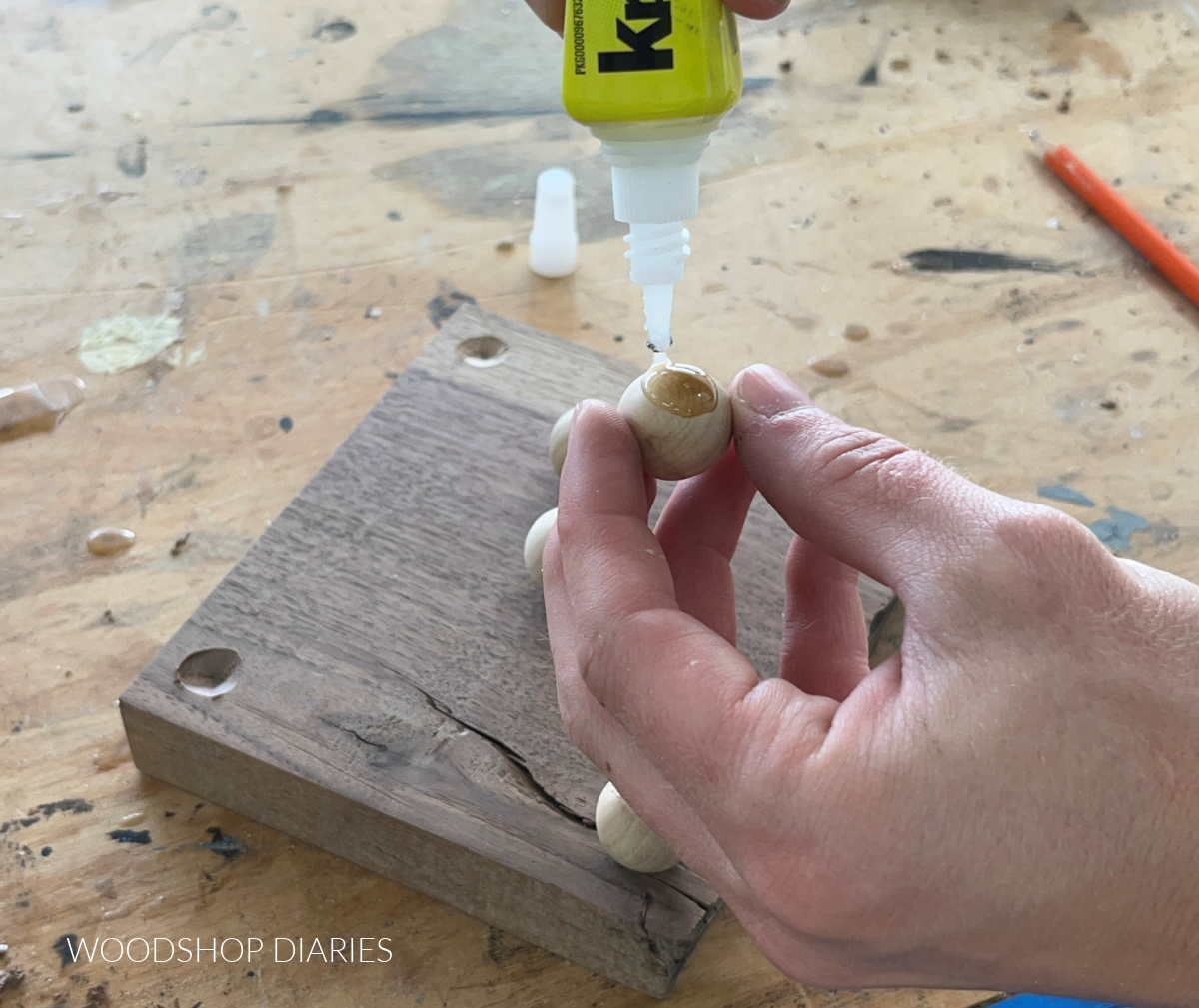
To keep things quick, I used some Krazy Glue Fast Dry Wood Glue to attach the wooden balls/feet to the wood piece.

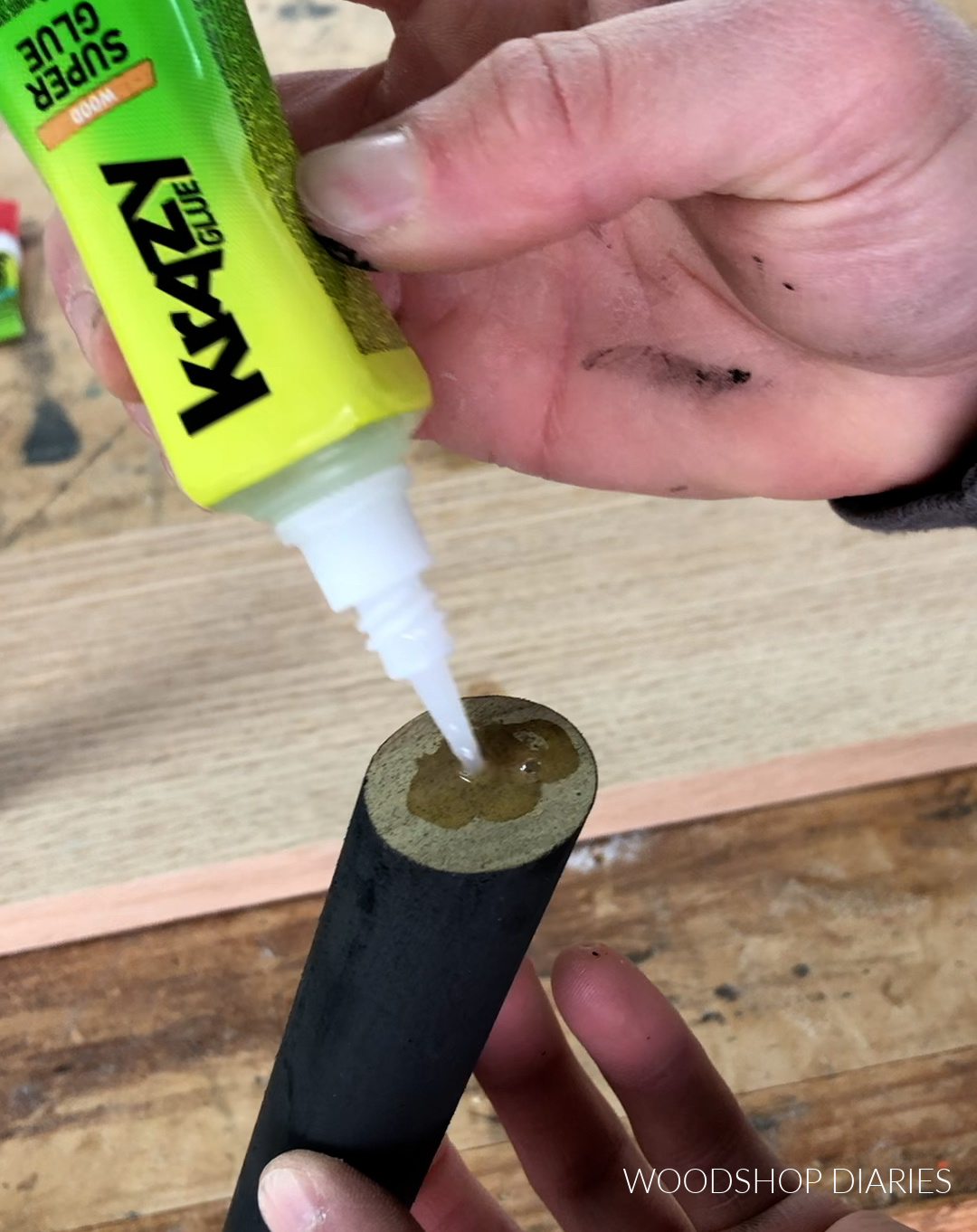
Close up of adding Krazy Glue Wood Glue to wooden balls to glue on board to make footed tray

You could certainly use regular wood glue if you’d rather, but it will take a good while to dry.

.

There are many types of “fast drying” super glue for wood that you could use for this, but I’ve used Krazy Glue on several projects recently (like these large custom picture frames!)and have been really impressed with how well it works.

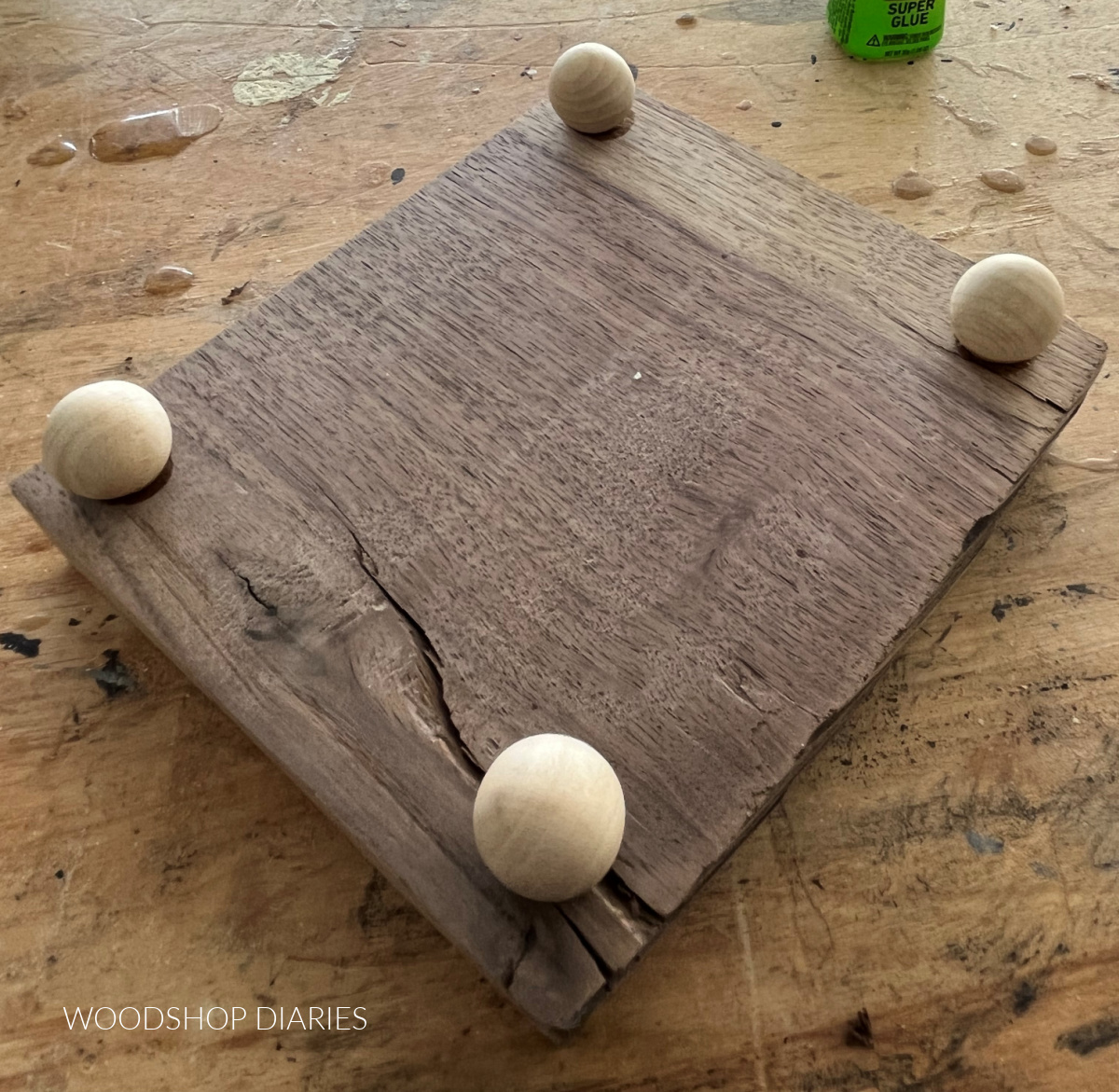
Wooden balls glued on bottom side of wooden tray with feet

I covered the top of each wooden ball with glue and set them into the holes and allowed to dry.

.

If you wanted to use little furniture feet or blocks instead of wooden balls, go for it! Those would work great as well. Get creative 🙂

Step 4: Apply Finish to DIY Footed Tray

Once the glue is dry, flip over and apply whatever finish you’d like! I always like to use Walrus Oil Furniture Butter on hardwood projects, so that’s what I used here.

.

But you can stain, paint, wax, oil, or poly as you wish.

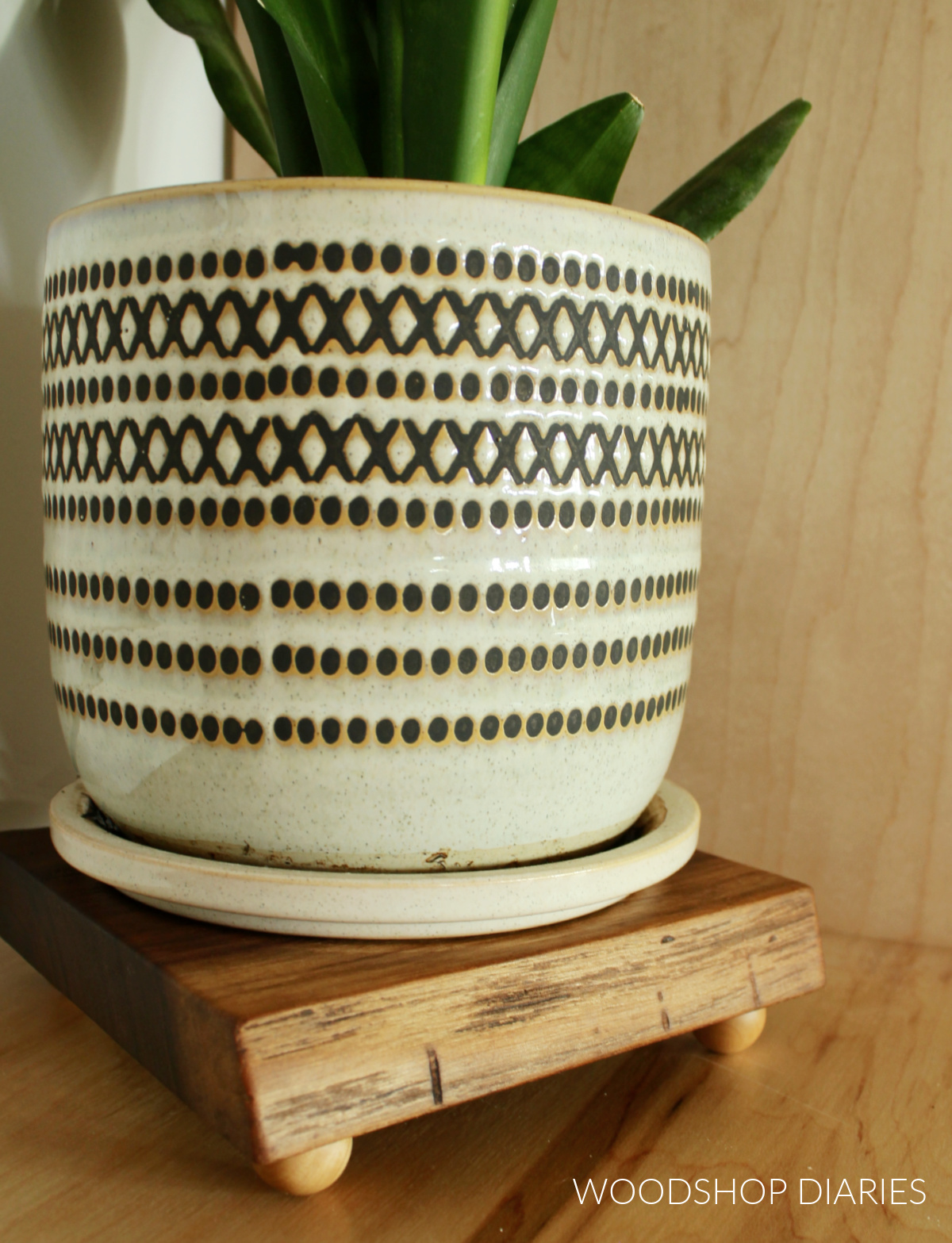
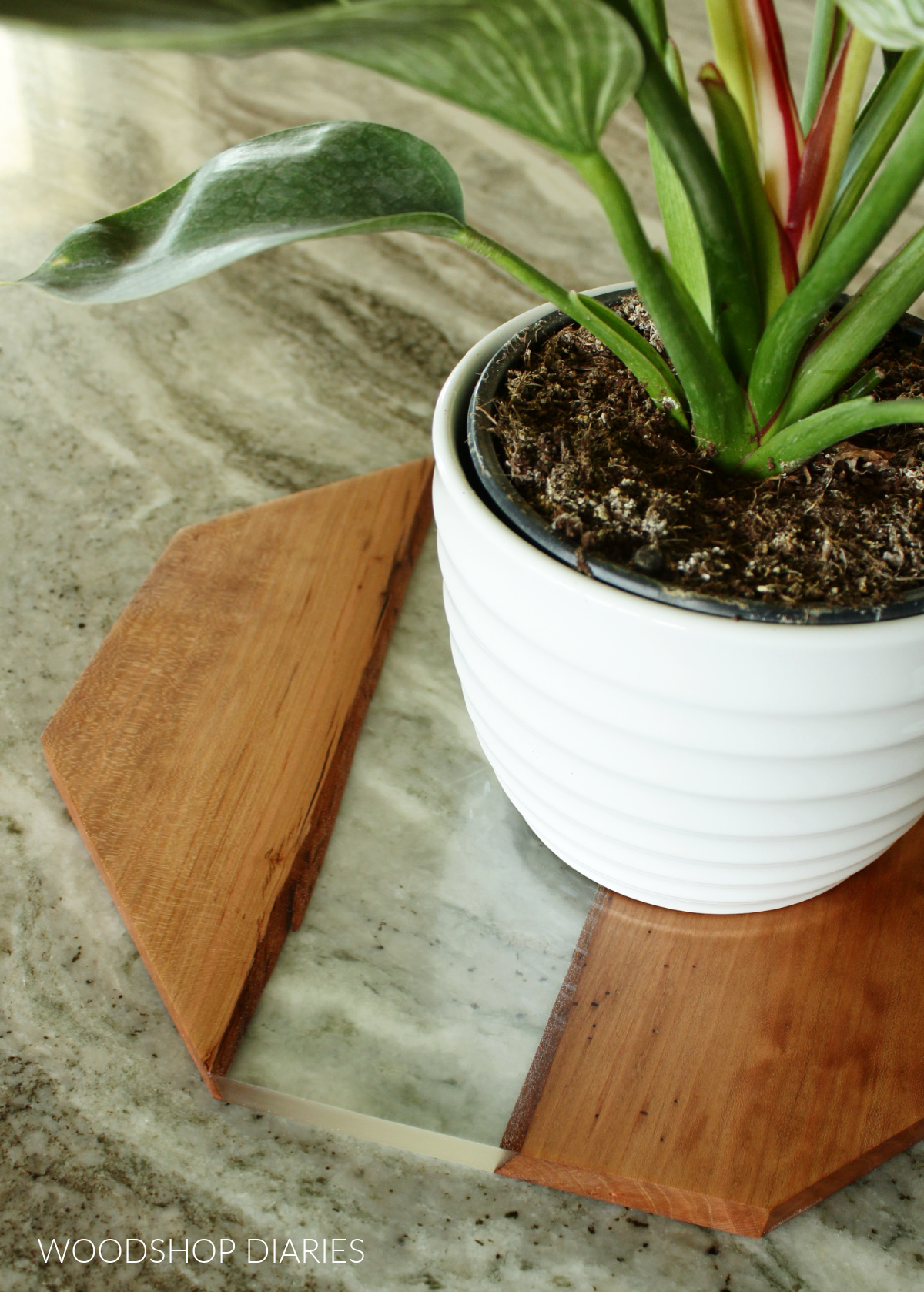
elevated wooden tray used as a plant coaster with pot on top

These are SO easy and quick to make. You can repeat this process for any size or shape or wood type you’d like!

.

I made my larger wooden tray here from some leftover white oak and my smaller plant coaster from some leftover walnut wood.

Larger wooden tray with wood ball feet used as centerpiece on kitchen island

More Fun with Scrap Wood

Can’t get enough scrap wood projects?? I’m teaming up with my friend, Kati, from Houseful of Handmade all month long to share some “Scrap Wood Summer” Projects!

.

Check out all the projects in the series so far below. Click on an image to learn how to make each one!

Scrap Wood Monitor Stand
Scrap Wood Footed Tray
Scrap Wood Cake Plate
Scrap Wood Geometric Art
Scrap Wood Bookends
Scrap Wood Wall Shelf
Scrap Wood Curtain Rod Brackets
Scrap Wood Pumpkin Sign
Scrap Wood Tiered Plant Stand
Scrap Wood Plant Stand

We will be posting new Scrap Wood Summer projects every Tuesday through this entire month.

.

Subscribe to the newsletter to be the first to know when the new scrap wood projects come out!

I hope you enjoyed this simple scrap wood pedestal wooden tray project and if you’d like to save it for later, don’t forget to pin it or share to your favorite social channel!

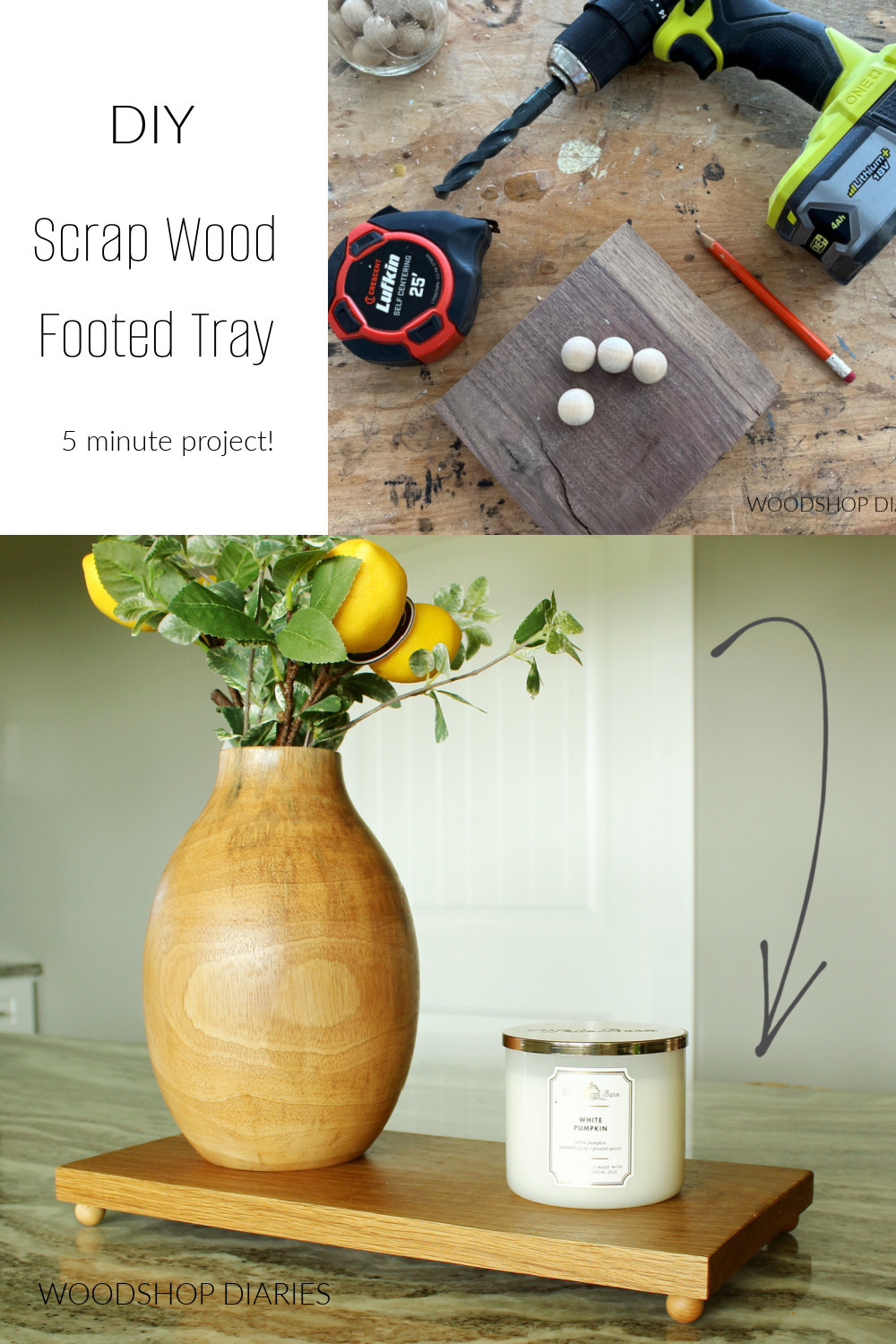
Scrap wood footed tray pin image collage--materials on workbench at top and completed DIY footed tray on bottom with text "DIY Scrap wood footed Tray 5 minute project"

Until next time, friends, happy building!
How to Build a One Drawer Nightstand

July 30, 2022 by Shara, Woodshop Diaries

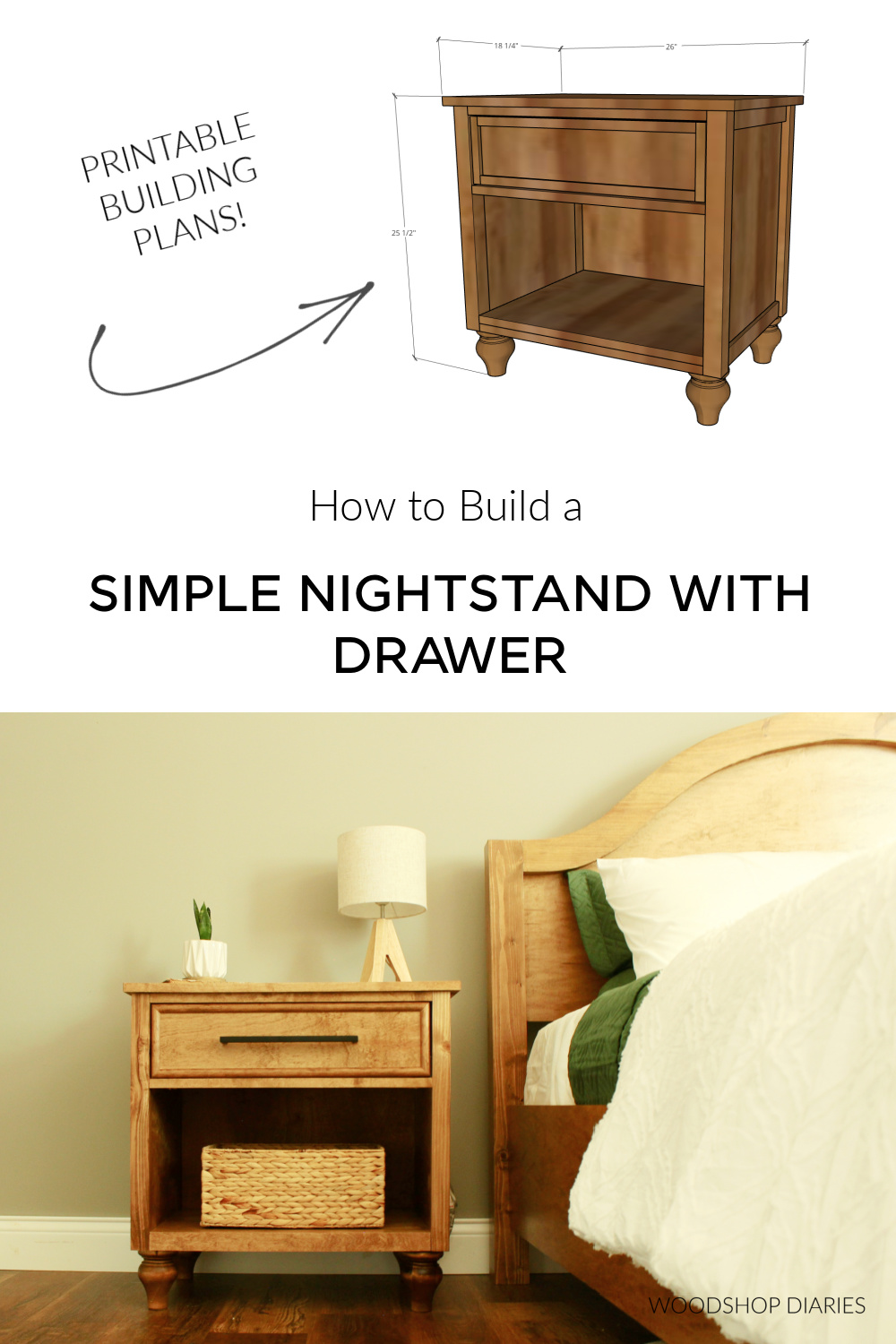
In this post, I’m sharing how to build a simple DIY one drawer nightstand with an open storage shelf and decorative feet!

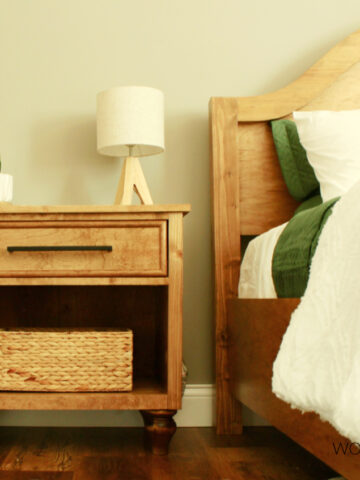
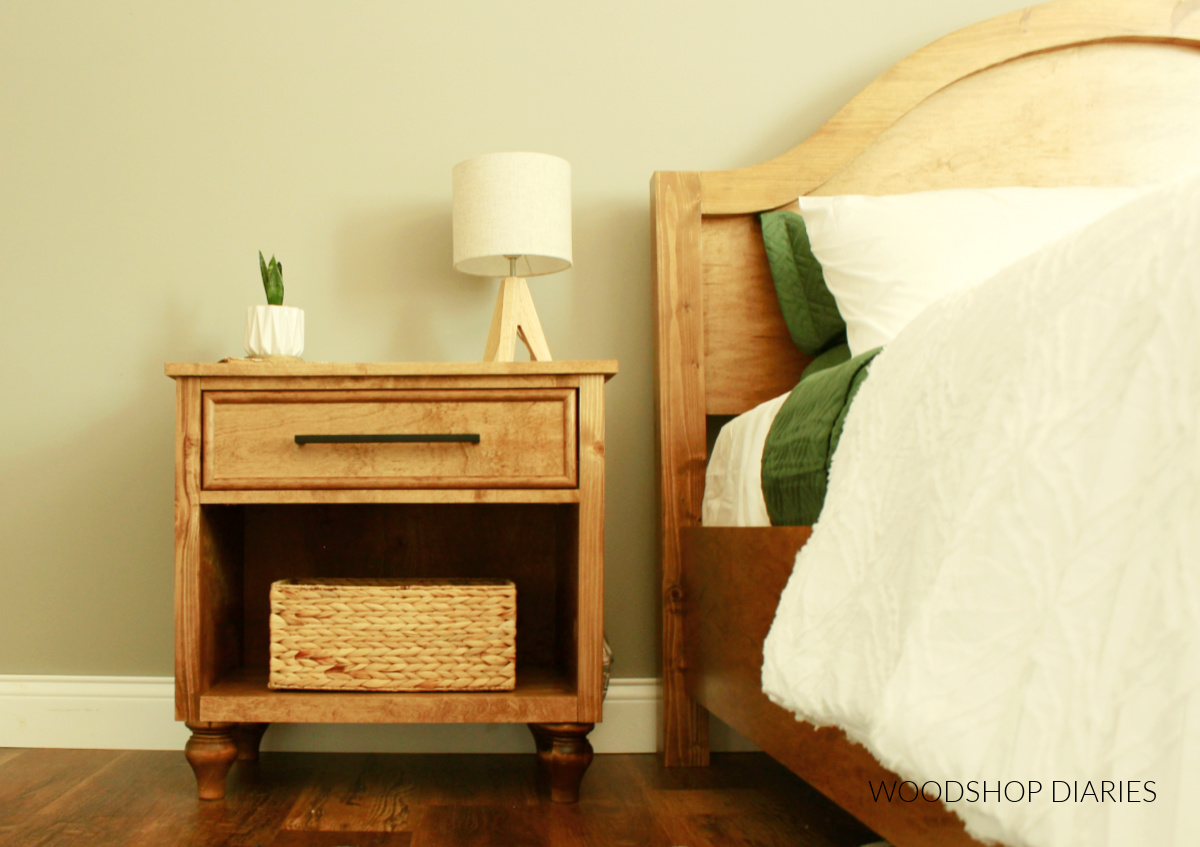
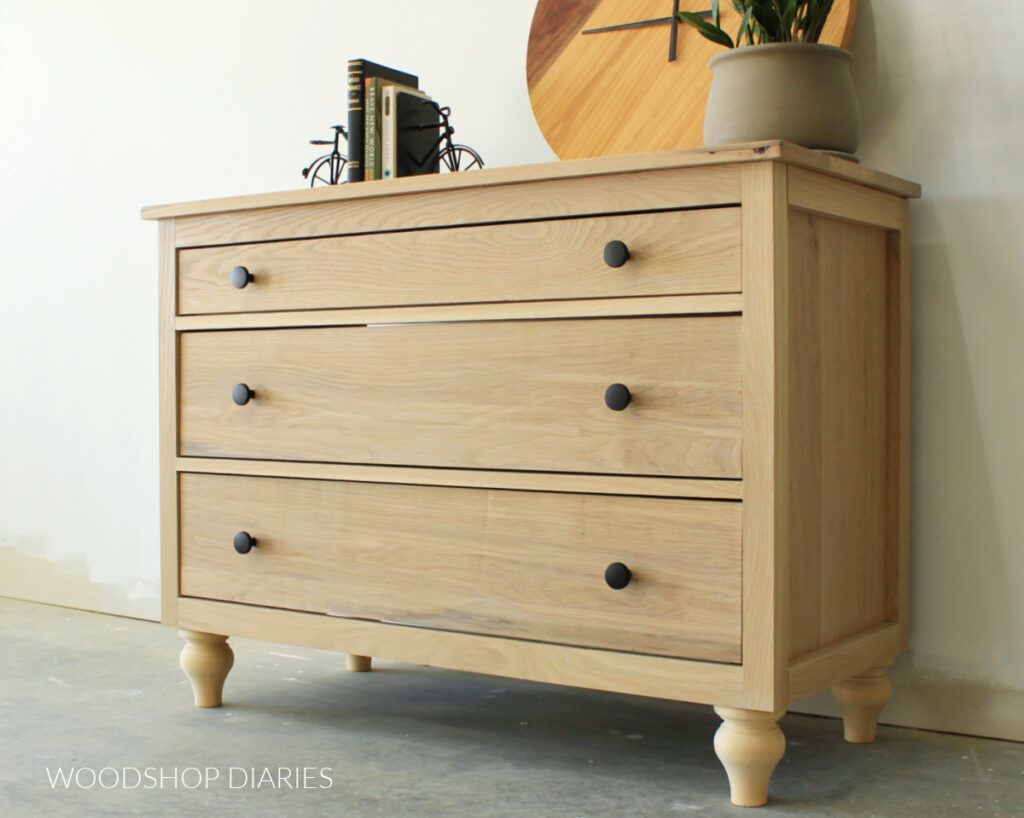
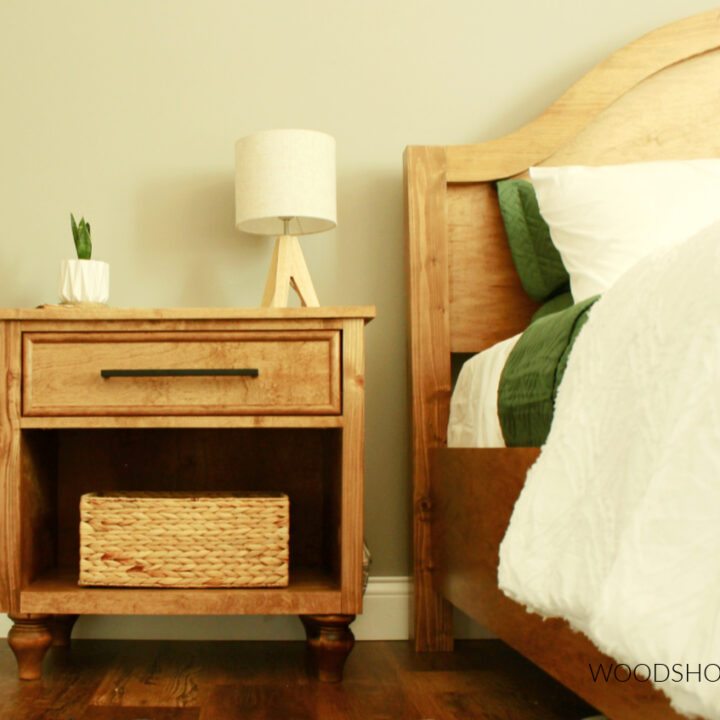
DIY bedside table with single drawer and open storage cubby next to arched headboard bed frame

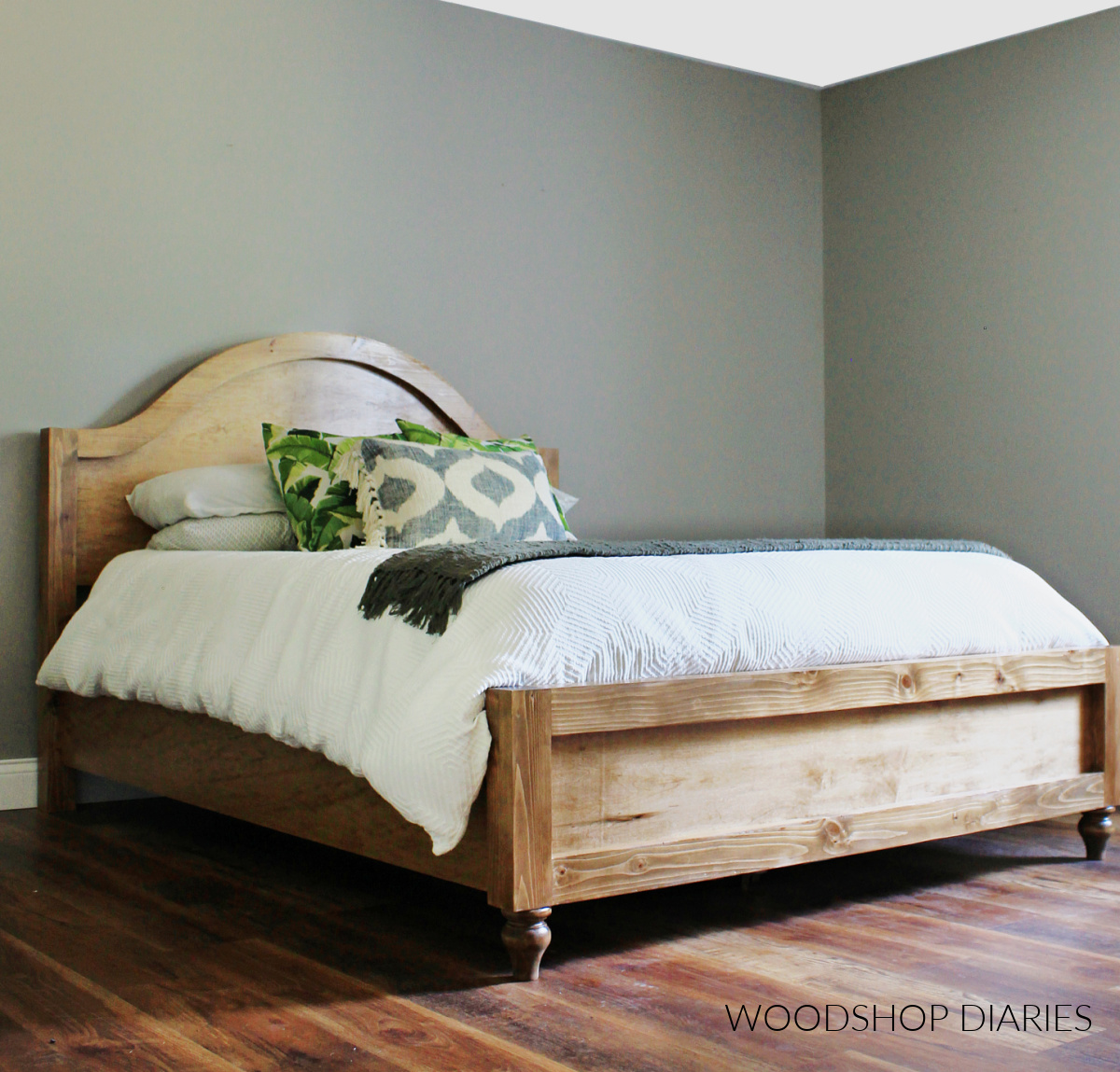
A few posts ago, I kicked off the start of a new matching bedroom furniture series by sharing a DIY bed frame with an arched headboard.

.

And now, I’m bringing you the matching DIY one drawer nightstand plans!

.

This simple bedside table design features a single drawer and a large open cubby for storage.

.

Tuck away remotes, jewelry, and keys in the drawer, and use the larger storage for books, blankets, or baskets.

.

Whatever you choose to store away, I’ve got the build plans and video for you below!

Notes About this DIY One Drawer Nightstand Project:

The plans and materials list below are for ONE nightstand/bedside table. To make a pair, simply double up on the lumber and hardware.

.

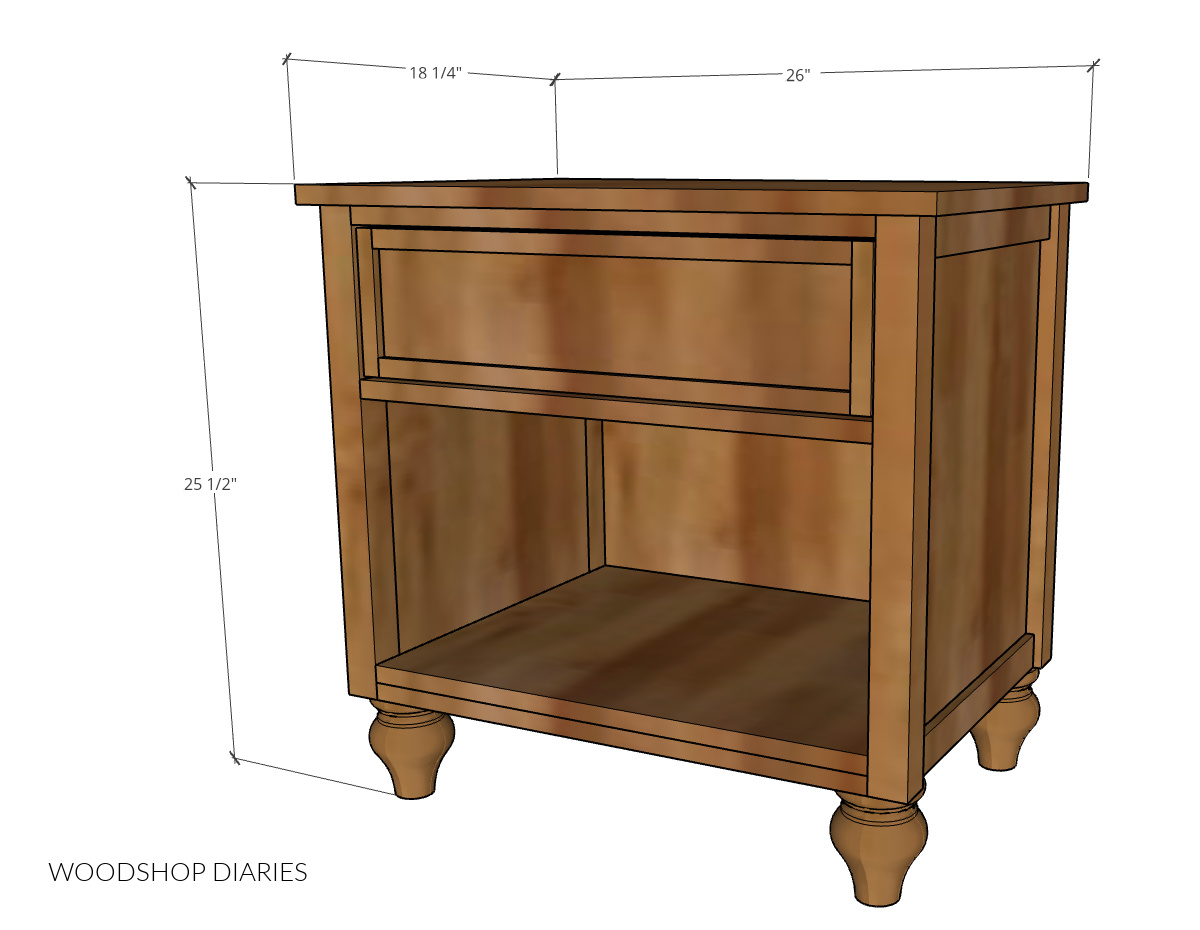
The overall dimensions of this DIY one drawer nightstand with storage cubby are 25 ½″ tall, 18 ¼″ deep and 26″ wide.

Overall dimensional diagram of nightstand--25 ½" tall, 18 ¼" deep and 26" wide

This was a fairly simple build, but you may find these posts and guides helpful throughout the build process:

  • How to cut plywood sheets
  • How to apply iron on edge banding
  • How to cut your own 2x2s
  • How to install furniture feet
  • How to use a pocket hole jig
  • How to build and install drawers and drawer slides
  • 5 secrets to professional looking DIY furniture

.

This bedside table is the second piece of the DIY Guest Bedroom Matching Furniture Series. Check out the other matching pieces here:

  • Arched Headboard Bed Frame Plans
  • 3 Drawer Dresser Plans
DIY matching bedroom furniture pieces
DIY Curved Head Board Bed
3 Drawer Dresser

Tools & Materials

*This post contains affiliate links. See website policies.

Tools:

  • Circular Saw and straight edge (or cutting guides)
  • Miter Saw
  • Table Saw (optional)
  • Drill/ Driver
  • Brad Nailer (optional)
  • Pocket Hole Jig

Materials:

  • (1) 2x2x8 board
  • (1) 1x3x8 board
  • (1) 1x2x8 board OR ¼″ x 1 ½″ x 8 lattice trim (to trim sides)
  • (1) 4’x4′ sheet ¾ ” plywood (note this is half of a full sheet)
  • (1 2’x4′ sheet ¼″ plywood (note this is a quarter sheet)
  • (1) 8′ stick half round or other molding to add to drawer front (optional)
  • (4) 4 ¾″ tall furniture feet
  • (4) threaded inserts for furniture feet
  • (1) pair 16 ” drawer slides
  • ¾″ & 1 ½″ Edge Banding (optional)
  • Wood Glue
  • 1 ¼″ pocket hole screws
  • 1 ¼″ wood screws
  • Wood finish (as desired)

How to Build a Simple One Drawer Nightstand

Now, we are ready to start building! I’ve got you covered with all the instructions, details, and printable plans below, but if you’re into videos, I’ve got that for you, too:

If you enjoyed the overview video and want to see it more in depth, you can check out the full length video on YouTube at the bottom of this post!

.

Grab the printable building plans for this one drawer nightstand with all the dimensions, cut list, and diagrams here:

Step 1: Assemble Side Panels

The side panels are made of 2x2s and ¾″ plywood panels. So, I cut 4 pieces of 2×2 and two plywood panels for each nightstand according to the cut list in the build plans.

.

Then, I drilled ¾″ pocket holes along the edges of the plywood panels.

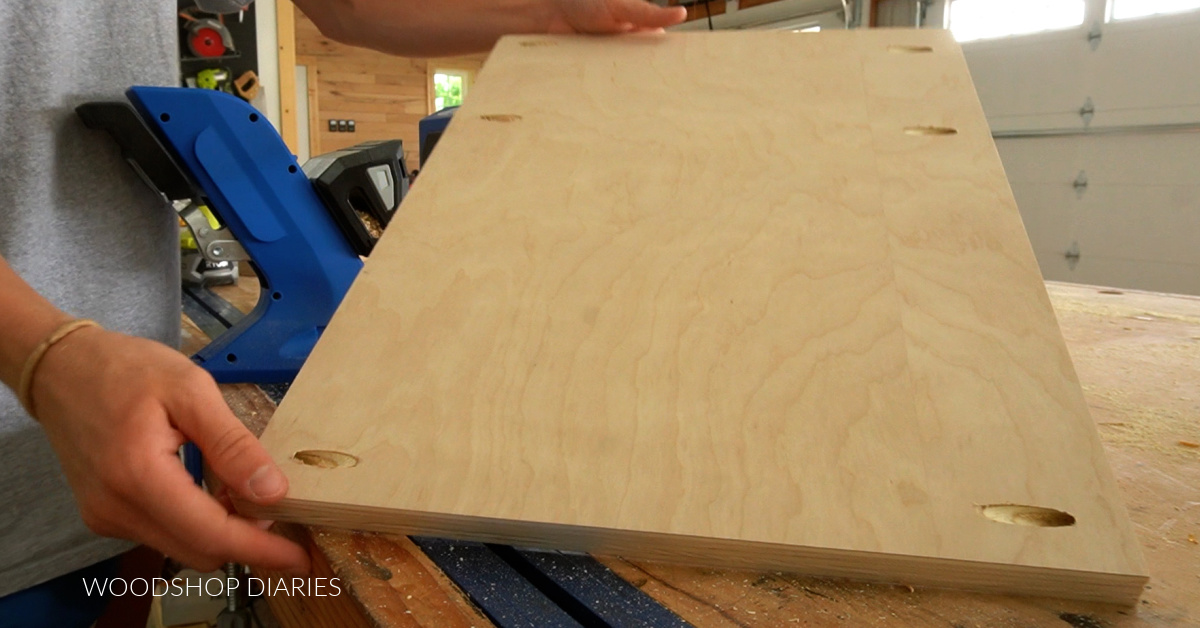
Pocket holes drilled in sides of plywood panel close to top and close to bottom

So that the pocket holes don’t show in the final product, I was careful to drill the top two pocket holes within 7 ½” of the top and the bottom pocket hole within 1 ½” of the bottom. These holes will all be covered later.

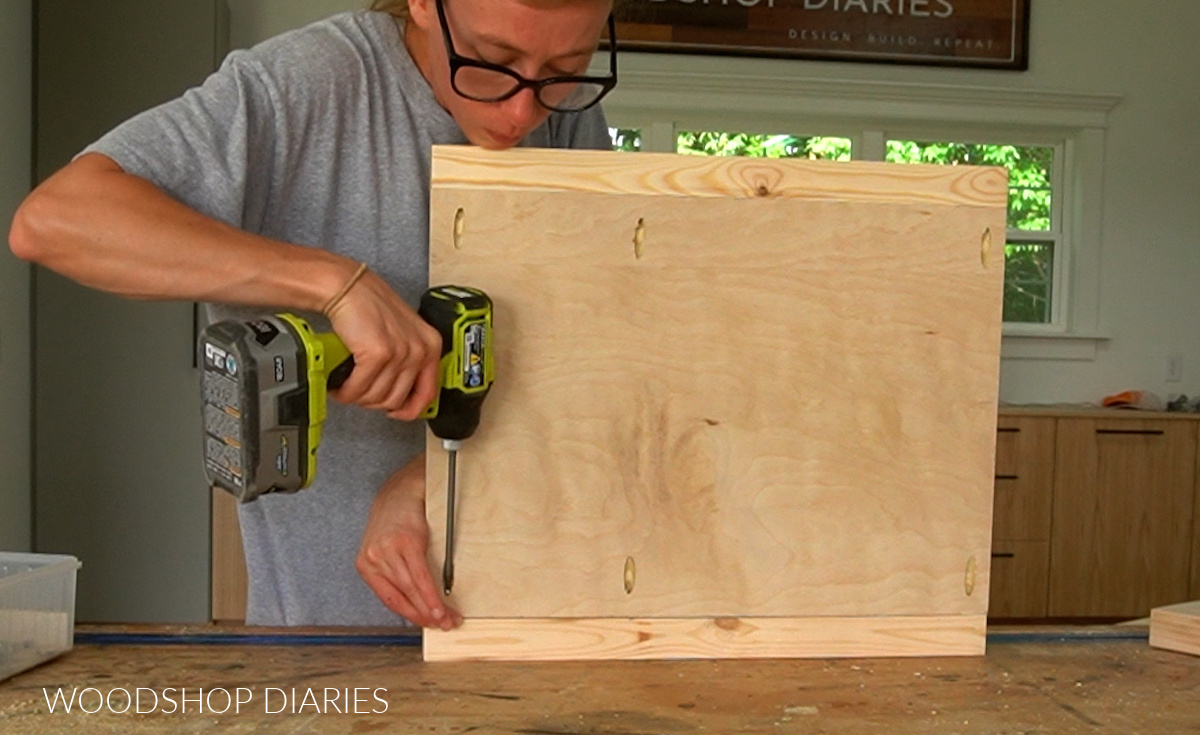
Shara Woodshop Diaries assembling side panels of DIY one drawer nightstand

I assembled the sides using 1 ¼” pocket hole screws so that the panels were all flush across the inside.

Step 2: Assemble Bottom Panel

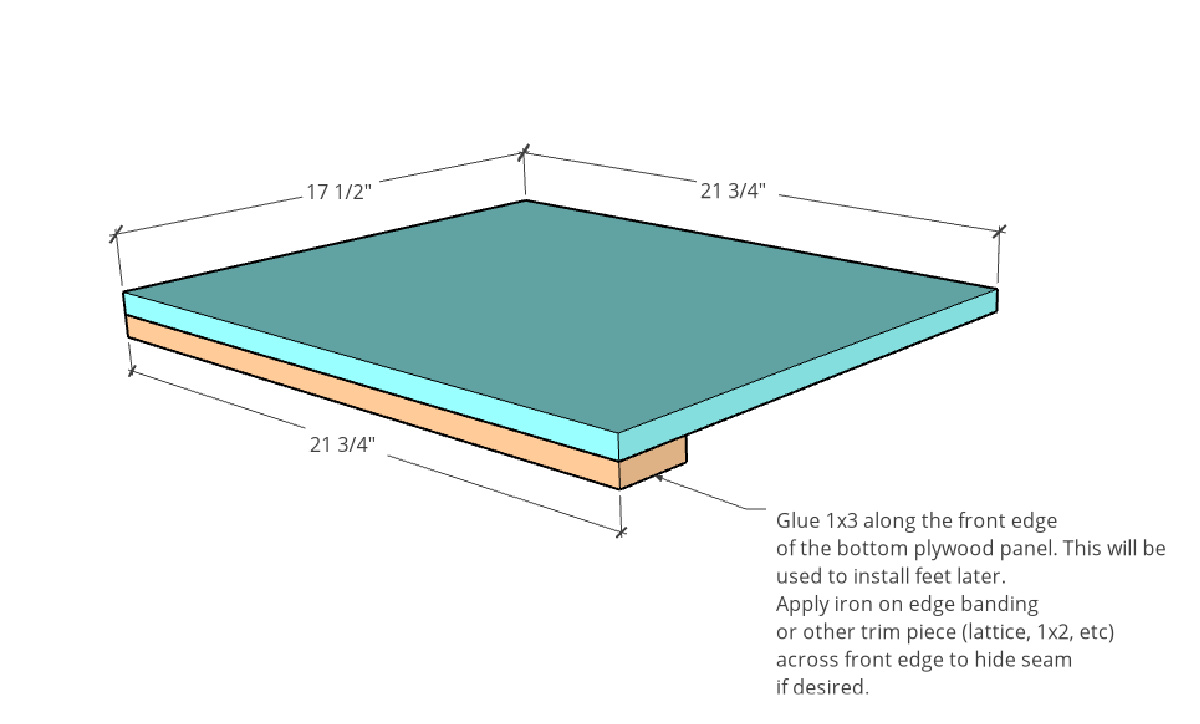
The bottom panel is cut from a piece of ¾″ plywood, but to make the front appear thicker and to give somewhere to install the threaded inserts for the feet later, glue a piece of 1×3 on the bottom flush to the front edge.

Bottom panel assembly of bedside table build diagram

To hide the seam on the front, you can either apply 1 ½″ iron on edge banding, or glue/brad nail a piece of 1×2 or lattice trim across the front.

.

If you do add trim on the front, you’ll need to trim the same thickness off the back edge so that the bottom panel’s overall depth stays 17 ½″.

Step 3: Assemble Nightstand Body

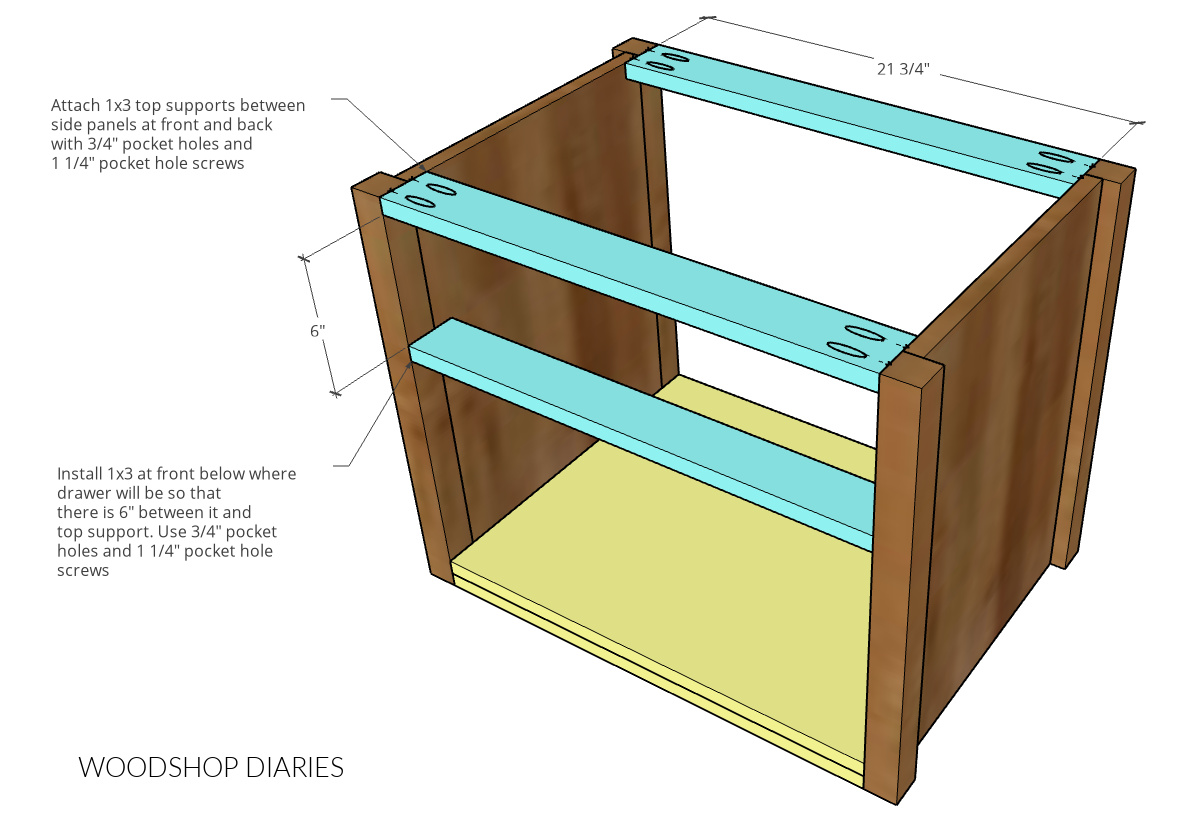
I cut three 1x3s for the top supports and to add below the drawer and drilled ¾″ pocket holes into the ends of each piece and into the ends of the bottom panel from step 2.

.

Then, I used 1 ¼″ pocket holes to assemble the main nightstand body.

Diagram showing how to attach top supports between side panels of DIY nightstand build

Two of the 1x3s go at the top–one at the front and one at the back. And the third is installed 6″ below the top support at the front.

.

This third piece is basically just a trim piece that goes underneath the drawer.

.

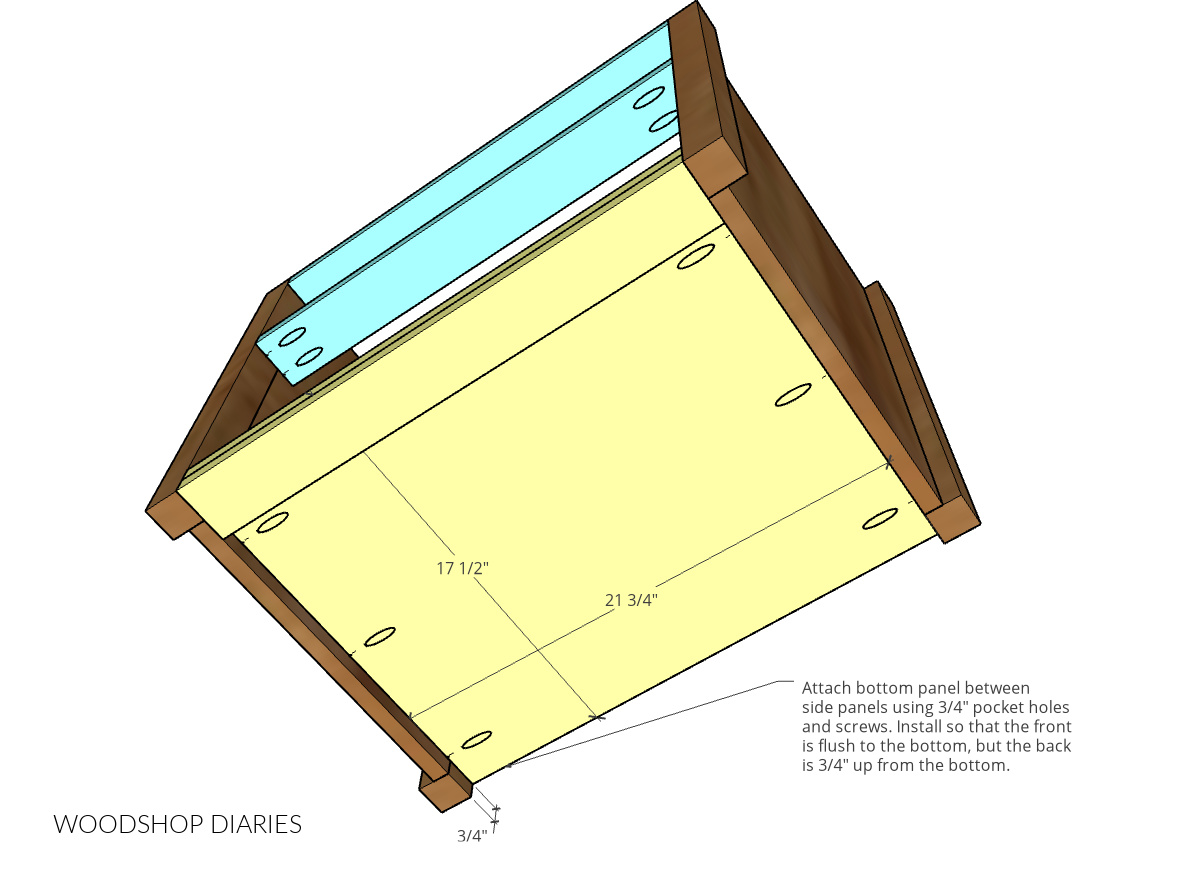
The bottom panel is flush to the bottom at the front, but I made sure the back side was ¾” up from the bottom.

Diagram showing how to install bottom panel between side panels of bedside table

I made sure to keep the side panels correctly oriented so the top two pocket holes stay toward the top.

Step 4: Install Drawer Slides

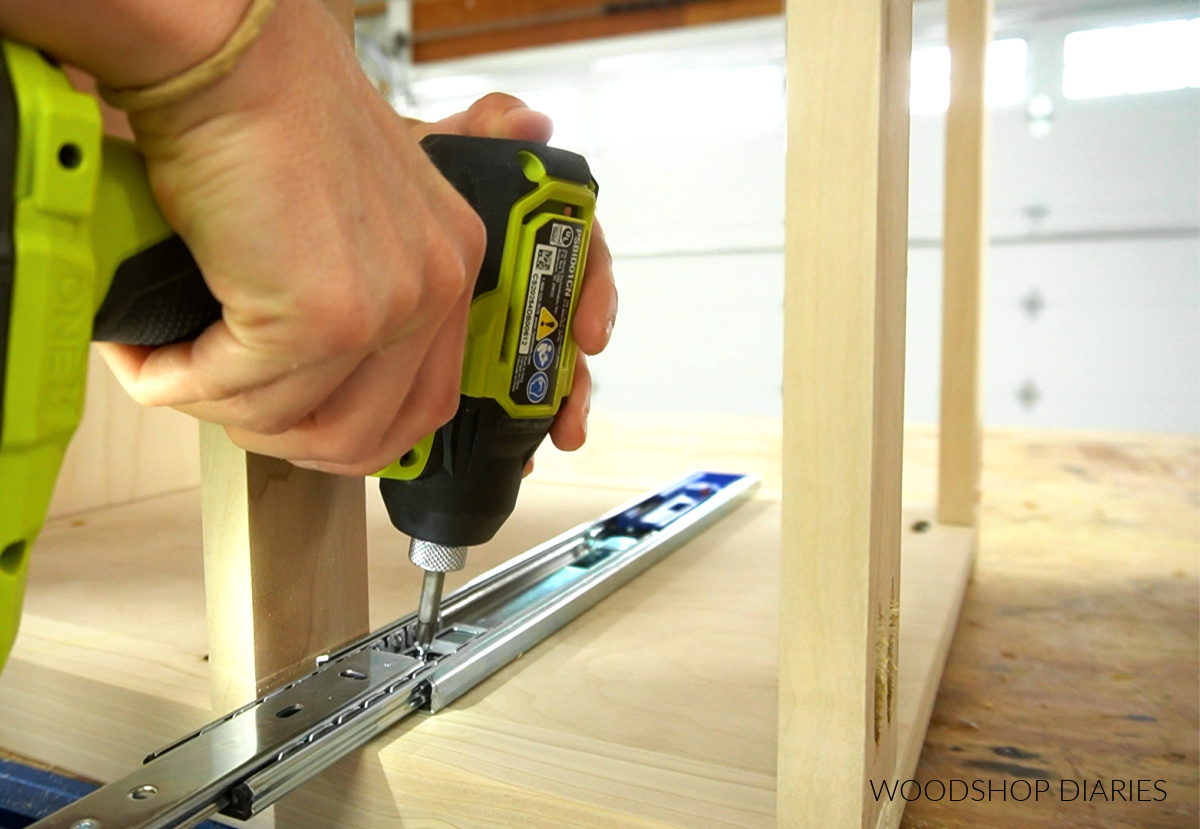
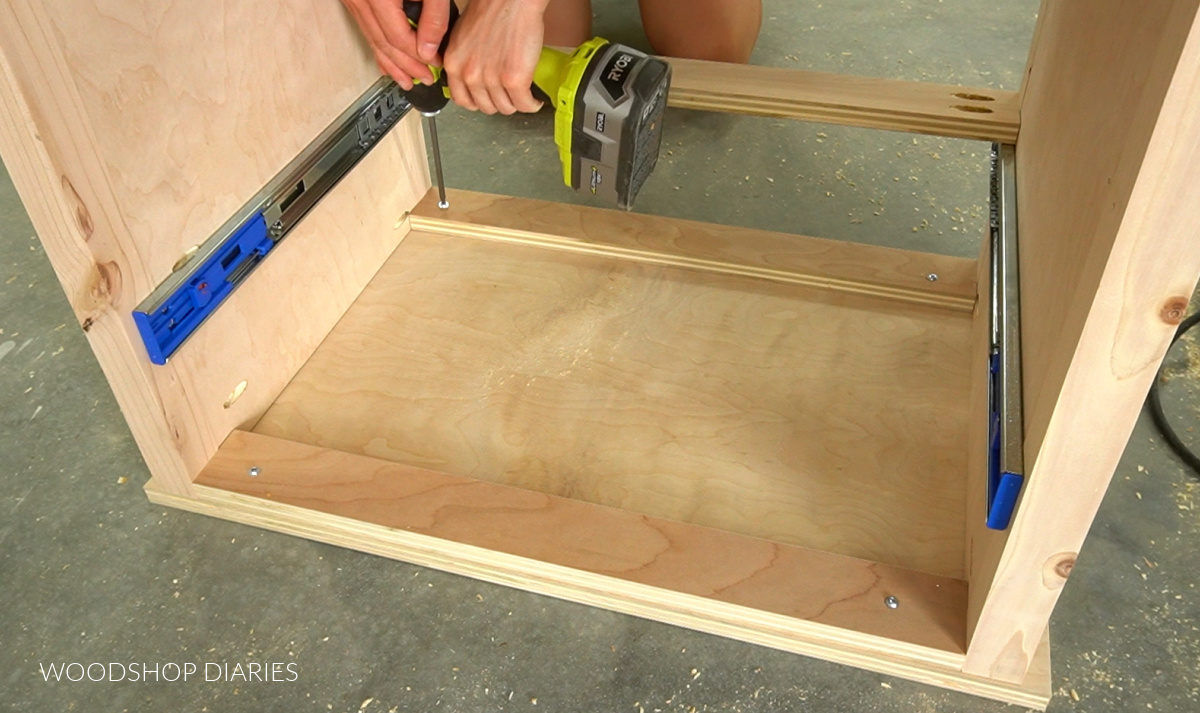
I used 16” ball bearing drawer slides in these nightstands and installed them in the top section so that they were about 1 ¼” inset from the front edge. 

Close up of installing drawer slides into nightstand with drawer

I’ve got a detailed guide on how I install drawer slides that will explain how exactly to attach these.

Step 5: Install Feet

The feet I used came with a threaded rod installed in the top. These will screw into a threaded insert.

.

But first, I had to install these inserts at each corner.

.

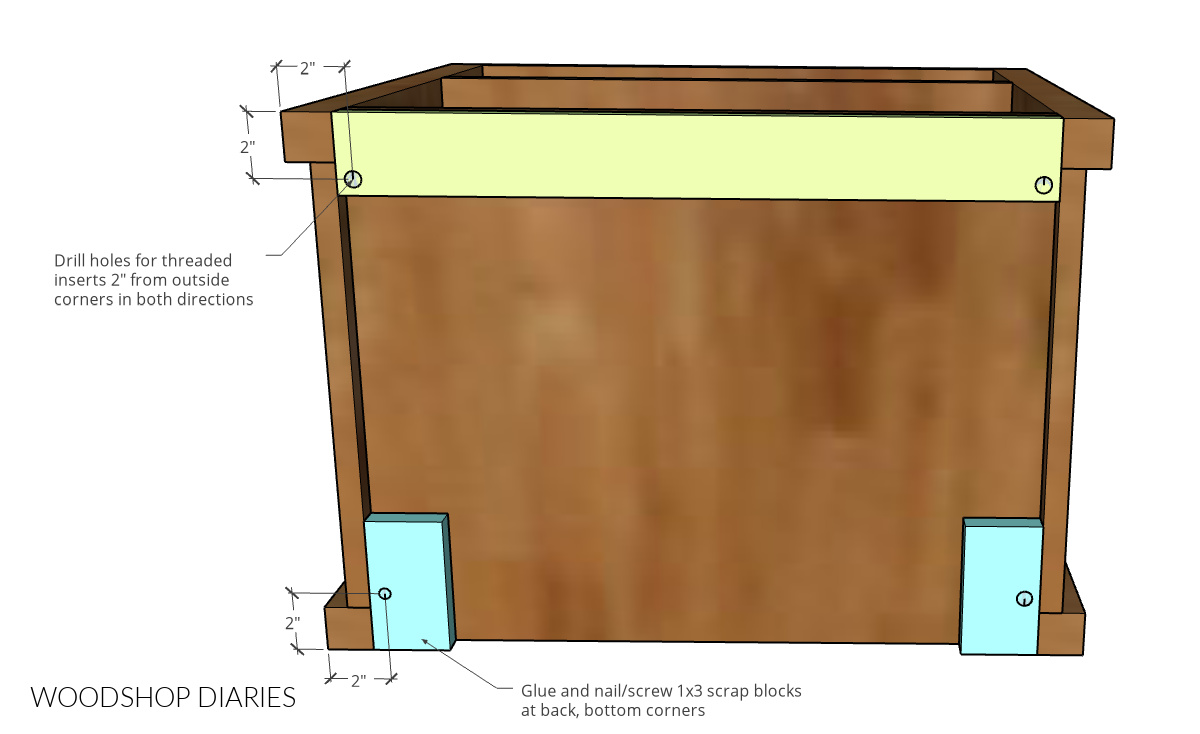
I cut the remaining 1×3 in half and glued them into the back corners. You can screw and nail these as well, but I recommend letting the glue dry before installing the inserts.

Threaded insert locations on bottom side of bedside table

I marked 2” in from each edge at each corner and drilled a hole larger than the shank of the insert, but smaller than the threads—just like predrilling for a screw.

.

Then, I used the included wrench to screw these into the holes until they were flat to the surface of the wood.

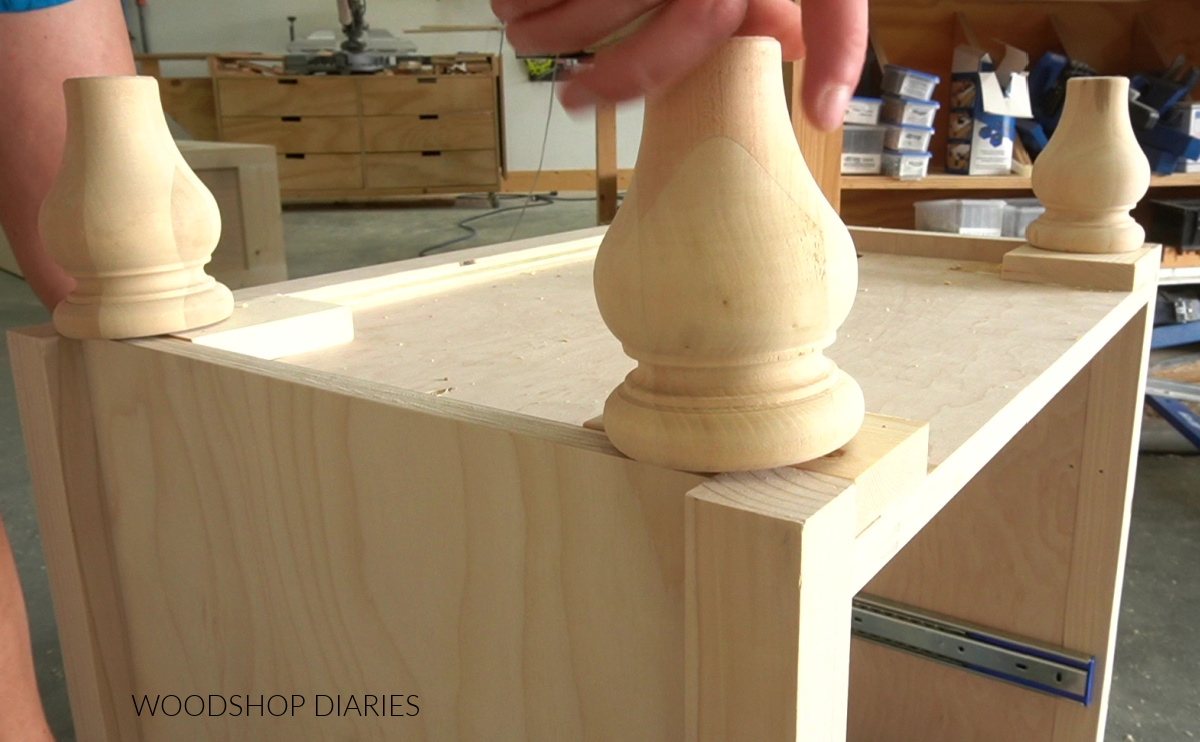
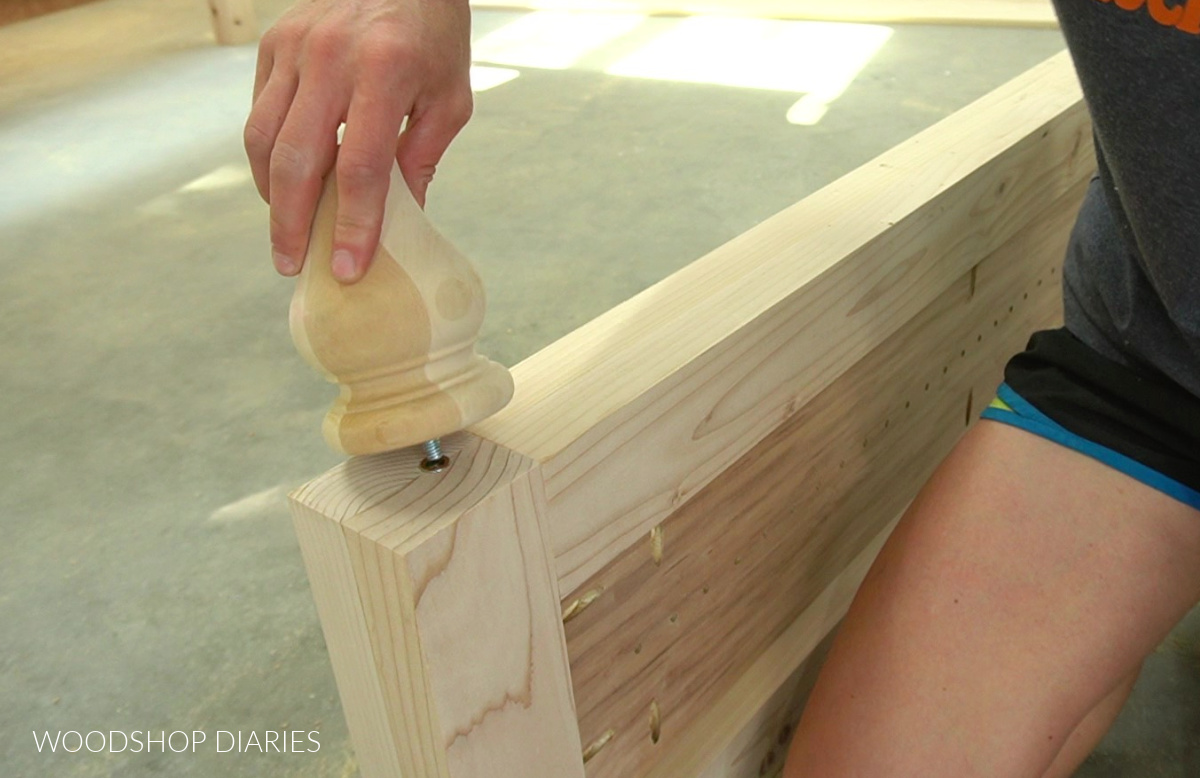
Screwing decorative furniture feet into threaded inserts on bottom of DIY nightstand

Then, I simply screwed these feet in. 

Helpful Tip: If they don’t seem to bite into the threads, take some pliers and back out the threaded rod in the foot so it sticks out longer.  Some of mine were pretty short.

Step 6: Build Drawer Box for Nightstand

Now, let’s move to my favorite part—the drawers.

.

I cut the drawer box pieces from the leftover ¾″ plywood according to the cut list in the plans.

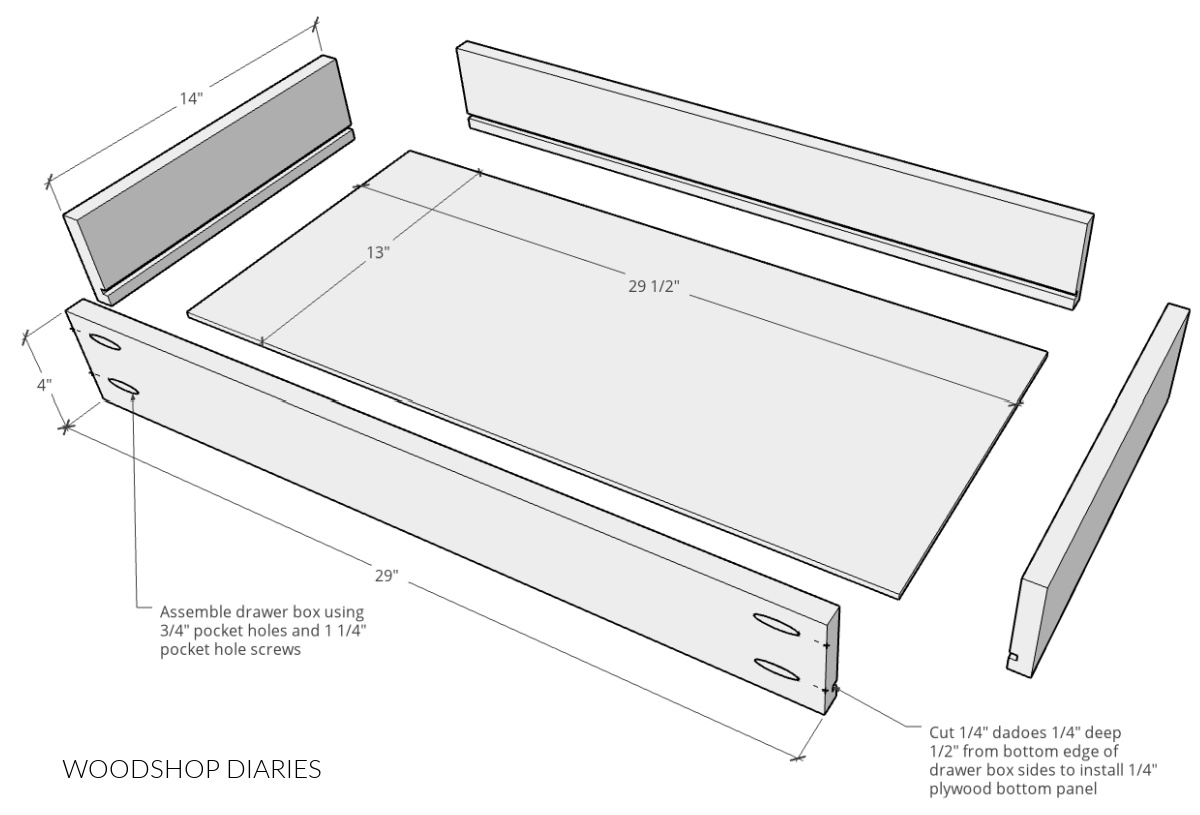
Exploded diagram of drawer box with dimensions

Then, I set up my table saw to cut dadoes in the drawer box sides to install the drawer bottom panel.

.

If you don’t have a table saw, you can also use a router instead, or skip the dadoes altogether and just glue and staple/screw ¼″ plywood bottom on after the box is assembled.

.

Check out this post on how to build drawers.

.

I applied iron on edge banding to the drawer box tops. Edge banding is optional, but it makes the plywood edges look a lot cleaner.

.

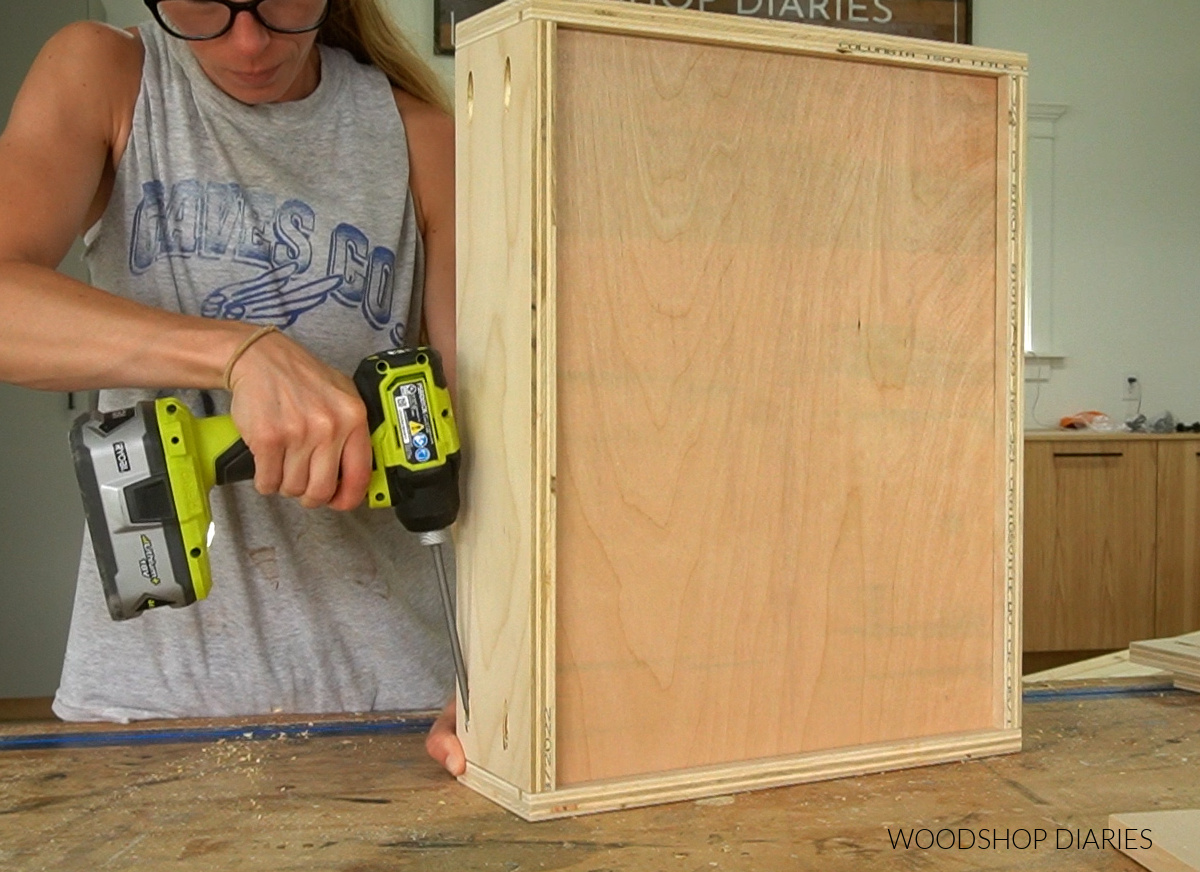
Then, I drilled ¾” pocket holes into the front and back pieces of the drawer boxes, then assembled using 1 ¼” pocket hole screws.

Shara Woodshop Diaries assembling drawer box on workbench

I cut and installed a ¼” plywood bottom panel to slide into these dadoes before adding the fourth side.

Step 7: Install Drawer Box

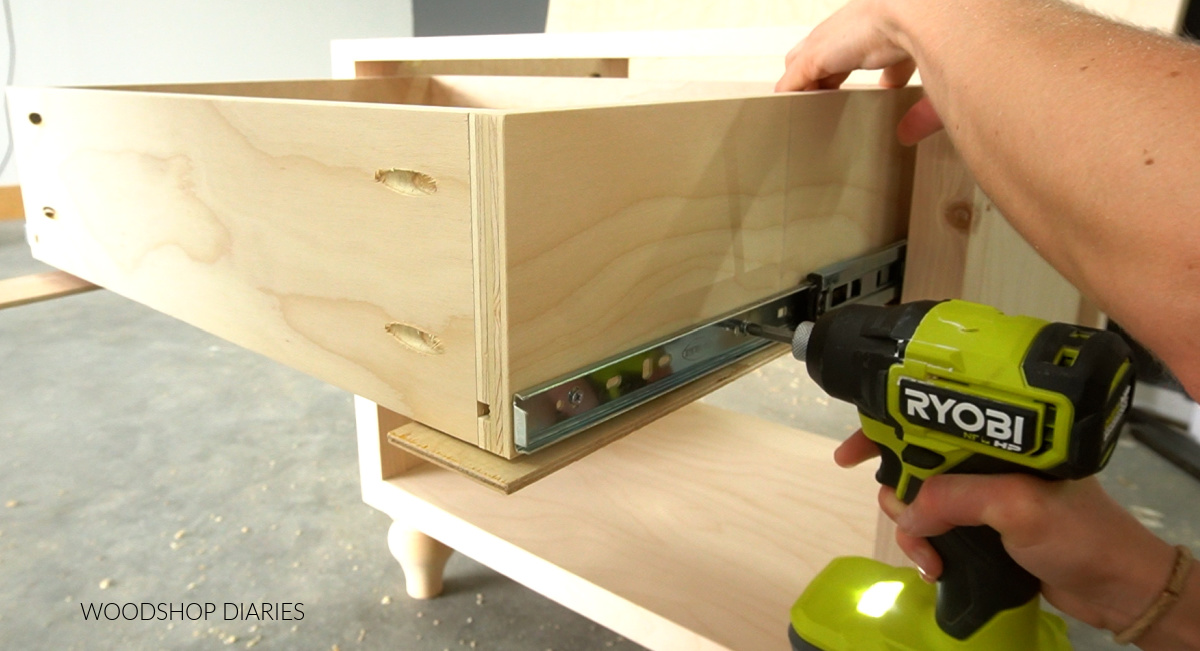
I installed the drawer box onto the slides in each nightstand so that it was 1 ¼” inset from the front edge to allow for the inset drawer front.

Installing drawer box into drawer slides in nightstand

Step 8: Install Drawer Front

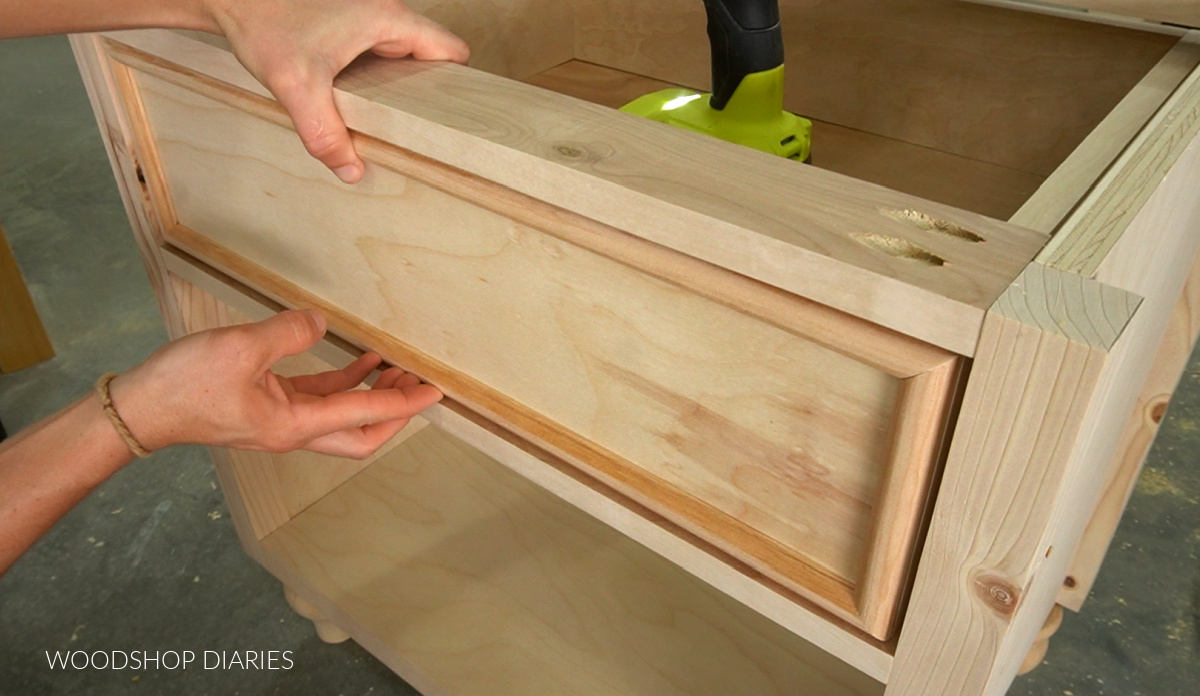
I cut the drawer front from ¾” plywood, but to dress it up a little, I added some half round molding along the front edges. 

¾" plywood drawer front with half round molding around front edges

This is totally optional and you could use a different type of molding if you’d rather.

.

I mitered these corners 45 degrees and cut the pieces to fit, then used some fast dry wood glue to attach them.

.

I installed this front onto the drawer box using 1 ¼” screws from the inside so that there was about ⅛” gap around all sides of the drawer front.

Step 9: Add Top to Nightstand

To add the top, I needed to remove the drawer to access the supports. 

.

So I used the little tabs on the slides to slide the drawer box out, then flipped the top upside down and the nightstand on top of it.

Screwing top panel of nightstand in place

I centered it side to side and made sure the back edges were flush, then used 1 ¼” screws to secure it through the top supports.

Step 10: Add Trim to Bedside Table Sides

To finish up the sides, I cut some thin lattice trim to fit on the side panels at the top and bottom. 

.

I used ¼” thick lattice trim for this because it added another dimension since it was thinner, but you could certainly use 1x2s here instead if you’d rather.

Installing trim on side panels of DIY nightstand with drawer

Again, I used fast dry wood glue to attach these, but regular wood glue would work as well with a few clamps to hold until it’s dry.

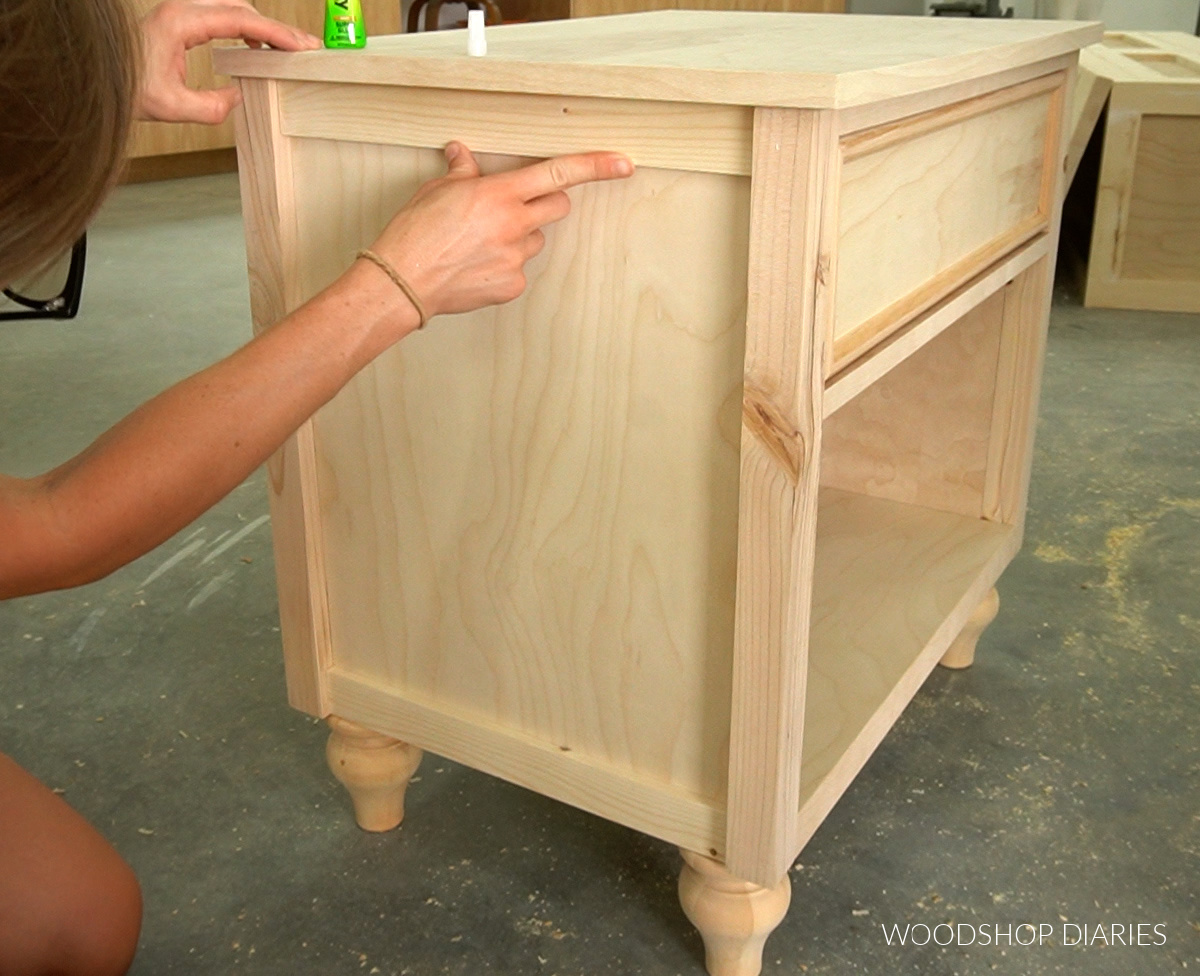
Step 11: Add Back Panel

I actually hadn’t originally planned on adding a back panel here, but after I finished building it, I decided to add one. 

.

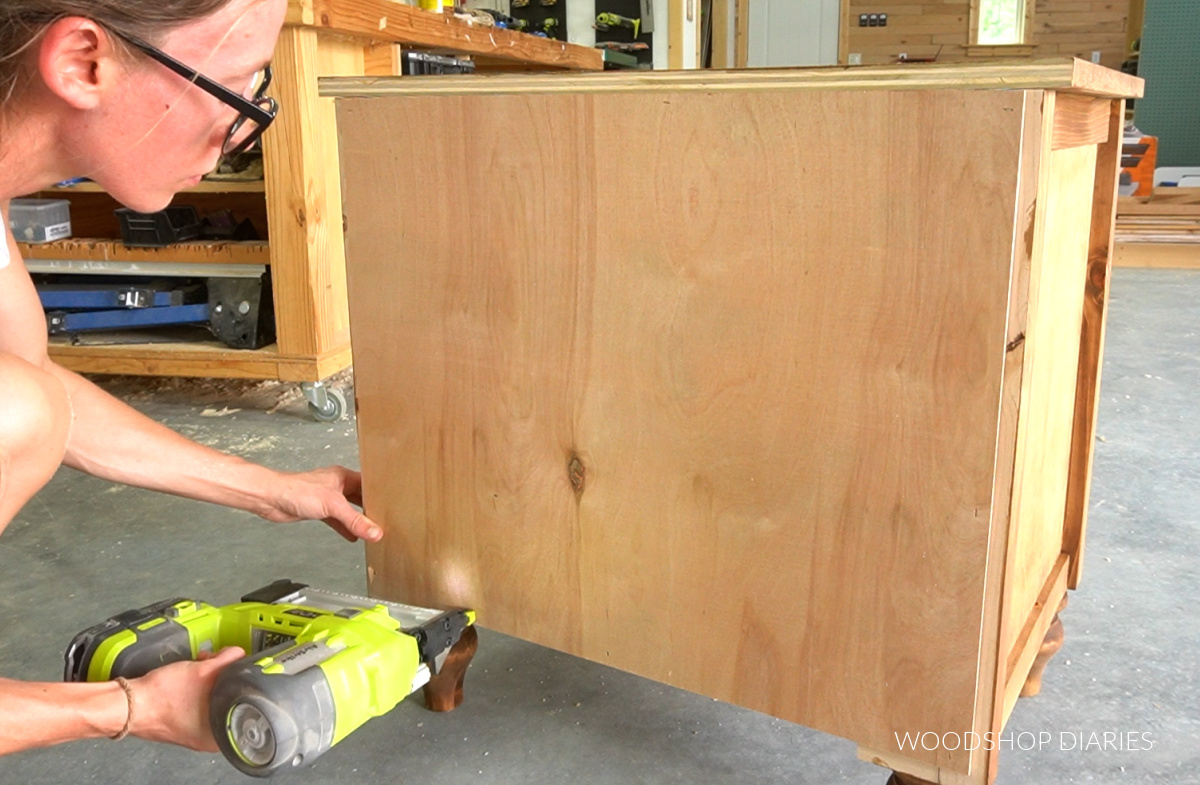
The back is totally optional…if you like it more open, you can skip it. But I cut a piece of ¼” plywood to cover the back side.

.

Before attaching, I stained everything first.  Nothing is worse than trying to crawl into a tiny space and stain a back panel. 

.

Well…there are probably worse things.  But that’s pretty bad. 

Shara Woodshop Diaries stapling back panel onto stained nightstand body

So stained these nightstands with Minwax Early American, then stapled this back panel in place. You can also glue and screw/nail this panel in place.

Step 12: Finish Nightstand with Drawer

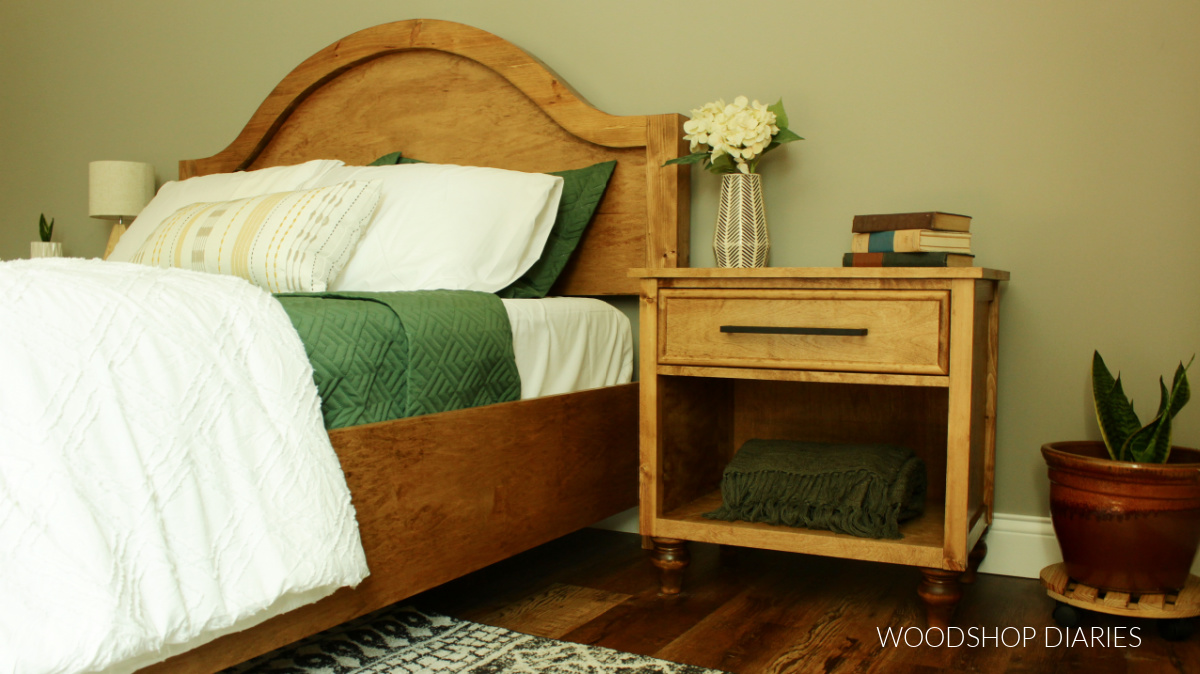
The next day, I added a clear coat poly, and the handles, and that completed part 2 of this matching guest bedroom furniture series–the nightstands!

Completed DIY nightstand build next to arched headboard bed frame in guest bedroom

Looking for More Matching Furniture?

I’ve got at least one more piece in this matching set, so if you’re enjoying it, be sure to subscribe to the newsletter to receive priority access to new posts and plans so you don’t miss the rest of the series!

But, if you’d like to check out some other DIY matching furniture sets, I’ve got a few to pick from!

Modern Bedroom Furniture Series
Mid Century Bedroom Furniture Series
Matching Office Furniture Series

Don’t forget to grab the plans to build your own DIY one drawer nightstand and check out the full video tutorial on YouTube here:

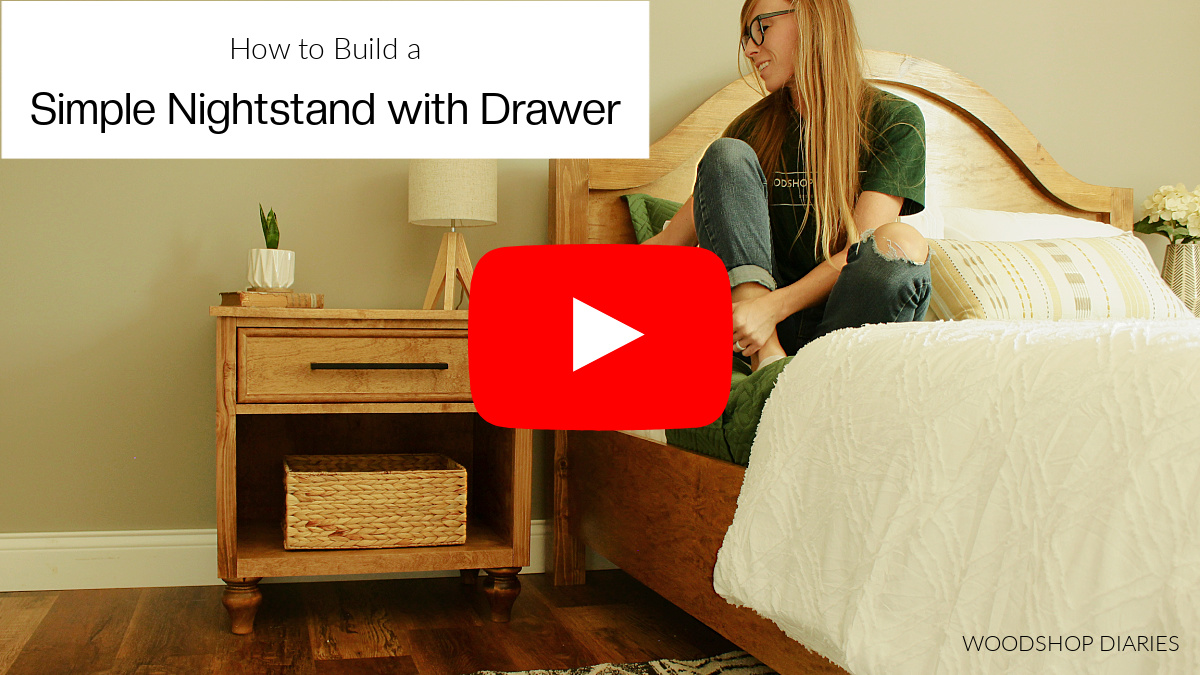
Faux YouTube thumbnail image for How to build a simple nightstand with drawer

If you’d like to save this for later, be sure to pin it or share to your favorite social channel!

Pinterest collage image showing overall dimensional diagram at top and completed DIY nightstand on bottom with text "how to build a simple nightstand with drawer"

Until next time, friends, happy building!
One Drawer Nightstand

One Drawer Nightstand

Yield: 1 one drawer nightstand

How to build a simple DIY one drawer nightstand with an open storage shelf and decorative feet!

Materials

  • (1) 2x2x8 board
  • (1) 1x3x8 board
  • (1) 1x2x8 board OR ¼" x 1 ½" x 8 lattice trim (to trim sides)
  • (1) 4'x4' sheet ¾ " plywood (note this is half of a full sheet)
  • (1 2'x4' sheet ¼" plywood (note this is a quarter sheet)
  • (1) 8' stick half round molding
  • (4) 4 ¾" tall furniture feet
  • (4) threaded inserts for furniture feet
  • (1) pair 16 " drawer slides
  • 1 ½" Edge Banding (optional)
  • ¾ " edge banding (optional
  • Wood Glue
  • 1 ¼″ pocket hole screws
  • 1 ¼" wood screws
  • Wood finish (as desired)

Tools

  • Circular Saw
  • Straight edge
  • Miter Saw
  • Table Saw (optional)
  • Drill/ Driver
  • Brad Nailer (optional)
  • Pocket Hole Jig

Instructions

  1. Assemble side panels using 1 ¼" pocket hole screws.
  2. Assemble bottom panel.
  3. Assemble nightstand body using 1 ¼" pocket hole screws.
  4. Install drawer slides inset 1 ¼" from the front edge.
  5. Install feet.
  6. Build drawer box for nightstand using ¾" plywood according to the plan's cut list. Apply edge banding to the drawer box top for a cleaner finished look.
  7. Install drawer box.
  8. Install the drawer front. Dress up the drawer front by adding half round molding along the front edges.
  9. Add top to the nightstand by attaching to supports using 1 ¼" screws.
  10. Add trim to bedside table sides.
  11. Stain your nightstand.
  12. Add the back panel using ¼" plywood. Optionally you could leave the back open.
  13. Finish the nightstand by adding a clear coat of poly and handles to your drawer.
© Shara, Woodshop Diaries
Project Type: DIY Furniture Plans / Category: Woodworking

Easy Large Custom DIY Picture Frames

July 23, 2022 by Shara, Woodshop Diaries

In this post, I’m showing you how to make your own easy large custom DIY picture frames.

…Or small custom DIY pictures frames–it’s custom, so you can make any size you wish. I just made mine HUGE!

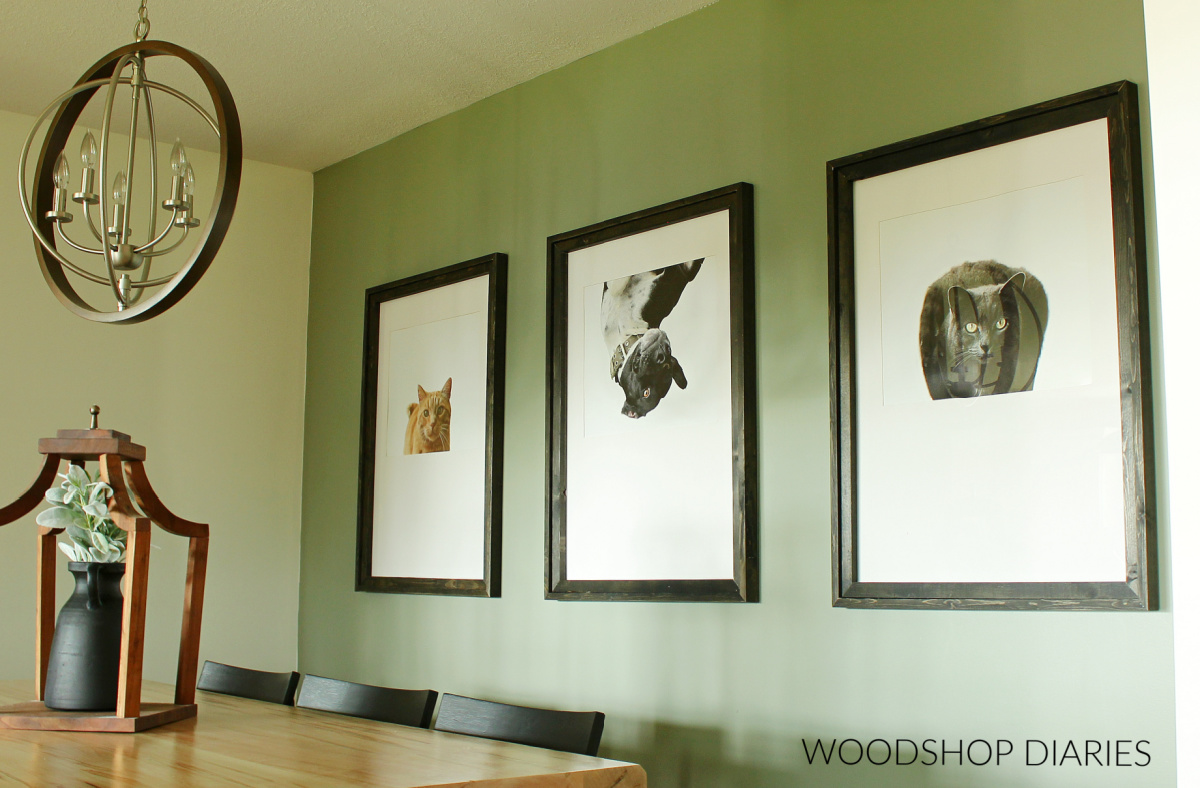
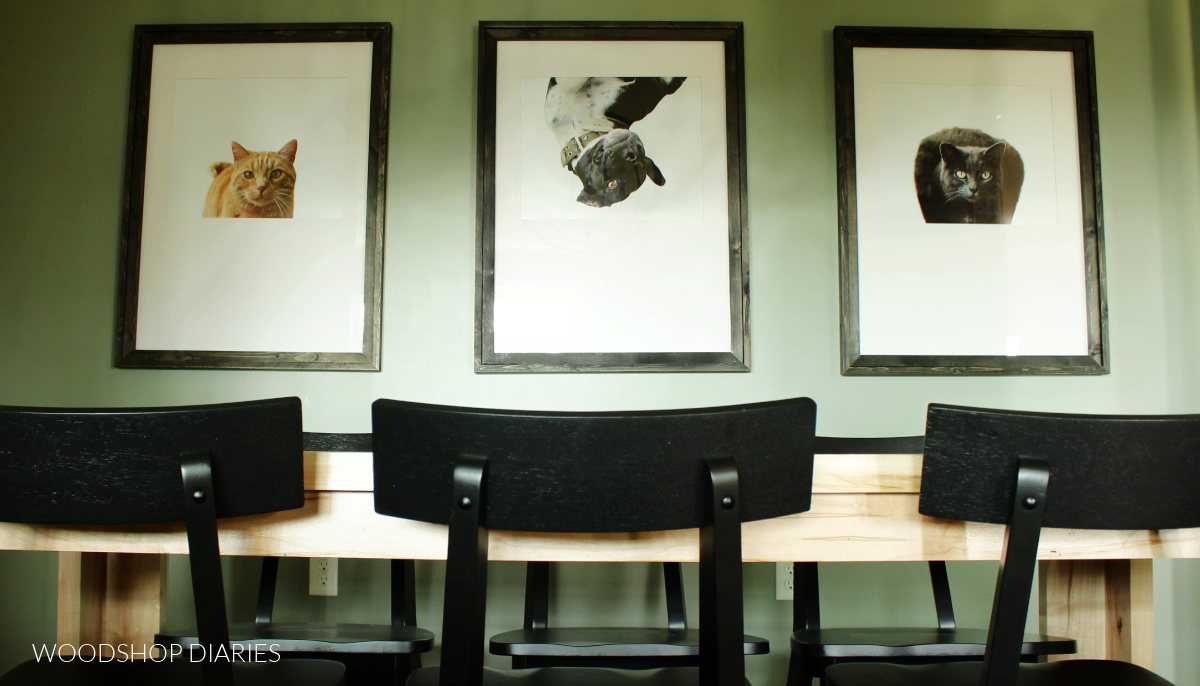
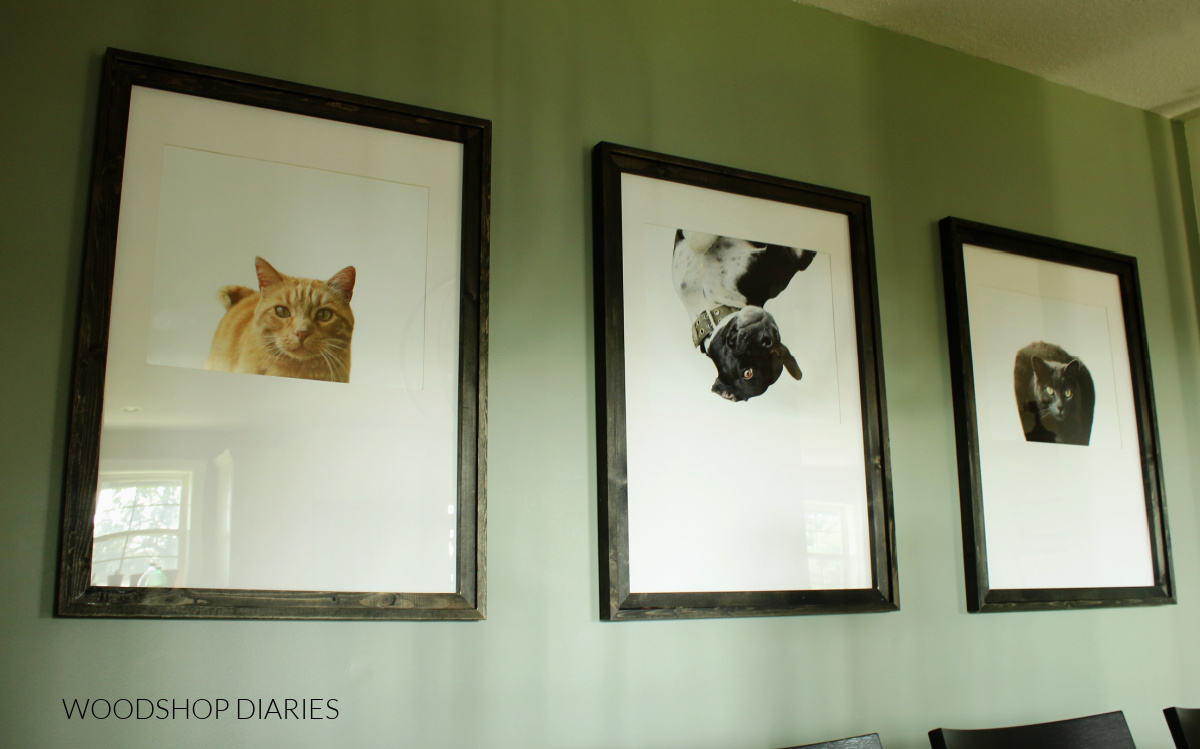
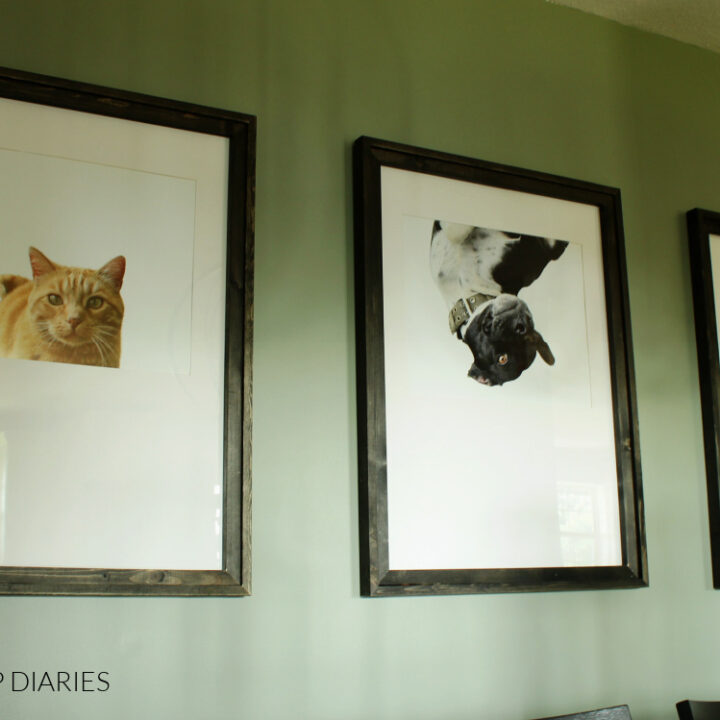
Large black wooden picture frames hanging on green wall with pictures of cats and a dog on white backgrounds

Our dining room wall has been empty for over half a year because I just couldn’t find anything I loved to hang here. And if you’ve shopped for it lately, you know that large artwork is also…pretty pricey.

.

But, I had three photogenic pets and a phone full of photos of them, so why not just make some huge custom picture frames to put their cute faces in??

.

These large, simple frames were EXACTLY what this wall needed! So if you’ve got a blank wall you need to fill, let me show you how to make your own EASY custom DIY picture frames!

.

PSSST…See that lantern in the photo above? I’ve got the tutorial here for you to make your own scrap wood lantern!

Why Make Your Own Custom DIY Picture Frames?

First, let’s talk about custom framing.  Tons of places offer custom framing—some can be pretty pricey, but some can be pretty comparable in price to what it costs to make your own—mostly because the plexiglass is expensive.

.

That said, making this yourself is likely to save you SOME money, but if you want something pretty standard, it may not be worth making it yourself…unless you just enjoy the process.

.

But if you’re like me and you want something out of the ordinary, it could save you a good chunk of money to make picture frames yourself. 

.

Personally, I like to make my own stuff because a lot of times I break the typical “rules” with my ideas and it’s just easier to make it myself than to explain to people why I don’t want something done the “normal” way.

.

As an example, normally you’d frame your photos so that the image is centered in the frame and it’s oriented the same direction as the photo.  Clearly, that’s not what I did here ha!

Large photos of cats and dog hanging in black DIY custom made picture frames hanging above dining table on green wall

So for me, it was easier to just make these than to convince a framer to do what I wanted haha.

.

All that said, if you want to make some custom DIY picture frames, let’s get building.

Tools & Materials:

*This post contains affiliate links. See website policies.

Tools:

  • Miter Saw
  • Utility Knife
  • Straight Edge
  • Screwdriver
  • Hammer
  • Saw To Cut Plexiglass (*only needed if you want a specific size. See notes below.)

Materials:

  • Pictures to Frame
  • Plexiglass (*see notes below)
  • Mat Board
  • 1×2 boards (amount will depend on size frame(s) you build
  • ¾″ or 1″ square dowels (amount will depend on size frame(s) you build)
  • Cardboard
  • Wood Glue
  • Picture Frame Tabs
  • Sawtooth Hanger

Notes on Wood Sizes:

There’s no “right” or “wrong” with this materials list. You can make these SO many different ways with tons of different materials.

.

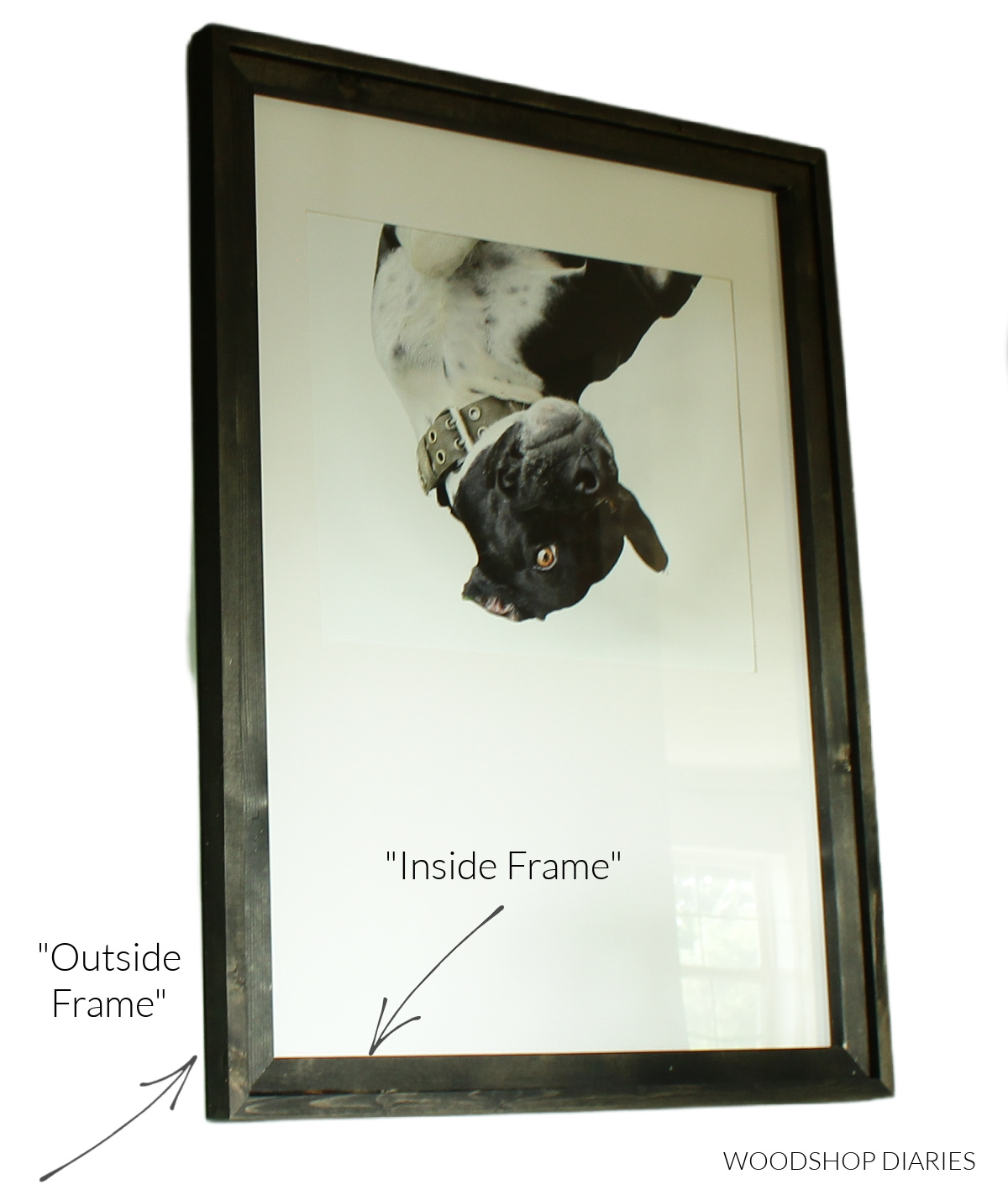
For this, I used 1x2s for the OUTSIDE frame and ¾″ x 1″ strips for the INSIDE frame. But ¾″ x 1″ isn’t a common size you can purchase (I ripped mine on the table saw).

A close up image of a picture frame with arrows pointing to the inside frame and the outside frame to show the difference

So a ¾″ square dowel OR 1″ square dowel would work perfectly fine OR you can just use a 1×2 for the inside frame as well.

Plexiglass Options for Custom DIY Picture Frames

I purchased 30″ x 36″ plexiglass panels for these picture frames. These come in TONS of precut sizes, so pick one up the same size, or a little bigger than you need based on step 1 below.

.

Mine was a little under ⅛″ thick (it was 0.093 in.) which is perfect for a picture frame.

.

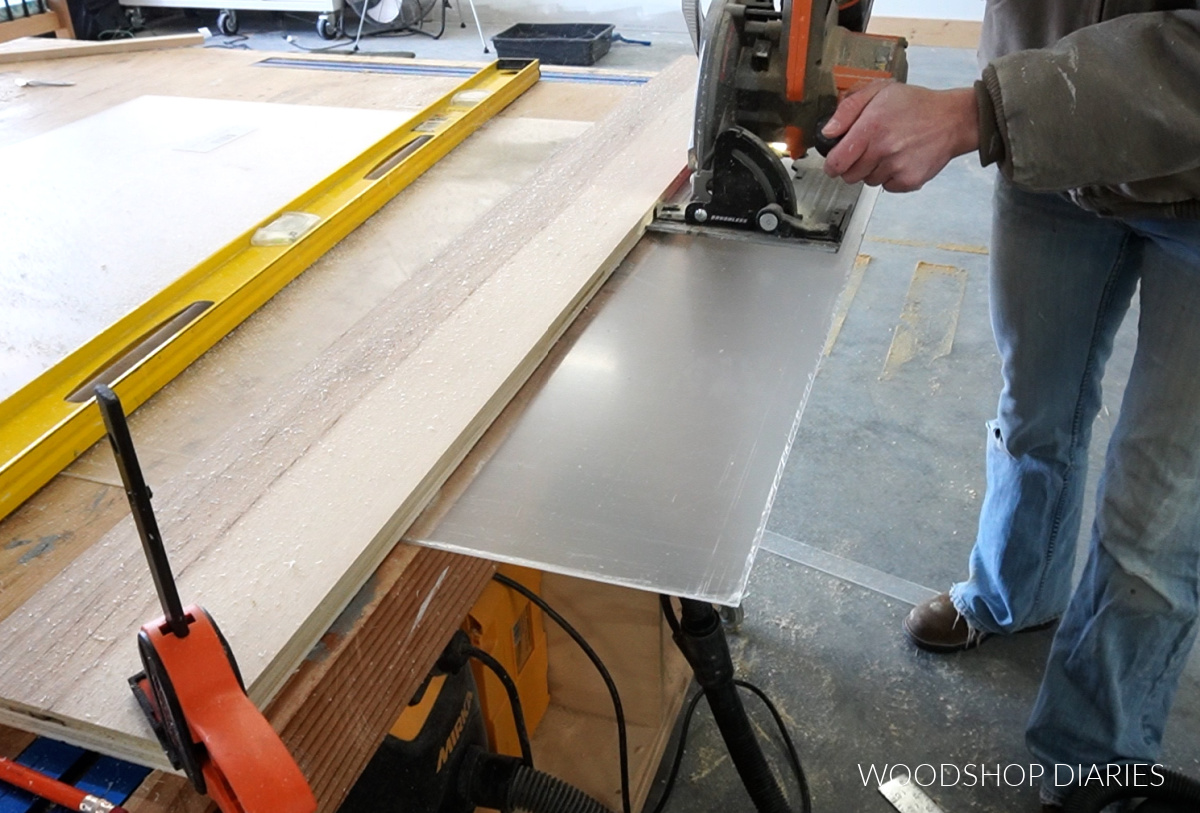
I cut mine down to a custom size using a circular saw and a fine finish blade. But you can cut plexiglass using other methods as well.

Using a circular saw to cut plexiglass on workbench

If you prefer not to cut it yourself, usually, you can have the store you purchase from custom cut your plexiglass, or you can just make do with the precut sizes available and not cut the sheet at all.

.

MONEY SAVING TIP: The plexiglass is the most expensive part of this project. My sheets were $35 each.

However, you can pick up large poster frames from Walmart or Amazon for about $20 or less. The frames aren’t great, but the plexiglass inside is useable so that’s an option if you want to save a few bucks.

What to Pictures to Frame

As you can see, I framed posters of my pets. Obviously, you can frame whatever you’d like.

.

But for this, I recommend printing a good quality photo, especially if it’ll be large.

.

Just in case you wondered what I did here, I took photos from my phone and uploaded them into PicMonkey and used their background remover tool to remove the backgrounds and make them white.

Posters of cat and dog against white backgrounds laying out on workbench

Then, I ordered these as 16×20 posters from Walgreens.

How to Build a Custom DIY Picture Frames

The steps below outline how I build these simple frames and I’ve also got a video tutorial here as well:

YouTube thumbnail image linked to custom DIY picture frames video

If you like videos, be sure to subscribe to the Woodshop Diaries YouTube Channel Here!

Step 1: Determine Inside Picture Frame Size

The first step is determining the size of the inside frame. Take note that the inside frame is where I used the thinner material. So this is where you’d use the ¾″ square dowels, or 1″ square dowels–or 1x2s if that’s what you decide.

.

Now, there is a lot of creative freedom with this, so feel free to change things up as desired.

.

But, to give you an example to work with, here’s what I did.

.

For the height, I didn’t really care specifically how tall these were as I was off centering my photo anyway.

.

Since my plexiglass sheets were already 36″ tall, I just used 36″ for my height so I didn’t have to cut that side.

.

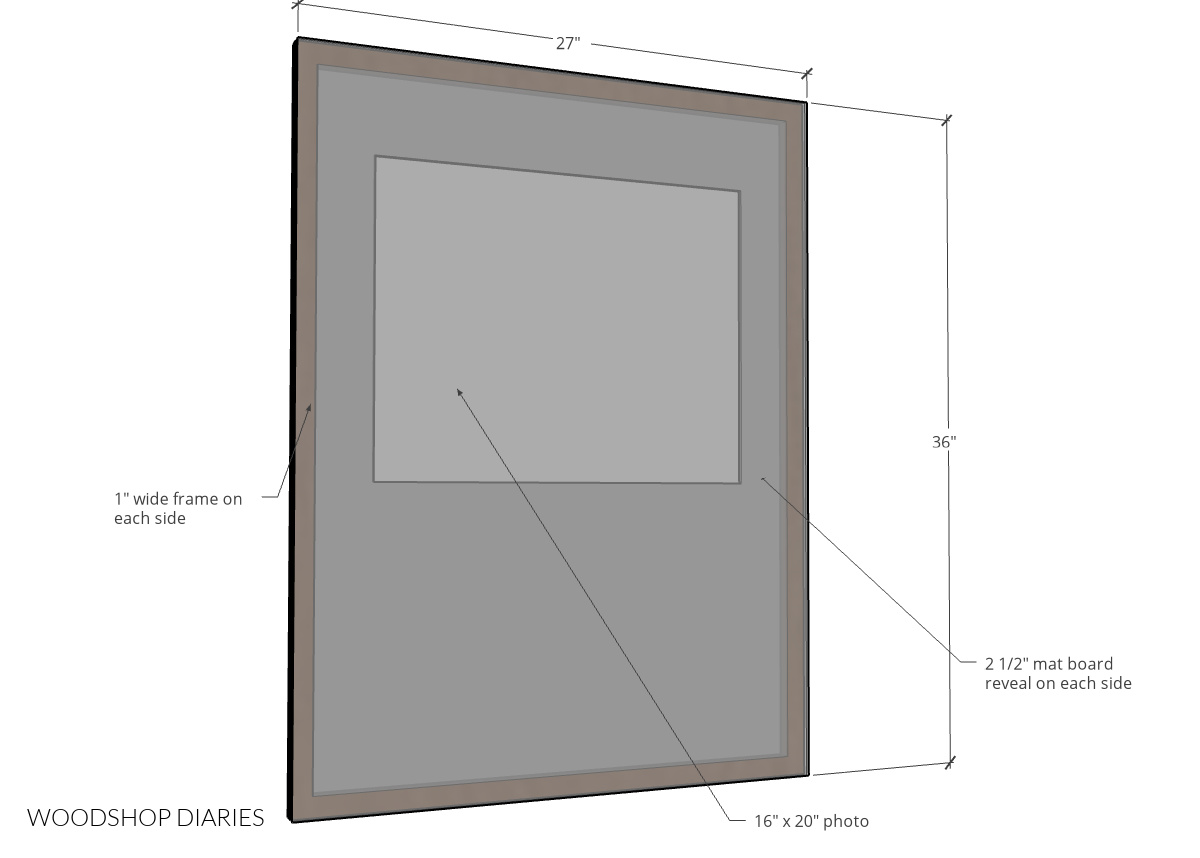
But for the width, I decided that I liked the look of having about 2 ½″ of mat board on each side of the photo.

Diagram showing the inside picture frame, plexiglass and mat board layout to determine overall size

So I took my photo width (which was 20″) plus 2x my desired mat reveal (which was 2 x 2 ½″ = 5″) plus 2x the thickness of the inside frame (in my case, it was 1″ thick, but if you used ¾″ square dowels or 1x2s, yours would be different).

.

So, 20″ + 5″ + 2″ = 27″. That’s the width I need to cut my plexiglass.

.

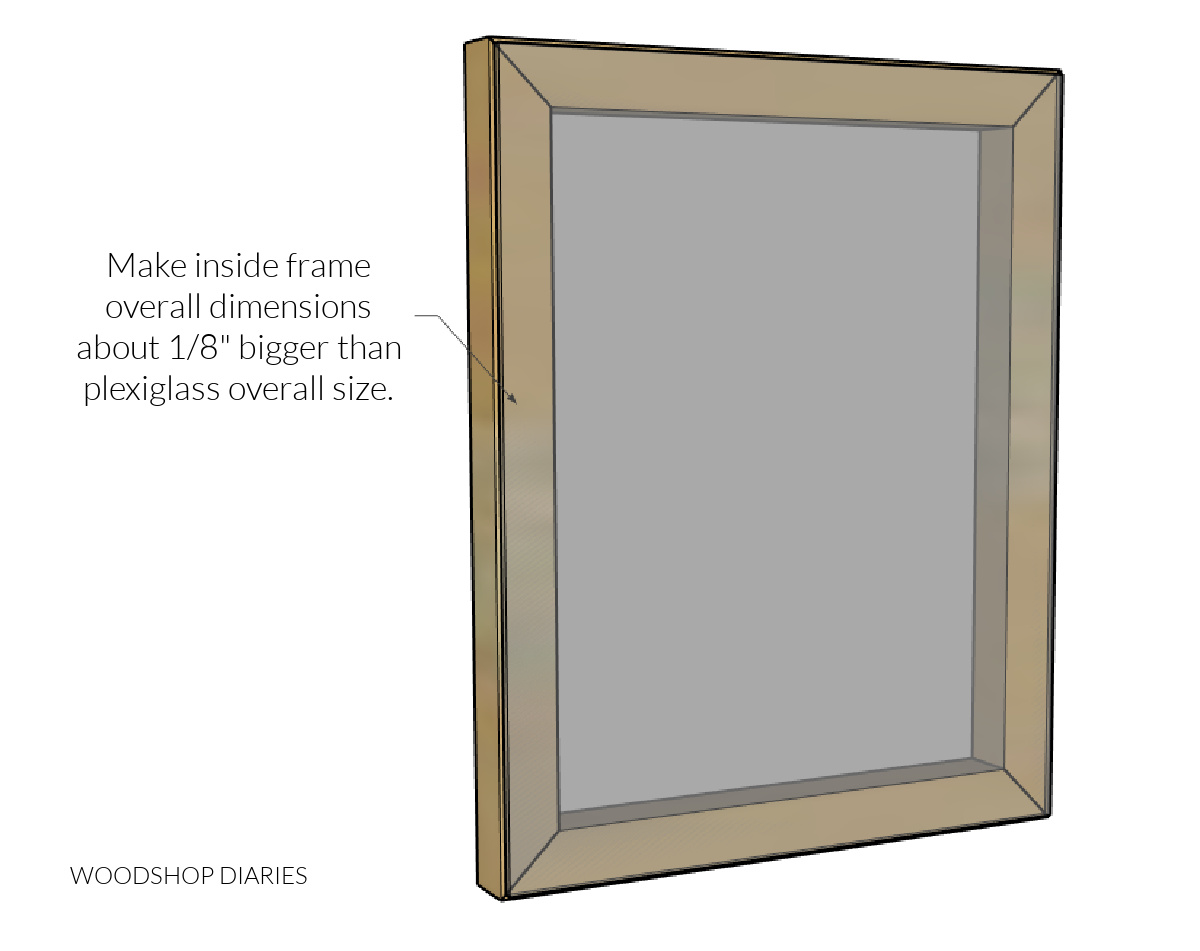
My inside frame’s overall dimensions should be ⅛″ larger in both directions than my plexiglass (just to allow for some wiggle room to set it in place). So if my plexiglass will be 27″ x 36″, I’ll make my inside frame 27 ⅛″ x 36 ⅛″ overall.

Diagram showing plexiglass for custom DIY picture frame cut ⅛" smaller than inside frame

As a note, you can also play around with these numbers a little and work backward to figure out how to make your frame boards bigger or smaller and your mat reveal bigger or smaller in order to work with a precut plexiglass size.

.

Feel free to get creative and make do with what you have.

Step 2: Build Inside Picture Frames

Now, once you figure out your sizing, it’s SUPER easy to build.

.

Use your measurements from step 1 to determine the amount of 1×2 and square dowels you’ll need. I stained all my boards ebony before cutting as I thought it would be easier to stain now than after it’s assembled.

.

But you can stain or paint before OR after–it’s up to you.

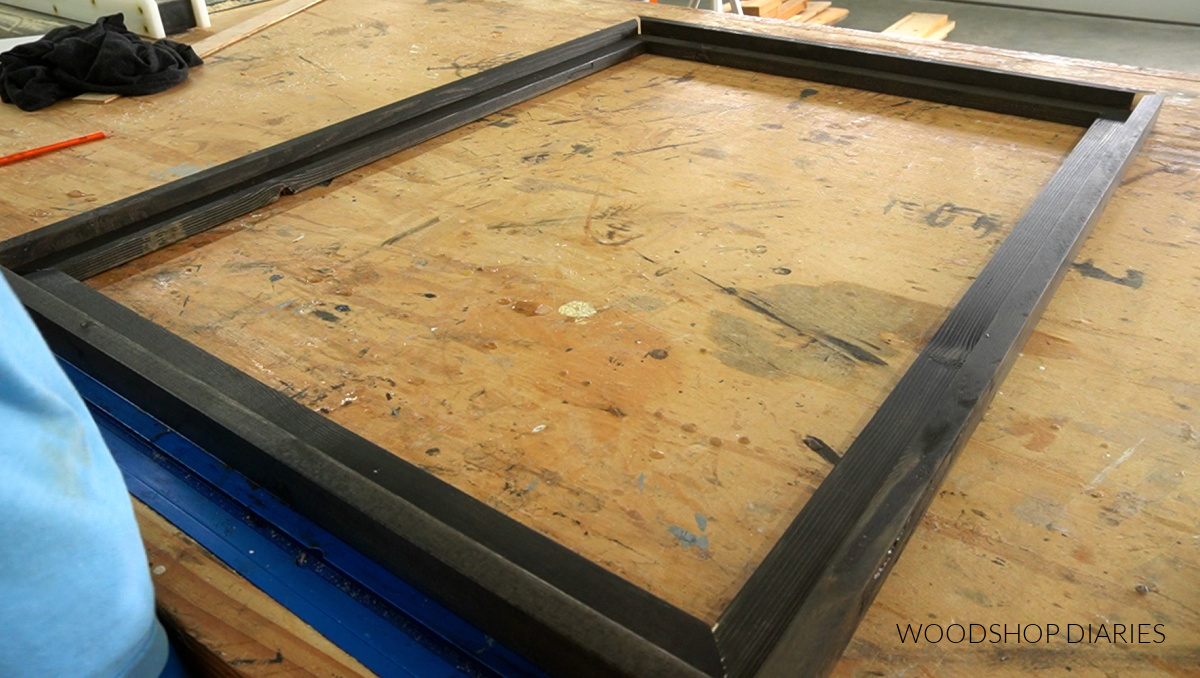
Inside picture frame pieces laid out on workbench--not assembled yet

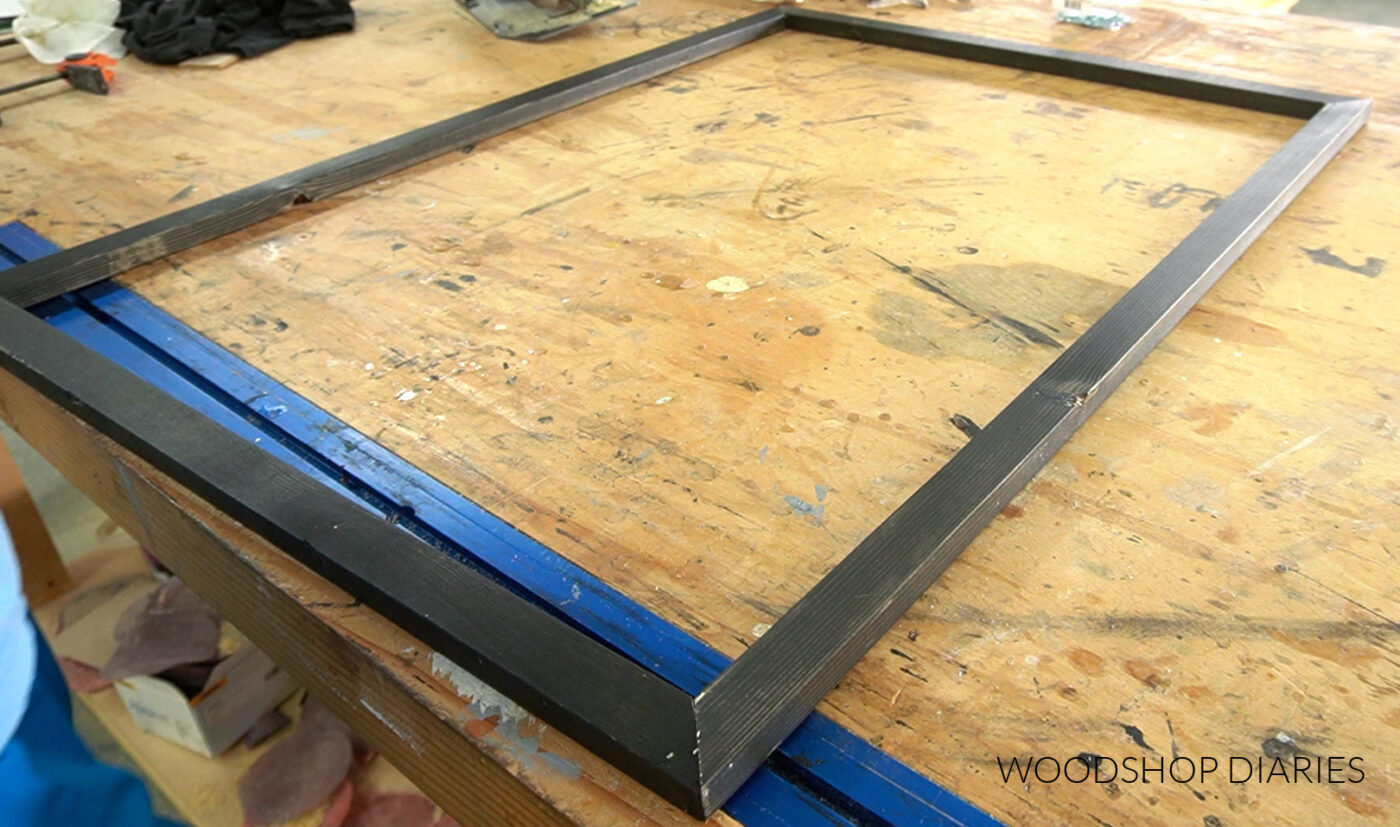
I adjusted my miter saw to cut 45 degrees and cut four pieces of my ¾″ x 1″ board with mitered ends so that when fit together, their overall size would be 27 ⅛″ x 36 ⅛″.

.

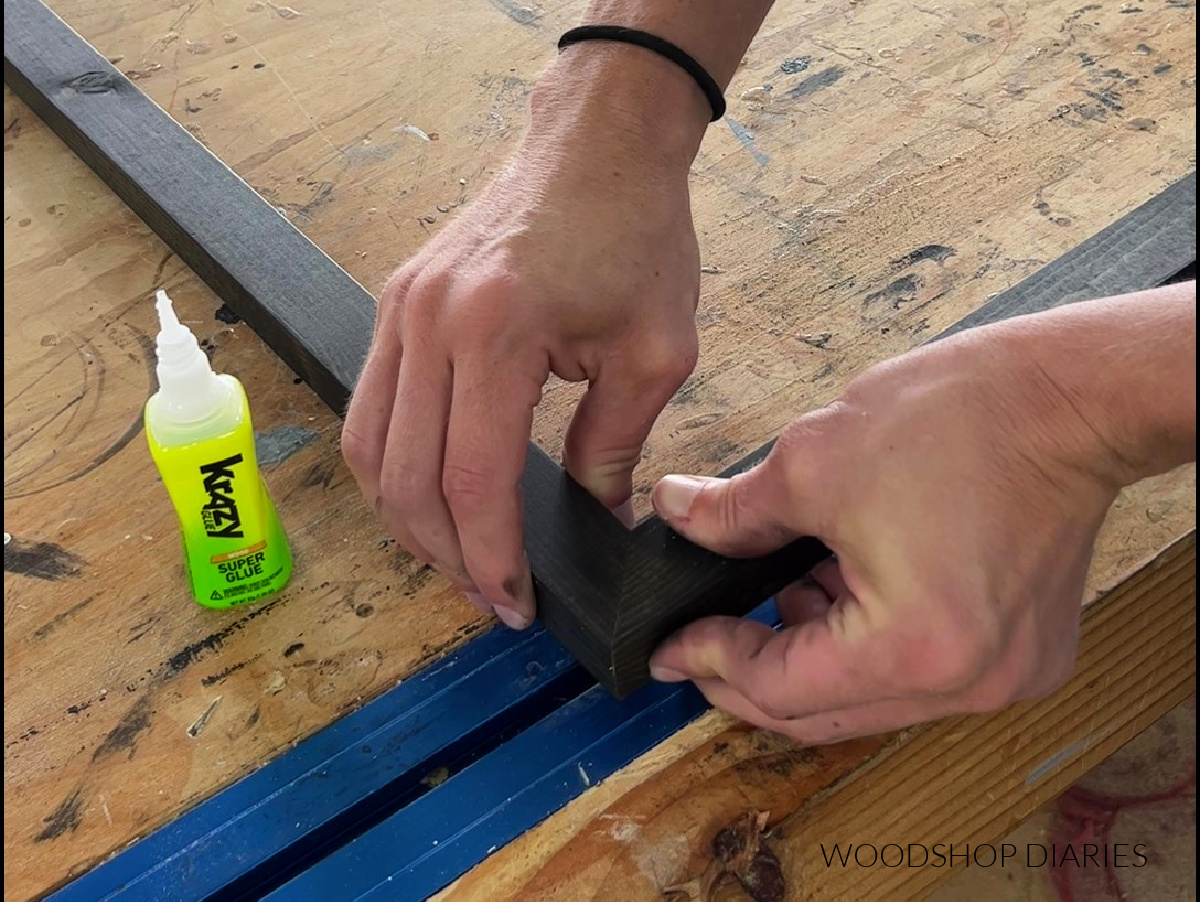
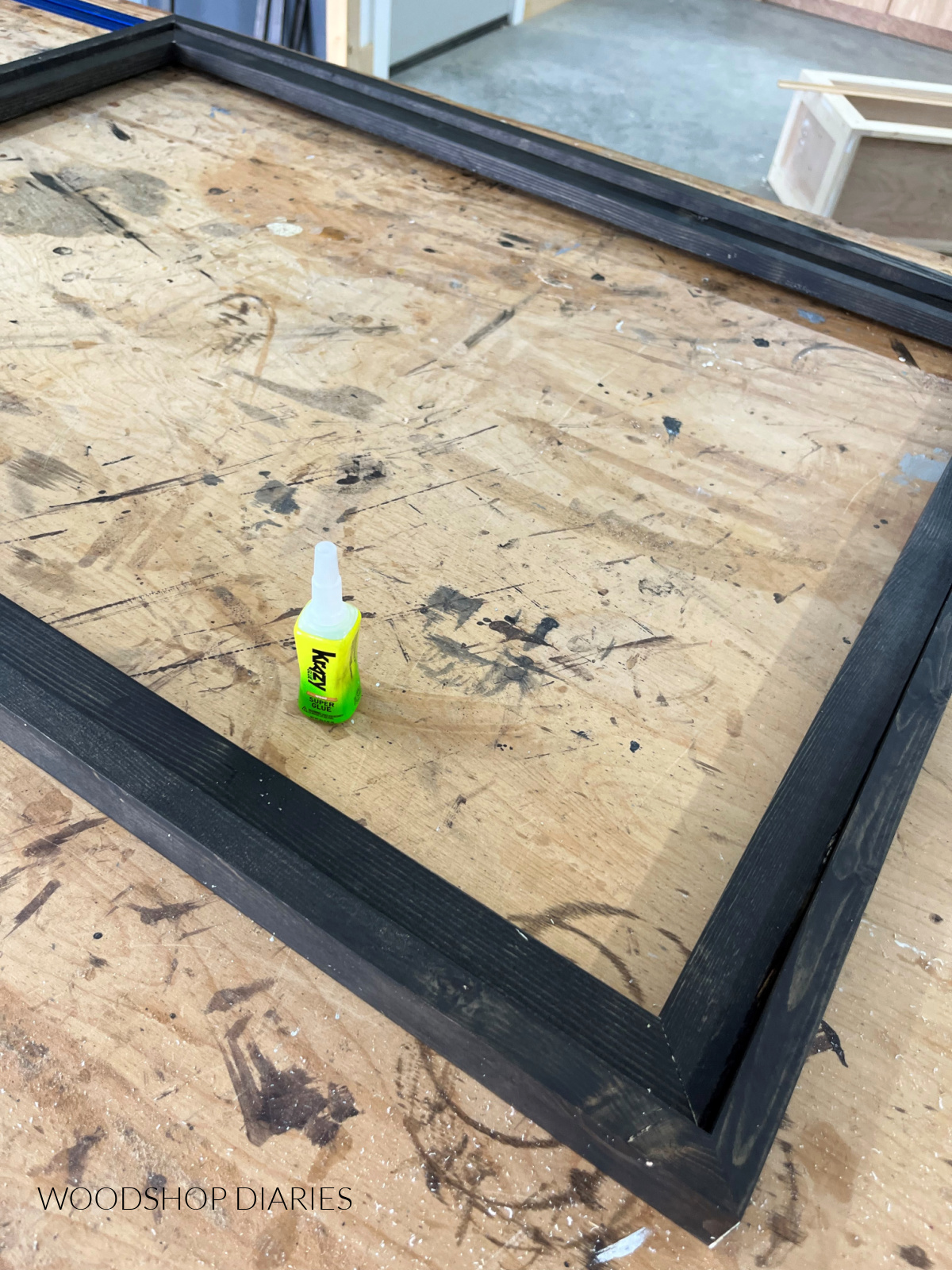
Then, I used some Krazy Glue Fast Dry Wood Glue on each corner to assemble. This is a quick drying formula and dries clear, so it made assembly super easy.

Using Krazy Glue wood glue to glue up mitered corners on Custom picture frame

However, you can use regular wood glue and clamps here instead if you prefer.

Step 3: Add Outside Frames

Once the inside frame is assembled, I basically “wrapped” 1x2s around the outside edge just to thicken it up a little and make it look nicer.

outside frame pieces cut to fit around inside picture frame laid out on workbench

I mitered the ends 45 degrees and cut each piece to fit perfectly around the inside frame.

.

Then, I glued these one side at a time around the inside frame.

Krazy glue used to attach outside frame to inside frame of custom DIY picture frame assembly

I used a piece of scrap ¼″ plywood to keep my inside frame inset from the back edge of the 1x2s about ¼″. This just leaves a “lip” on the back side to set the plexiglass, mat, and backer into later.

Step 4: Cut and Install Plexiglass In Picture Frames (if needed)

Now that the frame is assembled, if you decided to cut your plexiglass, it’s time to trim it down to fit inside the frame.

.

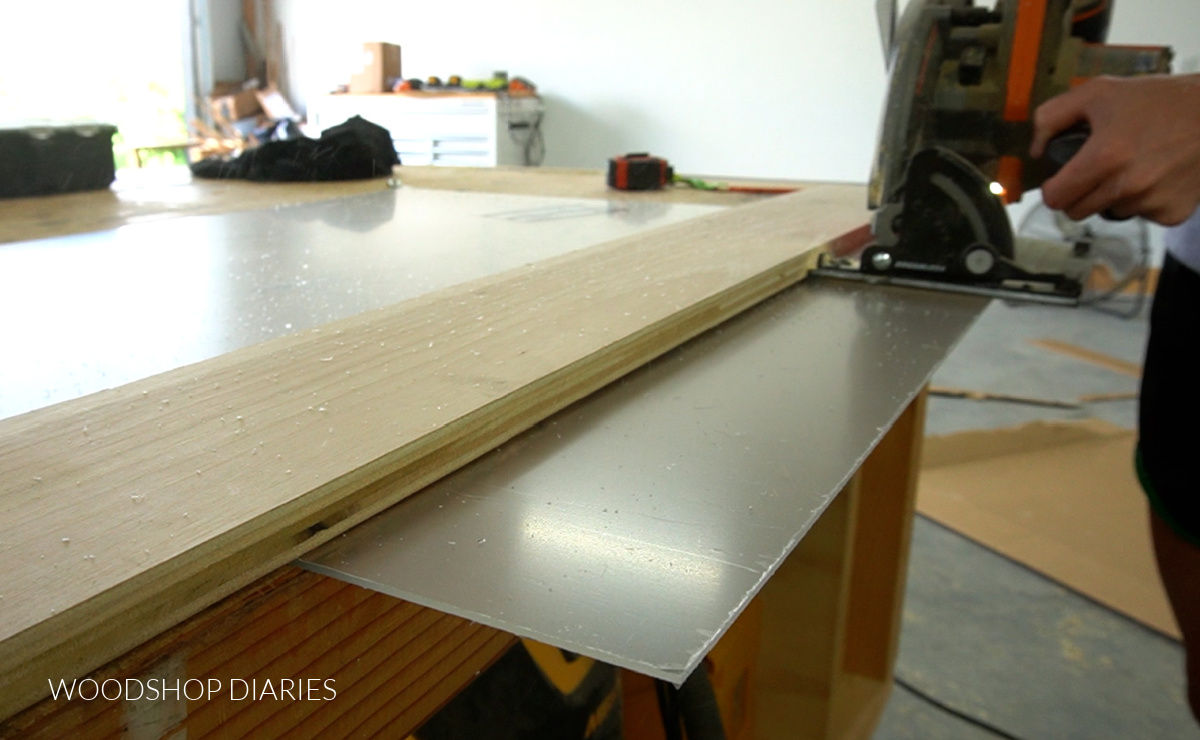
I used a circular saw with a fine finish blade and a straight edge clamped to my workbench to trim my plexiglass sheet to size from step 1.

.

I left the protective layer on the sheet while cutting. That just helps prevent chips and scratches while cutting.

Using a circular saw to cut plexiglass on workbench

You can also use a cut off tool, a table saw, or a special utility knife designed to score plexiglass as well if you didn’t want to use a circular saw.

.

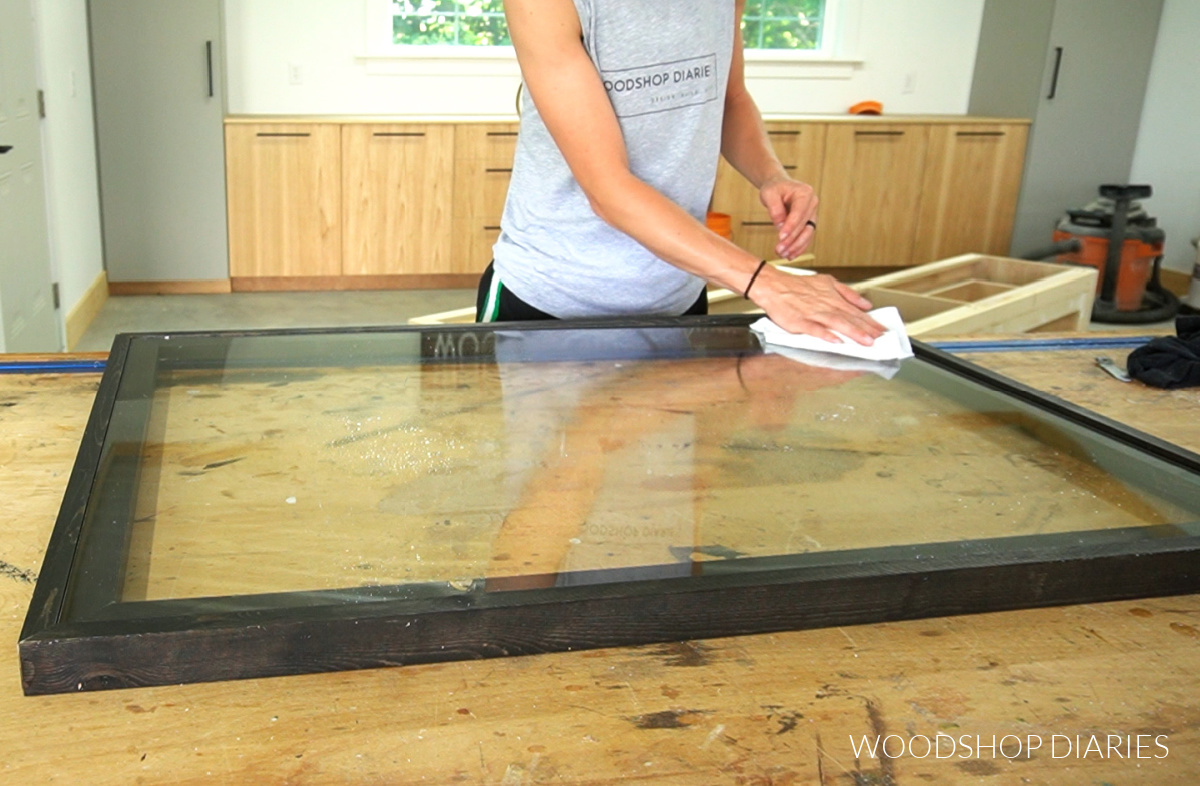
Once the plexiglass was cut, I placed it into the back of the frame and wiped it clean.

Plexiglass installed into back side of picture frame on workbench

OPTIONAL STEP: If desired, you can glue these plexiglass panels in place. Sometimes I like my plexiglass to be glued in–it makes it easier to keep clean and seals out dust. But that’s totally optional.

.

If you decide to glue it, you can run a bead of Krazy Glue Max Bond Gel along the inside frame before placing the plexiglass in.

Step 5: Custom Cut and Install Picture Frame Mat Board

Now, this part is a little frustrating if you are a perfectionist.

.

Cutting mat board isn’t difficult, but you have to be careful.

.

Helpful tip: BE CAREFUL TO KEEP MAT BOARD CLEAN. It’s not very forgiving if you get any smudges or dirt on it.

.

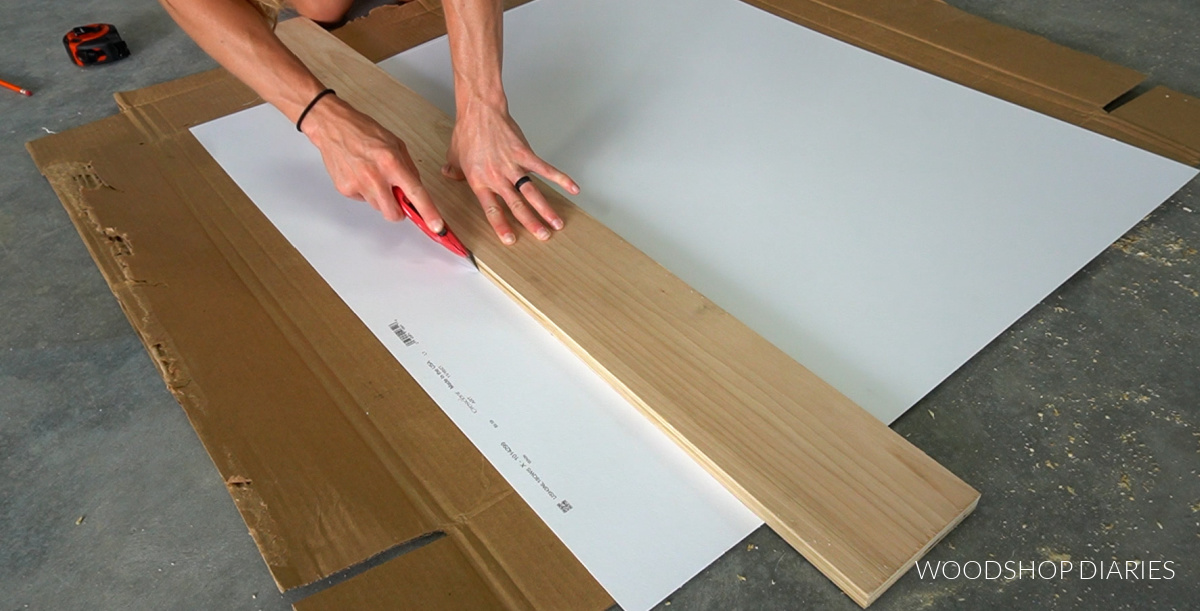
I purchased some 32×40 white mat board from Hobby Lobby and used a SHARP utility knife and a straight edge to trim it down to the same size as my plexiglass from step 1.

Using a utility knife to cut mat board to size

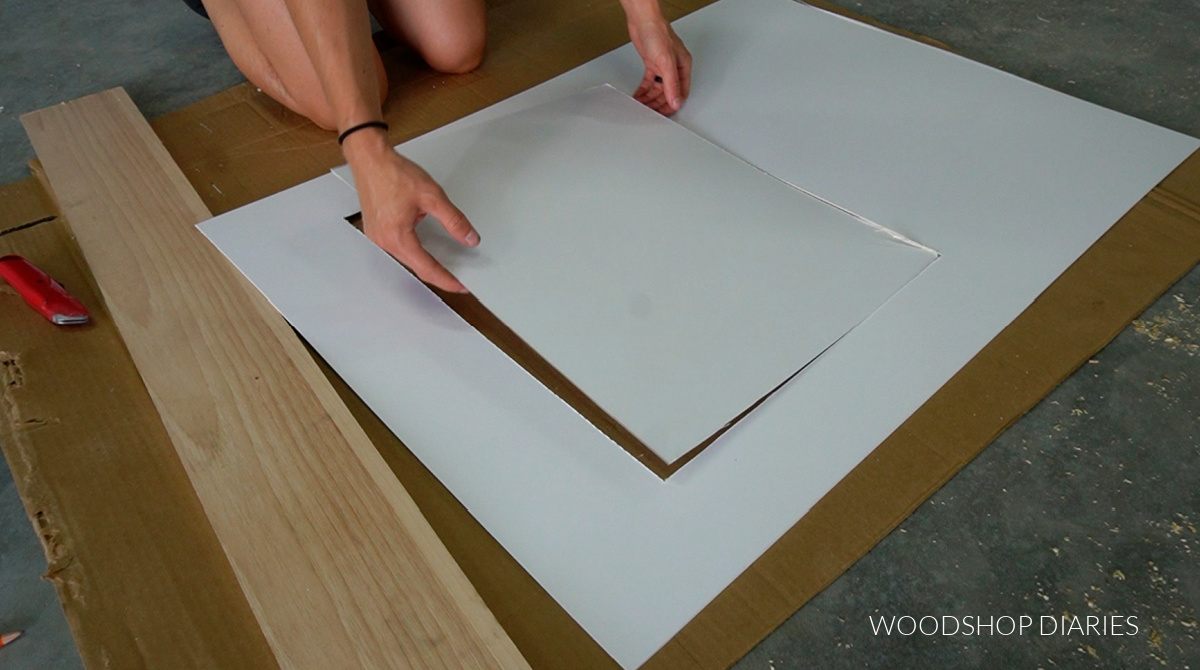
Then, I placed it face down on a clean piece of cardboard and drew out where to cut the “picture hole.”

.

You want to make your pencil marks on the back side as it’ll be difficult to remove any pencil marks later.

.

Draw your square/rectangle about ½″ smaller than your picture in both directions to give you some wiggle room for the photo edges to overlap the mat.

.

My photo was 16″ x 20″, so I made my opening 15 ½″ x 19 ½″.

.

You’ll have to draw out your own square/rectangle based on the size photo you are framing…just make sure it’s correctly centered (or off centered if you so choose) before cutting anything.

.

Once it’s drawn, use a straight edge and a SHARP utility knife to carefully cut along the lines.

removing the picture opening piece from the mat board

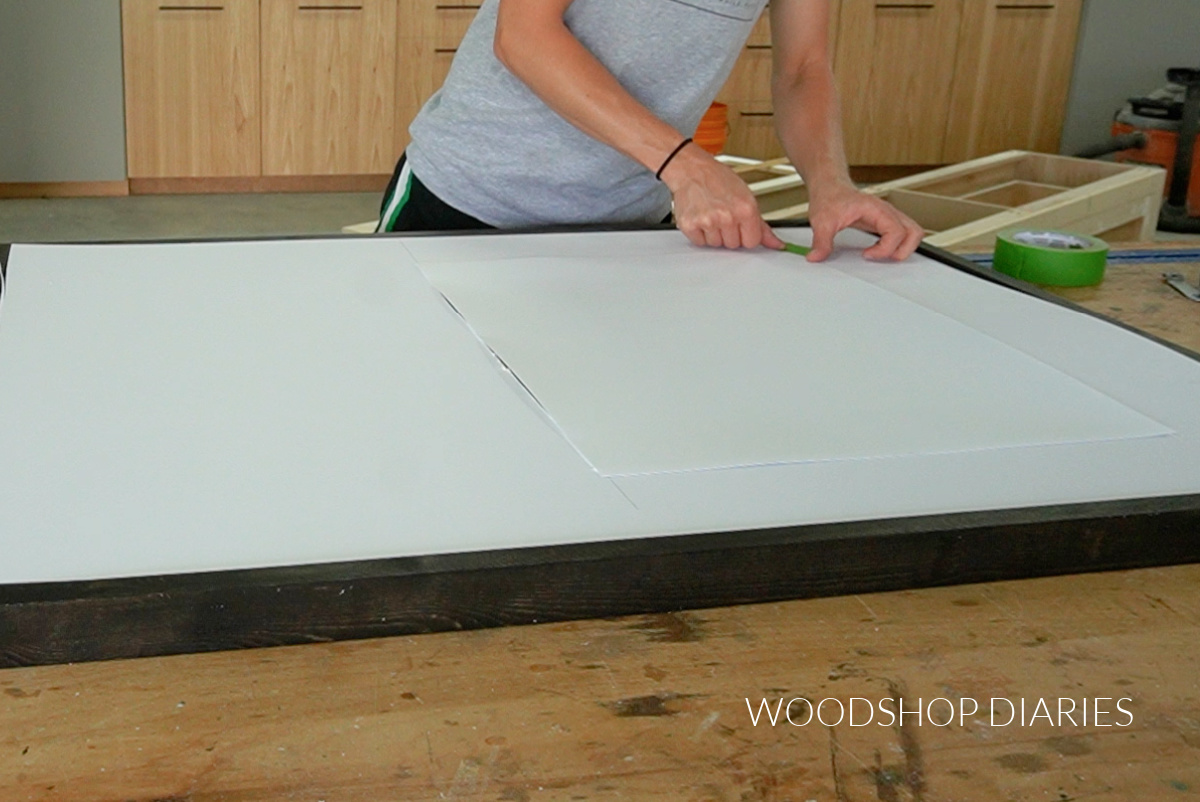
After I had my opening cut, I placed this inside the frame as well and placed the picture over the opening.

.

I used some painters tape at the corners to hold it in place–I’m sure there’s a better way to do that, but this works fine and it’s what I had on hand haha.

Taping the photo onto the back of the mat board on picture frame

Step 6: Add Hardware and Hanger to Picture Frames

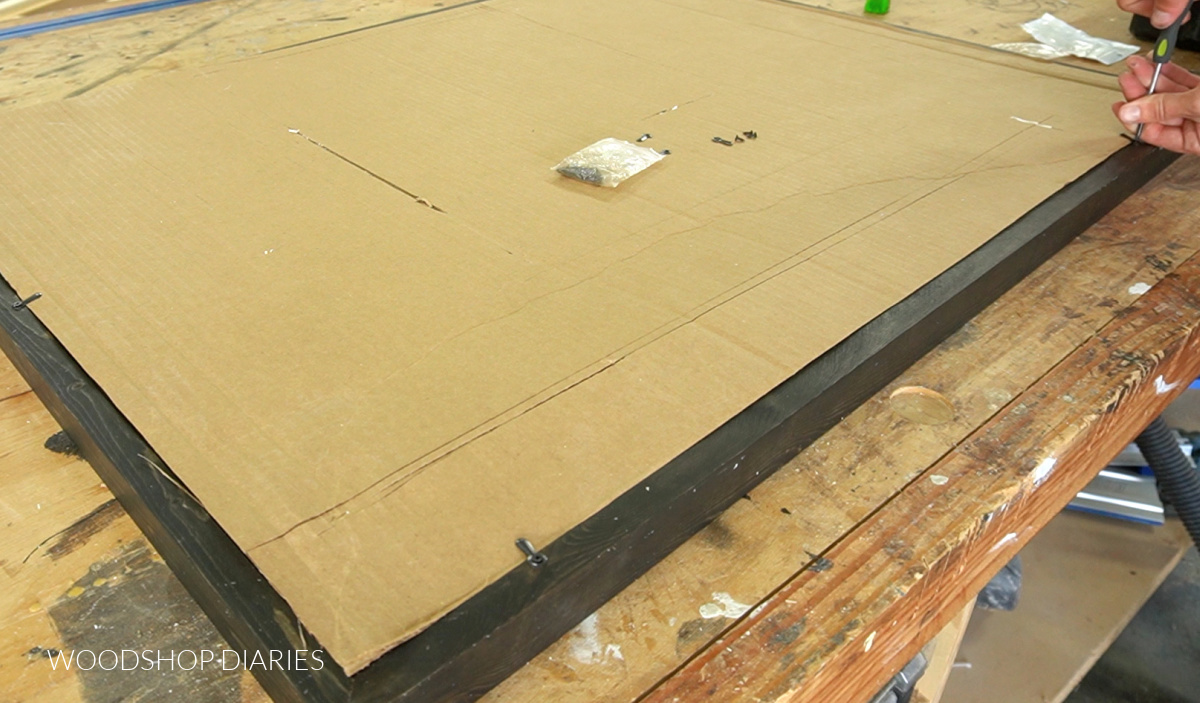
Finally, I cut a piece of cardboard the same size as the plexiglass and mat board and placed in the back.

.

This cardboard will just help “flatten” everything out and hold it all in place.

.

I screwed some turn buttons along the edges to hold the cardboard in place. These turn buttons are great options to make this easy to remove and swap out photos later as needed.

Using cardboard and picture frame tabs to secure back side of frame

And finally, to hang them, I installed a sawtooth hanger centered on the top.

.

All that was left, was using some roofing nails (or screws or whatever you prefer) to hang them along my back dining room wall!

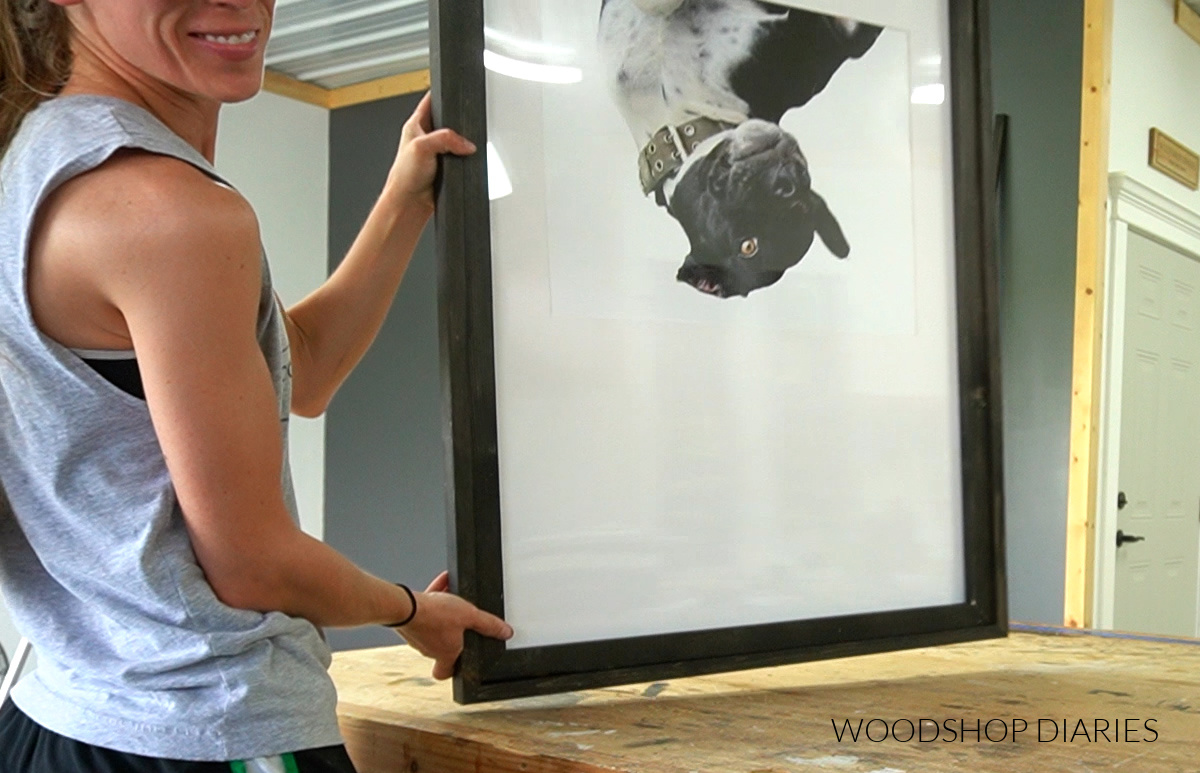
Shara Woodshop Diaries holding up completed custom DIY picture frame with dog photo inside

These are definitely not “fancy” picture frames, but they’re EXACTLY what I wanted for this space. The simple photos of my sweet pets in these huge frames makes me smile every time I walk by.

.

And, best of all, compared to store bought artwork, this saved me a TON of money and is the best kind of “custom” artwork I could find.

Large black wood picture frame on green wall with pet photos inside

I hope you enjoyed this simple custom DIY picture frames project and I hope it inspires you to create your own!

.

If you’d like to check out more picture frame projects, here’s a few favorites!

Easiest Picture Frame EVER
3 Easy DIY Floating Picture Frame Ideas {And how to cut plexiglass}
How to make your own Custom DIY Picture Frame for any size picture or print you want to frame. Save hundreds by making your own with these plans!
DIY Large Custom Picture Frame
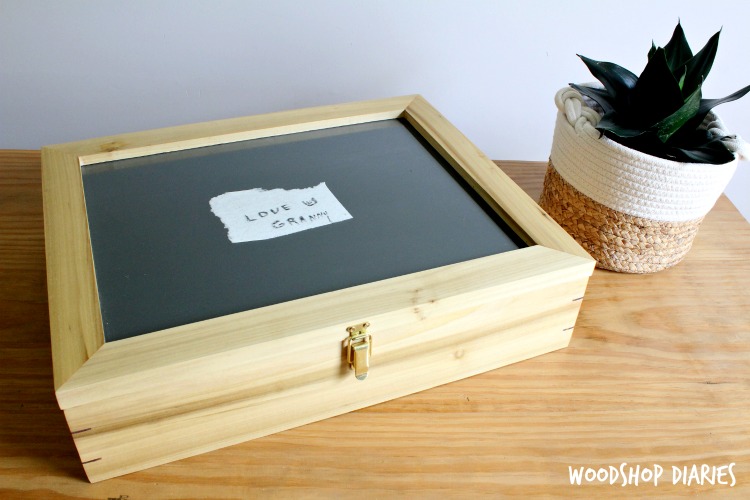
How to build a DIY wooden keepsake box with splines and picture frame top
DIY Picture Frame Keepsake Box

For more woodworking tips, tutorials, and building plans, be sure to subscribe to our newsletter to be the first to know about new posts!

And if you’d like to save this for later, don’t forget to pin it or share it to your favorite social channel.

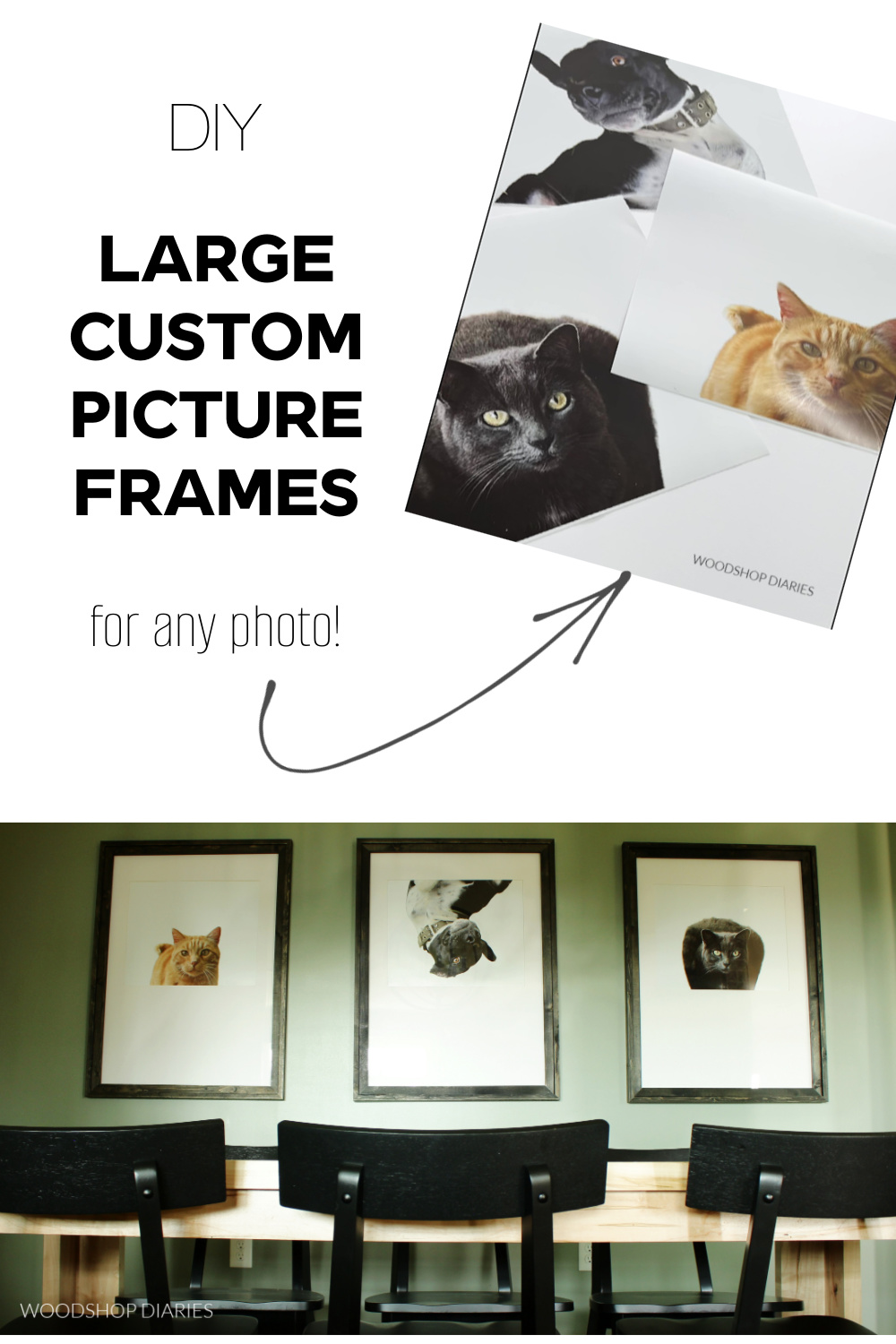
Pinterest collage image showing pet photos at top and completed custom picture frames at bottom with text "DIY large custom picture frames for any photo

Until next time, friends, happy building!
Large Custom DIY Picture Frames

Large Custom DIY Picture Frames

Yield: 1 large custom picture frame

If you've got a blank wall you need to fill, let me show you how to make your own EASY custom DIY picture frames!

Materials

  • Pictures to Frame
  • Plexiglass
  • Mat Board
  • 1x2 boards
  • ¾" or 1" square dowels
  • Cardboard
  • Wood Glue
  • Picture Frame Tabs
  • Sawtooth Hanger

Tools

  • Miter Saw
  • Utility Knife
  • Straight Edge
  • Screwdriver
  • Hammer
  • Saw To Cut Plexiglass

Instructions

  1. Determind inside picture frame size.
  2. Build the inside picture frame with 1x2s and dowels.
  3. Build the outside frame by attaching to the inside frame using wood glue.
  4. Stain the frame. You can do this before or after assembling.
  5. Cut and install plexiglass if needed.
  6. Custom cut and install picture frame mat board and add your photo.
  7. Add hardware and hanger to picture frame and hang it up!
© Shara, Woodshop Diaries
Project Type: DIY Home Decor / Category: Woodworking

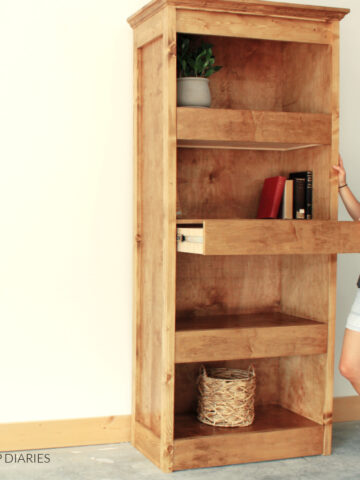
DIY Bookshelf with Hidden Storage

July 9, 2022 by Shara, Woodshop Diaries

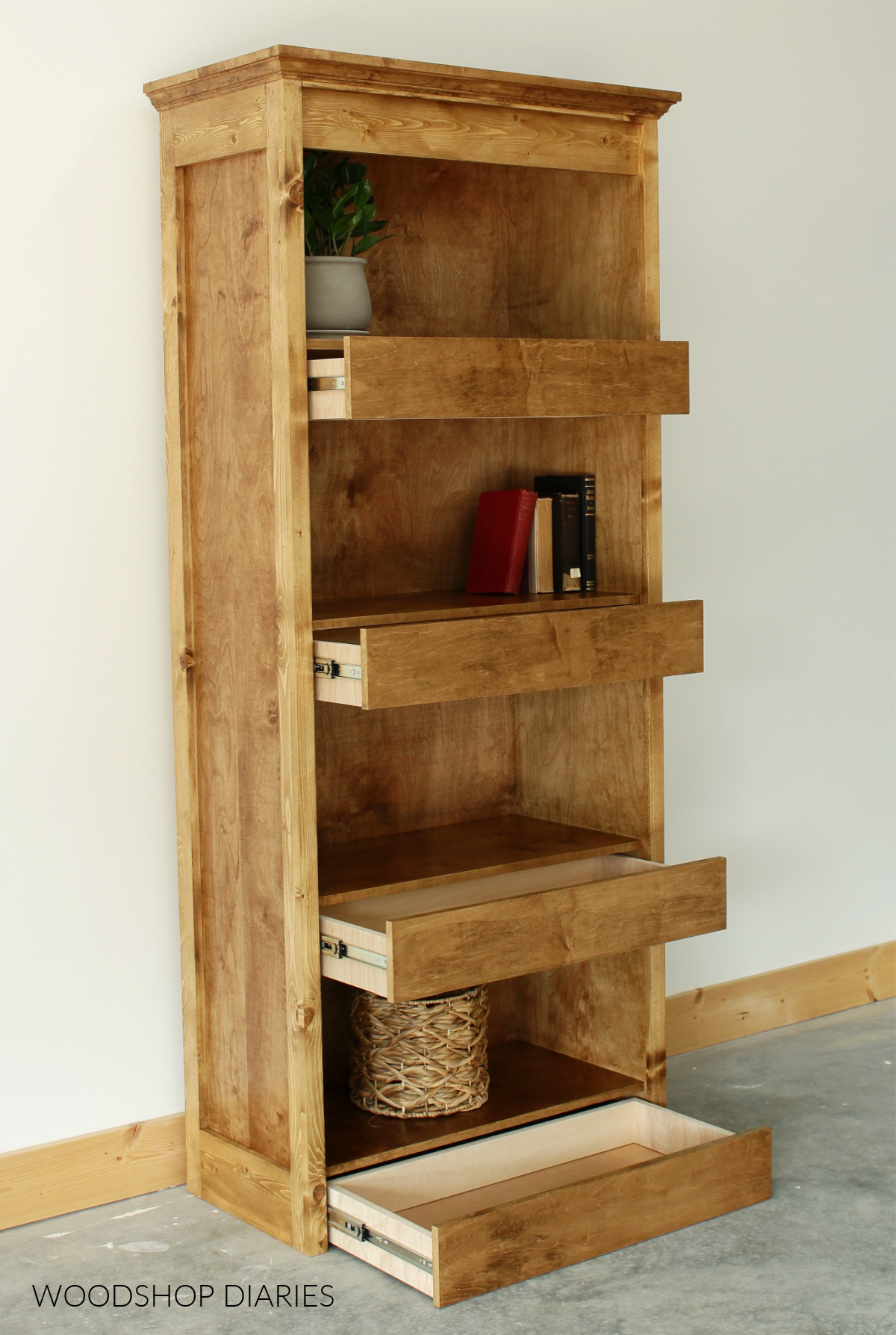
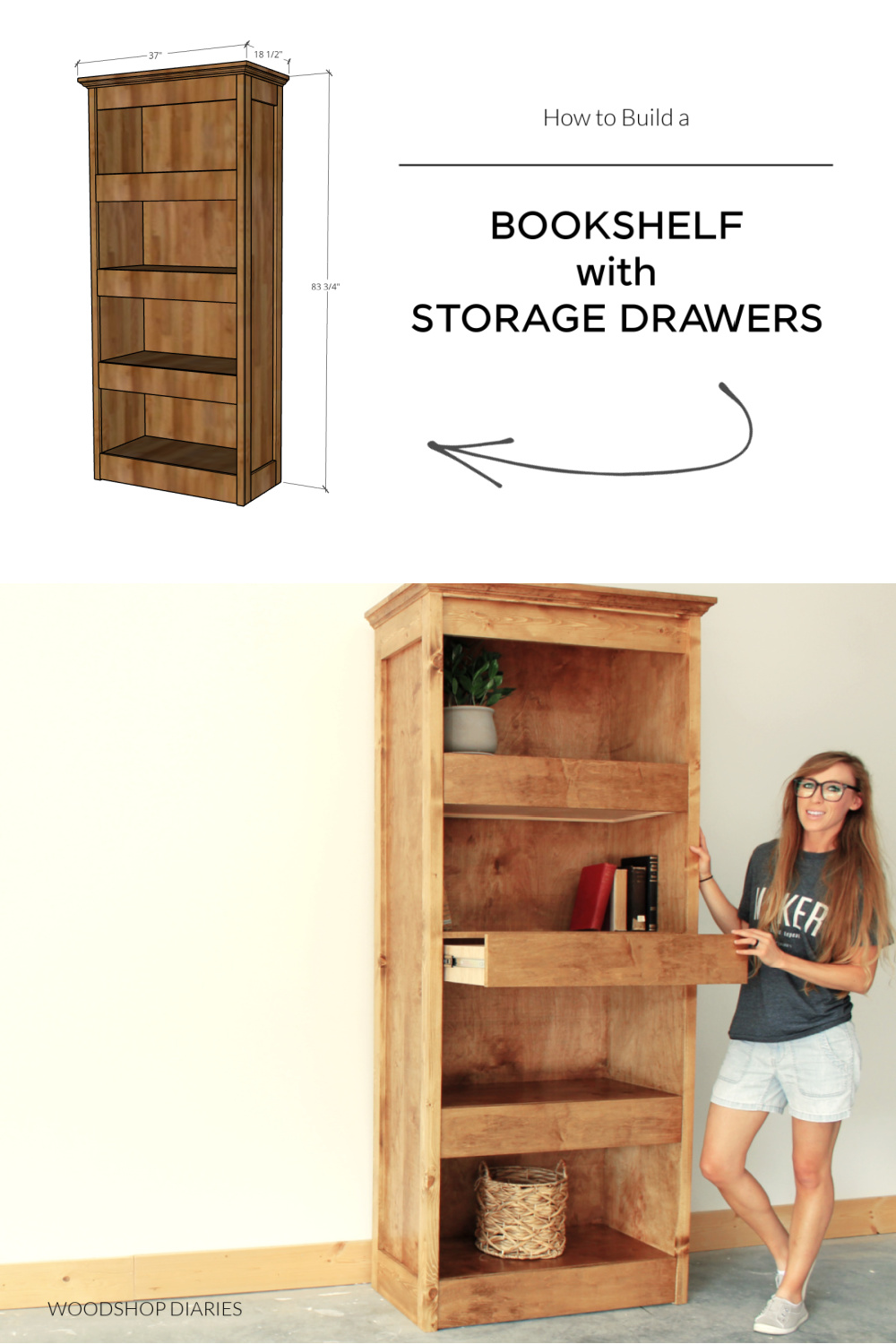
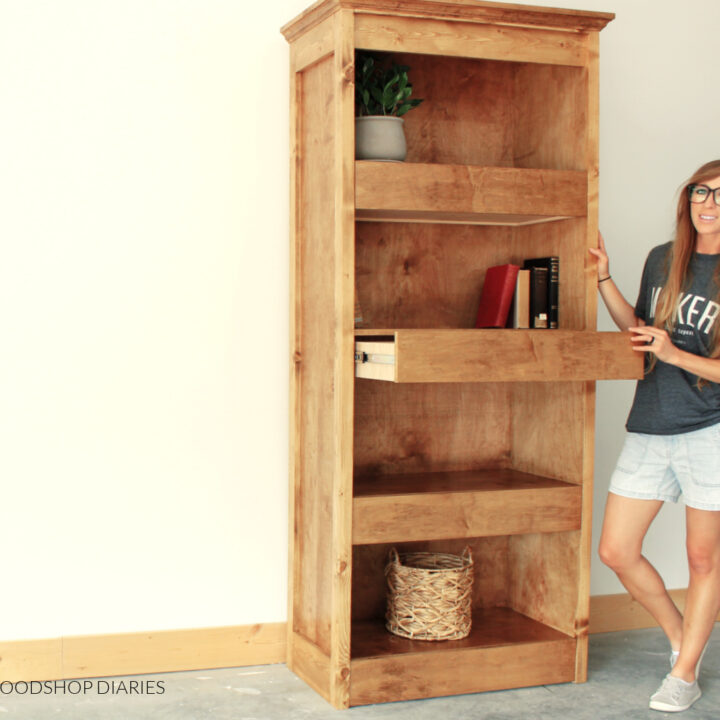
In this post, I’m sharing how to build this DIY bookshelf with hidden storage drawers!

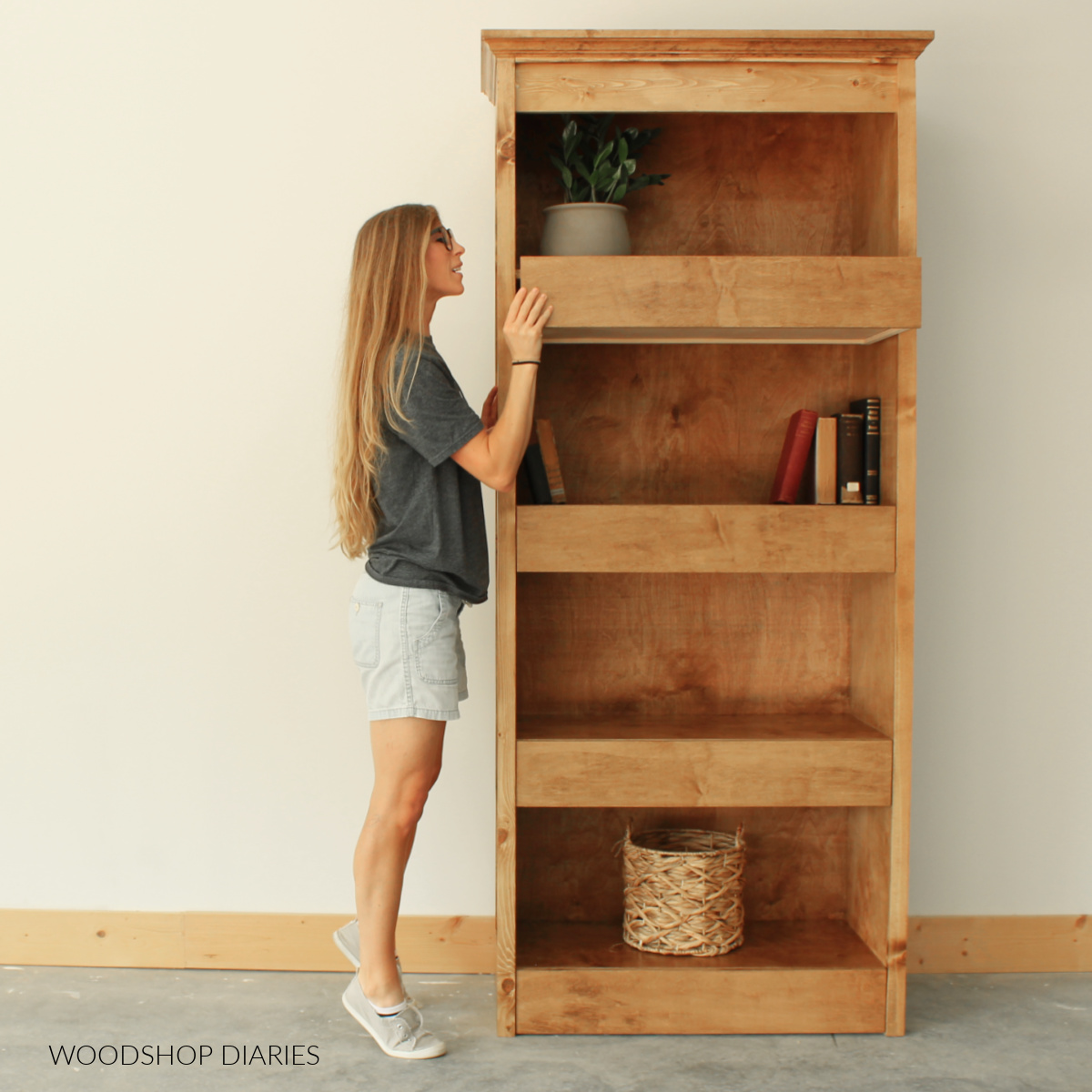
Shara Woodshop Diaries looking inside top drawer of bookshelf with hidden storage

While the storage in this book shelf isn’t really that “hidden,” at first glance, it isn’t really obvious.

.

If you didn’t know any better, you may just think these are really thick shelves, but the shallow drawers are a great place to store remotes in a living room, a secret candy stash in a pantry, or whatever else you may want to hide away.

.

If you’d like to build one yourself, I’m sharing the printable building plans, step by step tutorial, and the full video of the build here in this post!

.

But first…

Some Notes About Building This Bookshelf with Drawers:

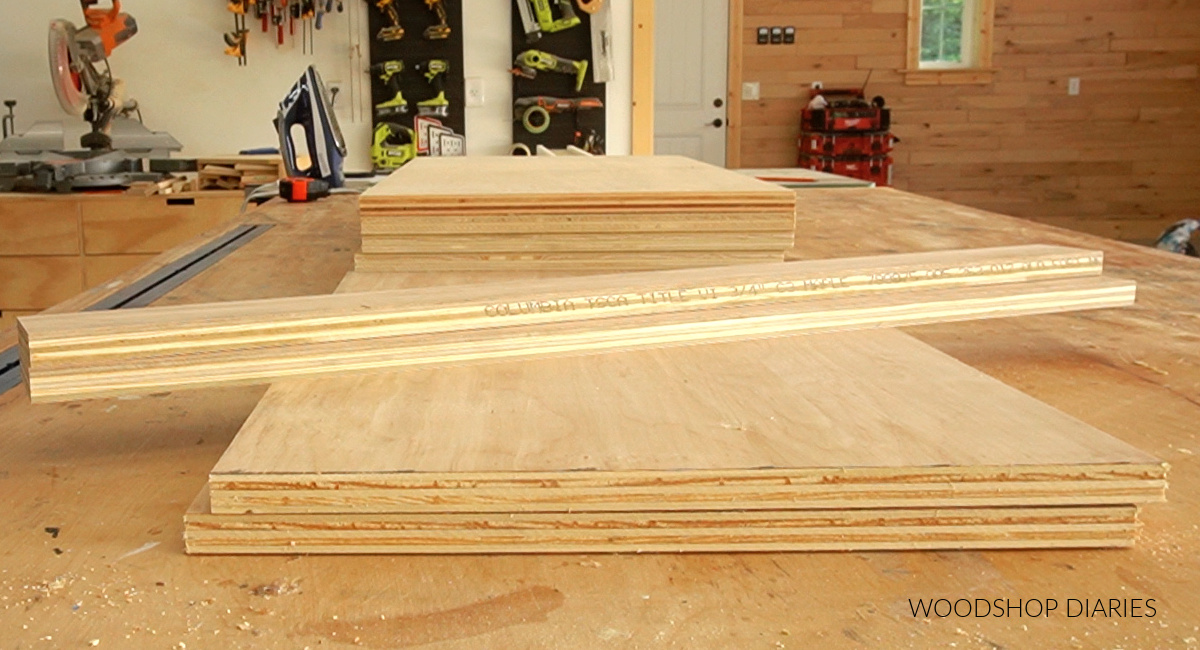
This project was built mainly using ¾″ plywood plus some solid wood for the trim on the sides.

.

You can use any wood type for this that you’d like, but I recommend using a good quality hardwood plywood for the main body for the nicest results.

.

In this build, I used birch plywood and I’ve linked exactly what I used in the materials list below.

Due to the possibility of overloading the drawers, this should be securely anchored to the wall before use.

Overall Bookshelf Dimensions:

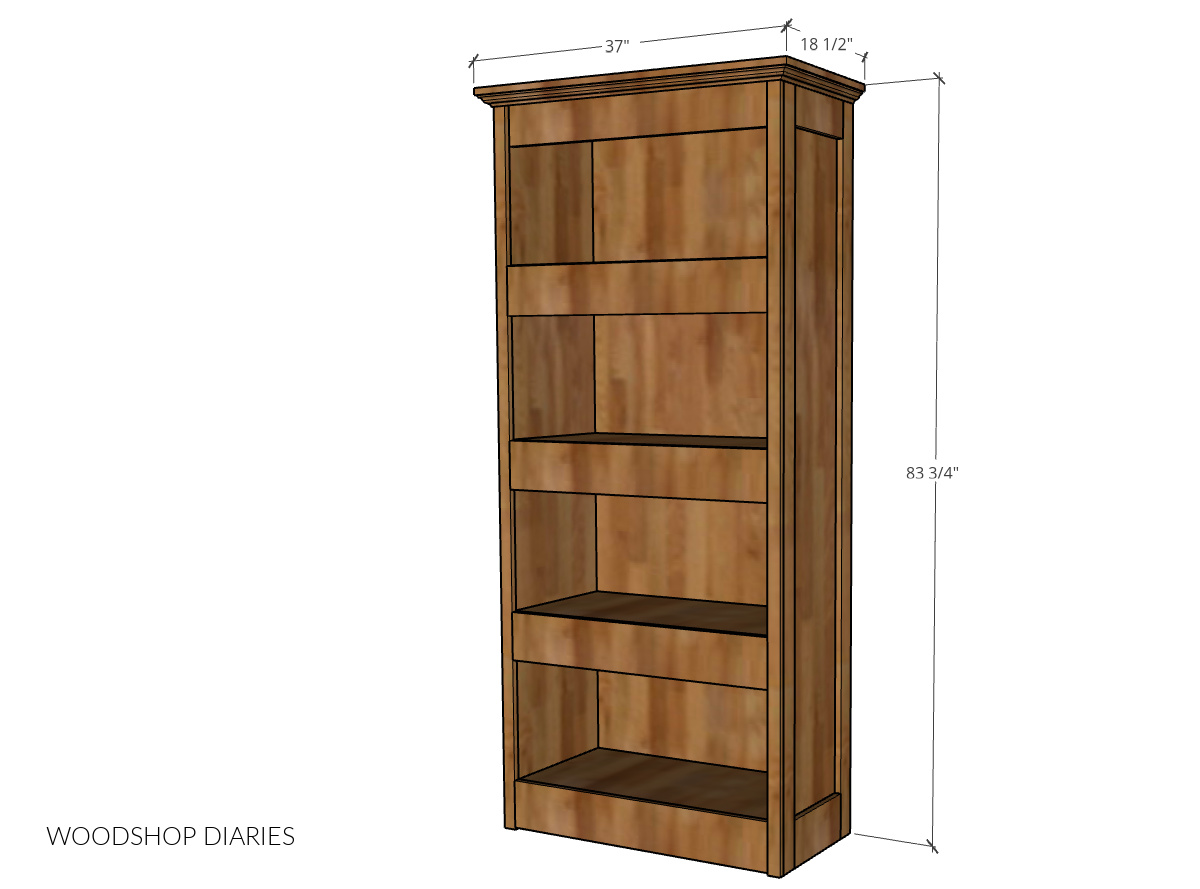
The overall dimensions of this project are 83 ¾″ tall, 18 ½″ deep (at the top), and 37″ wide (at the top). It has 4 shelves and 4 drawers total.

Overall dimensional diagram of hidden storage bookcase-- 83 ¾" tall, 18 ½" deep, 37" wide

Helpful resources to use in the build:

Throughout the build, you may find these guides helpful to complete the project:

  • How to cut plywood sheets
  • How to use a pocket hole jig
  • How to apply iron on edge banding
  • How to build and install drawer boxes
  • How to cut crown molding
  • How to finish raw wood furniture
  • 5 tips to professional looking DIY furniture

Tools & Materials:

*This post contains affiliate links. See website policies.

Tools:

  • Circular Saw and straight edge (or cutting guides)
  • Miter Saw
  • Table Saw (optional)
  • Drill/Driver
  • Brad Nailer
  • Pocket Hole Jig
  • Clamps

Materials:

  • (2) 1x3x8 boards
  • (4) 1x2x8 boards
  • (1) 1x6x8 boards
  • (2) 4×8 sheets ¾″ plywood
  • (1) 4×8 sheet ¼″ plywood
  • (1) 1 ⅝″ x 8 ft crown molding OR cove molding
  • (4) pair 14″ drawer slides
  • Edge Banding (optional)
  • Wood Glue
  • 1 ¼″ pocket hole screws
  • 1 ¼″ brad nails
  • Wood finish (as desired)

How to Build a Bookshelf with Hidden Storage Drawers

Check out the full length video tutorial here:

Youtube thumbnail for bookshelf with hidden drawers

Grab the printable building plans here:

Step 1: Assemble the Bookshelf Cabinet

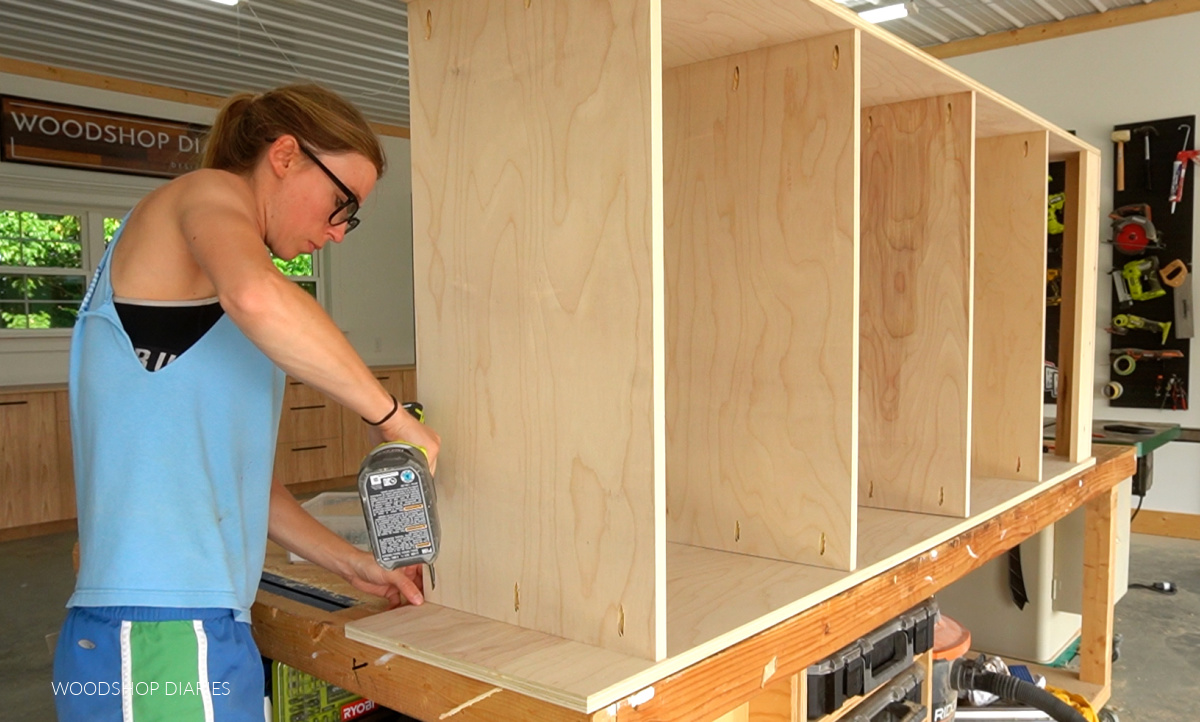
To get started, I used a circular saw and Kreg Rip Cut to cut down my plywood sheets. I cut 2 side panels, 4 shelves, and three thinner pieces to attach at the top as trim/supports.

Plywood pieces cut for bookshelf cabinet sitting on workbench

All dimensions and cut diagram can be found in the plans here.

RELATED: How to cut plywood sheets

.

The front edges of the side panels will be covered with trim later, but I did apply edge banding to the front edges of the shelves before assembling because they will be exposed when the drawers are open. 

.

Edge banding is always optional, but it does make the plywood edges look nice and finished.

RELATED: How to apply iron on edge banding

.

I assembled the main body of the shelf using ¾″ pocket holes and 1 ¼″ pocket hole screws.

RELATED: How to use a pocket hole jig

Shara Woodshop Diaries assembling bookshelf cabinet on workbench using pocket holes and screws

I’ve detailed the shelf locations in the printable plans.

Step 2: Add Back Panel

I pulled out a sheet of ¼” plywood and cut out a back panel to fit over the shelf body.  I set aside and used the leftover pieces for the drawer bottoms later.

.

Before attaching, I double checked the diagonals of this panel to make sure it was square.  This will help ensure the bookshelf is square once it’s attached.

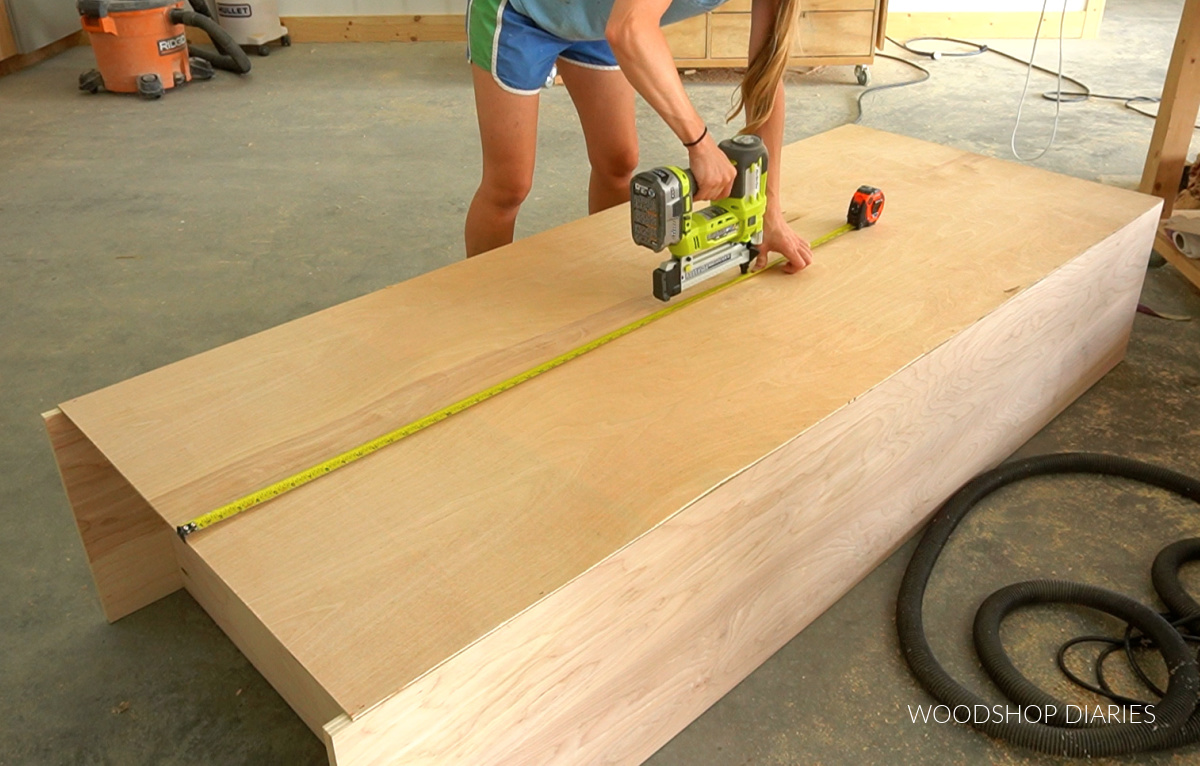
Using a stapler to secure the back panel to the bookshelf carcass

Then, I stapled this in place.  You could also glue and brad nail or screw this in place if you didn’t have a stapler.

RELATED: What’s the difference in a finish, brad, and pin nailer vs a stapler?

Step 3: Install Drawer Slides

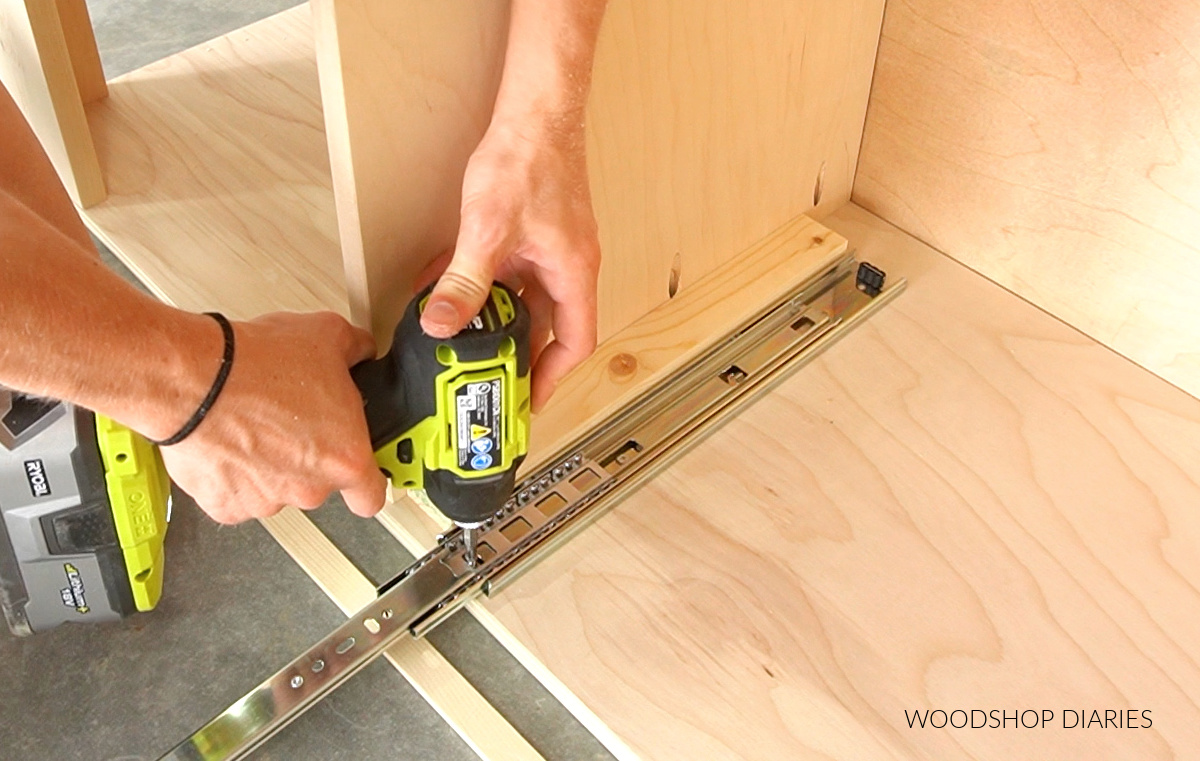
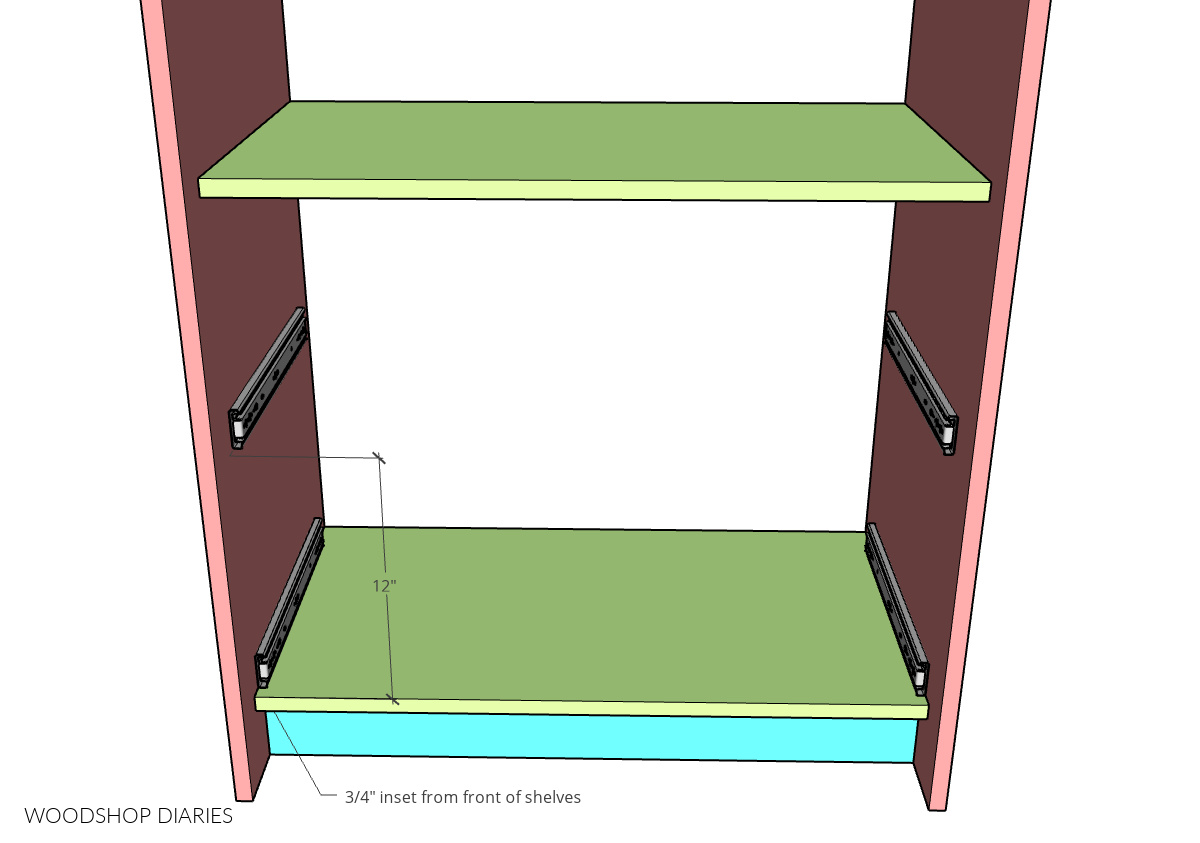
The shelves were slightly shallower than the side panels, so I used a scrap piece of wood to help me install these slides flush to the front edge of the shelves. 

.

And I used another scrap block to make sure these were installed about 1 ½” below each shelf.

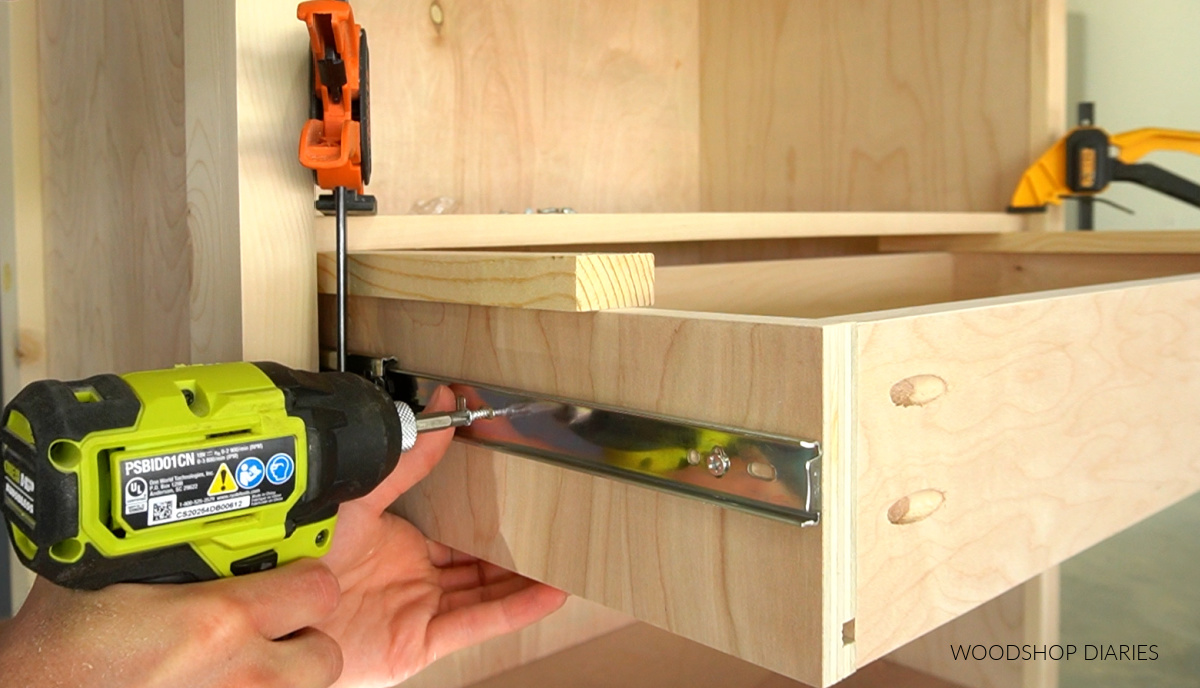
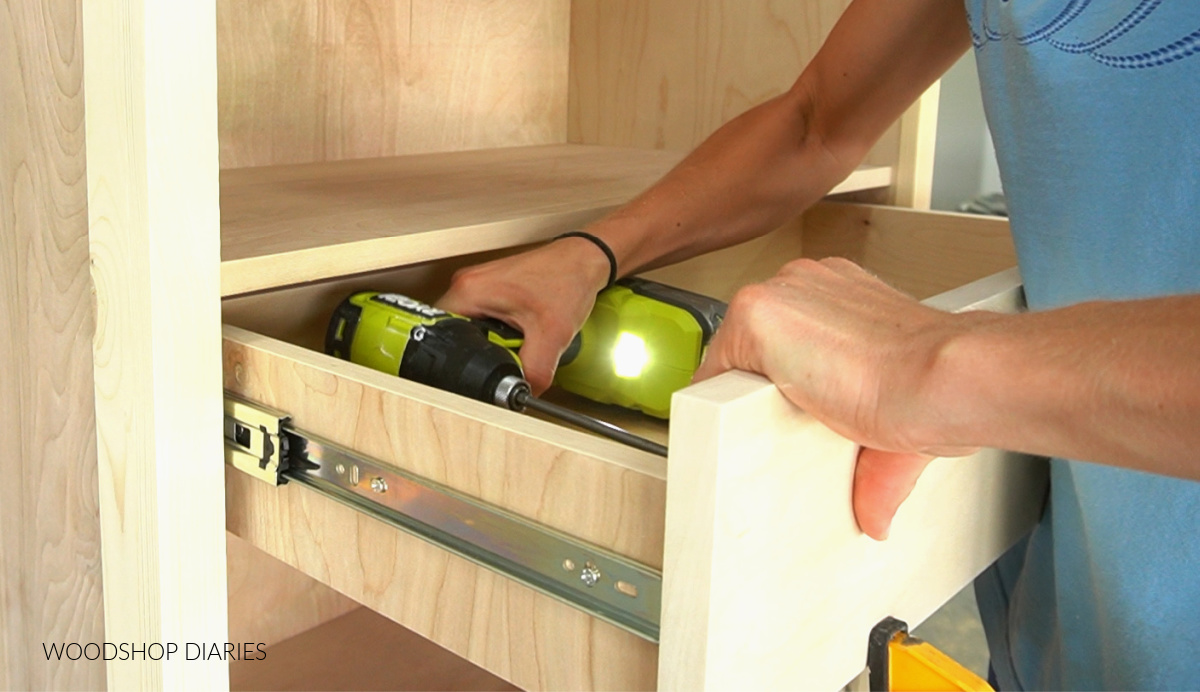
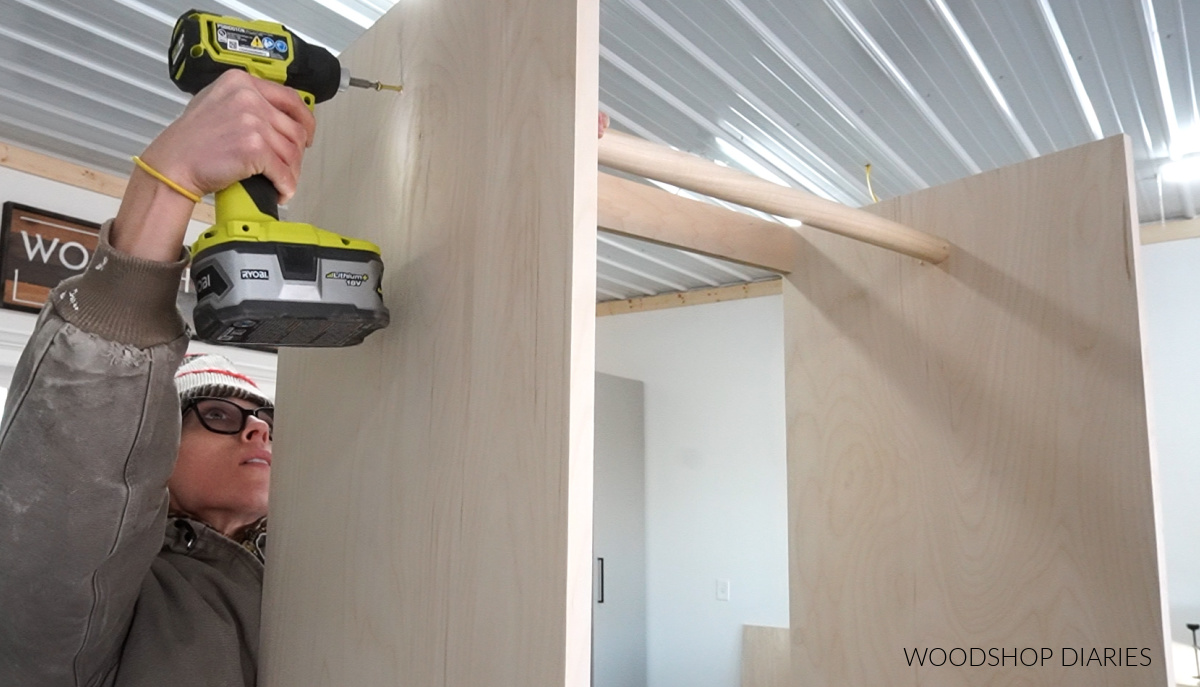
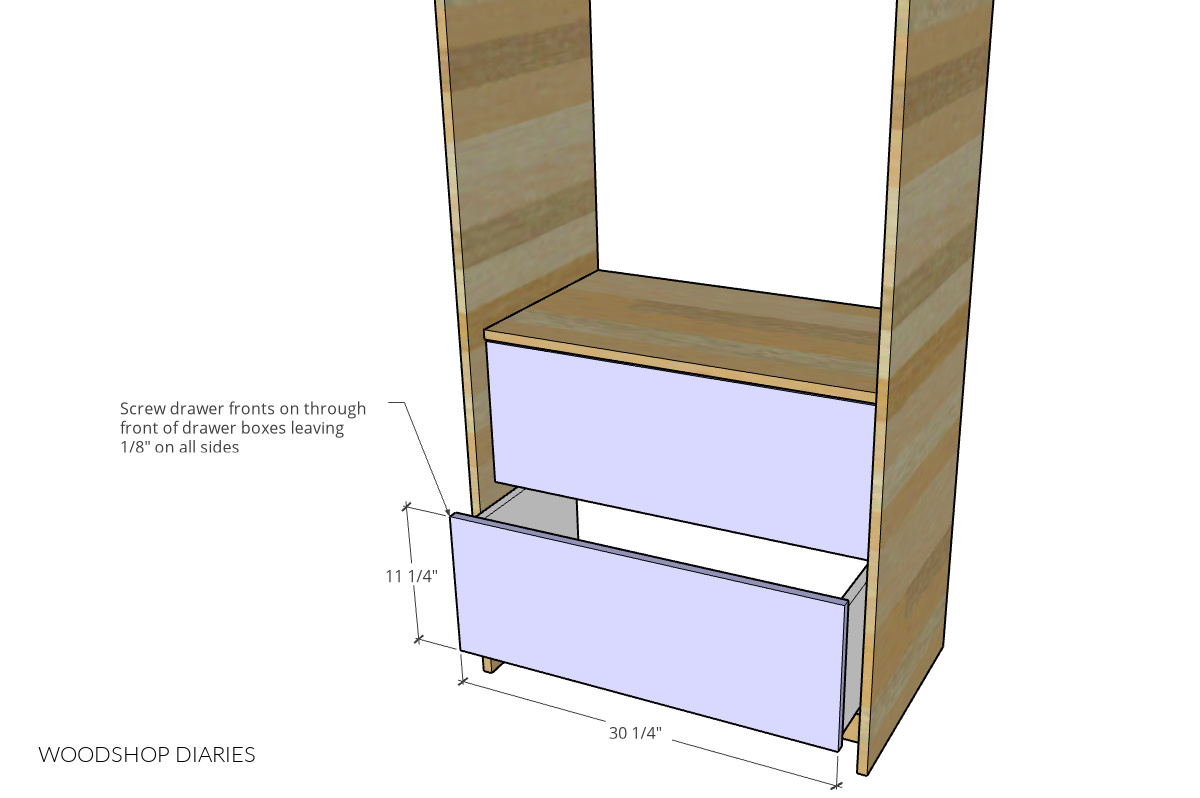
Close up of installing the drawer slide to bookshelf cabinet for hidden storage drawers

I installed four 14” slides on one side, then flipped it over and installed the other 4 on the opposite side the same way.

RELATED: How to install drawer slides

Step 4: Install Trim on Bookshelf Sides

I used 1x2s, 1x3s, and 1x6s for the trim. Feel free to get creative and customize this if you’d like something different.

.

For the front of the shelf, I glued up two 1x2s into an “L” to kind of “wrap around” each corner.  You don’t have to glue these together first—you could just glue and nail them directly to the shelf instead. 

Close up of gluing L shaped corner trim together on workbench

However, I thought it would be easier to line up everything this way. Either way works fine.

.

Once the glue on these corner pieces was dry, I glued and nailed a 1×3 along the back edge of the shelf.  Then, I glued and nailed the corner trim pieces.

Shara Woodshop Diaries nailing trim onto bookshelf sides

Notice that the full 1×2 goes on the side and the shorter piece goes on the front. 

.

The inside edge of the shelf sides should be flush so as not to interfere with the drawer slides’ ability to slide in and out freely.

.

And finally, I cut to fit a couple of 1x6s to go between them at the top and bottom.

Using a nailer to install 1x6 trim at top of bookshelf side

I trimmed out both sides like this.

Step 4: Build and Install Hidden Storage Drawers

I cut my drawer box pieces from ¾″ plywood according to the cut list in the plans. I cut ¼″ dadoes, ¼″ deep, ½″ from the bottom edge of all sides to install the ¼″ plywood drawer bottoms into.

.

You can see how to cut dadoes using a table saw in this video, but you can also use a dado blade or a router instead if you preferred.

.

Or, if you don’t want to cut dadoes, you can certainly just glue and nail the bottom panel onto the drawer box.

RELATED: Check out this post on how to build drawer boxes

Exploded diagram of hidden storage drawer box assembly

Then, I drilled ¾″ pocket holes into the front and back drawer pieces and assembled using 1 ¼″ pocket hole screws.

.

To install these drawer boxes, I screwed them directly onto the slides that were already installed.

Close up of driving screws to install drawer boxes onto drawer slides in bookshelf cabinet

I used some scrap 1x pieces and some clamps to help keep these ¾” below each shelf as I screwed them in.

RELATED: How to install drawer slides

Step 5: Add Drawer Fronts

For the drawer fronts, I used ¾” plywood, but you could also use 1x6s for this if you’d rather.  I cut four pieces to fit and applied iron on edge banding on all sides.

.

I held these in place so that they were just BARELY below the top edge of the shelf, then clamped it on at the bottom and screwed these in from the inside.

Shara Woodshop Diaries securing drawer fronts onto drawer boxes in bookshelf

I repeated on all four drawers, but there wasn’t enough clearance below the bottom drawer to clamp.

.

So for this, I used a scrap piece of ¼” plywood to position the drawer front ¼” from the floor.

Step 6: Install Top Panel & Crown

I cut a piece of ¾” plywood to fit on the top so that there was 1 ¼” overhang on the sides and front.  I applied iron on edge banding, then placed this on top of the shelf.

.

Before securing, I made sure the overhang was equal on the sides and the back edges were all flush, then I used 1 ¼” screws through the top supports to attach.

Shara Woodshop Diaries installing top panel onto bookshelf through top supports

To dress it up a little, I added some small crown molding along the top.  This is optional and you could definitely use whatever type of molding you wanted. 

.

I marked and cut each piece to fit and nailed it in place.

RELATED: How to cut crown molding

.

I had planned to leave this gap between the front trim and the crown open, but after installing it, I decided it looked weird, so I cut some scrap 1×2 and tapped it in to fill this space.

Close up showing spacer block added on front of bookshelf between trim and crown molding

I secured the crown and this piece together with a few brad nails to finish it up.

Step 7: Finish Bookshelf with Drawers

After puttying the nail holes and a final sanding, I gave the shelf a coat of Minwax Early American stain and a few coats of Minwax Polycrylic and it was complete!

RELATED: How to finish wood furniture

.

This DIY bookshelf with hidden storage drawers was such a fun project that’s big in size, but not overly complicated to put together. 

Bookshelf with hidden storage drawers open stained in Minwax Early American

The storage drawers are a great addition to give it a little extra versatility without looking out of place.

.

I really hope you enjoyed seeing this bookshelf with hidden storage come together as much as I enjoyed building it! Don’t forget if you’d like to grab the plans to build your own, you can find them here!

.

If you enjoyed the project and want to see what’s next, be sure to subscribe to the newsletter to keep up with all the projects to come!

And if you’d like to save this DIY bookshelf with hidden storage drawers project for later, don’t forget to pin it or share it to your favorite social channel!

Pinterest collage image showing overall dimensional diagram at top and Shara opening drawers on bookshelf at bottom with text "how to build a bookshelf with storage drawers"

Until next time, happy building!

DIY Bookshelf with Hidden Storage

DIY Bookshelf with Hidden Storage

Yield: 1 bookshelf with hidden storage

How to build this DIY bookshelf with hidden storage drawers!

Materials

  • 3x8 boards
  • (4) 1x2x8 boards
  • (1) 1x6x8 boards
  • (2) 4x8 sheets ¾" plywood
  • (1) 4x8 sheet ¼" plywood
  • (1) 1 ⅝" x 8 ft crown molding OR cove molding
  • (4) pair 14" drawer slides
  • Edge Banding (optional)
  • Wood Glue
  • 1 ¼″ pocket hole screws
  • 1 ¼" brad nails
  • Wood finish (as desired)

Tools

  • Circular Saw
  • straight edge (or cutting guides)
  • Miter Saw
  • Table Saw (optional)
  • Drill/Driver
  • Brad Nailer
  • Pocket Hole Jig
  • Clamps

Instructions

  1. Cut your plywood according to the cut list, apply edge banding, and assemble using ¾" pocket holes and 1 ¼" pocket hole screws.
  2. Add the back panel by stapling into place.
  3. Install drawer slides by using a scrap piece of wood to make sure they are flush to the front edge of the shelves.
  4. Install trim on bookshelf sides.
  5. Build drawer boxes from ¾" plywood using ¾" pocket holes and 1 ¼" pocket hole screws. Install drawers by screwing directly on the slides that are already installed.
  6. Add drawer fronts by attaching with screws from the inside of the drawer.
  7. Install top panel and crown molding for a little extra detail.
  8. Finish the bookshelf with drawers as desired.
© Shara, Woodshop Diaries
Project Type: DIY Furniture Plans / Category: Woodworking

How to Build a Bed with Arched Head Board

July 2, 2022 by Shara, Woodshop Diaries

In this post, I’m sharing how to build a bed frame with an arched head board!

Wooden bed frame with arched headboard and decorative furniture feet with white comforter

I’ve built a few beds over the years, and to be honest, they’re all pretty similar. Most beds are built basically the same “structure-wise,” but making some small design changes on each one can make them look completely different.

.

This time, I’m building this curved head board bed for our guest bedroom. This is actually the kick off to a whole matching furniture series I’ll be sharing for that space–bed, dressers, nightstands.

.

If you want to follow along and see the whole bedroom furniture building series, be sure to subscribe to the newsletter to be the first to know when new plans and projects come out!

The Basic Parts of a Bed Frame

To build a bed frame, you basically need a head board, a footboard, two side rails, and some slats or supports for the mattress to rest on.

Exploded view of parts of bed structure showing head board, foot board, side rails, slats, and mattress

However, you can customize the details on each section to make it look different.

.

So, I’m breaking down this bed build in these sections below to keep things simple. 

.

If you’d like to check out other bed builds, here’s a few favorites:

Mid Century Bed
DIY Modern Bed
Free Building plans to build your own DIY King size storage bed
DIY Storage Bed

How to Build a Bed with Arched Head Board

Obviously, there are different size options when it comes to beds, so overall dimensions and material amounts will vary based on the size you’re building.

.

But, don’t worry! I’ve got you covered with the detailed plans for a twin, full, queen, and king size bed frame here, so you can grab whatever size you need:

Tools & Materials:

**This post contains affiliate links. See website policies.

Tools:

  • Circular Saw and straight edge (or cutting guides)
  • Miter Saw
  • Table Saw
  • Jig Saw
  • Drill/Driver
  • Pocket Hole Jig
  • ⅜″ dowel Jig
  • Router and Rabbeting Bit
  • Clamps
  • Sander

Materials:

*Amounts will vary based on bed frame size. Refer to plans for specifics.

  • 2x8x8 boards
  • 2x4x8 boards
  • 2x2x8 boards
  • 4×8 sheets ¾″ plywood
  • (2) 4 ¾″ tall furniture feet
  • (2) threaded inserts for furniture feet
  • ⅜″ diameter x 1 ½″ wood dowels
  • Wood Glue
  • 1 ¼″ pocket hole screws
  • 1 ¼″ & 2″ wood screws
  • Edge Banding (optional)
  • Bed Rail Brackets
  • Wood finish (as desired)

Part 1: Building the Head Board

The Head Board Frame

For the headboard curve, I used basic 2×8 material. 

.

I trimmed the boards down into more manageable lengths on the miter saw, and squared off the rounded edges on the table saw.

RELATED: How to square off board edges

.

I’ve detailed the lengths of these pieces in the building plans and they will vary based on the size bed you’re building, but I basically cut pieces to form kind of a “U” shape.

Shara Woodshop Diaries marking on boards pieced together in a "U" shape on workbench

I glued up two of these “U shaped panels” identical to each other.

RELATED: How to glue up panels

.

For the curve, I drew up a template in SketchUp, took a screen shot of it, put it in a Word document, blew it up to actual size, printed it out on a few sheets of paper, taped them together, and cut it out with scissors. 

.

It was pretty rough and ended up not being really nice, smooth lines, so I actually don’t recommend doing that ha!  Instead, you could freehand your curve, use round objects to draw it, whatever.

.

But, in the build plans, I’ve noted the radius of each curve and if I had to do this again, I’d put a screw in a scrap board, clamp this glued up panel to the workbench, and position the screw on the scrap board at the pivot points noted in the plans. 

.

Then I’d use a pencil on a string or a tape measure to trace my radius about that screw.

RELATED: Check out this post for 3 ways to draw a circle of any size

Shara Woodshop Diaries showing how to draw a radius using a tape measure on scrap wood

Either way, once the curve shape was drawn, I used a jig saw to cut it out. 

.

I used a belt sander to help me smooth things out a little on the edges, then used this to trace my curve onto the second glued up panel and cut it out.

Shara Woodshop Diaries using jig saw to cut bed frame arched head board

These curves will be glued together to give me a 3” thick piece, but before gluing them up, I used a rabbeting bit in my router to cut a rabbet along the inside edge.

RELATED: How to set up and use a router

.

I knew I’d never be able to perfectly cut a curve on the headboard panel to match the curve on the frame, so instead of wasting my time trying, I cut this rabbet. This way, I can slide the top of the headboard panel into it later and not have to worry if it’s a perfect cut.

.

Since my headboard panel will be ¾” plywood, I made multiple passes to cut this rabbet to ¾” deep to make sure my plywood would fit into it.

Close up of rabbet cut in head board arch

Then, I glued my curve pieces together so that the rabbet was in the middle.

.

After the glue dried, I used my belt sander to get all these edges nice and flush and smooth.  There was a lot of sanding haha.

Head board arch completed laying on concrete floor

I made the headboard legs from 2x4s glued together.  If you saw my matching office furniture series, this process looks familiar. 

.

I cut 4 pieces of 2x4s to a little over 40″, then squared the edges off on the table saw so the boards were just over 3” wide.

RELATED: How to square board edges

.

Then, I glued them together to make two legs.

.

After the glue dried, I ran these through the table saw again just to clean up the glue edges and give me 3” x 3” posts.  Then, I trimmed them to a final length of 40”.

.

I laid these two posts, and the curve out on the floor and used a square to mark some lines at the joints on both the front and back.

Using a square to mark dowel locations to assemble bed frame head board

Then, I used a dowel jig on these marks to drill dowel holes. 

Dowel holes drilled out in frame pieces

If you didn’t want to use dowels, you can definitely use another joinery method you feel comfortable with.

.

I used wood glue and dowels to assemble this frame and did some creative clamping to hold it together while the glue dried.

Head board frame clamped together

To make sure my headboard legs stayed parallel while the glue dried, I used a 2×4 board at the bottom.  I just kind of tapped it in at an angle until the legs were the same distance apart at the top as they were at the bottom.  Then, I let it dry.

The Head Board Panel

While the glue dried, I cut a panel to fit between the head board legs.

RELATED: How to cut plywood sheets

.

Once the headboard frame was dry and all the glue squeeze out was sanded off, I laid this panel on the floor and placed the frame on top of it.  I set the inside of the curve about ¼” down from the top edge of the panel and traced it out.

Shara Woodshop Diaries tracing arched panel for head board

Then, I used a jig saw to trim about ¼”-⅜” on the outside of this line.  This will go up into the rabbet, so that’s why I cut a little outside the line.  These edges will be hidden.

.

I drilled ¾” pocket holes into the sides of this panel, and slid it into the frame so that the top curve slides into the rabbet on the frame.

RELATED: How to use a pocket hole jig

Diagram showing pocket holes installing head board panel

It really doesn’t matter which side you make the front and which side you make the back, but I installed this so that the headboard panel was ¾” inset from the back edge and 1 ½” inset from the front edge.  You could flip flop it if you wanted.

Part 2: Building the Foot Board

For the footboard, I repeated the process for making 3” x 3” posts from 2x4s.  I made two long ones for the top and bottom, and two shorter ones for the sides.  The plans detail the lengths these should be based on the size bed you’re building.

.

Just like with the headboard, I laid these out on the floor, and used a square to mark lines at each joint on both sides.  Then, I used a dowel jig to drill out dowel holes at each mark.

Shara Woodshop Diaries marking dowel locations on footboard frame

Again, you can use another joinery method if you prefer. 

.

I glued up this frame using wood glue and dowels, but you could also use pocket holes and screws.

.

Once this was dry, I sanded off all the glue squeeze out, and cut a piece of ¾” plywood to fit perfectly inside this frame.

.

I drilled ¾” pocket holes around the edges, then installed this into the frame using 1 ¼″ pocket hole screws so that it was about 1 ½” inset from the front edge.

Shara Woodshop Diaries assembling footboard panel into footboard frame of bed

Now, I was installing some furniture feet onto the footboard.  So I flipped it upside down, and kind of figured out how far in I wanted the feet to go. 

.

I marked and drilled out a hole on each side to install a threaded insert to screw the feet into.

Close up of screwing furniture feet into threaded inserts

Once both feet were on, the footboard was complete and it was time to move to the side rails.

Part 3: Building the Side Rails

The side rails are probably the easiest part of the whole bed.  I cut two strips of ¾″ plywood for this and applied iron on edge banding to the top edges just to give them a cleaner, smoother look. 

RELATED: How to apply iron on edge banding

.

Now these side rails will need some supports to rest the bed slats on later, so for this, I used some scrap plywood strips I had in the shop. 

Diagram showing how to build bed frame side rails

I didn’t have any long enough to run the full length, so I pieced them together—which is fine.  I glued and screwed these support pieces along the inside of each side rail so that the top was about 7” from the bottom edge.

Part 4: Assembly Using Bed Rail Brackets

Now that all four sides of the bed are made, it’s time to put it all together.  I used some bed rail brackets for this.  There are several styles of bed rail brackets. 

.

This is a new kind I haven’t used before, but they seemed simple enough.  I attached the corner piece onto the head and foot board like shown the same distance up from the ground. 

Bed rail bracket installed on footboard

The plans will detail the location of the brackets.

.

I’m pretty sure these are intended to go the other way so that the “teeth” face the outside vs the inside, but if I flipped them, it would push the side rails further apart and leave way too much wiggle room on each side of the mattress. 

.

So I installed them so that the teeth were flush to the inside of the frame.

.

I screwed the other part of the brackets in along the edges of the side rail supports so that they would fit together at each corner just like this. 

Demonstrating installing side rails using bed rail brackets

I installed these so that the bottom edge of the bed rail would come to the bottom edge of the footboard. 

.

After installing the brackets and making sure it all fit together, I stained all four pieces in Minwax Early American and gave it a few coats of clear coat poly once the stain dried.

Part 5: Adding Bed Slats

I cut nine 3 ½” wide plywood strips long enough to span the width of the side rails and rest across the supports. (You could use 1x4s instead…or 1x6s…it doesn’t really matter as long as the mattress is well supported.)

.

Then, I cut nine 2x2s the height of the top of the side rail supports from the ground.

.

I screwed the 2x2s in at the center of each slat, and placed these evenly along the bed rail supports.  Then, I screwed these in place.

Diagram showing how to space out bed frame slats for mattress support

And at this point, it was done and ready for a good nap haha!

.

Simply place the mattress (no box spring needed, but you can add one if you’d like) on top of the slats, add bedding as desired, and hop in!

.

I know this seemed like a big project, but building beds is more like building several separate projects that kind of all fit together.

Completed bed frame build--DIY wooden bed frame set up with bedding

So hopefully that helps make it a little less overwhelming when you think about building one 🙂

.

If you’d like to learn how to build a bed in a twin, full, queen, or king size, don’t forget to check out the plans and watch the full build video over on my YouTube channel.

Mock YouTube thumbnail for how to build a bed frame video

If you’d like to keep up with how the rest of this matching bedroom furniture set comes together, be sure to subscribe to the newsletter here.

.

And if you’d like to save this for later, don’t forget to pin it or share it to your favorite social channel!

Pinterest image showing bed frame overall dimensional diagram at top and completed bed frame assembled at bottom with text "How to build a bed with curved head board"

Until next time, friends, happy building!
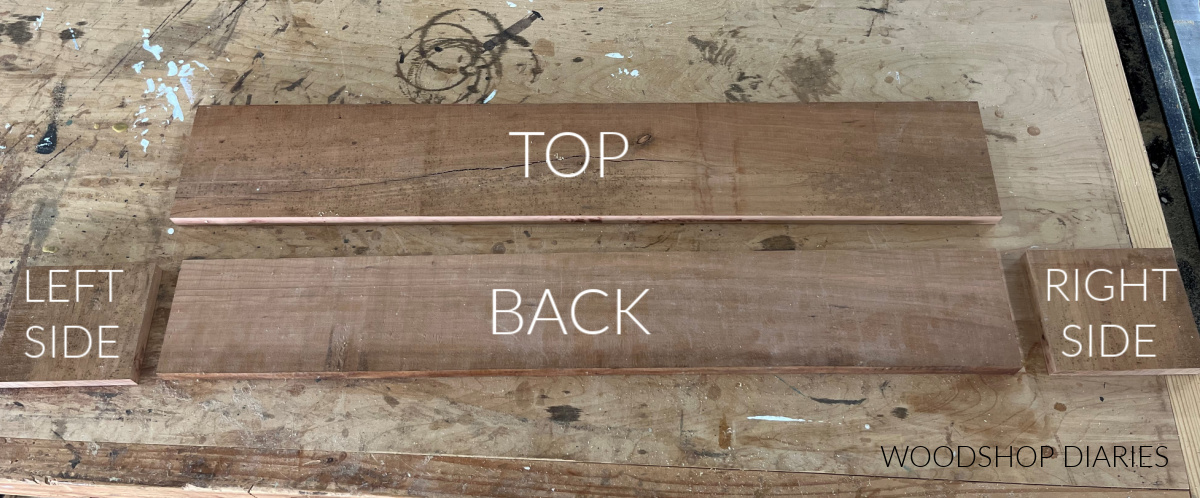
Woodworking Tips: How to Draw a Circle of Any Size

July 1, 2022 by Shara, Woodshop Diaries

In this post, I’m sharing how to draw a circle (or arch) of any size using a few various, simple methods!

Shara Woodshop Diaries drawing radius onto plywood scrap using tape measure on pivot screw

Drawing a circle or a curve may seem like an amateur task, but when it comes to woodworking applications, many times it can be a challenge.

.

You may need to draw a simple arch on a piece of trim, a whole circle for a round table top, or a small radius on the end of a board for a decorative detail.

.

Most likely, these will all need to be different sizes. So it’s good to know some simple ways to draw any size circle (or radius) you might need.

.

Below, I’ll discuss three easy ways to draw a circle or a radius to help you with your woodworking projects:

  1. Using Round Object
  2. The String or Tape Measure Method
  3. The Screw and Bent Wood Method

.

*This post contains affiliate links. See website policies.

A Few Circle Basics Before Getting Started

Let’s go back to back to basic geometry for a minute. What is a circle?

.

A circle is an shape that’s outermost points are all equal distance from the center.

.

Sometimes you will need to draw a full circle–like when making a round table top or a wooden wheel.

Modern round coffee tables

However, there may be times where you only need to draw part of a circle–like an arch or a curve. And in these cases, it’s helpful to know what the radius of that “partial circle” is.

.

The radius is the distance from the center to the outside of a circle. And the diameter is the full distance across the circle through the center point–so it’s 2x the radius.

Diagram of circle showing the radius and diameter from the centerpoint

Now that we have the definitions out of the way, let’s get drawing.

How to Draw a Circle Any Size Using a Round Object

Probably the easiest way to draw a circle is to use an existing round object and trace it. You’re probably thinking, “that’s obvious,” but stick with me.

.

If you don’t need an exact size circle, you can just find any round object–like a roll of tape, a stain or paint can, or a bucket.

Tracing around outside of roll of tape onto plywood surface

However, if you do need a specific size circle, and have a round object slightly smaller, you can use a simple tool to draw an “offset” from that object to create the size you need.

.

There are several ways you can draw an offset, but this Kreg MultiMark Tool is great for this.

RELATED: Must have tools for cabinet and furniture making

.

If I needed a 9″ diameter circle, but I had a stain can that’s 5″, I can set my MultiMark up to draw a 2″ offset and simply run it along the outside of the can.

Using a MultiMark tool to draw an offset around existing round object on plywood

Since the offset goes around the entire circle, you’d need to set your offset to 1x the difference you wanted your RADIUS to be OR ½ the difference you wanted your diameter to be.

.

This is also a great way to draw out “rings” or “donuts” if you need to draw multiple size circles from the same center.

How to Draw a Circle Using a Tape Measure or String

This is my favorite way to draw a circle and it works for both really small circles or huge radii as well.

Tape measure sitting on plywood with circle drawn and radii drawn on workbench

Drawing Entire Circles

To do this, you need a pivot point. If you’re drawing an entire circle, you can use a screw or a nail in the center of where you want your circle to be.

NOTE: If doing this for a table top or tray, put the screw or nail in the bottom side and don’t go all the way through. That way, you won’t have a hole in the top side of your piece.

.

Then, set and lock your tape measure in so that it’s the desired radius PLUS ¼″. (Different screw sizes and tapes may vary slightly. I’d recommend starting at ¼″ and drawing a test circle and see if you need to adjust the tape as needed.)

.

Set the tape measure so that the screw is in the inside corner between the tape and the tape measure body.

Using a tape measure to draw a circle on scrap plywood

Use a pencil in the end of the tape and draw a circle so that the tape measure pivots smoothly around the screw.

.

You can also do the same thing using a string tied around the screw and the pencil…but the tape measure method is a lot quicker.

Drawing a Curve Using a Radius

For large arches or radii, you can also use this method, but it requires a little more involved set up.

.

First, you’d want to clamp or secure the board/piece you want to draw your arch on so that it doesn’t move.

.

You can put the screw or nail in a scrap board and position this relative to the board you are drawing on.

Positioning pivot screw relative to board on workbench to draw radius onto

You’d want to place the screw so that it’s the center of the circle you’re wanting to draw.

.

It will be the pivot point. It’s best to screw, clamp, or secure this board in place as well so it doesn’t move while drawing.

.

Then, simply repeat the pivot for the radius you need. In the picture below, you can see I’m drawing a 27″ radius curve onto this piece of plywood.

Close up showing using tape measure and pivot screw to draw 27" radius curve on scrap plywood

RELATED: Check out how to use this circle drawing method to create and arched headboard here.

Drawing an Arch Using Screws and Bent Wood

This method CAN be used for drawing whole circles, but is best used for drawing out simple arches.

.

I use this method when I’m drawing out a decorative curve on a face frame or trim that may go along the bottom of a dresser, etc.

.

You need at least three screws and some thin wood strips–like ¼″ plywood or some really thin scraps.

Driving screws into plywood

Screw the screws into the board so that two are toward the outside and are about where you want the arch to end and the third is centered side to side and is the height you want the arch to reach.

.

Place your thin wood around the screws like shown below so that it forms an arch, then, trace.

Bending plywood around screws

Note that the thicker the wood, the less “bendy” it is. This will not form a perfect circle and different wood thicknesses will form different shapes.

.

Thinner wood will make a “fatter” shape while thicker wood will make a more “pointy” shape at the middle.

Tracing along bent wood to draw a curve

You can adjust the size and shape of your arch by adjusting the location of the center screw.

Plywood with different size and shape curves drawn from bent wood

Projects that Use Circles and Arches

Now that you know a few simple ways to draw out your round shapes, it’s time to tackle a project or two and test it out!

.

Here are a few fun projects to incorporate these tips into:

Curved Top Lantern
Modern Round Coffee Table
Two Tone Clock
DIY Curved Head Board Bed

If you enjoyed this post and can’t wait to see more, be sure to subscribe to the newsletter to be the first to know when new projects and tips come out!

And if you’d like to save this for later, don’t forget to pin it and share it to your favorite social channel!

Pinterest collage image showing using tape measure to draw circle at top and using Kreg MultiMark tool to draw circle at bottom with text "3 easy ways to draw a circle or curve of any size"

Until next time, friends, happy building!
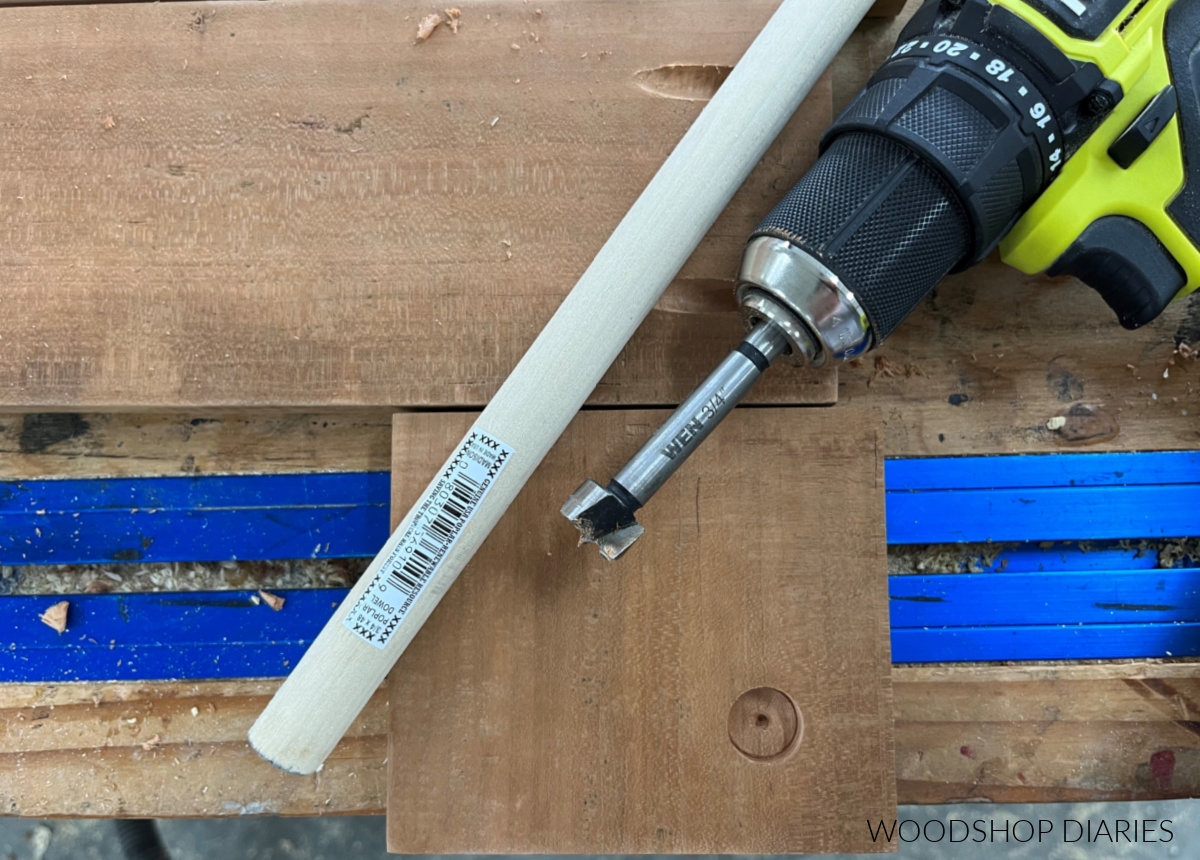
DIY Potting Bench with Wheels

June 11, 2022 by Shara, Woodshop Diaries

In this post, I’m sharing how to build this adorable DIY potting bench with wheels!

*I’ve partnered with KregTool.com to provide you with FREE BUILDING PLANS for this project!

DIY Cedar potting bench with wheels against metal house with plants around it

This simple DIY potting bench cart is not only adorable, but super versatile, too!

.

It would make a great place to display some of your indoor plants outside during the summer, store your potting supplies and repot your plants. You could even use it as a serving cart for outdoor (or indoor!) entertaining and meals.

.

If you’ve got a garden, you could also use it to help you collect your harvest and roll it back to the house.

.

However, you use it, this DIY potting bench is a really fun summertime scrap wood project and I’m sharing the video tutorial here and the plans below:

*This post contains affiliate links. See website policies.

Tools & Materials:

Tools:

  • Miter Saw
  • Drill/Driver
  • Pocket Hole Jig (Kreg 720 used here)
  • 18 ga Nail gun (optional)
  • Level

Materials:

  • (5) 1x3x8 boards
  • (1) 1x2x8 board
  • (3) 1x6x8 boards
  • (1) 1” dowel rod (18” long)
  • (2) 7” plastic wheels (or cut wooden wheels)
  • (2) 2 ½” long bolts + nuts to attach wheels
  • 1 ¼” Kreg Pocket Hole Screws
  • Wood Glue
  • 1 ¼” wood screws
  • 2” wood screws
  • Brad nails (optional)

HELPFUL TIP: I built this project from cedar scraps I had leftover from my raised garden bed project, my bathroom vanity, and some planters.

I listed the complete materials list above, but I encourage you to shop around your workshop and get creative to see what you may already have on hand that you can use for this.

Some Notes Before Getting Started:

Material and Hardware:

If you plan to use this project outdoors, be sure to use outdoor finish (paint, stain, poly, etc) and outdoor/exterior rated hardware.

.

Kreg makes Blue Kote pocket hole screws that are made to be used in exterior projects and with treated lumber. I’d recommend using these type of pocket hole screws if you plan to use this out in the elements.

.

It’s not NECESSARY, but if you plan to use this outside, you may want to consider using treated wood or a rot resistant wood like cedar or teak. You can certainly use untreated pine wood, but it may not last as long.

Overall Dimensions:

The overall dimensions for this project were 19 ½″ deep, 32″ tall, and 48″ long.

DIY Mobile potting bench with wheels overall dimensional diagram showing 32" tall, 19 ½" deep and 48" long

Wheel Options:

Get creative with your wheel options! You can use any size or material you want–as long as it’s at least 4 ½″ or larger in diameter.

.

I initially cut my own wooden wheels for this project (you can see this in the video), but decided to swap them out because I wasn’t able to get them perfectly round haha.

.

However, you could cut your own wheels, use precut wooden rounds, or use a totally different material than wood altogether.

.

I swapped my original wooden wheels for some 7″ plastic lawn mower wheels for this project and they worked great!

Black and white plastic wheel in package shown next to potting bench cart

I encourage you to check out the video for a more in depth visual for how to install them.

Looking for more Summertime DIY Project Ideas?

If you’re interested in more outdoor DIY projects, here’s a few favorites!

mobile bbq cart prep table small
2 Tool Outdoor Grill Cart
DIY Grill Cart
DIY Hammock Stand
Raised Garden Beds with Trellis
Shara sitting on planter bench
DIY Planter Garden Bench

How to Build a DIY Potting Bench with Wheels

Step 1: Assemble Potting Bench Sides

I cut four cart legs from 1x3s with 10 degree mitered ends. Two legs were 2” shorter than the others because the two longer ones will touch the ground, and the two shorter ones will not since they’ll have a wheel installed onto them.

Close up of miter saw mitered to 10 degrees

Then, I cut two pieces with mitered ends not parallel to each other–one shorter one for the top and a longer one for the bottom. All dimensions can be found in the plans here. 

.

I drilled ¾” pocket holes into the ends of the top and bottom pieces.

.

In case you ever wondered if you can drill pocket holes in angled boards, yes, you certainly can.  You just have to place it into the jig at an angle so that the edge is flat on the bottom of the jig.

RELATED: How to use a pocket hole jig

Close up of drilling pocket hole in angled board with Kreg 720 pocket hole jig

I assembled two frames using 1 ¼” pocket hole screws and a little wood glue.  Each frame will have one short and one long leg and I made sure to measure and install the bottom piece parallel to the top.

.

All required dimensions can be found in the plans here.

Diagram of side frame of potting bench cart

I built these MIRRORING each other so that when put together, the short legs are on the same side and the pocket holes all face the inside.

Step 2: Install Bottom Sides

I installed two 1×3 bottom shelf sides even with the bottom piece on the frame using ¾″ pocket holes and 1 ¼″ pocket hole screws. 

RELATED: How to use a pocket hole jig

.

I just eyeballed the angle on these so that they would be somewhat square to the floor and not angled on the leg…this isn’t critical, I just didn’t want the sides here slanted.

Diagram showing attaching bottom shelf sides of potting bench cart

Step 3: Assemble Potting Bench Top Tray

I cut four pieces of 1×3 to assemble the top tray using pocket holes and screws.  One short side piece was inset so that there would be room later to add the cart handle.

Shara Woodshop Diaries assembling top tray using pocket holes and screws on workbench

Step 4: Add Top Tray to Potting Bench Frame

I centered the opening in tray from step 3 onto the frame from step 2 so that it overhung the top of the frame about 1 ½″. Then, I used 1 ¼″ screws to secure the frame to the tray from the inside.

Main frame of mobile potting bench assembled on workshop floor

And that gave me this lopsided cart haha.  Don’t worry…the wheels will fix the lopsidedness later.

Step 5: Add Potting Bench Cart Handle

I cut a piece of 1” dowel rod to fit between the sides of the top tray.  I used some of these black timber screws to install this because I liked the black hardware accent, but a regular wood screw would work here as well.

Driving timber screw to attach cart handle

Step 6: Add Slat Supports

I cut some small scrap strips and glued and nailed them onto the bottom and at the top to give me somewhere to set the slats onto.

Shara nailing support pieces at top of potting bench cart

Step 7: Add Wheels to Potting Bench

I mentioned in the notes above that I started out cutting my own wooden wheels and changed my mind. You can choose to use any type of “wheel” for this.

.

However, no matter what kind of wheels you want to use here, this is how I attached them.  I set my cart up on my table saw because it’s a flat, level surface. 

.

Then, I raised the short side of the cart up until the bottom shelf was level and clamped the wheels onto the short legs at that height.

Close up of drilling out center hole of plastic wheel on potting bench leg

I drilled a hole through the center of the wheel and through the leg, then used a bolt just slightly smaller in diameter than the hole I drilled and added a nut on the end.

.

I tightened it just barely snug so it was tight enough to hold the wheel in position, but loose enough to still be able to spin. 

Step 8: Add Shelf Slats

Then, I cut some 1×6 cedar fence picket pieces for the shelf slats.  You could certainly use regular 1x6s or even plywood, or whatever width boards you want for this, but fence pickets are a fraction of the price of any of those options, so that’s what I used here.

.

I cut 7 for the top and 5 for the bottom and set them in place on the little supports. 

Completed cedar potting bench with handle and wheels against black and white siding with plants around

I did come back and sand these as they were a little rough, but I didn’t attach them so they’d be easy to remove and clean off later if I got potting soil on them or whatever. 

.

However, you could certainly nail or screw these in if you’d like. And now, this cart is ready for use!

Shara Woodshop Diaries pushing DIY potting bench cart with wheels on porch

I didn’t apply any finish to this cart—I’m still undecided on whether it’s going inside or staying on the porch or what’s happening with it, so for now, I’m leaving it as is. 

.

But, you can apply a paint, stain or poly as desired—just make sure it’s an exterior finish if you plan to use it outside.

RELATED: How to finish DIY furniture projects

Adorable cedar potting bench cart with plastic wheels and bottom shelf

Building Plans:

I’m sharing the project dimensions, cut list, and detailed instructions in the FREE building plans here on KregTool.com.

.

I hope you enjoyed this fun and simple summertime build and if you want to build your own, don’t forget to head to KregTool.com for the free building plans for this and hundreds of other DIY projects.

.

If you liked this DIY potting bench with wheels, be sure to subscribe and follow along for tons more projects coming soon.

If you’d like to save this for later, don’t forget to pin it or share it to your favorite social channel!

Pinterest collage showing completed DIY mobile potting bench at bottom with overall dimensional diagram at top with text "how to build a potting bench with wheels"

Until next time, happy building! 🙂

How to Cut Crown Molding Laying Flat

June 9, 2022 by Shara, Woodshop Diaries

In this post, I’m sharing how to cut crown molding laying flat using a compound miter saw!

Crown molding placed flat in miter saw

Crown molding is used add a decorative trim where walls meet a ceiling, on the tops of furniture pieces, and even on some window and door trims!

.

It really adds a lot of dimension to whatever you choose to put it on. The only downside…it can be confusing to cut correctly.

.

I shared in a previous blog post here how to cut crown molding standing up in a miter saw.

.

I’ve used that method for cutting crown molding for years and found it to be pretty simple, easy to remember, and straightforward.

.

But just in case you ever run into a case where your saw is too small to cut it standing up, or you just want to try things differently, here’s an alternative way to cut crown molding laying flat in a miter saw.

.

*This post contains affiliate links. See website policies before starting any project.

What You’ll Need to Cut Crown Molding Laying Flat:

  • COMPOUND Miter Saw (this method only works if your saw can both MITER AND BEVEL your saw)
  • Crown Molding
  • Measuring Tape
  • Speed Square (helpful to double check angles on miter saw and molding)

Types of Crown Molding

Before we dive into the specifics, it’s important to know what kind of crown molding you are working with.

.

The angles you need to use to cut crown molding laying flat will vary based on the specific style and shape of the crown you are using.

.

There are thousands of sizes and styles of crown molding.

.

However, the most common type of crown molding you find precut in the lumber yard and the big box stores is this profile:

Close up of side profile of crown molding on workbench

You’ll usually find this profile in several sizes with different rises and runs. The rise is how TALL the molding is when it’s installed and the RUN is how DEEP the molding sticks out once installed.

.

Note that this style particular style is taller than it is deep, which means that the inside angles can’t be 45 degrees.

.

They’re actually 38° and 52°.

.

So the following instructions work for this type of crown molding.

Close up of crown molding standing up on workbench showing rise and run and angles at corners

There are other, less common molding styles that may be 45 degree angles (or something else), but most likely, your off-the-shelf crown will be 38-52.

.

If you aren’t sure what yours is, you can measure your rise and run dimensions and do a little geometry to figure out your molding’s angles.

How to Set up Your Miter Saw To Cut Crown Molding

For basic 90° corners, there are some “magic numbers” you want to remember. But, luckily, most miter saws have them specifically marked to make it easier.

MITER ANGLE: 31.6°

BEVEL ANGLE: 33.9°

.

*NOTE: THIS ONLY APPLIES IF THE CROWN MOLDING IS A STANDARD 38/52 DEGREE MOLDING.

.

The miter is the pivot angle of the blade. Notice that the 31.6 degree is specifically marked.

Close up of miter saw mitered to 31.6 degrees

The bevel angle is the blade tilt. You typically adjust this on the back of the saw and some saws will tilt both directions and others will only tilt one direction.

.

Note that the 33.9 degrees is specifically marked.

Close up of miter saw beveled to 33.9 degrees

Now you can make your cuts! Just make sure to pay close attention to the direction of the cut on the piece and whether you are cutting for an inside or an outside corner.

Cutting Inside Corners

Inside corners are like the corners that form on the interior of a room. They form more of an “enclosed” type space.

.

When installing crown molding on an INSIDE CORNER, you need to keep two things in mind:

  • The bottom is longer than the top
  • The back side is longer than the front
Image showing cut end of crown molding for inside corners

So, take note that when you make your cut, that the saw will cut the piece this way.

.

Here’s a real like example of these pieces on an inside corner for a visual:

Arrows pointing to inside corners of crown molding on kitchen cabinets

You can flip the piece around in the saw, or swap mitering from the left or right side (as long as you keep the angle the same) in order to cut the piece the correct direction.

.

Below is an example–note that the bottom of the crown molding is toward the back, so when the cut is made, the piece on the left of the blade will be cut for an inside corner–bottom longer than top and back side longer than front.

Close up of crown molding placed in miter saw to make an inside corner cut

Cutting Outside Corners

Outside corners are the corners that “stick out” into a space.

.

When cutting crown molding for OUTSIDE corners, you need to keep two things in mind:

  • The top is longer than the bottom
  • The front side is longer than the back
Close up of cut end of crown molding for outside corner

So, take note that when you make your cut, that the saw will cut the piece this way.

.

Here’s a real life example so you can get a visual:

Arrow pointing to outside corner of crown molding on built in library shelves

You can flip the piece around in the saw, or swap mitering from the left or right side (as long as you keep the angle the same) in order to cut the piece the correct direction.

.

Below is an example–notice that the top of the crown is toward the back and when cut, the piece on the right will be cut for an outside corner. The top will be longer than the bottom and the front will be longer than the back.

Close up of crown molding placed in miter saw for an inside corner cut

And, the piece on the left would be an inside corner cut–so, you can see, there are multiple ways to set up your cuts. Flip it around as needed and just pay attention to cut them the way you intend to.

For Cuts on Corners Not 90 Degrees

To be honest, once you steer away from 90 degree corners, cutting crown molding flat in the miter saw gets a little complicated.

.

You can find a chart here with some numbers that may help, and another here, or, you can figure out the angles yourself using a little trigonometry.

.

However, I find that it’s a lot easier to just cut it standing up in the saw instead.

Shara Woodshop Diaries holding crown molding in miter saw standing up

I have a full post on how to cut crown molding standing up in the miter saw here. That post also includes tips on how to adjust as needed if your walls (or cabinet, etc) are a little off square.

.

I also explain how to splice two pieces of crown molding together in that post as well, so it’s full of additional info you might find helpful while cutting crown molding 🙂

.

Once you’ve cut your molding, it’s time to install it. Check out this post to learn what type of nail gun is best to use to install moldings and trims.

.

And if you’re ready to practice your cuts, here are some project ideas you can try them out on!

  • DIY Window and Door Trim
  • DIY Library Desk
  • DIY Glass Door Linen Cabinet
  • DIY Entertainment Center

I hope you found this helpful and if you’d like to see more woodworking basics, head over to the Getting Started Page!

.

To stay up to date on the latest projects, plans, and DIY tips, be sure to sign up for the FREE Woodshop Diaries newsletter:

Don’t forget to pin this or share to your favorite social channel to save it for later!

Pinterest collage image showing crown molding flat in miter saw at bottom and close up cuts for inside vs outside corners at top with text "how to cut crown molding"

Until next time, friends, happy building! 🙂
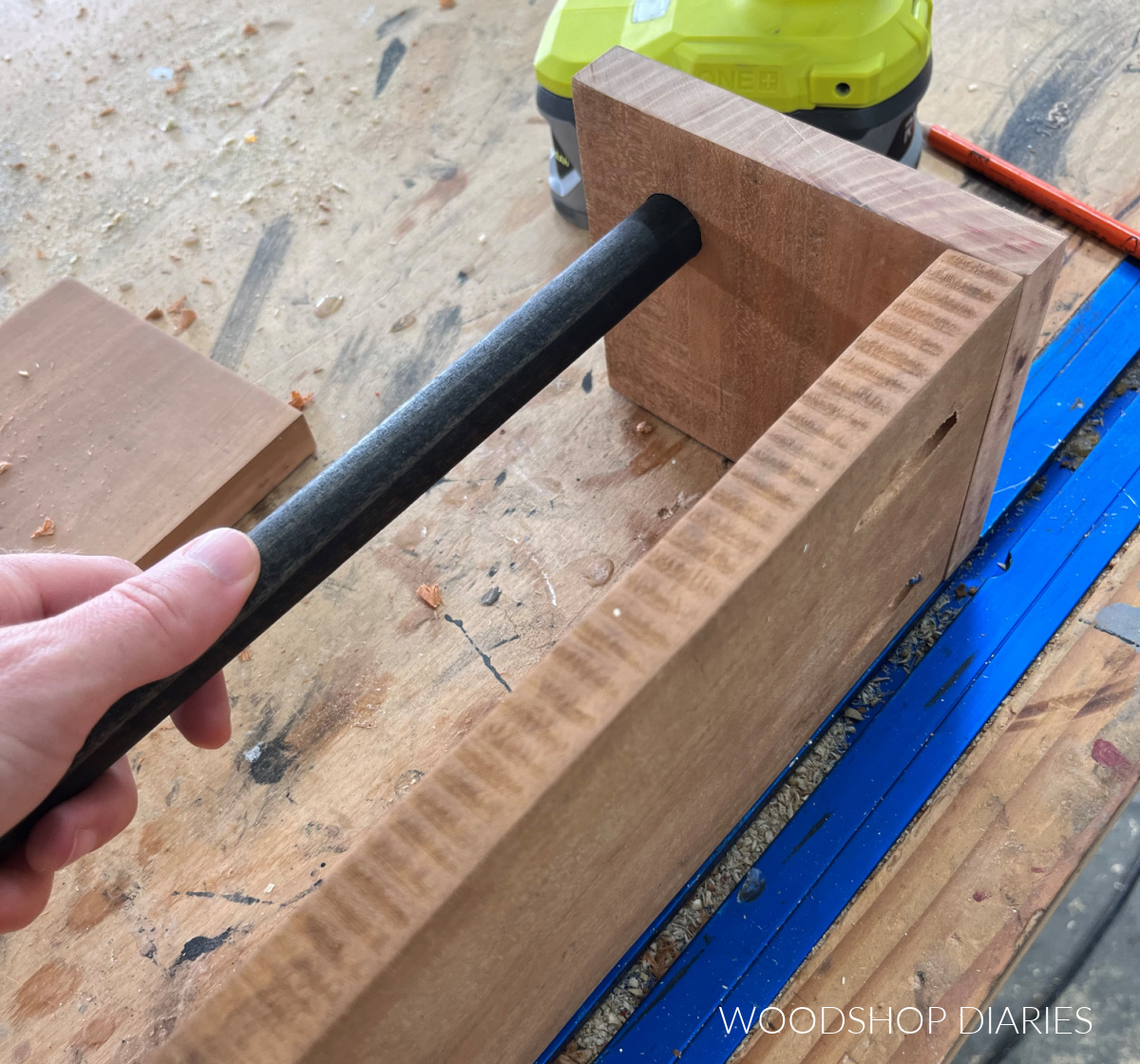
DIY Hallway Makeover–Before & After

June 6, 2022 by Shara, Woodshop Diaries

In this post, I’m sharing all the details on my DIY hallway makeover project!

Shara Woodshop Diaries sitting on built in bench in hallway with white walls and wall trim and black doors with wooden bench seat top--Hallway makeover "after" image

Our home has this hallway that’s like an “off shoot” from the main hallway with all the bedrooms.

.

This hallway seems kind of random, but it’s the only way to have an access door to the side of the wrap around porch, so I guess that’s why they added it.

.

The storage closets here are nice to have, but the little nook between them wasn’t being used to it’s full potential. The gray and white felt kind of boring. And there was so much blank wall space, it was just kind of…blah.

.

All in all, I thought this hallway could use an update, so I’m sharing how I gave it a modern makeover with you here!

.

I’m detailing the entire before and after here in this video, and sharing the before and after photos below!

*This post contains affiliate links. See website policies.

The Hallway Before:

This hallway in our home had a few things going on—It had two small closets and an exterior door that goes out to the porch. 

.

I’m not usually too fond of closets and doors, (remember how I transformed this closet into open shelves??) but I kind of wanted to keep these particular closets.

.

It’s where I keep my vacuum, files, and a bunch of my crafting and sewing supplies—which are nice to be able to hide behind a door haha. 

Before image of hallway with dark gray walls and white doors--The DIY hallway makeover "before"

However, I did want to dress them up and give them a little more visual interest.

.

The previous homeowners had set this nook between the closets up as a desk area with just a desk top, but we didn’t use it, so it felt like a waste of space. So I also wanted to rework it into something a bit more functional for us.

The DIY Hallway Makeover Plan:

Paint:

One of the biggest changes I wanted to make here was painting it a bright white. A fresh coat of white paint would definitely brighten things up and allow the natural light from the exterior door to reflect more.

.

To give the space some contrast, I also wanted to paint the doors a rich black color. Black doors with white walls is my favorite combination!

Trim:

In addition to paint, I planned to remove and redo the existing door trim with a more “custom” version of trim that I like to use when I trim out my doors and windows.

Close up image of window trim with crown molding and half round

You can check out my step by step guide for trimming windows and doors here.

Bench/Storage:

And since we didn’t use the nook space as a desk, I thought it would be a more practical idea to make this a storage bench. We may not actually use the bench seat very often, but a little extra storage is always nice to have 🙂

Accent Wall(s):

The nook space seemed like the perfect place to create an accent wall that adds a little “custom character” without being too much.

.

So after the bench was in, I wanted to create a picture frame molding accent on these three walls to give it a high end look without being too busy.

DIY Hallway Makeover Process:

Demo:

First thing was first, I began removing everything from the space.  The desk top was one of those prefab hardwood butcher blocks, so while the color was a little too dark for me, I saved it to sand it down and use it for the bench top later.

.

I removed all the baseboards and door trim and salvaged some of the door trim pieces to use later. But they definitely needed some sanding first.

Shara Woodshop Diaries ripping baseboards off walls in hallway

And then, I patched several holes and uneven spots in the drywall to get it ready for paint.

Trim and Paint:

With everything out of the way and the walls sanded nice and smooth, I painted the walls a bright white (color: SW Pure White). I also removed the doors and primed and painted them PPG Onyx Black.

Shara Woodshop Diaries painting walls in hallway nook

Between coats of door paint (because waiting for coats to dry between priming and painting both sides took a while!), I moved on to replacing the trim on the doors.

.

I’ve covered in detail how to trim out windows and doors in this post, so I won’t go into detail here, but I basically used 1x4s for the sides and top, then added some crown molding around the tops and some half round to cover the seams where the sides meet the top.

Shara Woodshop Diaries installing new door trim on hallway doors

I LOVE how classy and high end this trim style looks and it’s really an easy way to customize your home by updating the trim.

.

After the bench was installed, I also went around and added simple 1×6 boards for the baseboard and painted all the trim the same color as the walls–SW Pure White–except I painted the trim semi gloss and the walls satin.

Shara Woodshop Diaries installing baseboards around built in bench in hallway nook

I love using 1x6s for baseboards–it’s inexpensive, but they’re clean lined and thick so they look really nice and fit any style.

Built In Storage Bench:

I’ve detailed the storage bench plans and how to modify them for your own space in this post here.

.

However, basically, I was able to reuse the desk top that was here previously, sand it down, and set it on top of a large plywood box that I built to fit into this nook.

Shara Installing flip top bench seat into built in bench in hallway nook

I made this a flip top style bench so I can flip it open and store things (mostly fabric, batting, and bulky stuffing I use in my sewing projects haha) inside easily to put this space to some kind of good use.

.

I painted it white to blend into the walls but left the seat top a natural color. I love the warmth and contrast that gives without being too dark.

White walls with decorative base cap trim and built in bench with black doors and wooden bench seat

You’ll notice, I wrapped the baseboards around this box to make it look all built in and seamless.

.

Once that was in place, I added the final touch above it–the accent wall trim!

Picture Frame Molding Accent Wall:

I’ve been wanting to try picture frame molding on my walls for a while, but wanted to start small because I’m really indecisive and wanted to make sure I loved it before doing a large wall or a whole room.

Shara Woodshop Diaries nailing picture frame molding onto nook walls in hallway

This little bench nook seemed like the perfect spot to try this out!

.

I used base cap molding for this and laid out my pattern with shorter boxes on top and taller boxes on bottom.

.

I detailed the installation process and how to figure all your cuts in this post.

Picture frame molding trim completed and painted on hallway nook wall

It really added a subtle, but beautiful addition to an otherwise plain wall and I can’t wait to hang some plants or artwork in here–after I finally decide what I want haha.

Hallway Makeover Final Reveal:

And now this bright, modern, and functional hallway looks like a completely different space!

Close up of built in storage bench in hallway nook after hallway makeover

I LOVE walking by here now and noticing the little details and seeing the bright reflection of the sunlight from the door off the white walls.

.

This bench is a great place to hide away some of my bulky crafting supplies and will also make a great place to sit down and take off or put on shoes as we head out this door OR just to sit down and read a book in the afternoon sunshine.

Shara Woodshop Diaries opening bench seat in hallway nook after DIY hallway makeover project

Products & Paint Colors Used in DIY Hallway Makeover:

Paint Colors:

  • Doors: PPG Onyx Black in Satin
  • Walls & Wall Trim: SW Pure White in Satin
  • Baseboards and Door Trim: SW Pure White in Semi Gloss

Products:

  • Closet Door Handles
  • Exterior Door Handle
  • Deadbolt

For a list of supplies to build bench seat, see DIY built in bench seat post here. For a list of supplies to install wall trim, see DIY picture frame molding accent wall tutorial here.

.

I hope you enjoyed this transformation and if you’d like to keep up with the latest projects and plans, be sure to subscribe to the newsletter below to stay up to date!

If you want to save this project for later, be sure to pin it or save it to your favorite social channel!

Pinterest collage image showing hallway before image at top and DIY hallway makeover after image at bottom with text "BEFORE AND AFTER DIY Hallway makeover"

Until next time, friends, happy building!
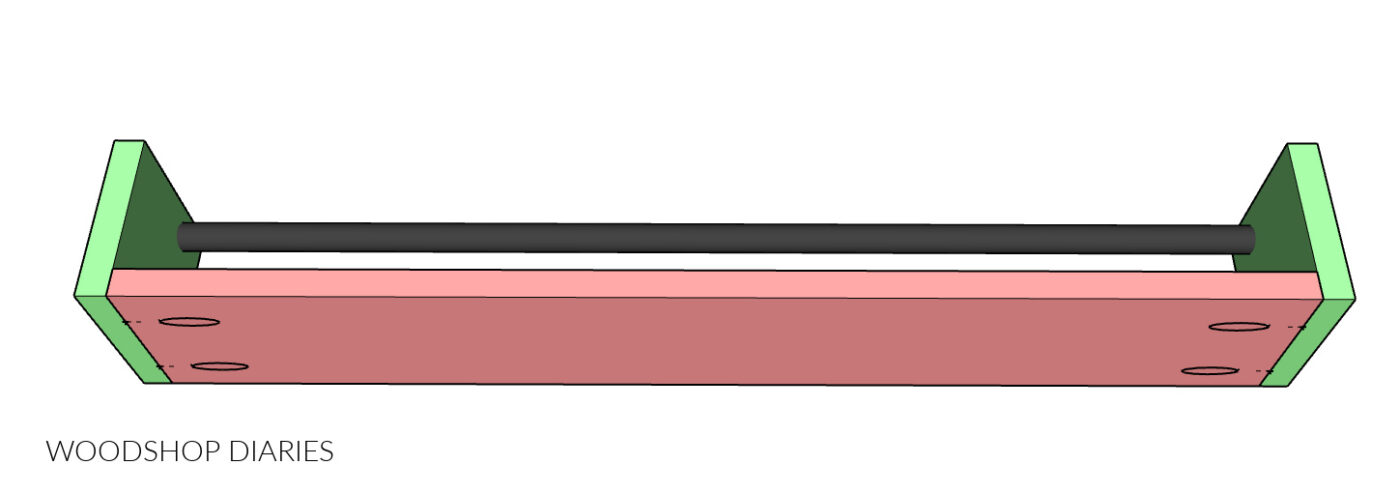
DIY Picture Frame Molding Accent Wall

June 3, 2022 by Shara, Woodshop Diaries

In this post, I’m sharing how to install an elegant DIY picture frame molding accent wall!

*This post is sponsored by The Home Depot as part of the ProSpective Program.

White wall with picture frame molding accent trim and black doors around built in bench

I recently gave our hallway a makeover with a fresh coat of paint, updated trim around the doors and a new custom DIY built in storage bench between the closets.

.

However, when I finished with all of that, I felt like something was still missing here in this nook space.

.

This three sided nook space above the built in bench seemed like the perfect place to try out a DIY picture frame molding accent wall as I’ve been wanting to add one somewhere around our new home (because I LOVE THEM!).

.

You can check out the full before and after hallway makeover in this post and grab the plans to build a built in storage bench here.

.

Check out the video tutorial here and the step by step instructions to make your own DIY picture frame molding accent wall below:

*This post contains affiliate links. See website policies.

Tools & Materials:

Tools:

  • Ryobi ONE+ 18V 7 ¼″ Sliding Compound Miter Saw
  • Ryobi ONE+ HP 18V AirStrike Brad Nailer
  • Measuring tape
  • Caulk gun

Materials:

  • Base Cap Molding (amount will vary based on the size of your project)
  • Construction adhesive
  • Painters caulk
  • Wood filler
  • Paint
  • Scrap wood spacer block (optional, but helpful)
  • 1″ brad nails

Some notes about the project:

Get creative with picture frame molding layout!

The exact measurements used here will vary based on the size of the wall you are working with and the exact design you are implementing.

.

There is a ton of freedom when it comes to accent walls, so feel free to get creative and don’t worry too much about “right” and “wrong.”

.

In my case, I added picture frame molding to the nook space above a built in bench. However, you can definitely take this all the way to the floor if you don’t have a bench in your space.

.

You can make your “boxes” smaller, larger, or alternate big and small boxes however you want.

Use Adhesive AND Brad Nails

Because my pieces weren’t all going to line up on a wall stud, I chose to use BOTH construction adhesive and brad nails to install it.

.

The adhesive will hold the pieces in place for the long term. But the brad nails will hold the pieces in place until the adhesive dries.

.

Brad nails into the drywall alone won’t hold the pieces securely without going into a stud.

Check the Length of Your Nails

HOWEVER, the length of the nail is important here!

.

You want the nail to go into the drywall to hold the trim piece in place. However, you don’t want it to go THROUGH the drywall because you don’t want to take a chance on the nail running into any wires or plumbing inside the walls.

.

Check your drywall thickness and your trim thickness before beginning and make sure the nail isn’t longer than these two added together.

.

In my case, my drywall was ½″ thick and my trim was about ⅝″ thick (on the thickest part–where I nailed), so I used 1″ long brad nails.

Painting Before or After

I painted my walls white first (this whole hallway had been gray, so I painted the whole thing at once), then installed the trim and let it dry. Then, I came back and painted just the trim to match the already painted walls.

.

However, you can wait and paint everything after the fact if you’d like–whichever you prefer.

How to Install a Simple Picture Frame Molding Accent Wall

Step 1: Measure Wall and Decide Layout

This is the hardest part because it’s going to be different for every one and every wall. So I can’t tell you your exact measurements–you’ll need to figure that out for yourself.

.

However, I can help you think it through 🙂

  • First, measure your wall(s) width and height. Only include the WALL space in the height–don’t include any existing trim or trim you plan to add–like baseboards and/or crown molding.
  • Second, decide the spacing between boxes/adjacent walls. I used a scrap 1×4 block as a “spacer,” so I made my gaps 3 ½″ wide (the width of a 1×4).
  • Third, decide how many boxes you want in each direction. In my case, I did two rows of boxes, 1 column wide on the sides and 3 columns wide on the back wall.

.

Now, sketch it out and do a little math to figure out what width and heights to make your boxes. You can make your boxes equal sizes, or make some wider and some narrower. At this point, it’s up to you!

.

Here’s an example using my back wall space. My wall space was 76″ tall and 70″ wide. I made all my spaces between the molding 3 ½″.

Diagram example of picture frame molding box sizes

So I took 70″ – (4 x 3 ½″) = 56″ of space to divide among my boxes. I didn’t want them even, so I made the two on the outside 12″. So, 56″ – (2 x 12″) left me with 32″ for the middle box.

.

I did the same for the height to determine the height to make my boxes.

.

NOTE: Be sure to take into consideration outlet, doors, windows, etc. that you may need to work around for this. Try to avoid putting trim in places that will have to be cut around or notched out to fit around obstructions.

Step 2: List Out Your Molding Cuts

Once you have your layout, and your box sizes, count out how many pieces of each length trim you will need.

.

In the example above, I needed:

  • (6) pieces 54 ½″ long
  • (4) pieces 32″ long
  • (6) pieces 11″ long
  • (8) pieces 12″ long

.

Now, I also had the two side walls as well, but to keep things simple, let’s just discuss one wall in this example.

.

With a list of all your cuts, now you can determine how many pieces of trim you will need to purchase.

.

I used base cap molding for this and bought 8′ sticks. However, you may find them in longer lengths.

Step 3: Cut Picture Frame Molding Pieces

Now the fun part–cutting! Since you already have your cut list from step 2, this part is easy.

.

Base cap molding has a decorative profile, so in order for these to fit together properly at the corners, you’ll need to cut the ends with a 45 degree miter.

.

For this project, I set up my new Ryobi ONE+ 18V Cordless 7 ¼″ Sliding Compound Miter Saw to make these cuts right outside on the porch. Having a cordless miter saw for doing trim work around the house–or on the go–is such a game changer.

Marking base cap molding using measuring tape on miter saw

Since my shop is detached from the house, it’s such a time suck to go back and forth to and from the shop just to cut a little off a piece, then come back and test it and go back out to cut a little more.

.

After trimming out my bathroom during our recent remodel and making a thousand trips across the backyard to the shop, I vowed never to do any more trim work in this house without having a cordless miter saw to set up right where I’m working.

.

This compact saw is capable of cutting up to a 2×10 board, but is small enough to easily carry around and it works with the same 18v batteries I use every day in my other Ryobi 18V tools.

.

If you want a compact, yet powerful cordless miter saw option to be able to use wherever you’re already working, I’d encourage you to give this one a look!

Using cordless miter saw to cut base cap molding at 45 degree miter

I cut each piece on my cut list with 45 degree mitered ends (with the “fat part” of the molding always the long end) and labeled them to make sure I kept them organized.

Step 4: Install Picture Frame Molding on Wall

Like I mentioned previously, I used BOTH construction adhesive AND brad nails to secure these pieces in place.

.

The adhesive will actually HOLD the pieces in place, but the brad nails will secure them until the adhesive dries.

Shara Woodshop Diaries applying construction adhesive to base cap molding

You want to make sure and install the bottom row level.

.

Check to see if your baseboard is level. If so, simply use your spacer block to space your bottom pieces 3 ½″ up from the top of the baseboard.

.

If it’s not level, use a pencil and a long level to draw a level line approx 3 ½″ (or whatever distance you decided to make your spacing) up from the baseboard to install your bottom row along.

.

I started at the bottom corner, applied a bead of adhesive to the back of the bottom piece, and used my 1×4 spacer block to position it 3 ½″ up from the bench and 3 ½″ in from the edge of the wall.

Bottom first piece of picture frame molding attached to wall

Then, I used my Ryobi ONE+ HP 18 ga AirStrike Brad Nailer to brad nail this piece in place. I added the piece closest to the wall next using my spacer block to keep it spaced evenly away from the corner.

Shara Woodshop Diaries using nail gun to install picture frame molding using scrap wood spacer block

Then, I applied adhesive to the two other pieces to complete this box and stuck them on the wall. I got them positioned to where all the corners lined up before brad nailing these last two pieces.

Shara Woodshop Diaries brad nailing picture frame molding box to accent wall

I repeated, working my way around adding pieces of each box keeping 3 ½″ spacing.

.

It’s important here to make sure that the brad nails aren’t going THROUGH the drywall. You want them to go INTO it, but not through.

.

This Ryobi ONE+ HP brushless 18 gauge nailer is a great option for this as it is capable of shooting the shorter nails that I needed, and it has depth adjustment settings so that I can make sure my nail shoots just right below the trim surface. 

Shara Woodshop Diaries installing base cap molding accent wall

That way it won’t go through the drywall, and it makes puttying over the holes easier later as well.

.

As a side note, I’ve been using the older version of the 18 gauge AirStrike for several years now and have loved it.  (You can see me using it in tons of my previous posts.) 

.

So if you’re curious what’s different with the new HP brushless version of this nailer, it has a much quicker response time, it delivers 60% more power than the older version and the nose is so much easier to see where the nail will hit so your placement is much more accurate.

Close up of Ryobi HP AirStrike 18 ga nail gun on workbench

I’ll link it here if you want to check it out for yourself.

.

After all the pieces of all the boxes are nailed to the wall, allow to dry. Check your adhesive for specific dry times.

Step 5: Caulk and Finish

Apply wood filler to the nail holes and apply painters caulk along all the molding at the corners and where the trim meets the wall.

Shara Woodshop Diaries applying caulk to picture frame molding on accent wall

Don’t skip this step. Caulk and putty will cover any gaps and make this trim look seamless even if the walls are a little uneven.

.

Sand the wood filler smooth and allow the caulk to dry. Then, apply paint as desired.

.

Now the boring, blank wall looks like a high end, custom built accent!

.

As long as you get your bottom row level and use a spacer block to keep your spaces consistent, this is a pretty simple project. The hardest part is just figuring out the sizing!

Completed DIY picture frame molding accent wall in built in bench nook painted white

I love how much character this simple DIY picture frame molding accent wall project added to this plain, white nook. I have a feeling I’ll be trying this again on a bigger wall space very soon!

.

For now, I’m off to the shop to get building again 🙂

.

If you enjoyed this project and want to keep up with all the latest plans, projects, and happenings, be sure to subscribe to the newsletter below!

And if you want to save this project for later, don’t forget to pin it or share it to your favorite social channel!

Pinterest collage image showing Shara installing picture frame molding using nail gun at top and completed accent wall at bottom with text "DIY picture frame molding accent wall"

Until next time, friends, happy building 🙂

DIY Built-In Storage Bench

June 2, 2022 by Shara, Woodshop Diaries

In this post, I’m sharing how to build a built in storage bench and how to add a flip top to easily access to the inside!

Shara Woodshop Diaries lifting lid of flip top storage bench in hallway nook

This simple flip top storage bench was part of an overall hallway makeover project where I updated our hallway with fresh paint, new door trim, this built in bench, and a decorative wall trim (you can see in the image above).

.

If you’d like to see more, you can check out the hallway makeover before and after here and learn how to install the picture frame molding wall treatment here.

.

But right now in this post, I want to share the details on building the built in bench and how to modify it to fit your space!

.

I’ve got a video tutorial here and the step by step building plans below:

*This post contains affiliate links. See policies.

Tools & Materials:

Tools:

  • Circular Saw
  • Cutting Guides (optional, but helpful. Learn how to cut plywood in this post)
  • Miter saw (optional, but helpful)
  • Pocket hole jig
  • Drill/Driver
  • Jig Saw
  • Nail Gun (brad or finish to replace/install trim. Learn the difference in brad and finish nailers in this post)
  • Stud Finder
  • Sander

Materials:

  • ¾″ plywood (cabinet grade–birch or maple work well for painted or stained projects)
  • Pre-Made Butcherblock countertop OR 2x material to make your seat top
  • Trim for sides and bottom (You can get creative with this and do something different, but I used 1x6s for the baseboard and cove molding for the sides)
  • Edge Banding (optional)
  • 1 ¼″ pocket hole screws
  • 2″ & 2 ½″ wood screws
  • Wood shims
  • Brad and/or finish nails
  • (1) pair butt hinges for flip top seat

Notes About the Build:

Simple Cabinet Style Plywood Bench Design

There are SO many ways to build a built in storage bench. You could frame out the whole thing with 2x4s and then just cover it with plywood or trim pieces.

.

You could add drawers or doors instead of a flip top. I actually built some kitchen nook built ins several years ago with doors here.

.

However, this particular bench is a simple, flip top style made basically as a large plywood box. I was able to build this in the shop, then carry it inside and slide it into place as one big piece and just add the top.

Computer diagram of basic simple storage bench box with trim at bottom and a wooden butcherblock top

So, this is definitely NOT THE ONLY WAY to do this, but it’s a very simple way 🙂

Tips on Measuring Your Space

Make sure when measuring the space that you want your bench to go into that you measure it at the back and the front and take the smallest measurement.

.

Walls are never perfectly square and corners are usually the worst. In my case, the nook I was sliding my bench into was about ½″ wider at the back corners than the front corners.

.

But I had to make my box small enough to fit through the front corners in order to sit back into the nook. It’s better to build a little too small than too big. You can always cover gaps with trim.

Storage Bench Seat Top Options

I used a pre-made butcherblock countertop for the bench seat and cut it to make part of it stationary and part of it flip open.

Close up of butcherblock top used as a bench seat on built in storage bench

You can find these in a variety of sizes and wood types, or, if you’d rather, you can certainly use this tutorial to glue up your own top in whatever size you want.

.

If you have little ones and are worried about smashed fingers or you’d like to make your flip top stay open on it’s own, you can find several options online for soft close hinges/lid supports. However, I didn’t add one in my case.

Recommendations for Long Spaces

You can make this bench as a “built in” and put it in a nook, or in a corner, etc. Or, you can also build this as a stand alone bench as well.

.

However, I wouldn’t recommend going much wider than 6 ft. unless you add a middle support OR make two smaller boxes to go side by side.

Posts you may find helpful to build this built in storage bench:

  • How to glue up your own top
  • How to cut plywood sheets
  • How to apply edge banding
  • How to use a pocket hole jig
  • Brad vs Finish vs Pin Nailers–What’s the difference?
  • How to finish raw wood furniture

How to Build a Built In Storage Bench

Step 1: Measure Space and Determine Bench Size

Remove existing trim/baseboards in your space to get everything down to the bare walls.

Shara Woodshop Diaries removing baseboards in hallway nook to prep for built in

Take detailed measurements of the space. If you are adding this into a nook, make sure to measure at both the back and the front and take the smallest measurement.

.

For example, my wall was 70 ¾″ wide at the back and 70 ¼″ wide at the front of the nook.

Diagram showing where to measure for built in bench inside nook

To allow for some additional wiggle room, subtract approximately ¼″ from the smallest measurement and that’s the overall width to make the bench. In my case, I went with 70″ wide.

.

Determine how tall, deep, and wide you want your bench to be based on your space. Pay attention to outlets, light switches and other things that might interfere with the bench that you will need to work/build around.

.

I made my bench BOX 18 ½″ tall, 21″ deep, and 70″ long overall.

Overall dimensional diagram of built in bench box--70" wide 18 ½" tall and 21" deep

If your space is longer than 6′, I’d recommend making two separate boxes OR at least adding a middle divider for extra seat support over such a long span.

Step 2: Cut & Assemble Storage Bench Box

Cut ¾″ plywood pieces as needed to assemble the bench box the size you need from step 1.

RELATED: How to cut plywood sheets

.

You’ll need:

  • (2) Sides 18 ½″ x 20 ¼″
  • (1) Bottom 20 ¼″ x (Overall width – 1 ½″)
  • (1) Front 18 ½″ x Overall Width
  • (3) Plywood strips (widths of these strips isn’t critical) the same length as you cut the bottom panel
  • (2) Top Side Supports (see below)

If desired, apply iron on edge banding to the TOP edge of the front panel as this will be exposed in the final product when the lid is lifted.

RELATED: How to apply iron on edge banding

.

I assembled this box using ¾″ pocket holes and 1 ¼″ pocket hole screws.

RELATED: How to use pocket holes to build furniture

.

I drilled pocket holes into the ends and along the front edge of the bottom panel, across the front edges of the side panels, and into the ends of the three plywood strips.

Diagram showing how to assemble the bottom and side panels of bench box together

I installed the bottom panel and the plywood strips between the side panels.

Diagram showing where to attach back supports of bench box

Then, I laid the front panel face down, and placed the box on top to secure it with pocket hole screws.

.

Note that these pocket holes are on the outside of the box. Since this was going into a nook, these holes will be hidden. However, if you will have an exposed side with your bench, these pocket holes can certainly be placed on the INSIDE instead of the outside so they aren’t seen.

Diagram showing how to attach front panel of bench box

If desired, you can add a ¼″ plywood back panel, but I didn’t since there were several outlets on the back wall I wanted to have access to and I didn’t want to cut out all the holes for them in a plywood panel. A back is totally optional.

.

Since I was adding a flip top seat, I needed somewhere on the sides to attach the stationary portion of the top, but didn’t want anything that would run the full length across the front. So, I measured and cut two scrap plywood pieces to fit on the sides.

Shara Woodshop Diaries installing side top supports into built in bench box frame

I installed these using pocket holes and screws. These can vary in size as needed, but I made mine approx. 7″ wide.

Step 3: Install Built In Storage Bench

I slid my bench box into the nook and used 2 ½″ wood screws to secure it through the top, back support into the wall studs behind and on each side.

.

Use a stud finder to mark the studs and use use shims where needed to ensure the box is square and level.

Shara Woodshop Diaries securing built in bench box to wall studs

I hit three studs along the back and one on each side of the bench.

Step 4: Cut Flip Top Bench Seat

I actually used a pre-made butcher block for this bench seat. The previous homeowners used this nook as a desk and they had installed this as the desk top. I removed it, sanded it down, and reused it for the bench top.

.

However, you can find these at the big box stores in different sizes and wood types if you’d like to use one for this.

.

OR, you can simply purchase some 2x material and use this tutorial to glue up a top the size you need. That tutorial is for making table tops, but it’s the same process for any kind of “top” you need to make 🙂

.

Trim down the top–whatever you decide to use for this–to fit your bench. I made it the same length as my overall bench box and 1″ deeper so it would overhang the front edge by 1″. If you have an exposed side, you may want to add a little for overhang on your side, too.

.

After it was trimmed to size, I flipped it upside down and marked out where I wanted to cut for the flip top.

Diagram showing the cut outs for the bench top flip section

I used a circular saw to cut along these lines (I had to “plunge cut” the back line–CAREFULLY lower the saw down along the line–since it wasn’t a through cut).

Shara Woodshop Diaries cutting out flip top section of bench seat

Then, I flipped it back over and used a jig saw to finish cutting the corners nice and square.

Shara Woodshop Diaries using jig saw to cut corners of flip top section of seat

Step 5: Install Built In Bench Top

I wanted to allow for wood movement, so I drilled some oversized holes along the top supports in the bench box.

Using a drill to drill holes to install bench top

Then, I placed the “U shaped” stationary portion of the top onto the bench. I used 2″ screws with washers larger than the holes through the bottom, up into the top.

Close of of 2" screws and washers

I used a pair of butt hinges (the exact size of these isn’t critical, as long as they are strong enough to handle the weight/size of the top) to attach the flip top.

.

Check out the video here for some helpful tips and a visual of how I installed these hinges to the top.

Shara Woodshop Diaries using butt hinges to attach flip top portion of bench seat

If desired, you can also add some soft close supports to the lid.

Step 6: Trim & Finish

I told you to remove the baseboards and trim in step 1, and now that the bench is in place, it’s time to cut and replace the trim and baseboards as needed. This is what really gives it the “built in look.”

.

I used 1x6s here for some simple baseboard trim, but you may choose to match your existing baseboard if you have something different.

Nailing trim in place around built in bench box

Use brad or finish nails to secure the trim in place.

RELATED: What’s the difference between brad and finish nails?

.

I had some gaps between the wall and the sides of my bench, so I cut some cove molding to fit here in the corners. You can get creative and use quarter round, 1x material, etc to trim out the corners or even add a decorative design along the front or sides of the bench as desired.

Detail view of cove molding installed at corners to hide gaps between wall

If you also have gaps along the bench top, you can certainly trim these out with cove, half round, or another trim as desired.

.

Caulk, putty, and sand as needed. Check out this guide for my top 5 secrets to making DIY furniture look more professional!

.

Then, finish bench and top as desired. I primed and painted my bench box to match my walls here (SW Pure White) and applied some Minwax Helmsman Poly to the bench top to protect it, but keep its natural color.

.

But obviously, you can paint or stain yours however you wish! 🙂

.

And now you have a simple, functional, built-in storage bench!

Shara Woodshop Diaries sitting on built in bench seat in hallway with white walls and black doors with wall trim

I love this little addition to our hallway, but this would also be great for a mudroom, or under a window in a bedroom or anywhere you have a little space that could use a little extra seating and storage.

.

This is a super simple design, so feel free to get creative to add your own custom touches with unique trim, pops of color, or some interesting hardware.

Built in bench seat in hallway between two closets with black doors and base cap molding on walls

If you’d like to check out the whole hallway makeover, I’ve got those details here.

.

I hope you enjoyed this built in storage bench project and if you want to stay up to date on the latest projects and plans, be sure to subscribe to the newsletter!

And if you would like to save this for later, feel free to pin it or share it you your favorite social channel!

Pinterest collage showing overall built in diagram at top and completed bench seat built in at bottom with text "DIY simple built in storage bench"

Until next time, friends, happy building!
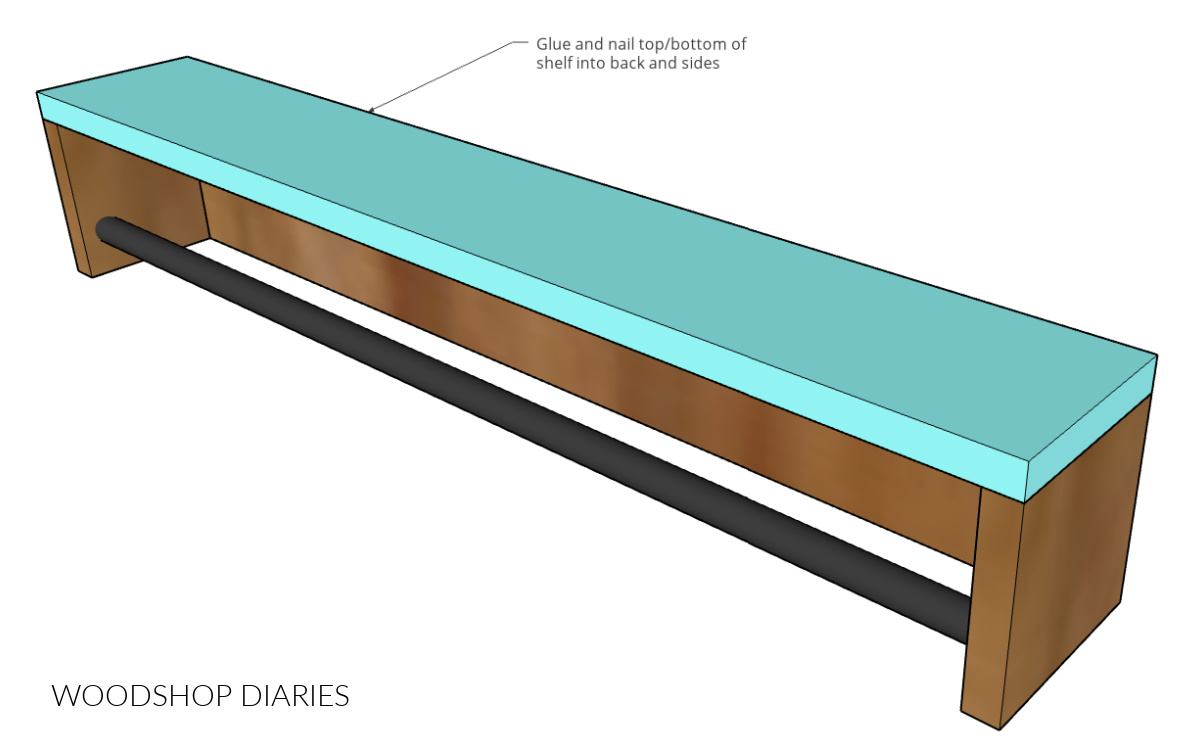
DIY Outdoor Ceramic Grill Cart

May 28, 2022 by Shara, Woodshop Diaries

In this post, I’m sharing how to build a DIY Outdoor Ceramic Grill Cart!

Mobile wooden grill cart with two ceramic Kamado Joe Grills on open shelves with accessories stored below

I built this for my Dad to fit his two Kamado Joe Classic III Grills.

.

But, this design is easily modified to fit your needs. It’s got open shelves for storage below, an enclosed cabinet for storage in the middle, and can fit either one or two ceramic grills. 

.

(My Dad has two, but that’s only because one of them has a broken lid and he didn’t want to get rid of it because it still grills okay haha.  Whatever, Dad.)

.

I’ve got the printable plans linked below with all the dimensions to build your own, but if you want to see how it came together, I have a video tutorial here as well.

**This post contains affiliate links. See website policies.

Tools & Materials:

Tools:

  • Miter Saw
  • Drill/Driver
  • Pocket Hole Jig
  • Jig Saw
  • Clamps
  • Table saw
  • Measuring Tape
  • Square

Materials:

  • (2) 2x2x8 boards (I used treated)
  • (15) 1x6x8 boards (I used treated)
  • (13) 2x4x8 boards (I used treated)
  • (1) pair butt hinges
  • (1) door latch
  • ¼″ washers
  • 1 ¼″, 2″, 2 ½″ & 3″ exterior wood screws
  • 2 ½″ exterior pocket hole screws
  • 2 ⅞″ black timber screws (optional)
  • (8) heavy duty 4″ caster wheels (I used two of these–they come in sets of four)
  • (2) concrete pavers to set grill on

Grab the DIY Outdoor Ceramic Grill Cart printable plans here!

Some Notes about the DIY Outdoor Ceramic Grill Cart Build:

Design and Material Choices:

This design was actually inspired by a similar cart I’ve seen built by Smoking Dad BBQ on YouTube.  However, to keep things simpler, I made a few modifications to materials used, changed a few dimensions, and kept this design a little more open than his.

.

I built this cart using basic treated lumber–2x4s for the frame, 1x6s for the top, sides, and shelves, and 2x2s for the shelf supports.  

Treated wood laid out on concrete floor ready to build outdoor grill cart with

I would have preferred to use cedar, but it would have cost about 3-4 times as much and since this was already a couple hundred bucks in materials, I opted to stick with treated.

.

You’re welcome to use any weather/rot resistant wood for this build. Treated wood is great for outdoor projects, but shouldn’t come in direct contact with food. So use a pan or a cutting board for food prep–not the actual wood top.

Cart and Grill Sizing:

This cart was built with the intention of using with TWO Kamado Joe Classic III grills. The cut out hole opening to insert the grills was 23″ diameter with an 8 ½″ wide box cut out the back for the box on the back of these grills.

Diagram of cut outs for ceramic grill bodies in cart top

Different styles and brands of grills may require different spacing/sizing and clearance specifications, so BE SURE TO CHECK YOUR GRILL TO MAKE SURE IT WILL WORK and make the modifications necessary for yours to fit.

.

The distance between the top of the shelf and the top of the cart is 16 ¾″. We used a concrete paver underneath the grill to go between the grill itself and the wooden shelf below, so this sat the grill up an additional inch or so. If you want your grill raised, lowered, then adjust the height of the shelf as desired.

.

Overall project dimensions are 38″ tall, 32″ deep, and 74″ wide.

computer diagram showing overall DIY outdoor ceramic grill cart project dimensions of 38" tall, 32" deep and 74" wide

A Word of Caution:

And as a blanket disclaimer–yes, there is a risk of fire. To state the obvious, grills are hot, and wood burns. 

.

Wooden grill carts are very common (just Google it), but, yes, they do come with a risk of catching fire.  But so does grilling next to a house, on a wooden deck, or anywhere else reasonably close to combustible materials. 

.

So, use common sense, check your own grills specifications on clearance space, check often that the outside of your grill and the surrounding wood isn’t getting too hot, and always grill with a fire extinguisher close by—wooden cart or not—sparks and ash when opening the lid can ignite a fire even if the outside of the grill is cold as ice.

.

Basisally, attempt at your own risk and take necessary precautions to avoid a fire. Okay, now that that’s out of the way, let’s get building.

How to Build a DIY Outdoor Ceramic Grill Cart

Step 1: Assemble the Front and Back Grill Cart Frame

These ceramic grills are really heavy, so I wanted to make sure to build a sturdy frame.  I’ve detailed all the dimensions in the plans, but I cut down several pieces of 2×4 to assemble the front and back frames.

.

I made this frame 32” tall and 72” long and I laid these pieces out on the workbench to get a better visual of where everything went. 

Close up of timber screws being used on cart frame corner

I used black timber screws at the corners just for some decoration, but I used basic 2 ½” decking screws for the rest of this assembly.  I could certainly have used the timber screws throughout, but they’re a little pricey, so I used them sparingly haha.

.

After the corners were attached, I screwed the 2×4 for the middle shelf between the front 2×4 pieces to make what looks like a capital “H.”  Then I moved these pieces to the floor and screwed together the rest of the pieces to make the entire frame.

Shara Woodshop Diaries driving screw to assemble grill cart framing on concrete floor

I made two identical frames just like this—one for the front and one for the back.  Note that the middle shelf is 16” below the top—you’d need to adjust this as needed to raise/lower your grill if building your own.

Step 2: Attach Front and Back Frames

I cut 12 pieces of 24” long 2×4 and drilled 1 ½” pocket holes into the ends of each.

RELATED: How to use a pocket hole jig

Close up of Kreg Blue Kote pocket hole screws

Then, I assembled the two frames together by screwing these pieces between them with 2 ½″ Kreg Blue Kote pocket hole screws. 

Shara Woodshop Diaries driving pocket hole screws to assemble main grill cart frame

These screws are made for use in exterior applications where regular zinc coated pocket hole screws would rust and corrode.

Step 3: Add Casters to Make Grill Cart Mobile

After the main frame was assembled, I flipped it upside down and attached the caster wheels. 

.

I added these heavy duty caster wheels to the corners using some washers and 2 ½” exterior screws.  And at first, I thought that 4 was enough, but I ended up going back and buying 4 more to add later. 

Close up of driving screws to install red heavy duty caster wheels on corner of grill cart frame

I added this second set of four to the corners of the middle section framing.

Step 4: Line the Middle Section of Grill Cart Frame

For the middle cabinet and shelves, I used 1×6 treated wood.  Now, let me clarify—I used 1x6s, not 5/4 decking boards.  These boards were actually ¾” thick. 

.

You could use thicker decking boards, but these were quite a bit cheaper and worked just fine.

.

I cut three of these to line the inside of the back middle section.  There were some small gaps between boards—which was intentional—so I just kind of clamped these in place and evenly spaced the gaps, then screwed these in using 1 ¼” decking screws.

Driving screws to install back panel slats of grill cart cabinet

After the back was in, I did the same for the sides of the middle section, this time, using 4 boards on each side.

Step 5: Add Bottom Slats

For the bottom, I cut four pieces of 1×6 to place across the 2×4 frame pieces on the inside.  I came back and notched out the front piece at the corners so it came closer toward the front and the spacing wasn’t so big.

Shara Woodshop Diaries placing center cabinet bottom slats in place

If you wanted to add a shelf inside this cabinet section later, you can install some more 1x6s across the middle framing this same way.

Step 6: Install Shelf Supports into Grill Cart

I bought a couple of treated 2x2s to use as the shelf supports. 

.

I cut and screwed them into the frame using 2 ½” long screws on the outside pieces and 3” long screws on the inside.

.

NOTE: Since these screws needed to go through the side panel pieces and into the framing behind them, the inside screws needed to be a little longer.

Shara Woodshop Diaries screwing 2x2 shelf supports into side cabinet of grill cart

I installed these so that they were ¾” down from the top of the framing so that the shelves would sit down into them and be flush across the top.

.

I decided that the top shelves needed an additional support to hold the weight of the grills.

.

So, I cut two more 2x4s to go in the middle of the top shelves.  The bottom shelves won’t be holding hundreds of pounds of “grill weight,” so I didn’t add them there—just the tops.

Diagram showing shelf supports installation locations on top shelf of cart assembly

I installed these ¾” down from the top and centered side to side with pocket holes and screws.

Step 7: Add Shelf Slats

Then, I cut 16 shelf pieces to place across the supports in all four sections.  I notched out the front, outside corners so that they kind of “wrapped around” the corner legs and made the spacing not look so odd haha.

Shara Woodshop Diaries placing notched shelf board into bottom supports of mobile grill cart

Step 8: Add Top and Cut Out Ceramic Grill Shaped Holes

At this point, I moved on to the top.  I cut 5 pieces of 1×6 to go on the top so that they would overhang both sides, the front, and the back by 1”.

.

I installed the front and back pieces first leaving 1” overhang on the front and sides, then spaced the rest of the pieces out between them to figure out how wide to cut my last piece.

.

I spaced these approx. ¼” apart and installed them with 2” decking screws into the framing of the cart.

.

I used the table saw to rip my last piece to fit and installed it the same way.

Shara Woodshop Diaries installing top boards of grill cart using 2" wood screws

Then, I needed to cut out the hole for the grills.  These grills are round, but they have a box sticking out the back side.  So this cut out needed to accommodate both the grill body, but also needed a cut out for the box to fit.

.

I took measurements of dad’s grill and ended up cutting out a 23” diameter circle with an 8 ½” wide section off the back.

Shara Woodshop Diaries using a tape measure to draw circle on top boards for ceramic grill cut out

I cut this out with a jig saw and sanded the edges to smooth things out as best I could.

Step 9: Add Cabinet Door

My door here and the door in the plans are different. That wasn’t intentional…but I made a mistake haha.

.

Truth be told, I wanted to buy 8 foot 1×6 boards and when I went to the store, they were out, so I had to buy 10 foot boards and I hadn’t figured what I needed for 10 foot boards, so I had to do some quick calculations in the store and I miscalculated and ended up being one board short.

.

Because it’s a 20 minute drive one way to town to get another board, I decided to make do with what I had leftover at this point.

.

I ended up cutting what was left of my 1x boards down to make a panel and cut some strips off a 2×4 to kind of “frame them out” to make the door. 

Treated lumber door frame for ceramic grill cart on concrete floor

This worked fine and I like the design, but in the printable plans for this project, I show a simpler way of making the door simply using 1x6s with some horizontal slats between them.

.

Anyway, once the door was together, I installed it with some butt hinges and a simple latch so it’ll stay shut.

Close up of butt hinges and door latch used to install door onto outdoor grill cart cabinet

At this point, I loaded it into the back of the truck and drove it over to my parents house to get the grills in and set it up in its new home.

.

We set these grills up on some concrete paver blocks so that they weren’t sitting directly on the wood. 

Completed DIY outdoor ceramic grill cart with two Kamado Joe grills placed on shelves

Anyway, now Dad is ready for all his summer time grill outs! Let the summer begin!

.

I really hope you enjoyed this DIY outdoor ceramic grill cart build and if you’d like to keep up with all the latest projects and videos, don’t forget to subscribe to the newsletter below!

And if you’d like to save this project for later, be sure to pin it or share it to your favorite social channel! Don’t forget to grab the plans here!

Pinterest collage image showing overall dimensional diagram at top and Shara holding lid of Kamado Joe grill on mobile cart open at bottom with text "how to build a mobile grill cart"

Until next time, friends, happy building!
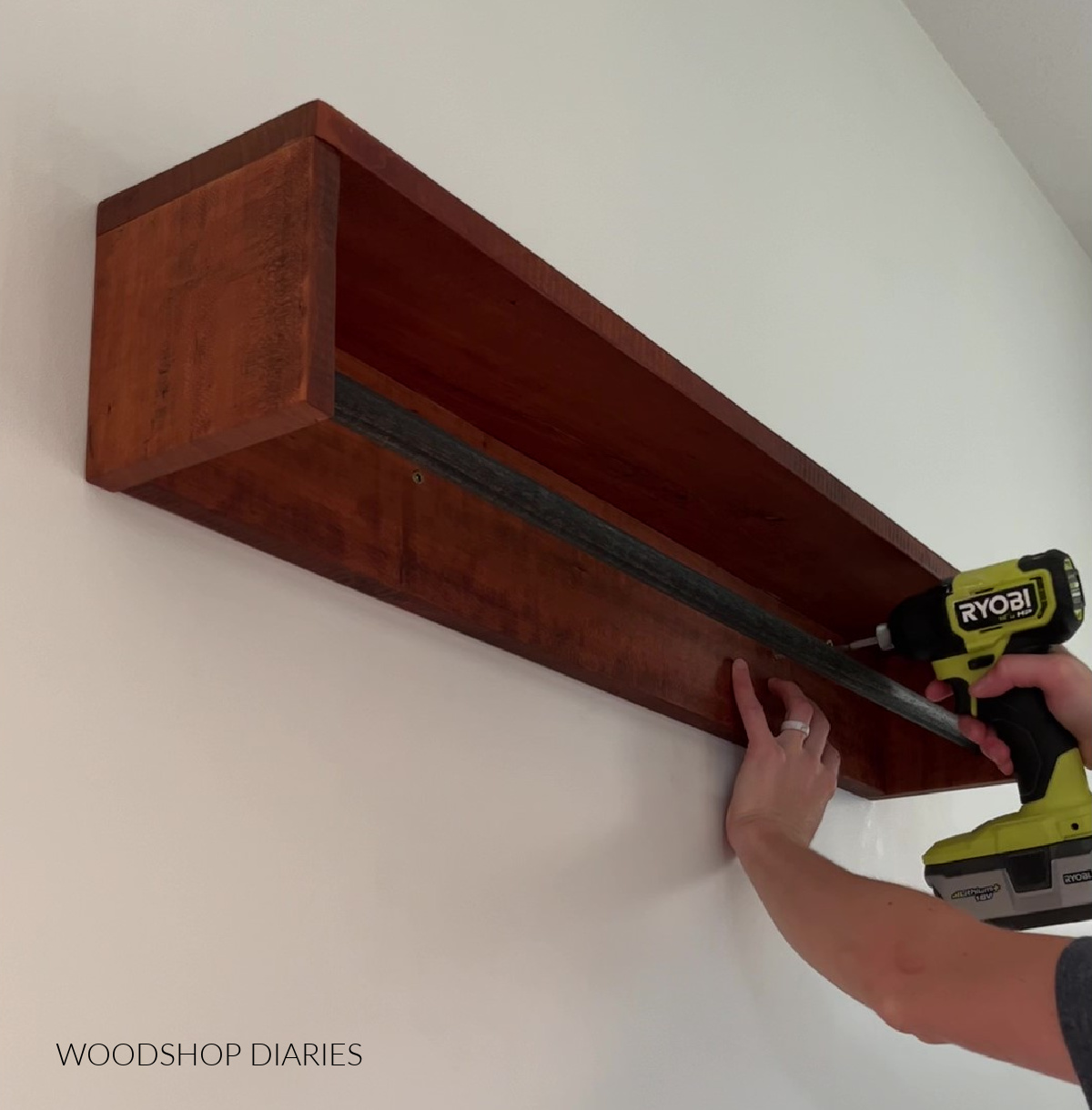
DIY Storage Bench with Drawer

May 21, 2022 by Shara, Woodshop Diaries

In this post, I’m sharing how to build a DIY storage bench with drawer!

This would be perfect for a bathroom, the end of a bed, in an entryway, or for storage in a kids room.

Black and wood DIY storage bench with large drawer against white wall

I actually built this little bench to go in our bathroom for some extra towel storage and to cover a hole in the floor where the tub used to be–but that’s another story for another day haha.

.

Anyway, this is obviously a versatile project and a pretty easy build, so let’s dive right in and get building 🙂

How to Build a Storage Bench with Drawer

I’m sharing the plans below, with a step by step tutorial and also a video here as well:

*This post contains affiliate links. See website policies.

Tools & Materials:

Tools:

  • Circular saw
  • Kreg Rip Cut and Kreg Accu-Cut Cutting guides (optional, but helpful)
  • Drill/Driver
  • Kreg Pocket Hole Jig
  • Miter saw
  • Nail gun (optional–used for adding trim pieces)
  • Table saw (optional–for cutting dadoes in drawer box)

Materials:

  • (1) sheet ¾″ plywood (I used maple)
  • ¼ sheet ¼″ plywood
  • (1) 2x2x8 board
  • (2) 1x2x8 board
  • (2) 1x3x8 board
  • (1) pair 16″ ball bearing drawer slides
  • 1 ¼″ pocket hole screws
  • 1 ¼″ brad nails
  • Edge banding
  • Wood Glue
  • Wood Filler

Grab the printable plans for this DIY Storage Bench with Drawer here:

Some Notes About the Build:

The trim on the bench sides and drawer front is optional and, if desired, you can use plywood strips for this vs 1x2s and 1x3s instead.

.

You can find the full cut and materials list with diagrams in the plans here.

.

You can also replace the ¾″ plywood top with a thicker top (like 2x material, OR double up on the plywood) if you’d like to make this larger.

.

Overall dimensions for this DIY storage bench with drawer project are 19″ deep x 19 ¼″ tall x 36″ wide.

Overall dimensional diagram of storage bench showing 36" wide, 19" deep, 19 ¼" tall

Some posts you might find helpful in the build:

  • How to make your own 2x2s
  • How to cut plywood sheets
  • How to use a pocket hole jig
  • How to apply iron on edge banding
  • How to build and install drawers
  • How to finish raw wood furniture
  • 5 tips to professional looking DIY furniture

Step 1: Assemble Storage Bench Side Panels

I cut all my plywood pieces according to the cut list in the plans before getting started.

RELATED: How to cut plywood sheets with a circular saw

.

The side panels consist of 2×2 legs with a ¾″ plywood panel between them.

RELATED: How to make your own 2x2s


So, I cut four 2×2 legs to 18 ½″ long, and installed a 15 ½″ square plywood panel between them using ¾″ pocket holes and 1 ¼″ pocket hole screws.

RELATED: How to use a Kreg Pocket Hole Jig

Close up of driving pocket hole screw into side panel of bench side

NOTE: It’s easier to sand pieces BEFORE assembling 🙂

RELATED: 5 Secrets to Professional Looking DIY Furniture

.

I installed the panel so that these sides are flush across the inside–so they’re inset on the outside to allow for trim pieces to be added later.

Step 2: Assemble Storage Bench Frame

Once the sides were together, I assembled the main bench frame using 1x2s.

.

Now, I actually used ¾″ plywood strips ripped to 1 ½″ wide–which is the same size as a 1×2. So whether you want to use plywood strips or actual 1x2s, either way works fine.

.

If you’d rather make this a little “beefier,” you could also substitute the 1x2s for 2x2s as well.

Diagram showing 1x2s attached between side panels of storage bench to make frame

I assembled these 1x2s between the side panels with ¾″ pocket holes and 1 ¼″ pocket hole screws.

.

Note that the front pieces are inset ¾″ from the front edge of the legs and the bottom piece is 3″ off the ground.

Step 3: Install Top and Bottom Supports

Then, I used 1x3s at the top to add some support and to give me somewhere to attach the top later.

.

Now, again, I actually used ¾″ plywood strips ripped to 2 ½″ wide for this–so you can use plywood or actual 1x3s.

Diagram showing top bench supports installed into frame with pocket holes

I installed one at the front and one at the back of the top of the bench frame using ¾″ pocket holes and 1 ¼″ pocket hole screws.

.

Then, I cut and installed a ¾″ plywood panel using pocket holes and screws as well.

Unfinished storage bench frame sitting on workbench

And at this point, if you wanted to skip the drawer, the frame is complete and it’s ready for a top! But, I love building drawers so I went ahead and added one here 🙂

Step 4: Install Drawer Slides into Bench

I installed a pair of 16” ball bearing drawer slides into the opening ¾” inset to allow for an inset drawer front later.

Close up of driving screw to install drawer slide

RELATED: How to build and install drawers and drawer slides

Step 5: Build and Install Drawer in Storage Bench

Now, it was time for my favorite part of every build—the drawer!

.

My process for assembling drawers is pretty much always the same. You can check out how I build drawers here. The DIY storage bench plans have the exact measurements needed here.

.

I cut my four drawer sides from ¾” plywood and used a table saw to cut a ¼” dado ¼” deep ½” up from the bottom of each piece.

.

Just for a cleaner look, I like to edge band the tops of my plywood drawer boxes.  This is totally optional, but here’s a guide for how to apply iron on edge banding if you’re interested.

.

I drilled ¾” pocket holes into the ends of the front and back pieces of the drawer box making sure to drill fairly close to the top and bottom so that the trim I add in a minute will cover them.

Shara Woodshop Diaries assembling drawer box on workbench

Then, I assembled the drawer box using 1 ¼” pocket hole screws with the ¼” plywood bottom installed into the dado.

Close up of installing drawer box onto drawer slides

I installed this drawer box onto the slides in the opening of the bench.  I have a complete guide on how to measure, build and install drawer boxes that I’ll link in here for details on all things related to drawers.

Step 6: Install Side and Drawer Front Trim

For the trim, you could use leftover plywood strips if you wanted—especially if you’re painting, but I used solid 1x2s for the sides and 1x3s for the drawer front because I did have some scraps already on hand for this.

.

I simply cut four pieces of 1×3 to piece together to glue and nail onto the drawer box front so that when put together, it left ⅛” gap around all sides. 

.

I flipped the bench on its back and just glued and brad nailed the pieces on the front.

Using nail gun to secure drawer front pieces on drawer of storage bench

After the drawer front trim was on, I cut some 1x2s to trim the sides at the top and bottom and also just glued and nailed these pieces in place.

Storage bench base completed with trim added ready for paint

I puttied and sanded over all the joints on the trim and the nail holes, and gave it a final sanding after it was dry.

Step 7: Paint/Stain Storage Bench

I removed the drawer to make painting easier and I primed and painted the bench base and the drawer front separately.

RELATED: How to finish raw wood furniture without a sprayer

.

I cut the top from ¾″ plywood and I chose to leave it a natural color. I just applied iron on edge banding along the edges and gave it a few coats of clear poly.

.

Since this DIY storage bench was two-tone, I found it easier to finish the pieces separately this way.

.

Before adding the drawer back in after painting/polying, I went ahead and placed the top on and used 1 ¼” screws through the top supports to secure it.

Shara Woodshop Diaries securing top onto bench base

Once the top was on, I added a drawer pull to the drawer and installed it back into the bench and it was ready for use!

.

This DIY storage bench with drawer will be great for storing towels in our new bathroom, but would also work well for for blankets in a living or bed room, shoes, gloves, or hats in an entryway, or for toys in a kids room.

Completed black and wood storage bench with drawer pulled open

I hope you enjoyed this simple build and if you’d like to build your own, don’t forget to grab the plans here!

.

If you enjoyed this project, be sure to subscribe and follow along because I have so many new building projects coming soon that you won’t want to miss out on!

And if you’d like to save this project for later, I’d love if you’d pin it or share it to your favorite social channel!

Pinterest collage showing dimensional diagram at top and Shara Woodshop Diaries sitting on bench at bottom with text "how to build a storage bench with drawer"

Until next time, friends, happy building ????

How to Install a Granite Countertop on Bathroom Vanity

May 12, 2022 by Shara, Woodshop Diaries

In this post, I’ll share how to easily install a granite countertop to a bathroom vanity!

Close of of granite countertop with sinks and faucets in bathroom

Recently, I built a double sink bathroom vanity to install in our new bathroom after it was remodeled.

.

I shared the building plans for the vanity here, and now it’s time to share how we installed it, and added the granite top and sinks.

.

Check out all the posts and updates from the bathroom remodel here:

  • DIY Bathroom Vanity
  • DIY Tile Shower Remodel

But first, where do I find a granite countertop for bathroom vanity?

You can purchase granite, marble, quartz, etc type countertops precut to various standard sizes online, but I actually just reached out to a local granite shop and had them custom cut me a top for the vanity I built from a scrap piece they had in their yard.

.

This was actually significantly cheaper than the ones I saw online and I was able to take my pick from their remnants to get a color I liked.

.

They provided ceramic sinks with the top and they cut the holes for them and the faucets as needed, and then we put it all together on the new vanity…which I’ll show you how below 🙂

.

If you have a local granite countertop supplier, I highly recommend checking with them about using remnants (scraps) for your bathroom vanity countertop.

How to Install a Granite Countertop

Once we had the vanity, the top, and the sinks, it was time to install it. You can check out the video for this here (this also includes some info about the shower install as well!), and the step by step process below:

*This post contains affiliate links. See policies.

Tools & Materials:

Tools:

  • Caulk gun
  • Stud finder
  • Drill/Driver
  • Level
  • Pipe clamp (you’ll have to have a ¾″ pipe as well)

Materials:

  • DAP DynaGrip Mirror, Marble, Granite Construction Adhesive
  • 2 ½″ – 3″ wood screws
  • Scrap wood (at least one piece longer than the width of your sink)
  • Clips/Brackets (if required–see note below)
  • Kitchen and Bath sealant/caulk

NOTE: Read and follow manufacturer’s instructions for installation of your own countertop and sinks if and where applicable. Our countertop and sinks didn’t come with any instructions, so we were on our own and we found this adhesive to work well in our case.

.

But, while this worked excellent for our granite top and ceramic sinks without any additional fasteners, some manufacturer’s may specifically call out and require the use of mechanical fasteners/clips/brackets for installing the top and/or the sinks.

.

If in doubt, use appropriate fasteners in addition to the adhesive shown here.

Step 1: Secure Bathroom Vanity to Wall Studs

If you already have an existing vanity and are simply replacing the top, you can likely skip this part if the vanity is already in place.

.

However, in my case, I had built this new vanity and before I added the top, I needed to screw it to the wall studs.

.

I used a stud finder to locate at least two studs in the wall behind where the vanity was going.

Shara Woodshop Diaries securing vanity to wall studs in bathroom

Then, I used a level and shims (as needed) to level the vanity and used 2 ½″ wood screws through the top, back support to secure it to the wall.

.

The vanity needs to be securely fastened before attempting to install a granite countertop.

Step 2: Apply Adhesive to Top of Vanity

Now…hear me out–there are many ways to do this and many opinions as well. This is not the only way, the only product, or the only method to use for this…it’s just one way 🙂

.

In the past, I’ve used clear silicone to attach granite vanity tops (just the top…NOT the sinks) and it worked great.

.

However, in this case, I opted for a construction adhesive for a stronger, more secure hold since this was a fairly large top (6 ft long).

Close up applying DynaGrip to top of wooden vanity

I applied a bead of DAP DynaGrip Mirror, Marble, and Granite adhesive around the top of the vanity according to the instructions.

.

This is easy to apply using a basic caulk gun.

Step 3: Place Granite Countertop

We (“we” as in multiple people, because it was heavy!) carefully placed the granite countertop on the vanity and centered it was needed.

.

The adhesive isn’t an “instant stick” so you have a little time to get it positioned where you want it.

Shara and Danny setting granite countertop onto top of vanity

You can clamp it, but it was so heavy, once I got it in position, I just let it set. It’s so heavy, it stayed in place on its own.

.

If you clamp, clamp lightly because if there is some uneven/unlevel-ness and you clamp too hard, the granite could crack.

.

Before letting it completely set up, check around the edges for any gaps and clean up any squeeze out according to the instructions on the tube.

.

The vanity should be level already from step 1, so hopefully there aren’t any huge gaps, but if you notice any large gaps around the edges, use some shims to fill the void and give the top some support at that spot.

.

I let it sit for about an hour before adding the sinks.

Step 4: Install Sinks on Countertop

NOTE: Some sinks will come with specific instructions for installation. FOLLOW MANUFACTURER’S INSTRUCTIONS.

.

However, we were given ceramic sinks with our countertop and they didn’t come with instructions, so we were kind of on our own haha.

.

We found that the adhesive held really well, but for extra security, you may need to also add appropriate hardware (like brackets/clips) in addition.

.

To install the sinks, I applied a bead of DyanGrip Mirror, Marble, and Granite to the tip around the top.

Shara Woodshop Diaries applying DynaGrip around top lip of sink

It’s VERY helpful to have an extra set of hands for this. I asked Danny to hold the sink under the countertop in position.

.

I placed a scrap 2×4 across the sink hole cut in the countertop, removed the clamp portion off the end of a pipe clamp, dropped the pipe through the sink hole, and then Danny slipped the clamp back onto the end of the pipe on the bottom side.

.

I used a scrap board on the bottom side (I don’t think it was necessary, though), and then clamped the sink tight with the pipe clamp until it dried.

Shara and Danny clamping bathroom sink onto granite countertop

A couple things to note in this process:

  • Make sure the sink is centered on the hole
  • Make sure the lip of the sink isn’t covering/too close to the faucet holes so there’s plenty of room to install the faucets later
  • Make sure to add plenty of adhesive around the tops (don’t skimp on the adhesive!)
  • Make sure to clean up any squeeze out before it sets up
  • Don’t clamp too tight! Clamp the sink tight, but don’t crank down on it as you don’t want to take a chance on cracking it.
Collage image showing pipe clamp securing sinks in place on granite countertop

We didn’t add any brackets/clips, but you can if you’d like for a little extra hold.

.

I let this dry overnight before removing the clamps.

Step 5: Add Backsplash and Caulk

Backsplashes come in a million styles. You may opt for a granite backsplash piece to match your countertop, or you may do shiplap, or some kind of decorative wall treatment. You may even decide to skip backsplash altogether.

.

However, I went with tile. I used these hexagon tiles for backsplash here above the vanity and used white grout between them.

.

No matter what kind of backsplash you add (or don’t add), after it’s installed, it’ll need to be caulked.

.

Use painters tape to get a nice, clean, sharp line, and use a waterproof, mold resistant kitchen and bath sealant (or silicone) to seal between the backsplash (or the wall if you didn’t add backsplash) and the new countertop.

Shara Woodshop Diaries caulking between hexagon backsplash and granite countertop on bathroom vanity

This will prevent water from seeping into cracks and causing issues down the road.

.

Then, it’s time to install the faucets, and the drains, and the mirrors and enjoy!

.

With the new vanity installed, we are one step closer to completing this bathroom remodel and I’m so excited to share the rest of it very soon!

Cedar bathroom vanity with grey countertop and dark grey hexagon backsplash

If you want to follow along and see all the upcoming projects, videos, and DIYs, be sure to subscribe to the newsletter below to be the first to hear about new posts and plans!

And if you want to save this for later, don’t forget to pin it or share it to your favorite social channel!

Pinterest collage image showing Shara caulking backsplash at top and finished countertop installed at bottom

Until next time, friends, happy building! 🙂
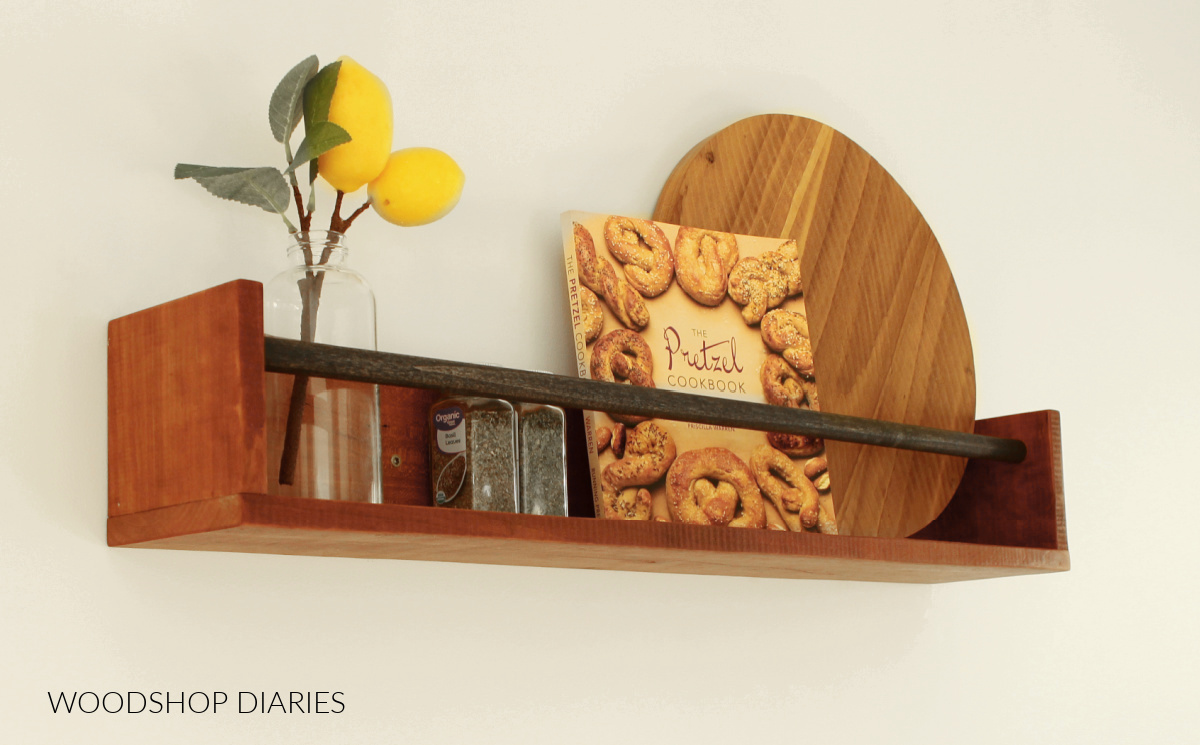
DIY Shower Remodel–Modern Walk-In Tile Shower

May 10, 2022 by Shara, Woodshop Diaries

In this post, I’m sharing about our recent DIY shower remodel.

**This post was sponsored by DAP Products. 

We transformed our large walk in shower into a more modern, easier-to-keep-clean shower space that I’m excited to share with you here!

Shara Woodshop Diaries sitting on bench seat in large walk in shower after remodel

Recently, I started the process of remodeling the large bathroom in our new home. Within that remodel project, there are a lot of “smaller” projects to share, so I’m breaking this down into somewhat of a series.

.

In an earlier post, I shared how I built our new DIY bathroom vanity. And I also shared how I transformed a boring corner closet into open shelf storage cubbies.

.

And now, I’m sharing about the shower.

.

You can check out the project video of this shower build here and the project details following:

*This post contains affiliate links. See policies.

Why we are remodeling our shower–The Before

Now, I know when I show you our shower “before,” many of you will ask why in the world we are redoing it. But the problems are more with the FUNCTION vs. the LOOKS.

.

Our existing shower was a huge walk in tiled shower.  It was approximately 4 ft wide by 9 foot deep and at quick glance, it looks fine.

walk in shower before remodel--white tile with dark accents and dark grout

However, the shower was the main reason for remodeling the bathroom to begin with because while things LOOK okay on the surface, when you turn the water on, it pooled at the front corner vs running toward the drain.

.

There were also a few cracked and missing tiles, dark grey grout smears all over the ceiling, missing caulk at the top, and the galvanized pipe for the shower head (you’re not supposed to use galvanized pipe for a shower head, by the way…) had rusted and the water dripping from it had stained some of the tiles as well–you can see below.

Water pooling on shower tiles on floor

So, with these things, amongst a few other issues, we just decided to rip it out and start over. 

What we are changing with the shower design

Now, I know many of you will think I am crazy for what I did to rebuild the shower, but we didn’t replace the tile shower floor with another tile shower floor. 

.

We replaced it with a single piece shower pan. I would 100% do it again, and I’m very happy with how it turned out, however, I do understand that not everyone would choose this option.

.

But I have several reasons for why I did.

.

While a large walk in tile shower is many people’s dream, a 4×9 tile floor shower is A LOT to keep clean. I’ve had single unit showers, acrylic shower bases, and tile shower floors.

.

And at the end of the day, tile floors are my least favorite option. They require more maintenance, are hardest to keep clean, and have more potential places for cracks and leaks that you need to constantly be checking for.

.

I also didn’t want to take a chance on replacing this shower floor only to end up with the same issue as before with incorrect sloping and pooling water.

.

So, after I tore out the shower walls and the shower floor, I decided to install an acrylic shower pan and just retile the walls. 

Before and after collage showing back shower wall

Everyone’s situation will vary, so you’ll have to do your own research for your own project, but below is a general overview of how I remodeled our walk in shower with a new shower pan.

Tools & Materials:

Tools:

  • Demolition tools–hammer, prybar, etc.
  • Tile Saw
  • Drill/Driver
  • Trowel(s)
  • Grout Float
  • Grout Sponge

Materials:

  • Shower Pan
  • Cement Board
  • Waterproofing (I used Schluter Systems, but there are other options)
  • Thinset/Mortar (do your research on what type you need for your own application(s) )
  • Slate 4×12 tiles
  • Slate 16 x 16 tiles
  • Subway 4×12 tiles
  • Grout
  • DAP Advanced Modified Polymer (AMP) Waterproof Kitchen, Bath and Plumbing Sealant
  • Tile sealer
  • Shower curtain
  • Shower Faucet
  • Shower Rug

Step 1: Demo the Existing Shower

The first step to remodeling the shower was to remove the existing one.

.

This was a chore and quite a messy job. I put on some gloves and grabbed a prybar and a hammer and removed all the tile and existing cement board from the walls and the floor of the shower.

Walk in shower demo complete down to studs and bare concrete

It’s important to be careful not to get into any plumbing or wiring behind the walls, so tread lightly as you start to tear things out.

.

I removed everything down to the studs and the concrete floor.

Step 2: Dry Fit and Frame Out for Shower Pan

Since the shower was already 4 ft wide, I was able to use a 3×4 pan in here with a center drain.

.

However, while the existing drain was centered left to right, it was pretty far from the front, so I had a lot of space to fill between the existing wall and the back edge of the shower pan.

Measuring between back wall and shower pan to fill space in walk in shower

So I got creative and framed out this section with a bench seat and a full length shelf. 

.

I basically built a bench seat frame to fill the space and allow the back of the pan to run along the front of the bench, then I installed two false walls framed using 2x4s with space in between them to act as the shelf for shampoo and soap bottles.

Shara Woodshop Diaries framing out false walls in back of shower

You’ll notice that we also moved the shower head so that it came out the side wall vs. the back wall.

.

Also, I had to chisel out the old drain and extend the drain pipe up a little to accommodate the pan.  But luckily, we didn’t have to move it.

Step 3: Install Shower Pan and Walls

Once the drain was prepped and the framing complete, we installed the pan according to the instructions that came with it and made sure it was properly leveled up.

.

After the mud bed dried, I came back and installed cement board. 

Cement board installed in shower on walls, shelf, and bench seat

If you’ve ever worked with cement board before, it’s basically like working with drywall, only a million times harder to cut and much heavier haha.

.

After the cement board was up, I installed Schluter Kerdi membrane for waterproofing. 

.

I’ve used this a few times before (you can see it in our old house tile shower redo here and in my parent’s shower remodel I did a few years ago here) and it seems to work well. 

.

But there are many options for waterproofing, so this is just one way to do it.  You basically “glue” this fabric onto the cement board with thinset.

Schluter Kerdi applied to shower walls around shower pan

You can find more details on this on the Schluter Systems website.

Step 4: Tile the Shower Walls

And once the waterproofing membrane was dry, I could come back and tile. 

.

Now, this is not a detailed “how to tile a shower” post—obviously.  I don’t love tiling and I’m definitely not an qualified expert to give out tiling advice. 

.

I encourage you to always do your research before tackling a DIY shower remodel because there are a million situations and possibilities and options that come with tiling.

.

I used slate 4×12 tiles for the back wall here in a vertical pattern. And I used matching slate 16×16 tiles for the seat to minimize horizontal grout lines. (I had to cut these tiles to fit, obviously.)

Back wall of shower partially tiled with dark slate

Now, I found that while these slate tiles are very pretty, they are very inconsistent in sizing and many of the edges were not square. 

.

They were not all the same thickness and they were very difficult to keep straight.  So laying them was somewhat frustrating and I had to embrace the fact that imperfections were just going to be part of it.

.

I used a tile saw to trim pieces as needed and I kept a level close by to check as I installed each row.

.

Once the back wall was installed, I continued this same tile and same pattern on the floor. I used another Schluter product called Ditra on the floor between the concrete and the tile because it was highly recommended to use between concrete floors and tile.

Shara Woodshop Diaries placing spacers between slat floor tiles in front of shower base

You’ll need to do your own research to figure out what you’d need based on your existing floor and the type of tile you’re installing.

.

I actually had wanted to continue the vinyl plank floor that was already in the rest of the bathroom up to this shower pan, but after tearing out the shower, we found that the shower floor had about a ½” step up, so we would need a transition and I thought it would look weird, so I ended up just extending the tile over this area.

.

Sometimes you just wing it and make do haha.

.

Once the slate tile was complete, I started on the other two walls adding 4×12 white subway tile.  I laid the slate tiles vertically, but I laid the subway tiles horizontally. 

Shara Woodshop Diaries installing subway tile on large shower wall

I just liked this look…you can lay them in whatever pattern you’d like.

.

I got my first row nice and level, then proceeded to kind of build on top of it all the way up the walls. 

.

Also, yes, I’m aware I’m using these spacers “incorrectly” here.  These were 3/16” spacers, but they were ⅛” thick.  I wanted ⅛” gaps, so I flipped them on their sides.

Dark slate and white subway tile shower  before grout is applied

This was days worth of tiling, and I hated almost every second of it haha.  It was a very repetitive process so I was pretty excited when it was over.

Step 5: Grout the Shower Tiles

After the tiles were set and dry, I cleaned them up and applied some sealer to the slate before coming back and grouting to help prevent any possible staining.

.

Slate is a pretty absorbent material, so sealing before grout will help prevent the grout from sticking to the tiles when you apply it.

.

Grouting is also not a super fun process, but at this point, I could see the light at the end of the tunnel haha.

Shara Woodshop Diaries applying grout to white subway tile in shower remodel project

I applied white sanded grout into all the gaps and spaces between tiles EXCEPT on the inside corners. I left the inside corners clear because I’ll come back and seal with in the next step.

.

I worked in small sections with the grout and so I could clean it up with a damp sponge before it set up.

.

I cleaned the grout with a damp sponge about three times, then came back the next day and cleaned them again with a dry towel to remove any remaining residue.

Step 6: Seal Tile Joints in Shower Remodel

Grout should go in between all the tiles on the same plane and should fill any outside corners.  However, for inside corners, you skip the grout and use a sealant type caulk.

.

In this application, I used DAP’s new Advanced Modified Polymer Waterproof Bath and Plumbing Sealant. 

Close up of DAP AMP sealant tube in front of shower tiles

Now, I’ll warm you that if you’re used to using latex caulks like I am, this is a bit more difficult to tool and requires mineral spirits to clean up (be sure to read the instructions on the tube for clean up/disposal instructions). 

.

So to get a nice, clean bead, I used painters tape to tape off the areas I was sealing.

.

I worked in small sections to give me plenty of time to apply, smooth it and remove the tape before it skinned over.  It’s recommended to use a caulking tool to smooth this sealant.

.

This DAP Advanced Modified Polymer (AMP) Waterproof Kitchen, Bath and Plumbing Sealant provides a lifetime guarantee, a 100% waterproof seal, and prevents mold and mildew, so it’s the ideal choice for use in a shower like this.

Shara Woodshop Diaries sealing inside corner of niche shower shelf with DAP AMP sealant

I sealed along all the inside corners of the shower and along the floor where the tile wall meets the tile floor, around the shelf, and the bench, and where the tile met the pan.

.

I used this on basically all remaining gaps and cracks after grouting to seal out water from getting in.

.

After everything was dry, I sealed the tiles and the grout with a penetrating sealer, and the DIY shower remodel is complete!

Charcoal and White tile shower with full length shelf niche and bench seat

While tiling isn’t my favorite past time, this DIY shower remodel project turned out even better than I expected and I think it makes this bathroom look much brighter and will be easier to maintain and keep clean.

.

Call me crazy, but I like having a smaller shower space and more peace of mind not worrying about potential leaks.

Grey slate and white subway tile shower with acrylic shower pan and charcoal colored shower curtain

I’m not done with this bathroom yet–there’s still at least one more fun project to tackle in here before sharing a full reveal!

.

So if you’d like to follow along so you don’t miss out on all the bathroom remodel updates, be sure to subscribe to the newsletter below!

And if you’d like to save this DIY shower remodel project for later, don’t forget to pin it or save it to your favorite social channel!

Pinterest collage image showing shower remodeled entrance at top and Shara sitting on shower bench seat at bottom with text "DIY walk in modern shower remodel"

Until next time, friends, happy building!
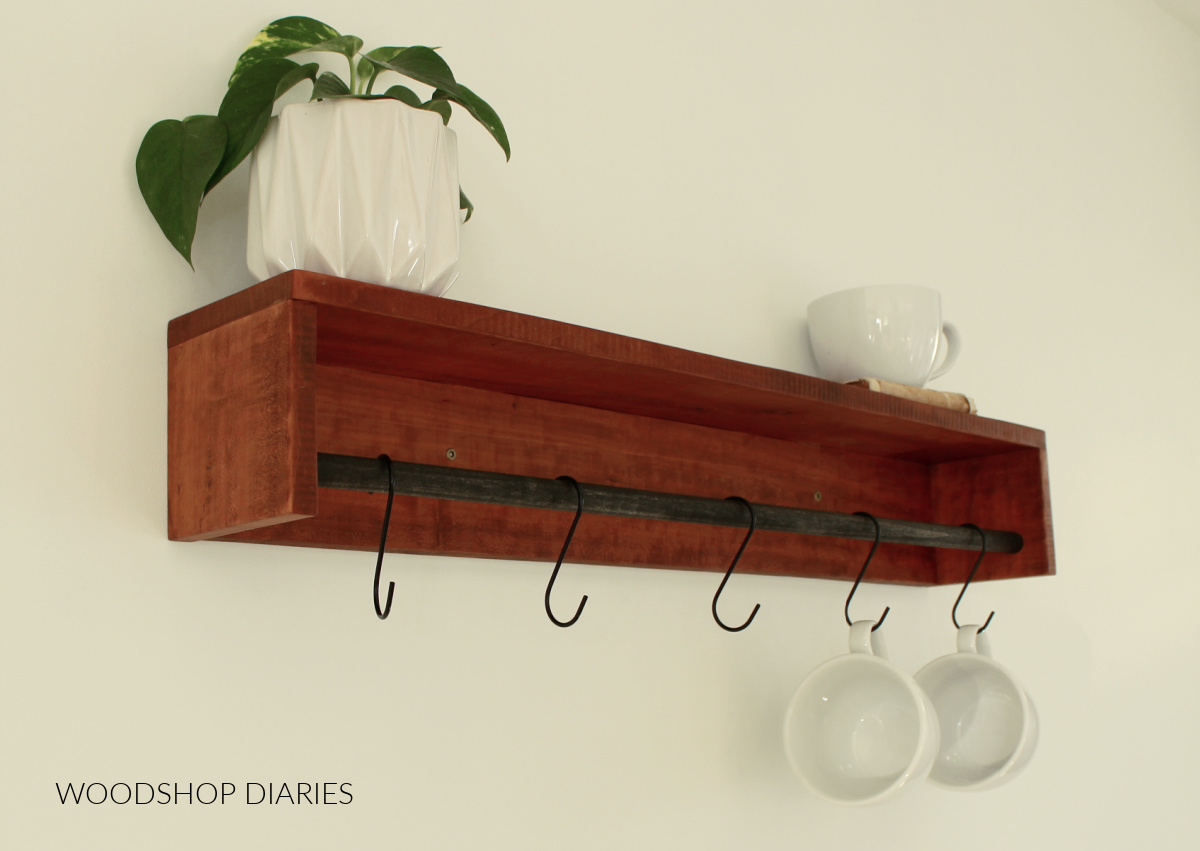
How to Turn a Closet Into Built In Shelves

April 23, 2022 by Shara, Woodshop Diaries

In this post, I’m sharing how to turn a closet into built in shelves!

We are remodeling our basic builder grade bathroom into a unique, custom, modern space and part of that remodel involved ditching our tiny linen closet for something a little more eye catching!

Before and after collage showing closet door before and open shelving after in the same space

Originally, I wanted to completely remove this closet altogether, but since the ceiling was textured, removing the walls would involve trying to patch and match the ceiling texture and, honestly, it was just more hassle than it was worth.

.

So instead of removing it, I decided to just rework the existing structure into something more visually appealing with built in open shelves.

.

Now, granted, it’s not always feasible to turn a closet into open shelves because sometimes you just need somewhere behind closed doors to hide the “not so pretty things.”

.

But in this case, we had plenty of storage elsewhere so this particular closet wasn’t a necessity.

.

So if you’re looking for a simple way to turn one of your closets into built in shelves, I’ve got you covered with all the details in this post 🙂

.

Check out the full project video here and the step by step written tutorial below.

**This post contains affiliate links. See website policies.

Tools & Materials:

Tools:

  • Circular saw
  • Cutting Guides (optional)
  • Miter saw (optional)
  • Pocket hole jig
  • Drill/Driver
  • Shelf Pin Jig (optional)
  • Drywall finishing tools (to patch drywall if needed)
  • Nail Gun (to attach/replace baseboard)

Materials:

  • ¾″ plywood
  • 2×4 scrap (roughly the length of your closet width)
  • Small piece of drywall for patching
  • ¾″ Iron on edge banding & 1 ½″ iron on edge banding (optional)
  • Shelf Pins
  • 1 ¼″ pocket hole screws
  • 2 ½″ wood screws
  • Drywall Screws
  • Drywall tape/spackling for patching
  • Wood finish as desired

Some notes about the project:

It’s impossible to figure up how much material you need as every closet built in every house can come in every size imaginable.

.

I used two sheets for mine just to give you a rough idea. My closet was roughly 24″ deep, and the opening for the shelves was about 27″ wide and 68″ tall.

.

Yours will very likely vary, so you’ll have to figure your own materials based on your sizing.

.

This design is definitely not an efficient use of space. It is intended to look nice, not provide the most storage possible.

.

You’ll notice that this design basically covers up a large section of the bottom of the closet. We didn’t need that space, so that was fine with me.

.

But, if you prefer to keep as much storage space as possible, you can definitely skip covering up this bottom section and run your cubby shelf box all the way to the floor.

.

OR, you can cover it up like I did here, but build in an access in the bottom of the cubby box and use this space below as “hidden storage.”

.

Feel free to get creative 🙂

Step 1: Remove the Existing Closet Door and Trim

I removed everything from the closet first—most of which could be thrown away anyway haha.

.

I removed the shelves and the shelf brackets inside. 

.

Then, I removed the door, the trim, and the door frame. Basically, I removed everything down the the studs and drywall.

Closet door frame with door and trim removed

Now that everything was gone, I could start rebuilding it.

Step 2: Add Bottom Frame and Drywall Patch

I wanted these open shelves I was making to look like they were a big built in cubby. So, I didn’t want them to go all the way to the floor.

.

And with that, I wanted it to be centered up and down on the wall.  So I measured the height of the drywall section above the door and built a simple 2×4 frame this same height to fit into the bottom of the doorway. 

.

That way, the drywalled section at the top would be the same size as the one at the bottom, so the cubby would look centered vertically.

.

I secured this frame between the studs where the door frame was at the bottom of the closet.

2x4 box frame installed at bottom of closet opening between stud framing

Then, I cut a piece of drywall to cover it and screwed it in place.

.

And you all know what comes after patching drywall—then you have to mud and finish it haha.  This was the worst part of the entire project.

Drywall patch over the box frame installed at bottom of existing closet opening

Once the drywall patch was mudded, sanded, and finished smooth (which takes a few coats of mud with a day between them to dry), I painted the walls.

.

In addition to painting the outside walls of the old closet, I also painted the inside back wall black as I thought this would be a cool way to accent it.

.

But you’ll see later that I changed my mind and painted it back to white—I’m a hot mess of indecision ha. 

Step 3: Build Open Shelf Cubby Box

My closet was about 24” deep from the back wall to the front edge of the outside drywall.  So I was able to rip a sheet of ¾” plywood in half to use to build my big cubby box that I’ll slide into the old closet.

.

Obviously, if your closet is deeper or more shallow, you’d adjust how wide you rip your plywood strips to accommodate.

.

SIDE NOTE: If you wanted to make your cubby shallower than your full closet depth, you certainly can…and you can simply staple a back panel on your cubby instead of butting it all the way to the back wall. Plenty of options here 🙂

.

I cut my plywood down to build the main cubby box where the shelves will go.

RELATED: How to cut plywood sheets with a circular saw

Shara Woodshop Diaries cutting plywood using circular saw

Your closet measurements will surely be different than mine, but the goal here is to cut four pieces to build a simple plywood box that will fit inside the opening in the drywall.

.

I made my box 1″ shorter and 1 ½″ narrower than the overall opening to allow for plenty of wiggle room to slide it in place.

.

Once I had my pieces cut, I assembled the box using pocket holes and screws.

RELATED: How to Use a Kreg Pocket Hole Jig

.

You’ll notice in the image below that I not only drilled pocket holes in the ends of the short piece, but also along the front edge of all four pieces.

Shara Woodshop Diaries assembling plywood box on workbench using pocket holes

I’ll attach the face frame later through these pocket holes.

.

I screwed the main cubby together using pocket hole screws making sure to position the pieces so the pocket holes on the front edge were in fact facing the front.

Step 4: Drill Shelf Pin Holes for Adjustable Shelves

Once the box was together, I used a shelf pin jig to drill shelf pin holes up and down the tall sides of the box—this is so that I can add adjustable shelves later. 

Shara Woodshop Diaries using shelf pin jig to drill shelf pin holes on plywood box

I drilled my front shelf pins about 4-5” from the front edge—which I’ll discuss why later.

.

Of course, if you didn’t want the option to adjust your shelves, you can skip this part and screw your shelves in so they’re stationary. 

Step 5: Add Face Frame to Shelf Cubby

I ripped two strips of ¾″ plywood to 2 ½” wide to use as the face frame.

. 

Obviously, you can use solid wood for the face frame instead of plywood if you prefer—I just went with plywood since it had some pretty coloring on it to match the shelves.

.

I trimmed four pieces to make a face frame that would cover the plywood edges on the front of the cubby box.

.

I applied iron on edge banding to cover the edges of these pieces and hide the plys, but that’s totally optional.

RELATED: How to apply iron on edge banding

.

Then, I screwed the face frame together using pocket holes and screws and placed it on the front edge of the cubby box.

Shara Woodshop Diaries installing face frame onto closet cubby box

Notice that the face frame is flush to the inside of the shelf cubby box, and overhangs all sides.

.

I worked my way around the box using pocket hole screws to secure the face frame.

Shara Woodshop Diaries securing face frame to cubby box using pocket holes on sides

Step 6: Install Back Support and Place Shelf Cubby Inside

The frame at the front (the one from step 2) will support the front of the cubby, but I needed to add something in the back to hold up the box.

.

So I cut a piece of 2×4 to add at the back of the closet.  I installed this at the same height as the front frame, made sure it was level, and screwed it into the wall studs.

2x4 support block screwed into back of closet wall

Then, I carried the cubby box inside and slid it into the opening. The back of the shelf should rest on the 2×4 that is screwed in on the back wall and the front of the shelf should rest on the frame at the front.

Shara Woodshop Diaries sliding built in cubby box into closet opening

After I made sure the cubby fit, all that was left was adding the shelves.

Step 7: Cut and Install Open Shelves

I cut four shelves from my remaining plywood the same depth as the cubby box (24″ in my case). 

.

Just as a side note, when cutting adjustable shelves, I typically cut them ⅛”-¼” shorter than the opening they’re going into so that they have some wiggle room to go in and out.

.

Ex. If your cubby opening is 24″ wide, cut your shelves 23 ¾″ – 23 ⅞″ wide so you have some wiggle room to place them in and remove them so they aren’t scraping the sides.

.

Now—this is a totally optional part—but I wanted my shelves to appear thicker than just ¾”, but I didn’t want to double up on plywood for the entire shelf. 

.

So I headed to my scrap plywood pile and found some thin strips I could cut and glue along the front edge of each shelf.

Screwing scrap plywood piece onto bottom front edge of shelf

I glued and screwed these strips on the bottom of each shelf, then used some 1 ½” wide iron on edge banding on the front edge to “fake” a thicker shelf. 

.

This is optional, I just liked how it looked.  However, when adding these strips, make sure that they aren’t wide enough to interfere with the shelf pin holes.  This is why I mentioned that I drilled my front shelf pins 4-5” from the front edge earlier.

.

And if you didn’t want to use adjustable shelves, you can drill pocket holes into the bottom of these shelves and screw them into the cubby.

.

I gave the shelves and the cubby a couple coats of clear poly, then installed the shelves using shelf pins and it was done!

Shara Woodshop Diaries installing shelf pin into built in shelf cubby

Now I didn’t secure this cubby—it’s huge and heavy and it’s not going anywhere.  However, you CAN certainly screw it into the back support, the front supports and into the stud frame surrounding it for extra security if you’d like.

.

I’m obviously not finished with this entire room yet, so I still have to do all the other trim work, but I did go ahead and add some baseboards here at the bottom of this section so it looked a little more complete haha.  

Nailing baseboard trim around closet

You will need to replace the baseboard piece or cut a “patch” piece to fit over the new drywall section as well.

.

Simply cut and nail into the stud framing, then putty, caulk, and paint to match the rest of your trim.

Built in cubby shelf complete with four shelves in bathroom closet opening

I can’t wait to share all the other parts of this bathroom remodel as they come together, so if you want to make sure you don’t miss them, be sure to subscribe to the newsletter and follow along!

I’ve spent the last two weeks tearing out our old bathroom, so honestly, I’m just glad this week I got to put something together again haha.

.

I really hope you enjoyed this simple project and maybe it gave you some ideas you can try on a closet or two in your own home.

Shara Woodshop Diaries standing next to built in shelves where closet used to be

Until next time, friends, happy building ????

DIY Garden Beds with Arbor

April 9, 2022 by Shara, Woodshop Diaries

In this post, I’m sharing how to build your own DIY garden beds with arbor!

You can use the arbor for both looks–because it’s pretty ha!–and for vertical growing in your garden.

Shara standing in garden arbor between raised beds on mulch

This year, I’m all about the outdoor projects because we have a big open yard to work with now in the new house. 

.

The only down side is that this place needs some grass…it’s clearly pretty bare haha.  So just ignore that for now. We will get some planted when it warms up a little more 😉

.

I built these raised DIY garden beds with arbor to give me somewhere to plant my tomato, cucumber, and pepper plants. But obviously, you can plant all your favorite garden veggies in yours 🙂

.

So if you’re ready to build your own, I’m sharing all the details on this one below. Check out the full video tutorial here and the plans and details following:

*This post contains affiliate links. See policies for details.

Tools & Materials:

Tools:

  • Miter Saw or circular/jig saw (any saw that can cut straight lines would work fine)
  • Drill/Driver
  • Table Saw (optional)
  • Pocket hole jig (optional)
  • Stapler

Materials:

  • (26) Cedar fence pickets
  • (4) Cedar 4x4x8 posts
  • (4) Cedar 2x4x8 boards
  • 4 ft wide welded wire
  • Heavy Duty Landscape Fabric
  • Garden Staples
  • No Dig Edging
  • Black Mulch
  • Garden Soil/Potting Soil
  • 1 ¼” exterior screws
  • 2 ½” exterior screws
  • 2 ⅞” timber screws (optional)
  • ½″ long staples for stapling wire and fabric to garden beds
  • Veggies, flowers, shrubs as desired
  • Coco baskets
  • Plant Hanging Brackets

Prefer to print? Grab the printable building plans for this build here:

Some Notes About the Build:

Wood Type:

Since this is an outdoor project, I used cedar as it’s a naturally rot and moisture resistant wood species and it’s readily available in my area.

.

You can use regular untreated pine/construction grade lumber for this, but it won’t last as long and will likely rot away in a few years.

.

Treated wood will last a good while, but it’s not recommended for use in a garden bed where you plan to grow food. If you want to just grow flowers/plants for looks, it would be okay, but I don’t recommend it for anything edible.

Garden Location & Ground Prep:

You want to make sure to pick a spot to put these garden beds that is fairly level so you don’t have to deal with uneven or sloping beds.

.

I measured out roughly where to put mine and rolled out landscape fabric to block out any weeds from eventually growing up into my garden.

Shara stapling landscape fabric over grass where garden will go

Then, I began the fun part—building stuff.

.

RELATED: Check out the garden patio with privacy fence, raised beds, and planter boxes from our previous home here.

Step 1: Assemble Garden Arbor Frame

I built the arbor frame using 4x4s for the corners and 2x4s between them.

Shara Woodshop Diaries assembling arbor frame on concrete floor

I cut 16” off each 4×4 post and set these shorter pieces aside for now. Then I cut one of my 2x4s in half and drilled pocket holes into the ends of them. 

RELATED: How to use a pocket hole jig

.

Want to print these plans and take them with you to the workshop? Grab the printable raised garden bed building plans with arbor here.

Pocket holes aren’t necessary here—you could definitely just use long exterior screws and drive them in at an angle.  But if you do use pocket holes, be sure to use the blue kote exterior grade screws since this will be an outside project.

Garden arbor frame computer drawn diagram

I made two arbor frames by screwing the 2x4s between 4×4 posts about 4 ft from the bottom edge.

Step 2: Assemble Garden Bed Sides

I used 1×6 fence pickets for the sides of the garden beds. So, I cut 6 fence pickets down to install at the bottoms of the two frames from step 1. Three boards will go on each one.

Garden arbor frame computer diagram showing bottom boards attached

I kept the pieces I cut off these pickets to trim out the corners later…which you will see shortly 🙂

.

I used 1 ¼″ decking screws and these fence pickets are easy to split, so I was careful to predrill all my holes before driving the screws.

.

Then, I did the same thing with the 16″ long pieces I cut off the 4×4 posts earlier—just screwed three fence boards between the two.

Short side of garden bed diagram

Note that the top fence picket will hang over the top of the 4×4 about ½″. That’s okay!

Step 3: Assemble Garden Bed Boxes

I carried the short sides and arbor frames from step 2 out to my garden area along with 12 full length fence pickets.

.

The fence pickets I used here were 6 ft long, so these beds ended up being about 4 ½” feet by 6 feet and about 16 ½” deep. 

.

So, if you wanted to adjust the sizing, it’s obviously pretty easy to do so. Simply trim these boards as desired before assembling the boxes.

.

I assembled the two garden beds together by screwing three full length fence pickets between the arbor frame and the small sides on both the front and the back with some more 1 ¼″ decking screws. 

Shara screwing fence picket boards to assemble garden bed boxes

You’ll notice that I didn’t cut off the dog ear ends here…and that’s okay because I came back later and trimmed the corners out to cover that up.

.

With both beds assembled, I spaced them out about 40” apart.  I played around with the spacing here and there’s no right or wrong distance.

Diagram showing garden beds spaced 40" apart

But 40” between them looked good to me without being too cramped, so that’s what I went with. 

Step 4: Assemble Garden Arbor Top

I cut 2x4s long enough to overhang each 4×4 post by about 6”, and used the miter saw to trim off a corner just for a little decorative detail. You could also use a jig saw to cut a curved detail, instead.

.

Then I attached these between the posts about 2” down from the top and so they overhung each side about 6”.  No reason for the 2” thing except I liked how it looked haha.

Diagram showing how to install boards at top of garden arbor

I used 2 ⅞″ black timber screws for this because I thought they looked nice.  But you could use regular 2 ½″ exterior screws as well.

.

Once the front and back pieces were secured, I added another 2×4 between them in the center.

Diagram showing center board location on top of garden arbor

Then, from the remaining 2×4 material I had left, I cut some corner braces.  I just cut these ends 45 degrees, and screwed them in place using 2 ½” decking screws.

Diagram showing corner braces on garden arbor

Step 5: Trim Garden Beds and Add Middle Supports

Now—remember those off cuts from cutting down the fence pickets in step 2?  I ripped them in half on the table saw to trim out the corners.

.

You could use the full width boards if you don’t have a table saw, but I just liked the looks of the thinner trim. 

Shara installing corner trim on garden beds using screws

I screwed these onto the corners to cover the dog ears and to add some visual interest using 1 ¼″ decking screws. 

.

These corner trim pieces are totally optional.

.

In addition to these corner trim pieces, I did add a couple other pieces in the middle of the long sides on the inside of the beds to help hold the pieces firmly together.

Diagram showing corner trim locations and middle supports

Check out the printable building plans for this raised garden bed build here.

Step 6: Add Wire/Trellis to Garden Arbor

The arbor is pretty if you just wanted it for looks, but it could also serve a purpose if you wanted to use it to grow things vertically. 

Shara Woodshop Diaries stapling welded wire onto garden arbor

I stapled some welded wire here around the arbor to give me somewhere to tie off the plants as needed while they grow.  You could also just attach some wood scraps here to make your own trellis…feel free to get creative.

RELATED: Check out how I made a simple trellis from wood in this garden project

Step 7: Prep DIY Garden Beds for Soil

I lined the inside of the garden beds with landscape fabric.  This also isn’t totally necessary, but does help to hold the soil in from running out the cracks between the side boards.

.

And that will keep it looking a little cleaner after big rains.

Garden beds lined with landscape fabric

I just stapled the fabric around the inside and trimmed away the excess—which somehow proved more difficult than it should have with the wind blowing as hard as it was haha.

Step 8: Add Plants, Landscaping as Desired

And the rest is just for fun.  I wanted to dress up around my new garden beds, so I added some edging.  Then some mulch.

RELATED: See how easy this no dig edging is to install in this post from last year’s garden!

Shara Woodshop Diaries hanging planter baskets with flowers on garden arbor

Then, for some color, I added some plant hangers, and a few flowers.

.

We filled the beds with a mix of top soil we had from the field and bagged garden soil.

.

And finally, it was ready for planting.

Shara Woodshop Diaries planting tomatoes in garden bed

I’m really happy with how this new garden project turned out and we’ve got plenty of room to add on to it later as we need. 

.

Eventually I’d like to add a patio out here nearby, but that’s another project for another day haha.

.

If you’d like to check out more garden and outdoor projects, here’s a few of my favorites!

DIY Planter Post
DIY Planter Bench Vertical Small
DIY Planter Garden Bench
DIY Raised Garden Bed
DIY Privacy Fence
Scrap Wood Planter with Trellis
DIY Louvered Planter Box
eye sore cover fence idea
How to Hide Outdoor Eye Sores

I hope you guys enjoyed these DIY garden beds with arbor plans and if you want to keep up with all the upcoming projects and plans, be sure to subscribe so you don’t miss out on what’s coming next!

Don’t forget to save this for later by pinning it or sharing to your favorite social channel!

DIY garden beds with mulch and flowers and arbor with text "how to build garden beds with arbor" at bottom corner

Until next time, friends, happy building! 🙂
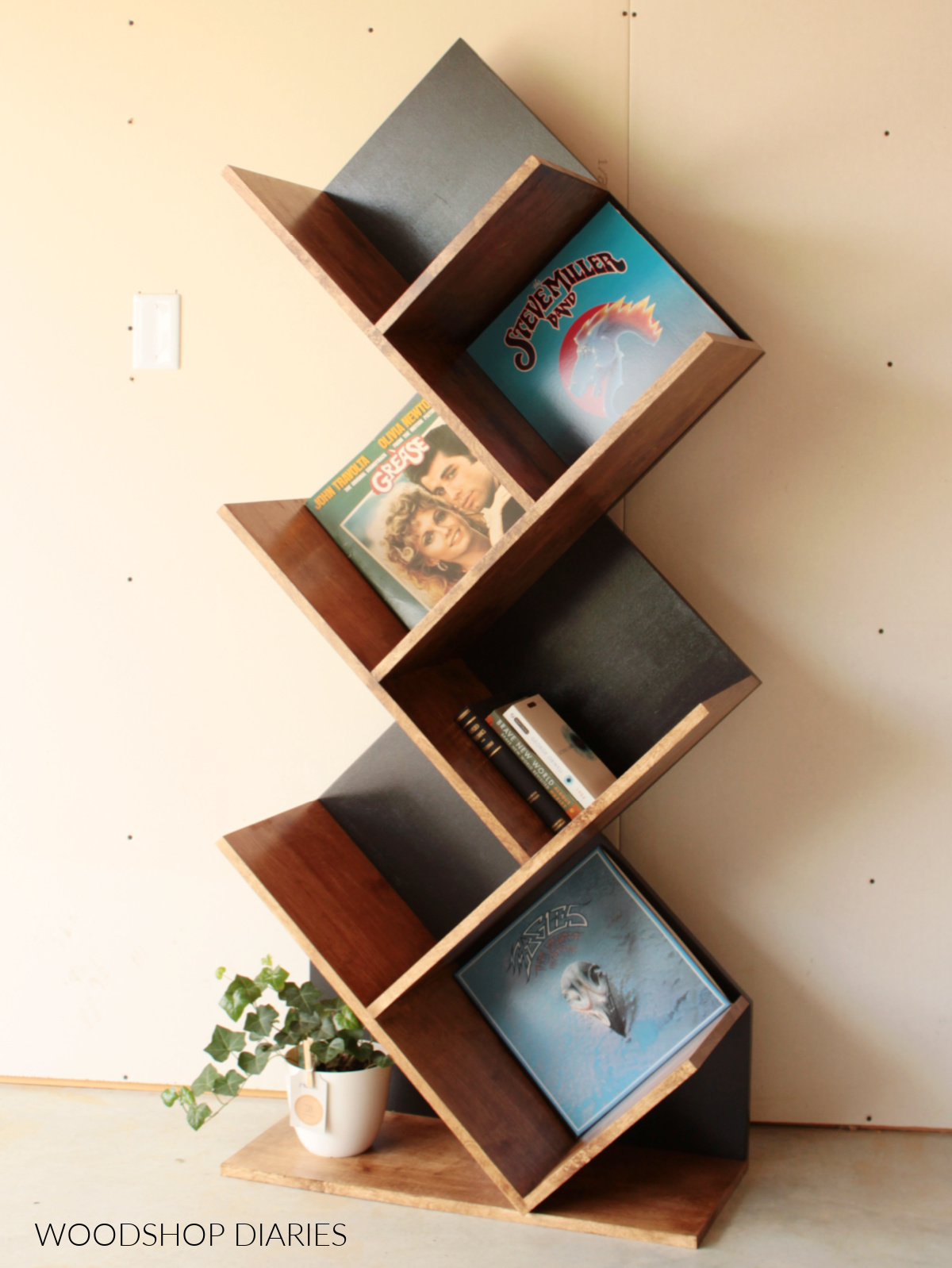
DIY Modern Two Drawer Nightstand

April 6, 2022 by Shara, Woodshop Diaries

In this post, I’m sharing how to build a DIY modern nightstand with two large drawers!

And if you like this nightstand design, I’ve got plans to build an entire matching modern bedroom set in a full build series here.

Modern poplar nightstand with two drawers against white wall with text "DIY modern two drawer nightstand"

This entire bedroom set series were some of my favorite pieces to build ever!

.

The clean lines and warm poplar color make my favorite combination! You can mix and match this nightstand with any other dresser or bed easily since the style here is so simple and clean.

.

My favorite part of these nightstands is the fact they provide so much storage space in the large drawers.

.

In fact, in our previous home, we didn’t have room for a dresser in the bedroom, so we just used our nightstands as little “mini dressers” and it worked out great!

.

So if you’re ready to see how to build your own DIY modern nightstand, I’ve got the video, details and plans all below 🙂

**This post contains affiliate links. See policies.

.

If Check out plans for the entire matching bedroom set here.

Collage image showing matching bed, two dressers, and nightstand

Tools & Materials:

Tools:

  • Drill
  • Miter Saw
  • Circular Saw or Table Saw
  • Clamps
  • Router (optional)
  • Rabbeting bit (optional)
  • Dowel Jig
  • Kreg Pocket Hole Jig

Materials:

  • (1) 1x10x8  (top)
  • (3) 2x2x8 (frame)
  • (2) 1x8x8 (side panels and drawer fronts)
  • (2) 1x6x8 (drawer boxes)
  • ½ sheet ¼″ plywood  (drawer box bottoms)
  • Dowels
  • Wood Glue
  • 1 ¼″ pocket hole screws
  • (2) pair 16″ drawer slides
  • (2) large modern drawer pulls

Grab the printable plans here:

Some notes about the build:

I made this whole matching bedroom set out of poplar and it really gave it a modern feel. 

.

I was able to build two large nightstands and the bed for about $200 (100 board foot of rough sawn) in poplar in 2018 (it would be a little more than that now haha). 

.

I bought my lumber rough sawn from a local lumber yard because it’s cheaper. I planed and milled it down myself, but you could build it with standard construction lumber (spruce, pine, or even cabinet grade plywood) for about the same cost.

.

The project overall dimensions are 17″ deep, 24 ¾″ tall, and 33″ wide.

Overall dimensional diagram of DIY modern nightstand

Some posts you may find helpful in the build:

  • How to make your own 2x2s
  • How to measure, build, assemble, and install drawer boxes
  • How to use a pocket hole jig
  • Tips for making professional looking DIY furniture
  • How to finish raw wood furniture–without a sprayer!

Step 1: Build Modern Nightstand Side Frames

I cut four “legs” and four top and bottom pieces for my two nightstand sides from 2x2s.  You can purchase precut 2x2s or make your own 2x2s using this tutorial.

.

To assemble the two frames, I used this dowel jig to drill holes in the frame pieces and glued them together using wood glue and wood dowels.

Modern nightstand side frame assembly diagram

I have a quick video here showing how to use a simple dowel jig, but if you prefer to skip dowels, you can definitely use pocket holes and screws instead.

RELATED: How to use a pocket hole jig

Insert dowel into dowel holes on joining pieces of wood to build nightstand frame

Step 2: Add Side Panels to Nightstand Frames

Once I had two frames assembled, now it’s time to add the panels.  For this, I glued (or pocket hole screw if desired) two pieces of 1×8 together to make a panel about 15″ long and 14″ wide. 

.

Typical 1x8s are 7 ¼″ wide, so gluing two together will make 14 ½″ wide…so just trim these down once glued.  OR, feel free to use ¾″ plywood and cut to size.

Side panel and frame assembly diagram for modern nightstand

.Drill ¾″ pocket holes along the two long edges and attach like shown using 1 ¼″ pocket hole screws.

Attach side panel into nightstand frame using pocket holes and screws

Step 3: Assemble the Remaining Nightstand Frame

Now that the two side panels are assembled, next, we have to put them together.  I cut three more 2x2s to assemble the sides together to make the overall nightstand frame.

.

There will be a 2×2 at the top front corner, the top back corner, and the back bottom corner. 

.

Just like the side frames, I attached using wood glue and dowels. But of course, you can use pocket holes and screws if you wish.

Shara Woodshop Diaries assembling two drawer nightstand frame using wood glue and dowels

Step 4: Add Decorative Edge to Nightstand Frame

Using a router and a rabbeting bit, I cut a small (about ⅛″ deep) notch around the edge of the top of the frame. 

.

This is totally optional and serves no other purpose other than I just thought it looked cool haha.  It makes it look like there’s a “riser” or something between the frame and the top.

Close up of notched top frame of DIY modern nightstand

I used this same method to create a “gap” between the frame and the top on this DIY keyboard stand, too!

Step 5: Add Top to Nightstand

For the top panel, I glued two pieces of 1×10 together to make a panel.

RELATED: How to glue up wood panels

.

I wanted it to be exactly the same size as the top of the frame–so no overhang.  Gluing together two 1×10 will give you a width of 18 ½″.  So to get it the right size, I just trimmed down after the glue dried.

Glue up nightstand top boards

I sanded and glued the top panel onto the top of the nightstand frame.  The top should sit flush on all sides. 

.

NOTE: After building this I learned this isn’t the correct way to attach tops because of the issue of wood movement.

Top glued onto nightstand frame

That said, I’ve had these nightstands for almost four years now, three moves, and it spent a summer in a non-climate controlled storage shed while we built our home. 

.

It’s never had any issues with wood movement, cracking, or splitting.  We are still using them daily and they look the same as the day I built them. So, take that for what it’s worth. 

.

However, you can see how you’re “SUPPOSED” to attach table tops correctly in this post.

Step 6: Install Drawers

The last step in building these nightstands is to install the drawers. 

.

I built two drawers for each nightstand for this from plywood scraps and used poplar for the fronts so it would match the rest of the piece.  You can see how I assemble drawers in this post.

.

First, I attached the 16″ slides to the carcass.

Shara installing drawer slides into modern nightstand

For my drawer boxes, I ripped some scrap plywood to about 6″ wide.  But you could also use 1×6 boards for this instead. 

.

I assembled the drawers with dadoes for the bottoms and pocket holes and screws for the sides.

.

Then, I installed them into the nightstand carcass on the drawer slides.  This comprehensive guide on building and installing drawer boxes will help 🙂

Drawer boxes installed on slides of DIY modern nightstand frame

Once everything was lined up, I cut two pieces of poplar for the drawer fronts and screwed these in from the inside of the drawer leaving ⅛″ gap on all sides for clearance.

Step 7: Finish DIY Modern Nightstand

The last thing is to finish the piece and add drawer pulls.  First, the finish.

.

I used natural color Watco Danish Oil.  I wanted the natural color of the poplar to show up, but wanted something that would dry “clean” and not still feel oily even after it’s dry. 

.

I added some modern drawer pulls to finish this build off. I used these long pulls on these nightstands.

.

And, that’s it!  This two drawer DIY modern nightstand is complete and ready to start filling up. 

.

NOTE: If both drawers of this nightstand open at the same time, it could potentially tip over due to the weight distribution.  It’s recommended to anchor to the wall once complete.

DIY modern nightstands made of poplar with long, bronze drawer pulls

I love the variation here in the wood.  I know some people don’t like poplar, but I really love the look. 

.

I love leaving it out in the sun to darken some after oiling.  Did you know wood “tans” in the sun?  It does…it’s crazy how much darker it can get just from sun.

.

Plans for the modern bed I built to match can be found here. And plans for the modern dresser to match these nightstands can be found here.

.

If you’ve enjoyed this DIY modern nightstand project, and want to keep up with all the latest projects, videos, and plans, be sure to subscribe to our newsletter!

And if you’d like to save this for later, don’t forget to pin it or share to you favorite social channel!

Pinterest collage showing overall dimensional diagram at top and completed DIY modern nightstand on bottom

Until next time, happy building! 🙂

DIY Bathroom Vanity

April 2, 2022 by Shara, Woodshop Diaries

In this post, I’m sharing DIY bathroom vanity plans for this beauty with room for double sinks!

DIY Bathroom Vanity without a top sitting against white wall

I’m about to tackle a bathroom remodel (AGAIN!) and before I started tearing into anything, I wanted to make sure I had something to replace it with, so I kicked off the remodel project by building the vanity.

.

I designed this vanity to replace our existing one and to have space for two sinks plus some drawer storage in the middle.

.

I’m still waiting for the granite top to be cut for it, so please ignore the fact that right now, it’s….topless, HA! #awkward

.

This was a really fun build that I’m excited to share, and I’ve included several helpful tips in the video, so I’d encourage you to give it a watch! After that, I’ve got the DIY bathroom vanity plans, dimensions, and project details to build your own below.

*This post contains affiliate links. See policies page.

Tools & Materials:

Tools:

  • Circular Saw and Saw Guide(s)
  • Miter Saw
  • Table Saw
  • Jig Saw
  • ⅜″ dowel jig
  • Pocket Hole Jig
  • Concealed Hinge Jig
  • Drill/Driver
  • Clamps

Materials:

  • (1) sheet ¾″ plywood (birch used here)
  • (½) sheet ¼″ plywood (birch used here)
  • (7) 2x4x8 boards (cedar used here)
  • (3) 1x6x8 tongue and groove boards (cedar used here)
  • (1) ¾″ x ¾″ x 8′ square dowel (or can cut your own from scraps)
  • (3) pair 16″ drawer slides
  • (4) pair inset concealed hinges for frameless cabinets
  • 1 ¼″ pocket hole screws
  • 2 ½″ pocket hole screws
  • 2″ wood screws
  • ⅝″ wood screws (for installing drawer slides)
  • ⅜″ x 1 ½″ wood dowels (for assembling doors)
  • Wood Glue
  • Knobs
  • Handles

GRAB THE BUILDING DIY BATHROOM VANITY PLANS HERE:

Some Notes About this Bathroom Vanity Build:

Lumber Type/Sizes:

This project was built using cedar 2x4s, cedar 1×6 tongue and groove boards, and birch plywood. You’re welcome to use whatever type of lumber you prefer for this build.

.

I made my own 2x2s from 2x4s. This cuts down on material waste, but if you prefer to buy precut 2x2s, you certainly can.

RELATED: Check out this post on how to cut your own 2x2s from 2x4s

A “Cheat” To Making Cabinet Doors:

I made the doors using 1×6 tongue and groove lumber as it already had a ¼″ dado cut down the middle.

.

Be sure to check your tongue and groove lumber before buying to make sure the tongue is at least ¼″ wide and ¼″ deep. OR you can cut your own dadoes on the table saw or router if you prefer.

.

This 60 second video shows a quick overview on how I made these doors using tongue and groove material.

.

But, if you don’t like that method, I have a guide for how to build these same style doors without using T&G lumber here.

Bathroom Vanity Top Options:

It is recommended to have your vanity top custom cut to fit this design or to build your own from wood, concrete, etc.

.

Many local granite shops can custom cut a vanity top from a leftover piece of granite for a reasonable price. That’s what we are doing here.

.

However, this design was made to accommodate a top 22″ deep and 72″ wide–which is a common size.

.

You can find many options for precut tops this size from the big box stores. If you go that route, just make sure to check the measurements of the top you intend to use AND MAKE SURE IT WILL WORK WITH THIS BEFORE YOU BUILD IT.

Overall Size:

The overall size of this vanity is 21 ½″ deep, 34″ tall, and 71″ wide.

Overall dimensional diagram showing vanity dimensions once completed--21 ½" x 34" x 71"

Some posts you might find helpful in the build:

  • How to cut plywood sheets
  • How to make your own 2x2s
  • How to use a pocket hole jig
  • How to measure, build, and install drawers
  • How to measure and build cabinet doors
  • How to install concealed hinges
  • How to apply iron on edge banding
  • How to finish wood furniture

Step 1: Assemble Vanity Side Panels

I glued up my own vanity legs by gluing together 4 pair of 2x4s. After the glue was dry, I trimmed the edges to clean them off and give me 3″ x 3″ posts.

.

You could use a 4×4 post for the legs instead of gluing up your own, but typically 2×4 material is a little nicer and cheaper than buying 4x4s.

.

I cut two pieces of ¾″ plywood to assemble between the legs to give me two side panels using pocket holes and screws.

Two bathroom vanity side panels assembled leaning against wall

RELATED: How to cut plywood sheets

ALSO RELATED: How to use a pocket hole jig

.

I screwed these in about ¾″ inset from the outside of the legs.

NOTE: All the project dimensions can be found in the printable plans here.

Step 2: Assemble Vanity Frame

For the vanity frame, I used 2x4s at the front and 2x2s in the back. You could also use 2x4s at the back, but 2x2s are sufficient and that saves a little lumber.

.

Before installing anything, I ripped the two 2x4s for the front to 3″ wide and saved the thin piece leftover to use as trim later.

Shara Woodshop Diaries screwing frame pieces into side panels to assemble bathroom vanity frame

Then, I assembled the vanity frame together using 1 ½″ pocket holes and 2 ½″ pocket hole screws.

.

To divide the door vs. drawer sections of the vanity, I cut down some 2x2s and installed them between the front frame pieces using pocket holes and screws from the INSIDE so the holes are hidden.

Shara Woodshop Diaries driving screw in pocket hole to assemble bathroom vanity frame

Then, just for looks, I also cut two more 2x2s and glued then at the far left and far right between the frame pieces.

.

These pieces aren’t structurally necessary, but they add some nice dimension.

Shara Woodshop Diaries clamping decorative outside trim piece to vanity leg

To give the piece a little extra dimension and detail, I glued the thin pieces I ripped off the 2x4s for the front frame at the top and bottom on the front.

.

I just ran a bead of glue along the boards and clamped these pieces until dry.

Placing a clamp on trim piece at top of bathroom vanity frame

Step 3: Add Dividers to Vanity Frame

With the frame complete, I added plywood panels inside to divide up the cabinet from the drawer sections and give me somewhere to mount the drawer slides to.

.

I cut these panels from ¾″ plywood and used a jig saw to notch out the back corners to fit around the back 2x2s on the frame.

.

I installed them flush to the inside of the 2×2 dividers in the front using pocket holes and screws. Then, secured them at the back using 2″ wood screws through the 2×2 frame pieces.

Shara Woodshop Diaries securing divider panel into vanity frame using screws

Then, to divide the three drawers in the middle section, I added 2x2s using pocket holes and screws.

.

These dividers are optional, but I liked how they looked. I found them easiest to install by flipping the vanity on its side, so that’s what’s shown here.

Shara Woodshop Diaries installing drawer dividers in middle of bathroom vanity frame

Step 4: Install Drawers in Bathroom Vanity

I installed 16″ ball bearing drawer slides into the vanity so they they were ¾″ inset to allow for inset drawer fronts later.

RELATED: Check out this post for more information on how to install drawer slides.

Drawer slides installed in cabinet

I assembled three identical drawer boxes to install into this vanity.

.

I made these from ¾″ plywood for the sides and ¼″ plywood for the bottom and I assembled them using pocket holes and screws.

RELATED: Check out this post for a detailed guide on how to measure and build drawer boxes.

.

Take note here that when drilling the pocket holes, they need to be drilled close to the edge so they’ll be covered by the trim later. You’ll see that in a minute 🙂

.

Once the drawers were made, I installed them into the vanity onto the slides so that they were ¾″ inset from the front edge.

Diagram showing drawer boxes installed onto drawer slides

Step 5: Build Vanity Cabinet Doors

I have a detailed guide here for how to measure for and build cabinet doors.

.

I used this same method for building these doors, but in this case, instead of cutting my own dadoes and routing my own edge, I used tongue and groove lumber since it basically already has a dado and chamfer cut for you.

Close up shot of the groove section of a tongue and groove board

I ripped about 2 ½″ off the groove side of the T&G boards and used these for my door frames.

.

I mitered the ends 45 degrees and drilled ⅜″ dowel holes to assemble using wood glue and dowels.

RELATED: Check out this video for how to use a simple dowel jig.

.

Before adding the fourth side, I installed ¼″ birch plywood panels inside, then clamped together. I made four identical doors. The dimensions for all the pieces on this project can be found in the DIY bathroom vanity plans here.

Shara clamping a cabinet door together on the floor

I made a short 60 second video on this process that you might find helpful. Check out this clip for how I used tongue and groove lumber to make a cabinet door.

Step 6: Trim Out Drawer Boxes

The reason I showed making the doors first before finishing the drawers was because after ripping the 2 ½″ off the tongue and groove lumber for the door frames, I ripped the tongue off the remaining pieces and used this as the drawer front trim.

.

These pieces ended up being about 1 ½″ wide–so the equivalent of a 1×2.

.

I flipped the vanity on its back and applied wood glue around the edges on the drawer fronts.

Gluing and positioning trim on the front of drawer boxes

I cut these pieces to fit to allow ⅛″ gap on all sides, and positioned them where I wanted. They should cover the pocket holes when in place. Then, I stepped back and allowed them to dry so they’d stay put 🙂

Step 7: Install Bottom Panels

Now, I’m a little weird about things I build for myself. I have pet peeves that probably don’t bother most other people haha.

.

But…we clean out our p-traps quite often and when you do that, it’s usually pretty messy and some of that nasty p-trap water ends up on the bottom of the cabinet.

.

So, when I build vanities for myself, I like to install the bottom so that it’s removeable. That way, when we clean the p-traps, we can pop the bottom panel out, then replace it back when we are done.

.

Of course, you don’t have to do that. You can certainly install yours so it’s stationary.

.

To make mine removeable, I cut some scrap wood–about ¾″ x ¾″–and just glued it onto the bottom frame pieces at the front and back. These will be the support pieces the bottom panels rest on.

Scrap board glued and clamped onto the bottom of frame to hold the bottom panel

Then, I cut two pieces of ¾″ plywood to fit inside these sections of the vanity.

.

I had to “cut to fit” the plywood panels and use a jig saw to notch out the corners so it would fit around the legs.

.

Then, I could just set them in place after the glue dried on the little support pieces.

Shara Woodshop Diaries placing bottom panel into vanity cabinet

Step 8: Install Bathroom Vanity Doors

The last part of the build is adding the doors.

.

I used a Kreg concealed hinge jig to drill out the cup holes to install concealed inset hinges for frameless cabinets onto each door I made in step 5.

.

Now, you may be asking–but this isn’t a frameless cabinet?

.

And, you’re right. But it’s also not a typical face frame cabinet, either. So they don’t really make hinges that fit this exact application.

.

So, what I did was use frameless cabinet hinges and install spacer blocks behind them. You can see below how the hinge is installed on the door, but there’s nothing to screw it to.

Close up shot of door hinges without spacer block installed

So I cut spacer blocks to fit behind the hinges for each door. The doors on the outside need a block about 1 ½″ x 1 ½″ (so, a 2×2), and the doors on the inside need a smaller block.

.

Those could use a ¾″ x 1 ½″ block (so a 1×2). You could run the block the whole way up and down, but I just cut small pieces for just behind the hinges.

Shara screwing door hinges to spacer blocks inside cabinet

I screwed these blocks in place, then screwed the hinges to them.

.

One note here…the bottom block should be a couple inches off the bottom so that there is still room to lift up and remove the bottom panel (if you want it to be removeable, that is).

.

Once all the doors were on, I adjusted them as needed to get the gaps even.

RELATED: Check out how to install and adjust hinges in this post.

Step 9: Finish and Install Vanity Hardware

At this point, it’s ready to paint, stain, finish as desired.

.

I applied three coats of Minwax Polycrylic clear coat to seal and protect it, but keep the natural color.

RELATED: How to finish wood furniture without a sprayer

.

Then, I added knobs to the doors, and handles to the drawers. Inset hinges can sometimes allow the doors to “kick in” too far into the cabinet. To fix that, you can install some magnetic catches at the top or bottom of the doors.

magnetic catches installed on bottom of bathroom vanity

If you find that the magnet is “too much,” you can remove the metal plate on the door and simply use it as a “stop” instead of a “catch.”

.

And now, all that’s left is installing it and adding a top!

DIY cedar bathroom vanity against white wall

I left the back open here because if I added one, I’d end up cutting out a lot of it when it’s installed to run the plumbing through. So feel free to add one if you’d like, but I skipped it.

.

To install it, we will just secure it to the wall studs through the back 2×2 frame. Then we can add our custom cut granite top once it’s finished.

.

I’m so excited with how this turned out and I really hope you enjoyed watching it come together. If you’d like to build your own, grab the printable DIY bathroom vanity plans here!

.

I can’t wait to share this again in its new space once we start the remodel! If you want to stay up to date on all the latest projects and plans, be sure to subscribe to the newsletter below!

And if you want to save this for later, be sure to pin it and/or share it to your favorite social platform!

Pinterest collage image showing Shara Woodshop Diaries next to vanity below and overall dimensional diagram at top with text "printable plans" and "how to build a bathroom vanity"

Until next time, friends, happy building! 🙂
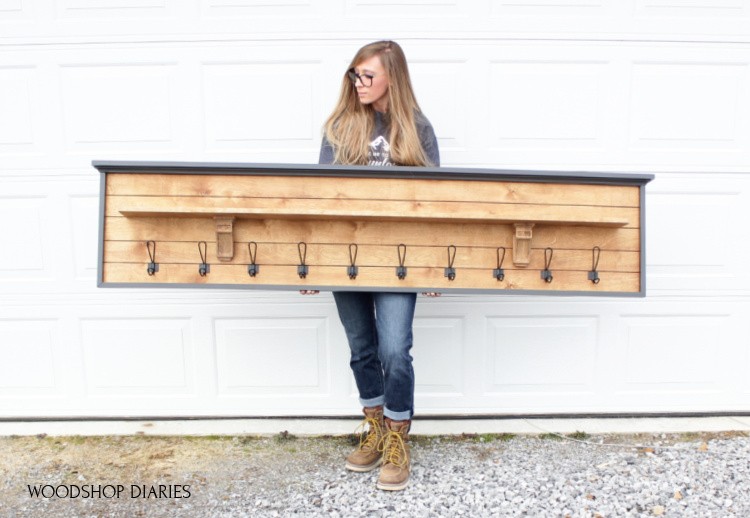
Easy Spring DIY Planter Post

March 28, 2022 by Shara, Woodshop Diaries

In this post, I’m sharing how to create an easy DIY planter post to hang flowers on this spring and summer!

Barrel planter with post and hanging baskets with flowers

This spring, combine your potted plants with your hanging plants with this quick and easy DIY planter post.

.

You can make this project in under an hour and it makes a great DIY Mother’s Day gift if you need something that goes above and beyond your basic basket of flowers this year 🙂

.

Whether you’re making it for your porch, your garden, around your mailbox, your flagpole, or to give as a gift, it’s a great spring project you’ll enjoy putting together.

.

Here’s a short video showing how it came together, and below is the step by step tutorial.

View this post on Instagram

A post shared by Woodshop Diaries | Shara (@woodshopdiaries)

.

*This post contains affiliate links. See policies for details.

Tools & Materials:

Tools:

  • Miter saw
  • Drill/driver
  • Screwdriver

Materials:

  • (1) Vigoro Barrel Planter
  • (1) 4x4x8 treated post (or can use cedar instead)
  • (2) plant basket hangers
  • (2) coco baskets
  • Mulch/potting soil
  • Flowers
  • (1) post cap
  • Exterior wood glue
  • 2 ½″ exterior screws
Barrel planter, post, baskets--materials needed to complete the project

Step 1: Cut Planter Post and Supports

You can make your 4×4 post any height, but I made this one about 54″ tall. So I cut a 54″ long piece off my 4×4 post first.

.

Then, I cut two angled supports to go inside the barrel planter to help keep the post upright.

.

I adjusted my miter saw to 45 degrees and cut these two support pieces roughly 16″ long. In order to fit down into the barrel, I had to trim some off the bottom of these supports. You can see the image below.

Placing corner supports posts into barrel

To do this, I adjusted my miter saw back to 0 and just cut a little off the long end until both supports and the post were able to fit down into the barrel. This doesn’t have to be exact.

Step 2: Secure Post to Planter

First, I placed the pieces down into the barrel and used (2) 2 ½″ exterior screws to secure the supports into the post.

Screwing supports into post inside barrel planters

Then, I flipped it upside down and centered the barrel planter on top. I used a couple more screws to secure the barrel planter to the center post.

Shara Woodshop Diaries screwing barrel planter onto post

Then, I laid it on its side and added some screws through the bottom into each angled support.

Barrel planter flipped on side--Shara Woodshop Diaries screwing supports to bottom of barrel

The barrel planter should be securely attached to the post and supports.

Step 3: Fill Planter

Once the post was secured to the planter, I filled it with mulch. Now, I used mulch here because it’s a little lighter and this will make it a little easier to move around.

Filling barrel planter with mulch

However, if you plan to plant anything in here, I’d recommend using a potting mix. You CAN plant in mulch, but you have to keep it well watered, and likely whatever you plant will only last for the season.

Step 4: Add Hanging Baskets

I screwed these simple plant hangers into the post about 2″ down from the top. You can use a drill, but you’ll likely need a screwdriver to get them tightened down all the way because of the tight space.

Shara Woodshop Diaries using drill to secure hanging baskets to planter post

Then, I filled these coco baskets with potting mix, added some flowers, and hung them up.

Shara Woodshop Diaries planting flowers in hanging baskets for planter post

I adjusted the height of the chains so they didn’t hang down so low. You can adjust this however high or low you like.

Step 5: Add Planter Post Cap

The final piece was adding the post cap on the top. This is optional, but it looks a little more “finished.”

.

I just used some exterior wood glue to glue a fence post cap onto the top of the post here, and it was complete!

Shara Woodshop Diaries gluing post cap onto planter post

This is such a simple way to add some flowers and interest around your home, garden, or outdoor landscaping.

.

I hope you enjoyed this simple spring DIY planter post project and if you’d like to see more outdoor project ideas, check out a few favorites here:

DIY Planter Garden Bench
DIY Porch Swing
DIY Hammock Stand
Scrap Wood Lanterns
How to make your own DIY concrete planter pot with wooden base
DIY Outdoor Chair
2 Tool Outdoor Grill Cart
How to Hide Outdoor Eye Sores

If you want to stay up to date on all the latest projects and plans, be sure to subscribe to the newsletter so you’ll be the first to know about new posts and videos:

Save this for later by sharing to your favorite social channel or pinning it!

DIY Spring planter post with hanging flowers Pinterest image

Until next time, friends, happy building! 🙂
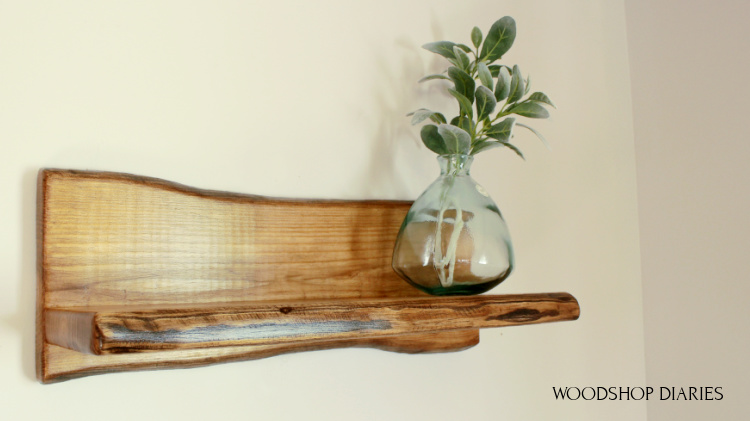
DIY Wooden Planter Bench

March 19, 2022 by Shara, Woodshop Diaries

In this post, I’m sharing how to build this DIY wooden planter bench!

*This post is sponsored by The Home Depot x Vigoro. It also contains affiliate links. See policies page.

DIY cedar planter bench sitting in front of black garage door

You could build these as just the planters, and skip the bench part if you wanted to. But, the bench is an easy addition that’s great for adding some extra seating to a porch or garden.

.

PSST…peep those adorable barrel planters to the right in the photo above?? I know someone is sure to ask where I got them, so here’s the link!

.

I’m sharing the building plans for this DIY wooden planter bench and a video below, with lots of helpful tips including how to easily figure the angles for X trim (without doing any math!).

.

So if you’re ready to see how it came together, let’s go ????

Tools & Materials:

Tools:

  • Miter saw
  • Table Saw
  • Drill/Driver
  • Brad Nailer
  • Speed Square

Materials:

  • (4) 2x4x8 boards (I used cedar)
  • (10) 1x6x72 fence pickets (I used cedar)
  • Exterior Wood Glue
  • 1 ¼″ exterior wood screws
  • 2 ½″ exterior wood screws
  • Brad nails (1″ long)
  • (2) nursery pots for planting
  • Vigoro Potting Mix
  • Vigoro Plants/Flowers of your choice (I used these!)

PRINTABLE BUILDING PLANS:

Some notes about the project:

Overall Dimensions:

The overall dimensions of this planter bench are 27″ tall, 15 ½″ deep, and 73″ wide.

Overall dimensional diagram of DIY wooden planter bench build project

Wood Type:

Since this was an outdoor project, I opted for cedar since it’s a naturally water and rot resistant wood and it’s readily available where I live.

.

However, there are other great wood options for outdoor use as well and you could also use treated wood, too.

.

If you wanted to use basic untreated pine/spruce/whitewood, you certainly can, just keep in mind that it may not last as long out in the elements.

.

Wood Sizes:

I couldn’t find cedar 2x2s locally, so I cut my own 2x2s from cedar 2x4s.

RELATED: How to make your own 2x2s

.

I used cedar fence pickets for the planter sides and bench seat. Cedar fence pickets come as 1x6s and are usually 72″ long. You can certainly use standard 1x6x8 boards instead, but the fence pickets are MUCH cheaper.

Cedar 2x4s and fence pickets on workbench

Keep in mind that the fence pickets are LABELED 1×6. A regular 1×6 board is actually ¾″ x 5 ½″ but fence pickets are actually ⅝″ x 5 ½″ wide, so they’re a little thinner than regular boards.

.

And they don’t have super tight tolerances–several of mine were actually a little wider than 5 ½″ when I bought them.

.

Tools:

Since there is so much potential variation in the fence pickets, several of these pieces require being cut to fit. So, a table saw is highly recommended for this project to make those cuts.

.

Planter Pots:

I used these 6.24 gallon nursery containers and built the planters to fit so they just drop in and rest on the frame.

Shara Woodshop Diaries dropping planter pots into planter boxes

However, you could certainly adjust your sizing to use a larger pot, or if you have smaller pots, you can add a little shelf on the inside of the planter to set your pot on. That’s covered in step 6.

Step 1: Assemble Wooden Planter Frame

To get started, I cut 2 ½ of my 2x4x8s down into 2x2s.

RELATED: How to cut your own 2x2s

.

Then, I cut these 2x2s into 4 legs and 8 frame pieces for each planter box.

  • (4) @ 27” long for the legs and
  • (8) @ 12 ½” long for the rest of the frame

FOR EACH PLANTER BOX. You can grab the full plans for this planter bench here.

.

These were pretty rough, so I gave them a good sanding before assembling.

.

You can assemble this a million ways, but I kept it simple and just assembled this frame using 2 ½” long exterior decking screws.

Shara Woodshop Diaries Assembling planter box frames from 2x2s

You can use large decorative screws (like what I used in this DIY porch swing) if you prefer, or use pocket holes on the inside so you don’t see any screws. 

RELATED: How to use a pocket hole jig

.

I predrilled all the holes before driving the screws to help prevent splitting and I tried to drive the screws so they were slightly off center so they didn’t run into each other at the corners. (Ignore my “serious face” below haha!)

Planter Box frame assembled on workbench

Repeat to make two frames.

Step 2: Add Planter Box Sides

I cut 8 pieces of cedar fence picket to line the insides of these frames and sanded them well. 

.

I used 1 ¼″ screws to install two of these on the inside of two opposite sides of the planter frame so that they were pushed all the way to the far left and far right. This will leave a gap between them. See image below.

.

Then, I installed two more on the other two sides like shown. There will very likely be some small gaps between the boards–that’s okay. Just space them out fairly evenly.

Fence pickets added to inside of planter box frame

Once these pieces were in place, I measured the gaps I needed to fill on the first two sides.  They should theoretically be the same, but these fence pickets have some variation, so it’s best to measure and cut to fit. 

.

Mine ended up being about 1 ⅜” wide, so I ripped two strips this width on the table saw and screwed them in place.

Diagram showing how sides of planter box are attached

Repeat for the second planter box.

Step 3: Add X Trim to Planter Sides

At this point, the planters are technically complete, but I wanted to add a decorative X to the sides.  This is totally optional, but really dresses up the sides with some nice detail. 

.

I’ll show you a simple way to add X trim here in this video without having to do any math. It’s just a minute long video and I promise it’s worth the watch!

.

I cut X pieces for three sides.  I didn’t install an X on the side the bench will go on since the bench will cover most of it anyway.  And I used exterior wood glue and brad nails to secure these pieces to each side.

Shara Woodshop Diaries adding X trim to the sides of the cedar planter boxes using an airstrike nailer

And, again, I repeated for the second planter box.

Step 4: Add Planter Bench Frame

Obviously the bench is optional, but if you want to add it, it’s really simple!

.

I cut two cedar 2x4s for the front and back supports and screwed them into the inside of the 2x2s on the planters about 16” up from the bottom.

Close up of installing bench supports to inside of planter frame

Once I had them installed into one, I flipped it back over and screwed it into the other.

.

Then, I cut four short pieces to go between them—two at each end and two spaced out in the middle—and screwed them in place. 

Planter bench frame assembled in workshop

Step 5: Add Planter Bench Seat Slats

I cut two fence pickets for the seat.  The gap between them in the middle was bigger than I wanted, so just like with the planter sides, I measured and ripped a strip to fit between them and screwed these three seat slats into the bench frame.

Shara Woodshop Diaries screwing bench seat slats onto bench frame

Step 6: Add Plants to Planter Boxes!

Now that the planter bench build was complete, it was time to add some greenery and finish this up!

.

If you remember, last year, I built an outdoor garden area at our previous home with the help of Vigoro, and this year, I’m trusting them again to help me with all the outdoor projects around our new home.

Filling nursery pots with Vigoro Potting Mix

I filled my nursery pots with Vigoro Potting Mix and added some greenery to each one.

.

I used these 6″ Vigoro Dieffenbachia plants here, and they are beautiful. However, they’re a shade and warm temps only plant, so keep that in mind when planting!

Up close look at Vigoro plant tag reading "dieffenbachia hybrid"

If you like to switch things up, you can trade these plants out with the seasons and add some spring flowers now, some ferns this summer, and some mums this fall.

.

No matter what you decide to plant here, Vigoro has you covered with everything you need to add soil, color, and life to your planter pots.  You can find it all in the garden center at your local Home Depot.

Shara Woodshop Diaries dropping plants into planter boxes in black nursery pots

I mentioned earlier that I built these planters so these pots would just drop right in.

.

However, if you wanted to use a different size pot, don’t worry.  You can easily add a little “shelf” inside these planters by screwing some scraps along the insides and cutting a piece of fence picket to sit across them to set your pot on.

Diagram showing how to install a simple shelf inside planter box to set pot on

This DIY wooden planter bench will make a great addition to the front porch, patio, or garden.

Close up look at DIY wooden planter bench sitting in front of garage door

And if you want to skip the bench addition, the planters are super cute all by themselves, too!

Two cedar planters with X trim

Don’t forget to grab the printable plans to build your own here!

.

If you’d like to save this for later, be sure to pin it or share it to your favorite social channel!

Pinterest collage image showing Shara installing X trim onto planters and completed DIY wooden planter bench at bottom with text "how to build a planter bench"

I can’t wait to share some more outdoor projects this summer so if you want to check them out, be sure to subscribe to the newsletter below and follow along.

Until next time, friends, happy building!
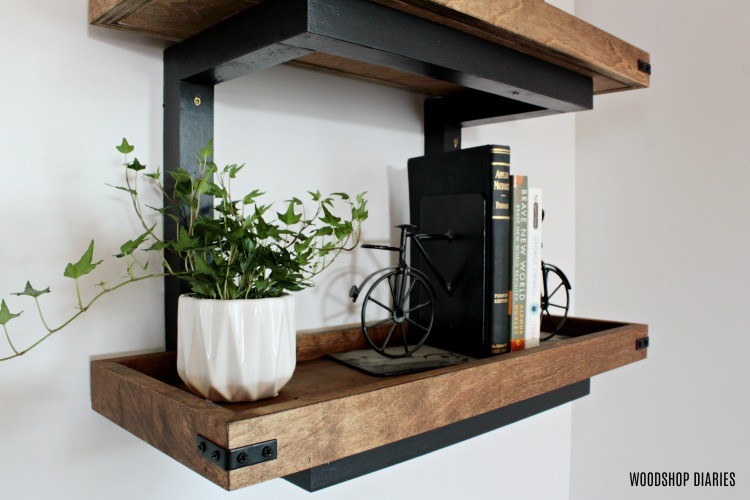
Easy DIY Book or Shoe Rack

March 12, 2022 by Shara, Woodshop Diaries

In this post, I’m sharing how to build this simple DIY book rack that could double as a shoe, plate, or towel rack, too!

*This post is sponsored by KregTool.com. It also contains affiliate links. See policies page.

Shara Woodshop Diaries placing shoes in wooden shoe rack

This project may be small and simple, but it packs a ton of opportunity!

.

You could use this in the kitchen as cookbook rack, spice rack, or as a plate rack.

.

Use it in a bathroom for toiletries or towels.

.

Use it in a kid’s room for books and toys.

.

Or use in an entryway as a shoe rack.

.

There are so many options, but no matter what you use it for, I’m sharing how to make your own right here!

.

Check out the video and plans below:

Tools & Materials:

Tools:

  • Circ saw
  • Kreg Rip Cut
  • Kreg AccuCut
  • Miter Saw (optional)
  • Kreg Pocket Hole Jig
  • Brad Nailer
  • Drill/Driver

Materials:

  • ½ sheet ¾” plywood
  • (1) 2x2x8 board
  • (2) ¾” x 48” dowel rod (optional)
  • 1 ¼” pocket hole screws
  • 2 ½” pocket hole screws
  • 1 ¼” wood screws
  • 2” wood screws
  • 1 ¼” brad nails
  • Wood glue
  • Edge banding (optional)

PRINTABLE PLANS: You can grab the FREE PRINTABLE PLANS for this DIY book rack complete with plywood cutting guide on KregTool.com here.

Notes About this DIY Book Rack Project:

Overall Dimensions:

The overall dimensions of this project are 6 ½″ deep x 25″ wide x 42 ¾″ tall.

Overall dimensional diagram showing size of book rack project

However, the sizing is EASILY customizable so if you need it larger or smaller, feel free to get creative to suit your own needs and space.

Base Sizing:

The base on this project is simply two legs and a piece between them mounted toward the front.

.

This is because this project is designed to be mounted to the wall and the back needs to sit flush against it. So the base needs to be taller than your baseboards and inset far enough from the back edge that it doesn’t come into contact with your baseboards.

Some posts you may find helpful in the build:

  • How to Cut Plywood Sheets
  • How to Apply Iron On Edge Banding
  • How to Use a Pocket Hole Jig
  • Brad vs. Finish vs. Pin Nailer

Step 1: Prepare Plywood for Book Rack

I share the plywood cut diagram in the plans here showing how to cut everything you need from a ½ sheet of ¾″ plywood.

.

However, if you have scraps, I recommend browsing your scrap pile to see what you can use for this because most of the pieces are fairly small.

.

I used my circular saw and Kreg cutting guides to cut down my plywood pieces into a back panel, two side panels, a bottom, two shelves, and three shelf fronts.

RELATED: How to cut plywood sheets using a circular saw

Book rack plywood pieces laid out on workbench labeled

I laid them out on the workbench and marked the edges that will be exposed in the finished project so I knew which edges to edge band.

.

As always, edge banding is optional, but it makes the project look a little cleaner, so I like to add it. 

RELATED: How to apply iron on edge banding

.

I applied iron on edge banding to all the edges that will be showing at the end and once I had all the sides that I marked covered, I gave everything a good sanding.

Step 2: Attach Book Rack Back and Sides

I assembled this project using pocket holes and screws, so I pulled out my Kreg pocket hole jig and drilled ¾” pocket holes into the ends of the little shelves and along the long edges of the back side of the back panel.

RELATED: How to use a pocket hole jig

Shara drilling pocket holes into plywood panel on Kreg 720 jig

I used 1 ¼” pocket hole screws to secure the back panel between the side panels making sure to place my edge banded edges in the right position.

Shara Woodshop Diaries assembling back and side panels with pocket hole screws

Step 3: Install Shelves

Then, I placed the two middle shelves in and secured these with 1 ¼” pocket hole screws. 

Shara equally spacing shelves in book rack before securing

Before securing, I made sure these were equally spaced out and that the shelves were square to the back so the shelves wouldn’t be tilted.

Step 4: Add Bottom to Book Rack Shelf

For the bottom panel, I centered it side to side, but kept the back edge flush to the back panel and simply screwed this in using 1 ¼” wood screws from the bottom.

Shara screwing bottom panel onto book rack project on workbench

Step 5: Add Shelf Fronts

To prevent books, shoes, plates, whatever you put in here from sliding off the shelves, I added some small pieces along the front edges of each shelf.

.

You could also install these using pocket holes and screws, but it’s a super tight fit to try to drive them, so I simply used wood glue and brad nails. 

RELATED: Finish vs Brad vs Staplers–What’s the difference?

Brad nailer securing shelf fronts onto book/shoe rack project

I applied wood glue along the front edges of both shelves and nailed these pieces on through the front and through the side panels.

.

For the bottom, since there’s no shelf to nail to, I applied wood glue on the bottom edge and glued it to the bottom panel.  I used nails through the bottom and sides to keep it in place while the glue dried.

Shara Woodshop Diaries nailing bottom shelf front ledge in place

Step 6: Add Top Trim

I cut a small scrap piece to glue to the top edge here—100% just for looks.  I don’t know why, but I felt like this top section needed something here to finish it off.

Top trim piece glued and clamped onto top of shelf panel

Step 7: Add Dowels to Shelf Tops

Then, I cut three ¾” dowels to fit right above these shelves.  I added these to give some extra height to the shelf fronts to prevent things from falling out.

.

These pieces are optional and you could definitely trade these out for something else if you wanted to use 1x2s, square dowels, etc.

.

This was kind of messy, but I just added some glue on the ends of each dowel and slid it in place about ¾” above the shelf fronts. 

Shara Woodshop Diaries using nail gun to secure dowel rods in bookshelf

I shot a nail through each side and into these ends to hold them while the glue dried, then wiped and sanded off any glue messes that occurred while putting these in.

Step 8: Assemble Shelf Rack Base

I cut some scrap 2x2s—two at 6” long and the other 21” long.  I drilled 1 ½” pocket holes into the ends of the long piece and assembled this base using wood glue and 2 ½” pocket hole screws.

Dimensional diagram of book rack base

As a side note—theoretically, each joint should have at least two screws, but I’ve found when using 2x2s, that they’re more likely to split when driving two screws into such a small piece.

.

So I’ve found that in most cases, some wood glue and one screw works well.

.

Before attaching the base, I went ahead and stained it.  I used ebony stain because I wanted the base to be dark to contrast the shelf.

Step 9: Attach Base to Book Rack

Then, I secured the base to the bottom of the shelf using 2” wood screws.

Shara Woodshop Diaries using driver to secure base to bottom of shelf cabinet

Step 10: Secure to the Wall

This shelf rack is tall and skinny, so it has the potential to easily tip over. So it should be secured to the wall once complete. 

Plywood book shelf rack with various books inside leaning against wall next to glass vase

Once you place it where you want it, I recommend using a screw to secure it to a wall stud behind it through the back panel or use another method to anchor it in place.

.

And now it’s ready for books, shoes, plates, towels, whatever.

natural plywood book rack shelf with books inside leaning against wall

I hope you enjoyed this simple little project build and if you want the plans to build your own, you can grab them here for FREE from KregTool.com.

.

If you enjoyed this easy DIY Book Rack project and can’t wait to see more, be sure to subscribe to the newsletter to be the first to know about the latest plans and videos on WoodshopDiaries.com!

And if you want to save this for later, don’t forget to pin it or share it to your favorite social channel!

Pinterest collage image showing dimensional book rack diagram up top and completed book rack at bottom with text "how to build an easy DIY book rack free plans"

Until next time, friends, happy building!
Modern DIY Electric Fireplace Wall

February 26, 2022 by Shara, Woodshop Diaries

In this post, I’m sharing how to make an modern DIY electric fireplace wall. Like this one!

White walls with black DIY electric fireplace wall with TV. Stacked wood cubbies on left side with firewood

When we moved into our home, this living room was just empty—it had no built ins, no features, nothing to give it any character—just empty, dark grey walls.

.

After being here for a couple months, I painted the walls white (SW Pure White in case you wondered) to brighten things up, and you may remember seeing me add this library desk area to the back wall a few projects ago.

.

But, this past week, I added a DIY electric fireplace wall with removeable cubbies and I’m so excited to share it with you here 🙂

.

I’ve got a video of the project from start to finish here and the step by step tutorial to make your own below:

*This post contains affiliate links. See policies page.

Tools & Materials:

Tools:

  • Miter saw
  • Drill/driver
  • Stud Finder
  • Utility Knife (to cut drywall)
  • Nail gun
  • Table Saw (optional to cut your own corner trim)
  • Level

Materials/Supplies:

  • Recessed Electric Fireplace
  • TV
  • TV Mount Kit
  • 2x4s (for framing–amount depends on size you build)
  • ½″ Drywall (could use shiplap, etc to cover the box–amount depends on size)
  • 1 ¼″, 2 ½″ & 3″ wood screws
  • Drywall screws, Drywall mud, drywall finishing materials
  • Moldings for top and bottom (I used crown molding and cove molding)
  • Scrap plywood (to build cubby boxes)
  • Corner trim (can make your own if desired)

.

*Note: Material amounts depend on the size fireplace wall you build. Room layout, ceiling height, and other details differ and may require modifications, so this is a general overview. Each specific project may require adjustments.

The Living Room BEFORE

The living room wall was pretty much blank. We had this console that I built years ago with our old tv, this blanket ladder, and some odds and ends sitting around.

The Living room before--plain white walls with wooden TV console and some planters in the floor

But it was pretty basic and we wanted something that looked a little more “built-in” and something that could kind of “anchor” our living room and give it some eye catching character.

Step 1: Demo and Layout Fireplace Wall

Since there wasn’t anything already here, there wasn’t much to this step.

.

I just moved the existing console and decor out of the way, and removed the baseboards on the wall I was working on. 

.

I didn’t like these existing baseboards, so I planned to replace them later, but if you like yours, try to keep them in good shape when you remove them and you can reuse them later at the end.

.

I located the wall studs and marked them using a pencil and a level, then tried to lay out where I wanted to install the fireplace wall.

Empty wall showing studs marked for electric fireplace wall placement

Based on the design I had planned in my head, I knew I wanted my DIY electric fireplace wall box to be 7 ft wide.  Luckily, I was able to find two studs about 7 foot apart that I could screw the sides of my wall box into.

.

But if you don’t have studs at the ends of where you want to place your new walls, you can attach a couple 2x4s horizontally on the wall into the studs and screw your side walls into these boards instead of directly into the studs.

Step 2: Frame out DIY Electric Fireplace Wall Box

I screwed together two “side walls” made of 2x4s about 96″ tall and 14″ deep.

Close up of screwing together 2x4 stud wall for fireplace

Then, I used a level to ensure they stayed straight up and down while attaching them to the studs.

Shara Woodshop Diaries screwing 2x4 side walls into wall studs using a level

Since this would be 84” wide overall, I took 84” – 2x 3 ½” for the 2×4 side walls and cut a 77” 2×4 to space the second side out evenly.

Shara Woodshop Diaries screwing second fireplace side wall into wall studs using spacer block

Then I headed back to the shop to lay out the front wall.

.

The front wall was a little more complicated because I needed an opening for the fireplace and an opening for the cubby I was building on the right side. Note that it’s shown laid out upside down on my shop floor in the image below.

Front electric fireplace wall frame laid out on shop floor

Depending on the specific size and brand of fireplace box you’re using, the instructions should tell you the size to make your rough opening so it’ll fit.

.

I made my opening about 14″ off the floor, and centered 2x4s above it on 16″ centers to mount the TV later.

.

Check out the video for more details on the front frame layout.

.

The tall opening on the right side is for removeable cubbies. This cubby is optional, but it serves two purposes—1: Because I just liked the look of stacked wood here.  And 2: So we can have access to outlets, and to add/remove tv cables, etc behind the new wall.

.

We are using an electric fireplace and it pulls so much power for the heating element that it really needed it’s own circuit to safely run the heat. So we need access inside here to add that designated outlet later, but for now, we can use the existing outlets to just enjoy the lights 🙂

.

Once the wall was assembled, I carried it inside and screwed it between the sides.

Shara Woodshop Diaries installing front fireplace wall between sides in living room

I secured the bottom of this framed box in two places at the floor–one on the left and one on the right.

.

Then, I added some corner braces at the top between the sides and the front to secure the top from wiggling. See video for more details.

Step 3: Add Drywall to Electric Fireplace Box

I cut to fit drywall pieces to cover this box making sure to leave openings for the fireplace and the cubby.

Shara Woodshop Diaries cutting drywall on shop floor
Electric fireplace wall box with drywall installed on front and sides

Side note—I used drywall because I wanted a smooth surface for this.  However, shiplap, or tile would work great for this too.

.

I mudded the joints and the corners and just did my best. I’m no drywall expert and I don’t want to be haha.

Shara Woodshop Diaries applying drywall mud to electric fireplace wall box

If you’re looking for drywall tips, you may want to search for videos and tips on that because I don’t have much expertise to share here ha.

.

But after three coats of mud and lots of sanding, I primed and painted the box. I primed with KILZ 3 (check out this post on why I love KILZ 3 primer) and painted SW Tricorn Black (the same color I painted my kitchen island here).

Shara Woodshop Diaries painting fireplace wall box black

Step 4: Install Fireplace (and TV–Optional)

After the paint was dry, I was eager to install the fireplace and make sure everything fit and see how it looked.

.

So we installed the fireplace box into the opening and secured it in place according to the instructions that came with it.

Shara Woodshop Diaries installing electric fireplace into wall

We used a basic TV mount and hung up the new TV, too.

.

Now, you can do this before or after trimming everything else out. I actually installed the crown molding first, then came back and hung the TV so it wouldn’t be in the way and I’d take a chance on knocking it off (I’m clumsy ha!)

Step 5: Trim out Fireplace Wall

I cut to fit, painted, and then nailed crown molding around the top. 

RELATED: How to Cut Crown Molding

.

Then I replaced the baseboards and added cove molding along the bottom. You could just wrap your baseboards around the new wall and skip the cove molding, but I used cove because I didn’t want any “big” trim around the bottom–I wanted to keep it minimal.

Shara Woodshop Diaries installing trim pieces on and around new fireplace wall

I puttied the nail holes on all the trim and touched up the paint as I went–it was a lot of paint touch ups here and there ha!

Step 6: Trim and Add Cubby Boxes

To trim out the cubby opening, I cut my own corner trim. However, you could purchase some corner trim already cut if you don’t have a table saw.

.

I ripped two 2” wide strips from a 1×6 board and cutting out a rabbet to make a little corner trim piece (see image below). This doesn’t have to be specific dimensions–the goal is just to cover up all the rough drywall edges to make the corners look nice and clean.

Cutting corner trim pieces to frame out cubby opening in front wall

I cut these to fit inside the opening mitering the corners 45 degrees.

.

I was pleasantly surprised how clean this looked, so I nailed it in place, took some measurements and headed to the shop to rummage through my scrap plywood pile to build some simple boxes.

Shara Woodshop Diaries installing corner trim around cubby opening on fireplace wall

I screwed together three identical sized plywood boxes to fit inside this opening between the trim pieces and stapled ¼” plywood on the back side. 

.

Simple as could be. I did edge band the front edges of the plywood that will be seen to make them look a little cleaner.

RELATED: How to Apply Iron On Edge Banding

Assembling plywood cubby boxes

To “install” the boxes, I screwed together some scrap 2×6 blocks to sit in place between the existing wall and the fireplace wall.

.

These will support the weight of the boxes sitting on top and can be easily removed if needed.

Using scrap blocks as a platform to install plywood cubbies

Then, I simply stacked the plywood boxes into the cubby on top of it.

.

These aren’t really heavy, so if and when we need to remove them, I can simply slide them out and crawl inside, then replace them once I’m done hanging out behind my fake wall box haha.

Sliding cubby boxes into opening in electric fireplace wall

At this point, all was complete—except for adding the extra outlet, which we will do later since we have access to get back there whenever we need *wink wink*

.

And now we have this nice fireplace feature wall to “anchor” our living room space and give it some character.

Shara Woodshop Diaries sitting next to fireplace on black feature wall in living room

Honestly, my favorite part is being able to sit back and watch the flames—I don’t even care if they’re fake—it’s still mesmerizing.  Lou seems to enjoy them, too ha.

.

I hope you enjoyed watching this DIY electric fireplace wall come to life and if you aren’t already subscribed, I’d love if you’d follow along so you don’t miss out on all the upcoming projects and plans coming soon.

If you’d like to save this project for later, be sure to pin it or share it to your favorite social channel!

Pinterest collage image showing before and after adding fireplace feature wall in living room with text "modern DIY fireplace wall"

Until next time, friends, happy building!
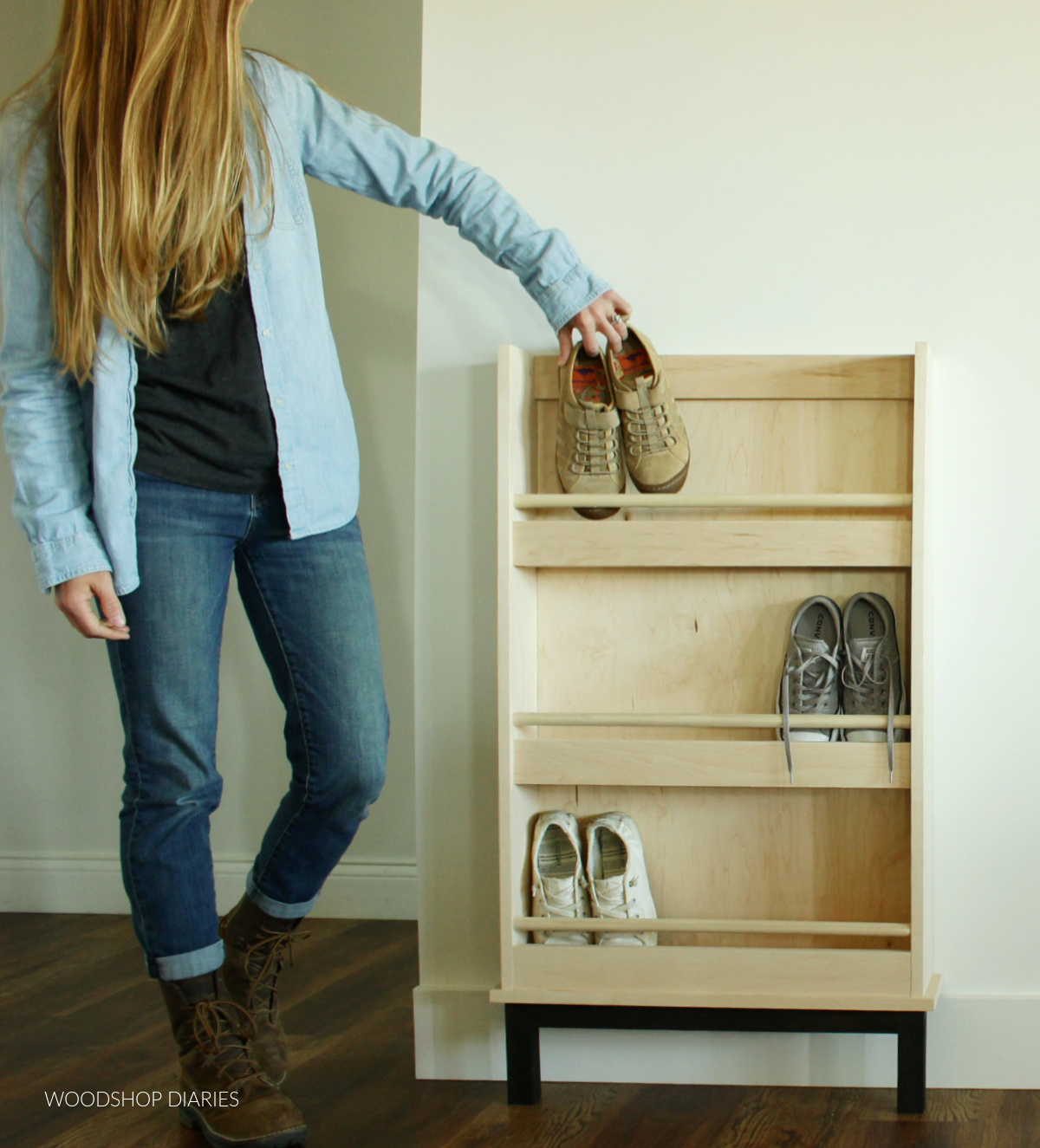
MODERN DIY Sliding Door with Frosted Glass Panels

February 12, 2022 by Shara, Woodshop Diaries

In this post, I’m sharing how to build a MODERN DIY sliding door with frosted glass panels!

Shara Woodshop Diaries standing next to wood and black MODERN DIY sliding door in white hallway by laundry room

One of the biggest pet peeves in our new home was the laundry room door.

.

We really only ever want this door closed when one of the laundry machines are running. Otherwise, we like to leave it open be able to go in and out of easily.

.

The existing door was a pivot door, so it could open in either direction, but neither way was very convenient.

.

If you opened it out into the hallway, it opened right in front of the door to go outside, and if you opened it into the laundry room, it opened right into the washing machine.

Shara Woodshop Diaries opening laundry room pivot door into hallway

So I decided in this case, it was best to replace this door with a DIY sliding door, so I built one 🙂

.

And I’m sharing how with you so you can build your own, too! I’ve got the video here and the step by step tutorial below.

**This post contains affiliate links. See policies.

Tools and Materials:

Tools:

  • Miter saw
  • Table saw (completely optional–not necessary)
  • Circular saw (used to cut plexiglass–could also use utility knife, jig saw, etc)
  • Clamps
  • Drill/Driver
  • ⅜″ forstener bit
  • Wrench, pliers, or sockets to install sliding door hardware
  • Stud Finder
  • Nail Gun (to replace existing door trim if necessary)
  • Kreg MultiMark and/or speed square

Materials:

  • (5) 2x6x8 boards
  • (1) 36×48 sheet (about ⅛″) plexiglass
  • Pack of 25 ½″ x 48″ square dowels
  • ⅜″ dowels (Or can use pocket holes and screws instead)
  • 1x4x8 (to replace existing door trim if necessary)
  • Wood Glue
  • Quick dry wood glue
  • 7 ft sliding door kit (size needed may vary depending on your door size)
  • Frosted glass spray paint
  • Finish of your choosing

Notes about this DIY Modern Sliding Door:

Determining Sliding Door Size:

In this project, I was replacing my existing 36″ swing door with a sliding door. To determine the size to build my sliding door, I measured the door OPENING and added about 2″ on EACH side and 2″ on the top.

.

This way, the door would overhang the opening about 2″ in each direction (it doesn’t have to be EXACT). My door ended up being 40″ x 82″ overall. Yours may be different depending on your door opening.

Sliding Door Hardware Kit Options:

I purchased a 14 ft sliding door kit–this comes with two 7 ft rails and two pair of rollers (for double doors). However, I split this kit and used one 7 ft bar and one pair of rollers for this door and I will use the other half of the kit for a different door later.

.

It was cheaper to buy the 14 ft and split it than to buy two seven foot kits. BUT, you can purchase a 6 or 7 ½ ft kit if you don’t have a need for a second sliding door. They come in several sizes here.

Dealing with Existing Door Trim:

In order to install the sliding door rail onto the wall, you will need the rail to be on one plane. You can’t mount half on door trim and half on the wall.

.

So if you have existing door trim, you’ll need to extend the trim out the length of your rail. If you don’t have existing door trim around your opening, then nothing needs to be done (lucky! haha).

.

For More Sliding Door Ideas, check these out!

  • How to build your own DIY modern sliding door with mid century style frosted glass panes!
    DIY Modern Sliding Door
  • Double Sliding Doors
  • Sliding Door Entertainment Center

Step 1: Assemble DIY Sliding Door Frame

To start this project off, I began by building the door frame. I wanted something simple, so I built the main frame of this door using 2x6s.

.

I measured the door opening and added 4” to the width and about 2” to the height. That way it would overhang the opening on all sides by about 2”.

.

This made my overall door size 40” wide x 82” tall. So I cut down my pieces to make this size:

(2) 2x6s @ 82″ long

(8) 2x6s @ 30″ long

2x6 boards cut down to assemble sliding door frame

Because these 2x6s came with rounded corners, I ran them through the table saw to remove about ¼″ off each edge.

RELATED: How to square off rounded edges on construction lumber boards

.

That left me with nice, clean, sharp corners to work with and made my 2x6s about 5″ wide. But, you can leave the edges as is if you don’t have a table saw—it’s not a necessary step.

.

Just keep in mind my measurements above are based on 5″ wide boards, so if you leave them full width, you may need to adjust the rails an inch shorter.

.

I dry fit the pieces together on my workbench and spaced the rails evenly so all the openings were the same size. (In my case, these were 6″ apart).

.

Then, I used a speed square and my Kreg MultiMark tool to mark out dowel locations to assemble the frame.

Sliding door frame pieces laid out on workbench--Shara measuring distance between rails

I didn’t really measure these exactly. It doesn’t matter where you put them as long as the holes in the stile and the rails line up.

.

With the pieces laid out evenly on my workbench like shown above, I used a square to mark two lines on each rail (seen below) and transferred these marks around the corners where they’ll be drilled out. (See video above for more details)

  • Arrow pointing to dowel marks on sliding door
    Mark dowel locations on stiles and rails
  • Using speed square to transfer dowel marks to board edge
    Transfer marks to board edges
  • Sliding door rail boards marked for dowel locations
    Mark centerlines of edges

I made sure to mark these in the centerline of the board edges and labeled each rail so I didn’t get them mixed up.

.

Then I used a ⅜” forstener bit to drill out holes to insert the dowels. I drilled a little over half the length of the dowels I was using—which was about ¾” deep.

  • Shara Woodshop Diaries drilling dowel holes in stile board edges
  • Shara Woodshop Diaries drilling dowel holes into door rail ends

I sanded the pieces before assembling because it will be a lot easier to do now vs later, but made sure to keep everything in the same order and not switch up the rails.

.

And then the most stressful part of this entire build began—the glue up. In hindsight, pocket holes may have been a better option, but I really didn’t want to see or plug these in this case, so I went with dowels.

RELATED: How to use a pocket hole jig

.

I used wood glue to install dowels into one of the stiles, then added the rails, and repeated to add the second stile. It’s helpful to have a second set of hands for this as this door is pretty big and heavy.

.

I used a rubber mallet to tap in most of the dowels, but used a pipe clamp to convince the others to get in place haha.

.

I used several pipe clamps to glue this door together and let it dry overnight.

Shara Woodshop Diaries clamping DIY sliding door together in glue up

After the glue was good and dry the next day, I came back and gave the door a good sanding to remove any squeeze out smooth out all the joints.

.

Then, I applied a few coats of clear coat poly. You could paint or stain the door as desired at this point.

Step 2: Cut and “Frost” Plexiglass Panels

Next, I started cutting down my plexiglass pieces to fill the openings in the door.

.

You could use real glass for this if you wanted. I actually used real glass in a similar style sliding door here.

.

But this time, I just grabbed a sheet of ⅛” plexiglass to keep it lighter, simpler, and less dangerous in case of any accidents.

Shara Woodshop Diaries using circular saw to cut down plexiglass sheet

I used a finish blade in my circular saw to cut down this sheet into 7 strips SLIGHTLY smaller than the openings in the door.

.

I purchased a 36″ x 48″ sheet, so I cut the 36″ side down to just under 30″ first, then ripped seven ~6″ wide strips to fit in the openings. Note that it’s best to cut about ⅛″ smaller than the openings to give you some wiggle room when installing them.

.

You could also use a fine finish blade in your table saw, a jig saw, or a utility knife. I just already had a finish blade on my circular saw so that’s what I used so I didn’t have to swap out any blades.

RELATED: If you want an alternative way to cut down plexiglass, check out this tutorial.

.

I removed the protective plastic on one side of the plexiglass and gave these pieces several coats of frosted glass spray paint. You only need to coat one side of the plexiglass.

Frosted glass spray paint can in front of plexiglass strips ready to be sprayed

I’ve used this paint several times before and it works great, but in my experience, you will need at least 4 coats to make it look even and not still be see through.

Step 3: Line Door Openings with Dowels

Now, I’ve built a very similar DIY sliding door several years ago and used a router to route out a rabbet to install the glass panels.

.

This time, though, I was trying to find an alternative way to install this that didn’t require a router, and I ended up using ½” square dowels. I found this pack of 25 that was plenty to complete this door and have a little leftover to play around with later.

Close up of ½" square dowels on workbench

I cut these dowels to fit inside the openings of the door and stained them ebony to give them some contrast against the natural wood on the frame. But you can paint or stain however you want if you don’t like ebony stain.

.

Then I used some quick dry clear wood glue to glue these pieces in place. I kept these pieces about ¼” inset from the front edge and worked my way around each opening gluing these in place.

Shara Woodshop Diaries gluing square dowels into openings of DIY sliding door to install glass panels

Step 4: Install Plexiglass and Line Back Openings

After each opening was lined with dowels, I laid the door over and glued the frosted glass panels in place.

Shara Woodshop Diaries installing plexiglass panels into sliding door

Glue here is totally optional—it’s really not necessary because after these were in, I flipped the door back up and repeated the process of lining the other side with dowels to hold the glass in place.

.

I’ll be honest, I couldn’t decide if I liked the black lining on the front, so on this side, I kept these pieces natural. That way, if I changed my mind, I could flip the door over and make this the front.

Shara Woodshop Diaries gluing square dowels on back side of sliding door to keep plexiglass panels in place

At this point, the sliding door itself was complete, but now I had to hang it.

Step 5: Hang Sliding Door Hardware Rail

In order to mount this rail, I needed to either remove all the door trim here and finish the corners with drywall OR extend this top board the full length of the rail.

.

Since I hate drywall work, I just installed a new piece of trim here. I pryed the top piece off and cut a 1×4 to 7 ft long (the length of my door rail) and nailed it into the studs on the wall.

Shara Woodshop Diaries nailing new trim piece above laundry room door to install sliding door hardware rail

The existing trim was never caulked or painted properly, so this gave me the opportunity to caulk, putty, and paint the trim so it looks a little nicer.

.

And then, it was time to actually hang the rail. I followed the directions with the kit to mark and predrill holes into the wall studs behind the trim.

Shara Woodshop Diaries installing sliding door hardware kit onto wall

I did two first to get it in place, then did the rest one by one to make sure my holes didn’t get out of line with the holes on the rail.

Step 6: Remove Existing Door and Hang New DIY Sliding Door

I removed the old pivot door and puttied, sanded, and touched up the paint from the holes left behind. While all that was drying, I added the rollers to hang the new door.

.

I laid the new door over on its back and marked out where to drill the holes to install the rollers according to the instructions with the sliding door kit.

.

I started with a small bit first and worked up to a hole large enough to fit the included bolts through. Then, I installed the rollers good and tight. I used a couple wrenches to tighten everything, but pliers would work as well.

Shara Woodshop Diaries drilling holes in sliding door to install rollers

Then I carried it inside and set it on the rail for the moment of truth.

.

It fit, it rolled, and it functioned! That’s a win haha.

.

I adjusted the stops on each end of the rail so the door didn’t slide off, but I didn’t have any concrete screws to install the guide stops at the bottom of the door. So for now, It’s just hanging freely.

Black and wood modern frosted glass sliding door on laundry room in white hallway

I’ll have to grab some concrete screws to screw the stops that came with the sliding door kit into the floor–or use some sort of adhesive to stick it on. But if you have wood floor, you can use the screws that were included in the kit.

.

I’ve got so much more to do in this little hallway and in the laundry room, so the color of the door may change once I get everything else in here added and situated. I’m indecisive haha.

.

If you want to see what else eventually happens in this space, be sure to follow along and subscribe to the newsletter to be the first to know about new projects and plans!

I hope you guys enjoyed this DIY sliding door project and if you’d like to save it for later, be sure to pin it or share it to your favorite social channel!

Pinterest collage showing Shara installing frosted glass panels into sliding door at top and finished modern DIY sliding door hanging on rail at bottom with text "How to build a modern sliding door"

Until next time, friends, happy building!

Basic Guide to Using a Router

February 10, 2022 by Shara, Woodshop Diaries

In this post, I’m sharing some tips on getting started using a router, breaking down the different types, and giving you some project ideas you can practice with!

After a recent poll on my Facebook page, I was overwhelmed with how many people had so many questions about how to use a router.

I’m not a router expert, but I’ve used one a time or two (or a hundred). So I wanted to put together this router guide with all the information that I’ve learned over the years to help others who had questions and are just starting out.

This post contains affiliate links. See policies page.

Router Guide: What is a Router?

Routers come in many shapes and sizes. I’ll cover the various types below, but, basically, a router is a power tool that uses a shaped cutter (or a bit) to make decorative edges, or grooves in wood.

Routers are a super versatile tool. And like any power tool, they pose a possible danger, especially if you aren’t sure how to use it.

Be sure to read manufacturer’s instructions on your routers and get comfortable using them on small projects before tackling anything huge.

Router Guide: Why Do I Need One?

Routers are really handy to have in a woodshop. I don’t use mine on every project, but I have used them on several.

A router is one of those tools that you may not use every day, but there’s not really an alternative to use when you need it. It’s both a versatile, but specialized tool. Nothing else really takes it’s place.

They are great for not only adding some decorative touches to your projects, but they also can be used to cut slots, grooves, and dadoes for joinery methods, flatten table tops, carve, and smooth out rough or uneven edges when needed.

Here are a few examples of how I’ve used my router. These are a just a few of the many ways you can use them:

Add a decorative edge on a project

Check out how I used a router on this scrap wood cutting board project.

Routing chamfer edge on cutting board
up close chamfer edge on cutting board

Cut out large rabbets for joinery

Check out how I used a router on this dining table build to join the legs and apron.

Cut a perfect circle

Check out how I used a router to cut a perfect circle to build these round coffee tables.

Smooth uneven edges after glue ups

Check out how I used a router to flush cut the edges of this DIY pumpkin tray after gluing the pieces together.

Cut dadoes to assemble shelves

Check out how I used a router to cut dadoes to assemble this large DIY modern shelving unit.

Cut out a hole in the middle of a project

Check out how I used a router to route out a hole to install a clock mechanism in this DIY round wood clock project.

Route out hold for clock movement
Set DIY clock movement in place
How to build your own personalized DIY wooden wall clock with this free tutorial

Make frame and panel cabinet doors

Check out how I used a router to build these DIY shaker style cabinet doors.

Using trim router to add roundover to door frame
How to Build Cabinet Doors

Specialized router bits can also be helpful in making cabinet doors, cutting key hole slots, and cutting pieces out from templates.

Router Guide: What Kind Are There?

There are several types of routers and some of the terminology overlaps. But, there are three basic types of routers.

They may come in different sizes and they may be called different names, but they generally fall into one of these categories: trim, fixed base, or plunge.

Let’s also cover the terms collet and shank before I dive into this.

A collet is the metal sleeve on a router that you insert a router bit into. A shank is the part of a router bit that gets inserted into the router. (This is just like with drills and drill bits.)

These typically come in ¼″ and ½″ diameter sizes on routers.

Trim Routers

Trim routers are small routers that can typically be held with one hand like shown here.

Sometimes they are called palm routers or hand routers. I’m currently using this corded Ridgid Trim Router in my shop. It also comes in a battery powered version if you want to ditch the cord.

Using a trim router to chamfer the edge of a walnut serving platter

Trim routers usually have ¼″ collets for ¼″ router bit shanks and are best used for small details like adding decorative edges shown here in this cutting board.

close up of chamfered edges of a cutting board

In my experience, they don’t do well removing a large amount of material at one time. I’ve used mine in a circle jig to make a thick, round table top, but I don’t recommend it. It’s just too small for making large cuts.

Fixed Base Router

TECHNICALLY, a trim router is also a fixed base router, but when I talk about fixed base routers, I typically think about mid and full sized versions. Trim routers are kind of an animal of their own.

Fixed base routers are routers that continuously cut at the same depth. Now, the depth is adjustable between cuts, but unlike a plunge router (I’ll discuss below), you can’t lift and plunge while it’s cutting–hence the term “fixed base.”

They usually have two handles on each side so they can be held and controlled with two hands. And they are usually larger and more powerful than trim routers.

Router guide: Fixed Base Ridgid Router

They can come in TONS of sizes (as far as horsepower goes) and can be ¼″ or ½″ collets.

Personally, I’m using this Ridid 2 HP Fixed Base Router and it uses a ½″ collet and I LOVE it.

The larger router cuts much thicker material than my small trim router without bogging down and is much easier to control with the two handles on each side.

Also, the ½″ router that I’m using comes with a ¼″ collet attachment so I can still use all my old ¼″ router bits with it even though they are a different shank size.

¼" attachment for router bit collet

Plunge Router

I don’t have a plunge router to show you pictures of, but basically, a plunge router is just a router that has a “springy looking base” that allows you to plunge the bit into the wood and lift it back up.

This is useful for carving signs where you need to lift the bit between letters or designs you are carving.

It’s handy to have the ability to plunge and some fixed base routers have a separate attachment you can purchase to give you both fixed and plunge base options.

Router Guide: Which is Best?

It all just depends on what you plan to use it for.

If you just want to add some decorative edges to your projects and are on a budget, a trim router is probably your best option.

It’s the cheapest option, but also has the least amount of power. It’s great to start out with and you can upgrade later.

If you plan to use it to cut out circles, table tops, cut large dadoes, or you are going to be using it on a lot of thick material, I’d upgrade to a larger fixed base router.

I got my fixed base router because my trim router just wasn’t cutting it (pun intended) to help me cut out circles in 2x material. The larger router is much easier to control, too, so I feel more comfortable using it.

That said, if you think you may ever want to use the functionality of a plunge router, I’d recommend getting a fixed base router that has the add on option to use it as a plunge router as well. Like a 2-in-1.

Router Guide: How To Use a Router

That’s a tricky question to answer because routers are SO VERSATILE, so you may use them a little differently for each application.

However, I’m covering the BASICS in this post, so first, we have to install the bit.

Router Bit Types

Routers can use A TON of different bits. Here are several different types you can browse through to see all the options.

Some are for edges and they will have a little bearing at the bottom or the top. This bearing is designed to ride along the edge of the board while the cutter cuts a profile.

Close up of chamfer router bit in fixed base router--guide to using a router example

Some common decorative edge bits are chamfer, Roman Ogee, round over, and cove. .

You can see the chamfer along the bottom edge of the tray in the first photo below, the Roman Ogee around the edge of the door, and the round over on the cabinet door frame below.

Round over routed edge

And some router bits are for cutting grooves–like a straight bit, juice groove bit or a dovetail bit.

Straight bits come in different sizes and are commonly used for cutting dadoes. I also use them when I cut out round table tops.

V groove bits, round nose (or juice groove bits), and other decorative groove bits come in various sizes as well and are often used for carving designs like the juice groove shown below in this stove top cover.

Juice groove routed into stove top cover

Flush trim bits are another very common bit used in woodworking.

These are handy for applications like where you glued two pieces together and the edges aren’t flush. I used a flush trim bit in this pumpkin tray project where I glued a piece onto the top and they didn’t match up perfectly.

Instead of sanding for hours, I used a flush trim bit to clean up my edges.

Using a flush trim bit in router to clean edges on a glued up platter project

Installing the Router Bit

Once you decide which bit you want to use, follow manufacturer’s instructions to install it into your specific router.

Typically, you simply slide it into the collet and use the included wrench (routers come with a wrench for this) to tighten the nut.

Tightening the nut on trim router to hold bit in place

Once you install the base back on, you can adjust the base up and down (mine has a turning wheel for extra precise adjustments) to set the correct cutting depth you want (see below for cutting depth details).

Routing Direction

When routing an edge, router direction is very important.

You should route opposite the direction that the bit is turning.

So, when running the router along the outside edge of a board–for example around the outside edge of a picture frame–you should cut counterclockwise (or running from left to right).

Router Guide--routing outside edge of picture frame counterclockwise

When routing INSIDE a board (like this frame for example), you should route clockwise (so right to left).

Router Guide--routing inside edge of picture frame clockwise

Routing Depth

Your routing depth will vary depending on your application.

The depth is adjusted by adjusting how far the router bit sticks out of the base. When routing a small decorative edge, you may be able to make one pass and cut your edge.

But, if you are taking a lot of material off at a time or cutting through thick material (like cutting out a circle table top), it may be best to make several passes, going a little deeper each time.

It all depends on how sharp your bits are, how powerful your router is, and how comfortable you are using it.

When using a router, I HIGHLY recommend doing a couple test pieces to make sure you’ve got your adjustments set how you want.

Router Guide and Jigs

When using a hand held router, it’s helpful to use a router guide or jig for more accurate cuts (like the circle jig seen above).

Most routers come with some type of attachment that will run along the edge of a board and allow you to cut a certain distance from the edge.

Or, you can simply clamp a straight edge to run your router along as well. There are also many jigs that you can make or buy to add to the functionality of your router.

A good example is a circle jig. You can purchase a circle jig to mount your router onto that will allow you to cut a perfect circle. OR, you can make your own circle jig as well.

There are also TONS of jigs and guides out there for helping cut dovetails, carve letters, etc.

And of course, you can always make your guides, jigs, and set ups like this one.

Router Guide: Router Tables

I can’t say much about router tables as I don’t personally have one. However, they can be a VERY useful tool to have–it’s on my wish list.

Router tables are basically a table base where you can attach a router upside down so that the router bit sticks up out of the table. Like a table saw…but for a router.

They have rip fences and can make edging small pieces and cutting dadoes quick and painless.

I borrowed my Dad’s tiny, mobile router table for one project one time and kind of just winged it.

I built a jig to hold a dowel rod so that I could route a slot to insert a 1×3 to make a modern dresser base. So I don’t have a lot of information to share. But, here is a link to a great guide to router tables.

mid century furniture base diy tutorial--slot cut in dowel rod on router table

Router Safety Tips

I’M NOT A SAFETY EXPERT. Follow manufacturer’s instructions for your specific router. I just have to make that clear.

However, there are some basic safety measures you should take when using a router. Many people are afraid of routers…and for good reason.

They can be dangerous. So here are a few tips to make using your router a more uneventful experience 🙂

Keep your hands out of the path of the router.

If you are using a hand held router like I’ve shown in this post, do not hold your pieces with your hand.

Clamp pieces to your workbench to route and keep your hands out of the way. If you are using a router with two handles, keep BOTH hands on it.

The only router you should use with one hand is a trim router.

Cutting dado in serving tray with router and straight bit

Make sure you are routing the correct direction

I covered this above 🙂

Don’t cut too much too fast

If you are cutting away a lot of material, don’t cut too much too fast. Make multiple shallow passes if needed.

Use sharp bits

Use high quality, sharp router bits. Crappy bits can chip, burn, bog down and cause kickback. Use sharp router bits for cleaner and safer cuts.

Examine your board before routing

Examine the area you plan to route. Do not route if you see cracks, knots, or loose pieces. This can cause damage to your project, or, in worst cases, can fly off and cause danger to you.

Turn router off when not in use

The scariest part of a router is that it’s not a trigger switch like a drill. You flip the switch and it’s on. And it stays on whether your hands are on it or not.

If your router isn’t cutting, TURN IT OFF. Don’t lay it on your workbench running. Don’t walk around with it running.

Practice, Practice, Practice

The best lessons are learned by experience. If you want to learn how to use a router, the best way is to USE A ROUTER.

Take it slow and get comfortable using it on some small projects or with some scraps. Routers are a very useful tool once you learn how to handle one.

If you want some projects to use your router with, here are a few:

Two Tone Clock
Cabinet Doors
Picture Frame
Modern Round Coffee Table
Modern Dining Table
Linen Cabinet
Cutting Board
Outdoor Dining Table
Bookshelf

I hope this routing guide has been helpful and I’d love if you’d pin this for later.

Until next time, happy building 🙂

Shara Woodshop Diaries Sign Off

DIY Modern Sideboard Cabinet

February 5, 2022 by Shara, Woodshop Diaries

In this post, I’ll show you how to build this DIY Modern Sideboard Cabinet!

Shara opening door of DIY modern sideboard console cabinet

This piece would be perfect for a media cabinet, TV stand, or as a sideboard in a dining room. It’s got plenty of storage behind those doors!

.

I built this sideboard cabinet in two sections—it’s an oak plywood cabinet sitting on a simple painted base.  It’s a very simple design and one of my favorite features is the way the top kind of floats above the cabinet. 

Close up of floating cabinet top on sideboard console

I achieved this by adding an inset frame between the top and the body of the cabinet.  You’ll see what I mean in the video and tutorial…so let’s just dive right in, shall we?

.

If you’re interested in other console or storage cabinet projects, check these out:

  • DIY X Base Console Table stained with Minwax Early American and finished with Minwax Polycrylic--Free building plans to make your own!
    DIY Console Table
  • Stenciled Door Console
  • Open Shelf Dresser
  • DIY Display Shelf with Storage

I’ve got the video for you right here with the plans and tutorial below:

*This post contains affiliate links. See policies page.

Tools and Materials:

Materials:

  • 1 ½ sheets ¾″ oak plywood
  • ½ sheet ¼″ plywood for back
  • (1) 2x2x8 board
  • (2) 1x3x8 board
  • (2) pair inset concealed hinges
  • (2) pair overlay concealed hinges
  • (4) door pulls
  • Wood Glue
  • Edge banding
  • 1 ¼″ pocket hole screws
  • 2″ wood screws
  • 1 ¼″ wood screws
  • Wood finish of your choice

Tools:

  • Circular Saw and Saw Guide
  • Miter Saw
  • Pocket Hole Jig
  • Drill
  • Concealed hinge jig
  • Stapler/nail gun

Grab the Printable Plans for this Project Here:

Notes About this Modern Console Cabinet Build:

The overall project dimensions are 72″ wide, 31 ¾″ tall, and 16″ deep.

Overall DIY modern sideboard console cabinet dimensions

Some posts you might find helpful for this project:

  • How to cut down plywood sheets
  • How to make your own 2x2s
  • How to apply iron on edge banding
  • How to use a pocket hole jig
  • How to install doors with concealed hinges

Step 1: Cut Down Plywood Sheet

The body of the cabinet—so everything except for the doors—can be cut from a single ¾” sheet of plywood.  So the first thing I did was cut down my first sheet and start building the cabinet. 

RELATED: How to use a circular saw to cut down plywood sheets

.

I used my Kreg rip cut to rip the sheet into three strips–two 16″ wide and one 15 ¼″ wide. Then I trimmed them to length on the miter saw according to the cut list in the printable plans.

Step 2: Assemble Modern Console Cabinet Carcass

Before putting anything together, I used some glue on edge banding along the edges that will be exposed in the finished project. 

RELATED: How to apply iron on edge banding

.

This is totally optional…some people like exposed plywood edges.  I just prefer to cover them.

.

The cabinet was easily assembled with ¾″ pocket holes and 1 ¼″ pocket hole screws, so once everything was cut to the right size, edge banded, and sanded, I drilled pocket holes to begin assembly.

RELATED: How to set up and use a pocket hole jig

.

I first assembled the bottom piece to the sides.  Notice that the bottom is ¾” narrower than the side pieces.  This is because the doors will overlay the bottom, but are inset flush to the sides.  

Console cabinet body assembly diagram

Once the bottom was screwed in place, I attached two pieces of 2 ½” plywood strips along the top—one in the front and one in the back.  Then, I added a support in the middle between these two strips.

Top of sideboard cabinet frame diagram with dimensions

Next, I installed a middle divider panel to divide the left and right cabinets.  I simply screwed this into the center of the cabinet using 1 ¼” wood screws along the top and bottom. 

.

Note that this divider is inset from the front of the cabinet ¾” like the bottom.  The doors will overlay this piece once it’s complete.

Diagram to install middle cabinet divider panel

Then I realized I had forgotten something and had to regroup. When I applied edge banding to the sides, I didn’t think about doing the top edge. I also didn’t think about covering up the pocket holes on the top.

.

When I install the “floating top frame” in the next step, these edges will show and so will the pocket holes.

.

So I needed to cover them. I applied glue on edge banding along all the top edges of the carcass to solve this problem before moving on to the next step.

Edge banding applied along top edge of entire cabinet body

Step 3: Add “Floating Top Frame” to Modern Sideboard Cabinet

Now the main body of the cabinet is assembled, so I moved it out of the way to work on the top.  Between this main body and the top, I added a little frame to make the top look like it’s floating over the body of the cabinet. 

Close up of floating cabinet top corner

I assembled a frame that was 1 ½” narrower on both sides than the body of the cabinet using some of the 2 ½″ inch wide strips and ¾″ pocket holes and 1 ¼″ pocket hole screws. 

.

Once it was together, I applied edge banding along the edges and glued it onto the cabinet like shown so that it was ¾” inset along all sides.

Installing frame diagram onto cabinet body

The glue alone probably would have been sufficient, but I went ahead and added some screws along the top of this frame to give it some extra holding power.  You can see this in the video above.

Step 4: Attach Sideboard Cabinet Top

To attach the top of the cabinet, I applied some wood glue along the frame from step 3 and centered the top in place.

.

I clamped it to hold it while the glue dried, then used some 1 ¼″ wood screws from the underside to secure it to the frame.

Top dimensions of console cabinet
Underside view diagram of console cabinet to attach top

Step 5: Attach Back of Sideboard Cabinet

Before moving onto the doors, I cut a piece of ¼” plywood and stapled it onto the back of the cabinet as a backer panel.

.

Below I’ve shown this as one single piece, but if you wanted to purchase a half sheet (4×4 sheet) of plywood, you can cut this in two pieces that meet in the middle and the middle divider of the cabinet will cover the seam on the inside.

Staple backer onto cabinet back

Step 6: Add Doors to the Sideboard Cabinet

I brought out another sheet of ¾″ plywood to cut the doors from.  I had a full sheet to use for this, but you could also use a half sheet (4×4) to cut the doors from.

.

I used my rip cut to rip plywood strips to 17 ½″ wide, then cut the strips to 21 ¼″ long pieces for the doors. I cut four identical doors like shown below.

Door dimensions for console cabinet doors

Once the doors were cut, I applied edge banding along the sides and stained the cabinet body with Varathane Smoke Grey.

.

Then I used my Kreg Concealed Hinge Jig to drill the cup holes to attach the hinges. I’ve got a post here on how to install concealed hinges.

.

Now, because of the way these doors are attached, the two inside doors need full overlay hinges, but the two outside doors need inset hinges.  This makes it appear that all the doors are inset to the cabinet body. 

RELATED: Learn the difference between inset and overlay cabinet doors here.

.

So I paid careful attention to which hinges I put on which door and how I installed them.  I adjusted the hinges to get equal spacing between all the doors.

Diagram of doors installed onto modern console cabinet

Once I had my doors in, I added some simple modern handles and flipped it upside down to install the base onto the bottom. 

Step 7: Add Console Cabinet Base

The base of this cabinet is made from simple 2x2s for the corners and 1x3s for the rest of the frame. 

RELATED: How to make your own 2x2s

.

I cut the pieces to length and drilled pocket holes for assembling it together.

Console Cabinet Base dimensions diagram

The short middle pieces on the front and back help support the middle of the cabinet to keep it from sagging. 

.

They’ve got pocket holes drilled to attach them to the base, but also drilled the opposite way to attach them to the cabinet bottom as well.

.

Once the frame was assembled, I painted it black.  And once the paint was dry, I was ready to attach it onto the bottom of the cabinet.

Attaching middle of console base to bottom of cabinet with pocket hole screws

I centered the base onto the bottom of the cabinet and used pocket hole screws into the center supports of the base to attach it to the cabinet. 

.

Then, I used 2” wood screws through the bottom of the cabinet into each leg of the base to secure it completely.

Attaching base of console using screws from inside the cabinet

Step 8: Finish and Add Shelves (Optional)

I brought it inside to poly it and then decided to drill some shelf pins in one side so I could add a shelf.  That’s another optional step.  It’s nice to have options, right?

RELATED: Check out more about using a shelf pin jig in this post

Shara adding shelf into console cabinet

And once the shelf was in place, it was finished.  It’s a really simple design and easy to build using plywood and pocket hole joinery. 

Angled shot of DIY modern console cabinet

This would be perfect for a modern media cabinet or a dining room console cabinet. 

Front View of DIY Modern Console Cabinet with four closed doors

If you enjoyed this DIY Modern Sideboard Cabinet project, be sure to check out my other building plans and DIY furniture projects.

.

Be sure to subscribe to the newsletter to be the first to know about new projects and plans!

Don’t forget to pin this for later or share it to your favorite social channel to save it 🙂

DIY Floating Top Modern Console Cabinet Collage Pinterest Image

Until next time, happy building 🙂

Easy Beginner Epoxy Projects and How to Polish Resin

January 29, 2022 by Shara, Woodshop Diaries

In this post, I’m sharing some fun and easy beginner epoxy projects and tips to getting the best results possible.

*This post is sponsored by The Home Depot as part of the ProSpective program and contains affiliate links. See website policies.

Easy beginner epoxy and wood projects--clear resin and wood charger plate and black resin and wood coasters

For the last few months, I’ve had so many requests for some easy beginner epoxy projects.

.

It’s been a while since I’ve worked with resin, but I finally gave in and decided to share an epoxy project again.

.

I say “again” because this isn’t my first epoxy project.  I’ve done a couple in the past, but it’s been a while since I worked with it.

RELATED: Check out this “broken” resin leg desk!

.

The problem I have with epoxy resin is that I like using it clear, but I can never get it to look very nice after I sand it. 

.

So, this time, I tried something different…a POLISHER!

Ryobi 5in Polisher and polishing pads on clear resin project

I actually got this cordless Ryobi Dual Action Polisher for using on my truck because “old red” needs a pick me up.  But after all these requests for epoxy, I got to thinking maybe this can work on that too.

.

So, in this post, I’m going to share a simple beginner resin pour project, some quick tips, and explain how I did things differently this time to get a much nicer finished result than in the past.

.

You can check out tutorial here and the step by step tutorial below:

Tools and Materials:

Tools:

  • Drill
  • Saw (circular, miter or jig saw)
  • Sander
  • Ryobi ONE+ 18V 5 in. Dual Action Polisher

Materials:

  • Deep Pour Epoxy Formula
  • Mixing Cups
  • Scrap wood for mold
  • Tyvek tape
  • Wood screws
  • Silicone Caulk
  • Sandpaper (80, 120, 220, 400, 600, 800, 1500 grits)
  • Polishing compound

Notes about easy beginner epoxy projects:

You can get as creative as you want, but I just did two basic resin pours here—one clear and one with black mica powder–and made what I’ll call a “charger plate” and some coasters from them.

.

You could add handles and make yourself a tray, use them as little plant coasters, just use as display on your countertops—whatever your heart desires.

.

Before we dive in, I want to share these tips I’ve learned the hard way when working with resin. I’m sharing with you so that you don’t make the same mistakes I have 🙂

FIVE TIPS TO A SUCCESSFUL EPOXY PROJECT:

  1. Temperature matters! Make sure you pour at the temperature listed on the resin you’re using. Too hot and it’ll cure too fast. Too cold and it’ll cure too slow. A few degrees can make a big difference!
  2. Mix ratio matters! Different epoxy formulas will have different mix ratios. Follow the instructions closely and ensure you are mixing to the correct ratio of resin to hardener.
  3. Stir well. When mixing your epoxy, STIR REALLY WELL. If you’re pouring clear, and you don’t mix well, you will see the two different parts in your pour and it will look cloudy.
  4. SAND, SAND, SAND. Sand resin gradually up to a VERY fine grit (like 1500) to get it clear and scratch free.
  5. Protect your work surface to prevent scratches. Use a towel or old blanket under your resin pieces while you sand and polish to prevent scratching it by accident.

Step 1: Cut Wood to Use in Resin Pour

To get started, I grabbed an old board I’ve had in my shop for a while with a big crack in it.

.

If you don’t have a big, cracked piece of wood, you can cut some unique shapes using a jig saw to fake a live edge, or use plain boards.

RELATED: How to fake a live edge on a new board!

Shara Woodshop Diaries cutting cracked board on miter saw

I used my miter saw to cut these two pieces off the board about 14-16” long.  The end pieces were already broken in two after I cut them off, but I split the second piece down the crack to get four “live edgy” looking pieces from these cuts.

Step 2: Build Molds for Epoxy Pour

I cut down some plywood scraps to assemble some shallow trays to use as my molds for pouring.

.

The great thing about making your own molds is that you can make them any shape and size you want.

.

If you didn’t want to make your own mold, you can purchase silicone molds for resin pours online as well.

.

I lined the mold pieces with Tyvek tape because the resin will stick to the bare wood. But it won’t stick to the tape.

Resin pour molds made of plywood lined with Tyvek Tape

Then I just screwed together the two molds using wood screws and used some clear silicone along the corners to seal the corner joints.  Sealing the corners will just help prevent the resin from leaking once it’s poured in.

Step 3: Pour Epoxy Resin into Molds

Before pouring, I made sure to sand the wood pieces and remove all the sawdust and dirt because I don’t want these getting into the resin once it’s poured.

.

Referencing tip number 1 above, I brought everything inside to pour because it was way too cold outside. 

.

I set out some trash bags on my kitchen island clamped my wood pieces in the molds, and prepared to pour. 

cracked boards clamped in plywood molds ready for epoxy pours

Because this board was about ⅝” thick, I used a deep pour resin formula.  There are a lot of brands and options for pouring thick resin, but make sure that whatever you use can be poured as thick as your board. 

.

If your board is really thick, you may need to do multiple pours.  Pouring too thick can cause the resin to get too hot or not cure properly.

.

Be sure the read the instructions carefully on the resin you plan to use.

.

I didn’t calculate how much I was going to need here.  To be completely honest, I just kind of eyeballed what was in the cup and what I needed to fill up in the mold and “guesstimated.”

.

It’ll take hours to start setting up, so if you need to add more, don’t panic. You can immediately mix and pour a little more in.

.

I filled this mold until the resin reached the top of the wood, then stopped. 

Pouring clear resin into the mold between two pieces of wood

For the second pour, I did the same thing, but before I poured, I added in some black mica powder and stirred it in.  You can get this powder in any color and you could also use alcohol ink or other methods to tint the resin your desired color.

.

It doesn’t take a lot, so just sprinkle a little in at a time and stir until it’s the color you want. Then, pour.

Pouring black resin into mold between two pieces of wood

Step 4: Remove Epoxy Projects from Mold

Once they were poured, I waited a little bit to make sure nothing leaked at the corners, then set these aside to cure for about 4 days.

.

Then I carried them to the shop and unscrewed the molds and removed the pieces.  The sides came off really easy with a rubber mallet, but I used a chisel to kind of pop the bottom off.

Clear resin and wood project removed from mold after curing

Step 5: Sand Epoxy Resin and Wood

Now, this is the part that bothers me the most—sanding.  Make sure to wear a dust mask as resin dust is rough stuff.  I used a belt sander first to help level out the top surface.

.

Then, I moved to an orbital sander.  I started with 80 grit and sanded the top and bottom.  The clear resin will look white and cloudy—which always makes me nervous.

Sanding epoxy resin and wood with orbital sander

After 80 grit, I went over it again with 120.  Then 180, then 220, 400, and 600.  Sanding will take a while, but it’s important to sand through each grit, removing as many scratches left from the previous grit as you can.  Allow plenty of time for sanding.

.

I only had sanding discs up to 600 grit, so I had to hand sand after the 600. 

Step 6: Cut Resin Project to Size

Before I started hand sanding, I wanted to make sure I was only sanding what I needed to, so I trimmed this piece down.  I trimmed my edges clean, then cut this into an octagon on my miter saw.  You can leave it a square, make it a rectangle, cut it into a circle, whatever.

Cutting resin and wood on miter saw

I actually cut my black resin piece into small squares to use as coasters. But I wanted the clear one to stay together as one large piece.

.

You can cut your resin/wood piece however you’d like.

Step 7: Wet Sand and Polish Epoxy

After it was cut to size, I dipped 800 grit sandpaper in water to wet sand it. 

Shara holding wet sandpaper over epoxy projects

I started with 800 grit, then moved to 1500 grit.  I tried my best to remove as many little scratches as I could on BOTH SIDES and the edges.

.

I didn’t have a polisher when I did my previous resin projects, so this is something that I did differently this time that I really think made a big difference in how bright, shiny, and clear this turned out vs my last attempt.

.

This Ryobi Dual Action Polisher comes with 3 pads—a cutting pad, a correcting pad, and a finishing pad.  It has a variable speed for optimal control and can be easily adjusted from 3000 up to 7500 orbits per minute.

.

It offers a removeable, adjustable handle for various grip locations, and a lock on switch, so you don’t have to hold the button continuously.

.

The best part is that it’s lightweight—only 3.75 lbs—and cordless, so it doesn’t wear out your arms with continuous use, and you can move it around freely without having to worry with any cords.

Applying polishing compound to epoxy

I added a little bit of compound each time, smeared it around some, and turned on the polisher. 

.

I started it slow, then increased the speed once the compound was distributed.  If it didn’t seem to be doing much, I added a little more compound, but not a lot.

Using Ryobi Polisher to polish epoxy resin project

I worked my way through the different pads (cutting first, then correcting, and finally the finishing pad), polishing both sides, then when it was finished, I wiped it clean. 

.

To seal and protect it, I applied some wax finish over the wood and the resin and buffed it in.

Polished easy beginner epoxy and wood project on granite kitchen island with vase on top

For the black resin piece, I followed the same process except that instead of making it one big project, I sanded it, and cut it into smaller squares. 

.

And now they’re ready for use.  I am actually really excited to have some little plant coasters to protect the surfaces I set my plants on, and also to protect my desk from my coffee and tea cups. 

Close up of clear epoxy and wood charger plate project cut in octagon shape

I really hope if you’re one of the many who have asked for some easy beginner epoxy projects lately, that this has given you some helpful tips and ideas.

.

Check out these other Easy DIY project ideas for more inspiration and be sure to subscribe to the newsletter to be the first to know when new projects go live!

Until next time, friends, happy building!
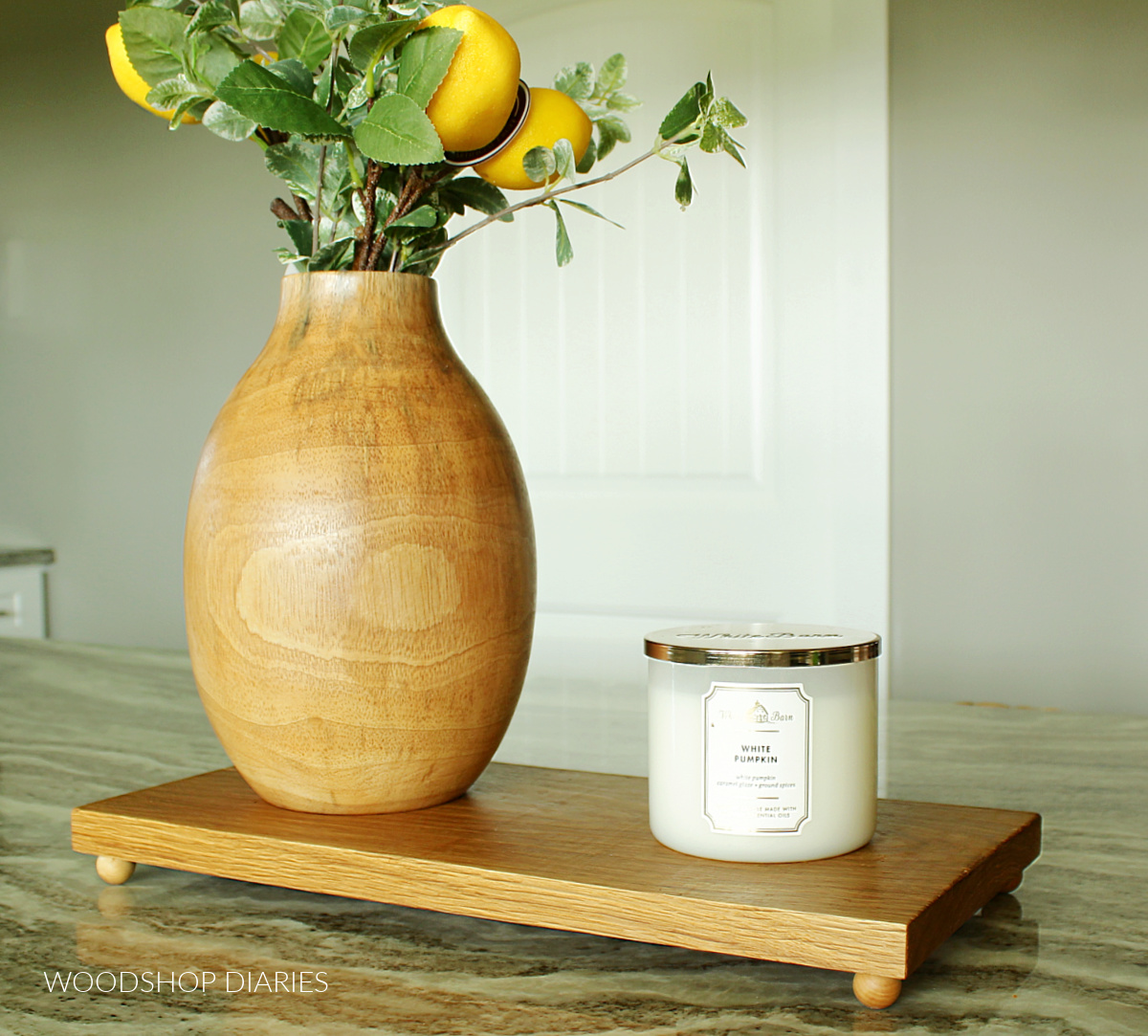
How to Cut Crown Molding with a Miter Saw

January 26, 2022 by Shara, Woodshop Diaries

In this post, I’ll show you how to easily cut crown molding with a miter saw.

Close up of crown molding installed on window trim

This is a useful skill to learn that you can apply to many future projects!

.

Before we dive into cutting, let’s discuss what crown molding is for a minute and how it’s typically shaped.

The Anatomy of Crown Molding

Crown molding comes in many sizes and styles. You’ll notice, though, that most types have these features–a flat surface at the top, a flat surface at the bottom back, and the “corner” section is hollow when installed.

Diagram of crown molding sections

You may occasionally run into “solid” crown molding options where the corner section is solid, but it’s not as common.

.

Note that the bottom, in many cases, has a flat surface area that’s larger than the top. You’re typically nailing through the bottom, so the larger surface area allows for more room to nail and a more secure hold.

.

Also, the flat top and flat back sections are 90 degrees to each other so these should fit square into a corner–like the corner where a wall meets a ceiling.

Computer diagram showing crown molding butted up to ceiling and wall

Of course, not every application using crown molding is for walls and ceilings. In many cases, I use crown molding for furniture pieces to give it some extra detail. And in this case, I used it to trim out a window.

.

Check out some furniture projects using crown molding here:

  • Library Bookshelf with Desk
  • Small Linen Cabinet
  • Glass Door Linen Cabinet
  • Dog Crate Nightstand
  • DIY Entertainment Center

.

No matter how you’re using it, the steps to cutting it are still the same. I’ll show you below.

*See website policies before starting any project.

To Cut Crown Molding, You Will Need:

  • Miter Saw
  • Crown Molding
  • Measuring Tape
  • Speed Square (helpful to double check angles on miter saw)

.

You can cut crown molding many ways, but a miter saw is a quick and easy way, so that’s what I’m sharing here.

.

Crown molding can be installed in different orientations. I’ll discuss in detail below, but first, let’s compare inside vs. outside corners.

.

RELATED: What type of nail gun should you use to install crown molding?

Crown Molding on Inside Corners

Inside corners are corners that meet together to form an internal angle–like the corner of a room. These are corners that don’t protrude outward, but instead, kind of form an “enclosed” space.

.

The key thing to remember when cutting crown molding for INSIDE CORNERS is that the bottom is longer than the top.

Diagram showing crown molding with end cut for inside corner

Below is a real life example. Notice that on the inside corners, the bottom of the crown protrudes further into the corner than the top, making it longer.

Kitchen cabinets showing two types of inside corners

In this example, the corner on the right is a 45 degree corner and the corner on the left is a 90 degree corner. I’ll discuss that more below.

Crown Molding on Outside Corners

Outside corners are corners that meet together to form an exterior angle–one that protrudes outward into a space. An example of an outside corner would be the corner of a bookshelf that sticks out into a room.

.

The key thing to remember when cutting crown molding for OUTSIDE CORNERS is that the top is longer than the bottom.

Diagram showing crown molding cut for outside corner

Below are some real life examples. Notice that on the outside corners, the top of the crown sticks out further than the bottom, making it longer.

Collage showing bookcase on left and corner kitchen cabinet on right

In this example, the left image shows a basic 90 degree outside corner and the right image shows a 45 degree outside corner. I’ll discuss both of these more below.

How to Place Crown Molding in the Miter Saw

When using a miter saw to cut crown molding–whether you’re cutting an inside or outside corner, you want to place it into the saw UPSIDE DOWN.

.

Place the flat section of the bottom against the vertical saw fence and the flat top section flat on the saw base.

Shara Woodshop Diaries holding crown molding in miter saw upside down

It’s very important to make sure the molding is set into the saw nice and square. Make sure the flat sections at the top and bottom are FLAT against the back fence and the saw base.

Diagram detailing crown molding position in miter saw fence

When you make your cuts, make sure to hold this position firmly to avoid the piece shifting.

.

HELPFUL TIP: If you notice that the ends on your cuts aren’t lining up very well, it’s likely that the piece wasn’t sitting square in the saw.

Cutting Crown for 90 Degree Corners

To make cuts for a 90 degree corner, adjust your miter saw’s MITER ANGLE to 45 degrees. Use a speed square to double check that the 45 degree miter saw setting IS ACTUALLY 45 degrees.

.

NOTE: Keep your miter saw’s BEVEL ANGLE set to 0. You only need to adjust the MITER angle here.

.

Depending on which side of the corner you are cutting and whether it’s an inside or outside corner, you may have to miter to the right or to the left. This is where you have to pay close attention.

.

Remember that for inside corners, the bottom is longer than the top and for outside corners, the top is longer then the bottom. So, place your piece in the saw upside down and turn the miter angle based on what you need.

.

If you’re cutting the left side of an outside corner (shown in diagram below) or the right side of an inside corner, you’ll turn 45 degrees to the left.

Diagram showing outside corner cut on end of crown molding

If you’re cutting the right side of an outside corner or the left side of an inside corner, you’ll miter 45 degrees to the right.

Miter saw mitered 45 degrees with crown molding placed in upside down

For me, it’s easiest to just remember 3 things:

  1. Upside down
  2. Figure out which side (top or bottom) should be the longest in your situation
  3. Adjust 45 degrees that direction

A Note About Adjusting angles:

In real life situations, you may not be working with EXACT 90 degree corners as things are rarely ever exactly perfect. If it’s close, a little glue, caulk and/or putty will work to fill small cracks.

.

But if your corners are several degrees off, you can adjust each cut slightly off 45 degrees to compensate.

  • For corners slightly OVER 90 degrees, adjust your cuts ½ degree less than 45 for every degree the corner is over 90.
  • For corners slightly UNDER 90 degrees, adjust your cuts ½ degree more than 45 for every degree the corner is under 90.

Cutting Crown for 45 Degree Corners

To make cuts for 45 degree corners, the process is exactly the same as cutting 90 degree corners, only this time, you adjust the miter angle to 22.5 degrees instead of 45.

.

Follow the same rules for inside and outside corners, just change the cut angle.

Diagram drawing of crown molding cut at 45 degree inside corners

Measuring Crown Molding

Measuring crown molding–especially if it’s a long piece–can be a little challenging. Instead of actually MEASURING, many times, I find it easiest to hold the piece in place and just mark where it needs to be cut.

.

But sometimes (especially for inside corners), you can’t always hold it in place and mark it. So sometimes you do have to measure.

.

Once you measure for how long of a piece you need, keep in mind that the part that the measurement needs to be transferred to is the flat part on the back at the bottom.

Back side of crown molding with measuring tape showing how to mark on flat bottom section where to cut

This is the part that gets secured to the wall/piece of furniture so it’s the part that needs to fit where you measured (assuming you measured the wall/piece of furniture).

.

Once I make my mark, or my measurement, I like to trim it a little long (about ⅛″ to ¼″), then cut a little off (half a blade width) at a time and test it until I get a perfect fit. When I say “cut to fit,” that’s what I mean. I literally cut it until it fits haha.

Splicing Long Pieces of Crown Molding

The great thing about moldings is that they are usually fairly easy to splice together if you have a really long piece, or you’re trying to use up some shorter pieces you don’t want to waste.

.

To splice pieces of crown together, you simply cut the end of one piece with a 45 degree bevel and the end of the adjacent piece with a 45 degree bevel the other way so that one overlaps the other.

Exploded view of spliced crown molding pieces with 45 degree bevels

To cut this bevel, place the large, flat “corner” section of the back of the crown molding flat up against the back fence of the miter saw, and cut with a miter angle of 45 degrees.

Position of crown molding in miter saw fence to cut splice bevel

To splice together, apply a little glue to the joint, nail in place, and putty over the seam once dry.

Shara Woodshop Diaries splicing crown molding on bookcase at ceiling

Now you know how to measure, cut, splice crown molding for your next furniture or home improvement project!

.

Check out this post to learn which type of nail gun is best to use when installing crown molding.

.

And if you’re looking for some projects to practice on, here are a few favorites:

  • How to Install Window Trim
  • How to Build an Entertainment Center
  • DIY Armoire Cabinet

I hope you found this helpful and if you’d like to see more woodworking basics, head over to the Getting Started Page!

.

To stay up to date on the latest projects, plans, and DIY tips, be sure to sign up for the FREE Woodshop Diaries newsletter:

Don’t forget to pin this or share to your favorite social channel to save it for later!

Pinterest collage showing crown molding placed in miter saw at top and Shara installing crown molding at bottom with text "how to: cut crown molding on a miter saw"

Until next time, friends, happy building! 🙂
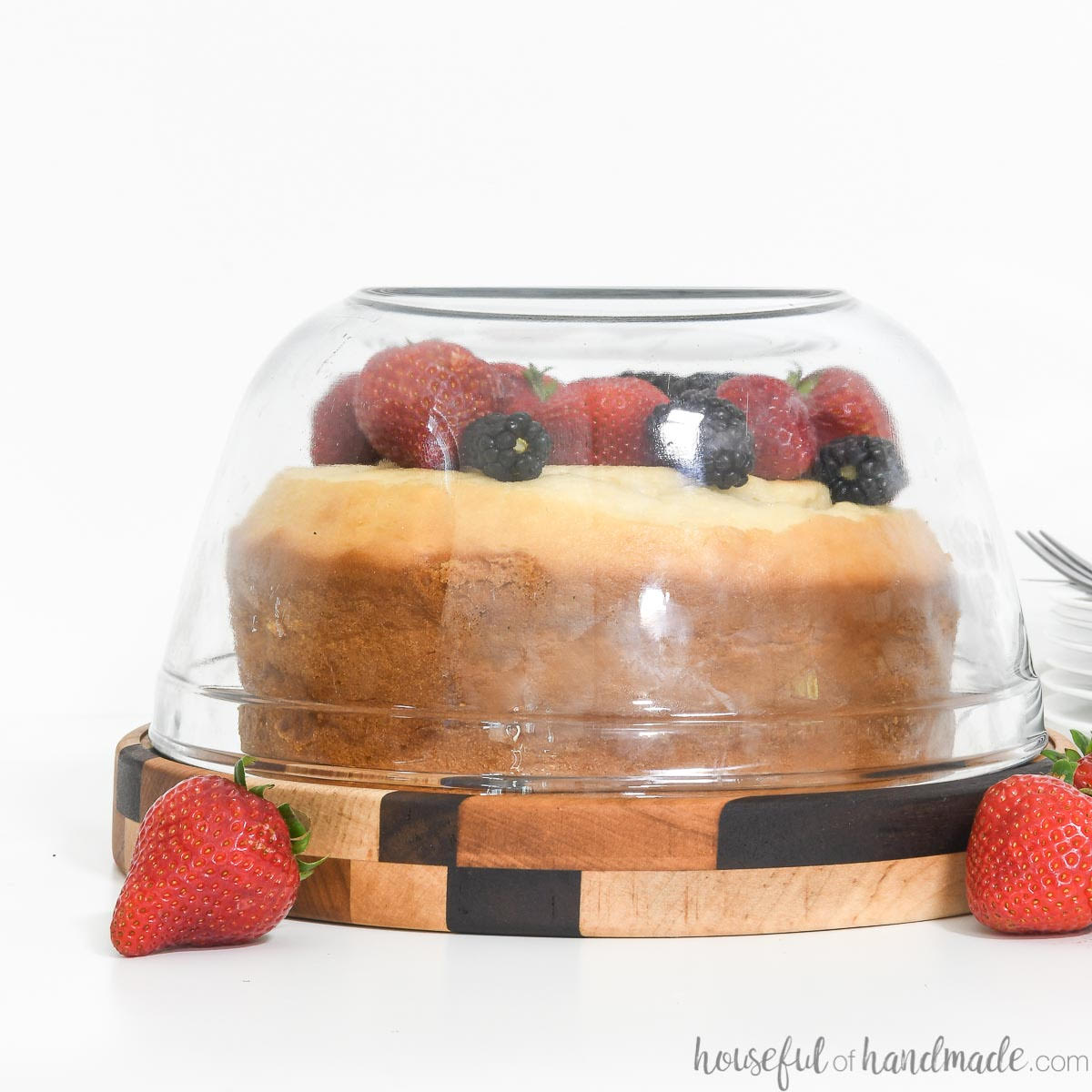
DIY Library Bookshelf with Desk

January 22, 2022 by Shara, Woodshop Diaries

In this post, I’m sharing with you how to build your own DIY library bookshelf with a built in desk!

Wood and white painted library bookshelf with rolling ladder and desk in living room space

Welcome to my new home office space! I’ve wanted a legit library bookshelf desk/home office space for YEARS and I finally got around to building one that I’m SO excited to share with you. And…obviously excited to work at 😉

.

This project is both a built in “library”–basically, a wall of shelves–plus a desk and it could even be used as an entertainment center if you wanted.

.

It’s complete with lights, a rolling ladder, storage, and plenty of display space.

.

The best part from the DIYers perspective?? It’s built in sections to make it easy to build, set up, and install! There is a lot of info to cover here, so let’s dive right in.

.

I’m sharing the video of the build process here and the tutorial with printable plans below:

*This post contains affiliate links. See website policies for details.

.

Grab the printable plans for this DIY Library Bookshelf with Desk here:

Tools & Materials:

Tools:

  • Circular Saw
  • Cutting guides–optional (Check out how to use what I use here)
  • Miter saw
  • Table Saw
  • Drill/Driver
  • Pocket Hole Jig
  • Shelf Pin Jig
  • Finish (or brad) nailer

Materials:

  • (7) sheets ¾″ plywood
  • (½) sheet ¼″ plywood
  • (7) 1x3x8 boards
  • (2) 1x6x8 boards
  • (3) 1x4x8 boards (preferably a hardwood–for ladder)
  • 18′ crown molding (3 ⅝″ used here, but you can use other sizes if needed/desired)
  • 12′ half round molding or lattice trim (optional)
  • (4) pair 16″ drawer slides
  • 1 ¼″ pocket hole screws
  • 1 ¼″, 2″, and 2 ½″ wood screws
  • Wood Glue
  • Edge Banding–¾″ and 1 ½″ wide
  • (4) handles/knobs for drawers
  • 2″ screws & washers (for securing ladder to rollers)
  • Wood Putty/Filler
  • 12′ barn door hardware kit
  • Sconce Lights
  • Shelf pins

Some notes about the build:

Project Dimensions:

This bookshelf/desk project was made to fit floor to ceiling for 8 ft tall ceilings. The tall bookshelves are made 94″ tall to allow for room to tilt it upright once moved inside.

.

The ~2″ space between the top of the shelves and the ceiling will be covered with crown molding once installed.

.

If your ceiling is higher, than 8 foot, you’ll have some open space above the shelves…which is okay. But if your ceiling is lower than 8 ft, you’ll need to adjust the height here for it to fit.

.

Overall dimensions for the library bookshelf are approx. 8′ tall, 13′ 5″ wide, and about 20″ deep–not including the ladder.

Overall dimensional diagram of DIY library bookshelf with rolling ladder and desk cabinets with drawers

Baseboards:

You will need to remove and replace OR cut out the sections of baseboard necessary for these pieces to fit flush up against the wall. These cabinets/shelves need to be secured to the wall, so the baseboards will have to be out of the way.

Face Frames:

The face frames where the top and middle shelves meet together are intentionally made thinner so that when put together, it appears (visually) like a 1×3. For these thin pieces, I just ripped 1x3s down the middle to make ~1 ¼″ wide strips.

This Project is Built in Sections:

Check out the video above to see the 3D diagram breakdown for how the various pieces of this project came together, but note that the entire project was built in separate pieces then assembled together as one unit.

.

First, I built the tall outside bookshelves, then the desk cabinets with drawers, the countertop, the middle shelf section that sits on top of the desk, and once it was all put together, I added the crown molding, the lights and the ladder.

Posts you may find helpful in the building process:

  • How to cut plywood sheets
  • How to use a pocket hole jig
  • How to apply iron on edge banding
  • How to build and install drawer boxes and slides
  • Information about shelf pins and shelf pin jigs
  • How to finish raw wood furniture

Step 1: Assemble Tall DIY Library Bookshelves

The printable library bookshelf and desk plans contain the cut diagrams and all the dimensions for this project. I used my circular saw and cutting guides to break down my plywood sheets into more manageable pieces to begin working.

RELATED: How to easily cut down plywood sheets

.

I began by assembling two identical 94″ tall bookshelves from ¾″ plywood. I used a Kreg pocket hole jig to assemble these shelve cabinets using ¾″ pocket holes and 1 ¼″ pocket hole screws.

RELATED: How to set up and use a pocket hole jig

Shara Woodshop Diaries assembling library bookshelf cabinet on workbench using pocket holes

In order to be able to secure these cabinets to the wall later, I added a scrap piece at the top between the side panels as well.

Diagram showing top support attached to top of bookshelves

Then, I used my Kreg shelf pin jig to drill shelf pin holes up and down both sides of both shelves. Using shelf pins allows me to be able to install adjustable shelves.

.

You simply place a pin in the holes you drilled using the jig, and rest your shelves on top. Check out more information on shelf pins and shelf pin jigs in this post.

Shara Woodshop Diaries drilling shelf pin holes along bookshelf sides to install adjustable shelves

Step 2: Add Face Frame to Tall Shelves

Now, these tall shelves will butt up next to the middle shelves. For design/visual purposes, I didn’t want where they came together to have a wider face frame than everywhere else.

.

So instead of using full 1x3s where they will meet, I ripped 1x3s in half for these pieces of the face frames.

Diagram showing face frames attached to front of bookcases

I used 1x6s for the top and bottom, 1x3s for the outside and the middle and the 1 ¼″ wide (half of a 1×3) strip for the inside piece of the face frame.

.

I assembled the face frames using wood glue and pocket holes and screws, then glued and nailed them onto the fronts. I used 1 ¼″ finish nails, but brad nails would be fine, too.

RELATED: What’s the difference between brad and finish nails??

Shara Woodshop Diaries using finish nailer to secure face frames to cabinets

Step 3: Build Desk Cabinets

For now, I set the shelves aside and began putting together these basic desk cabinets.

.

If you’ve seen my cabinet building tutorial or video, this is basically that exact same process. I assembled two basic plywood cabinets using pocket holes and screws and instead of cutting out a toe kick, I just added a toe kick piece underneath the bottom panel.

RELATED: This is also how I build this modular desk design, too!

.

I did apply iron on edge banding to the front edges since these will be exposed. That’s optional, it just looks a little nicer.

RELATED: How to apply iron on edge banding

Shara Woodshop Diaries setting plywood desk cabinet on floor of workshop assembled

I added two deep drawers into these cabinets, so I installed two pair of 16″ ball bearing drawer slides into each one ¾″ inset to allow for inset drawer fronts later.

RELATED: How to install drawer slides

.

Then, I assembled the drawer boxes to fit and installed them. All of the drawer slide and box dimensions can be found in the plans here. I also have a detailed tutorial for how to measure for, build and install drawer boxes here.

Shara Woodshop Diaries installing drawer boxes onto drawer slides in bookshelf desk cabinets

Once the drawer boxes were in, I cut, edge banded and installed inset drawer fronts using screws from the inside to secure them.

.

As a helpful tip–add some painters tape on the drawers OR go ahead and add your knobs or handles so that you have a way to open them later after you add the countertop.

Diagram showing attaching drawer fronts to drawer boxes of desk cabinets

Step 4: Assemble Desk Countertop

I wanted this desk top to be a little thicker than just ¾″, but I wasn’t in the mood to glue together a solid wood panel (those are a pain) and I didn’t want to waste more plywood by adding another full layer.

.

So I “cheated” and just used some scraps glued onto the bottom side of the plywood top around the edges to “thicken” it up.

Shara gluing and nailing scraps on bottom side of desk countertop

Once the glue dried, I went back and sanded the edges smooth and flush and added some 1 ½″ wide iron on edge banding to make it look like a thick, solid piece.

RELATED: How to apply iron on edge banding

Using an iron to apply edge banding around desk top edges

Step 5: Assemble Middle Shelf Section

I set the desk cabinets and countertop aside for now to finish up the last big piece of the project–the middle shelf section.

.

Again, all the dimensions can be found in the plans, but I assembled a simple plywood shelf using pocket holes and screws just like I did the tall bookshelves, except this one didn’t have a bottom and it was shorter since it’ll be sitting on top of the desk.

Shara Woodshop Diaries using pocket holes to assemble middle section of library bookshelves

This was so large, I needed to assemble it on the floor haha.

.

Notice also that I drilled shelf pin holes in the bottom parts of the smaller sections. These spaces will have shelves installed, but the wider middle section will be where the computer goes, so it didn’t need any additional shelves–unless you want to add some.

.

When you build it yourself, you can customize how you wish 🙂 haha!

Step 6: Add Face Frame to Middle Section

Just like the face frame for the tall shelves, I assembled the face frame here using 1x6s at the top, 1x3s in the middle and used the 1×3 ripped in half (1 ¼″ wide strips) for the outside where this will butt up to the tall shelves.

Diagram showing face frame attached on front of middle library bookshelf section

I assembled this face frame using wood glue and pocket holes and screws.

.

Then, I glued and nailed it onto the front just like I did with the tall bookshelves. I used 1 ¼″ finish nails, but brad nails would be fine, too.

Shara Woodshop Diaries nailing face frame on front of middle library bookshelf section

Step 7: Finish Before Assembly

Now, of course, you can totally finish this after assembling, but I found it easiest to finish prior to putting all the pieces together since I painted some parts and left some parts natural wood.

.

I puttied and sanded all joints and nail holes, then applied primer and paint to the outsides of the tall bookshelves and to all of the face frames.

RELATED: How to finish raw wood furniture

Shara Woodshop Diaries painting face frames of bookshelf cabinets before assembling

I chose to just apply a simple clear poly to the desk cabinets–but you could also stain or paint those as well.

Step 8: Assemble Library Bookshelf and Desk

Once the finish was dry, I installed the pieces and secured them to the wall.

.

Like I mentioned earlier, the baseboards need to be removed or cut out for these parts to sit flush against the wall. I removed mine because I didn’t like them to begin with and I’ll replace them later. But if you didn’t want to completely remove, you could just cut out the sections where these shelves will go.

.

First, I secured the desk cabinets into the wall studs so that they were the exact width of the countertop end to end.

Diagram showing how to secure desk cabinets of library bookshelf unit to wall studs

Then, I secured the countertop in place through the top supports in these cabinets. Obviously the drawers had to be pulled out to access it.

Diagram showing how to attach countertop onto desk cabinets

Then, I butted the tall cabinets up to the desk and against the wall and screwed them together.

Diagram showing installation of tall library bookshelves next to desk cabinets

And finally, I placed the middle section on top of the desk and screwed it into the tall cabinets. I also used a few screws through the bottom side of the countertop up into the middle section vertical pieces to secure them from moving.

Diagram showing installing middle bookshelf between tall shelves on top of desk

After all the pieces were in place and secured together, I used some 2 ½″ screws through the top supports in the tall cabinets to secure them to the wall studs.

.

One way or another, I wanted everything screwed together and secured to the wall haha.

Step 9: Add Trim to Library Bookshelf

Now that everything is in place, I finished off the main part of the build by adding crown molding around the top. You can check out more information about installing crown molding in this video.

Shara Woodshop Diaries using a brad nailer to install crown molding

Now, I tried to putty and sand over the seam where the tall bookshelf met the middle section, but I just wasn’t happy with the result and I could still see the seam a little.

.

So this part is totally optional, but I added some half round trim over the seams to hide them. You could also use some thin lattice trim or something else, but I had some half round handy and it blended in fairly well after it was painted to match.

Shara Woodshop Diaries using brad nailer to install half round molding on face frame seam

Then, I came back and cut to fit my new baseboards around the shelf as needed. I just butted the baseboards up to the sides of the shelves and added one in between the desk cabinets.

.

I used painted 1x6s for my baseboards to keep things simple.

Step 10: Add Adjustable Shelves

I cut and installed my shelves where I wanted in each bookcase using shelf pins.

.

As a rule of thumb, when using shelf pins to install adjustable shelves, I like to cut my shelves about ¼″ smaller than the overall opening so I have some wiggle room to place them in, take them out, or move them around.

RELATED: Learn more about shelf pin sizes here

.

You can install as many or as few shelves as you wish.

Step 11: Add Rolling Library Bookshelf Ladder

This part is also optional, but how cool is the ladder part of this project?!

.

I looked for rolling ladder hardware online for this, but the prices I found were a little steep. I didn’t see a big difference between rolling ladder hardware and rolling door hardware–except for the price.

.

So I actually used rolling door hardware for this and it worked great!

.

I ordered this 12′ kit and installed the rail according to the included instructions into the bookshelf so that the screws went through the middle of the plywood shelves behind the face frame.

Shara Woodshop Diaries installing rolling library ladder track onto bookshelf

The rail connects together in the middle here, so that’s why it looks like it’s bent–I just haven’t got the left side screwed in yet haha.

.

For the ladder, I built it using 1×4 oak. Pine would have probably been fine, but I thought a hardwood might be better here for using as a ladder so I went with oak.

.

I cut the ends of the ladder sides with a 10 degree miter so it would lean a little and used a speed square to mark and cut off the top back corner to give me somewhere to mount the rollers (see plans for diagrams and dimensions).

.

Then, I used wood screws to attach the rungs between the sides making sure to keep them parallel to the 10 degree ends. Using a scrap block (shown below) helps keep rungs evenly spaced and parallel.

Shara Woodshop Diaries assembling rolling ladder for library bookshelf

To install the ladder–since this was sliding barn door hardware and not rolling ladder hardware–I kind of positioned the rollers straight up and down on the track.

.

I ensured the ladder was flat on the ground, then clamped the roller to the ladder in that position.

Shara Woodshop Diaries clamping roller onto back side of ladder to secure

I lifted the ladder off the rail and used 2″ screws with washers to secure the roller to the back edge in that position. Then I repeated for the second roller.

.

Check out the video for more details.

Shara Woodshop Diaries using screws on back side to secure rollers to rolling ladder

I didn’t add any wheels on the bottom of the ladder because they were pretty pricey and I didn’t like how any of the ones I saw online looked.

.

The ladder is fairly lightweight and glides really easily, so I just lift it out a little and slide it where needed, then set it back down. You could add some felt pads to the bottom to slide easier, too, if you wanted. Or, you can add wheels if you’d rather.

Step 12: Add Lights to Library Bookshelf

The lights are another optional step, but all these optional steps really add a lot to the project, so I like them haha.

.

I bought a pair of plug in sconce lights and just used some wood screws to screw them into the top 1×6 part of the face frame. The hardware that comes with the lights won’t work for this application.

.

I used these plug in style lights so that I could drill holes into the plywood panels of the bookshelves and run the wires behind the face frames so they’re hidden. Then, I just plugged them into an extension cord in the middle at the top and ran it down to an outlet to plug them in.

.

I discuss this in more detail in the video, but at this point, it’s ready for filling up and getting to work!

White and wood bookshelf unit with desk in the middle with rolling ladder and black sconce lights and grey office chair

I am SOOOO excited about how this home office project turned out and so ready to get to work here at my very own legit home office station.

.

Although I don’t have a ton of books, I do plan to add to my collection now that I have such a fun place to store and display them.

Shara Woodshop Diaries on rolling library ladder picking a book off the shelf

I really hope you guys enjoyed this library bookshelf and desk build as much as I did and I hope it’s inspired you to set up and enjoy your own office space.

.

I’m at my computer A LOT editing videos and content, so I really wanted an enjoyable place to spend that time.

.

PS How cute is Lucy’s black and white picture above my desk–I tell people when I think about quitting, I look up and remember why I keep working HAHA! Just kidding–kind of.

.

I know this was a lot of info to cover on a really big project, so be sure to check out the video for more information and to watch the whole process and grab the printable plans for all the dimensions and diagrams as well.

.

If you enjoyed this DIY library bookshelf project, be sure to subscribe to the newsletter to be the first to know about the latest projects and plans on Woodshop Diaries.

And if you want to save this for later, don’t forget to share it on your favorite social channel or pin it!

Pinterest image collage showing overall dimensional diagram at top with text "printable plans" and Shara sitting at desk of library bookshelf at bottom with text "How to build a rolling ladder library shelf with desk"

Until next time, friends, happy building! 🙂
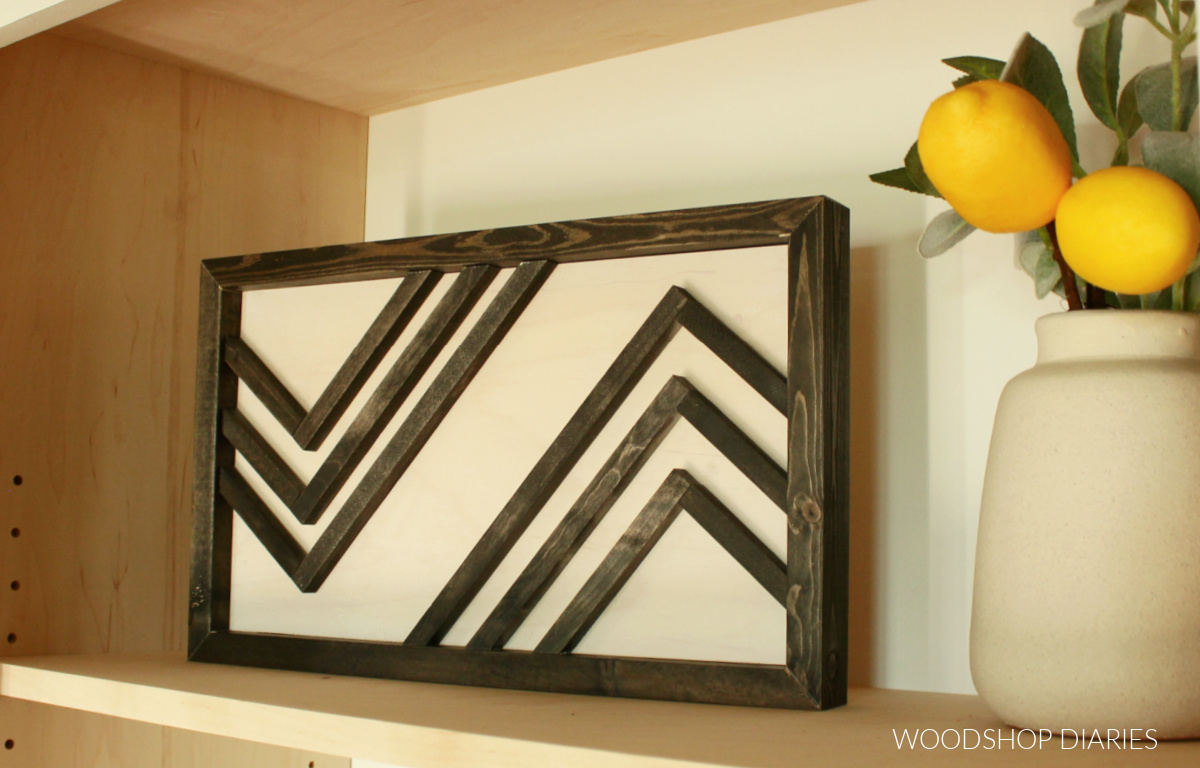
DIY Elevated Dog Bed

January 15, 2022 by Shara, Woodshop Diaries

In this post, I’m sharing how to build another fun pet project! This DIY elevated dog bed is easy to build and easy to modify to fit your own pet’s size. I’ll show you how below.

Black and white dog laying on white fur bed in modern DIY elevated plywood dog bed box on black wood legs

If you’ve seen many of my projects in the past, you have probably seen Lucy show up a time or two.

.

She’s the true boss behind Woodshop Diaries, haha!

.

A while back, I built her a mid century style elevated dog bed and she has LOVED IT. (See below)

Black and white dog sitting in mid century modern elevated dog bed
DIY Dog Bed

But since moving into a new home–one that actually has multiple rooms (our last home was a one room studio style home)–Lucy now has multiple beds around the house, and only one of them is elevated.

.

I think she really enjoys napping up off the ground (I imagine it’s a little less drafty). So I decided to build her a second DIY elevated dog bed so no matter where she’s hanging out in the house, she can have a platform to sleep on.

.

I actually put this in our living room, so I built it to match the coffee tables I built a while back. (See below)

Modern coffee tables

Lucy is a large dog, so this is made to fit a large dog bed, BUT don’t worry, I’m sharing how to modify the sizing to fit your own dog’s bed size below.

.

I made a video of the project here and I’ve got the plans below:

**This post contains affiliate links. See website policies.

Tools & Materials:

Tools:

  • Circular saw
  • Cutting Guides (optional)
  • Jig Saw
  • Miter saw
  • Drill/Driver
  • Pocket hole jig

Materials:

  • ¾″ plywood (amount depends on size you make)
  • 2x2s (amount depends on size, but likely two 8′ boards will be plenty)
  • 1 ¼″ pocket hole screws
  • 2″ & 2 ½″ wood screws
  • Wood Glue
  • Edge banding (optional)

*NOTE: I used ¾″ cabinet grade maple plywood since that’s what I had in my shop. However, any smooth plywood would work fine–just don’t use anything super rough as you don’t want your pets to end up with splinters!

Notes About this DIY Elevated Dog Bed Build:

Modifying the size:

As I said earlier, the dimensions shown here are for a large dog bed. I used Lucy’s existing bed’s dimensions to build this from and her bed was about 26″ x 38″ overall. This is the bed I used.

.

However, you can easily modify the size here if you need bigger or smaller.

Overall dimensional diagram showing dog bed size

To do that, start by measuring your own dog’s bed and cut the bottom panel from step 1 to fit that size. Then, just cut the box sides to fit around that bottom panel.

.

For the base, you can shorten or lengthen the main X pieces to fit your box. Just make sure to change them equally.

.

For example, if you make the long piece of the X 4″ shorter than I show in the plans, then you need to make each short piece of the X 2″ shorter to accommodate the change.

.

You should likely be able to keep the angles the same, and just change the lengths as needed.

.

You can also adjust the height of the legs the same way.

.

Keep in mind that this isn’t rocket science and it’s just a dog bed–so don’t sweat it. Just make the pieces bigger or smaller as needed to fit your dog/cat/pet.

.

Some posts you might find helpful in the build:

  • How to cut plywood sheets
  • How to apply edge banding
  • How to use a pocket hole jig
  • How to make your own 2x2s

Step 1: Cut Pieces for the Elevated Dog Bed Box

I built this elevated dog bed as basically a plywood box sitting on a 2×2 base. So the first thing I did was build the box.

.

I measured Lucy’s dog bed and cut a panel of ¾″ plywood the same size to use as the bottom of the box.

RELATED: How to cut plywood sheets

.

Then, I ripped some plywood strips 7″ wide to use as the sides. FYI, if you have any plywood scraps, they would work great for this!

.

If your dog bed isn’t that tall or you want to adjust the height of the box, simply rip these widths smaller or larger as needed.

.

I cut these 7″ strips to “wrap around” the bottom panel to form a simple box.

Dog bed box dimensional diagram showing sizing of each piece of the box

Notice that the back is the same width as the bottom panel, the sides stop at the front edge and the front runs the full length.

Step 2: Add a “Cut Out” to the Sides

You’ll notice in the image above that I added a cut out to one side and the front to make kind of an “opening” for Lucy to climb into easily. You are welcome to get as creative as you wish with this and cut this however you like.

.

But I cut mine out like this because I thought it looked kind of “modern-ish.” I used a speed square to mark a 30 degree line from the top to the 2″ line, but 30 degrees is just a number I picked–you can adjust as you wish.

Close up detail shot showing dimensions of dog bed box cut out

You can check out the video for more details, but I cut the straight line using a table saw and the diagonal using a jig saw. You can cut the entire thing using a jig saw if you don’t have a table saw.

.

I used some painters tape on the plywood surface to help prevent tear out from the jig saw on the cut.

Shara Woodshop Diaries removing tape from plywood on dog bed side panel

Step 3: Assemble Dog Bed Box

Once the pieces were all cut, I applied iron on edge banding along the top edges and any sides that will be exposed. Edge banding is optional, but helps smooth things out a bit.

RELATED: How to apply iron on edge banding

.

Then, I drilled ¾″ pocket holes along the edges of the bottom panel, into the ends of the back panel, and one at the front edge of the side panels (note locations in image below).

RELATED: How to use a pocket hole jig

.

I assembled this box using 1 ¼″ pocket hole screws. I attached the sides to the bottom panel first, then screwed the sides together at the top.

Using pocket holes on underside of bottom panel to assemble sides to box
Using pocket holes on inside of dog bed box to attach sides at corners

Step 4: Cut and Assemble Elevated Dog Bed Base

The base of this dog bed was made from 2x2s.

RELATED: How to make your own 2x2s

.

Now, if you modified your box size in the steps above, you’ll need to modify your base size here. To do this, simply adjust the lengths of your main X pieces as needed.

.

I recommend flipping your box over and figuring out how long you should make your long, main X board.

.

As an example, if it’s 4″ shorter than what’s shown here, then make your short X pieces 2″ shorter each for a total of 4″ shorter all together.

.

I cut the ends of my X pieces with a 10 degree miter so that the legs will slant in toward the top. At the center, the short X pieces were cut at 20 degrees to fit together properly.

Dimensional diagram showing X base pieces

I cut the legs 5″ long with ends mitered 10 degrees–you can adjust the length here if you need to make your dog bed taller or shorter.

diagram showing leg length on X base of bed box

To assemble, I used wood glue and one 2 ½″ wood screw to secure each leg to the corners.

Assembly diagram of X base of dog bed

Then, I used wood glue and 2 ½″ wood screws to secure the short X pieces to the main X. I explain this in detail in the video above.

Step 5: Add Riser Blocks

This is an optional step, but I was building this to match these modern coffee tables and I used riser blocks on them for a neat design element, so I did the same here, too.

.

I cut five 1 ½″ cube blocks and glued and screwed them onto the top of the base like shown below.

Adding riser blocks to X base

I put one in the middle and the other four 1 ½″ in from the ends of the X.

Step 6: Attach Dog Bed Box to Base

After the glue dried, I sanded the base smooth and applied an Ebony stain to the base. You can finish as desired.

.

After the stain was dry, I centered the dog bed box on the base and used 2″ wood screws through the bottom panel into each riser block of the base.

Shara Woodshop Diaries installing plywood box to X base

If you skipped adding the blocks, you can screw directly into the X base.

Step 7: Finish and Test

I applied a clear coat poly to the bed just to seal it and make it easier to clean in the future, then I tested it out to make sure it’ll hold.

.

It held me plus Lucy standing in it and I weigh twice as much as she does, so it definitely passed the weight test and should hold Lou just fine haha.

Black and white dog laying in plywood box elevated dog bed

After the finish was cured, I placed the bed inside and let her try it out for herself. I think it’s safe to say she loves it.

.

I hope you enjoyed this fun and simple DIY elevated dog bed project and if you have a pet you want to spoil, I hope this gives you some inspiration to give it a go!

Black and white dog laying on furry bed inside plywood box

For more pet related projects, check out this list of fun pet DIYs here!

.

I’ve got tons more projects (both big and small!) to share soon, so if you want to stay up to date on all the latest happenings, be sure to subscribe below to be the first to know when new projects come out.

And if you’d like to save this for later, don’t forget to pin it!

Pinterest collage showing modern dog bed overall dimensions at top and Lucy in modern dog bed at bottom with text "How to build a modern dog bed in any size"

Until next time, friends, happy building! 🙂

DIY Wood Plank Accent Wall–USING PLYWOOD!

January 4, 2022 by Shara, Woodshop Diaries

In this post, I’m sharing how I installed an easy DIY wood plank accent wall using precut plywood planks!

Shara Woodshop Diaries standing in front of wood plank accent wall in workshop

If you had the tools needed, you could definitely make your own wood planks for this and finish however you’d like.

.

However, for this particular project, PureBond sent me some of their precut and prefinished planks to make this project go SUPER QUICK!

.

These are an excellent option if you don’t have the tools to cut your own planks, but want an easy way to add a shiplap or rustic wood accent wall…or you’re like me and have the tools, but just don’t want to take the time to cut them all down.

.

The wood wall planks are about ¼″ thick and come in precut sizes 3 ¾″ x 48″. One side is left unfinished (which is the side I used here), but the other side comes prefinished in varying colors to give a unique, rustic, barn wood style.

.

You can see how I used the prefinished side in the wood sign that I made for my workshop here.

.

But, in this case, for this wall, I used the unfinished side and left it natural because I liked the wood look. However, you can paint or stain this side as desired if you don’t like it plain.

.

So, if you’re ready to see how easy this is to install, let’s dive right in! I have a video tutorial here and a step by step below!

*This post contains affiliate links. See policies.

Tools & Materials:

Tools:

  • Miter saw (optional)
  • Jig Saw
  • Screwdriver
  • Nail Gun OR Staple gun
  • Level
  • Stud Finder

Materials:

  • PureBond Wall Planks (or planks of your choosing)
  • Nails/Staples (See notes section below for details)

Notes About This Wood Plank Accent Wall Project:

RELATED POST: Check out this post for more details on installing a wood plank accent wall in a herringbone pattern!

.

A Note About the Wall Plank Material:

For this project, to keep things quick and simple, I used these precut PureBond Wall Planks. However, you can cut your own ¼″ plywood strips if you prefer.

Shara Woodshop Diaries laying out plywood plank boards on workshop floor

You can use thicker plywood or even solid wood for this, but ¼″ plywood planks are lightweight and really easy to install so I’d recommend it over thicker materials. Just a personal preference.

.

Nail/Staple Lengths:

The instructions suggest using brad or finish nails to secure these boards to the wall studs, but staples work as well.

RELATED: What’s the difference in finish, brad, and staple nailers?

.

You want to make sure to use a nail long enough to go through the plank boards and the drywall/wall covering and into the studs behind it.

.

Depending the thickness of the planks you choose to use and your existing wall covering (drywall, paneling, etc.), this length may vary and you’ll have to determine what you need for your situation.

.

What About Existing Trim?

You can opt to remove the existing trim on the wall (baseboards, crown molding, etc.) and replace them after installing the planks OR just cut the planks around the trim.

.

I know it’s more work, but I’d advise at least removing the crown and baseboard and replacing them after installing the wall planks for best results.

.

In my case, my wall was unfinished and didn’t have any trim, so I just added crown and baseboard after installing the planks.

.

However, I did install the door trim first and cut my planks around that. I encourage you to check out the video to see how and why I installed the trim in the order I did.

Step 1: Prep the Accent Wall

My wall was unfinished and didn’t have any paint on it yet–this was a freshly drywalled surface. However, if you plan for your boards to be dark, it’s best to paint your wall dark before installing the planks.

.

Or, if you plan to keep your boards light, paint the wall a light color before installing.

Shara nailing door trim around door of Unfinished drywall wall in workshop

This just helps blend in if there are any gaps between the boards when you install them. I was using light colored wood, so I left my drywall bare as it was a light color to begin with.

Step 2: Mark a Level Line and Wall Stud Locations

To get started, it’s important to make sure the first row is level. You can start at the top or bottom of the wall (I started at the top), and use a level to mark a level line across the wall.

.

I marked this about ½″ from the top edge. I’ll cover this ½″ gap later with trim.

Shara marking level line along top of wall to be planked

After marking a level line across the wall horizontally, use a stud finder to mark the stud locations on the wall from the top to the bottom.

.

You will nail the boards into the studs, so it makes things go a little quicker if you just mark these first instead of finding them as you install each piece.

.

Since my drywall was unfinished, my studs were already marked with drywall screws. But you can simply draw a vertical line down the wall to mark the studs.

Step 3: Start First Two Wall Plank Rows

To begin, I started stapling planks along the level line at the top starting at one end and working my way to the other. It doesn’t matter which side you start on as long as you keep things level as you go.

.

I used a stapler, so I stapled each board into the wall studs they crossed. The first two rows are the most important. I double checked each board as I installed it that it stayed level.

Shara stapling wood planks along top of wood accent wall

When I got to the end, I used a miter saw to trim the last board to fit. If you don’t have a miter saw, you can use a jig saw instead.

Using a miter saw to trim boards to length

Then, I moved to the next row, making sure to install these so the seams were staggered–much like you’d install a wood floor. You don’t want all the ends to line up.

Step 4: Cut to Fit Wall Planks Around Obstacles

I kept working my way down the wall installing planks until I reached an obstacle to cut around. In my case, the first obstacle I reached was a hole for a light box for a light outside my shop.

.

In this case, I marked where to cut and used a jig saw to carefully cut out the pieces to fit around it.

Using a jig saw to cut planks to fit around obstacles

You can see where I cut these pieces below on the left.

Shara Stapling plywood planks to wood accent wall

Now I did come back to this later in the project to install a cover and make this look a little nicer. Likely, you wont have a recessed box in your wall like this to worry about haha.

.

But when I came to trim I needed to cut around or outlets/switches, I just marked and cut to fit with my jig saw.

Wall plank board cut to fit around door trim

For the left side of this door, I just trimmed several small pieces to staple in between the trim and the adjacent wall.

.

For outlets, make sure to turn off power first, then remove the plates and cut to fit the wood plank pieces around the box. I loosened the outlets and slid the trimmed boards behind them, then tightened the outlets back up on the outside of the wood and reinstalled the plates.

.

However, if you don’t want to mess with that, you can also install outlet extenders instead.

Close up of boards cut to fit around outlet box

Step 5: Install Final Row and Trim

I worked my way down the wall cutting and stapling pieces in place, staggering all the seams and cutting around obstacles. And when I got to the bottom of the wall, I installed the final row.

.

You don’t have to go all the way to the floor, but you want to make sure that you stop close enough to the bottom that your baseboard trim will cover it.

.

If you left your existing trim, you may need to use a jig saw (or a table saw if you have one) to trim down your last row boards to thinner strips to fit.

.

Once the last row was installed, I nailed trim on top. At the bottom, I installed a 1×6 board. Because the door trim was a 1×4 and the planks were butted up to them, if I installed the 1×6 on top of the planks, it would stick out past the door trim at the front corner.

.

I felt it looked a little weird like that, so I trimmed a small bevel on that corner using my miter saw to help these pieces “match up better.” See bottom left corner below.

Nailing 1x6 baseboard trim along bottom of wood accent wall

I used a finish nailer to secure this trim into the studs and I installed a 1×4 along the top as a crown molding alternative.

.

Then I came back and trimmed out the window. You can check out a step by step tutorial for how to install window trim here.

Shara nailing window trim around window in wood accent wall

Step 6: Finish as Desired

At this point, you can putty over the staple/nail holes and paint and/or stain as desired. Or, like me, you can leave it as is. I really liked the natural wood look for this wall.

.

I will come back at some point and give it some clear coat poly to seal it, but for now, I was in a hurry to move on to my next project. I would recommend sealing it even if you don’t paint or stain.

.

I plan to use Minwax Helmsman Water Based Poly whenever I get back around to finishing it.

.

The final thing I needed to finish up was covering up that light box hole in the wall. This is just my workshop, so it’s not a huge deal that it be perfect, but this recessed light box was a bit of an eyesore.

.

I put a cover over it to keep the wires safe inside, and I hung up this little Home Depot apron that I used to have hanging on the wall in my old workshop to cover it up. No one will ever know haha.

Shara Woodshop Diaries hanging Home Depot Apron over light box in wood wall

And now I have an eye catching wood plank accent wall backdrop and staging area in my workshop perfect for taking photos against!

.

I’m SO happy with how this turned out. It definitely finishes out my shop well and looks a million times better than I expected–much better than that unfinished drywall wall haha.

Finished wood accent wall using plywood planks

I easily completed this project in a day and it’s a really fun project if you’re looking to add some texture and warmth to your space–in your home or in your shop/garage!

.

I really hope you enjoyed this DIY wood plank accent wall project and be sure to check out the video for more details and to watch the entire process.

.

And for a look at the prefinished side of these plank boards, check out my shop sign tutorial here.

.

If you’d like to follow along and stay up to date on all the latest projects and videos, be sure to subscribe to the newsletter below!

And if you’d like to save this for later, don’t forget to pin it!

Pinterest collage image showing before wall at top and finished wood plank accent wall at bottom

Until next time, friends, happy building! 🙂
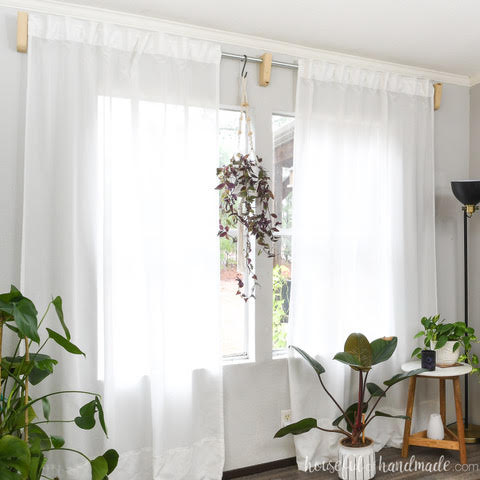
Built In DIY Custom Closet Cabinets

December 18, 2021 by Shara, Woodshop Diaries

In this post, I’ll show you how I built my own DIY custom closet cabinets and built ins to add both storage and style to my boring, basic walk-in closet.

Shara Woodshop Diaries standing in walk in closet with built in cabinets on each side and mirror at back

We recently moved into a new home and one of the first projects I decided to tackle was to add some DIY custom closet cabinets to the walk in closet.

.

Just to give you an idea of what I was working with, let’s kick things off with a quick glance at what it looked like before.

The Closet Before:

This closet is almost 9 ft deep and almost 8 ft wide. But sadly, the only storage it had was two tiny shelves and a couple rods for hanging. (Image below left & right)

.

Clearly, we could do better than this…

Collage image showing the closet before with simple shelves and rods

The first thing I did was remove the closet door, and take down the existing shelves and brackets.

.

I also removed the baseboards and all the trim since I was going to take these new cabinets wall to wall (see image above center).

.

Once the room was empty, I patched the holes in the wall and painted it SW Pure White to give me a clean slate to work with.

.

Then, I started building out the closet.

.

I’m sharing the plans and building details below, but I also have a video sharing the process here as well:

*This post contains affiliate links. See policies.

Tools & Materials:

Tools:

  • Circular saw
  • Cutting Guides (Kreg Rip Cut & Kreg AccuCut)
  • Kreg pocket hole jig
  • Drill/Driver
  • Miter saw (optional)
  • Kreg Shelf Pin Jig
  • Kreg Concealed Hinge Jig
  • Stud Finder
  • Level
  • Table saw (optional for cutting dadoes in drawers)

Materials:

*Note that quantities will vary based on your own sizes/space

  • ¾″ cabinet grade plywood (birch, maple, or oak)
  • ¼″ plywood
  • 1 ½″ diameter dowel rod(s)
  • 1 ¼″ pocket hole screws
  • 1 ¼″ & 2 ½″ wood screws
  • 16″ drawer slides
  • Concealed Inset Hinges
  • Modern drawer/door pulls
  • Shelf pins
  • Edge Banding

Some notes about these DIY Custom Closet Cabinets:

I built everything here using cabinet grade plywood.  I had to use a combination of birch and maple since my store ran out of birch, and I switched over to maple mid-project.

.

The number of sheets of plywood you’ll need will depend on how you customize your cabinets/sections for your space. I lost count, but I believe I used around 9 sheets of ¾″ plywood for my closet.

.

These closet built ins were made in 5 main parts. And because these were built specific to my closet’s dimensions, it’s kind of useless to share my exact dimensions with you as they’ll very likely not the the same to fit your space.

.

That said, I’m going to share the how to and some diagrams for each section of the build, but you’ll have to figure out your own dimensions and customize it to fit your own closet space.

.

Bear in mind that most walls are not perfectly square and it’s best to build things a little too small and cover any gaps with trim than to build things too big to fit in the space.

.

Here are some guides to help you in this project:

  • How to cut plywood sheets
  • How to apply edge banding
  • How to use a pocket hole jig
  • How to build and install drawers
  • How to size cabinet doors
  • How to install concealed hinges
  • Must have tools for cabinet building
  • Tips to professional looking DIY furniture
  • How to trim windows and doors

Step 1: Build Main Closet Cabinets

I mentioned that I built out the closet in 5 basic sections.

.

The first section was the clothes rack cabinets with drawers at the bottom.  I built four of these—two for each side of the closet. 

.

For each of these four cabinets, I used my Kreg Cutting Guides and circular saw to cut two side panels and two shelves like shown below. 

Dimensional diagram showing main custom closet cabinet carcass side panels and shelf dimensions

I also cut two plywood scrap strips 3 ½” wide..one for the toe kick and one for the top back support.

RELATED: How to cut plywood sheets

.

Before assembling anything, I applied iron on edge banding to the front edges of the side panels and shelves and sanded all my pieces well.

RELATED: How to apply iron on edge banding

RELATED: 5 Tips to Professional Looking Projects

.

Then, I pulled out my Kreg 720 pocket hole jig and drilled ¾″ pocket holes along the ends of the shelves and the two thin strips.

RELATED: How to use a pocket hole jig

Assembling DIY custom closet cabinet built in using pocket holes and screws

I used 1 ¼″ pocket hole screws to assemble the cabinet. I installed the bottom shelf 3 ½” from the bottom edge, then installed the toe kick strip underneath it 3 ½” in from the front edge.

.

Then, I installed the top shelf 52” down from the top edge. 

.

I’m just picking numbers here—52” seemed like a good height to be able to hang most of our clothes.

.

Notice that I kept these shelves flush to the back edge of the side panels so they are inset from the front. 

.

There’s no reason for making the shelves shallower than the side panels except that I liked the way this looked…you can make them all the same depth if you wanted.

.

I screwed the second plywood strip at the top back corner—I’ll use this strip to secure these cabinets to the wall once they’re in the closet.

.

I was able to reuse the 1 ½″ diameter dowel rods that I removed from the original closet and cut them down to install into these cabinets.

Installing clothes rod using wood screws through cabinet side panels

I screwed these in through the side panels about 2 ¾” down from the top edge and centered front to back.  This left enough room to be able to add some standard size hangers.

Step 2: Add Drawers to Closet Cabinets

The top section of these cabinets is obviously meant for hanging clothes. But the bottom section can be used for adjustable shelves, drawers, or left open for baskets.

.

I opted for drawers here.

.

So, I installed two 16″ drawer slides into the bottom section of each cabinet.  I was installing inset drawers, so I made sure to install these ¾” in from the front edge of the shelves.

RELATED: How to measure, build, and install drawer boxes and drawer slides

Dimensional diagram  showing where to install drawer slides in closet cabinet

I used my leftover 10” wide plywood strips to cut down pieces to make two drawer boxes for each cabinet.

.

I have a complete guide for how I build drawers here, but once I had the pieces trimmed to length, I cut ¼″ dadoes ¼″ deep ½″ from the bottom edge of the sides to install a ¼″ plywood bottom.

Exploded diagram showing drawer box dimensions

Then, I assembled the boxes using ¾″ pocket holes and 1 ¼″ pocket hole screws.  Edge banding on drawers is totally optional, but I think it looks a lot nicer, so I did edge band the tops of these pieces before putting them together.

.

Then,  I installed the drawer boxes into the cabinets.

Diagram showing drawers installed with 2" gap between

This guide walks you step by step how to install drawer boxes onto slides.

.

To finish these up, I cut two ¾” plywood drawer fronts to install on each cabinet.

Drawer front dimensions and diagram showing installation

I edge banded them, brought them inside and screwed them in through the front of each drawer box leaving ⅛” gap on all sides.

.

I went ahead and added the drawer pulls here, too because if I didn’t, I wouldn’t be able to open the drawers again since they’re inset haha.

Shara Woodshop Diaries installing modern drawer pulls onto drawer boxes

Step 3: Install Closet Cabinets into Closet

Each side of the closet had two of these cabinets side by side. I screwed both cabinets together with a couple 1 ¼″ wood screws.

.

Then, I used a level and a stud finder to drive one screw per cabinet through the back support into a stud making sure the side panels were straight up and down.

Shara Woodshop Diaries securing closet cabinets to wall studs

Step 4: Build Tall Narrow Closet Cabinet

Those large closet cabinets were the main part of the closet build out. The next sections were a little simpler.

.

Danny had requested a tall, narrow cabinet with shelves to store some of his smaller items to keep organized.

.

I built this the same height and depth as the clothes rack cabinets, but cut a narrower divider panel to split the top section in half. 

Diagram showing tall, narrow cabinet with divider panel and open cubby

Because this cabinet was so narrow, I knew I wouldn’t be able to get the shelf pin jig and the drill into the space to drill holes after it was assembled, so I drilled them first before screwing anything together.

.

I assembled the main body of the cabinet using ¾″ pocket holes and 1 ¼″ pocket hole screws, then added the middle divider panel using 1 ¼″ screws through the top and middle shelves.

Assembling tall narrow custom closet cabinet with divider panel in top section

Since this cabinet was so narrow, I knew there wasn’t going to be a stud behind it to attach to, so I used a screw through the side panel to secure it to a stud that way.

Tall narrow closet cabinet secured to wall stud on side panel

I cut an inset door from ¾″ plywood and a few shelves to add onto this cabinet.

.

You can check out this post for how to size a cabinet door. I used a Kreg concealed hinge jig to drill out holes to insert the inset concealed hinges, then installed it onto the cabinet.

RELATED: How to install concealed hinges

Screwing concealed hinge onto closet cabinet door

Step 5: Add Top Closet Cabinet Boxes

But now that the cabinets were all in place, I could move on to the third main part of the closet—the top boxes.

.

These are obviously one of the simpler pieces of the closet as they consist of just four pieces of plywood screwed together.

.

I could have saved some lumber here by simply adding a single shelf across the top of these cabinets on each side, but I really wanted the look of these boxes going all the way to the ceiling, so that’s what I did.

.

I measured and built a simple plywood box to fit over the top of the two clothes rack cabinets first.  I cut the four pieces to assemble the box, added iron on edge banding, then screwed them together using wood screws.

Assembling closet cabinet top cubby boxes on workbench

You could use pocket holes here instead, and you could also build these so that the top and bottom span the entire width vs butting up to the sides.  It doesn’t really make a big difference here either way.

.

I slid the box on top of the cabinets, and used screws to secure it to them.  I drove them at and angle on each end at the front, used a few in the middle, and also used a couple at the back to secure it to the back supports of the cabinets below.

Installing top closet cubbies onto clothes hanging cabinets below

After that box was in, I measured and built a second one to slide in right beside it.

.

I secured this box to the one beside it, and to the top of the narrow cabinet in the front corner.

Shara Woodshop Diaries screwing two top closet cubby boxes together

As a general note, none of these walls were perfectly square and they got narrower in the corners.  So I had some small gaps around the edges of each cabinet in here. 

.

The small gaps also allow a little wiggle room when installing these pieces side by side. It’s better to build it a little too small and add some trim later than build it too big to fit.

.

I left the gaps as they were small and didn’t’ bother me, but if they bother you, you can always add trim around it at the end to cover them up. 

.

I repeated this for the other side of the closet, and got a little help from Danny on the box that didn’t have a cabinet below it.

Shara Woodshop Diaries checking top cubby box is level before securing in place

For this side of the closet, since there wasn’t anything underneath the front box, I used a couple screws through the side to secure the box into the wall studs like I did with the narrow cabinet earlier.

Step 6: Install Closet Shelf Boxes

The fourth part of the closet was adding these shelf boxes on the left side between the main clothes hanging cabinets and the tall narrow cabinet.

.

This again, was a super simple part.  I used some leftover plywood about 14″ wide to assemble three boxes.

.

I cut the top and bottom box pieces to fit perfectly in the open space between the two cabinets on the left side of the closet and cut 12” long pieces for the sides. 

.

I edge banded the front edges of each piece and assembled the boxes using pocket holes and screws.

.

Notice that I faced the pocket holes on the outside here so they won’t be seen once they’re installed.

DIY Custom closet cabinet shelf boxes assembled on workbench

On the bottom box, I also added a 3 ½” toe kick across the bottom side just to keep things consistent between all the cabinets.

.

I slid the bottom box in place and made sure it was level and square, then screwed it in between the two existing cabinets on each side.  I had to remove the drawer to put the screws where they wouldn’t be seen.

Installing bottom shelf cabinet box in closet

Then, I added the top box the same way, and finally the middle box.  Each shelf was spaced 12” apart.

.

Now, you could save some lumber here by using shelf pins and adding adjustable shelves or simply screwing in single stationary shelves and not assembling the whole box—there are a million other ways to do this.

Installing top and middle shelf cabinet boxes in closet

But I really just liked how this looked, and it was simple to put together.   

Step 7: Build Closet Cabinet Dresser

Now the closet is ALMOST done, but the last piece was adding the dresser cabinet in the open space at the bottom right side.

.

I built this to fit perfectly in the space that was left.

.

I cut two sides, a top, bottom, divider, and a toe kick and edge banded the front edge of everything except the toe kick.  It tried to use leftover plywood wherever I could for this and it ended up being about 17″ deep.

.

I used ¾″ pocket holes and 1 ¼″ pocket hole screws to assemble this dresser.

Diagram showing closet dresser cabinet assembly

Once the main body was together, I installed the middle divider. 

.

I decided which side I wanted to put the door and made sure to hide the pocket holes in that side of the dresser.  I only used pocket holes at the top and just used wood screws at the bottom—making sure to keep the divider panel square. (It’s upside down in the image below.)

Shara Woodshop Diaries securing middle divider panel into dresser cabinet

I used my Kreg Shelf Pin Jig to drill shelf pins along the sides of each section to be able to add adjustable shelves later as needed.

.

Then, I installed this dresser in the closet.  I secured it to the cabinet next to it, and to the wall stud to the right.

Shara Woodshop Diaries installing dresser cabinet into custom closet build out

Now all that was left was the finishing touches, I added a baseboard to the back of the closet, and replaced the door trim that I removed at the beginning

.

I have a separate post on door and window trim I’ll link here if you want to know more about that.

.

Then, I cut an inset ¾” plywood door for this dresser cabinet just like I did for the tall narrow cabinet earlier. 

.

I edge banded and sanded it well, then pulled out my Kreg Concealed hinge jig to drill out holes to insert the hinges.

.

I installed soft close, concealed inset hinges into the door, then brought it inside to install it into the cabinet.

Door installed onto dresser cabinet in closet

I have a guide for how to install and adjust concealed hinges that I’ll link here if you want to know more.

.

At this point, all that was left was adding a couple shelves where I drilled holes for the shelf pins and filling it up!

Completed closet built ins with clothes hanging, drawers, open cubbies and adjustable shelves

I’m sure over time, we will figure out how best to use this closet and add more shelves as needed, but for now, I just added a single shelf in the dresser, and a few shelves in the tall cabinet. 

.

Compared to the previous closet, we have TONS more storage in here, so there is plenty of empty space for now—and I kind of like it that way haha.

Tall pantry closet cabinet built in with open shelves above and beside

I didn’t bother finishing these custom closet cabinets—I may later, but for now, they’re unfinished and I’m fine with that. 

Custom built in dresser cabinet in walk in closet with round mirror above

I’m SO happy to finally have my clothes unpacked and out of boxes and to have things better organized and hidden away.

.

I really hope you guys enjoyed seeing these closet built ins come together and I hope it’s given you some inspiration for your own space!  Don’t forget to pin it for later 🙂

Pinterest collage image showing before and after DIY custom closet cabinets built ins installed

And if you aren’t already subscribed, be sure to follow along so you don’t miss out on what’s coming next!

Until next time, friends, happy building!
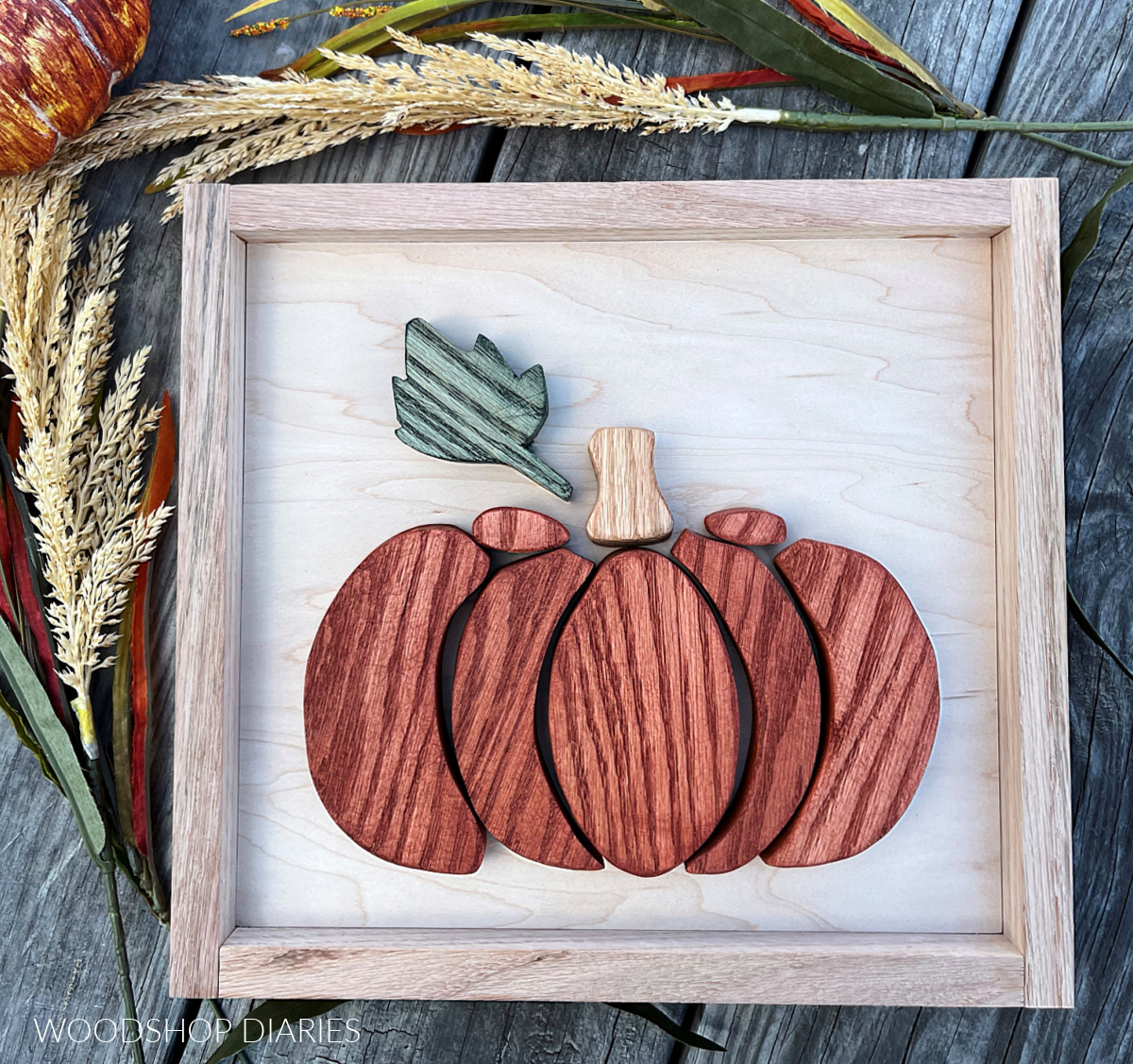
How to Make a Large Wooden Sign

December 14, 2021 by Shara, Woodshop Diaries

In this post, I’m sharing how to make a large wooden sign like this one I made for my workshop wall!

.

This is a project that is easy to customize to your own size, style, and design, so I hope you use this as inspiration for your own version!

Woodshop Diaries back wall with cabinets, large window, and large wooden sign hanging at top in center

After setting up my new workshop and adding some shop cabinets on the back wall, I decided the back wall still needed a little something to go above the windows.

.

Since this will be the main background for my videos and workshop, I wanted to add a simple, but eye catching logo sign.

.

So I’m sharing how to make a large wooden sign plus another fun shop update in this video, and I’m listing out the step by step instructions and materials list to make your own below:

*This post contains affiliate links. See website policies.

Tools and Materials:

Tools:

  • Circular saw (cutting guides optional)–to cut plywood
  • Miter or jig saw–to cut planks
  • Stapler and/or nail gun
  • Cricut Joy (or another stencil cutter)
  • Measuring tape

RELATED: What’s the difference in finish vs brad nailers vs staplers?

Materials:

  • ¾″ plywood panel (for back–can use scraps for this if desired)
  • 1×2 boards for frame
  • PureBond Wall Planks (or other planking option)
  • Spray Paint (optional)
  • Cricut Joy Vinyl & Transfer Tape
  • Wood Glue
  • Stain (optional)

Some Notes About this Large Wooden Sign Project:

I made this large wooden sign pretty huge as my windows were about 9 foot long. It ended up being about 7 foot long and about 15 inches tall.

.

But this is SUPER easy to customize to whatever size you want.

.

Because this sign was so large, I had to cut the stencil out in sections and piece it together on the boards. I did this using a Cricut Joy Machine.

Cricut Joy machine cutting blank vinyl

Cricut Joys are intended to use for small projects, but if you get creative, you can use them for larger ones, too!

.

I share more in detail how to use a Cricut Joy to cut a large stencil in sections in this post where I did it for a cool design on cabinet doors.

.

But if you have a larger Cricut or vinyl cutting machine, or another way to create stencils, that works, too 🙂

.

Some related posts/videos to check out:

  • How to cut plywood sheets
  • New workshop video
  • How to build workshop cabinets
  • Using a Cricut Joy to cut large stencil for cabinet doors

Step 1: Cut Sign Backer Board

I began by cutting a piece of ¾″ plywood the size I wanted my sign to be. I was covering this sign with PureBond planks (see next step), so to keep it simple, I cut it the same width as four planks placed together.

.

These planks are 3 ¾″ wide, so four of them would be about 15″. So I cut my plywood 15″ wide and about 82″ long. But you can cut yours whatever size you’d like.

.

You can even use some plywood scraps for this if you have them–feel free to get creative 🙂

RELATED: How to cut plywood sheets

Step 2: Add Wood Planks to Sign Board

I covered this plywood panel with these PureBond planks. These are basically pieces of ¼″ plywood with one side finished and one side unfinished.

Laying out planks to use on front of sign board

They come in a variety of colors (to mimic the look of rustic barn wood), so I dumped out a box and kind of separated the pieces out by color.

.

I picked a few of my favorite pieces to use for the sign and laid them out. I dry fit the pieces together and cut to fit the pieces to cover the whole top board making sure to stagger the ends so they didn’t all line up.

Cut to fit plank pieces to attach to top of sign board

Then, I applied some glue and stapled these boards in place. I used ¾″ long staples, but you could also use some short brad, finish, or pin nails too.

Using a stapler to attach planks to plywood panel board

Step 3: Apply Sign Stencil

Like I mentioned earlier in this post, I used a Cricut Joy to cut my logo stencil. I imported my logo into Cricut Design Space and cut it into six pieces and cut them all out separately.

.

Then, I pieced them together on my sign board. You can check out this video for details on how I did that on a different project. I followed those same steps with this logo.

.

And you can use that same method for whatever design you want to cut for your sign.

.

Or you can use a completely different method to get a stencil you like–use a larger machine to cut it out as one big piece, purchase a premade stencil, freehand it, etc.

.

Once my stencil was cut onto some vinyl, I removed the letters and applied transfer tape to transfer the vinyl to my sign. I pieced it together making sure to line everything up as best I could.

RELATED: How to make a small wood sign using vinyl

Applying vinyl stencil in pieces onto top of large wooden sign planks

NOTE: I removed the letters because I wanted to paint these letters on, then remove the stencil. But if you wanted to just apply vinyl for the letters, you would remove everything EXCEPT the letters before applying transfer tape.

.

Once the vinyl was in place, I removed the transfer tape on top.

.

Then, I taped up any exposed edges that I didn’t want to get paint on, and spray painted the letters white.

Spray painting letters on vinyl stencil for shop sign

After the paint was dry, I removed the stencil from the board to reveal the design. I was in love already haha.

Removing vinyl stencil from lettering on Woodshop Diaries shop sign

Step 4: Add Frame

The last part is optional, but I think it adds a nice detail. I cut some pieces to line the outside edges of the sign to make a frame.

.

I cut to fit these pieces and stained them with an ebony stain. Of course, you can finish this however you wish.

Using a finish nailer to attach frame around edges of sign

Then I nailed these pieces onto the sign around the edges keeping it flush across the back side.

Step 5: Hang Wood Sign

Depending on the size of this sign and where you’re hanging it, you can use several methods to hang. Sawtooth hangers would work well for small signs, some D-rings, or some wire would work as well.

.

But since mine was so large and it was going above a window, I just used a couple screws and screwed right through the sign into the header above my window.

Shara Woodshop Diaries hanging large wooden sign in workshop above windows

I used three screws–one on each side and one in the middle and used a level to make sure the sign didn’t go crooked.

.

And then, it was finished!! I’m literally SO excited about having this sign hanging on the back wall of my new shop.

Large wooden sign hanging above windows in workshop with WOODSHOP DIARIES on it

It makes it feel so legit haha. The barn wood look against the white wall really makes it pop and will be such a great background for future photos and videos.

.

I really hope this has given you some ideas for your shop or to make your own wood sign–for anywhere!

.

I’ve got plenty more projects to share from this space, so if you want to follow along and be the first to know about new projects, videos, and tutorials, be sure to subscribe to the newsletter here:

And if you want to save this for later, don’t forget to pin it!

Pinterest collage showing removing stencil from wooden sign at top and finished sign hanging on wall at bottom

Until next time, friends, happy building! 🙂
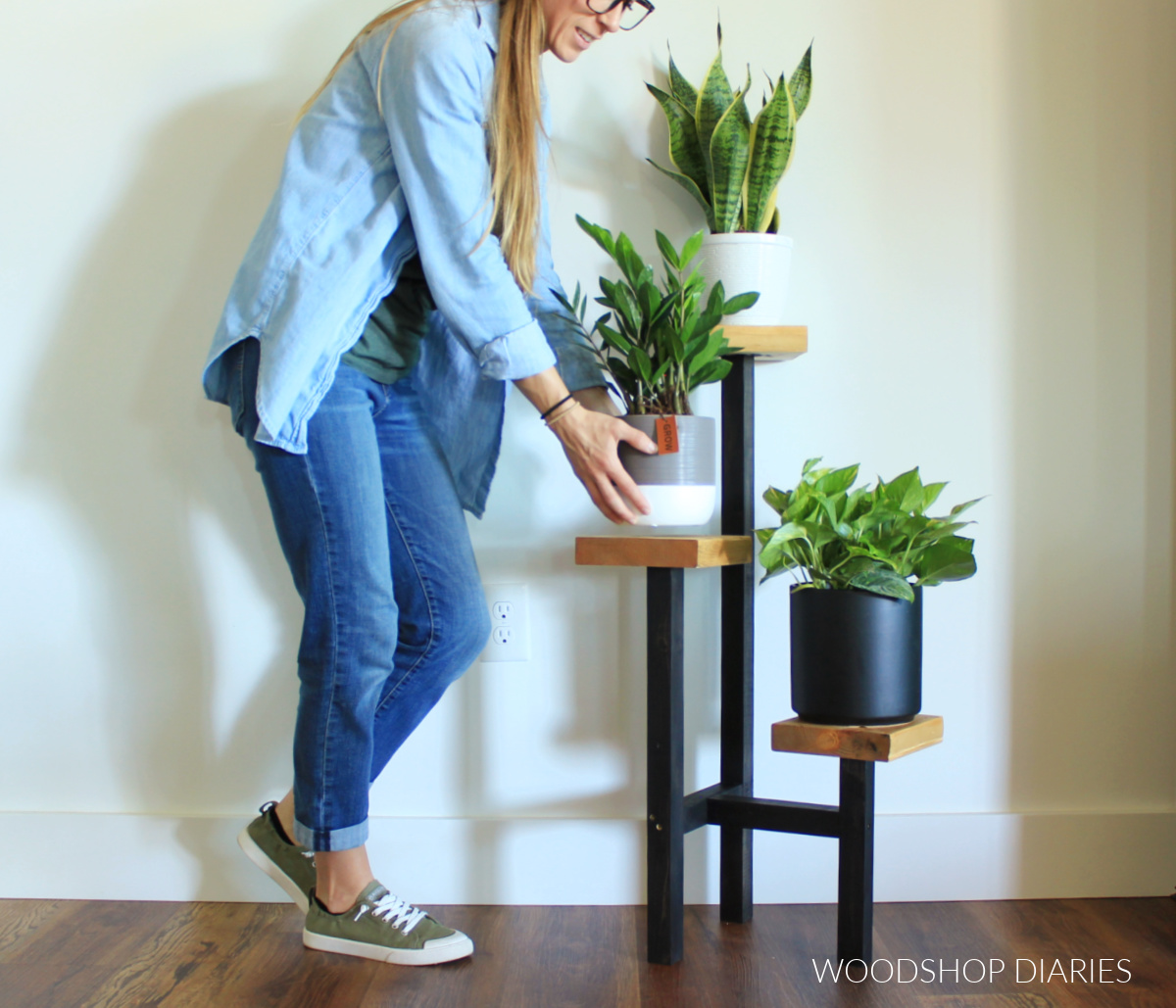
Easy DIY Stocking Hanger Rack

December 7, 2021 by Shara, Woodshop Diaries

In this post, I’m sharing how to make the easiest DIY Stocking Hanger Rack ever with some wood scraps and a little glue!

Easy scrap wood stocking hanger made with a single board and some dowels

A while back I made an accordion coat rack and I’ve loved it since day one. We hang our stockings on it and after the holidays are over, we use it for the dog leash, umbrellas, jackets, etc.

.

But, because it’s an actual moving accordion rack, it’s a little more involved to make.

.

So I wanted to share a similar, but MUCH easier DIY stocking hanger version that works just as well!

.

Grab your scraps, a saw and some glue and get ready to build.

*This post contains affiliate links. See website policies.

Tools and Materials:

Tools:

  • Saw (miter, jig, circular–anything that can cut clean lines)
  • Hammer
  • Level
  • Stud finder (optional)

Materials:

  • Scrap 1x board (I used 1×6, but you can use whatever size you’d like)
  • 1″ dowel rod
  • Krazy Glue Wood Glue
  • Sawtooth hangers
  • Spray Paint (optional)
  • Couple nails/screws to hang it on
Krazy Glue, board, and dowel supplies to make stocking hanger rack

Step 1: Cut Rack Board to Length

First, I trimmed my scrap 1x board to the length and size I wanted my stocking hanger/coat rack to be.

.

You can customize this to fit whatever space you plan to hang it in, but I made mine about 30″ long.

Step 2: Cut Dowels for Rack Pegs

Next, I cut my 1″ diameter dowel rod into pegs about 4″ long (this doesn’t have to be exact–you may want longer or shorter). You can cut these ends square for pegs that stick straight out, or you can miter the ends a little for pegs that slope.

.

I mitered the ends of my dowels about 20 degrees.

Dowels cut to length for stocking hanger

You can cut as many as you wish to put on your rack.

.

If desired, paint these whatever color you wish. I used some black spray paint to give them a little contrast against the wood board.

Step 3: Add Hangers on Back Side

In order to hang this stocking rack on the wall, I flipped the board from step 1 upside down and nailed a couple of sawtooth hangers on the back side.

Sawtooth hangers attached to back side of board

You want to space these out so that you’ll be able to hang them in the wall studs. You may want to check your stud distance of where you want to hang this and space them out accordingly. See step 5.

Step 4: Glue Pegs onto Coat Rack Board

Next, I measured and marked to evenly space out the pegs on my board.

.

A simple formula is to take the number of pegs you cut PLUS ONE, and divide the length of the back board by this number. So in my case, my board was 30″ long, and I had 4 pegs. So 30 divided by 5 is 6″.

.

So I made a mark on my board every 6″ about 2″ up from the bottom edge.

.

I used Krazy Glue Wood Glue on the end of each peg and centered them on these marks the same distance from the bottom edge.

Using Krazy glue to attach pegs to rack board

Follow the directions on the Krazy Glue package. It will dry really fast and should hold plenty strong for stockings, hats, and light weight items.

.

I didn’t add any additional support here, but if you wanted, you could also use a screw through the back of the board to help hold the dowel pegs in place if you wanted a little extra security.

Sticking pegs onto rack board

Step 5: Hang Up Rack!

Use a level and a stud finder to add a couple nails into the studs to hang the rack level.

.

You can also use screws, but I prefer using a couple roofing nails. Then, slide the sawtooth hangers over the nail heads and deck the halls!

Christmas stockings hanging from pegs on DIY stocking hanger rack

Or hang up your hats, coats, whatever else you need to hang up 🙂

Hats hanging on pegs glued to board--DIY hat rack

This really is the easiest DIY stocking hanger rack, hat, coat hanger ever! I really hope you enjoyed that quick and simple project and if you want to check out more winter/Christmas projects, here are a few favorites!

.

And if you want more where that came from, be sure to subscribe to my newsletter to be the first to know about new projects, tips, and latest happenings at Woodshop Diaries here:

Don’t forget to pin this for later!

Pinterest collage showing materials on workbench at top and completed stocking, hat, coat rack on bottom

Until next time, friends, happy building! 🙂
DIY Faux Brick Column {as a Room Divider}

November 28, 2021 by Shara, Woodshop Diaries

In this post, I’m sharing how I installed a DIY faux brick column to the room divider in between our kitchen, living, and dining rooms to give it some extra character.

Plain boring room divider column between kitchen, living, and dining rooms

We recently moved into a new house and because…I am the way that I am…I came in and immediately started seeing things I wanted to change. 

.

Since this weird room divider column was right in the middle of our most used spaces of the house, this was on the top of my list.

.

It’s not structural, so I’m not really sure why they put this here except that maybe it was to act as a divider between the rooms…and they needed somewhere for a few light switches.

.

Speaking of light switches, that’s the only reason why we decided to just keep it vs removing it.  Moving the light switches was more hassle than we felt it was worth.  So we are just keeping the column and making it a feature instead of an eye sore.

Shara standing next to faux brick column room divider

And I did that with faux brick panels. You can watch it all in the video here, or read about it in the step by step below:

*This post contains affiliate links. See website policies.

Tools and Materials:

Tools:

  • Circular saw (cutting guides optional–can use a straight edge instead)
  • Jig saw
  • Drill
  • Brad Nailer
  • Stud finder
  • Measuring tape

Materials:

  • Faux Brick paneling
  • Drywall mud or spackling (optional)
  • Putty knife
  • 1×6 for baseboard trim
  • 1×4 for trim at top
  • Construction adhesive

Some notes about the project:

Faux Brick Panels:

For this project, I used 3 sheets of this faux brick paneling from the Home Depot.  If you haven’t ever seen or felt of this stuff before, it’s surprisingly realistic, but it’s made of like MDF and paper. 

Faux brick paneling leaning against wall in workshop

I’ve used it once before to make a fake fireplace that turned really good, so I figured I’d try it again here.

.

It’s cheaper than faux brick tiles, a lot easier to install, and a lot easier to remove later if I change my mind.

To Glue or Not to Glue??

The instructions for this faux brick paneling state to use construction adhesive to attach them to the wall. However, I’m incredibly indecisive and I didn’t want anything permanent here just in case I change my mind and decide to do something different.

.

So, I simply used brad nails to attach the panels. It seems to hold fine and will be easy to just pop off the wall later and fill a few nail holes if I decide to change it up.

.

But if you want a stronger hold or don’t plan to remove this anytime soon, I’d use some adhesive.

Light Switches and Outlets:

I cut out holes for the outlets and light switches using a jig saw. But adding this paneling adds another ¼″ or so to the depth of the wall so the switches and outlets need to be brought out to match.

.

There are a couple options with that.  They make extenders you can add to your existing boxes to kind of push the switches out after adding the faux brick panel—it’s what many people use after installing backsplashes or tiles.

.

OR you can loosen the switches (after you turn off the breakers of course!!), cut your hole a little tight, slide the panel behind them, then tighten them back up so they’re on the outside of the panel.

.

There are other options, too, but those are probably the easiest. I’m not in a position to give you electrical advice, so you do what you feel most comfortable doing.

The German Schmear Look:

The schmear look is completely optional. You can leave the panels as is, use a whitewash technique, or paint them however you want.

Shara Woodshop Diaries smearing drywall mud onto faux brick panels

I used drywall mud to smear all over the bricks. This really looks realistic and adds a neat texture. But it’s kind of messy.

.

So, feel free to get creative and do what you want here.

Step 1: Remove Existing Trim on Column

Before I cut or installed anything, I first removed the baseboard trim around the bottom of the column.  I’ll replace this later.

Shara removing trim pieces around bottom of column

Step 2: Measure and Cut First Faux Brick Panel

Once the trim was removed, I measured all sides of the column.  It’s kind of an odd L shape and not just a big square.  So I wanted to measure all sides to lay out my cuts.

.

I decided to start on the inside smaller pieces, first.

Inside view of L shaped room divider column

I explain and show this in the video above, but basically, I laid out my cuts so that any “partial bricks” I cut were equal length on the right and the left of the panel.

Shara Woodshop Diaries laying out cuts using tape measure to evenly space outside brick pieces

So, I actually cut a wider piece than I needed first, then trimmed it down so the brick pattern was centered.

Shara Woodshop Diaries using circular saw to trim brick paneling sheets
Shara Woodshop Diaries using circular saw to trim strip off edge of brick paneling sheet

This isn’t really NECESSARY, it just helps it look a little more realistic.

.

For the inside of the column, the two walls were the same width, so I used my circular saw and Kreg rip cut to rip two equal strips with the brick pattern centered.

RELATED: How to Use a Kreg Rip Cut

.

These brick panels were about 96 ¼″ long. But the measurement from my floor to ceiling was right at 96″. So I used a jig saw to trim off about half a brick on the bottom end of each panel. I’m going to cover this with trim later, so it didn’t need to be perfect.

Close up of jig saw trimming end of brick panel

Step 3: Install Inside Faux Brick Panels

With my first pieces cut, I headed inside and just used a brad nailer and some brad nails to attach it. 

RELATED: What’s the difference between finish, brad, and pin nailers??

.

I butted the smooth factory edge of all these pieces to the ceiling and left the rough end I trimmed with the jig saw at the bottom.

Shara Woodshop Diaries brad nailing brick paneling onto inside of column

The instructions say to use a construction adhesive—and that’s probably best.  But just in case I didn’t love this or I want to change it a year from now because I’m incredibly indecisive, I just kept it simple and brad nailed it into the wall studs behind the sheetrock.

.

I used a stud finder to find the stud locations to nail into.  I was surprised, but it still worked through the panels.  I added several nails into the edges and into the stud in the middle from the top to bottom.

.

After the first piece was in, I measured to cut out for the light switch on the other side.  I just used a jig saw to cut that out then carefully nailed it in place.

Shara Woodshop Diaries using jig saw to cut out outlet holes in brick panel

HELPFUL TIP: You can use a drill with a large bit to make a pilot hole to start your jig saw cuts in the middle of a panel.

.

Once I had both of the inside pieces attached with brad nails, I moved to the outside.

Inside view of column with brick panel nailed in place

Step 4: Cut and Install Outside Faux Brick Panels on Column

For each piece, I tried to cut so that the brick pattern was centered side to side.

.

You can use a circular saw and saw guides OR a straight edge and some clamps to cut these panels. Or if you have a table saw, you can use that as well.

.

Just like the other panels, I trimmed half a brick off the bottom for some wiggle room, then carried it back inside to check the fit.

Shara Woodshop Diaries using stud finder to nail brick paneling in place on outside of column

I nailed this piece in place again using several brad nails up and down the column into the studs.

.

I carefully measured and cut out around all the light switches.

Step 5: Install End Caps on Column

After the four main panels were in place, all that was left was the two narrow strips to go on the edges of the “L” shape.

.

I cut these and nailed in place.

.

You’ll notice that I tried to cut each corner so that if a row ended on a whole brick, it “wrapped around” the corner to a half brick.

Close up of end caps of column showing whole and half brick orientation

This isn’t vital, but it’s just a little detail that helps make it look a little more realistic.

Step 6: German Schmear Faux Brick Panels

I’m not a huge fan of the plain red brick, so I dressed this up a little.  This also helps to kind of “finish off” these outside corners. 

.

I laid out some plastic on the floor to protect it and grabbed a bucket of drywall mud I had leftover from sheetrocking the shop. 

.

You can also use spackling or simply white wash it with a paint/water mix.

.

I used a plastic putty knife and just smeared mud all over the bricks. 

Shara Woodshop Diaries using a putty knife to apply drywall mud for German Schmear look

The panels already had some texture and some dimples in the brick and the mud kind of filled those in.  I scraped most of it off, but the film and mud that remained gave it a nice color that’s a little more interesting than the plain panel.

.

Of course, this step is totally optional, but it is nice to use to smooth out the joints where the corners meet.

.

I covered all sides—there’s no science to this—just smear it around and scrap off the excess.  And for the corners, I just filled them in and tried to kind of square them off.  They’re not perfect, but bricks normally aren’t and it blends in pretty well.

.

Once everything was covered, I let it sit for two days to get dry, then I came back and just knocked off any chunks leftover with some sandpaper.

.

If you want more red to show through, you can lightly sand the surface to knock off some more of the drywall mud.  Just don’t sand too much or you’ll sand through the paper on the brick panel. 

Step 7: Trim Out Divider Column

To finish this project, I just cut to fit some trim pieces for the top and bottom.

.

I just nailed 1x6s around the bottom as a baseboard and 1x4s around the top for trim.

Shara using nail gun to install 1x5 trim around top of column

In hindsight, it might have also been cool to cut apart some of the leftover brick and line the top with them running vertically.  Or since the panel was butted to the ceiling, I could have just left that as is.

.

But, I just kept things simple by trimming it out the top with 1x4s.

.

I puttied, caulked and painted the trim around the brick and it was finished!

.

I know this isn’t like a major update, but this is really neat to see as you walk in the front door, and it really adds some old world character to our kind of “basic” new home.

View of faux bricked column from front door showing kitchen and dining room in background

The color ties in nicely with the green accent wall in the dining room and it adds some interesting texture to the space.

.

And although it’s not actually structural, now that it’s “brick,” it looks like maybe it is and it’s serving an important purpose haha.

.

I hope you enjoyed this project and it gives you some inspiration for your own projects!

Pinterest collage image showing brick paneling at top and finished column at bottom

If you want to follow along and stay up to date on all the latest projects and happenings, don’t forget to subscribe to the newsletter below!

Until next time, friends, happy building! ????
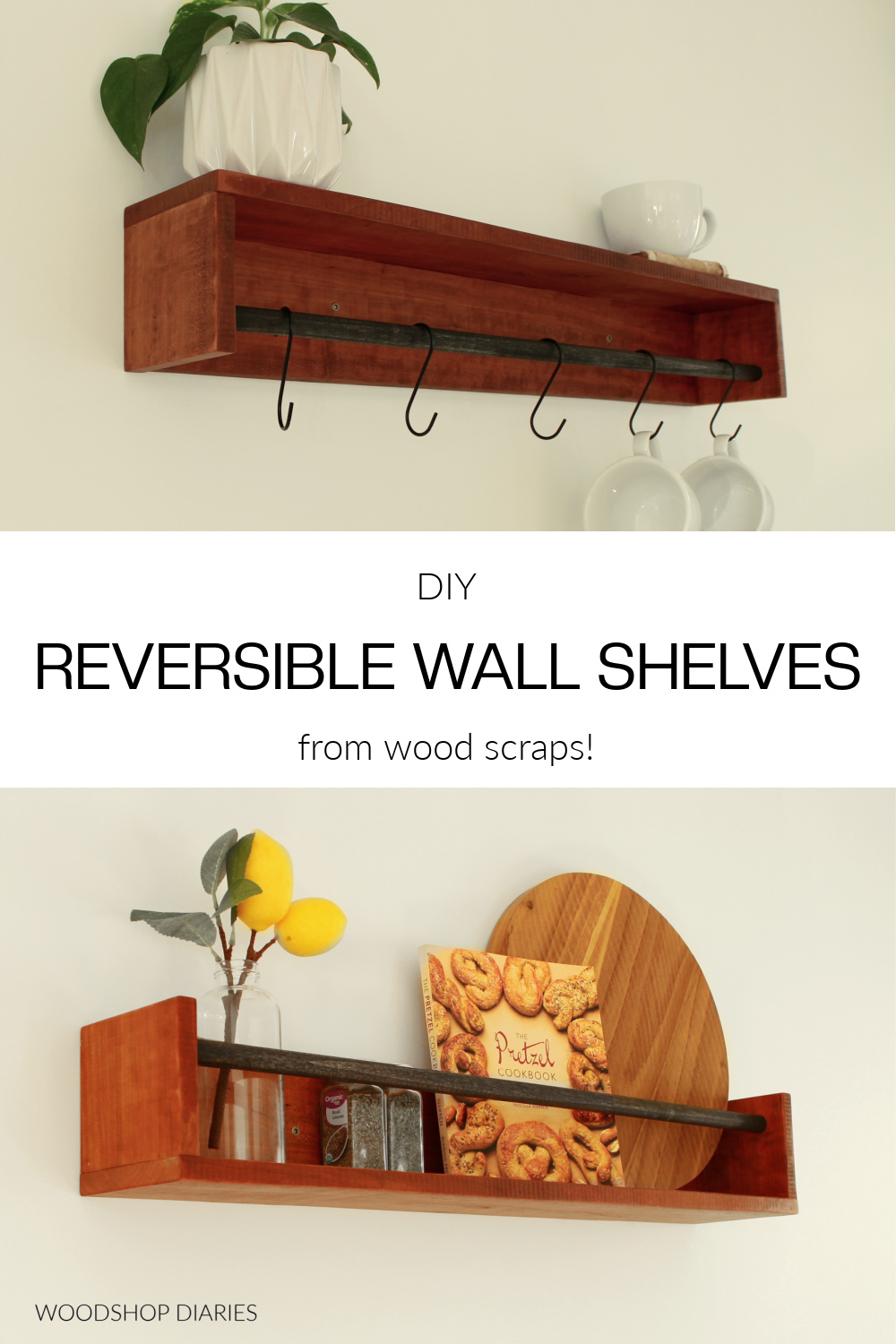
How to Build Base & Pantry Cabinets–For My Workshop!

November 20, 2021 by Shara, Woodshop Diaries

In this post, I’ll show you how easy it is to build base & pantry cabinets. I used this method to outfit my new workshop with more storage and a desk area!

Workshop wall full of pantry and base cabinets made from plywood--tall grey cabinets and hickory base cabinets

After unpacking most of my stuff in the new shop, I still had some paints, spare parts, and just some odds and ends items with no where to go.

.

So, I decided to build out this back wall to give me some storage. I added two tall pantry style cabinets on each side and some basic base cabinets under the window with an empty space in the middle to add a little desk area.

.

I built my previous kitchen’s cabinets the exact same way, so if you’re looking to add cabinets to your shop, kitchen, or just make a built in, this is a simple way to go about it–using only plywood. I’ll explain the benefits of “100% plywood cabinets” below.

.

I’m sharing all the details plans, tools, and products for this project below, but if you’d like to watch it, I put together a video of the process here:

**This post contains affiliate links. See website policies.

Why Build Cabinets Using Only Plywood?

These cabinets were all built entirely of plywood–even the doors! This is a really great way to build them for a few reasons.

Reason #1: It saves SO much time!

I used PureBond hardwood ply for this entire build and I highly recommend going with a hardwood option when building cabinets.

.

It comes already smooth, solid, and there’s no planing or milling needed like you’d have if you used solid hardwood in your project. You just cut, assemble, and finish as desired.

.

Not having to mill down any solid wood pieces for face frames or cabinet doors will save hours of your time.

Reason #2: It requires fewer tools!

Not having to use a planer, table saw, routers or big, expensive equipment not only saves you time and wear and tear on tools, but it also makes this project more approachable for those without big, fancy shops.

.

Since everything is made from plywood, all you need to cut your pieces down is a circular saw and some cutting guides.

RELATED: How to cut down plywood sheets

Reason #3: It saves money!

Although hardwood ply (like the PureBond ply I used here) is a bit pricey compared to cheaper building grade pine ply, it’s still significantly cheaper than the equivalent amount of solid hardwood.

.

If you were to buy a sheet of red oak ply and the equivalent amount of solid red oak boards, depending on where you bought it from, you could be looking at a price difference of 200-300%!

.

So to sum it up, using only plywood and not having to factor in the cost of solid hardwood into this project saves a significant amount of time, tools, and money!

Tools and Materials:

Tools:

  • Circular Saw
  • Cutting Guides
  • Jig Saw
  • Drill/Driver
  • Pocket Hole Jig
  • Concealed Hinge Jig
  • Shelf Pin Jig
  • Stud Finder
  • Nail gun (optional)

RELATED: Check out the top tools I recommend for cabinet and furniture building here.

Materials*:

  • ¾″ PureBond birch plywood (for cabinet boxes and painted doors)
  • ¾″ PureBond hickory 2×4 plywood panels (for wood cabinet doors)
  • ¼″ plywood for drawer bottoms and cabinet backs
  • Edge banding
  • 1 ¼″ pocket hole screws
  • 2 ½″ wood screws (to secure cabinets to wall studs)
  • Shims
  • Wood Glue
  • Concealed Overlay Hinges
  • Drawer Slides (I used 22″ and 16″ slides)
  • Shelf Pins
  • Drawer/Door pulls

*Amount of materials you need will depend on the number/size cabinets you are building. I used 6 hickory panels, 9 full ¾″ plywood sheets, and 3 sheets of ¼″ ply for this entire project.

.

PS, if you like the bar stool I used in the desk area, here’s the link!

Some notes about this cabinet build:

Frameless vs. Face Frame

Cabinets come frameless or with a face frame. You can see the difference below. The left has a face frame and the right does not.

Frameless vs face frame base cabinets diagram

I prefer frameless cabinets because it’s a more minimalist look and they are MUCH simpler to build. So this tutorial will show building frameless cabinets.

.

On that note, since the face frame won’t be there to cover the plywood edges on the front of the cabinet box, you may want to consider applying edge banding to cover those up and make them look cleaner.

RELATED: Here’s a guide to applying edge banding.

Cabinet Sizing

You can modify your cabinet sizing to fit your own needs (see this tutorial), however, for typical kitchen cabinets, the standard height is about 34 ½″ and the countertops are usually 24-25″ deep, so cabinets are 23-24″ to allow for 1″ overhang.

.

I stuck with those standards in this project just to keep things simple.

Overlay vs Inset

Cabinet doors and drawers are made either inset or overlay.

.

Inset means they are “set into” the frame or cabinet–so the door is flush to the front of the cabinet. Overlay means that the door sits on the outside of the cabinet and “lays over” the front.

.

In this case, I made my doors and drawers full overlay.

Diagram showing what a full overlay cabinet door is

Some resources to help you with this base & pantry cabinet build:

  • How to cut plywood sheets
  • How to apply edge banding
  • How to use a pocket hole jig
  • Which pocket hole jig do you need?
  • How to build and install drawers
  • How to measure and build cabinet doors
  • How to use concealed hinges
  • How to finish raw wood furniture and cabinets
  • 10 tools you need for cabinet & furniture building
  • How I built my kitchen cabinets

Step 1: Cut Down Plywood for Cabinet Boxes

I used my Kreg Rip Cut and circular saw to rip three ¾″ plywood sheets into 23 ¾” wide strips for the pantry cabinets–so 6 strips total. Four will be the pantry sides, and the other two will be used to cut the top, bottom, middle shelves in the next step.

RELATED: How to cut plywood sheets

Shara Woodshop Diaries using circular saw to cut plywood strips

And then I ripped three more sheets into 22 ¾” wide strips for the base cabinets.  This gave me six total strips and I can make one base cabinet from each.  I kept the leftover ~ 2 ½″ plywood strip from each sheet to use as support pieces later.

.

You’ll notice that I made the pantry cabinets 1″ deeper than the base cabinets. This is so that when I install the 24″ deep countertop later, it will be even with the pantry cabinets, but still overhang the base cabinets.

.

I ripped one more sheet right down the center to give me two 24” wide pieces to use for the pantry doors later.  I labeled everything before moving on so I didn’t get confused.

Step 2: Assemble Pantry Cabinets

To keep things simple, I just made the pantry cabinets a full 8 foot tall, so I didn’t have to trim the side panels. But if you have shorter ceilings, you may want to trim your sides and make yours a little shorter.

.

I cut three 22 ¾” long pieces for each cabinet from the plywood strips I cut for the pantries in step 1.  This gave me an overall cabinet width of 24 ¼″. If you need to modify your cabinet sizing, check out this tutorial.

.

In addition to the three shelves per cabinet, I also cut two small plywood strips the same length to use as back supports to secure the pantry cabinet to the wall. 

.

You’ve probably seen people build and install cabinets and use a 2×4 base to set them on instead of cutting a toe kick.  And that’s a great way of doing things.  But, I usually just cut the toe kick.

.

I’m not sure if there are “standards” for toe kick dimensions, but when you build things yourself, you can kind of do what you want, so usually I cut mine about 3 ½” tall and 4” deep.  

Shara Woodshop Diaries marking out toe kick locations on pantry cabinet sides

I just marked these out on the front, bottom corner of my pantry sides, and cut out with a jig saw.

.

Before moving on, I went ahead and applied edge banding to the front edges of each piece of the cabinet. 

RELATED: How to apply iron on edge banding

.

Next, I pulled out my Kreg Pocket Hole Jig and drilled ¾″ pocket holes into the ends of each of the shelves and the two support strips.

RELATED: How to use a pocket hole jig

.

I assembled using 1 ¼” pocket hole screws.  You can use glue here as well if you wanted.

.

I attached the bottom panel 3 ½” from the bottom edge of the sides, the top flush along the top edge and the middle piece exactly in the middle of the cabinet. 

Shara Woodshop Diaries assembling pantry cabinet on workbench using pocket holes and screws

I also installed the two support strips–one directly below the top, and one directly below the middle shelf.

.

Because I was adding a baseboard later, I didn’t want to butt the side of the pantry right against the wall (see video). So I glued a ¾″ square block along the side to set the cabinet off the wall a little.

Shara Woodshop Diaries showing attaching a spacer block to prevent baseboard from interfering with cabinet door

Then, I cut a piece of ¼” plywood to staple onto the back side. If you don’t have a stapler, nails or screws work fine, too.

Shara Woodshop Diaries stapling ¼" plywood backer onto pantry cabinet

Step 3: Install Pantry Cabinet

Once the pantry cabinet was assembled, I drug it over to where it was going and secured it to the wall.

.

I used a level and a couple shims to set up the cabinet so it was straight and square, then used a few 2 ½″ screws through the support strips to secure it to the wall studs.

.

Use a stud finder to make sure you screw through the supports (both the top and middle pieces) and into the wall studs behind it.

Shara Woodshop Diaries screwing pantry cabinet into wall studs through back support

Then, I repeated this same process to make the second pantry for the other side. 

.

I’ll come back and deal with the doors and shelves in later steps.

Step 4: Build Base Cabinets

I built all my base cabinets here the exact same size to keep things easy.  I was using 24” wide pieces of hickory plywood for the doors and they were full overlay.

. 

Usually, when I make full overlay doors, I take the overall width of the cabinet and subtract ¼”.

RELATED: How to measure for cabinet doors

.

So if I made my cabinets 24 ¼” wide, I wouldn’t have to cut my doors any narrower.  So that’s what I did here. #priorplanning

.

From each base cabinet plywood strip (from step 1), I cut two pieces 34 ½” for the sides, one 22 ¾” for the bottom and then kept the little leftover strip to use as a support piece later.

Stack of plywood to make base cabinet

I did this for all six base cabinet boxes and also cut toe kicks in the front bottom corners of the sides just like I did on the pantry sides earlier.

.

In addition to the one support piece left after cutting each plywood strip, I also cut two more for each cabinet box the same length. Two will go on the top and one at the back.

.

I edge banded the front edges of the sides, the bottom, and one support strip, then assembled using ¾″ pocket holes and 1 ¼″ pocket hole screws.

Shara Woodshop Diaries assembling base cabinet using pocket holes and screws

For these base cabinets, I installed the bottom panel 3 ½” from the bottom edge so that it’s even with the toe kick cut out, then I installed the edge banded support strip at the top in the front, and the two others are at the back corner. 

.

The strips at the top will be used to secure the countertop and the one at the back will be used to screw the cabinet to the wall.

.

After the boxes were together, I cut ¼” plywood back panels to staple (or nail, or screw) onto each one.

Shara Woodshop Diaries stapling ¼" plywood back onto cabinet box

I always like to check that my back panels are square and then adjust my cabinet boxes to match when I staple it on–that way, I make sure my cabinet box is square and stays that way.

Step 5: Install Base Cabinets

Now, of my six cabinets, four of them would be door cabinets and two would be drawers. I went ahead and installed the door cabinets, but will come back to the drawers in step 6.

.

I screwed the two base cabinets together on each side first, then used a level and some shims to get them level and square before securing them to the wall studs through the back support. 

Base cabinets installed to wall

The concrete floor was really unlevel, but most are, I guess, so I did the best I could ha.

Step 6: Install Drawers (optional)

For my two drawer cabinets, I used 22” drawer slides on the bottom two drawers and 16” slides on the top drawer.  I actually ordered 6 pair of 22” slides to use them on all the drawers, but realized later that the top drawer would hit the back support piece if I used 22” slides on it.

.

I keep a stock of 16” slides in my tool chest, I just swapped these out for the top drawers.  I don’t have a fancy reason for why I used 16” except that I just happened to have some handy.

Shara Woodshop Diaries installing drawer slides into base cabinet

I installed these into the two drawer cabinets, added the back panel, then secured these in place on the wall next to the door cabinets.

Pantry and base cabinets installed to workshop wall

You can check out this detailed tutorial to figure out how to measure for, plan out, build and install your drawer slides and drawer boxes to customize this however you need.

.

Once I had my drawer boxes assembled, I installed them into the cabinets.

Step 7: Add Shelves (optional)

For the rest of the cabinets, I went back and drilled shelf pin holes to be able to install shelves in them as needed. 

.

I used my Kreg Shelf Pin Jig to drill these holes.

Shara Woodshop Diaries sitting inside cabinet drilling shelf pin holes using jig

Could I have drilled these earlier in the building process before everything was installed? Yes. Should I have? Probably haha. 

.

But, as long as they are added at some point, it’s not that big of a deal.  I drilled holes along each side of the cabinets where I might want to add shelves later.

Shara Woodshop Diaries installing shelf into cabinet

You can learn more about installing shelves using shelf pins here.

.

Full disclosure here, I need to sit down and decide how I want to organize these, so I only added a shelf in one cabinet so far.  But that’s the beauty of shelf pins—I can install them later wherever I want. 

Step 8: Add Doors and Drawer Fronts

I made all the doors and drawer fronts from ¾″ plywood.

.

In step 1, I mentioned that I cut a sheet of birch plywood into 24″ wide strips for the pantry doors. I just had to trim them to the correct length to fit my pantry cabinets.

.

But for the base cabinets, I used some 2ft x 4 ft hickory PureBond plywood panels. 

.

I only had to cut the length on these as well since I made the cabinets to fit the width already.

Shara Woodshop Diaries cutting down plywood panel to make cabinet door

You can learn how to measure for your cabinet doors in this post.

.

Now, typically with drawer fronts, you run the grain horizontally, but in this case, I ran it vertically.  So for my drawer fronts, I cut the panel the same height as I cut all the rest of the doors. 

.

Then, I just measured and marked out the drawer front heights on this piece and cut along the lines.  So that way, when they go in place, the grain matches and it all runs vertically to match the doors. 

RELATED: How to measure for drawer fronts

.

I edge banded all these doors and drawer fronts—and full disclosure, I ran out of hickory edge banding and couldn’t find anymore, so I just used birch edge banding—the color wasn’t too far off.

.

Once everything was edge banded and sanded well, I used a Kreg concealed hinge jig to drill holes for concealed hinges in all the doors.

Shara Woodshop Diaries using Kreg concealed hinge jig to drill holes for concealed hinges

Since these were full overlay doors, I used full overlay hinges for frameless cabinets to install them into the cabinet. 

.

I have a separate video and a step by step tutorial for how to install and adjust these here.

Screwing concealed hinges into cabinet door

I installed all four hickory doors onto the cabinets, then screwed the drawer fronts on with a couple screws on the inside of the drawer boxes.

Screwing drawer front onto middle drawer in base cabinet

You can see how to install drawer fronts here.

.

For the large pantry doors, I used three hinges instead of just two.  However, since the shelf was in the center of the cabinet, I made sure to place the middle hinge slightly off center so it wouldn’t interfere.

Pantry door open showing hinge locations

Step 9: Add Toe Kicks to Cabinets

Now that all the cabinets are in and secure, one of the last pieces is adding the toe kick boards. 

.

I cut some 3 ½” wide plywood strips for this, but you could also use 1x4s if you wanted.  I just cut these to length and nailed in place along the fronts of the bottom of the cabinets. (If you don’t have a nail gun, you can also use some screws.)

Nailing toe kick boards along bottom of cabinet section

I used one solid piece across the three base cabinets on each side, but since the side cabinets were 1” deeper, I cut a separate piece for them.

Step 10: Paint/Finish Cabinets

Now, you can add this step in whenever you want. I actually painted the pantry cabinets and the pantry doors before installing them (as you can see above). But you could also paint them after…it’s up to you.

.

For the pantry cabinets, I used a brush and a roller to apply a coat of KILZ 3 primer, then two coats of SW Dorian Grey (I used Captivate in Satin). I didn’t use anything fancy here.

.

One thing I love about building cabinets from PureBond hardwood ply is that it’s already smooth, and since it’s just raw wood, it takes paint really well and it sticks good. 

.

I know it’s easy to overthink painting cabinets, but if you use a good primer and a decent paint on plywood, you’ll be fine.

Check out my tips for finishing raw wood furniture here.

.

For the base cabinets, I applied two coats of Minwax Helmsman clear coat, then added these modern handles to the doors and drawers.

Step 11: Add Countertop

The last piece of this cabinet build was the countertop.

.

You can use whatever you want for your countertop, but keeping on the plywood theme here, I just cut another sheet of plywood into two 24” wide strips.

.

This span was longer than 8 ft, so I was going to have to piece this together. If I just cut two pieces and had them meet in the middle, they’d meet where I wanted my desk space to go and there wasn’t any support there.

.

So instead, I put one 8 ft piece centered across the middle and added two smaller pieces on each end .

Shara installing countertop through top supports of cabinet boxes

I edge banded and installed the middle 8 ft piece first.  I got it fairly centered on the base cabinets, and used some 1 ¼” screws through the top supports in each cabinet to secure it. I put screws in both the front and back supports.

.

Then, I measured, cut, and screwed in two shorter sides to finish up the countertop.

Shara placing small countertop section

I gave this top a few coats of Minwax Helmsman like I did the base cabinets.

Step 12: Final Details

As a final detail, I went back and cut a couple pieces to put along the bottom of the inside of the cabinets (see below in the desk section). 

.

Because I had to shim these up so much from the unlevel floor, the gap was kind of ugly…so I just nailed a piece here to hide it.

Completed workshop cabinets with tall pantry and base cabinets with desk section in middle

I’m so excited to have some extra storage and function now in my workspace!  I’m glad I have some cabinets to keep some of my stuff free from dust and to help keep my workspace less visually cluttered by hiding all the chaos haha.

.

I’ve got some ideas for the rest of this wall, but I’m still contemplating what I want to do with it, so stay tuned to see if I ever make up my mind haha. If you’d like to follow along and keep up with all the latest projects, be sure to subscribe to the newsletter!

I hope you enjoyed this project–I know there was a lot of information to cover. Building cabinets isn’t a difficult task, but there are so many options for sizing, styles, and fits, it can get a little overwhelming sometimes.

.

For more cabinet building info, check out this cabinet building page for resources and tips!

Pinterest image collage showing shara assembling cabinet box at top and completed cabinets at bottom

Until next time, friends, happy building!
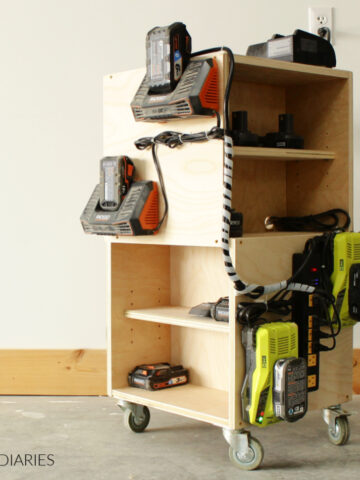
  • « Previous Page
  • 1
  • …
  • 4
  • 5
  • 6
  • 7
  • 8
  • …
  • 16
  • Next Page »

Hi! I'm Shara, the designer, maker, and videographer behind Woodshop Diaries. Let's get building, friends :)
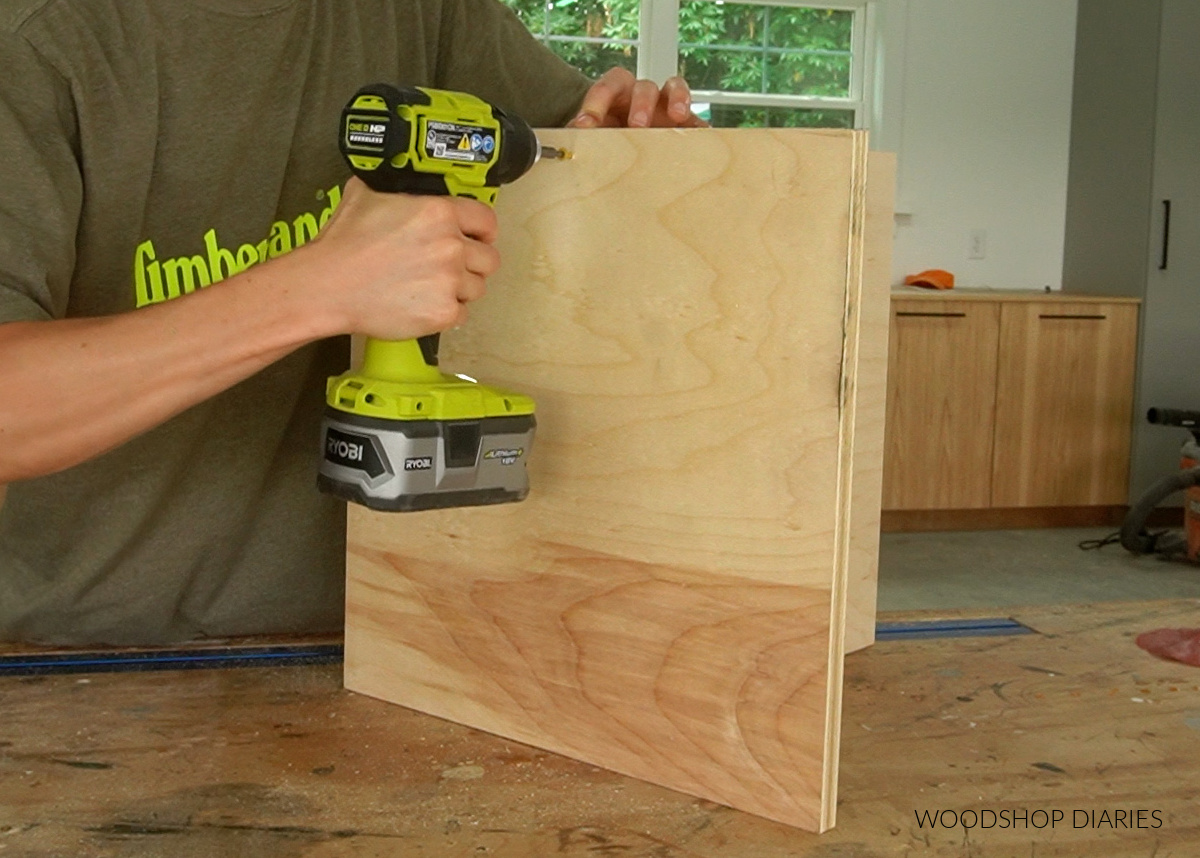
Learn more →

Woodworking Tips & Guides

  • How to make simple Shaker style cabinet doors!!
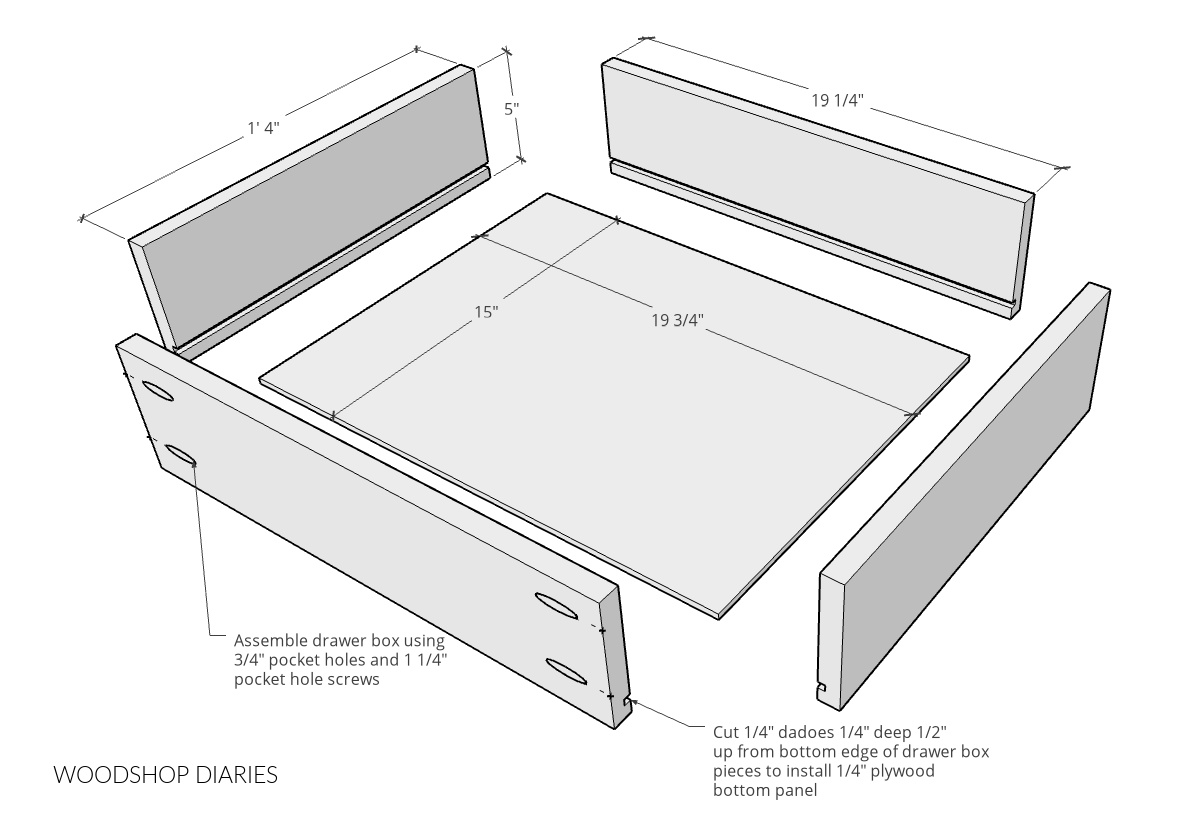
    DIY Simple Shaker Cabinet Doors
  • 5 Tools To Get Started Woodworking
  • DIY Kitchen Cabinets–From Only Plywood
  • How to Square Board Edges and Make Your Own 2x2s

Footer

↑ back to top

Tips to Take Your Projects to the Next Level

--5 Secrets to Professional Looking DIY Furniture

--How to Properly Paint Wood Furniture

--How to EASILY Cover Plywood Edges

--How to Sand Wood

--10 Must Have Tools for Furniture and Cabinet Building

Printable Building Plans

Check out our shop to browse printable PDF building plans!

Website Policies

This website is for entertainment purposes. Using any information provided is to be at your own risk.

This site uses cookies to provide you with a better experience.

All images and text on this site are property of Woodshop Diaries, LLC. Please be respectful and don't steal this content.

See Policies and Privacy page on this site for more information.

Want to get in touch? Contact Us Here

Copyright © 2026